Solar System Sizing Calculator: From kWh Usage to Array Size (2026)
Reading time: ~12 min read
📋 Key Takeaways
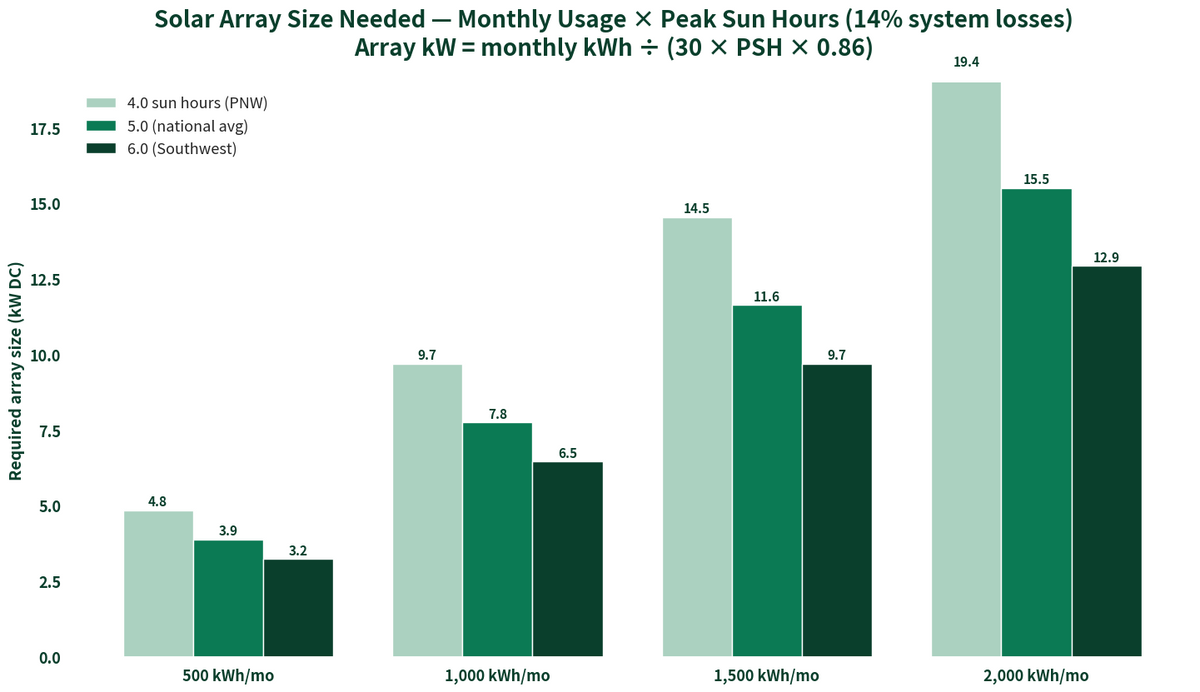
- Array size in kW = daily kWh ÷ (peak sun hours × system efficiency after losses).
- A ~14% total loss factor (0.86 performance ratio) covers inverter, wiring, soiling, and temperature losses for typical grid-tie systems.
- A 1,000 kWh/month home in a 5.0 peak-sun-hour state needs roughly a 7.8 kW array at 100% offset — about 19–20 400W panels.
- Size the inverter at a DC/AC ratio of 1.1–1.3 for grid-tie systems to maximize production without excessive clipping.
- Off-grid and hybrid systems size the array against worst-month sun hours, not annual averages.
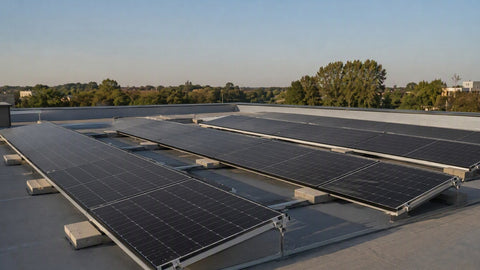
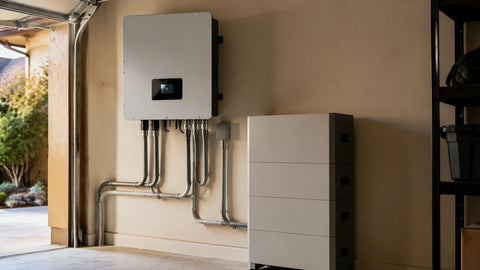
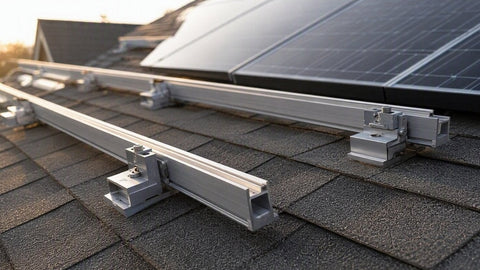
Sizing a solar array starts with one number: how much energy the site actually uses. Everything else — panel count, roof area, inverter capacity — falls out of the arithmetic once you know monthly kWh consumption and local peak sun hours. This guide walks through the full sizing method the way we spec it for contractor quotes, with an interactive calculator, a worked example, and the grid-tie, off-grid, and hybrid adjustments that change the answer. When you're ready to price equipment, our solar panel collection and inverter collection carry the modules and power electronics this math points you toward.
The Core Sizing Formula
The sizing chain is short enough to do on a napkin:
- Monthly kWh ÷ 30.4 = daily kWh load.
- Daily kWh ÷ peak sun hours (PSH) = raw array kW before losses.
- Raw kW ÷ (1 − losses) = required array kW (DC). At 14% losses, divide by 0.86.
- Multiply by your target offset % if you are not covering 100% of usage.
- Array kW × 1,000 ÷ panel wattage = panel count.
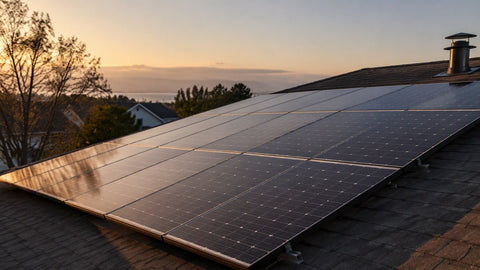
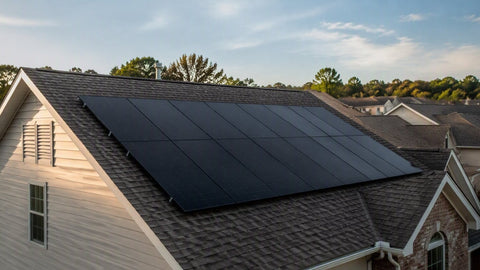
- Panel count × ~20 sq ft = approximate roof area (typical 400–450W residential modules run about 19–22 sq ft each).
Peak sun hours are not the same as daylight hours. One PSH is one hour of 1,000 W/m² irradiance — the unit that converts nameplate panel watts into real daily production. Phoenix averages about 6.5 PSH; Seattle sits near 3.5. Use your state's annual average for grid-tie sizing, and your worst-month (usually December) for off-grid work.
Interactive Solar Sizing Calculator
Enter the customer's average monthly kWh from the utility bill, pick a state (or enter custom sun hours), set the loss factor and target offset, and the calculator returns required array size, panel counts at 400W and 450W, and the roof area you'll need.
Worked Example: 1,000 kWh/Month Home
A ranch home in Dallas averages 1,000 kWh/month on the utility bill. The customer wants full offset with standard equipment.
| Step | Math | Result |
|---|---|---|
| Daily load | 1,000 ÷ 30.4 | 32.9 kWh/day |
| Raw array size | 32.9 ÷ 5.3 PSH (Texas) | 6.21 kW |
| After 14% losses | 6.21 ÷ 0.86 | 7.22 kW |
| At 100% offset | 7.22 × 1.00 | 7.22 kW DC |
| Panel count (400W) | 7,220 ÷ 400 | 19 panels (7.6 kW installed) |
| Panel count (450W) | 7,220 ÷ 450 | 17 panels (7.65 kW installed) |
| Roof area | 19 × 20 sq ft | ~380 sq ft |
| Inverter (DC/AC 1.2) | 7.6 ÷ 1.2 | 6.3 kW AC → 7.6 kW string inverter or micros |
Note that panel count rounds up to whole modules, so the installed array lands slightly above the calculated minimum. That small oversize is normal and usually desirable — it buys back degradation headroom over the system's life.
Grid-Tie vs. Off-Grid vs. Hybrid Sizing
The formula above assumes a grid-tie system with net metering or a similar export arrangement. Change the system type and the sizing basis changes with it:
| System Type | Size Array Against | Loss Factor | Key Constraint |
|---|---|---|---|
| Grid-tie (net metering) | Annual average PSH | ~14% | Utility interconnection limits; roof area |
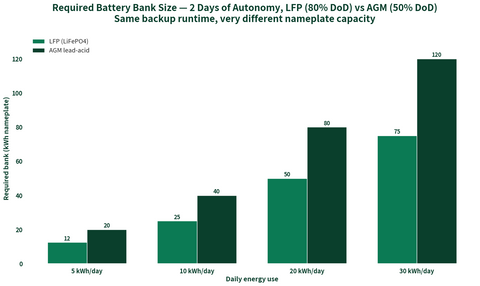
| Grid-tie + battery (hybrid) | Annual average PSH, plus battery charging margin | ~17–20% (adds battery round-trip) | Battery kWh sized to critical loads × autonomy hours |
| Off-grid | Worst-month PSH (design month) | ~25–30% (battery, controller, deeper derates) | Days of autonomy; generator backup for stretched cloudy periods |
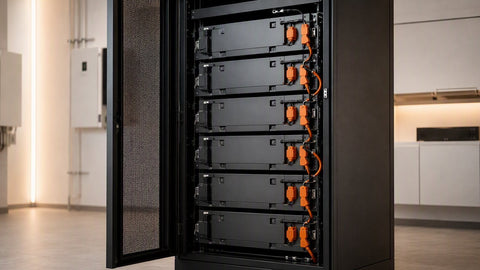
For off-grid work, re-run the calculator with December sun hours for the site and a 25% loss factor — that is the conservative answer that keeps the lights on in the worst month. Hybrid systems sit between the two: size the array on annual average, then verify that winter production still covers daily critical loads, and let the grid carry the shortfall. Our battery collection covers the storage side of hybrid and off-grid builds.
Inverter Sizing: The DC/AC Ratio
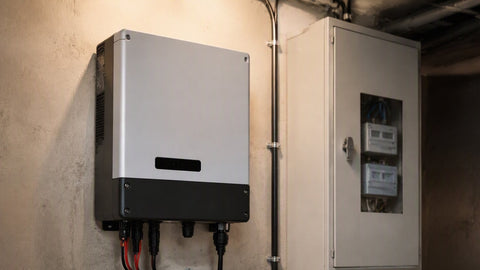
Grid-tie inverters are intentionally undersized relative to the array. A DC/AC ratio between 1.1 and 1.3 means a 10 kW array pairs with a 7.7–9.1 kW inverter. The reasons are practical: panels rarely produce nameplate power, so a 1:1 inverter spends its life oversized and less efficient; and mild clipping on the best noon hours of the year costs less energy than the efficiency gains everywhere else. Ratios above ~1.35 start to clip real production and below 1.0 you're paying for inverter capacity you'll never use.
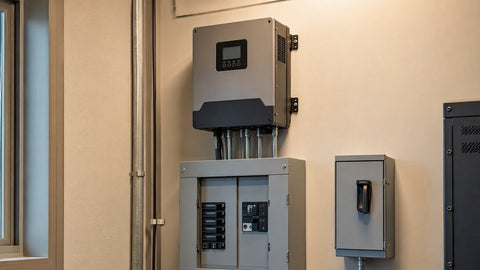
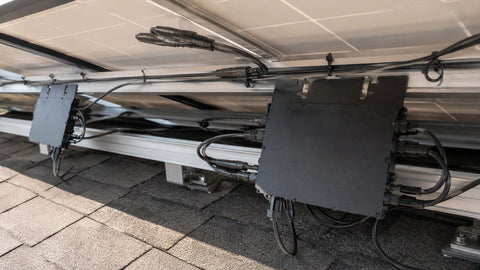
For string inverters, pick the next standard size above your calculated AC target. For microinverter systems, the ratio is set per module — match each micro's continuous output rating to the module wattage so the per-panel ratio lands in the same 1.1–1.3 band. Browse string, micro, and hybrid options in our inverter collection.
State-by-State Peak Sun Hours Reference
| State | Avg. PSH | kW needed per 1,000 kWh/mo* |
|---|---|---|
| Arizona | 6.5 | 5.9 kW |
| California | 5.8 | 6.6 kW |
| Texas | 5.3 | 7.2 kW |
| Florida | 5.2 | 7.4 kW |
| Colorado | 5.0 | 7.6 kW |
| Georgia | 4.8 | 8.0 kW |
| Illinois | 4.0 | 9.6 kW |
| New York | 3.9 | 9.8 kW |
| Washington | 3.5 | 10.9 kW |
*At 100% offset and 14% losses. Values are annual averages — site-specific shading, tilt, and azimuth shift the real number.
Sizing Mistakes We See in the Field
Sizing from the power bill's dollar amount instead of kWh. Rates vary wildly by utility; only the kWh figure is portable. Pull 12 months of usage if you can — a single summer bill oversizes the system, a single winter bill undersizes it.
Using daylight hours instead of peak sun hours. A site can have 14 hours of daylight and only 5 peak sun hours. PSH is the irradiance-weighted number, and it's the only one that belongs in the denominator.
Ignoring future loads. An EV adds roughly 250–300 kWh/month for a typical commuter; a heat pump water heater adds 100–150. If either is on the customer's two-year horizon, size for it now. Adding panels later means new permitting, new interconnection paperwork, and mismatched module vintages.
Overlooking shade and orientation. The calculator assumes unshaded, south-facing production at a reasonable tilt. East/west arrays produce roughly 15–20% less per kW of nameplate capacity, and any shading analysis that shows real obstruction needs a site-specific production estimate, not a napkin number.
Frequently Asked Questions
How many solar panels do I need for 1,000 kWh per month?
In an average-sun state (about 5 PSH), a 1,000 kWh/month load needs roughly a 7.6 kW array at 14% losses — about 19 400W panels or 17 450W panels. High-sun states like Arizona need as few as 15 panels; low-sun states like Washington may need 27 or more.
What is the 14% loss factor made of?
It's a combined performance ratio covering inverter efficiency (~2–4%), DC and AC wiring (~2%), soiling (~2%), temperature derating (~3–5% depending on climate), and mismatch/availability (~2%). Cool, clean, well-wired systems can beat 14%; hot climates and string inverters on complex roofs can run worse.
Should I size for 100% offset?
Usually, if roof area and budget allow — but check your utility's net metering rules first. Some utilities cap system size at 100% of historical usage, and a few cap it below that. If you expect an EV or heat pump in the next two years, size for the future load now rather than expanding later.
What's the difference between kW and kWh in sizing?
kWh is energy — what your bill measures and what the array must produce over time. kW is power — the instantaneous nameplate capacity of the array. The calculator converts your kWh usage into the kW of array capacity needed to generate that energy under your local sun conditions.
Can I install a bigger array than my inverter rating?
Yes — that's exactly what the DC/AC ratio of 1.1–1.3 describes. The array (DC) is deliberately 10–30% larger than the inverter's AC rating. Beyond roughly 1.35, clipping losses grow enough to outweigh the benefit, and some inverter warranties specify a maximum ratio.
How much roof space does a solar array need?
Plan on roughly 20 sq ft per modern 400–450W module, then add fire-code setbacks and pathway clearances per your local AHJ — typically 3 ft at ridges and edges. A 20-panel array needs about 400 sq ft of usable roof before setbacks.
Need a quote on panels, inverters, or full system BOMs? PES Supply works with contractors and volume buyers every day — send us your load calc or the numbers from the calculator above and we'll price modules, racking, and power electronics to match. Contact our sales team for project pricing, bulk discounts, and freight options on orders of any size.