EG4 Battery vs Tesla Powerwall 3: An Honest Comparison
Reading time: ~7 min read
📋 Key Takeaways
- Full disclosure up front: we stock EG4 batteries and Tesla Powerwall accessories (Gateway 2, Backup Switch, stacking kit) — but not the Powerwall 3 itself, which Tesla sells only through its certified installer channel. This comparison tells you when each answer is right anyway.
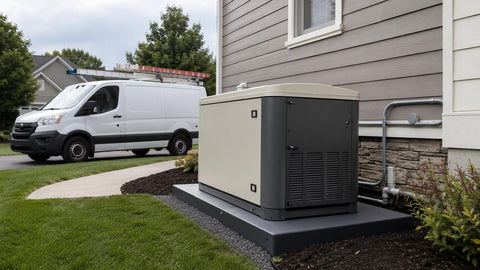
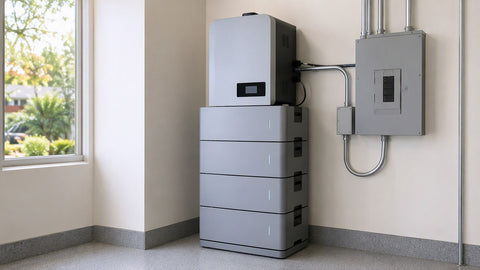
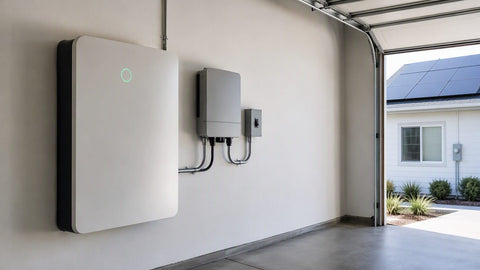
- Powerwall 3 is an appliance: 13.5kWh usable, 11.5kW continuous, an integrated solar inverter (6 MPPTs, up to 20kW DC), Storm Watch, and a polished app — installed turnkey for roughly $11,500–$16,500 by certified installers. No DIY path exists.
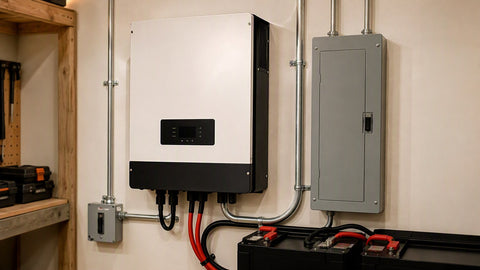
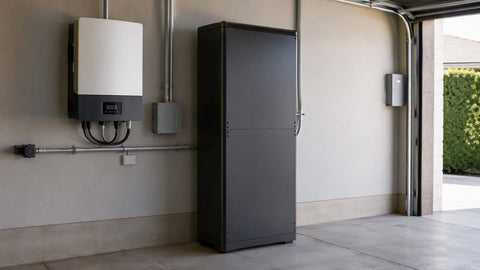
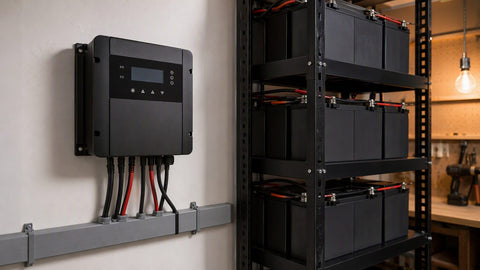
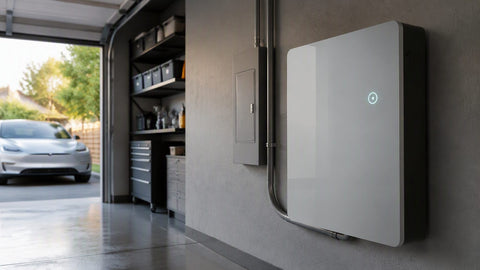
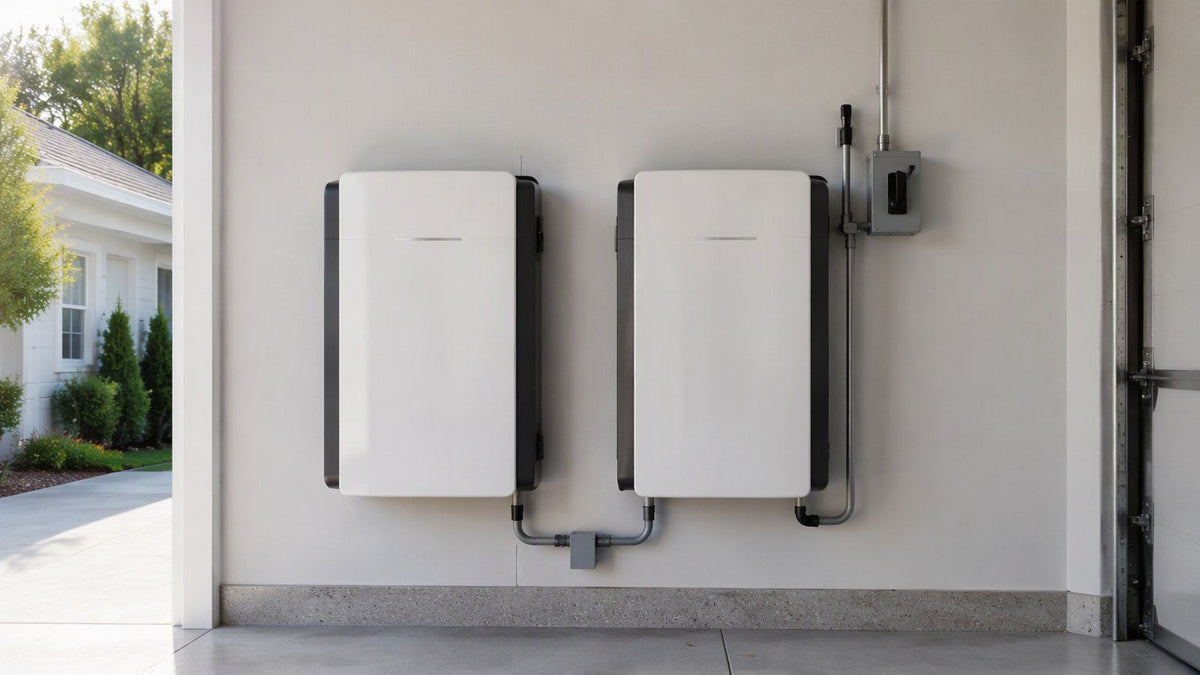
- EG4 PowerPro WallMount AllWeather is a component: 14.3kWh for $3,124.99 hardware — about $0.22/Wh before the inverter — with a 200A BMS, IP65 outdoor rating, self-heating, 8,000+ cycles at 80% DoD, and UL1973/UL9540A certification. It needs a hybrid inverter (EG4 18kPV at $3,999.99 is the natural pair).
- The math usually lands here: a one-battery EG4 + 18kPV system runs roughly $7,100 in equipment versus $12,000–$16,500 installed for one Powerwall 3 — and the EG4 stack is expandable to 15+ batteries with any 48V-fluent installer, including competent DIYers.
- For outage-first markets like Puerto Rico, both work; the EG4 route wins on serviceability, battery-agnostic expansion and price per kWh, while the Powerwall wins on single-box simplicity — if Tesla's channel serves your area and timeline.
The query "EG4 battery vs Tesla Powerwall 3" lands on our site every week — including, notably, from Puerto Rico. It is really two questions: which hardware is better, and which buying model is better. Tesla sells a finished appliance through a controlled channel; EG4 sells professional components through supply houses like ours. Here is the honest spec-and-dollar comparison, including the parts where the Powerwall genuinely wins.
The spec table that matters
| Specification | Tesla Powerwall 3 | EG4 PowerPro WallMount AllWeather |
|---|---|---|
| Usable capacity | 13.5 kWh | 14.3 kWh (48V / 51.2V, 280Ah LFP) |
| Continuous output | 11.5 kW AC (integrated inverter) | 200A DC / ~10kW delivery (inverter sets AC output) |
| Peak output | ~22 kW (10 sec) | 10.5kW (10s) / 15.4kW (3s) at the battery |
| Solar input | Integrated — 6 MPPTs, up to 20kW DC | None — pair with a hybrid inverter (18kPV etc.) |
| Cycle life | 10-yr warranty, 70% retention | >8,000 cycles @ 80% DoD (82.6 MWh lifetime), 10-yr warranty |
| Environment | IP67 indoor/outdoor | IP65 outdoor-rated, self-heating, dual fire arrestors |
| Certifications | UL listings via Tesla system | UL1973, UL9540A, UL9540 (with 18kPV) |
| Expansion | Up to 4 units (54 kWh) | Parallel across multiple units; 600A busbars onboard |
| Install model | Tesla-certified installers only; no DIY | Any qualified installer; DIY-feasible for competent owners |
| Real cost | ~$11,500–$16,500 installed | $3,124.99 battery; ~$7,100 with 18kPV inverter (equipment) |
Where the Powerwall 3 legitimately wins
Three places, and they matter. First, integration: the Powerwall 3 is the solar inverter — 6 MPPTs and up to 20kW of panels connect directly, eliminating a separate hybrid inverter and $1,500–$2,500 of install complexity on new builds. Second, software polish: Storm Watch automatically charges to full ahead of forecasted severe weather — genuinely useful in hurricane country — and the Tesla app remains the benchmark. Third, single-unit power: 11.5kW continuous from one box runs central air plus kitchen loads without load management; hitting that from the EG4 side means an 18kPV-class inverter, which is fine, but it is a second box on the wall. If you want one crew, one box, one app, and zero decisions — and Tesla's channel serves your area with an acceptable wait — the Powerwall 3 is a good product.
Where the EG4 route wins
Price per kWh is the headline. The EG4 PowerPro WallMount AllWeather 14.3kWh at $3,124.99 is about $0.22 per watt-hour of storage hardware; even adding the EG4 FlexBOSS21 ($3,599.99) or 18kPV ($3,999.99) hybrid inverter, a complete 14.3kWh system is roughly $6,700–$7,100 in equipment. Turnkey Powerwall 3 installs average $11,500–$16,500. The gap pays your electrician and buys a second battery.
Cycle life and serviceability come next. The PowerPro is rated beyond 8,000 cycles at 80% depth of discharge — 82.6 MWh of lifetime throughput — with a 10-year warranty, dual fire arrestors, self-heating for cold charging, and an IP65 enclosure that lives outdoors year-round. And the ecosystem is open: the battery speaks closed-loop CAN/RS485 with EG4, Sol-Ark, Victron, Growatt, Schneider, Luxpower and Deye inverters, so you are never locked to one vendor's roadmap — the same flexibility our Big Battery NEXUS guide details for the value tier. Indoor variants cover garages and utility rooms: the WallMount Indoor 14.3kWh ($3,290.75), the 16kWh 314Ah indoor unit ($3,399.99), and the 314Ah AllWeather ($3,749.99). On a budget, the LL-S 5.12kWh server-rack battery ($1,536.99) builds the same system brick by brick.
And DIY is real. EG4's market is the capable owner-builder and the independent installer — the same buyer our off-grid inverter sizing guide serves. Permitting and code still apply everywhere, but you are not waiting on a single manufacturer's installer network.
If you already own Powerwall gear
One more honest note: we do not sell Powerwall 3 units, but we do support the installed base. The Tesla Backup Gateway 2 ($1,695.75), Tesla Backup Switch meter collar ($472.00), and Multi-Powerwall stacking kit ($424.23) are in stock for installers servicing Tesla systems.
The verdict by buyer
New build, zero decisions wanted, installer channel available: Powerwall 3. Best price per kWh, expansion plans, off-grid or DIY-capable, independent installer: EG4 PowerPro + hybrid inverter. Puerto Rico and outage-first markets: either works electrically — but favor the route you can get serviced locally after the storm, and remember the battery can also earn $1.00/kWh through LUMA's CBES grid-event program. Size the bank first with our battery bank calculator and the backup runtime calculator.
Frequently Asked Questions
Is the EG4 battery cheaper than the Tesla Powerwall 3?
Yes, substantially, on hardware. The EG4 PowerPro WallMount AllWeather 14.3kWh costs $3,124.99 — about $0.22 per watt-hour — and even with an EG4 18kPV hybrid inverter ($3,999.99) the equipment total is roughly $7,100. A single Powerwall 3 (13.5kWh) typically installs turnkey for $11,500–$16,500 including its integrated inverter, gateway and labor. The Powerwall price includes professional installation and the app ecosystem; the EG4 price leaves room for your electrician and often a second battery.
Can I install an EG4 battery myself?
EG4 designs for the owner-builder and independent installer market, so competent DIY installation is genuinely feasible — quick-connect cables, onboard LCD touchscreen for configuration, closed-loop communication with major inverter brands, and published manuals. Permits, NEC code compliance and utility interconnection rules still apply in your jurisdiction, and 48V battery work at 200A deserves respect. Tesla does not offer any DIY path: Powerwall 3 must be installed by Tesla-certified installers, which is both a quality control and a channel constraint.
Does PES Supply sell the Tesla Powerwall 3?
No — Tesla distributes Powerwall 3 exclusively through its certified installer channel, not through electrical supply houses. What we do stock for the Tesla installed base are the accessories: the Backup Gateway 2, the Backup Switch meter collar, and the Multi-Powerwall stacking kit. For buyers comparing battery systems, our EG4 PowerPro line covers the same 13–14kWh class at a substantially lower hardware price, with UL1973/UL9540A certification and a 10-year warranty.
Which battery is better for off-grid or Puerto Rico?
For true off-grid, the EG4 route is the standard answer: it pairs with off-grid-capable hybrid inverters (18kPV, FlexBOSS21, Sol-Ark), supports generator input, expands battery-by-battery, and can be serviced by any qualified technician. The Powerwall 3 can back up a grid-tied home excellently but is not designed as an off-grid platform and depends on Tesla's service channel. In Puerto Rico specifically, both handle hurricane-season backup; weigh local service availability, the EG4 price advantage when importing equipment, and LUMA's CBES program paying $1.00/kWh for battery discharge during grid events.
How long will 14.3kWh actually run my house?
Divide 14.3kWh by your average load. Critical loads only — refrigerator, lights, internet, fans, phone charging at roughly 400W — run about 35 hours. A managed whole-home critical panel around 1,200W runs roughly 12 hours: overnight coverage. Add central air conditioning at 3–5kW and a single battery buys 3–4 hours of cooling, which is why multi-battery systems or a standby generator layer make sense for outage-prone areas. Two PowerPro batteries (28.6kWh) double every one of those numbers and add 200A more discharge headroom.
Price Your Storage by the kWh, Not the Brand
PES Supply stocks the full EG4 battery line plus the hybrid inverters to drive them — 169 authorized brands at contractor pricing. Tell us your loads and autonomy target and we will spec the bank and inverter together.
Shop Battery Storage Contact Us for a System QuoteRelated Resources
- Big Battery NEXUS 15kWh explained: specs and scaling
- Off-grid inverter sizing: continuous, surge and battery
- Battery bank sizing calculator
- Solar battery backup runtime calculator
- Solar ROI calculator: payback and 25-year savings
- Batteries and energy storage