Tesla Powerwall 2 vs sonnen eco: Home Batteries Go Mainstream in 2018
A head-to-head comparison of the two leading residential energy storage systems as the US home battery market reaches an inflection point — specs, pricing, chemistry, and installer guidance for November 2018.
Home battery storage is no longer a niche product for off-grid enthusiasts. In 2018, the US residential energy storage market is on track to deploy more than 70,000 systems, driven by falling lithium-ion prices, the 30% federal Investment Tax Credit (ITC), and a growing awareness among homeowners that solar panels alone cannot keep the lights on after dark.
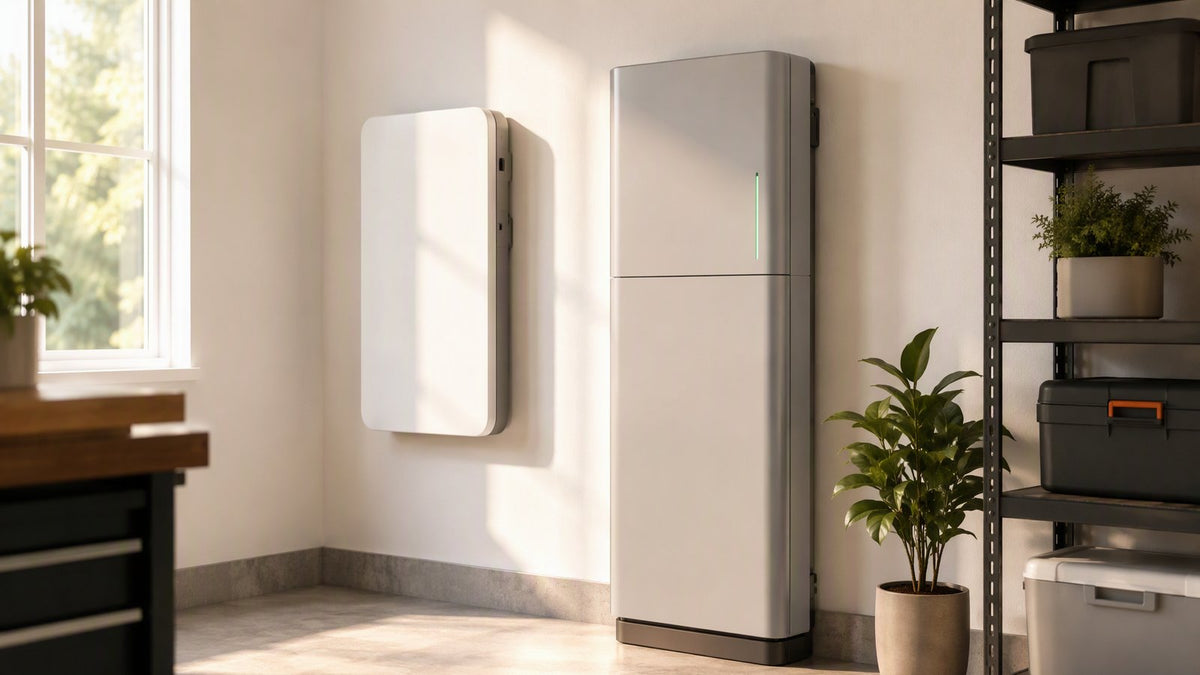
Two products dominate the conversation: the Tesla Powerwall 2, which has become the default choice for solar-plus-storage installations, and the sonnen eco, a German-engineered modular system that offers a very different approach to the same problem. Both are AC-coupled batteries that work with existing solar inverters. Both carry 10-year warranties. But the similarities end there.
This guide compares the Powerwall 2 and sonnen eco on the specifications, pricing, and use cases that matter to installers and homeowners as of late 2018. Every figure below is current as of November 2018.
Three forces are pushing home batteries into the mainstream this year:
- The 30% federal ITC — Solar-plus-storage systems still qualify for the full credit through the end of 2019, when the rate steps down to 26% (per the 2015 PATH Act schedule). Standalone storage does not qualify.
- Section 201 module tariffs — The 30% tariff on imported crystalline silicon modules, effective since February 2018, has nudged some homeowners toward larger battery systems to maximize self-consumption of domestically sourced or tariff-affected modules.
- State-level storage incentives — California's Self-Generation Incentive Program (SGIP) continues to offer substantial rebates for battery storage, especially in Tier 2 and Tier 3 fire-threat areas. Hawaii's Customer Self-Supply program essentially mandates storage for new solar installations.
Against this backdrop, Tesla and sonnen represent two fundamentally different philosophies. Tesla optimizes for capacity density, power output, and brand recognition. Sonnen optimizes for modularity, safety chemistry, and intelligent energy management.
Tesla introduced the Powerwall 2 in October 2016 as a ground-up redesign of the original 7 kWh Powerwall. By November 2018, it is the most widely installed residential battery in the United States. Sunnova, one of the largest residential solar financiers, reports that the Powerwall 2 represents approximately 86% of its storage supply mix this year.
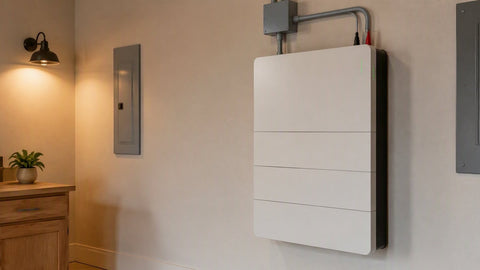
Powerwall 2 Specifications (November 2018)
| Specification | Value |
|---|---|
| Usable capacity | 13.5 kWh (14 kWh total) |
| Continuous power output | 5 kW |
| Peak power output (10 sec) | 7 kW |
| Battery chemistry | Lithium Nickel Manganese Cobalt Oxide (NMC) |
| Round-trip efficiency | ~90% |
| Dimensions (H × W × D) | 45.3" × 29.6" × 5.75" (1150 × 753 × 147 mm) |
| Weight | 251 lbs (114 kg) |
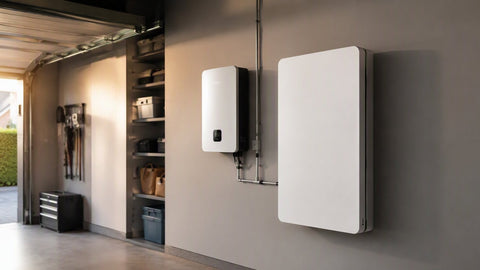
| Installation | Wall or floor mount; indoor or outdoor (IP67) |
| Operating temperature | −4°F to 122°F (−20°C to 50°C) |
| Warranty | 10 years, unlimited cycles, 70% capacity retention |
| Coupling | AC-coupled (requires separate solar inverter) |
| Scalability | Up to 10 units |
| Monitoring | Tesla mobile app (iOS/Android) |
Pricing: The Powerwall 2 unit retails for approximately $5,500–$6,500 depending on region and installer. The required Tesla Backup Gateway adds roughly $1,100. Typical installed costs range from $9,600 to $15,600 before incentives, depending on electrical panel upgrades and local labor rates.
Installation requirements: Tesla requires a Tesla-certified installer for warranty coverage. The Powerwall 2 is an AC-coupled battery, which means it can be retrofitted to virtually any existing solar system with any inverter — a significant advantage for homeowners adding storage to an existing array. However, it requires a separate solar inverter; the Powerwall 2 does not integrate solar panels directly.
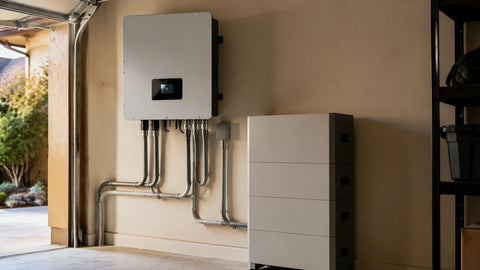
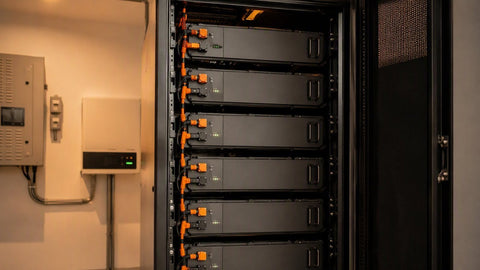
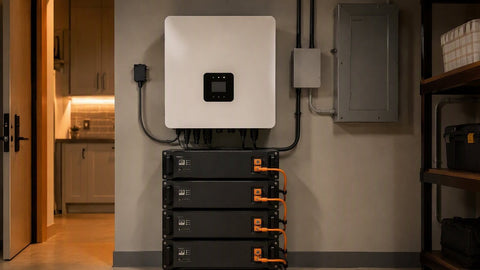
sonnenBatterie GmbH, founded in 2010 in Wildpoldsried, Germany, entered the US market in 2017 through a network of certified installer partners. By late 2018, sonnen has established a US subsidiary in the Atlanta area and is actively recruiting installation partners nationwide. The sonnen eco takes a fundamentally different approach from Tesla: modularity, cobalt-free lithium iron phosphate (LiFePO4) chemistry, and an all-in-one design that integrates the inverter, battery, and energy manager in a single cabinet.
sonnen eco Specifications (November 2018)
| Specification | Value |
|---|---|
| Capacity range | 4 kWh to 16 kWh (modular, 2 kWh increments) |
| Battery chemistry | Lithium Iron Phosphate (LiFePO4) — cobalt-free |
| Continuous power output | 1.5–3 kW (small systems) to 3–8 kW (large configurations) |
| Round-trip efficiency | ~81.6% |
| Depth of discharge | 90% |
| Dimensions (W × H × D) | ~26" × 57" × 19" (systems ≤12 kWh) |
| Weight | 543 lbs (10 kWh) to 830 lbs (20 kWh) |
| Installation | Floor mount only; indoor only |
| Operating temperature | 41°F to 113°F (5°C to 45°C) |
| Warranty | 10 years or 10,000 cycles, whichever comes first |
| Coupling | AC-coupled with integrated inverter (all-in-one) |
| Transfer switch | Built-in automatic transfer switch |
| Software modes | Self-consumption, Time-of-Use, Backup power |
Pricing: The sonnen eco 4 kWh base model lists at approximately $9,950 before installation. Larger configurations scale roughly $2,000–$2,500 per additional 2 kWh. A 10 kWh system runs approximately $16,000–$18,000 before installation. Installation costs typically add $1,500–$4,500 depending on complexity.
Key differentiators: The sonnen eco includes a built-in inverter and automatic transfer switch, eliminating the need for separate hardware. Its self-learning energy management software optimizes for time-of-use rates by learning household consumption patterns. The sonnenCommunity concept — a virtual network of sonnen battery owners sharing excess energy — is active in Germany and expanding to US markets. The LiFePO4 chemistry contains no cobalt, which sonnen markets as a safety and sustainability advantage over NMC competitors.
| Dimension | Tesla Powerwall 2 | sonnen eco |
|---|---|---|
| Usable capacity | 13.5 kWh (fixed) | 4–16 kWh (modular) |
| Unit cost per kWh | ~$407–$481/kWh | ~$621–$2,488/kWh (size-dependent) |
| Continuous power | 5 kW | 1.5–8 kW (size-dependent) |
| Peak power | 7 kW | Varies by configuration |
| Chemistry | NMC (cobalt-containing) | LiFePO4 (cobalt-free) |
| Round-trip efficiency | ~90% | ~81.6% |
| Weight | 251 lbs | 543–830 lbs |
| Mounting | Wall or floor; indoor/outdoor | Floor only; indoor only |
| Inverter | External required | Built-in integrated |
| Gateway/Transfer switch | Tesla Backup Gateway (~$1,100) | Built-in automatic transfer switch |
| Scalability | Up to 10 units | Expandable within cabinet |
| Warranty | 10 yr, unlimited cycles, 70% cap | 10 yr / 10,000 cycles |
| Smart features | Tesla app, Storm Watch | Self-learning TOU, sonnenCommunity |
| Installation req. | Tesla-certified installer | Certified sonnen installer |
Neither system is universally superior. The right choice depends on the homeowner's priorities, physical constraints, and existing solar configuration:
Choose Tesla Powerwall 2 if: maximum capacity per dollar matters
At roughly $407–$481 per usable kWh, the Powerwall 2 offers the lowest cost per kilowatt-hour of any major residential battery in 2018. The 13.5 kWh capacity is sufficient for most homes to ride through an evening on stored solar. The wall-mountable, indoor/outdoor design fits spaces where a refrigerator-sized cabinet will not. And the AC-coupled architecture means it retrofits to virtually any existing solar system without inverter replacement.
Choose sonnen eco if: modularity and safety chemistry are priorities
The LiFePO4 chemistry eliminates cobalt — a meaningful differentiator for homeowners concerned about thermal runaway risk or ethical sourcing. The modular capacity (4–16 kWh) lets installers right-size the system instead of overselling a fixed 13.5 kWh unit. The all-in-one design simplifies installation by eliminating separate inverter and gateway hardware. And the self-learning software provides genuine value in markets with time-of-use rates.
Choose Powerwall 2 if: outdoor installation is required
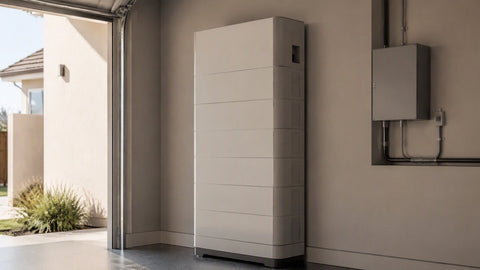
The sonnen eco is indoor-only and roughly the size of a refrigerator. Homes without a suitable garage, basement, or utility room may not have space. The Powerwall 2's IP67 rating and slim 5.75" depth allow outdoor wall mounting in climates from Phoenix to Minneapolis.
Choose sonnen eco if: the home has three-phase power or complex rate structures
While the US residential market is predominantly single-phase, the sonnen eco's three-phase capability and granular TOU optimization appeal to commercial-adjacent installations and homes with complex utility rate schedules. The 10,000-cycle warranty also provides more certainty for high-cycling applications like daily peak-shaving.
⚠️ Installer Note: Verify Certification Before Quoting
Both Tesla and sonnen require certified installer partnerships for warranty coverage. Tesla-certified installers are more widely available in 2018, particularly in major metro areas. sonnen's US installer network is growing but less dense — verify regional availability before specifying. For wholesale buyers, PES Supply stocks both product lines and can confirm certified installer coverage in your service territory.
Can I install a Powerwall 2 or sonnen eco without solar panels?
Yes, both systems can charge from the grid. However, the 30% federal ITC only applies to batteries installed with solar (or added to existing solar within 12 months of panel installation). Standalone storage does not qualify for the ITC in 2018. Some utilities offer standalone storage rebates — check local programs.
How long will these batteries power my home during an outage?
It depends on household load. At an average US residential consumption of ~900 kWh/month (~30 kWh/day), a 13.5 kWh Powerwall 2 provides roughly 10–16 hours of backup for essential loads (refrigerator, lighting, Wi-Fi, sump pump). A 10 kWh sonnen eco provides roughly 8–12 hours. Both systems support critical-load panels to extend runtime by isolating non-essential circuits.
Does the Powerwall 2 work with Enphase microinverters?
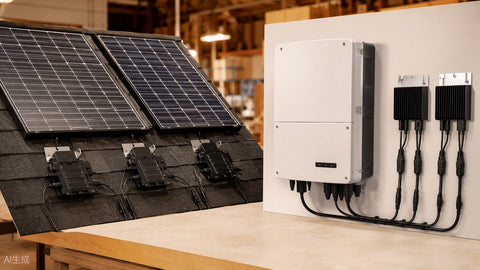
Yes. Because the Powerwall 2 is AC-coupled, it connects downstream of the solar inverter(s) at the main service panel. It works with Enphase IQ7 microinverters, SolarEdge HD-Wave inverters, SMA Sunny Boy units, and virtually any other grid-tied inverter on the market in 2018.
Is LiFePO4 really safer than NMC?
LiFePO4 (lithium iron phosphate) has a significantly higher thermal runaway threshold than NMC (nickel manganese cobalt) chemistry. The trade-off is lower energy density — which explains why the sonnen eco is physically larger and heavier than the Powerwall 2 for equivalent capacity. For indoor installations, especially in attached garages or utility rooms, LiFePO4's safety profile is a legitimate consideration.
What happens to the warranty if I sell my home?
Tesla's 10-year warranty is tied to the unit, not the owner — it transfers with the property. sonnen's warranty also transfers, but requires documentation of the certified installer and commissioning. Both manufacturers recommend registering the system at installation to simplify future claims.
Will these work with the Tesla Solar Roof?
The Powerwall 2 is designed to pair with Tesla Solar Roof V3 (announced October 25, 2019 — so not yet available in November 2018) as well as conventional panel systems. The sonnen eco pairs with any AC-coupled solar system, including conventional panels and non-Tesla inverters. SunPower announced in June 2018 that its Equinox systems are compatible with both the Powerwall 2 and sonnen eco.
📅 Where It Stands Today — A 2026 Editorial Note
The battery landscape has changed dramatically since 2018. Tesla discontinued the Powerwall 2 after launching the Powerwall 3 in September 2023, which adds a built-in solar inverter and 11.5 kW of continuous output. Enphase entered the storage market with the IQ Battery 5P and 10C. And FranklinWH introduced the aPower 2 with a 15-year warranty.
If you are specifying storage for a new installation in 2026, the Powerwall 3, Enphase IQ Battery 5P, and FranklinWH aPower 2 represent the current state of the art. PES Supply stocks all three platforms and can match your project to the right chemistry, capacity, and inverter pairing. Request a wholesale quote or log into my.pesdistribution.com for live B2B pricing and availability.
Source Your Battery Systems from PES Supply
Whether you are installing Tesla, sonnen, Enphase, or FranklinWH, PES Supply stocks the batteries, inverters, and accessories your projects demand. We ship nationwide from US distribution centers and offer contractor pricing through our B2B portal.
Request a Project Quote