Bila Solar AA-530US: Domestic Content Panels & ITC
Reading time: ~7 min read
📋 Key Takeaways
- The AA-530US is a 530W bifacial panel with a passport that matters: assembled in Indianapolis, Indiana, using US-made solar cells — which is exactly what the federal domestic-content rules look for.
- Domestic content can add 10 percentage points to the Investment Tax Credit for qualifying projects — on a commercial job, that bonus can outweigh a cheaper import panel's price edge several times over.
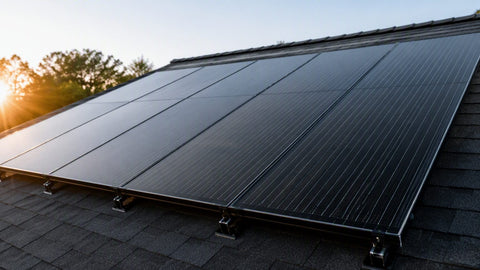
- The hardware is solid on its own: 144 half-cut mono PERC bifacial cells in a dual-glass package, 20.5% efficiency, Voc 49.3V, 1500V system rating, 5400Pa snow / 2400Pa wind loads.
- Warranty runs 12 years product / 30 years linear performance — under 2% first-year degradation, under 0.45% per year after, at least 84.95% output at year 30.
- Best fit: ground-mount, carport and commercial projects chasing the ITC adder or BABA compliance — where bifacial gain and domestic content stack. At $326.99 it costs more per watt than imports; that premium is what the tax credit is for.
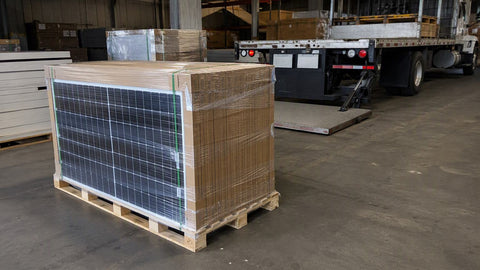
Most solar panel shopping is a watts-per-dollar spreadsheet. The Bila Solar AA-530US asks you to add a column: where the panel — and its cells — are made. Bila Solar repurposed a former Eli Lilly facility in Indianapolis to build conventional glass-and-frame modules around domestically produced cells, and announced in January 2025 that production would begin that May. The reason buyers care is spelled out in the product title: domestic content. Here is what that phrase is worth, and what the panel itself delivers.
Why "domestic content" is the headline spec
The Inflation Reduction Act kept the Investment Tax Credit at 30% for qualifying solar projects — and layered bonuses on top. The one relevant here is the domestic content bonus: an additional 10 percentage points of ITC for projects that meet the required share of US-manufactured content. Bila states directly that the AA series "enables solar developers across the United States to qualify for the ITC's 10% domestic content bonus credit," with modules manufactured in Indiana using US-made cells; the AA550US datasheet says it plainly: "Cells Made in USA, Modules Made in Indiana." The same construction supports Build America Buy America Act (BABA) compliance on federally funded work.
Run the arithmetic on a 500kW commercial array: at $1.50/W installed, the project cost is $750,000. Ten additional ITC points are worth $75,000 — $0.15 per watt. If a domestic-content panel costs $0.10–0.20/W more than the import alternative, the bonus can cover most or all of that premium before a single kilowatt-hour is produced. (The final qualification math depends on the project's full manufactured-products percentage and current IRS guidance — your tax advisor owns that determination; the panel is the enabling component.)
The panel itself: AA-530US-6x24GW
| Specification | AA-530US-6x24GW |
|---|---|
| Rated power | 530W (positive tolerance per series datasheet) |
| Cell technology | 144 half-cut monocrystalline PERC, bifacial |
| Module efficiency | 20.5% |
| Open-circuit voltage (Voc) | 49.3V |
| Max system voltage | 1500V DC |
| Construction | Dual glass, anodized aluminum frame |
| Dimensions / weight | 89.69" × 44.65" × 1.18" / 70.11 lb |
| Mechanical loads | 5400Pa snow (front) / 2400Pa wind (rear) |
| Temperature coefficient | −0.35%/°C (operating −40°F to +185°F) |
| Certifications | UL 61730 and UL 61215 |
| Warranty | 12-yr product / 30-yr linear performance (≥84.95% at yr 30) |
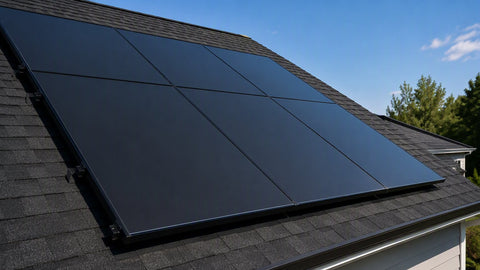
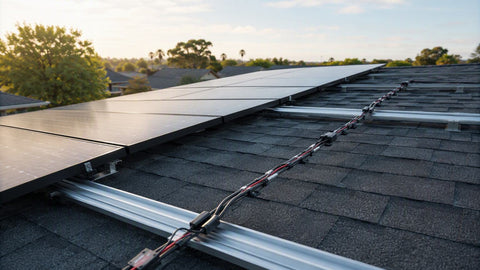
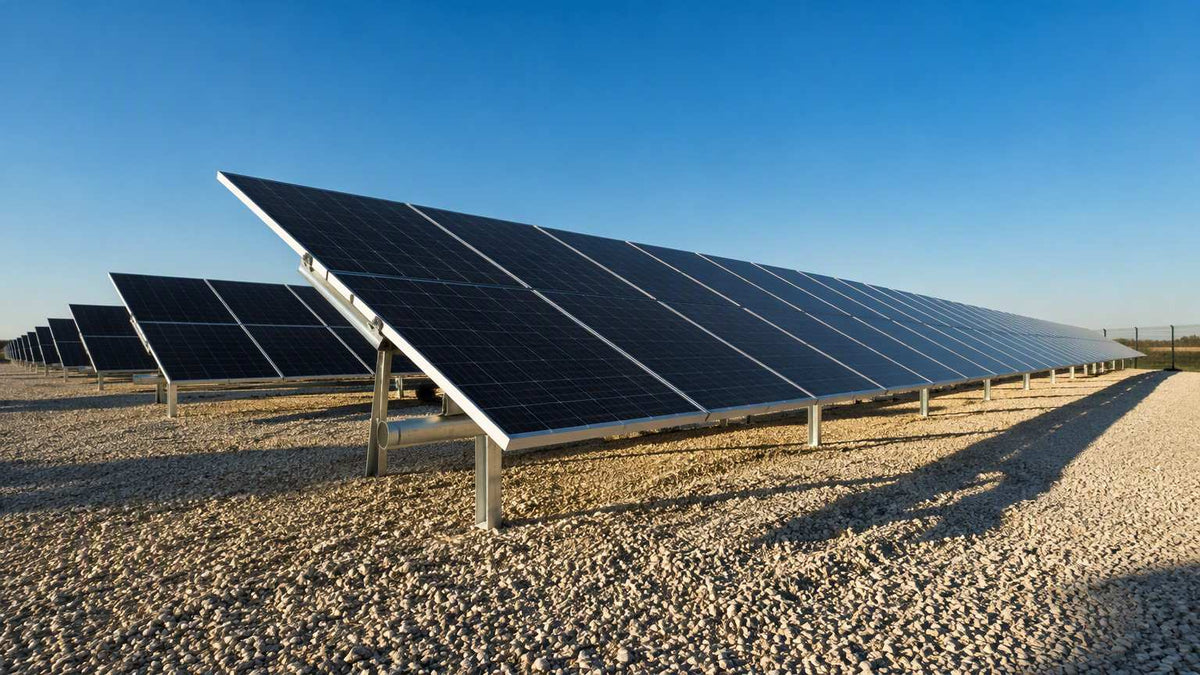
The dual-glass bifacial construction is doing double duty here. Electrically, the transparent rear captures reflected light from the surface below — on ground-mount over light gravel or a white membrane carport deck, real-world bifacial gain runs roughly 5–15% depending on albedo and height. Mechanically, glass-glass modules resist moisture ingress and micro-cracking better than backsheet modules, which is why the 30-year linear warranty (<2% first-year degradation, <0.45% annually after) is credible. The one honest caveat: at 70 pounds and nearly 90 inches long, this is a two-person panel with ground-mount logistics, not a residential-roof-first product.
String design notes
At Voc 49.3V, string math is straightforward: a 1500V commercial inverter input typically strings 24–28 of these per MPPT after cold-temperature voltage correction; residential 600V-class equipment lands around 10–11. The −0.35%/°C power coefficient is standard PERC territory — a notch behind TOPCon and ABC modules on hot rooftops, another reason this panel's natural habitat is the cooler, better-ventilated ground-mount and carport environment where bifacial gain also lives. Our string sizing guide walks the Voc correction math, and the system sizing calculator converts your kWh target into panel count.
The family: AA-530US and AA550US
Besides the flagship AA-530US at $326.99 (~$0.62/W), we stock the AA550US series — same Indiana assembly and US-cell domestic-content positioning, same dual-glass bifacial construction, at $220.00 per panel across the 530W, 540W and 550W bins ($0.40–0.42/W). For a project buying by the pallet, the AA550US bins deliver the domestic-content story at the sharper price; the AA-530US remains the reference SKU that most domestic-content searches land on.
Who should spec it — and who should not
Spec Bila AA when the project can monetize domestic content: commercial ground-mounts and carports claiming the ITC bonus, public or federally funded work with BABA requirements, and EPCs building a domestic supply chain story into bids. Think twice for straightforward residential rooftops where the ITC adder is harder to reach, where TOPCon/ABC modules (like the Canadian Solar TOPHiKu6 line) offer higher efficiency in a smaller, lighter package, or where roof loading favors lighter panels. Either way, the solar ROI calculator lets you model the ITC impact on payback before committing.
Frequently Asked Questions
What does "domestic content" mean for a solar panel?
It means the panel is manufactured in the United States with a qualifying share of US-made components — in Bila's case, modules assembled in Indianapolis, Indiana using US-manufactured solar cells. Under the Inflation Reduction Act, projects meeting the domestic content threshold can claim a 10-percentage-point bonus on the Investment Tax Credit, and domestic panels support Build America Buy America Act compliance on federally funded projects. Your tax advisor confirms project-level qualification; the panel is the enabling hardware.
How much is the ITC domestic content bonus worth?
The bonus adds 10 percentage points to the ITC — taking a qualifying project from 30% to 40% of eligible cost. On a $750,000 commercial array that is $75,000, or about $0.15 per watt on a 500kW system. Whether that outweighs the price premium of domestic panels depends on the premium size and the project's final qualification under current IRS guidance, but for most commercial projects the bonus exceeds the panel upcharge by a wide margin.
What are the Bila AA-530US specifications?
530W rated power from 144 half-cut monocrystalline PERC bifacial cells in a dual-glass package; 20.5% module efficiency; Voc 49.3V; 1500V max system voltage; 89.69 × 44.65 × 1.18 inches at 70.11 lb; 5400Pa front snow load and 2400Pa rear wind load; −0.35%/°C power temperature coefficient; UL 61730/61215 certified; 12-year product and 30-year linear performance warranty with at least 84.95% output guaranteed at year 30.
Is the Bila AA-530US good for a home rooftop?
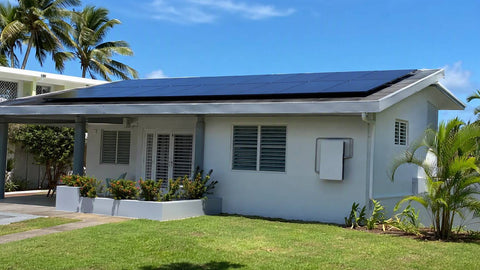
It can work, but it is not the panel's best habitat. At nearly 90 inches long and 70 pounds it is a two-person commercial-format module, and its bifacial rear does little on a flush shingle roof where no light reaches the back. It shines on ground-mounts, carports and flat commercial roofs with light-colored surfaces — where bifacial gain is real and where the domestic-content bonus is usually being claimed. Residential rooftops chasing efficiency-per-square-foot are often better served by compact TOPCon or ABC modules.
What is the difference between the AA-530US and AA550US?
Same platform family: 144 half-cut bifacial PERC cells, dual glass, Indiana assembly with US-made cells and the same domestic-content positioning. The AA550US is the newer 530–550W series with positive 0~+5W power tolerance; we stock the 530W, 540W and 550W bins at $220.00 per panel. The AA-530US at $326.99 is the original reference SKU most domestic-content searches name. For pallet-quantity projects the AA550US bins carry the sharper per-watt price.
Chasing the ITC Adder? Buy the Enabling Panel
PES Supply stocks Bila Solar domestic-content panels by the panel and by the pallet, plus the racking, wire and inverters to complete the job — 169 authorized brands at contractor pricing. Bring us the project size and we will quote the BOM.
Shop Solar Panels Contact Us for Bulk PricingRelated Resources
- Solar ROI calculator: payback, ITC and 25-year savings
- Solar system sizing calculator
- Solar string sizing: max panels in series
- Canadian Solar 445W vs 435W: TOPHiKu6 model guide
- Solar panel wattage chart: 400W vs 450W vs 500W
- Solar panels, residential to commercial