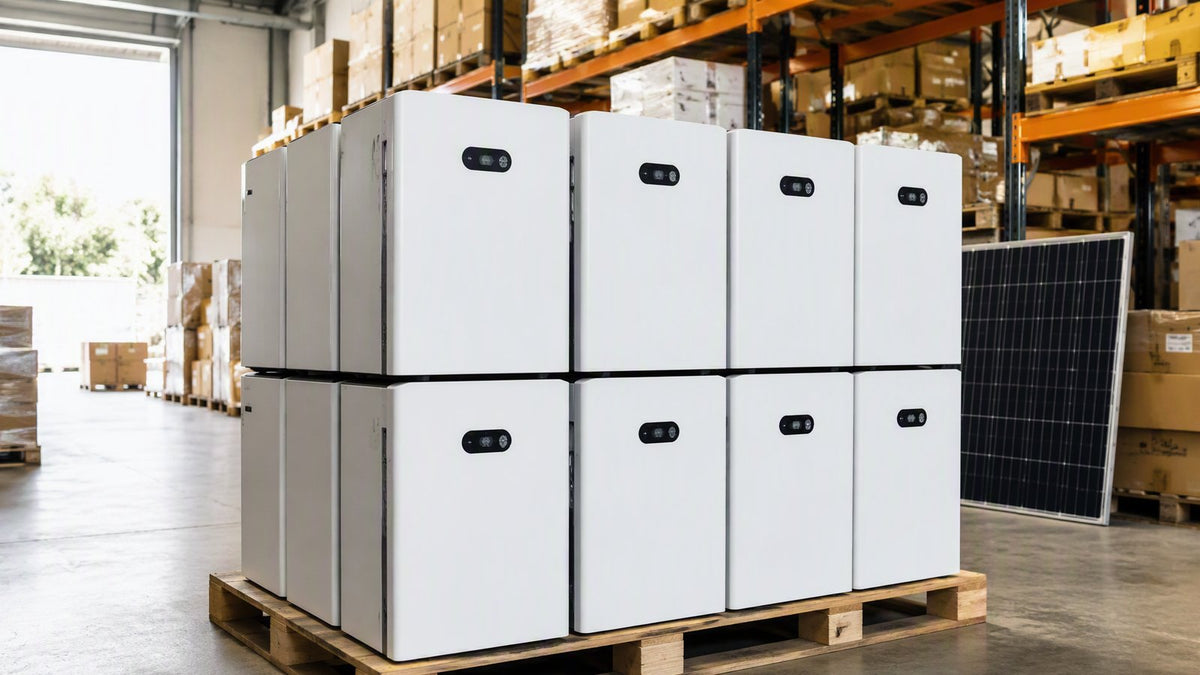
Enphase Energy began shipping a version of its IQ Battery built with higher U.S. domestic content — a manufacturing shift that sounds like a supply-chain footnote until you run the tax-credit math. For projects that qualify, domestic content can add a 10-percentage-point bonus on top of the federal Investment Tax Credit, and that bonus changes real project economics. I've pulled IQ Battery units off enough trucks to know what changed physically (not much — deliberately) and what changed on paper (a lot, for the right projects). Here's what the shipment actually means for installers, commercial buyers, and homeowners considering Enphase storage.

What Enphase Actually Announced
Enphase began production and shipment of IQ Battery units with higher domestic content from its U.S. manufacturing operations, part of a broader reshoring push that federal incentives deliberately encouraged. The company's stated goal: enable projects using its equipment to qualify for the domestic content bonus under the Inflation Reduction Act, which rewards projects built with sufficient American-manufactured content.
Two things matter about how Enphase approached this. First, the company redesigned sourcing and assembly to hit the domestic cost thresholds rather than merely relabeling — the qualification hinges on the share of manufactured-product cost attributable to U.S. production, verified and documented. Second, the battery itself is functionally the same platform customers already know. The change is in where and from what it's built, not in what it does on the wall. That's the correct way to reshore: identical product behavior, different paperwork value.
The Hardware: IQ Battery 5P Refresher
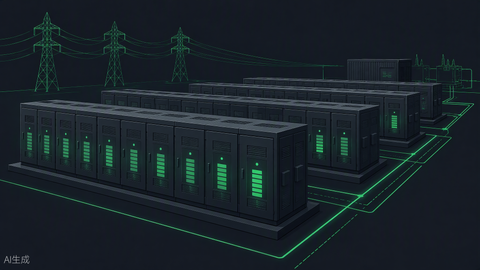
The current-generation IQ Battery 5P is the unit most buyers will encounter. Published specifications:
| Parameter | IQ Battery 5P | Practical Meaning |
|---|---|---|
| Usable energy | 5.0 kWh per unit | Modular building block — stack to the load |
| Continuous power | 3.84 kW per unit | Each unit runs essential loads; stack for whole-home |
| Peak power | 7.68 kW (short duration) | Motor starting and surge coverage |
| Architecture | Six embedded IQ8D-BAT microinverters per unit | AC-coupled, no single point of failure inside the battery |
| Chemistry | Lithium iron phosphate (LFP) | Cobalt-free, thermally stable |
| Coupling | AC-coupled | Retrofits onto existing solar without touching the array |
| Warranty | 15 years (manufacturer) | Among the longest in residential storage |
| Installation | Wall-mount, indoor/outdoor rated | Garage walls and exterior pads both work |
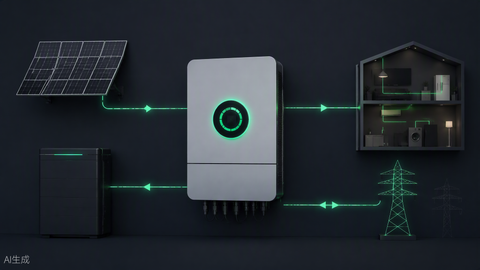
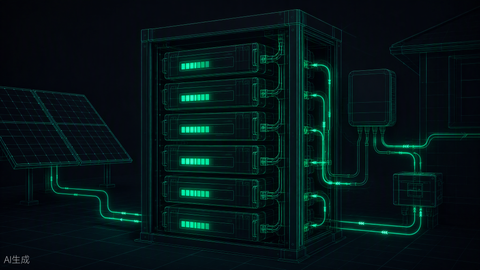
The AC-coupled, microinverter-based design is the Enphase signature: instead of one large central inverter in the battery, six small ones share the work. Lose one and you lose a sixth of the unit's output, not the whole backup system. For existing solar homes, AC coupling means the battery bolts onto the system you already have — no array rewiring, no replacing a working string inverter. That retrofit-friendliness is why these move so well in the battery backup kit market.
The Domestic Content Bonus: Rules and Thresholds
The Inflation Reduction Act added a domestic content bonus to the ITC: projects meeting the requirement get an additional 10 percentage points of credit (the "energy community" and "low-income" adders are separate bonuses with their own rules). For manufactured products, the requirement is defined as a percentage of total manufactured-product cost that must be U.S.-manufactured, on a schedule that tightens over time:
| Construction Begins | Required Domestic Share of Manufactured Products Cost | Bonus if Met |
|---|---|---|
| Before 2025 | 40% | +10 percentage points |
| 2025 | 45% | +10 percentage points |
| 2026 | 50% | +10 percentage points |
| 2027 and later | 55% | +10 percentage points |
Two cautions from the field, not the brochure. First, the percentage applies to the project's total manufactured products cost, not to one device — a qualifying battery doesn't automatically qualify the project; every major manufactured component enters the calculation. Second, the rules and IRS guidance have been revised and remain politically active. Verify current requirements with a tax professional before promising anyone a bonus. Our solar incentives page tracks programs, but final authority is the statute and current IRS guidance.
What the Bonus Is Worth in Dollars
Abstract percentages persuade nobody. On example project costs (not quotes — real numbers vary by site):
| Example Project | Installed Cost | ITC @ 30% | ITC @ 40% (with domestic content bonus) | Bonus Value |
|---|---|---|---|---|
| Residential solar + 10 kWh storage | $35,000 | $10,500 | $14,000 | $3,500 |
| Residential solar + 20 kWh storage | $48,000 | $14,400 | $19,200 | $4,800 |
| Small commercial, 50 kW + storage | $150,000 | $45,000 | $60,000 | $15,000 |
| Commercial, 250 kW + storage | $700,000 | $210,000 | $280,000 | $70,000 |
Arithmetic check: $35,000 × 0.10 = $3,500. The bonus scales linearly with project size, which explains the market behavior we've watched: commercial and industrial buyers started demanding domestic-content documentation on every quote, and manufacturers without a U.S. content story started losing bids they'd have won on price two years earlier. The commercial installation cost breakdown shows where storage sits in those project budgets.
Why Manufacturers Reshore: The Supply-Side View
From the distribution side, the Enphase move fits a pattern we've tracked across the catalog. Federal manufacturing incentives cut the cost gap between domestic and imported production, while the project-side bonus created demand pull for domestic content. When both sides of the ledger move at once, factory announcements follow — and they have, across modules, inverters, racking, and batteries. Our USA-made solar panel category barely existed a few years ago; now it's a real shelf.
There's a second, quieter benefit: supply-chain resilience. The pandemic-era shortage taught everyone in this trade what an eighteen-month lead time does to a business. Domestic assembly shortens the chain, stabilizes inventory, and — as we saw with the IQ Battery line — keeps warranty service and replacement parts closer to the install base. When a customer's unit needs service, a domestic pipeline is measured in days rather than container-ship weeks.
Stacking the 5P: Configuration Math
Because the 5P is modular, sizing is arithmetic. Each unit adds 5.0 kWh of energy and 3.84 kW of continuous power:
| Configuration | Usable Energy | Continuous Power | Peak Power | Runtime @ 2 kW Essential Loads | Typical Fit |
|---|---|---|---|---|---|
| 1 × 5P | 5.0 kWh | 3.84 kW | 7.68 kW | 2.5 h | Essential circuits, short outages |
| 2 × 5P | 10.0 kWh | 7.68 kW | 15.36 kW | 5.0 h | Essential loads overnight |
| 3 × 5P | 15.0 kWh | 11.52 kW | 23.04 kW | 7.5 h | Partial home backup with AC |
| 4 × 5P | 20.0 kWh | 15.36 kW | 30.72 kW | 10.0 h | Whole-home for many houses |
Runtime check: 15.0 kWh ÷ 2 kW = 7.5 hours. Real outage runtime runs longer because refrigerators and furnaces cycle rather than draw continuously. The continuous-power column deserves attention before the energy column — a single 5P can't start and run a large central AC, but three can. The backup runtime calculator and the bank sizing guide turn your load list into a unit count.
Who Benefits From the Domestic Content Version
Let's be precise, because the bonus doesn't apply equally:
- Commercial and industrial projects benefit most directly — the ITC with adders applies to business-owned systems, project sizes make the 10 points worth five and six figures, and procurement teams can demand documentation.
- Homeowners under the residential clean energy credit should know the residential credit rules differ from the commercial ITC adder structure. The domestic content bonus is primarily a commercial-ITC instrument; don't assume it applies to a rooftop system without professional confirmation.
- Buyers who value supply chain and warranty proximity benefit regardless of tax math — domestic assembly has practical service advantages that don't need a form to appreciate.
I've had two commercial customers re-spec storage specifically to chase the bonus, and in both cases the numbers justified the paperwork. I've also watched a homeowner nearly change equipment over a bonus that didn't apply to their residential credit situation. Know which side of that line your project sits on before the equipment decision, not after.
Alternatives in the Same Class

Enphase isn't the only path to modular LFP storage, and honest comparison serves the buyer better than brand loyalty. The 5P competes with modular LiFePO4 rack batteries paired with hybrid inverters, and with integrated units like the Powerwall class. The trade-offs: Enphase offers AC coupling, microinverter redundancy, and a 15-year warranty; rack-modular systems typically offer lower cost per kWh and more inverter flexibility; integrated units offer the simplest single-box install. The solar battery buyer's guide walks the decision tree, and the 5–15 kWh battery category shows the current field.
The Bottom Line on the Shipment
A battery that was already good got a paperwork upgrade that matters exactly where project scale makes 10 percentage points worth real money. The hardware didn't change; the economics for qualifying projects did. For commercial buyers, domestic content documentation now belongs in every storage RFP. For homeowners, the 5P's case rests where it always did — modular sizing, AC-coupled retrofit ease, and a long warranty — with any incentive questions routed to a tax professional who knows the current guidance. Either way, domestic manufacturing capacity in residential storage is growing, and that's a trend worth more than any single shipment.
Installation and Commissioning Notes
For installers weighing the 5P against DC-coupled alternatives, a few craft realities. The unit's weight is manageable with two people and the right lifting habit — no forklift dramas like the big rack systems. The AC-coupled architecture means the battery lands on its own breakers in the load center or a sub-panel, with the Enphase system controller handling the grid-islanding logic. Permit sets need the battery's UL listing pages and the system controller single-line; both are standard documents Enphase supports well.
Commissioning is app-driven and fast — the Envoy/IQ Gateway discovers the batteries, firmware syncs, and the installer validates grid-forming behavior with a deliberate breaker-pull test. Do the islanding test while you're still on site with the homeowner watching. Nothing sells the system like watching the lights stay on with the main breaker off, and nothing generates callbacks like skipping the test and leaving a misconfigured transfer setting for the first real outage to find.
One storage-specific note: keep clearances honest. The units breathe, and the manual's clearance specs aren't decorative. The tightest install I approved left exactly the specified clearance and no more, and the summer garage temps ran the internal fans harder than I'd like. An extra two inches of breathing room is free at install time and expensive later.
Monitoring, Software, and the Ownership Experience
Enphase's software layer is the other half of the product. The app shows per-circuit backup behavior, solar contribution, and battery state of charge, and the load-control settings let owners prioritize which circuits stay live as the battery drains — shed the water heater at 40%, the range at 30%, keep the fridge and lights to the floor. That load-shedding logic stretches a smaller battery across a longer outage, and it's the feature owners mention most after their first multi-hour event.
Storm-watch style features — charging the battery ahead of forecast severe weather — work where utility programs and forecasts support them. Firmware updates arrive over the air; I've watched capabilities improve on installed units without a truck roll, which is exactly how a 15-year-warrantied product should age.
What Reshoring Does to Price and Availability
Buyers reasonably ask whether domestic content means a domestic price premium. The market answer so far: federal manufacturing incentives were designed to absorb the cost difference, and competitive pressure does the rest. Storage pricing across our catalog — domestic and imported alike — has trended down even as reshoring accelerated, because cell costs fell faster than assembly costs rose. Availability is the bigger win: domestic assembly buffers the container-ship volatility that made 2021–2022 lead times a standing joke in the trade. A product built on the same continent as its install base simply shows up more predictably, and predictable inventory is worth real money to anyone running a project schedule.
Procurement Guidance for Commercial Buyers
If you're speccing storage for a commercial project where the domestic content bonus is in play, the process matters as much as the product. The practices that hold up:
- Request certification letters at quote stage, not at commissioning. Manufacturers issue domestic content documentation for qualifying product lines; collecting it after equipment ships turns a paperwork step into a project risk.
- Model the whole manufactured-products basket. The threshold applies across modules, inverters, racking, and batteries combined. A qualifying battery paired with imported everything else may or may not clear the bar — the math decides, not the marketing.
- Document construction-start timing. The required percentage steps up by year, so the established start-of-construction date carries real dollar value. Your tax counsel owns this determination; give them clean records.
- Price the bonus against alternatives honestly. A domestic-content-qualifying option at a modest premium often nets cheaper after the 10-point adder — but run the total installed cost both ways, including any balance-of-system differences, before the value engineering meeting decides it for you.
Two of our commercial customers re-specified storage mid-design to chase the bonus, and in both cases the all-in math favored the switch by margins that surprised their own finance teams. The inverse happens too — projects where the qualifying path costs more than the bonus returns. The only universal rule: do the arithmetic before the purchase order, not during the audit.
Utility Programs and the Aggregation Angle
A second economic layer sits on top of the tax math: utility battery programs. Across the country, utilities and their regulators have built bring-your-own-battery programs that pay homeowners and businesses for grid access to their storage during peak events — demand response, capacity services, frequency regulation. AC-coupled systems with strong software platforms, the 5P among them, are the natural participants because the utility dispatches through the manufacturer's cloud rather than through site-specific hardware. Program terms vary enormously — some pay annual capacity payments, some pay per event — but the structure is consistent: the battery earns while it sits ready. For commercial buyers stacking ITC, the domestic content bonus, and ongoing program revenue, storage project payback periods have compressed into territory that would have seemed fanciful five years ago. Check current program availability in your territory; our incentives page is the starting map.
What the Shipment Signals About 2026 and Beyond
Step back from this one announcement and the trajectory is clear: residential storage manufacturing is localizing, incentives are rewarding it, and the equipment keeps getting cheaper anyway. For buyers, that combination is unusually friendly — better documentation value on qualifying projects, more resilient supply chains for everyone, and no waiting required. The IQ Battery line's domestic content milestone is one data point in that trend, but it's a meaningful one: when a category leader re-shores to capture a policy incentive, the incentive is working as designed, and the rest of the shelf tends to follow.
A Note for Homeowners Already Running Enphase Solar
If your roof already carries IQ-series microinverters, the storage decision simplifies considerably. The IQ Battery 5P joins the same communications fabric, the same app, and the same installer certification channel — one vendor, one monitoring pane, one warranty conversation. I've added batteries to existing Enphase arrays, and the integration advantage is real: the system controller orchestrates solar and storage as one plant rather than two devices negotiating across a protocol boundary. The domestic content milestone doesn't change that calculus for a residential retrofit, but it does signal manufacturing investment in the product line you're buying into — a company building U.S. assembly capacity is a company planning to support the product for the length of that 15-year warranty.
For buyers still comparing, the decision framework hasn't moved: match the battery to the job. Retrofit onto existing solar, value AC coupling, want the longest warranty — the 5P makes its case. Building new off-grid or chasing the lowest cost per kilowatt-hour — the rack-battery and hybrid-inverter path earns its look. Either way, size from the load list, buy the documentation where the tax math needs it, and let the sizing guide do the counting.
The last word belongs to the trend line rather than any single shipment: storage is localizing, incentivized, and still getting cheaper. Whether your project needs the documentation value today or simply benefits from a more resilient supply chain tomorrow, this announcement is one more proof point that the industry is building capacity where the demand is. That's good for buyers, good for installers, and — if the pilot programs and tax adders do their work — good for the grid the rest of us share. Watch this category; it keeps delivering, and the pace of announcements has only accelerated this year, with more on the way from every corner of the storage market.
Frequently Asked Questions
What is the domestic content bonus for solar and storage?
It's an adder under the Inflation Reduction Act that increases the federal Investment Tax Credit by 10 percentage points for projects meeting U.S. manufactured-content thresholds. The required domestic share of manufactured-products cost rises on a schedule from 40% to 55% depending on when construction begins.
Does a domestic-content battery automatically qualify my whole project?
No. The requirement applies to the total cost of all manufactured products in the project, so every major component — modules, inverter, racking, battery — enters the calculation. A qualifying battery contributes, but doesn't guarantee the threshold is met.
Is the higher-domestic-content IQ Battery different hardware?
No functional difference — same platform, same performance specs. The change is in sourcing and assembly location, which affects qualification documentation rather than operation.
How many IQ Battery 5P units does a typical home need?
Two units (10 kWh, 7.68 kW continuous) cover essential loads overnight for many homes. Whole-home backup with central AC typically wants three to four units. Size from your actual load list, not a rule of thumb.
Does the domestic content bonus apply to residential systems?
The bonus is primarily structured around the commercial ITC. Residential clean energy credit rules differ — confirm with a tax professional whether any adder applies to your specific project before counting it in the budget.
Can the IQ Battery 5P be added to an existing solar system?
Yes — AC coupling is the design's core strength. It retrofits onto existing arrays without rewiring the solar side, which is why it's a leading choice for adding storage to systems that are already running.