AWG Wire Gauge Chart: Diameter, Resistance, Ampacity & Applications
The complete American Wire Gauge table — 40 AWG through 4/0 — with diameters, circular mils, copper resistance, NEC ampacity quick picks, and the voltage-drop math we use on every job ticket.
Every week somebody calls the counter asking "what wire do I need for a 100-amp subpanel" or "is 12 gauge enough for my solar strings," and every week the answer starts with the same chart. American Wire Gauge is the sizing system behind essentially every conductor sold in North America, and once you understand that it's logarithmic — three gauge numbers down doubles the cross-section and halves the resistance — you can sanity-check any spec sheet in seconds. Below is the full reference table, the ampacity numbers that matter under NEC 310.16, and the voltage-drop formula that decides real-world wire size more often than ampacity does. When you're ready to buy, our electrical supplies collection stocks the building wire, PV wire, and battery cable this chart covers.
Diameters are for solid bare copper conductor. Circular mils (kcmil above 4/0) are the cross-sectional area unit the NEC uses — one circular mil is the area of a circle one mil (0.001 in) in diameter. Resistance values are for annealed copper at 20°C (68°F); expect roughly 2% higher at 50°C conductor temperature and about 61% higher for aluminum of the same gauge.
| AWG | Diameter (in) | Diameter (mm) | Area (circular mils) | Copper Ω / 1,000 ft @ 20°C |
|---|---|---|---|---|
| 40 | 0.003145 | 0.07987 | 10 | 1049 |
| 39 | 0.003531 | 0.08969 | 12 | 831.8 |
| 38 | 0.003965 | 0.1007 | 16 | 659.6 |
| 37 | 0.004453 | 0.1131 | 20 | 523.1 |
| 36 | 0.005000 | 0.1270 | 25 | 414.8 |
| 35 | 0.005615 | 0.1426 | 32 | 329.0 |
| 34 | 0.006305 | 0.1601 | 40 | 260.9 |
| 33 | 0.007080 | 0.1798 | 50 | 206.9 |
| 32 | 0.007950 | 0.2019 | 63 | 164.1 |
| 31 | 0.008928 | 0.2268 | 80 | 130.1 |
| 30 | 0.01003 | 0.2546 | 101 | 103.2 |
| 29 | 0.01126 | 0.2859 | 127 | 81.83 |
| 28 | 0.01264 | 0.3211 | 160 | 64.90 |
| 27 | 0.01420 | 0.3606 | 202 | 51.47 |
| 26 | 0.01594 | 0.4049 | 254 | 40.81 |
| 25 | 0.01790 | 0.4547 | 320 | 32.37 |
| 24 | 0.02010 | 0.5106 | 404 | 25.67 |
| 23 | 0.02257 | 0.5733 | 509 | 20.36 |
| 22 | 0.02535 | 0.6438 | 642 | 16.14 |
| 21 | 0.02846 | 0.7229 | 810 | 12.80 |
| 20 | 0.03196 | 0.8118 | 1,022 | 10.15 |
| 19 | 0.03589 | 0.9116 | 1,288 | 8.051 |
| 18 | 0.04030 | 1.024 | 1,624 | 6.385 |
| 17 | 0.04526 | 1.150 | 2,048 | 5.063 |
| 16 | 0.05082 | 1.291 | 2,583 | 4.015 |
| 15 | 0.05707 | 1.450 | 3,257 | 3.184 |
| 14 | 0.06408 | 1.628 | 4,107 | 2.525 |
| 13 | 0.07196 | 1.828 | 5,178 | 2.003 |
| 12 | 0.08081 | 2.053 | 6,530 | 1.588 |
| 11 | 0.09074 | 2.305 | 8,234 | 1.260 |
| 10 | 0.1019 | 2.588 | 10,383 | 0.9988 |
| 9 | 0.1144 | 2.906 | 13,093 | 0.7921 |
| 8 | 0.1285 | 3.264 | 16,510 | 0.6282 |
| 7 | 0.1443 | 3.665 | 20,818 | 0.4982 |
| 6 | 0.1620 | 4.115 | 26,251 | 0.3951 |
| 5 | 0.1819 | 4.621 | 33,102 | 0.3133 |
| 4 | 0.2043 | 5.189 | 41,741 | 0.2485 |
| 3 | 0.2294 | 5.827 | 52,635 | 0.1970 |
| 2 | 0.2576 | 6.544 | 66,371 | 0.1563 |
| 1 | 0.2893 | 7.348 | 83,693 | 0.1239 |
| 1/0 | 0.3249 | 8.251 | 105,535 | 0.09827 |
| 2/0 | 0.3648 | 9.266 | 133,077 | 0.07793 |
| 3/0 | 0.4096 | 10.40 | 167,806 | 0.06180 |
| 4/0 | 0.4600 | 11.68 | 211,600 | 0.04901 |
Two patterns worth memorizing: every 3-gauge step doubles or halves the circular mils (10 AWG ≈ 10,380 cmil; 4/0 ≈ 211,600 cmil), and every 6-gauge step doubles or halves the diameter. That's the entire system — the rest is arithmetic.
Ampacity is where charts meet code. The numbers below are the NEC 310.16 75°C column for copper conductors in raceway or cable — the column that governs most residential and light-commercial work, since breaker and equipment terminations are typically rated 75°C. The "typical breaker" column applies the NEC 240.4(D) small-conductor rules, which cap 14/12/10 AWG at 15/20/30A regardless of what the table permits.
| AWG | Ampacity @ 60°C (TW, UF) | Ampacity @ 75°C (THHN, THWN-2) | Ampacity @ 90°C (derating only) | Typical max breaker |
|---|---|---|---|---|
| 14 | 15A | 20A | 25A | 15A |
| 12 | 20A | 25A | 30A | 20A |
| 10 | 30A | 35A | 40A | 30A |
| 8 | 40A | 50A | 55A | 40–50A |
| 6 | 55A | 65A | 75A | 60A |
| 4 | 70A | 85A | 95A | 80A |
| 3 | 85A | 100A | 115A | 100A |
| 2 | 95A | 115A | 130A | 100–110A |
| 1 | 110A | 130A | 145A | 125A |
| 1/0 | 125A | 150A | 170A | 150A |
| 2/0 | 145A | 175A | 195A | 175A |
| 3/0 | 165A | 200A | 225A | 200A |
| 4/0 | 195A | 230A | 260A | 225A |
Derating is not optional
These are 30°C-ambient, three-current-carrying-conductor values. A rooftop conduit in Arizona at 60°C ambient strips 40%+ of the 75°C ampacity, and more than three current-carrying conductors in one raceway triggers NEC 310.15(C)(1) adjustment factors. Solar installers: the 90°C column is for derating math only — final ampacity is still limited by the 75°C termination rating.
Select a gauge to pull every spec from the chart at once, or work the other direction — enter a load in amps and the tool returns the smallest copper conductor that carries it under the NEC 240.4(D) breaker rules. Ampacity answers are 75°C copper values; always re-check voltage drop on runs over ~75 ft and size continuous loads at 125%.
Full chart range: 40 AWG (winding wire) through 4/0 (service and battery cable).
Returns the smallest copper gauge per NEC 240.4(D). Leave blank to use gauge lookup only.
The counter-question cheat sheet, with the code basis behind each answer:
What gauge for…
- 20A branch circuit (receptacles, garage, kitchen small-appliance): 12 AWG copper. NEC 240.4(D) caps 12 AWG at 20A even though the table allows more.
- 30A dryer or RV receptacle: 10 AWG copper, 30A breaker.
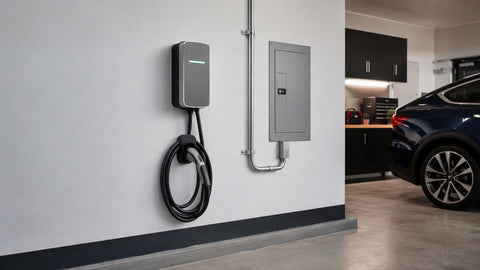
- 50A range or Level 2 EV charger (40A continuous): 6 AWG copper for hardwired continuous loads — EV charging is a continuous load under NEC 625, so size at 125%.
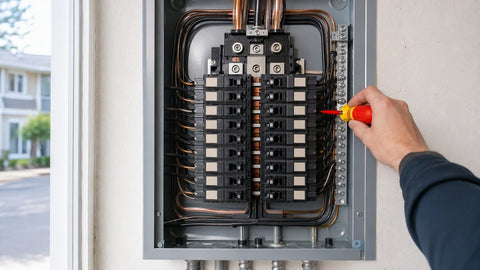
- 100A subpanel feeder: 3 AWG copper THHN (100A @ 75°C) or 1 AWG aluminum. For the main feeder serving an entire dwelling, NEC 310.12 lets you drop to 4 AWG copper / 2 AWG aluminum — a frequent point of inspection debates.
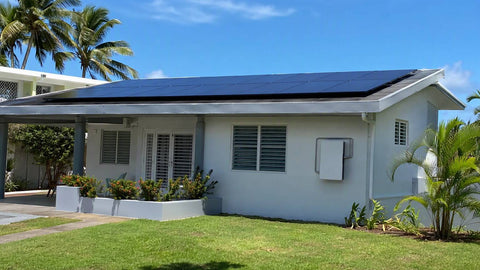
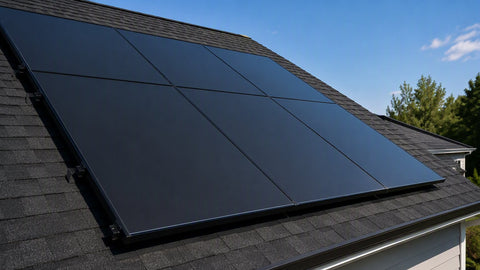
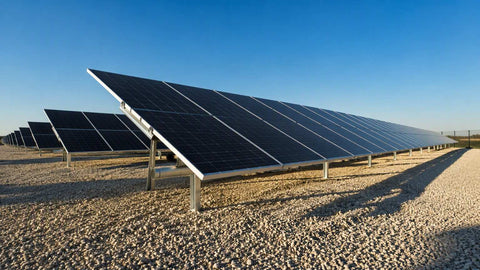
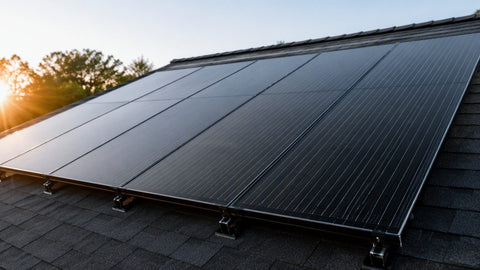
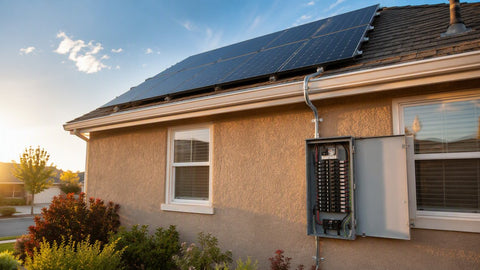
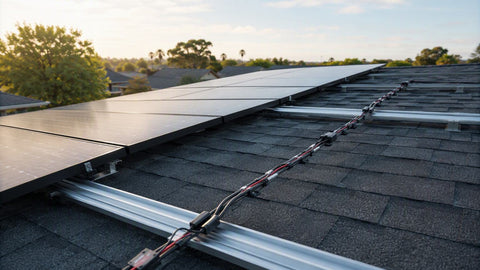
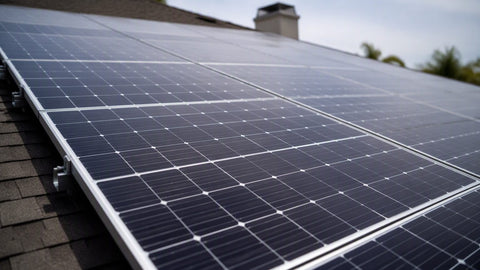
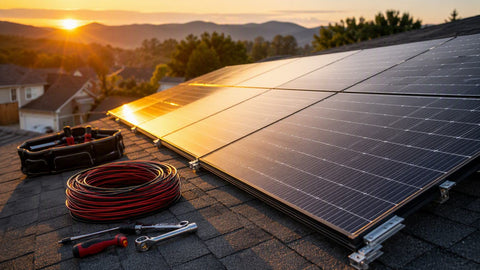
- Solar array strings (10–15A per string): 10 AWG PV wire is the industry default — it carries the current with margin and holds voltage drop down on long rooftop runs. High-current strings above ~25A step to 8 AWG.
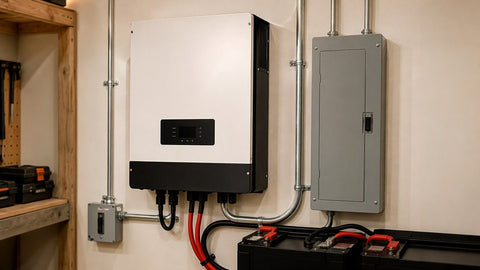
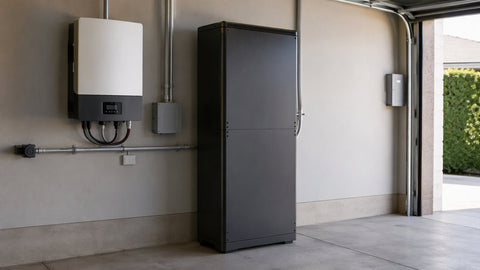
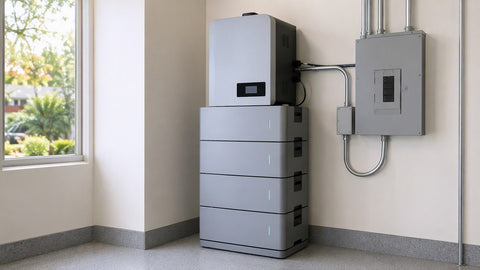
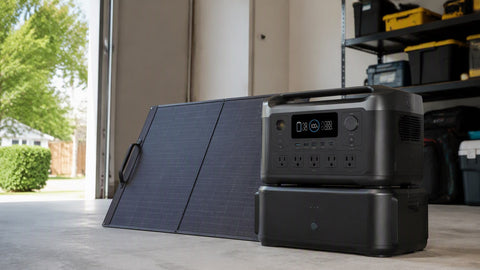
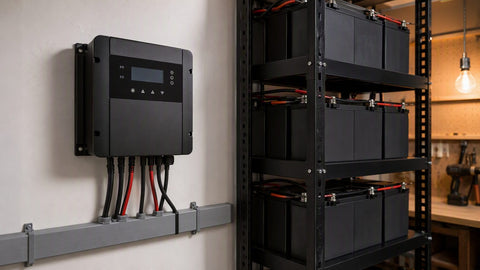
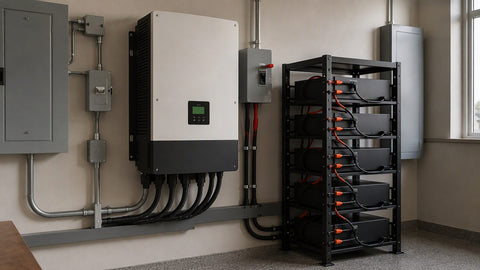
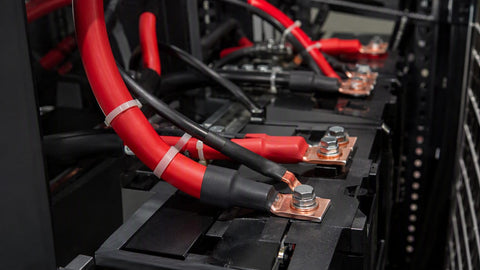
- Battery-to-inverter cables (48V, 100–200A): 2 AWG to 2/0 fine-strand copper welding/battery cable. At DC, voltage drop is the design constraint, not ampacity — see below.
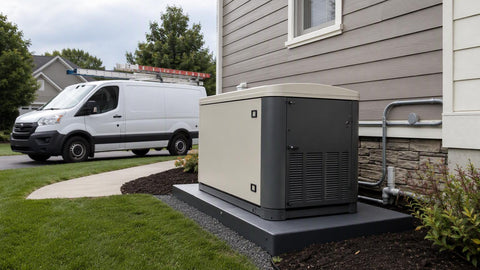
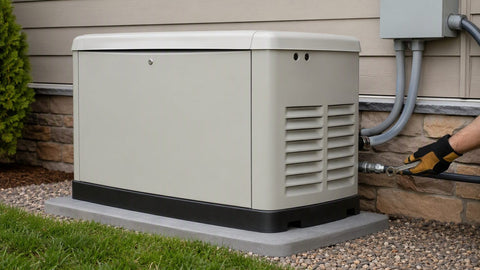
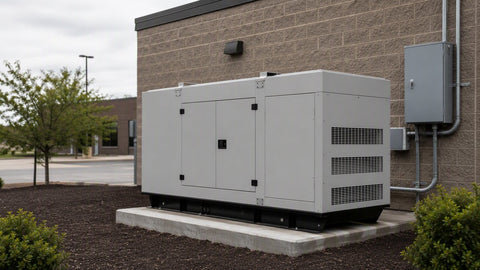
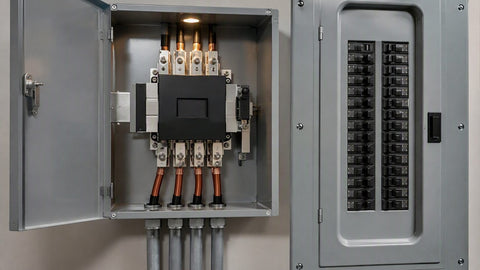
- Generator to transfer switch: sized to the generator's output breaker per NEC 445.13 — a 22 kW standby unit at 240V (92A) typically lands on 3 AWG copper.
Ampacity keeps insulation from melting. Voltage drop keeps equipment working. The NEC doesn't mandate a limit (it's an informational note), but the industry targets are 3% maximum on any branch circuit or feeder and 5% total — and for 12/24/48V battery and solar DC systems you should hold 2% or better, because 2V lost on a 12V system is 17%, not 1.7%.
For single-phase and DC circuits: VD = 2 × L × I × R ÷ 1,000, where L is one-way length in feet, I is load current, and R is the Ω/1,000 ft value from the chart above. The factor of 2 accounts for the round trip out and back.
Worked example: 48V battery bank to inverter
- Inverter draws 100A continuous; one-way cable run is 10 ft; candidate conductor 2 AWG (0.1563 Ω/1,000 ft).
- VD = 2 × 10 × 100 × 0.1563 ÷ 1,000 = 0.31V — 0.65% of 48V. Excellent.
- The same run at 12V (a 1,200W inverter): VD = 0.31V is now 2.6% — marginal — and the 12V inverter is pulling 400A, so you'd be on 4/0 cable and still dropping over 1V. This is why residential storage standardizes on 48V.
Worked example: 20A circuit, 100 ft run
- 12 AWG at 20°C: VD = 2 × 100 × 20 × 1.588 ÷ 1,000 = 6.35V — 5.3% at 120V. Fails the 3% target.
- 10 AWG: VD = 2 × 100 × 20 × 0.9988 ÷ 1,000 = 4.0V — 3.3%. Marginal; 8 AWG gets you to 2.1%.
- Lesson: on any run past ~75 ft at 120V, voltage drop — not ampacity — picks the wire.
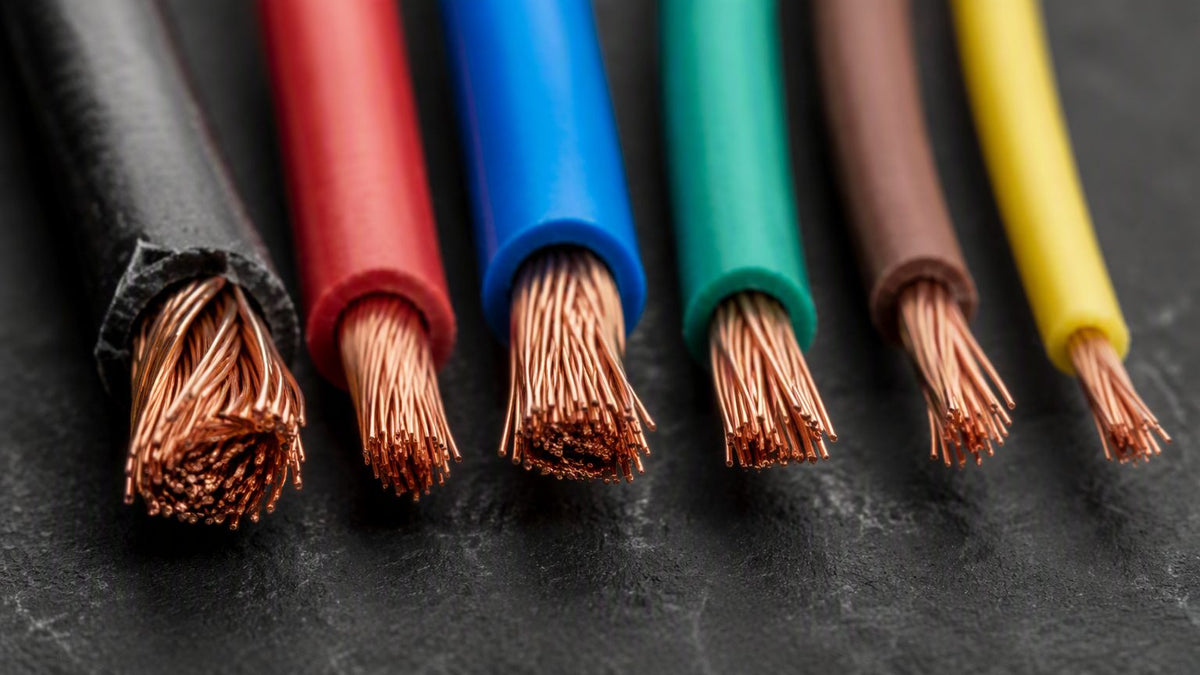
Same AWG, same copper, same ampacity: solid and stranded conductors carry identical current because cross-sectional area is what matters, and both are built to the same circular-mil spec. The differences are mechanical. Solid wire (through 10 AWG in building cable) is cheaper, holds its shape in boxes, and terminates cleanly under device screws — it's what NM-B romex is made of. Stranded wire flexes without work-hardening and survives vibration, so it's mandatory for anything that moves, and it's the standard construction from 8 AWG up because a solid 2/0 conductor simply cannot be pulled around a conduit bend. Fine-strand battery and welding cable takes this further for tight routing in inverter bays. Two practical notes: stranded conductors measure slightly larger in overall diameter than solid of the same AWG (the air gaps between strands), and stranded requires the right termination — use ferrules or lugs rated for stranded wire, never a bare wrap under a screw head.
Skin effect — current crowding toward the conductor surface at higher frequencies — is real physics that rarely matters at power-line frequency. At 60 Hz, the skin depth in copper is about 8.5 mm, deeper than the radius of a 4/0 conductor (~5.9 mm), so the entire cross-section of any wire in this chart carries current essentially uniformly. You can ignore skin effect for every AC branch circuit, feeder, and DC battery cable you'll ever pull. Where it does bite: high-frequency applications — inverter PWM output harmonics, RF transmission, induction heating, and data/signal wiring — which is why those worlds use Litz wire, braid, or plated conductors. If a salesman cites skin effect to upsell you exotic building wire for a 60 Hz panel feeder, hang up.
What gauge wire do I need for a 20-amp circuit? 12 AWG copper, on a 20A breaker, per NEC 240.4(D). The table technically allows 25A on 12 AWG THHN at 75°C, but the small-conductor rule caps the overcurrent device at 20A. For runs over ~75 feet, bump to 10 AWG for voltage drop — same breaker.
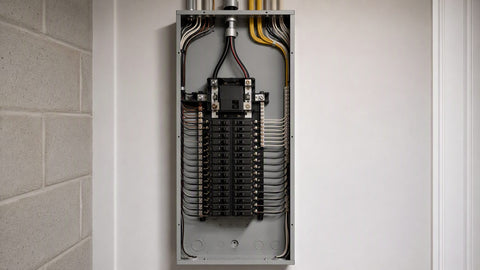
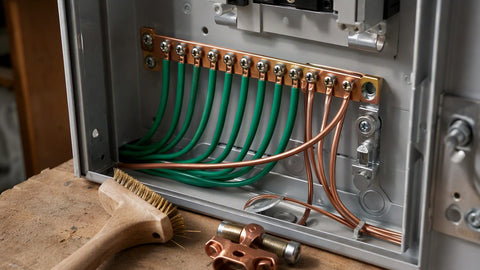
What size wire for a 100-amp subpanel? 3 AWG copper THHN/THWN-2 at the 75°C column, or 1 AWG aluminum with an anti-oxidant compound and AL-rated lugs. If the feeder serves the entire dwelling load, NEC 310.12 permits 4 AWG copper / 2 AWG aluminum — but confirm your AHJ applies that table before you order wire.
What gauge wire should I use for solar panel strings? 10 AWG PV wire (USE-2 or PV-rated) is the standard for strings up to ~25A and covers most residential arrays with comfortable voltage-drop margins. Source circuits are sized at 156% of short-circuit current under NEC 690.8 — 10 AWG handles typical 13–15A Isc strings with room to spare even after rooftop temperature derating.
Is stranded or solid wire better? Neither — same ampacity at the same gauge. Solid wins for in-wall branch wiring (cost, termination, shape retention); stranded wins for anything flexed, vibrated, or larger than 10 AWG. Match the termination hardware to the construction and both perform identically electrically.
Does insulation type change ampacity? Yes. The conductor gauge sets the resistance, but the insulation temperature rating (60°C TW/UF, 75°C THWN-2, 90°C THHN) sets which NEC 310.16 column you use. The same 10 AWG conductor is worth 30A in UF cable and 35A in THWN-2 — before derating.
How does aluminum compare to copper at the same gauge? Aluminum carries roughly two AWG sizes less than copper — 2 AWG aluminum ≈ 4 AWG copper in ampacity — with about 61% higher resistance per foot. It's the standard for service entrance and large feeders (SER, XHHW-2) because the cost per amp is unbeatable at those sizes; it demands AL-rated terminations, proper torque, and antioxidant paste.
What is a circular mil? The cross-sectional area of a circle 0.001 inch (one mil) in diameter. Area in circular mils is simply the diameter in mils squared — no π involved — which is why the NEC uses it for conductor sizing math. Above 4/0, conductors are specified directly in kcmil (thousands of circular mils): 250, 350, 500 kcmil and up.
Can I connect aluminum and copper wire together? Never directly — the galvanic pair corrodes and the joint loosens as the metals expand at different rates. Use listed dual-rated (AL/CU) connectors, AlumiConn-style lug connectors, or COPALUM crimps for pigtailing. This is a house-fire-class mistake, not a technicality.
Sources: NEC 2023 Tables 310.16 and 310.12, NEC Chapter 9 Table 8 conductor properties, ASTM B3/B8 conductor standards, and PES Supply counter tickets. Need wire by the foot, PV wire by the spool, or battery cable cut and lugged to length? Get a free quote — contractor and bulk pricing available across our electrical supplies inventory.
Related PES Supply guides
También disponible en español: lea esta guía en español.