Commercial Solar • PV String Inverters • 480VAC Three-Phase
A field-focused look at how modern commercial string inverters are evolving—and why the SG36CX-US matters for performance, compliance, and long-term reliability.
In This Guide:
- A Market Moving Beyond Simplicity
- What Is the Sungrow SG36CX-US?
- Why 36 kVA Matters in Commercial Solar
- The Role of 1000VDC Architecture
- Four MPPTs: Designed for Real Roofs
- String Inverters in a World of MLPE
- 480VAC Output: Built for Commercial Infrastructure
- Complete Technical Specifications
- Safety and Compliance
- Where the SG36CX-US Fits Best
- Frequently Asked Questions
By the time a solar system is switched on, its most important decisions have already been made.
In the early days of commercial solar, inverters were often treated as interchangeable components—necessary, but rarely scrutinized. Panels captured the spotlight. Racking dictated feasibility. Incentives drove decisions. That era has ended.
As solar installations scale, diversify, and shoulder greater responsibility for grid stability and business continuity, the inverter has become the intellectual core of the system. It is no longer a passive converter of electricity but an active manager of power, performance, and protection.
At the center of this shift is a new generation of commercial string inverters engineered for higher voltages, tighter codes, and more complex operating environments. Among them, the Sungrow SG36CX-US 36 kVA PV String Inverter has emerged as a defining example of how modern solar electronics are evolving—quietly, deliberately, and with unmistakable intent.
Commercial solar today operates under a different set of expectations than it did even five years ago. Project stakeholders—from facility owners to financing partners—demand more than generation capacity. They require infrastructure that performs predictably, complies seamlessly, and operates autonomously.
Modern Commercial Projects Must Deliver:
- Predictable performance over decades, not just years
- Compliance with increasingly strict electrical codes
- High uptime with minimal service disruption
- Compatibility with advanced monitoring and grid requirements
The inverter sits at the intersection of all four requirements. The Sungrow SG36CX-US is designed precisely for this environment—rated at 36 kVA, operating at 1000VDC input and 480VAC three-phase output, and equipped with four independent MPPTs. It is purpose-built for small to mid-scale commercial arrays where efficiency, resilience, and design flexibility are not optional—they are assumed.
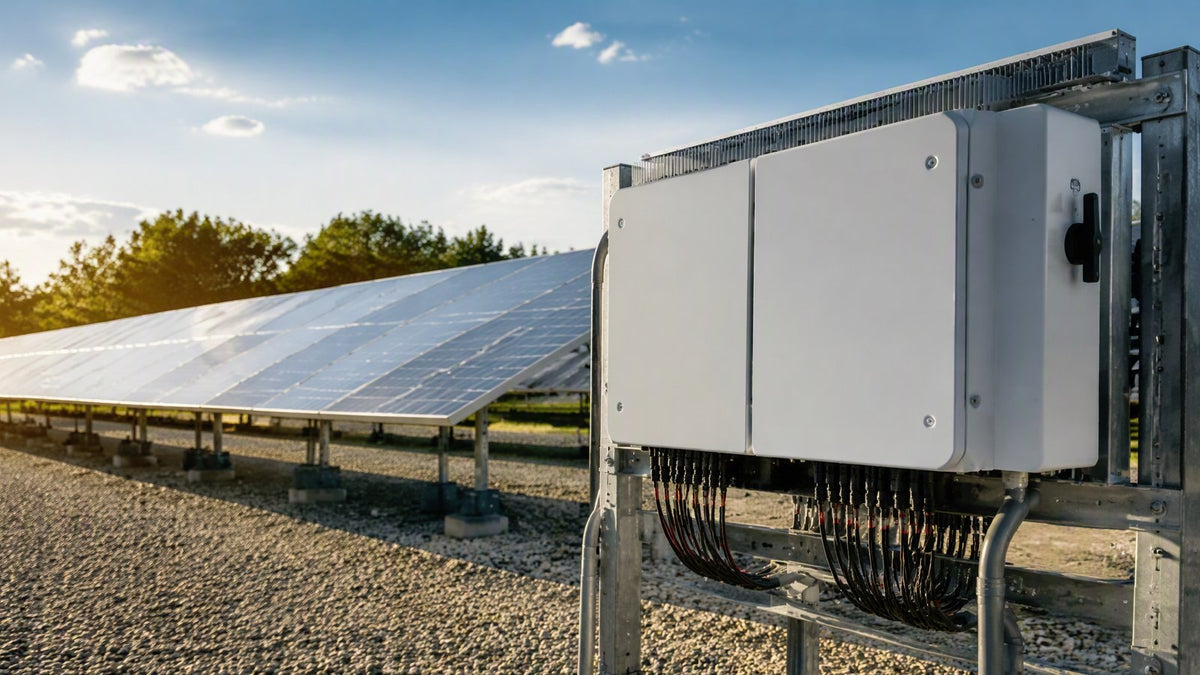
At its core, the SG36CX-US is a commercial-grade, three-phase PV string inverter designed for rooftop and ground-mounted solar systems in North America. But to describe it only in those terms would miss the point.
This inverter is not about novelty. It is about refinement—applying lessons learned from utility-scale solar to the commercial segment, where space constraints, code requirements, and operational demands are often more complex than their larger counterparts.
Core Specifications at a Glance:
- Rated Power: 36 kVA
- DC Input Voltage: Up to 1000 VDC
- AC Output: 480 VAC, 3-phase
- MPPTs: 4 independent trackers
- Application: Commercial and light industrial PV systems
Each of these design choices reflects a deliberate philosophy: flexibility without excess, power without complexity, and performance without fragility.
Inverter sizing is not just a technical decision—it is a strategic one that impacts system design, installation costs, and long-term economics.
Below 30 kVA, systems often struggle to support meaningful commercial loads without aggregation. Above 50 kVA, projects encounter higher costs, heavier infrastructure, and more complicated permitting processes.
The 36 kVA Sweet Spot:
- Large enough to support real commercial energy demand
- Compact enough to deploy in constrained rooftops or carports
- Efficient enough to maintain favorable project economics
For installers and EPCs, this size allows modular system design—scaling arrays incrementally rather than overbuilding from the start. Multiple SG36CX-US units can be deployed across a facility, providing redundancy and flexibility that a single larger inverter cannot match.
One of the most consequential design choices in the SG36CX-US is its 1000VDC input rating. This higher voltage architecture fundamentally changes what's possible in commercial array design.
| 1000VDC Advantage | Practical Benefit |
|---|---|
| Longer string lengths | More panels per string reduces combiner requirements |
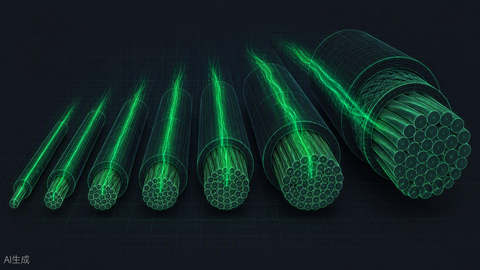
| Reduced conductor sizes | Lower current at higher voltage means smaller, cheaper wire |
| Lower balance-of-system costs | Fewer combiners, less conduit, reduced material costs |
| Cleaner electrical layouts | Simpler routing on constrained commercial rooftops |
| Faster installations | Less wiring work translates to reduced labor hours |
For commercial rooftops with limited pathways or structural constraints, the ability to optimize string design is not merely convenient—it can determine whether a project is viable at all.
No two commercial rooftops are identical. HVAC units cast shadows. Parapets interrupt layouts. Orientation shifts across a single structure. Traditional inverters, with one or two MPPTs, often force compromises—grouping mismatched strings and sacrificing performance.
The SG36CX-US addresses this reality with four independent Maximum Power Point Trackers.
What Four Independent MPPTs Enable:
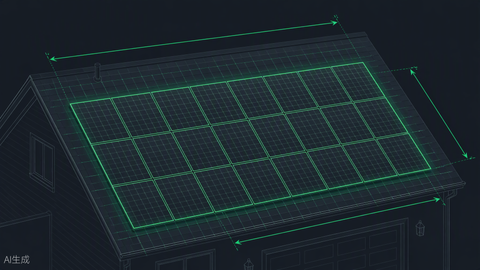
- Multiple roof planes: East, west, and south-facing arrays on a single inverter
- Mixed-tilt configurations: Flat and tilted sections optimized independently
- Better shade tolerance: Shaded strings don't drag down unshaded production
- Optimized energy harvest: Each MPPT tracks its strings' optimal operating point
This is not about theoretical efficiency gains. It is about capturing energy that would otherwise be lost—quietly improving yield over the system's lifetime without adding the cost and complexity of module-level power electronics.
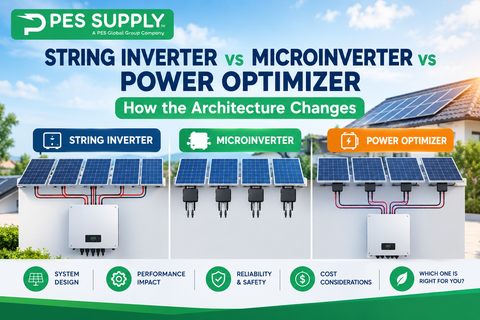
Much has been written about microinverters and power optimizers, often framing string inverters as legacy technology. The reality is more nuanced.
For many commercial applications, string inverters remain the most cost-effective and reliable solution, particularly when:
- Roof geometry is relatively uniform
- Shading is predictable or minimal
- Maintenance access and simplicity are priorities
The SG36CX-US reflects this maturity. It does not attempt to mimic MLPE features unnecessarily. Instead, it focuses on doing what string inverters do best:
| String Inverter Strength | Commercial Benefit |
|---|---|
| Centralized power conversion | Single point of monitoring and service |
| High conversion efficiency | Maximum energy yield from every panel |
| Fewer rooftop electronics | Reduced failure points, lower maintenance burden |
| Simplified long-term service | No rooftop access needed for inverter maintenance |
Technology choice should follow site conditions, not trends. The SG36CX-US aligns with a growing industry consensus that the best inverter is the one matched to the application—not necessarily the newest or most feature-laden.
The inverter's 480VAC three-phase output is not incidental. It is essential for seamless commercial integration.
Most commercial facilities already operate at or near this voltage level. By matching native infrastructure, the SG36CX-US delivers immediate advantages:
480VAC Integration Benefits:
- Reduced transformer requirements: Direct connection to existing 480V services
- Improved overall system efficiency: No step-up losses
- Simplified interconnection: Matches standard commercial electrical infrastructure
For electricians and engineers, this compatibility translates to cleaner designs, fewer components, and fewer points of failure. The inverter slots into existing electrical architecture rather than requiring special accommodation.
The following specifications detail the Sungrow SG36CX-US performance characteristics across DC input, AC output, efficiency, and environmental ratings.
| DC Input Specifications | |
|---|---|
| Maximum DC Input Voltage | 1000 VDC |
| MPPT Voltage Range | 200-850 VDC |
| Number of MPPTs | 4 independent trackers |
| Maximum DC Input Current | 26A per MPPT |
| Maximum Short Circuit Current | 40A per MPPT |
| DC Inputs per MPPT | 2 strings |
| AC Output Specifications | |
|---|---|
| Rated AC Output Power | 36 kVA / 36 kW |
| Nominal AC Voltage | 480 VAC, 3-phase |
| AC Voltage Range | 422-528 VAC |
| Nominal Grid Frequency | 60 Hz |
| Maximum AC Output Current | 43.4A |
| Power Factor | >0.99 (adjustable 0.8 leading to 0.8 lagging) |
| Efficiency & Performance | |
|---|---|
| Maximum Efficiency | 98.5% |
| CEC Weighted Efficiency | 98.0% |
| MPPT Efficiency | >99% |
| THD | <3% |
| Environmental & Physical | |
|---|---|
| Operating Temperature Range | -25°C to +60°C |
| Ingress Protection | NEMA 4X / IP66 |
| Cooling Method | Smart forced air cooling |
| Noise Level | <65 dB |
| Dimensions (W × H × D) | 1050mm × 660mm × 363mm (41.3" × 26.0" × 14.3") |
| Weight | ~75 kg (~165 lbs) |
| Certifications & Compliance | |
|---|---|
| Grid Compliance | UL 1741, IEEE 1547 |
| Safety Certification | UL 1741, CSA C22.2 |
| Rapid Shutdown | NEC 2017/2020 690.12 compliant |
| Warranty | 10 years standard (extendable) |
Modern commercial solar projects must navigate a dense regulatory landscape. The SG36CX-US is designed specifically for North American codes and standards, addressing compliance requirements that can otherwise delay projects or require costly redesigns.
Key Compliance Features:
- NEC 2017/2020 compliance: Meets current National Electrical Code requirements
- Rapid shutdown compatibility: NEC 690.12 compliant for first responder safety
- Grid-interconnection ready: IEEE 1547 and utility-specific requirements supported
- Arc fault protection: Integrated DC arc fault detection and interruption
By aligning hardware design with regulatory reality, Sungrow reduces the risk of costly redesigns or inspection delays—an often overlooked but critical advantage for commercial projects operating on tight timelines.
Monitoring, Data, and Operational Visibility
Today's commercial asset owners expect visibility, not guesswork. The SG36CX-US integrates seamlessly with Sungrow's iSolarCloud monitoring platform and third-party systems, providing:
- Real-time performance data: Production, efficiency, and status at a glance
- Historical trend analysis: Long-term performance tracking and reporting
- Fault detection and alerts: Immediate notification of issues
- Remote diagnostics: Troubleshooting without site visits when possible
This data is not just diagnostic—it is strategic. It informs maintenance schedules, validates ROI projections, and supports long-term asset management for commercial facility owners and O&M providers.
The inverter is particularly well-suited for applications where its combination of capacity, flexibility, and reliability align with specific project requirements.
Ideal Applications:
- Commercial rooftops: Retail, office, and mixed-use buildings
- Industrial facilities: Manufacturing plants and distribution centers
- Educational campuses: Schools, universities, and institutional buildings
- Warehouses and logistics centers: Large flat roof installations
- Carport solar installations: Parking structures and covered lots
In each case, the SG36CX-US balance of power density, design flexibility through 4 MPPTs, and commercial-grade reliability aligns with the practical demands of real-world energy production.
The Economics of Predictable Performance
Over a system's lifetime, small inefficiencies compound. Downtime costs more than equipment. Unplanned service erodes ROI. By delivering stable performance with minimal intervention, the SG36CX-US supports:
| Economic Benefit | How SG36CX-US Delivers |
|---|---|
| Lower operational costs | Reduced service calls, simplified maintenance access |
| Predictable energy yields | High efficiency maintained across operating conditions |
| Improved financial modeling | Reliable performance supports accurate ROI projections |
| Extended system lifespan | Conservative thermal design prioritizes longevity |
For asset owners, this predictability is often more valuable than marginal efficiency gains. A system that performs as expected, year after year, is worth more than one that promises slightly higher numbers but delivers uncertainty.
An inverter's true test is not its brochure—it is the job site. Installers consistently evaluate equipment on practical factors that impact labor time and project cost.
Field-Friendly Design Features:
- Mounting simplicity: Standard mounting brackets and clear installation points
- Wiring access: Generous terminal space and logical conductor routing
- Commissioning workflow: Intuitive interface for configuration and startup
- Weight management: Manageable for two-person lift without special equipment
The SG36CX-US reflects years of field-driven refinement, with layouts and interfaces that prioritize clarity and efficiency. This reduces installation time, minimizes errors, and ultimately lowers total project cost.
What We've Learned Deploying 36 kVA-Class String Inverters
- I've commissioned SG36CX-US units on tilt-up warehouse roofs where the four independent MPPTs paid for themselves in the first design meeting — three roof faces plus a parapet-shadowed section each got their own tracker, no optimizers required.
- My rule on 1000VDC commercial strings: I always re-run the NEC 690.7 cold-voltage correction with the AHJ's actual design temperature, because I've watched a 22-panel string that passed in October fault on the first January morning at 1,012V.
- We stage these with a torque wrench witness mark on every DC terminal — on a 200 kW rooftop job last year, the single nuisance arc-fault trip we chased for a day traced back to one under-torqued MC4 at the combiner.
- When a facility manager asks me why not microinverters at this scale, I show them the truck roll math: 36 kVA in one serviceable box beats 90 micros on a gravel roof when something needs attention at year seven.
One more sizing note we give every EPC: the 36 kVA rating is apparent power, not watts. At the unit's 480VAC three-phase output, 36 kVA works out to 43.3A per phase (36,000 ÷ (480 × √3)). Per NEC 690.8's 125% continuous sizing, the output circuit and OCPD must be rated for at least 54.2A, which lands on a 60A breaker from the NEC 240.6(A) standard ratings with 6 AWG copper at 75°C per Table 310.16. Confirm the exact nameplate continuous current on the unit's datasheet before ordering breakers — and confirm the switchgear has physical space for a 60A three-pole position before install week, not during it.
Common questions from installers, EPCs, and commercial facility managers about the Sungrow SG36CX-US.
What size solar array is appropriate for the SG36CX-US?
The SG36CX-US is typically paired with arrays in the 40-50 kW DC range, providing a DC/AC ratio of approximately 1.1-1.4. This oversizing captures additional production during non-peak hours while the inverter clips any production exceeding its 36 kVA rating during peak conditions. Exact array sizing depends on location, orientation, and project economics.
Is the SG36CX-US compatible with rapid shutdown requirements?
Yes. The SG36CX-US is NEC 2017/2020 690.12 compliant for rapid shutdown. It can be paired with Sungrow's Smart String Combiner or third-party rapid shutdown solutions depending on system design and AHJ requirements. This ensures first responder safety while maintaining system efficiency.
Can multiple SG36CX-US units be paralleled on a single project?
Absolutely. Multiple SG36CX-US units can be deployed across larger commercial installations to achieve the total capacity required. This modular approach provides design flexibility, built-in redundancy (one inverter issue doesn't take down the entire system), and the ability to phase installations over time as budgets allow.
What monitoring options are available?
The SG36CX-US integrates with Sungrow's iSolarCloud monitoring platform for comprehensive system visibility. It also supports Modbus RTU/TCP communication protocols for integration with third-party monitoring systems and building management systems (BMS), providing flexibility for commercial operators with existing monitoring infrastructure.
What warranty coverage does Sungrow provide?
The SG36CX-US comes with a standard 10-year product warranty, which can be extended to 15 or 20 years depending on project requirements. Sungrow's established U.S. presence and service network supports warranty claims and technical support throughout the inverter's operational life.
The Sungrow SG36CX-US 36 kVA PV String Inverter represents a mature approach to commercial solar—one that values engineering discipline over spectacle, and reliability over novelty.
With its 1000VDC architecture, four independent MPPTs, 480VAC three-phase output, and commercial-grade design, it is not trying to redefine solar. It is refining it.
And in an industry increasingly judged not by ambition but by execution, that distinction matters.
When solar infrastructure works as intended, it fades into the background. Power flows. Systems endure. And the most important thing happens quietly: Nothing goes wrong at all.
Related Products


Ready to Specify the SG36CX-US for Your Project?
PES Supply provides Sungrow commercial inverters with competitive pricing, technical support, and reliable inventory. Our team can help you spec the right inverter solution for your commercial solar installation.
About PES Supply: We provide commercial-grade solar equipment including Sungrow inverters for installers, EPCs, and facility managers. Our team offers technical guidance, competitive pricing, and reliable inventory for commercial solar projects of all sizes.
Related Resources:
- Best Solar Panels 2026 — Buyer's Guide
- EG4 vs Tesla Powerwall
- Qcells vs Trina vs JA
- Solar Inverter Buyer's Guide
- Solar Battery Buyer's Guide
- 5kW Solar Kit
- 10kW Solar + Battery Kit
- Off-Grid Cabin Kit
- EG4 Batteries
- Qcells Solar Panels
- Trina Solar
- JA Solar
- REC Solar
- Mission Solar
- Sol-Ark Inverters
- SolarEdge Inverters
- Generac PWRcell
Calculate how much storage you need with our battery sizing calculator.
Check solar incentives available in your state.
Use our free solar system calculator to size your array.
Check out our Solar Panel Comparison Tool. Check out our Inverter Sizing Calculator.
Calculate your solar payback and 25-year savings with our Solar ROI Calculator. Follow our complete DIY solar installation guide for step-by-step instructions. Keep your system running at peak performance with our Solar Maintenance Guide.
Related Resources
- Solar System Calculator
- Battery Sizing Calculator
- Solar Panel Comparison Tool
- Inverter Sizing Calculator
- Solar ROI Calculator
- Solar Installation Guide
- Solar Maintenance Guide
- Solar Permitting Guide
- Battery Installation Guide
- NEC Code Compliance Guide
- Solar Panel Mounting Guide
- Grounding & Bonding Guide
- Solar Incentives by State
- PES PowerLink — Contractor Program
PES Supply carries 80,000+ products from 300+ manufacturers. One PO, one invoice, every trade covered.
Need help sizing? Our team can calculate loads, select equipment, and source everything from one PO.
Call (502) 790-0600