Updated September 2026 — content reviewed and refreshed by the PES team. For current pricing and availability, see the linked product pages or request a quote.
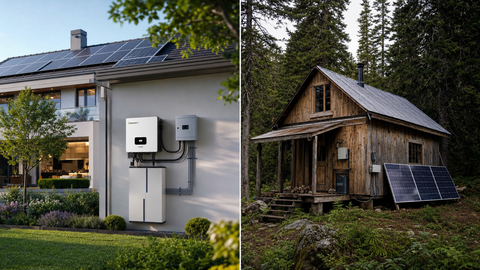
A hybrid inverter is the one-box answer to the question that defines modern residential solar: how do I use my own solar power when the grid goes down — or when the utility charges triple at 6 p.m.? It converts PV DC to household AC like any solar inverter, but also manages a battery bank and the grid connection, deciding moment by moment whether solar should power the house, charge the battery, or sell back. I've specced these for everything from off-grid cabins to suburban time-of-use arbitrage plays, and the sizing mistakes are always the same four. This guide explains how hybrid inverters actually work, when they beat the alternatives, how to size one correctly, and which models are worth your money at Portlandia Electric Supply (in stock, catalog prices July 2026).
How a hybrid inverter actually works
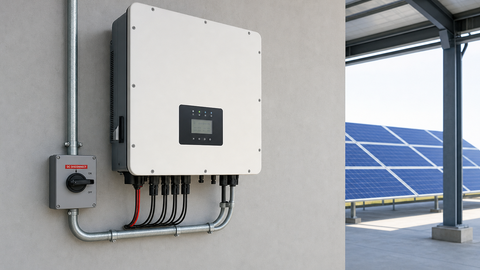
Strip the marketing off and a hybrid inverter is three devices sharing one chassis and one brain: a solar inverter (MPPT trackers turning PV DC into AC), a battery charger/discharger (bidirectional, usually 48V on residential units), and an automatic transfer switch that islands your home from the grid in milliseconds when utility power fails. The brain runs energy management logic you configure: self-consumption mode keeps solar at home first, time-of-use mode charges the battery on cheap overnight power and discharges through the evening peak, and backup mode reserves a slice of the battery for outages.
The efficiency edge over retrofitted storage is the DC-to-DC path: solar charges the battery without a double AC conversion, so more of what your roof makes actually lands in the cells. Round-trip losses on a DC-coupled hybrid typically beat an AC-coupled add-on by a few percentage points — small per day, meaningful over 6,000 cycles.
Hybrid vs. string vs. off-grid inverter
| Architecture | Battery-ready | Grid sell | Backup in outage | Best for |
|---|---|---|---|---|
| String inverter (grid-tie) | No (needs AC-coupled retrofit) | Yes | No — shuts down in outages | Lowest-cost grid-tie, no storage plans |
| String + AC-coupled battery (e.g. Powerwall) | Via add-on | Yes | Yes (battery inverter forms grid) | Adding storage to existing solar |
| Hybrid inverter | Native, DC-coupled | Yes | Yes — built-in transfer | New installs wanting solar + storage |
| Off-grid inverter | Native | No (or limited) | Always "backed up" | No grid, or grid-is-unreliable properties |
The hybrid's structural edge is efficiency and simplicity: one box replaces two, and the transfer to backup happens fast enough that computers don't notice. The AC-coupled alternative still wins when you already own a working string inverter — don't rip out functioning hardware. For string options see our string inverters; for grid-free properties, start with an off-grid design. If you're weighing the third architecture, our hybrid vs. off-grid inverter comparison draws that line clearly.
Sizing a hybrid inverter (the math that matters)
Four numbers, in order:
- Continuous AC output (kW) — must cover your simultaneous loads. Add up what runs at once: kitchen + HVAC blower + office ≈ 3–5 kW typical; add central AC and you're at 6–10 kW.
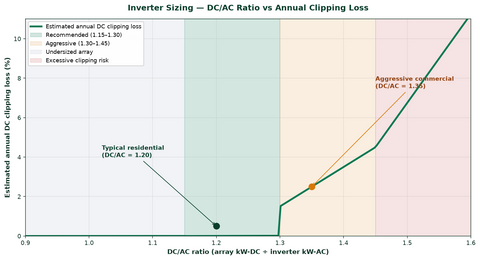
- PV input ceiling (kW DC) — oversizing the array 1.2–1.5x the inverter's AC rating is standard practice and improves battery charging on cloudy days.
- Battery voltage and charge current — 48V is the residential standard; charge current (amps) × 48V tells you how fast the bank refills. A 100A charge spec ≈ 4.8 kW of charging.
- MPPT count and string voltage — two MPPTs minimum for roofs with two orientations; four for complex roofs.
Here's the quick-reference version of step one — the continuous output that matches common home profiles:
| Home profile | Peak simultaneous load | Recommended continuous AC output |
|---|---|---|
| Essentials only (fridge, lights, outlets, furnace blower) | 2–4 kW | 4–5 kW class |
| Average home, gas heat, no central AC | 3–5 kW | 5–8 kW class |
| Whole home with one central AC | 6–10 kW | 8–10 kW class |
| Large home, multiple ACs, EV charging | 10–15 kW | 11.4–18 kW class (or stacked units) |
And the battery side of the equation, because an undersized charge rate strands solar you already paid for. Rule of thumb: your bank should refill in one good solar day. These are the charge-power numbers that fall out of the amps × volts math:
| Battery bank | Charge current (48V nominal) | Charge power | Refill time (from ~20% SOC, full sun) |
|---|---|---|---|
| 10 kWh | 100A | ~4.8 kW | ~2 hours |
| 20 kWh | 100A | ~4.8 kW | ~3.5–4 hours |
| 20 kWh | 200A | ~9.6 kW | ~2 hours |
| 30 kWh | 200A | ~9.6 kW | ~2.5–3 hours |
I've watched customers buy a 20 kWh bank and a hybrid that can only push 3 kW of charge — the battery eats lunch while the array naps all afternoon. Match the charge spec to the bank, not just the AC rating to the loads. For runtime math on the bank itself, our battery backup runtime calculator does the hours-per-load arithmetic.
Worked example: 2,400 sq ft home, 8 kW array, 20 kWh battery
Peak simultaneous load measured at the panel: 5.5 kW. Array: 8 kW DC. Battery: 20 kWh rack. The Solis 8.0kW RHI hybrid (RHI-1P8K-HVES-5G) at $2,060.62 covers the 5.5 kW peak with 45% headroom, accepts the 8 kW array without clipping concern, and its dual MPPTs split the array across two roof faces. Battery charge rate at full solar surplus refills 20 kWh in about 4–5 peak-sun hours — a full daily cycle. Budget alternative: the GoodWe 8.6kW split-phase hybrid (GW8600A-ES) at $1,594.01 with four MPPTs for more complex roofs.
Worked example: whole-home with central AC, 12 kW array
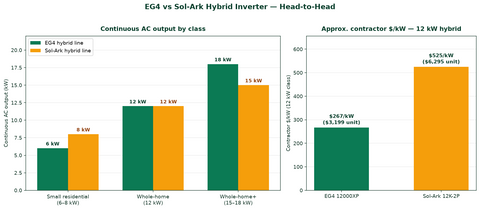
Central AC pushes continuous demand past 7 kW — step up to the Solis 10.0kW RHI (RHI-1P10K-HVES-5G) at $1,624.73, or the EG4 18kPV at $3,999.99 with its 18 kW PV ceiling if you plan to grow the array. For off-grid-capable heavy lifting, the Sol-Ark 5K (SA-5K-1P-N) at $2,993.00 and its larger sibling the Sol-Ark 12K are the installer favorites.
What the best hybrid inverters cost (in stock at PES, July 2026)
| Model | AC output | Architecture | PES price |
|---|---|---|---|
| Solis RHI 7.6kW (RHI-1P7-6K-HVES-5G1) | 7.6 kW | Split-phase hybrid, dual MPPT | $1,501.35 |
| Solis RHI 8.0kW (RHI-1P8K-HVES-5G) | 8.0 kW | Split-phase hybrid, dual MPPT | $2,060.62 |
| Solis RHI 10.0kW (RHI-1P10K-HVES-5G) | 10.0 kW | Split-phase hybrid | $1,624.73 |
| GoodWe GW8600A-ES | 8.6 kW | Split-phase hybrid, 4 MPPT | $1,594.01 |
| GoodWe GW9600A-ES | 9.6 kW | Split-phase hybrid, 4 MPPT | $4,182.00 |
| Sol-Ark SA-5K-1P-N | 5 kW | Hybrid, off-grid capable | $2,993.00 |
| Victron MultiPlus-II 48/5000 | 4 kW (120V) | Inverter/charger, modular ecosystem | $1,458.60 |
| EG4 18kPV | whole-home class | Hybrid, 18 kW PV input | $3,999.99 |
Five specs that separate good hybrids from frustrating ones
- Transfer time: under 20 ms keeps electronics happy; "UPS-grade" claims should be under 10 ms.
- Surge rating: 1.5–2x continuous for 5–10 seconds starts well pumps and compressors.
- Battery compatibility list: closed protocols lock you into one battery brand; CAN-bus open protocols (Pylontech, EG4, etc.) keep your options alive. I tell every customer the same thing: buy the inverter that speaks the most battery languages, because the battery you want in five years may not exist yet.
- Grid-interactive certifications: UL 1741 SB / IEEE 1547 compliance is required for legal grid connection in most US jurisdictions.
- Generator input: a dedicated gen port with charge control saves real money on long outages — the generator carries the house while the inverter sips a controlled charge into the bank.
How the hybrid pays for itself: self-consumption and time-of-use
The financial case for a hybrid inverter rests on two revenue streams that a plain string inverter can't touch. First, self-consumption: every kilowatt-hour you use from your own roof instead of buying from the utility saves the full retail rate, while exported solar often earns a fraction of retail — and under net billing tariffs that fraction keeps shrinking. Second, time-of-use arbitrage: charge the battery from solar (or cheap overnight grid power) and discharge through the evening peak when rates double or triple. The inverter's energy management software runs both plays automatically once you set the rate schedule.
An illustrative TOU example shows why the storage premium pencils out in high-spread markets. Say your utility charges off-peak and peak rates with a wide evening spread — the pattern common across California, Arizona, and the Northeast:
| Daily energy flow | Without storage | With hybrid + 20 kWh battery |
|---|---|---|
| Solar self-consumed directly | ~30% of production (daytime loads only) | ~70–85% of production |
| Evening peak (4–9 p.m.) grid purchases | Full peak rate | Largely covered by battery discharge |
| Exported solar compensation | Low wholesale/net-billing rate | Only true surplus exported |
| Outage coverage | None — system shuts down | Backed-up loads run from battery |
Exact savings depend on your rate plan, load shape, and climate — run your own numbers with our solar ROI and system sizing tools before committing. The point stands across markets: the wider the peak-to-off-peak spread and the lower the export rate, the faster a hybrid pays back its premium over a string inverter.
Battery compatibility: the decision that outlives the battery
Batteries are consumables with 10–15 year service lives; inverters often outlast the first bank. That makes the battery communications protocol a bigger long-term decision than the battery brand itself. Two camps exist:
- Closed protocols tie the inverter to one manufacturer's battery line. Integration is seamless and support is single-throat-to-choke, but replacement pricing is whatever that brand charges in year 11.
- Open CAN-bus protocols (Pylontech, EG4, and similar) let the inverter talk to multiple battery brands. Commissioning takes an extra configuration step, but your second bank can be whatever offers the best $/kWh at replacement time.
Practical checks before purchase: confirm the exact battery model appears on the inverter's published compatibility list (not just the brand), verify the firmware supports the battery's charge/discharge limits, and size the DC cable run for the full charge current with room to add a second tower later. Our battery sizing guide covers bank capacity math, and the EG4 battery line is the open-protocol option we move most.
Generator pairing for long outages
A hybrid with a dedicated generator input changes the outage equation from "days of battery" to "as long as the fuel lasts." The logic: the battery carries the house silently overnight, the generator runs a few efficient hours at heavy load each day to recharge the bank and carry big loads directly, then shuts down. Fuel runtime stretches two to three times versus a generator running continuously at light load, and the house gets clean inverter power around the clock. Size the generator to the inverter's accepted charge rate — a 5–8 kW generator pairs well with most residential hybrids — and confirm the inverter's gen-support mode handles the generator's frequency and voltage tolerance. Customers in hurricane and ice-storm country: this configuration is what we recommend when outages regularly run past 48 hours.
What fails in the field (and how to buy around it)
After enough warranty calls, patterns emerge. Cooling fans are the first wear item on hard-working units — buy models with field-replaceable fans and keep the clearances the manual demands. Firmware matters more than hardware revisions: an inverter whose manufacturer pushes regular updates gains battery profiles and grid-code compliance over time, while abandoned firmware strands you. Surge specs get oversold; a unit rated 2x for 10 seconds starts a well pump, a unit rated 1.5x for 5 seconds may not. And monitoring is not optional: the first sign of most failures is a production anomaly in the app weeks before the fault code. Buy the platform with the monitoring you'll actually open.
Installation and code checkpoints
Hybrid installs touch more code sections than a straight grid-tie job because they combine PV, energy storage, and a transfer function. The short list our installers verify on every job: NEC 690.12 rapid shutdown compliance at the array, NEC 705 interconnection rules for the point of connection (load-side breaker sizing under the 120% rule, or a supply-side tap), NEC 706 for the energy storage system itself (disconnects, working clearances, and labeling), and UL 9540 listing for the battery-plus-inverter combination where the AHJ requires it. Physical placement matters as much as paper compliance: inverters need the manufacturer's clearance for cooling, batteries want conditioned space or an insulated enclosure in cold climates, and the critical-loads sub-panel should land close enough to the inverter to keep the backup circuit runs short. Permit sets that show up with the load calculations, the compatibility letter, and the one-line diagram done right sail through inspection; the ones that improvise get red-tagged.
When NOT to buy a hybrid
Honesty from the supply house: skip the hybrid if you have a healthy string inverter already (AC-couple a battery instead), if you have no interest in storage ever (a straight string inverter is cheaper per watt — our string inverter sizing guide covers that path), or if your utility offers true 1:1 net metering with no time-of-use spread and outages are rare — in that case the storage premium buys little. The hybrid earns its premium when at least one of these is true: outages matter, rates punish peak hours, or export rates are falling.
Frequently asked questions
What does a hybrid solar inverter do?
It converts solar DC to household AC, manages a battery bank (charging and discharging), and controls the grid relationship — selling excess, buying when needed, and islanding the home during outages — all in one unit.
Hybrid inverter vs. regular inverter — what's the difference?
A regular (string) inverter only converts solar to AC and shuts down in outages. A hybrid adds native battery management and backup transfer, so your solar keeps working when the grid fails.
What size hybrid inverter do I need?
Match continuous output to your peak simultaneous load (5–8 kW covers most homes without central AC; 10 kW+ with it), and size the PV input ceiling 1.2–1.5x your array. Battery charge current should refill your bank in one good solar day.
Can a hybrid inverter work without batteries?
Yes — most run as plain grid-tie inverters until you add batteries later. That "battery-ready" path is a legitimate way to stage a budget.
Do hybrid inverters work off-grid?
Many do (Sol-Ark, EG4 XP series, Victron), but "hybrid" implies grid-interactive design. For permanent off-grid, verify the model's off-grid mode and generator support explicitly.
How fast does a hybrid inverter switch to battery during an outage?
Quality units transfer in under 20 milliseconds — fast enough that computers, networking gear, and most electronics never notice. Units claiming UPS-grade performance should be under 10 ms; check the spec sheet, not the brochure.
One big hybrid or two stacked units?
Loads above roughly 12 kW continuous force the stacking question. Two mid-size hybrids in parallel buy you redundancy (one fault doesn't dark the house), a bigger combined surge for compressor starts, and room to grow a second array later — at the cost of a second unit, more wall space, and a more involved commissioning. A single whole-home-class unit is simpler to permit, monitor, and service, and usually cheaper per watt. Our rule at the counter: if the load calc lands under one unit's rating with 25% headroom and the roof plan is settled, buy the single box. If you're at the ceiling, expect to add loads (EV, shop equipment, a second AC), or can't tolerate any single point of failure, stack two and sleep better. Either way, confirm the manufacturer's parallel-kit requirements before ordering — stacking is factory-supported on some platforms and improvisation on others.
Pick the box
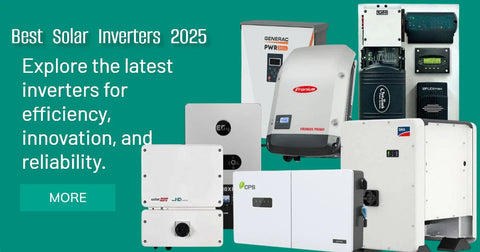
Portlandia Electric Supply stocks hybrid inverters from 4 kW to whole-home class in the hybrid inverters collection and the wider solar inverters collection — pair with battery storage and our energy storage systems for the complete system. Sizing between two models? Call the counter with your peak load and array size — we'll tell you which one we'd put on our own house.
One last piece of counter advice that saves return trips: buy for the house you'll own in five years, not the one on the permit today. If an EV, a heat-pump water heater, or a workshop is anywhere on your horizon, size the continuous output and the PV ceiling for that future load now — the cost difference between classes is a few hundred dollars at purchase and a full replacement later. The same logic applies to the battery bay: leave the physical space, conduit path, and breaker capacity for a second tower even if year one starts with ten kilowatt-hours.