

Choosing commercial solar modules Commercial and industrial arrays are specified differently from residential roofs: higher wattage modules, fewer units per kW, and a racking and freight plan that has to work on a loading dock. This collection carries 135 SKUs focused on the module classes used in C&I work, from Axitec and SolarEdge-compatible strings through…


134 products
 Trina Solar
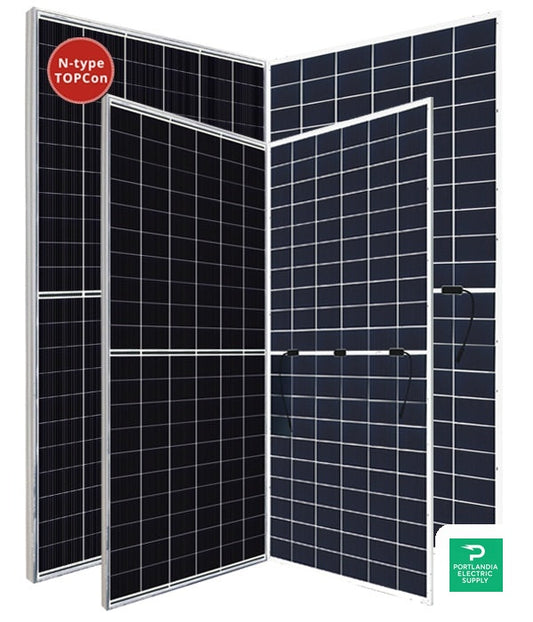
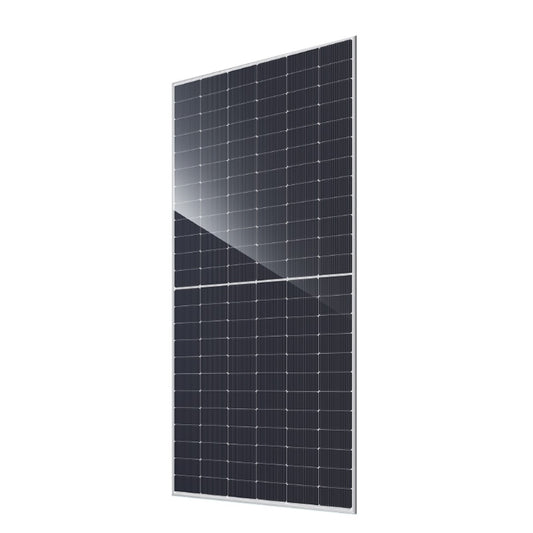
 Vertex N 600W N-Type TOPCon Commercial Module
$299.00
$0.50/W · 600WAvailable to orderLead time confirmed at checkoutTop Seller
 ZNShine
ZNshine 400W ZXM7-SH108-400/M All Black Monocrystalline...
$144.99
$0.36/W · 400WIn stockShips in 1–2 business daysTop Seller
 ZNShine
 Solar 405W 108-Cell Solar Panel
$147.61
$0.36/W · 405WAvailable to orderLead time confirmed at checkout
 LONGi
LONGi Hi-MO X6 Scientist 600W N-Type TOPCon Bifacial Mo...
$161.29
$0.27/W · 600WAvailable to orderLead time confirmed at checkout
 Jinko Solar
Jinko Tiger Neo N-Type 600W Bifacial TOPCon Solar Panel
$216.00
$0.36/W · 600WAvailable to orderLead time confirmed at checkout
 Canadian Solar
 HiKu6 395W Mono Solar Panel - CS6R-395MS-HL
$163.99
$0.42/W · 395WAvailable to orderLead time confirmed at checkout
 Hyundai Energy Solutions
Hyundai HiS-S410YH(BK) 410W Bifacial Commercial Solar P...
$149.00
$0.36/W · 410WAvailable to orderLead time confirmed at checkout
 Talesun
 TM7G54M-450 450W Bifacial Solar Panel
$223.95
$0.50/W · 450WAvailable to orderLead time confirmed at checkout
 Aptos
Aptos Solar DNA-120-BF10-440W 440W Bifacial Solar Panel
$176.00
$0.40/W · 440WAvailable to orderLead time confirmed at checkout
 JA Solar
 545 W Solar Panel – JAM72D30‑545/MB, 144‑cell ...
$185.32
Available to orderLead time confirmed at checkout
-
Vendor:Canadian Solar
MPN: PES-SPS-SPL-0143
Pallet of 30Regular price $340.80 USDRegular priceUnit price per -
Vendor:Hyundai Energy Solutions
MPN: PES-SPS-SPL-0213
Pallet of 30Regular price $220.78 USDRegular priceUnit price per -
Vendor:Hyundai Energy Solutions
MPN: PES-SPS-SPL-0332
Pallet of 30Regular price $285.56 USDRegular priceUnit price per -
Vendor:Canadian Solar
MPN: PES-SPS-SPL-0142
Pallet of 30Regular price $249.86 USDRegular priceUnit price per -
Vendor:JA Solar
MPN: PES-SPS-SPL-0330
Pallet of 30Regular price $270.99 USDRegular priceUnit price per -
Vendor:Jinko Solar
MPN: N-72HL4-BDV-628550
−14%Pallet of 30-14%Regular price $295.00 USDRegular priceUnit price per$341.90 USDSale price $295.00 USD$0.50/WAvailable to orderExpected ship Nov 13 – 17SaleIn Stock -
Vendor:Phono Solar
MPN: PES-SPS-SPL-0178
Pallet of 30Regular price $218.00 USDRegular priceUnit price per -
Vendor:Phono Solar
MPN: PES-SPS-SPL-0217
Pallet of 30Regular price $218.00 USDRegular priceUnit price per -
Vendor:Qcells
MPN: PES-SPS-SPL-0001
Regular price $296.69 USDRegular priceUnit price per -
Vendor:Talesun
MPN: PES-SPS-SPL-0166
Pallet of 30Regular price $226.64 USDRegular priceUnit price per -
Vendor:Mission Solar
MPN: PES-SPS-SPL-0146
Pallet of 30Regular price $263.25 USDRegular priceUnit price per -
Vendor:ZNShine
MPN: PES-SPS-SPL-0212
Pallet of 30Regular price $173.99 USDRegular priceUnit price per -
Vendor:Jinko Solar
MPN: PES-SPS-SPL-0333
Pallet of 30Regular price $325.00 USDRegular priceUnit price per -
Vendor:Solar4America
MPN: PES-SPS-SPL-0155
Pallet of 30Regular price $324.80 USDRegular priceUnit price per -
Vendor:Mission Solar
MPN: PES-SPS-SPL-0145
Pallet of 30Regular price $249.75 USDRegular priceUnit price per -
Vendor:ZNShine
MPN: PES-SPS-SPL-0198
Pallet of 30Regular price $185.31 USDRegular priceUnit price per -
Vendor:Aptos
MPN: PES-SPS-SPL-0140
Pallet of 30Regular price $216.99 USDRegular priceUnit price per -
Vendor:JA Solar
MPN: PES-SPS-SPL-0177
Pallet of 30Regular price $265.32 USDRegular priceUnit price per -
Vendor:Phono Solar
MPN: PES-SPS-SPL-0211
Pallet of 30Regular price $146.99 USDRegular priceUnit price per -
Vendor:Solar4America
MPN: PES-SPS-SPL-0031
Pallet of 30Regular price $6,168.69 USDRegular priceUnit price per -
Vendor:Solar4America
MPN: PES-SPS-SPL-0028
Pallet of 30Regular price $422.50 USDRegular priceUnit price per -
Vendor:Talesun
MPN: PES-SPS-SPL-0191
Pallet of 30Regular price $146.99 USDRegular priceUnit price per -
Vendor:ZNShine
MPN: PES-SPS-SPL-0160
Pallet of 30Regular price $175.45 USDRegular priceUnit price per -
Vendor:ZNShine
MPN: PES-SPS-SOL-23348
Pallet of 30Regular price $176.00 USDRegular priceUnit price per -
Vendor:Hyundai Energy Solutions
MPN: PES-SPS-SPL-0202
Pallet of 30Regular price $149.00 USDRegular priceUnit price per -
Vendor:Talesun
MPN: PES-SPS-SPL-0185
Pallet of 30Regular price $223.95 USDRegular priceUnit price per -
Vendor:Thornova
MPN: PES-SPS-SPL-0208
Pallet of 30Regular price $165.76 USDRegular priceUnit price per -
Vendor:Lesso New Energy Co.
MPN: PES-SPS-SPL-0206
Pallet of 30Regular price $98.08 USDRegular priceUnit price per -
Vendor:SolarSpace
MPN: PES-SPS-SPL-0196
Pallet of 30Regular price $194.38 USDRegular priceUnit price per -
Vendor:CW Energy
MPN: PES-SPS-SPL-0194
Pallet of 30Regular price $179.99 USDRegular priceUnit price per -
Vendor:Philadelphia Solar
MPN: PES-SPS-SPL-0189
Pallet of 30Regular price $148.96 USDRegular priceUnit price per -
Vendor:Thornova
MPN: PES-SPS-SPL-0187
Pallet of 30Regular price $6,308.50 USDRegular priceUnit price per -
Vendor:BYD
MPN: PES-SPS-SPL-0162
Pallet of 30Regular price $192.70 USDRegular priceUnit price per -
Vendor:SolarEdge
MPN: PES-SPS-SIV-0538
Regular price $5,079.82 USDRegular priceUnit price per -
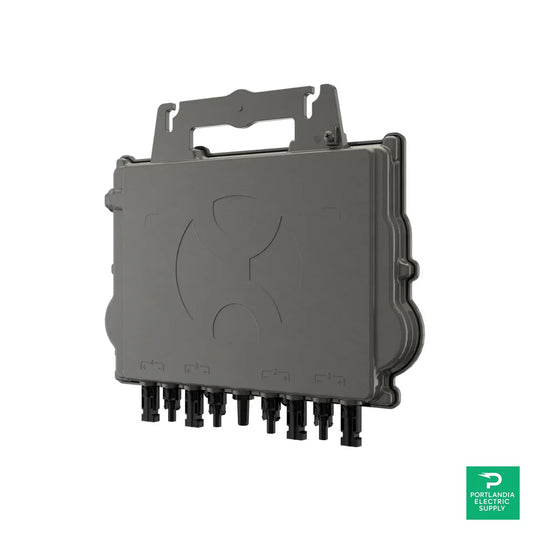
Vendor:APsystems
MPN: PES-SPS-SIV-0415
Regular price $383.90 USDRegular priceUnit price per -
Vendor:SolarEdge
MPN: PES-SPS-SIV-0008
Regular price $2,744.00 USDRegular priceUnit price per -
Vendor:Hyundai Energy Solutions
MPN: PES-SPS-SPL-0336
Pallet of 30Regular price $229.99 USDRegular priceUnit price per -
Vendor:Peimar
MPN: PES-SPS-SPL-0334
Pallet of 30Regular price $146.04 USDRegular priceUnit price per -
Vendor:Meyer Burger
MPN: PES-SPS-SPL-0331
Pallet of 30Regular price $168.00 USDRegular priceUnit price per -
Vendor:Solis
MPN: PES-SPS-SOL-18301
Pallet of 30Regular price $12,800.00 USDRegular priceUnit price per -
Vendor:Solis
MPN: PES-SPS-SOL-18300
Pallet of 30Regular price $7,072.12 USDRegular priceUnit price per -
Vendor:Solis
MPN: PES-SPS-SOL-18312
Pallet of 30Regular price $7,238.99 USDRegular priceUnit price per -
Vendor:Solis
MPN: PES-SPS-SOL-18311
Pallet of 30Regular price $9,634.99 USDRegular priceUnit price per -
Vendor:Solis
MPN: PES-SPS-SOL-18310
Pallet of 30Regular price $5,502.21 USDRegular priceUnit price per -
Vendor:Solis
MPN: PES-SPS-SIV-0766
Regular price $20,099.43 USDRegular priceUnit price per -
Vendor:GoodWe
MPN: PES-SPS-SIV-0709
Regular price $4,820.40 USDRegular priceUnit price per -
Vendor:GoodWe
MPN: PES-SPS-SIV-0708
Regular price $4,516.20 USDRegular priceUnit price per -
Vendor:GoodWe
MPN: PES-SPS-SIV-0706
Regular price $4,516.20 USDRegular priceUnit price per







About Commercial Solar Panels
Choosing commercial solar modules
Commercial and industrial arrays are specified differently from residential roofs: higher wattage modules, fewer units per kW, and a racking and freight plan that has to work on a loading dock. This collection carries 135 SKUs focused on the module classes used in C&I work, from Axitec and SolarEdge-compatible strings through to high-wattage bifacial modules, alongside the string inverters that pair with them.
The four specification decisions
- Wattage class. 400W-450W modules suit roofs with tight structural limits; 550W-700W modules reduce labor and racking cost per kW on ground mounts and large commercial roofs. Higher wattage also means larger physical dimensions - check the 72-cell vs 66-cell footprint against your racking layout.
- Cell technology. Mono PERC remains the cost baseline. TOPCon and n-type modules carry a better temperature coefficient and lower degradation, which matters in hot climates and on long-horizon PPAs. Bifacial adds rear-side gain only where the mounting surface is reflective and elevation permits.
- System voltage. 1500V modules require 1500V-rated inverters and string components. Mixing a 1500V module into a 1000V system is a design error, not a warranty issue.
- Certifications and warranty. UL 61730 listing for the module, IEC 61215/61730 test certificates where the off-taker asks, and a 25-30 year performance warranty with a US-addressable warranty entity.
String design and equipment pairing
Match module Voc temperature-corrected against inverter maximum DC input at the record low temperature for the site, not the average. Commercial strings also need to respect the inverter's MPPT window and maximum input current per MPPT, which is where high-current bifacial modules catch people out. The product pages list the electrical characteristics; the quote desk can confirm the string configuration against the inverter you have selected.
Pallet, freight and jobsite reality
Modules ship on manufacturer pallets, typically 30-36 modules, and pallets do not like being double-stacked or side-loaded. We quote LTL with liftgate when the site has no dock, and we can sequence deliveries so modules land after racking is installed. Freight is quoted per order against the delivery ZIP and site conditions.
Common questions
Which module should I use for a 100kW commercial roof? It depends on roof area and structural allowance - send the layout constraint and the quote desk will return two or three module options with cost and freight.
Do you carry 1500V modules and inverters? Yes, both appear in this collection and in the string inverter ranges; confirm system voltage on the request so the pairing is checked before quoting.
Can you supply datasheets for a submittal? Yes, the manufacturer datasheet and listing certificates are available with the quote.