EG4 Solar Products: The Installer's Guide to the Lineup for Homeowners and Businesses
~16 min read · Brand guide · PES Supply editorial

EG4 Electronics went from a value brand on a Texas shelf to one of the most-installed names in DIY and light-commercial solar in about five years, and it didn't happen through marketing. It happened because the equipment works, the documentation is unusually honest, and the price point lands where premium brands won't go. We stock the line because our customers kept asking for it by name — and because the warranty-claim rate stayed low after we did.
A quick honesty note on scope: EG4's catalog is broad — inverters, batteries, charge controllers, mini-splits, even EV charging accessories — and this guide concentrates on the solar power core: hybrid and off-grid inverters, LiFePO4 storage, and the controllers that tie them together every day. That's the gear we field questions on daily, and it's where the brand's reputation was actually built. If you need the wider catalog, contact the team and we'll source it — the point of 169 authorized brands is that the answer is rarely "we can't get that."
This guide walks the EG4 ecosystem the way we'd walk it with a contractor in the warehouse: what each product family does, which jobs it fits, where the limits are, and how to size the pieces into a system that passes inspection and survives its first winter. PES Supply is an authorized source for 169 brands and 50,000+ SKUs — including the EG4 battery line, hybrid inverters, and charge controllers covered here, delivered in 7–10 business days.
EG4 occupies the space between premium residential ecosystems (Enphase, SolarEdge) and commodity import equipment. The pitch: 48V hybrid and off-grid hardware with serious power ratings, UL listings where they matter, closed-loop battery communication, and prices that let a homeowner or small contractor build a code-compliant system without a five-figure equipment invoice.
The tradeoffs are real and we'll name them: the monitoring software is functional rather than polished, the aesthetic is utility-grade rather than design-forward, and grid-tie interconnection paperwork in strict utility territories can require more documentation effort than the premium brands with decades of utility relationships. For off-grid, backup, and self-consumption builds — the segments EG4 actually targets — those tradeoffs rarely bind.
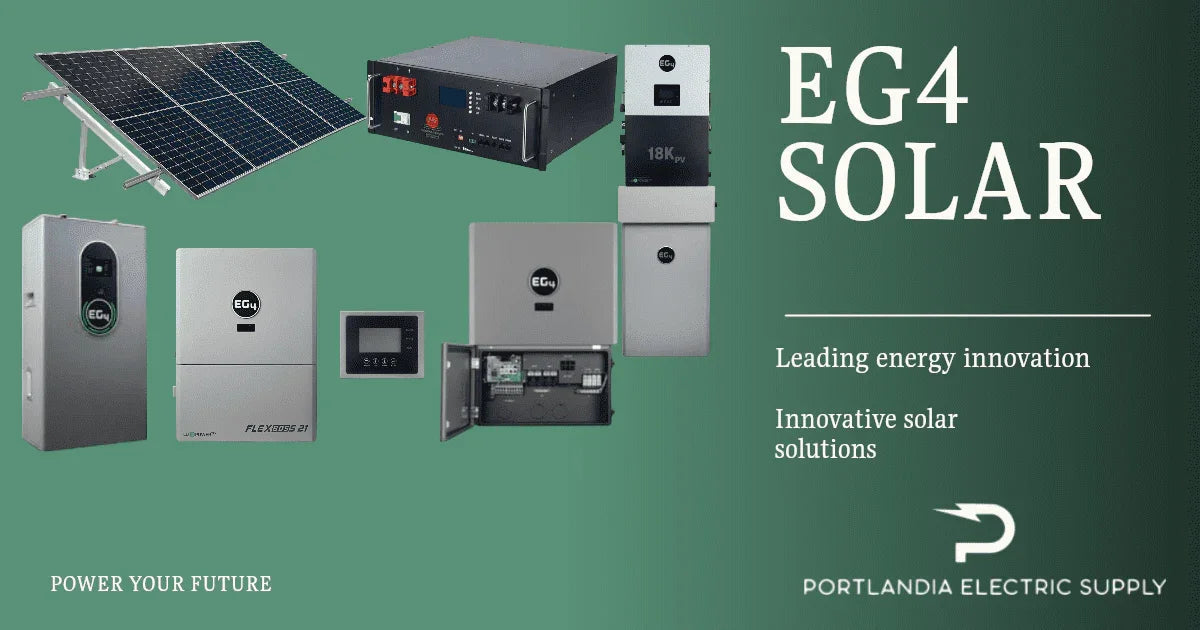
The inverter lineup is the heart of the ecosystem. Two series dominate the installs we support:
| Model | Class | Architecture | Best-Fit Application |
|---|---|---|---|
| EG4 12000XP | 12 kW off-grid inverter/charger | 48V battery, split-phase 120/240V output, dual MPPT inputs rated up to 24 kW of PV | Whole-home off-grid, large backup systems, shops and barns |
| EG4 12kPV | 12 kW-class hybrid | 48V battery, grid-interactive with battery backup, generator input | Grid-tied self-consumption with outage protection |
| EG4 6000XP | 6 kW off-grid inverter/charger | 48V battery, split-phase output, scalable in parallel | Cabins, RVs, small homes, starter systems |
| EG4 FlexBOSS21 | Flexible hybrid platform | Pairs with GridBOSS for whole-home energy management | Grid-tie with smart load management and generator integration |
The parallel capability is the sleeper feature. Two 12000XP units stacked give you 24 kW of inverter capacity — legitimate whole-property power, including well pumps and mini-splits that bog down lesser hardware. We routinely see installers start a customer on a single unit and parallel a second one two years later when the shop building goes up. Design the battery bank and DC bus for the future stack on day one; retrofitting parallel capacity onto an undersized bank is the expensive way.
EG4 batteries are lithium iron phosphate (LiFePO4) in the form factors the industry standardized on: 51.2V rack-mount modules around 5.12 kWh each, wall-mount PowerPro-style units, and weatherized outdoor enclosures. The chemistry choice is the point — LiFePO4's thermal stability and cycle life (rated for thousands of cycles to 80% depth of discharge) are why this class of battery displaced lead-acid for daily-cycling solar.
| Format | Typical Capacity | Strengths | Watch-Outs |
|---|---|---|---|
| Server-rack modules (LL / LifePower4 class) | ~5.12 kWh each, stackable to 30+ kWh | Closed-loop comms with EG4 inverters; easy capacity growth; rack serviceability | Indoor/protected install; weight on the rack |
| Wall-mount (PowerPro class) | ~14 kWh class per unit | High capacity per footprint; indoor/outdoor rated versions | Single-point failure if only one unit; heavier wall loading |
| Outdoor all-weather enclosures | Varies | Garage-free installs; heated options for cold climates | Verify low-temp charge protection spec for your climate |
The closed-loop detail deserves emphasis. When the battery BMS talks directly to the inverter over CAN — charge current limits, temperature, state of charge — the system charges faster, protects itself better, and logs data that makes warranty conversations short. Mixing EG4 inverters with non-communicating batteries works (voltage-based charging) but gives up the protection layer. Our server-rack battery category and the 20/80 cycling guide cover the operating discipline that gets these packs to their rated cycle life.
EG4's MPPT controllers round out the off-grid stack — the MPPT100-48HV 100A controller is the one we see specced most, sized for serious PV arrays on 48V banks. Controller sizing follows the standard discipline: array current at cold-corrected voltage must sit inside the controller's input window, and output current determines how much of the array the controller can actually harvest. A 100A controller on a 48V bank moves roughly 5 kW of charging power; arrays above that want a second controller or an inverter-charger with integrated MPPTs like the 12000XP's dual inputs.
For the full sizing walkthrough, use our charge controller sizing guide and the MPPT vs PWM explainer — short version: at this power class, MPPT is the only serious answer.
Take a realistic whole-home off-grid target: 25 kWh/day consumption, 4.0 peak sun hours average, 2.5 PSH in the design (worst) month, 2 days of autonomy.
| Design Step | Math | Result |
|---|---|---|
| Array for average day | 25 kWh ÷ (4.0 PSH × 0.80 system efficiency) | ~7.8 kW |
| Array for worst month (no generator) | 25 kWh ÷ (2.5 × 0.80) | ~12.5 kW — inside one 12000XP's 24 kW PV window |
| Battery for 2 days autonomy | 25 kWh × 2 ÷ 0.90 usable DoD | ~55.6 kWh → 11 × 5.12 kWh rack modules |
| With generator backup instead | 1 day autonomy + generator for long storms | ~28 kWh → 6 modules, generator carries the outliers |
| Inverter continuous load check | Peak simultaneous loads (HVAC + well pump + kitchen) | Size inverter to measured peak, not daily energy |
That last row is where off-grid designs fail. Daily energy sizing picks the battery and array; the inverter is sized by the worst simultaneous draw. A 4-ton heat pump with a 90A locked-rotor moment will test a single 12 kW inverter's surge rating every time it starts. Soft starters or a paralleled second inverter solve it — decide at design time, not at 11 PM on commissioning night. The off-grid battery sizing guide and battery-count math for a 4,000W system go deeper on the storage side.
Theory is fine; purchase orders are better. These are the three configurations we quote most often, with the reasoning behind each:
| Build | Core Equipment | What It Covers | Who Buys It |
|---|---|---|---|
| Cabin / weekend off-grid | 6000XP + 2–3 rack batteries + 3–4 kW array | ~10 kWh/day, fridge, lights, mini-split, well pump | Recreational property, remote builds |
| Grid-tie whole-home backup | 12kPV or FlexBOSS21 + 3–6 rack batteries + existing/new array | Critical-to-full-home loads through outages; daily TOU shifting | Suburban homeowners in outage-prone territories |
| Full off-grid homestead | 1–2 × 12000XP + 6–11 rack batteries + 8–13 kW array + generator | 20–25+ kWh/day year-round with generator for worst weeks | Rural homesteads, farms, remote commercial |
Notice the generator in the third row. Every honest off-grid design at mid-latitudes includes one — the generator sizing guide pairs naturally with these builds, and our generator catalog covers the units we match with them. A Champion 22kW standby unit or a Cummins Quiet Connect behind an EG4 bank is a standard pairing: the battery carries the night, the generator carries the storm week. Trying to build generator-free off-grid at 38°N latitude doubles the array and battery cost to cover maybe fifteen bad days a year — the math almost never favors it.
For the grid-tie backup row, the summer-vs-winter production guide is required reading before sizing: backup systems sized on July numbers disappoint in January, and the customer remembers who set the expectation.
5B. Design Mistakes We See on EG4 Builds (and How to Dodge Them)

These come straight from support calls and site visits:
- Undersized battery banks behind big inverters. A 12000XP can pull over 250A from the DC side at full tilt. Two 5.12 kWh modules can't deliver that without the BMS throttling or tripping. Rule of thumb we use: at least one 5 kWh-class module per 2 kW of inverter capacity — six modules behind a 12 kW unit is the comfortable floor, and it's why the sizing table above lands where it does.
- PV strings designed at STC. Cold mornings push open-circuit voltage well past nameplate. Run the NEC 690.7 temperature correction and respect the MPPT input ceiling — a string that's "fine" in September smokes an input stage in January. The permitting guide's voltage-correction table shows the math.
- No surge plan for motor loads. Covered above, and worth repeating: measure inrush, install soft starters, or parallel inverters. Hope is not a surge strategy.
- Battery-first wiring shortcuts. Class-T fusing on the battery bank, proper cable gauge for the round-trip run, and busbars instead of daisy-chained lugs once you're past two modules. The amperage at 48V forgives nothing.
- Skipping the grounding detail. Off-grid doesn't mean ungrounded — the system still needs its electrode and bonding per NEC 250/690. Inspectors check even when there's no utility involved.
EG4's core equipment carries the listings inspectors ask for — UL 1741 on the hybrid inverters, UL 1973/9540-family documentation on the battery line. Two permitting notes from the field. First, confirm the specific model's listing against your AHJ's checklist before ordering; listings land model by model, and "the brand is listed" is not the same as "this SKU is listed." Second, off-grid-branded equipment used in grid-connected mode triggers full interconnection review — the 12kPV's grid-interactive mode is the right tool when the utility meter stays involved. Our permitting and inspection guide covers the package reviewers expect, and the NEC 2026 rundown flags what changed for storage this cycle.
A few practices separate clean EG4 installs from troubled ones, and none of them are in the brochure:
- Torque the DC lugs by the book. Battery lugs on 48V banks carry hundreds of amps. Use the published torque value with a calibrated wrench, then thermal-scan the connections under load on commissioning day. Loose DC connections are the number-one self-inflicted wound in this product class, and they announce themselves as heat long before they fail.
- Respect the surge reality. Inductive loads — well pumps, compressors, older HVAC — draw 3–5× running current at start. The XP series handles honest surges, but a soft starter on a big heat pump is cheap insurance and extends inverter life. Measure the actual starting current with a clamp meter's inrush function before you promise a customer their AC will run.
- Update firmware before commissioning, not after. EG4 ships firmware updates that meaningfully improve battery communication and grid behavior. Flash to current on the bench, verify the BMS handshake, then hang the unit. Field-updating a commissioned system on a customer's schedule is how Friday afternoons get ruined.
- Ventilation clearances are load-bearing. The inverter's thermal derating curve starts earlier than most installers expect when the unit is packed into a closet. Give it the clearance the manual specifies; a derating inverter in August looks exactly like a failing one.
- Label everything at install. Six months later, when you're adding a second battery rack at 8 PM, the labels are the difference between a one-hour job and a trace-every-cable job. Label both ends of every DC run with string identity and polarity.
EG4's monitoring portal and local displays cover the operational essentials — production, consumption, battery state of charge, fault logs, and remote setting changes. What you won't get is the polished per-module visualization of an Enphase Enlighten or the fleet-management depth of a commercial platform. For the off-grid and backup customers this line serves, that's usually fine: they want to know the battery is at 74% and the generator didn't run yesterday, and the app answers both.
For installers managing multiple sites, the discipline is the same as any platform: set alert thresholds to weather-normalized events, export data archives periodically, and don't rely on a free cloud portal as your only record of a 25-year asset. Our AI and IoT monitoring guide covers how to layer third-party analytics on top of any vendor's telemetry when a customer outgrows the stock app.
EG4's warranty terms are competitive for the class — multi-year inverter coverage and 10-year-class battery warranties are the norm — and warranty service runs through the distributor channel, which is one reason sourcing from an authorized supplier matters. Keep your purchase records and commissioning photos; they shorten every warranty conversation we've been part of.
Honesty about fit, because it saves everyone time: EG4 is not the right answer for a homeowner who wants a white-glove, app-first, set-and-forget retail experience with per-panel monitoring — buy the premium ecosystem and pay for it. It's not the right answer for utility-scale or large commercial work, where the line simply doesn't reach. And it's not the right answer where the AHJ or utility maintains an approved-equipment list that the specific model hasn't landed on yet. Outside those cases — which is most of the off-grid, backup, and self-consumption market — the value equation is very hard to beat.
| Dimension | EG4 | Premium Ecosystems (Enphase / SolarEdge / Generac) |
|---|---|---|
| Equipment cost per kWh stored | Lowest in the listed-equipment class | 1.5–2.5× higher |
| Architecture | 48V DC-coupled, installer-configured | AC-coupled, module-level, highly integrated |
| Monitoring | Functional app + local displays; open-ish protocols | Polished per-module telemetry and fleet tools |
| Utility interconnection ease | More documentation effort in strict territories | Decades of utility pre-approval relationships |
| Best fit | Off-grid, backup, self-consumption, DIY-with-electrician | Retail grid-tie with premium monitoring and aesthetics |
| Service model | Distributor + community support depth | Manufacturer direct + certified installer networks |
I've commissioned both tiers. The premium systems are genuinely easier to monitor and easier to interconnect; EG4 systems are genuinely cheaper per delivered kWh and more forgiving of non-standard designs like generator integration and partial-home backup. Pick per the job, not per the logo. When the job is premium grid-tie, we carry Enphase, SolarEdge, and Generac too.
EG4 earned its market position the slow way: conventional LiFePO4 chemistry, honest ratings, closed-loop communication, and prices that make whole-home energy storage a middle-class purchase. For off-grid, backup, and self-consumption builds it's the first line we reach for. PES Supply stocks the ecosystem end to end — batteries, inverter-chargers, charge controllers — with 7–10 business day delivery. Request a quote with your load list and we'll spec the bank, the array, and the inverter as one matched system.
One last piece of advice that applies whatever brand you land on: buy the system as a system. The failure mode we see most is a great inverter married to a too-small bank, fed by strings designed at STC, commissioned without a surge plan. None of those parts failed — the design did. An hour of load-list and worst-month math before the purchase order is worth more than any single component upgrade on the market.
And if you're comparing quotes, ask each bidder the same three questions: what is the battery's usable capacity at my expected discharge rate, what is the inverter's continuous versus surge rating into my actual motor loads, and what does the warranty process look like when something fails in year six. The quality of the answers tells you more than the line items do.
Are EG4 products any good?
Yes — EG4 occupies the value tier of listed solar equipment: conventional LiFePO4 batteries, UL-listed hybrid inverters, and closed-loop battery-to-inverter communication at prices well below the premium ecosystems. The tradeoffs are plainer monitoring software and more interconnection paperwork in strict utility territories, which rarely matter for the off-grid and backup applications the line targets.
How many EG4 batteries do I need for whole-home backup?
Multiply daily consumption by days of autonomy and divide by usable depth of discharge. A 25 kWh/day home wanting one day of backup needs roughly 28 kWh — about six 5.12 kWh rack modules. Two days takes eleven. Generator backup shrinks the required bank significantly.
Can EG4 inverters parallel for more power?
Yes. The XP-series inverter-chargers stack in parallel — two 12000XP units deliver 24 kW of split-phase capacity. Design the battery bank and DC busbars for the future stack from day one; retrofitting parallel capacity onto an undersized battery bank is the expensive path.
Do EG4 batteries work with non-EG4 inverters?
Yes, via voltage-based (open-loop) charging settings published for common inverter brands. You give up closed-loop protections — dynamic charge-current limiting and precise SoC reporting — so closed-loop pairing with an EG4 or other supported inverter is the recommended configuration.
Is EG4 equipment permitted and inspected like other brands?
Yes. AHJs care about listings, not logos: UL 1741 on the inverter, UL 1973/9540-family documentation on the batteries, and a complete one-line diagram. Verify the specific model's listing against your jurisdiction's checklist before ordering, since listings apply model by model.
What's the difference between the 12000XP and the 12kPV?
The 12000XP is an off-grid inverter/charger: 12 kW split-phase output with dual MPPT inputs rated for up to 24 kW of PV, intended for battery-first systems. The 12kPV is a grid-interactive hybrid that can export and blend grid, solar, battery, and generator power. Off-grid or generator-backed builds lean XP; grid-tied homes wanting backup lean kPV.