The Real Question: Autonomy Hours × Load, Not Array Size


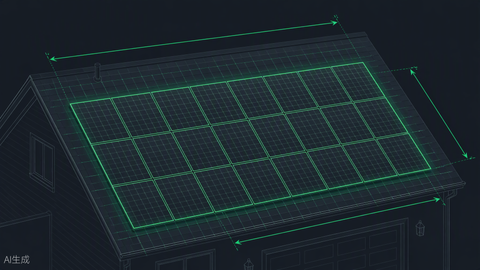
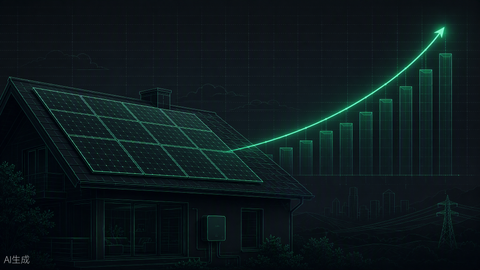
"How many batteries do I need for a 4,000-watt solar system?" is the most common storage question we get, and it starts from a misunderstanding worth correcting in the first paragraph: your battery bank is sized to your loads, not your array. The 4kW array's only job in this equation is to refill whatever bank you install on an average day. Get that relationship right and the whole design falls into place; get it backwards and you end up with either a bank that never charges fully or an array idling against a thimble.

So the honest answer comes in two steps. First, size the bank against what you want it to do — overnight self-consumption, backup for outages, or full off-grid autonomy. Second, verify the 4kW array can refill it. A 4kW array produces roughly 14–20 kWh on an average day depending on your climate, which comfortably refills 10–15 kWh of usable storage. That pairing — 4kW of panels against 10–15 kWh of batteries — is the sweet spot this entire guide is built around, and it's the configuration we've helped hundreds of customers dial in for homes, cabins, and small off-grid builds.
Key takeaways
- Overnight self-consumption for a typical home: 10–15 kWh usable storage.
- Multi-day off-grid autonomy: 20–40 kWh usable, depending on loads and climate.
- LiFePO4 vs. lead-acid: you need roughly half the nameplate capacity with lithium for the same usable kWh.
- A 4kW array refills 10–15 kWh/day in most US climates — match the bank to that budget.
- Count batteries by nameplate kWh ÷ depth of discharge, not by physical unit count.
Step 1: Determine Your Daily Energy Consumption

Battery sizing begins with a load audit, not a product catalog. Pull twelve months of utility bills and find your average daily consumption — the average US household uses about 30 kWh/day, but your number is the only one that matters. Then decide what the batteries actually need to cover, because "run the house" splits into three very different design targets:
Essential loads only — fridge, furnace blower, lights, internet, a few outlets: 5–10 kWh/day. Overnight self-consumption — everything you use between sunset and sunrise: typically 10–15 kWh for an average home. Full autonomy — your entire daily consumption multiplied by the number of sunless days you want to survive: 30 kWh/day × 2–3 days = 60–90 kWh, a serious bank that a 4kW array alone cannot support. I've watched customers spec 40 kWh of beautiful lithium against a 4kW array and then wonder why the bank sits at 40% through every cloudy week. The array has to earn the bank, every day.
| Design Target | Typical Daily Need | Recommended Usable Storage | 4kW Array Sufficient? |
|---|---|---|---|
| Essential loads backup | 5–10 kWh | 5–10 kWh | Yes — easily |
| Overnight self-consumption | 10–15 kWh | 10–15 kWh | Yes — the sweet spot |
| One full day autonomy | 20–30 kWh | 20–30 kWh | Marginal — tight in winter |
| Multi-day off-grid | 30+ kWh/day | 60–90 kWh | No — needs 8kW+ array |
Step 2: Battery Chemistry — Why LiFePO4 Won

The chemistry decision used to involve genuine tradeoffs. In 2026 it mostly doesn't. LiFePO4 (lithium iron phosphate) dominates new installations for reasons that compound: 90%+ usable depth of discharge versus 50% for lead-acid, 6,000+ cycle life versus 500–1,200 for AGM, no maintenance, no off-gassing, half the weight per usable kWh, and round-trip efficiency around 95% versus 80–85%. The upfront cost per nameplate kWh is higher; the cost per usable kWh per cycle is dramatically lower. Lead-acid — flooded, AGM, or gel — survives as a legacy and budget option for light-duty backup banks that cycle rarely. Flow batteries remain a niche commercial technology, not a residential one.
| Factor | LiFePO4 | Lead-Acid (AGM/Flooded) |
|---|---|---|
| Usable depth of discharge | 90–100% | 50% recommended max |
| Cycle life | 6,000+ cycles | 500–1,200 cycles |
| Round-trip efficiency | ~95% | 80–85% |
| Maintenance | None | Watering (flooded), terminal care |
| Weight per usable kWh | ~13 lb | ~55 lb |
| Lifespan at daily cycling | 15+ years | 3–5 years |
Step 3: The Sizing Math — Nameplate ÷ DoD = What You Buy

The formula that answers the title question: batteries needed = target usable kWh ÷ (nameplate kWh per battery × depth of discharge). Work it in both chemistries and the LiFePO4 advantage becomes arithmetic:
| Battery Type | Capacity per Battery (kWh) | Usable Capacity (kWh) | Batteries Needed (for ~30 kWh target*) | Notes |
|---|---|---|---|---|
| Li-ion | 10 | 10 | 3 | High efficiency, less space |
| Lead-Acid | 10 | 5 | 5+ | Heavier, requires maintenance |
| Li-ion | 5 | 5 | 5–6 | More modular, easier replacement |
| Lead-Acid | 6 | 3 | 8+ | Multiple batteries increase wiring complexity |
*The original version of this guide sized against a 30 kWh whole-home target; for the 10–15 kWh overnight target we recommend with a 4kW array, divide counts accordingly.
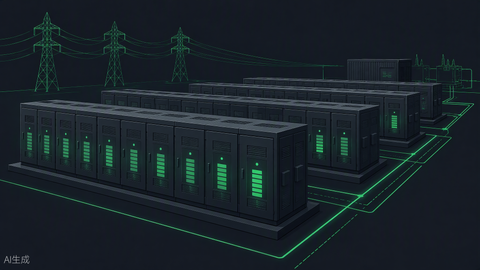
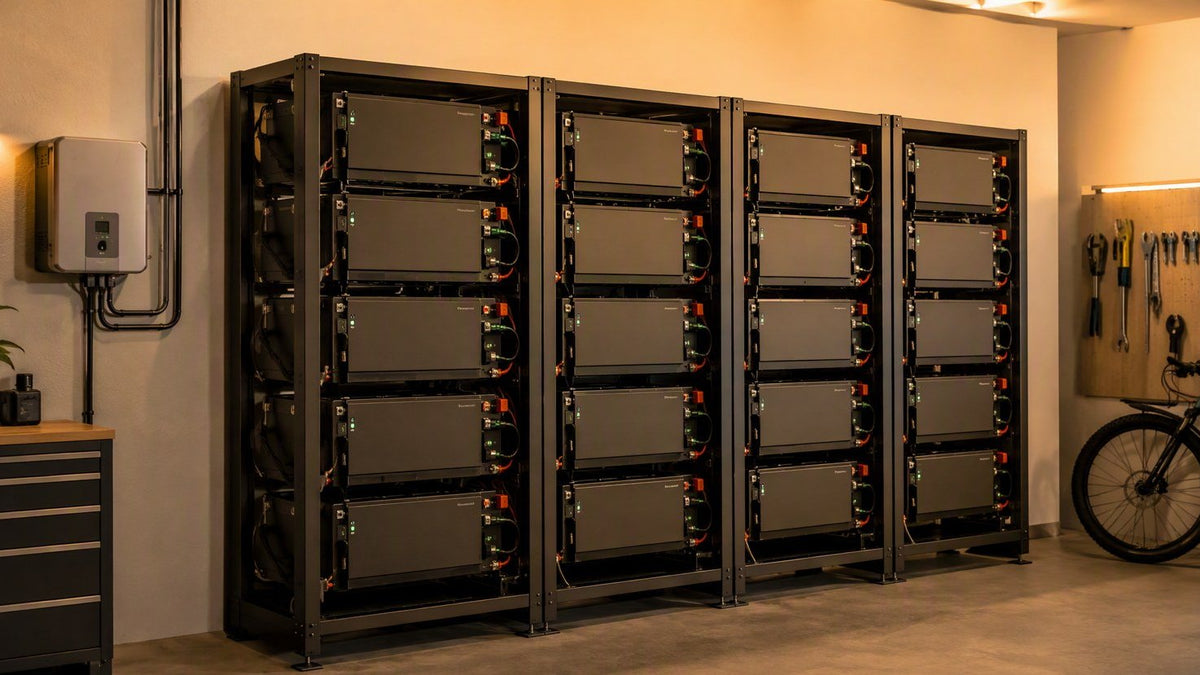
For overnight self-consumption of a home using 20–30 kWh/day, plan on 10–15 kWh of usable storage. In current hardware that's one 14.3 kWh wall-mount battery, or two to three 5.1 kWh server-rack modules, or a single integrated unit like the Fortress eFlex Max 5.4kWh stacked in pairs or triples. For multi-day autonomy, double or triple that — and revisit whether the 4kW array can keep up.
Battery Bank Sizing Math for a 4 kW Array

Now the array side of the ledger. A 4kW array's daily production follows the same formula as every PV system: nameplate × peak sun hours × ~85% system efficiency:
| Peak Sun Hours | Daily Production (4kW × hrs × 0.85) | Region | Refills This Much Usable Storage Daily |
|---|---|---|---|
| 3.5 | ~11.9 kWh | Pacific Northwest | ~8–10 kWh (after home daytime use) |
| 4.0 | ~13.6 kWh | Midwest / Northeast | ~10 kWh |
| 5.0 | ~17.0 kWh | Mid-Atlantic / California | ~12–14 kWh |
| 6.0 | ~20.4 kWh | Southwest | ~15+ kWh |
Remember the array also feeds your daytime loads directly — the surplus above daytime consumption is what actually reaches the batteries. A home using 8 kWh during daylight hours in a 4-sun-hour climate has roughly 5–6 kWh/day of charging surplus; that supports a 10 kWh bank cycling at 50–60% daily, not a 20 kWh bank cycled deep. This is the mismatch that strands oversized banks at partial charge, and partial charge is where LiFePO4 cell imbalance and lead-acid sulfation begin. Size the bank to what the array can refill in one average day, then let discharge depth, not charger starvation, be your design variable. Our off-grid battery sizing guide walks the full five-step calculation including temperature derating and autonomy days.
Bank Size vs. Backup Hours at Typical Loads

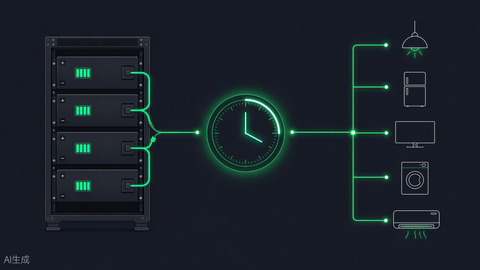
Translate kWh into the unit everyone actually thinks in — hours. At three realistic load levels:
| Usable bank size | 500W (essentials) | 1,000W (busy evening) | 2,000W (whole home, no HVAC) | Example build (LiFePO4) |
|---|---|---|---|---|
| 5 kWh | ~10 hrs | ~5 hrs | ~2.5 hrs | 1 × 5.1kWh rack module |
| 10 kWh | ~20 hrs | ~10 hrs | ~5 hrs | 2 × rack modules |
| 15 kWh | ~30 hrs | ~15 hrs | ~7.5 hrs | 3 × rack modules or 1 × 14.3kWh wall-mount |
| 20 kWh | ~40 hrs | ~20 hrs | ~10 hrs | 4 × rack modules |
Read the 10 kWh row carefully — it's the most-purchased bank size in residential solar. About 10 hours at a steady 1,000W load, 20 hours at 500W, or a full night of essential loads (fridge, lights, internet, furnace blower, a few outlets at 300–600W average). Whole-home loads with air conditioning or electric cooking average 2,000W+ and drain 10 kWh in 4–5 hours. If your outage plan includes central A/C, either budget 20+ kWh or put the A/C on a load-shed priority and accept that it cycles only when the sun helps.
LiFePO4 vs. Lead-Acid: The Count Math

Same target, two chemistries, very different shopping lists:
| Target usable storage | LiFePO4 nameplate needed (90% DoD) | Lead-acid nameplate needed (50% DoD) | Lead-acid 200Ah 12V units |
|---|---|---|---|
| 5 kWh | ~5.6 kWh → 1 rack module | 10 kWh | 4 × 12V 200Ah (2.4kWh ea) |
| 10 kWh | ~11 kWh → 2 rack modules | 20 kWh | 8 × 12V 200Ah |
| 15 kWh | ~17 kWh → 3 rack modules | 30 kWh | 12 × 12V 200Ah |
| 20 kWh | ~22 kWh → 4 rack modules | 40 kWh | 16 × 12V 200Ah |
Sixteen golf-cart-class batteries is not a battery bank; it's a maintenance hobby with a watering schedule. Each series string adds failure points, each flooded cell needs monthly attention in cycling service, and the whole assembly weighs the better part of a thousand pounds. We still sell lead-acid for the right applications — OutBack 800RE and 2200RE AGM banks serve light-duty backup well — but for a daily-cycling solar bank in 2026, lithium is the answer and it isn't close.
Sample Battery Layout for a 4kW System

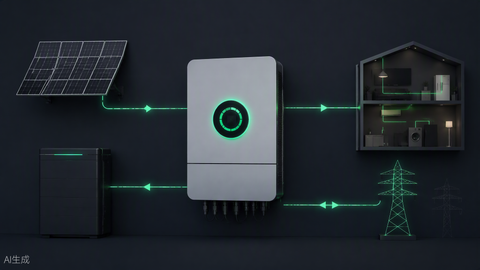
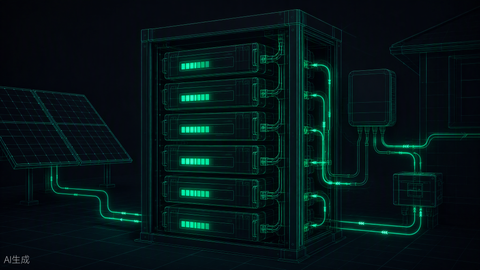
Two concrete builds cover most real projects. Build A — grid-tied with backup: 4kW array, hybrid inverter, 10 kWh LiFePO4 (two 5.1 kWh rack modules). Covers overnight essentials plus outage protection, refills fully by early afternoon in 4+ sun-hour climates, and leaves the grid as the deep reserve. This is the configuration we quote most often, and the one with the fewest post-install phone calls.
Build B — off-grid cabin: 4kW array, MPPT charge controller feeding a 48V bank of 15 kWh LiFePO4, inverter sized to the cabin's real loads with honest surge headroom. Discipline required: heavy loads run at solar noon, not at 9 p.m., and a small generator covers the December gap. The controller decision matters as much as the battery count — see our charge controller sizing guide for the voltage and current math, and the charge controller collection for current hardware.
Cost Considerations

LiFePO4 pricing in the current market runs roughly $300–$500 per nameplate kWh at the rack-module level, putting a 10 kWh bank at $3,500–$5,500 and a 15 kWh bank at $5,000–$8,000 for equipment. Lead-acid undercuts that by 30–40% upfront and loses it all back within the first replacement cycle. Add the balance of system — inverter or hybrid inverter, racking for rack modules, conduit, disconnects, and the inevitable box of lugs and heat-shrink — and a turnkey 10–15 kWh storage addition to an existing 4kW array typically lands at $8,000–$15,000 installed depending on region and complexity. Integrated systems like the Briggs & Stratton PHI 3.8 modules and mid-size hybrids like the Sol-Ark SA-8K or EG4 FlexBoss21 change the labor math substantially by collapsing inverter, transfer, and management into one box.
Installation & Maintenance Realities

LiFePO4 maintenance is mostly the absence of maintenance: no watering, no equalization charges, no venting requirements beyond sensible heat clearance. What remains: keep the bank between roughly 20% and 80% for daily cycling when longevity is the goal — the 20-80 rule explains the electrochemistry, and our battery life guide has the full protocol. Give the bank a full 100% charge monthly so the BMS can balance cells. Respect low-temperature charging limits — LiFePO4 must not accept charge below freezing, and quality batteries either self-heat or block it via BMS; if your bank lives in an unheated space, buy the heated variant. We've replaced exactly one LiFePO4 bank in five years, and it froze in an uninsulated Montana garage in February. The chemistry is bulletproof; the installation environment is not.
Portland & U.S. Market Notes
In our home Pacific Northwest market the sizing logic skews conservative: 3.5 annual-average sun hours means the 4kW array yields ~12 kWh/day, and December halves that. We size Portland-area banks at the smaller end of the ranges above — 10 kWh usable against a 4kW array — and counsel customers honestly that winter self-sufficiency isn't the design goal; outage resilience and summer self-consumption are. In California, NEM 3.0 flipped the economics toward storage: exporting solar pays pennies, so banks sized to swallow the entire afternoon surplus — 15+ kWh against a 4kW array — now pencil out where they never did before. Know your utility's export rules before finalizing bank size; they've become the single biggest variable in residential storage ROI, and they change often enough that last year's spreadsheet needs this year's rate sheet before you trust it.
Common Sizing Mistakes (and How to Avoid Them)
The failure patterns repeat across hundreds of customer projects, and every one of them is avoidable at the design table. First: sizing the bank from the array instead of the loads. A 4kW array doesn't tell you how much storage you need; your nighttime consumption does. Second: ignoring surge. A battery bank can hold plenty of energy and still fail to start a well pump or a compressor if the inverter and battery discharge ratings can't deliver the surge current — check the continuous and peak amp ratings, not just kWh. Third: planning 100% daily discharge. A bank sized with zero margin runs at its floor every morning and ages fast; size for 70–80% of your worst-night consumption so the battery lives in its comfortable middle. Fourth: forgetting future loads. The EV arrives, the hot tub appears, the kids discover gaming PCs — a bank at capacity today is undersized in three years, and rack-modular systems exist precisely so you can add a module instead of replacing the bank. Fifth, and quietest: never checking the system. A failed parallel module can turn a 15 kWh bank into a 10 kWh bank silently, and you find out during the outage. Put monitoring on the bank and glance at it monthly.
Charging Beyond Solar: Generators and Grid as Backup Fill
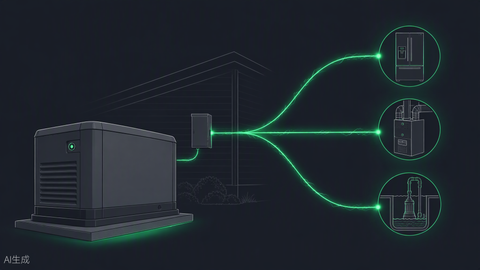
A 4kW array paired with 10–15 kWh of storage works beautifully nine months a year in most climates — and then December happens. The mature design includes a second charging source for the worst stretch: a small inverter generator (2,000–3,000W class) that feeds the hybrid inverter's AC input for a few hours during dark weeks, or grid charging on a scheduled off-peak window if you're grid-tied with time-of-use rates. This isn't a failure of the solar design; it's the honest acknowledgment that winter sun is a ration, and two gallons of gasoline in January is cheaper than doubling the battery bank to survive one bad month. The off-grid veterans all run this hybrid play, and the grid-tied folks already have it built in — the grid is the infinite battery behind the finite one on your wall.
Expansion Planning: Building a Bank That Grows
The best battery systems are bought once and grown into. Rack-modular LiFePO4 is the enabling hardware: modules share a common busbar and BMS communication, so year one is two modules and year three is four, with no rewiring beyond landing the new modules and updating the inverter's capacity setting. Two rules make expansion painless. Buy into a platform that's actually stocked long-term — orphan product lines strand expansion plans, which is why we steer customers toward high-volume ecosystems. And oversize the infrastructure on day one: the inverter's battery input rating, the busbar, the conduit, and the wall space should all accommodate the bank you'll own in five years, not the one you can afford this quarter. Trenching and drywall are the expensive parts of expansion; the module itself is the cheap part. Plan the infrastructure for the destination and grow the bank as budget and loads arrive.
How PES Supply Helps
We stock the batteries, inverters, and balance-of-system gear this guide describes — rack modules, wall-mounts, hybrid inverters, charge controllers, and the unglamorous cables and disconnects that make them work together safely for fifteen years. Browse the battery storage collection, batteries & energy storage, and energy storage systems, or pair storage with panels from the solar panel catalog and DIY solar kits. For generator-backup hybrids, the Generac PWRcell cost guide covers the all-in-one alternative. Bring us your utility bill and your goals — the sizing conversation is free, and an undersized or oversized bank is expensive either way.
FAQ: People Also Ask
How many batteries do I need for a 4kW solar system?
It depends on what you want the batteries to do, not on the array size. For overnight self-consumption of a home using 20–30 kWh/day, plan on 10–15 kWh of usable storage — that's one 14.3kWh wall-mount battery, or 2–3 server-rack 5kWh modules. For multi-day off-grid autonomy, double or triple that. The 4kW array just needs to refill the bank on an average day — and at 14–20 kWh of daily production, it can refill roughly 10–15 kWh of usable storage.
How long will a 10 kWh battery run a house?
About 10 hours at a steady 1,000W load, 20 hours at 500W, or roughly a full night of essential loads (fridge, lights, internet, furnace blower, a few outlets at 300–600W average). Whole-home loads with air conditioning or electric cooking average 2,000W+ and drain 10 kWh in 4–5 hours.
Is LiFePO4 or lead-acid better for a 4kW solar battery bank?
LiFePO4 for almost everyone. You can use 90% of its rated capacity versus 50% for lead-acid, so you need roughly half the nameplate capacity for the same usable kWh. LiFePO4 also lasts 6,000+ cycles versus 500–1,200 for AGM, tolerates partial state of charge without damage, and requires no maintenance. Lead-acid still makes sense for budget-constrained or rarely-cycled backup banks.
How much power does a 4kW solar system produce per day?
About 12–20 kWh per day depending on location: 4kW × peak sun hours × ~85% system efficiency. The Pacific Northwest sees ~12 kWh/day on annual average, the Midwest ~14, California and the Mid-Atlantic ~17, and the Southwest 20+.
What is the 20-80 battery rule?
Keep lithium batteries between roughly 20% and 80% state of charge for daily cycling to maximize lifespan, charging to 100% only occasionally (monthly) so the BMS can balance cells. It trades about 20% of daily usable capacity for a meaningful extension of cycle life — a good trade for a bank you expect to last 15 years.
How many lithium batteries do I need for whole-home backup?
For true whole-home backup including HVAC, plan on 20–30 kWh usable: 4–6 rack modules or 2 wall-mount 14.3kWh units. For essentials-only backup (the configuration most homes actually need), 10 kWh — two rack modules — covers a full night comfortably.
Sources & Standards
Production estimates use standard PVWatts-style methodology (nameplate × peak sun hours × 85% system efficiency); battery specifications reflect published manufacturer datasheets for current LiFePO4 and AGM products; cycle-life and DoD figures reflect manufacturer warranties and industry-standard test conditions. Installation of battery energy storage systems falls under NEC Article 706 (Energy Storage Systems) and NFPA 855 where adopted; permitted, inspected installation is required in most jurisdictions for permanently installed residential storage.