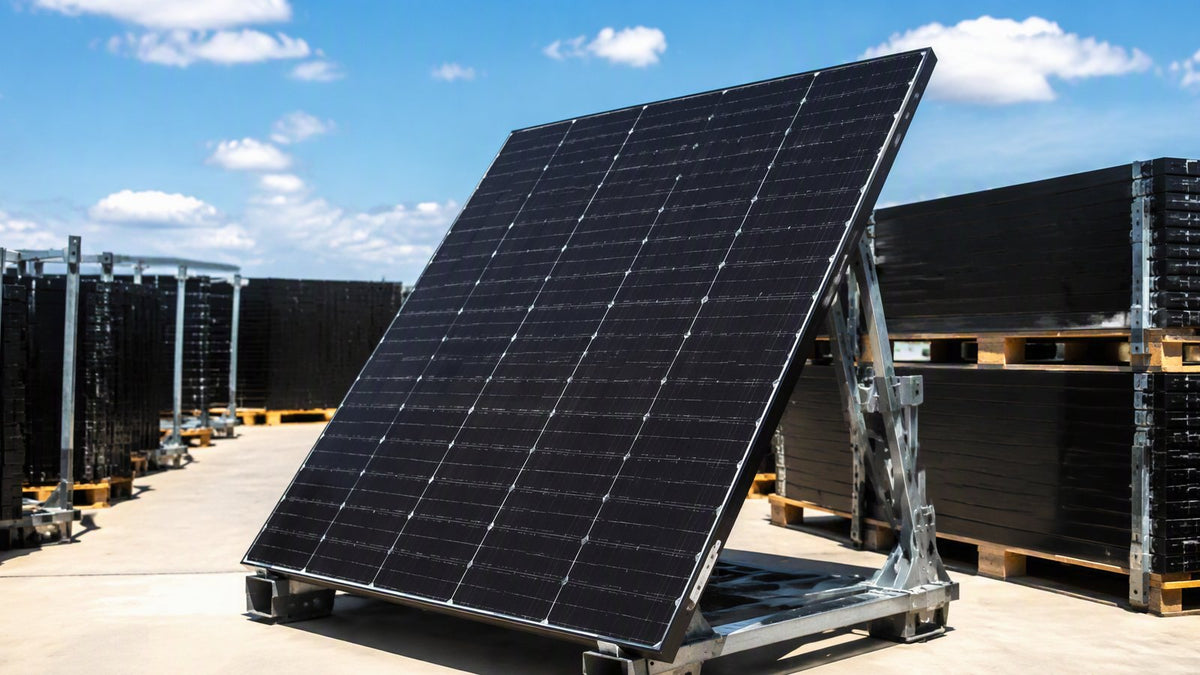
The 710W Class Arrives: Why This Panel Matters
We've unloaded a lot of containers in this business, and the first time a 700-watt-plus module came off the truck, the math on the whole job changed in the estimator's head before the lift was even parked. The Canadian Solar CS7N-TB-AG-710 — a 710-watt, bifacial, N-type TOPCon, glass-glass module — is where utility-scale solar sits right now: maximum watts per rack position, per acre, and per labor hour. If you're speccing a ground-mount or a big commercial roof in 2026 and you're still pricing 450W residential-format panels, you're paying yesterday's balance-of-system costs with tomorrow's budget.

This review is written from the supply side. We move these panels by the pallet and the container, we talk to the EPCs installing them, and we hear what actually happens in year one and year two — not what the datasheet promises at STC. Everything below keeps the real numbers on the table and the field experience in the prose. Check current stock in our solar panel catalog and the bifacial range.
The TOPCon Advantage: Why This Technology Ate PERC's Lunch
TOPCon — tunnel oxide passivated contact — won the technology war of the mid-2020s for a simple reason: it squeezes N-type performance out of manufacturing lines that already existed. PERC lines converted to TOPCon with manageable retooling, which meant the technology scaled to hundreds of gigawatts of capacity in a couple of years, which meant pricing collapsed to PERC parity while efficiency climbed a full point or two. That combination — better panel, same price, massive supply — is why PERC is being phased out and why HJT and back-contact, for all their elegance, remain premium niches rather than volume leaders.
What does N-type TOPCon actually buy in the field? Lower degradation — both the first-year light-induced hit and the annual rate. A better temperature coefficient, which on a 110°F roof or a desert tracker row is worth real percentage points of annual energy. Higher bifaciality, typically 80–85% versus ~70% for PERC bifacial. And no LID-driven anxiety in the commissioning reports. When we model projects for customers now, the PERC column is a history lesson.
Bifacial Gain: What the Back Side Really Delivers
Bifacial marketing loves the headline number — "up to 30% more energy!" — and field reality loves something more modest. The gain is a function of ground albedo, module height, row spacing, and diffuse light conditions, and we've watched identical arrays on different surfaces produce wildly different rear-side contributions. The albedo table below is the honest planning reference:
| Ground Surface | Albedo | Typical Bifacial Gain |
|---|---|---|
| Fresh Snow | 80-90% | 25-30% |
| White Gravel/Sand | 50-70% | 15-25% |
| Concrete | 25-40% | 10-15% |
| Dry Grass | 20-30% | 8-12% |
| Green Vegetation | 15-25% | 5-10% |
| Dark Soil | 10-15% | 3-7% |
Translation from the field: snow and white membranes are the rocket fuel, and everything else is single-digit to mid-teen percentages. Green vegetation — what most sites actually have — sits at the bottom of the table. Elevation matters as much as surface: a module at 1 meter over short grass gains meaningfully more than the same module at 0.4 meters, because the rear cell sees more of the sky and more of the ground. Tracker rows with wide pitch spacing stack the deck further. Design for bifacial deliberately — height, surface, spacing — or accept the modest default.
CS7N-TB-AG-710 Technical Specifications
Electrical
| Specification | Value | Notes |
|---|---|---|
| Power Output (Front) | 710W | STC conditions (1000W/m², 25°C, AM1.5) |
| Bifacial Power Output | Up to 850W | With 85% bifaciality and optimal conditions |
| Module Efficiency | 22.9% | Front-side efficiency at STC |
| Bifaciality Factor | 85% | Rear side output ratio vs. front |
| Cell Technology | N-type TOPCon | 132 cells in 2×66 configuration |
| Temperature Coefficient (Pmax) | -0.29%/°C | Excellent hot climate performance |
| Open Circuit Voltage (Voc) | ~54V | String sizing consideration |
| Short Circuit Current (Isc) | ~18A | Inverter compatibility consideration |
Two numbers in that table drive system design. First, 22.9% front efficiency: at utility scale, efficiency is density, and density is fewer racks, fewer piles, fewer feet of trench per megawatt. Second, the bifacial ceiling near 850W under optimal rear-side conditions — that's the number that makes capacity-factor models sing on high-albedo sites.
Mechanical
| Specification | Value | Notes |
|---|---|---|
| Dimensions | 2384 × 1303 × 33mm | ~94" × 51" × 1.3" |
| Weight | 37.8 kg (83.3 lbs) | Glass-glass construction |
| Glass Construction | 2.0mm + 2.0mm | Front and rear tempered glass |
| Snow Load Rating | 5,400 Pa | ~113 psf - excellent for northern climates |
| Wind Load Rating | 2,400 Pa | ~50 psf - suitable for high-wind regions |
| Junction Box | IP68 rated | Water and dust protected |
| Connectors | MC4-EVO2/T6 | Industry-standard compatibility |
Glass-glass construction at 37.8 kg is a two-person lift with suction cups, full stop. We've seen crews try to hand-carry glass-glass modules up rails and we've seen the warranty claims that follow microcracks from flexed handling. Use the lifting tools, follow the clamping zones in the install manual, and torque the mid-clamps to spec — glass-glass modules are tougher in hail and fire rating than glass-backsheet, but they are unforgiving of sloppy handling during the one hour they're in human hands.
Warranty and Certifications
| Coverage | Term | Details |
|---|---|---|
| Product Warranty | 12 years | Materials and workmanship defects |
| Power Warranty | 30 years linear | ≤1% year 1, ≤0.4% per year thereafter |
| Year 25 Guaranteed Output | ≥89.4% | Minimum warranted performance |
| Year 30 Guaranteed Output | ≥87.4% | Minimum warranted performance |
| Certifications | Multiple | IEC 61215, IEC 61730, UL 61730, ISO 9001/14001/45001 |
The 30-year linear power warranty with a warranted output floor of at least 89.4% at year 25 tells you how shallow the degradation curve runs — and it's a big part of why TOPCon modules from tier-one makers pencil in 2026 financing where second-tier warranties don't. Keep the serials documented at install; warranty service on a 10 MW array is only as fast as your commissioning records.
Market Context: Why TOPCon Is Winning
| Market Metric | 2025 Value | Trend |
|---|---|---|
| Global TOPCon Market | $10-15 billion | Growing 19-25% CAGR through 2033 |
| US Utility-Scale Solar | 41 GW (2025) | 36.1 GW projected for 2026 |
| Ground-Mount Market Share | 51.9% | Leading application segment |
| Asia-Pacific Market Share | 37.8% | Manufacturing and deployment leader |
| North America Market Share | 19.5% | Fastest-growing regional market |
The numbers behind the headline: TOPCon capacity scaled so fast that the technology went from premium to baseline in about thirty months, and US utility-scale procurement followed the global curve. Ground mount taking the majority share of new capacity is precisely the environment where a 710W bifacial glass-glass module is the correct tool — these panels are born for tracker rows and fixed-tilt utility blocks, not for a hip roof in a subdivision.
Supply-side reality from our order book: lead times on tier-one TOPCon have normalized compared to the crunch years, but trade policy and domestic-content rules keep the actual procurement calendar lumpy. If your project has a hard energization date, lock allocation early and confirm the country-of-origin documentation your incentive strategy requires. We handle that paperwork conversation at the quote stage because discovering it at delivery is a nightmare nobody bills for.
How It Compares: The Competitive Landscape
| Technology | Efficiency Range | Price Premium | Availability |
|---|---|---|---|
| TOPCon (N-type) | 22-23% | Baseline | Wide availability |
| PERC (P-type) | 20-22% | 5-10% lower | Being phased out |
| HJT (Heterojunction) | 23-25% | 10-15% higher | Limited |
| Back-Contact (ABC/HPBC) | 24-26% | 15-25% higher | Very limited |
| Perovskite Tandem | 30%+ (lab) | N/A | Not commercial |
Within the TOPCon class itself, the competitive set is tight: Trina's Vertex N line, Jinko's Tiger Neo, JA Solar's DeepBlue series, and LONGi's Hi-MO families all field 600W-plus N-type bifacial modules within a point or so of each other. Cross-shop them in our Trina, JA Solar, Qcells, REC, and Mission Solar collections. Canadian Solar's edge in this class is bankability plus supply depth — a manufacturer with its own ingot-to-module integration and decades of project finance acceptance behind it. When a lender's due-diligence list arrives, CS7N-series documentation sails through it.
Ideal Applications
| Application | Why This Panel Excels | Typical Scale |
|---|---|---|
| Utility-Scale Ground Mount | Bifacial gain maximizes land utilization; high power density reduces BOS costs; 30-year warranty aligns with project finance terms | 10+ MW |
| Commercial & Industrial Rooftop | 22.9% efficiency maximizes kW per square foot on constrained rooftops; excellent temperature performance | 100 kW - 5 MW |
| Hot Climate Installations | -0.29%/°C temperature coefficient outperforms PERC in desert Southwest and similar environments | Any scale |
| Data Center Power | High-efficiency modules meet demanding load requirements; proven reliability for critical infrastructure | 1-50+ MW |
| Agrivoltaics | Bifacial design works well with elevated mounting; allows continued agricultural use beneath arrays | 1-20 MW |
| Tracker Systems | Optimized for single-axis tracker integration; bifacial gain enhanced by continuous orientation optimization | 5+ MW |
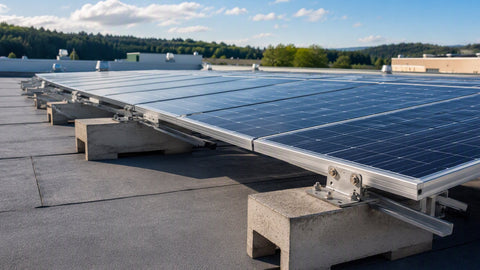
The pattern in that table is the pattern of the whole product: this is a big-site panel. Utility-scale ground mount first, large commercial flat roofs second, and carports or agrivoltaic structures where bifacial gain and glass-glass durability pay a premium third. What it is not: a residential retrofit module. At 2384 × 1303 mm and 83 pounds, it exceeds most residential racking ratings, most roof loading plans, and every one-person crew. Residential buyers should look at the 400–460W classes in our 400W range instead.
Installation Considerations From the Field
Design the string around the module's electrical window and the inverter's input limits — with bifacial gain, Voc temperature excursions and rear-side boost both eat into headroom, and we check the coldest-design-day Voc with bifacial gain applied before we approve a string length. Our inverter picks guide covers the utility and C&I inverter field, and the solar system size calculator helps with early-stage sizing.
Racking and wiring discipline on glass-glass bifacial arrays: clamp only in the specified zones, keep rails and torque tubes from shadowing rear cells (a torque tube parked behind the module center can cost a measurable slice of rear gain), and dress cabling off the back sheet — every zip-tied bundle on the rear side is a tiny shade tree on your revenue. The racking systems guide and wiring basics article cover the mechanical and electrical layout fundamentals. Code-side, utility and C&I arrays live and die by NEC 690 — grounding and bonding per the grounding guide, and rapid shutdown plus disconnect requirements per the NEC 690 disconnect guide.
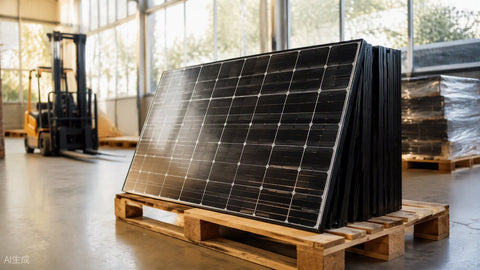
One logistics note from the receiving dock: these ship on big pallets, and a container of 710W modules is a serious lift-gate or forklift job. Plan receiving equipment before the truck is booked — we've watched a driver's delivery window expire while a site scrambled for a telehandler, and redelivery fees on LTL freight are real money.
Financial Analysis: What the Economics Look Like
| Factor | TOPCon Advantage | Financial Impact |
|---|---|---|
| Higher Efficiency | 22.9% vs. 21% PERC | ~10% fewer modules per MW; reduced BOS and labor costs |
| Bifacial Gain | 10-30% additional energy | Improved capacity factor and revenue without added footprint |
| Lower Degradation | ≤0.4%/year vs. 0.5-0.7% | 3-5% more lifetime energy production |
| Temperature Performance | -0.29%/°C vs. -0.35% | 2-4% higher yield in hot climates |
| Extended Warranty | 30 years vs. 25 years | Longer bankable revenue period; reduced risk premium |
| LCOE Improvement | ~5% reduction | Improved project returns and competitive positioning |
Stack the rows of that table and the story writes itself: fewer modules per megawatt, less steel and less labor per megawatt, more energy per module per year, and a degradation curve that keeps revenue higher in years 10–25 than the P-type baseline. The sensitivity that matters most in our models is bifacial capture: the delta between a green-field default site and an optimized high-albedo tracker site is the difference between a good project and a great one, and it costs almost nothing to design for at the start and is impossible to retrofit later.
On price: watt-for-watt, tier-one TOPCon at this class competes at or below where PERC sat two years ago, and the LCOE math has already voted. For early project economics, run the solar ROI calculator and then request a quote with real allocation pricing — published list prices and actual project pricing are different animals, and the spread widens with volume.
The Degradation Math: Why Year 15 Is Where TOPCon Pays
Datasheet efficiency wins the first-year argument; degradation wins the twenty-five-year one. Run the arithmetic the way we do in customer models. A typical P-type PERC baseline loses about 2% in year one and around 0.5–0.55% annually after that, landing near 84–85% of nameplate by year 25. This module's warranty curve — ≤1% year one, ≤0.4% annually — lands at roughly 89.4% or better at year 25. That five-point gap on a 10 MW array is on the order of half a megawatt of effective capacity in the out-years, worth six figures of lifetime energy revenue at typical PPA prices. Nothing else on the spec sheet moves lifetime value that much for that little procurement effort.
The mechanism matters for credibility: N-type cells avoid the boron-oxygen light-induced degradation that taxes P-type PERC in its first weeks of sun, and TOPCon's passivated contact architecture reduces the recombination that drives annual fade. When commissioning reports come back showing year-one performance holding closer to nameplate than the P-type fleet average, that's the physics showing up in the revenue meter.
String Sizing: A Worked Example
Every spec sheet question we get eventually lands on string length, so here's the discipline applied to this module. Take the datasheet Voc, correct it for your site's record-low temperature using the module's temperature coefficient — and on a bifacial project, add the rear-side current boost to your Isc and Imp checks, because the inverter's input current limit sees the boosted current, not the STC number. Then confirm the MPPT voltage window covers the string's operating range at both the hottest operating temperature and the coldest morning. The failure mode we're hired to fix is a string design done at STC that over-volts the inverter input on the first clear February morning; the protection trips, the array sits down, and somebody pays for a redesign that a ten-minute calculation would have prevented.
Second-order effects worth the extra spreadsheet rows: bifacial gain raises operating current into cable and connector ratings — check ampacity with the boost applied — and glass-glass modules run slightly hotter than glass-backsheet at the same conditions in some racking geometries, which is another reason clamping zones and rear clearance are not suggestions. The panel kits buyer's guide covers the component-matching logic at smaller scale, and the same physics applies at 10 MW.
Procurement and Logistics: The Part Nobody Puts in the Review

Module reviews obsess over efficiency and skip the part that actually delays projects: allocation, freight, and receiving. Our operating advice after years of container logistics. Lock allocation when the project financing timeline is firm, not when it's optimistic — tier-one capacity in hot technologies books out in waves, and the wave you're in decides your lead time. Confirm trade documentation at order: tariff classifications, country-of-origin statements, and any domestic-content BOM certifications your incentives require are order-time paperwork, not delivery-time surprises. Plan receiving with actual equipment: a container of 37.8 kg glass-glass modules wants a telehandler or a proper dock, two-person lifting discipline with suction cups, and racking-free staging space — the day the truck arrives is the wrong day to discover your gate is too narrow.
Freight economics favor the big module, by the way: watts per pallet and watts per container are the quiet metrics behind the 700W+ format's takeover, because shipping and handling cost scale with pieces while revenue scales with watts. Fewer pieces per megawatt is cheaper freight, faster receiving, and less packaging waste on site.
What Year-One Field Data Actually Shows
Across the TOPCon fleet our customers operate, the pattern that keeps repeating: energy models run with honest bifacial assumptions get met or slightly beaten on high-albedo tracker sites, and get met on fixed-tilt commercial sites with mediocre ground cover — the models only miss when somebody penciled 20% rear gain over green grass because a brochure said "up to 30%." Temperature behavior matches the improved coefficient on the hot afternoons that matter for demand-charge-sensitive C&I sites. And glass-glass durability shows up in the storm reports: hail events that wrote off glass-backsheet rows left glass-glass arrays generating, which is why hail-belt developers keep specifying the construction even where the warranty fine print treats hail as an act of God either way.
Who Should Not Buy This Panel
Honest reviews name the mismatch. Skip the CS7N-TB-AG-710 if you're doing residential rooftops (too big, too heavy, wrong racking class — the best panels roundup covers residential-format options), if your site has meaningful shading (bifacial big-format modules on shaded strings waste their premium), or if your project is small enough that freight minimums and handling equipment erase the per-watt advantage. The module's economics assume scale. Under a few hundred kilowatts, the 400–460W residential class in our 400W panels or the broader commercial panel range will serve you better.
Reading the Technology Table Like an Estimator
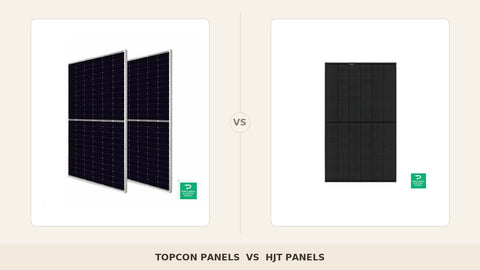
The TOPCon/PERC/HJT comparison table above deserves a second pass from the money side, because procurement teams keep misreading it. The efficiency column is the least interesting one at utility scale — a point of efficiency is worth real steel and land savings, yes, but the columns that actually move project IRR are price premium, availability, and degradation. TOPCon's "baseline" price with wide availability is the whole ballgame: HJT's extra efficiency is real, but a 10–15% premium plus thinner supply means you pay more and wait longer for a gain that bifacial capture and tracker optimization can deliver cheaper. PERC's 5–10% discount, meanwhile, buys you yesterday's degradation curve and a shrinking warranty bench as manufacturers exit the technology. When lenders read the module section of a 2026 PPA package, TOPCon from a tier-one maker is the answer that generates zero follow-up questions.
The estimation trap to avoid: comparing nameplate watts instead of watts per dollar per year-25. A cheaper module that degrades half a percent faster every year is not cheaper; it's a deferred expense with interest. This is why our volume quotes always carry the degradation curve in the same table as the price — customers who see both numbers stop asking for the discount PERC pallet.
Carports, Agrivoltaics, and Dual-Use: Where This Module Has an Unfair Advantage
Everything about the CS7N-TB-AG-710's construction reads like it was designed for dual-use structures. Glass-glass means no polymer backsheet to degrade under decades of UV and farm atmosphere — ammonia in livestock environments eats backsheets, and glass shrugs it off. Bifacial gain under a carport or elevated agrivoltaic row runs hot, because the geometry (height, open underside, light-colored pavement or crop canopy) is exactly what the albedo table's upper rows describe. And the 710W format means fewer modules per canopy span, which means less steel, fewer penetrations, and faster mechanical install on structures where steel and labor dominate module cost anyway.
We've spec'd agrivoltaic pilots where the rear-side contribution over reflective ground fabric between crop rows pushed measured gain past the fixed-tilt defaults — not brochure numbers, metered numbers. The design levers are always the same three: get the modules higher, space the rows wider, and manage the surface. A project that treats bifacial as a freebie gets the freebie-sized gain; a project that designs for it gets the number the financing model hoped for.
Temperature Coefficient: The Hot-Afternoon Dividend
Every module loses power as cells heat up; the question is how much. TOPCon's improved temperature coefficient versus PERC sounds like a datasheet footnote until you model a Texas August: cell temperatures running 35–40°C above ambient, STC ratings 25°C behind you, and the difference between coefficients showing up as a percentage point or more of real power during the exact hours when ERCOT prices peak and C&I demand charges ratchet. On hot-climate tracker sites the coefficient advantage compounds with bifacial gain — more energy when energy is worth most. We weight this heavily in customer models for the southern half of the US, and it's one reason the desert Southwest procurement we see has gone almost entirely N-type.
Bankability and Warranty Reality
Canadian Solar's bankability isn't sentiment — it's decades of project-finance acceptance, integrated manufacturing from ingot to module, and a balance sheet that lenders can model surviving the warranty period. That last part is the piece buyers underrate: a 30-year power warranty is only as good as the company standing behind it in year 19. The warranty-claim mechanics we've navigated on behalf of customers are straightforward when documentation exists: serials mapped to positions at commissioning, production monitoring that catches underperformance early, and freight/damage photos the day of delivery. Claims move fast with that file and crawl without it. Photograph the pallets before you break them down, keep the mapping spreadsheet like it's money — because it is.
The 2026 Buying Checklist for This Module Class
Before you sign a TOPCon volume order, run the list we run: confirm allocation with real ship dates, not quarters; verify country-of-origin and domestic-content documentation against your incentive strategy; match string design to the inverter window with bifacial boost and cold-day Voc applied; specify handling equipment and two-person lifting discipline in the install contract; lock the racking clamping zones to the module manual, not habit; photograph everything at receiving; and map serials at commissioning. None of that is exotic. Every item is on the list because a project somewhere paid for its omission. For current pricing and allocation on the CS7N series, get a quote — published prices and project pricing diverge fast at volume.
Ownership Economics Over the Warranty Life
Run the thirty-year view the way a CFO would. Year one: nameplate output minus the ≤1% first-year allowance. Years two through thirty: a slow 0.4% annual glide that keeps the module producing close to 90% of nameplate when the warranty ends. Against a P-type module at 0.55% annual fade, the cumulative energy gap across the warranty life runs into double-digit percentages of total lifetime production — on a megawatt-scale array that's not a rounding error, it's a revenue line. Pair that curve with the bifacial capture on a well-designed site and the module's lifetime cost per kWh lands where project finance needs it. The operational habits that protect those economics are mundane: keep vegetation managed under the rows (shading the rear side costs the gain you paid for), wash on the schedule the soiling data supports rather than the calendar, and trend the production data monthly so underperformance gets caught in week one instead of at the true-up.
Container Math and Order Planning
Procurement at this module class runs on container logistics. Watts per pallet and pallets per container decide freight cost per watt, and the 710W format's density is part of why delivered pricing keeps falling — more watts ride the same truck. Practical guidance from our receiving operations: order full pallets where possible (mixed-pallet handling adds labor and breakage risk), confirm the site can receive a 53-foot trailer before the order ships, and stage covered storage if the install schedule slips — glass-glass modules weather fine outdoors, but packaging and documentation don't. For large orders we sequence deliveries against the racking schedule so modules never sit; for small top-up orders, expect LTL freight realities and inspect on arrival with the driver present. Damage claims filed at the dock get paid; damage discovered a week later gets argued.
The Bottom Line for 2026 Procurement
The CS7N-TB-AG-710 is what the mainstream of the industry looks like now: 710W of N-type TOPCon, bifacial, glass-glass, bankable, and priced like a commodity while performing like a premium product. Projects that match it to its habitat — ground mount, big flat roofs, dual-use structures with designed albedo — get the full return. Projects that treat module selection as an afterthought leave the rear-side gain and the degradation advantage on the table. Our best panels roundup covers the rest of the field; when you're ready for allocation and real pricing, the quote desk is where the conversation starts.
Soiling, Snow, and the Maintenance Calendar That Protects Yield
Bifacial arrays have two surfaces to keep clean and most O&M plans remember one. Front-side soiling follows the local pattern — dust in the desert Southwest, pollen in the Southeast, agricultural film anywhere near harvest — and the wash schedule should come from measured soiling loss, not habit. The rear side matters differently: it rarely needs washing, but it needs the ground beneath managed, because tall summer vegetation shades the rear cells and quietly erases the gain the project paid for. Snow is the bifacial bonus round — fresh cover pushes albedo to the top of the table and cold air sharpens the temperature coefficient, so winter production on well-designed bifacial sites routinely beats the model. The one discipline: keep row clearance above the local snow-drift depth, or the February gain you modeled becomes February shading you didn't.
Field Handling: The Hour the Warranty Is Written
Module damage happens in the first hour of human contact, not the thirty years after. The handling protocol we enforce on glass-glass bifacial deliveries: suction-cup lifts only, two-person carries, no stacking on uneven staging, no leaning against rails at angles the manual prohibits, and clamping strictly inside the marked zones with calibrated torque wrenches rather than impact drivers run by feel. Microcracks from a flexed carry don't show on day one — they show in year-three electroluminescence images as darkened cell corners, and the claim conversation goes much better when the install records demonstrate correct handling with dated photographs. Train the crew before the truck arrives, because the truck won't wait, and a dropped pallet of 83-pound glass-glass modules is a five-figure bad morning that no schedule pressure justifies risking.
Frequently Asked Questions
What is TOPCon technology and why is it better than PERC?
TOPCon adds an ultra-thin tunnel oxide layer and a doped polysilicon contact to the rear of an N-type cell, cutting recombination losses. The field results: roughly a point or two of efficiency over PERC, lower first-year and annual degradation, a better temperature coefficient, and higher bifaciality — at price parity, which is why the industry switched.
How much additional energy can I expect from bifacial gain?
Anywhere from about 5% over green vegetation to 25–30% over fresh snow, with typical well-designed ground-mount sites landing in the 8–15% range. Surface, height, and row spacing decide the number — design for it deliberately or accept the default.
Is there a US-assembled version for domestic content requirements?
Canadian Solar has operated US module assembly capacity, and domestic-content configurations have been part of its US offering. Domestic-content qualification is project- and vintage-specific — confirm the exact BOM documentation against the current IRS guidance at procurement, not after delivery.
How does the 30-year warranty work?
Twelve years of product coverage for materials and workmanship, plus a 30-year linear power warranty: no more than 1% degradation in year one and 0.4% per year after, with a warranted output floor of at least 89.4% at year 25. Register the project and keep commissioning serials documented.
What inverters are compatible with this panel?
Any string inverter or central inverter whose MPPT voltage and current windows cover the string design — including bifacial-boosted current and cold-day Voc. That check is part of every system design we quote.
Should I wait for HJT or back-contact panels instead?
Only if your project economics depend on their specific edge and accept their premiums and thinner supply. For volume procurement in 2026, TOPCon's combination of efficiency, price, bankability, and availability is the default answer — waiting for the next technology is a cost of its own.