Updated September 2026 — refreshed against the live PES catalog; product pricing verified 2026-09-26.
We sell portable generators to three kinds of buyers: the camper who needs 2,000 quiet watts, the homeowner who needs a fridge and furnace alive through an ice storm, and the contractor who needs 12,000 watts of abuse-tolerant muscle on a job with no service yet. The mistake we see every storm season is buying across those lanes — a camping inverter asked to start a well pump, or a 90-decibel open-frame dragged to a campground. This roundup covers the full 2026 portable field by class, with the models we stock, the specs that survive contact with reality, and the money math at each tier. If your need is specifically campsite-quiet power, our camping generator guide goes deeper on that lane; this one covers the whole field.

The Four Classes of Portable Generator
"Portable" spans a 15-to-1 wattage range and a 10-to-1 price range. Class first, model second:
| Class | Output Range | Noise Class | Weight Class | Price Band (2026) | Owns This Job |
|---|---|---|---|---|---|
| Recreational inverter | 1,000–2,500 W | 48–58 dBA | 30–60 lbs | $400–$1,300 | Camping, tailgates, electronics, CPAP |
| Mid-size inverter | 3,000–4,500 W | 58–64 dBA | 60–105 lbs | $900–$2,700 | RVs (soft-started AC), light home backup |
| Conventional open-frame | 4,000–12,000 W | 68–80 dBA | 100–330 lbs | $500–$2,000 | Job sites, pumps, tools, budget backup |
| Large dual-fuel / tri-fuel | 9,000–15,000 W | 72–78 dBA | 200–350 lbs | $1,200–$3,500 | Whole-home manual transfer, storm duty |
The single most important spec distinction across these classes is power quality. Inverters produce under 3% THD — safe for furnaces with ECM blowers, modern refrigerators, and anything with a board. Conventional open-frames run 12–25% THD and will shorten the life of sensitive electronics. In 2026, with inverter pricing where it is, the only reason to buy conventional is raw watts per dollar for motor and tool loads.
Generators for Camping and Outdoor Use
A second distinction that matters more every year: carbon monoxide safety systems. Modern portable generators increasingly ship with CO-sensing auto-shutdown that kills the engine when carbon monoxide builds up around the unit — a response to the grim CDC statistics on generator CO poisoning. Treat that feature as mandatory, not optional, and treat it as a backup to placement discipline, not a replacement: outdoors, 20 feet from windows and doors, exhaust pointed away, every time. The third quiet shift is outlets: 2026 models increasingly ship with USB-C PD ports, TT-30 RV receptacles, and covered 50A (14-50R) connections that used to be aftermarket territory. Check the outlet panel against your actual cords and inlet before checkout — the right receptacles save an adapter chain, and adapter chains are where voltage drop and loose connections sneak into an otherwise good setup.
Recreational Inverter Class: The Quiet Money
Honda EU2200i ($1,150–$1,300). Still the benchmark: 1,800W running, 48–57 dBA, 47 lbs, and a reliability record measured in decades. The EU2200i is what you buy when the generator must start in year twelve, and it's the only portable with a real resale market. Weakness: price, and no factory dual-fuel option.
Everything in this class should also pass two counter checks before money changes hands: a pure-sine inverter output explicitly stated in the spec sheet (not implied), and a two-year-plus residential warranty with a real claims process. The models above clear both bars with room to spare.
Champion 2000W-class inverters ($450–$700, dual-fuel options). The value answer that stopped feeling like a compromise. Fifty-three dBA, under 3% THD, and the propane capability means no carburetor varnish for intermittent users. Our Champion portable lineup guide covers the range, and the brand guide explains how they got here.
Westinghouse iGen2200 ($400–$550). Twelve hours of quarter-load runtime per tank and genuinely quiet. Support is mail-order-centric — fine if you're handy, worth knowing if you're not.
Mid-Size Inverter Class: The Crossover Sweet Spot
This is the class we recommend most often in 2026, because it does two jobs honestly: quiet RV/camping duty and meaningful home backup.
Honda EU3200i ($2,400–$2,700). Runs a soft-started 13.5k BTU RV air conditioner, weighs 59 lbs, and sips fuel at partial load. Expensive, refined, and the resale holds like a Honda's does.
Champion 4500W dual-fuel inverter ($900–$1,200). The best watts-per-quiet-dollar in the industry right now. Sixty-one dBA, RV-ready 30A outlet, propane capable, electric start. It will not start a big well pump — that's not its lane — but for an RV plus fridge-furnace-lights home backup, it's the value pick of the year.
Generac GP3500iO / iQ3500 ($900–$1,300). Generac's inverter line is competent and backed by the biggest service network in the business. If dealer support near you matters more than the last decibel or dollar, it's a defensible buy. The Generac brand guide covers the broader ecosystem.
Open-Frame and Large Dual-Fuel: Watts per Dollar
When the load is motors, tools, and pumps — or a whole house through a manual transfer switch — the equation changes. You want surge capacity, frame strength, and fuel flexibility, and you accept the noise.
DuroMax XP13000HXT / XP12000HX class ($1,300–$1,800). Tri-fuel and dual-fuel 12–13kW units that have become the default storm-season answer for whole-home manual backup. They'll start a 4-ton AC (managed) or a well pump, run on propane that stores forever, and cost a third of a standby system. Support is mail-order; buy spares (plugs, filter, carb kit) with the unit. The DuroMax vs Generac vs Honda comparison frames the trade against the legacy brands.
Westinghouse WGen9500DF ($1,100–$1,400). Dual-fuel, electric start, 30A and 50A outlets — the spec-per-dollar leader at the 9.5kW class and a legitimate interlock-fed home backup machine.
Generac GP8000E / XT8000E class ($1,000–$1,400). The contractor-grade conventional choice with the dealer network behind it, and the Generac XD5000E diesel deserves a mention for crews who want diesel's fuel-shelf-life and durability in a portable frame.
| Model | Running / Surge Watts | Fuel | Noise | THD | Weight | Street Price | Best Lane |
|---|---|---|---|---|---|---|---|
| Honda EU2200i | 1,800 / 2,200 W | Gas | 48–57 dBA | <3% | 47 lbs | $1,150–$1,300 | Camping, electronics |
| Champion 2000W dual-fuel | 1,700 / 2,000 W | Gas + LP | ~53 dBA | <3% | ~48 lbs | $500–$700 | Camping value pick |
| Champion 4500 dual-fuel inverter | 3,150 / 4,200 W (gas) | Gas + LP | ~61 dBA | <3% | ~99 lbs | $900–$1,200 | RV + light home backup |
| Honda EU3200i | 2,600 / 3,200 W | Gas | 54–58 dBA | <3% | 59 lbs | $2,400–$2,700 | RV premium |
| Westinghouse WGen9500DF | 9,500 / 12,500 W (gas) | Gas + LP | ~74 dBA | High (conv.) | ~220 lbs | $1,100–$1,400 | Home backup value |
| DuroMax XP13000HXT | 10,500 / 13,000 W (gas) | Gas + LP + NG | ~74 dBA | High (conv.) | ~240 lbs | $1,400–$1,800 | Storm-duty whole-home manual |
Runtime and Fuel: The Numbers That Decide Storm Week

Brochure runtime is quoted at 25% load. Plan your storm fuel budget at 50%, because that's where fridge-furnace-lights cycles actually average:
| Unit Class | Fuel Capacity | Runtime @ 25% Load | Runtime @ 50% Load (realistic) | Daily Fuel Need @ 50% (24h) |
|---|---|---|---|---|
| 2kW inverter (gas) | ~1 gal | 8–12 hr | 5–7 hr | 3.5–5 gal |
| 4.5kW inverter (gas) | ~2.9 gal | 12–14 hr | 7–9 hr | 6–9 gal |
| 4.5kW inverter (propane) | 20 lb bottle | ~18–21 hr | 10–14 hr | 1.5–2 bottles |
| 9.5kW dual-fuel (gas) | 6.6 gal | ~12 hr | 7–8 hr | 18–22 gal |
| 9.5kW dual-fuel (propane) | 20 lb bottle | ~7–9 hr | 4–5.5 hr | 4–5 bottles |
| 13kW tri-fuel (gas) | 8.3 gal | ~12 hr | 6–8 hr | 24–30 gal |
Read that last column carefully. Running a 13kW conventional around the clock burns 25–30 gallons of gasoline a day — after a regional disaster, that's a logistics problem, not a shopping trip. The smart storm protocol: run the generator in blocks (morning and evening to chill the fridge, run the furnace, charge devices), not continuously. Four to six hours of runtime a day keeps a house functional on 6–10 gallons. Propane's indefinite shelf life is why we steer storm-belt buyers toward dual-fuel; a cage of six 20-lb bottles in the shed is two weeks of disciplined backup with zero fuel anxiety. Stock up via our portable generator catalog, and keep cords rated for the job — the 30A L14-30 cord is the one most interlock installs want.
Hooking It to the House: Do It Legally or Don't Do It
Introduction to Portable Generators
Top Picks for Best Portable Generators of 2025
2. Generac Portable Generators
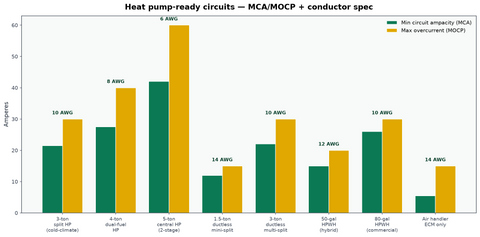
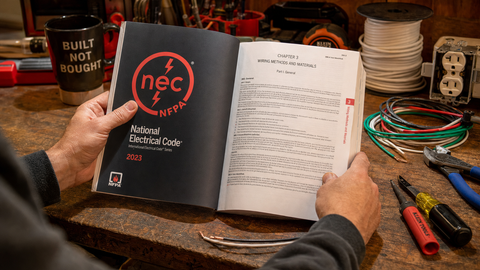
Every storm season, linemen are endangered by backfed generators and houses burn from suicide cords. The legal options, cheapest first: heavy-duty cords to individual appliances (fine for a fridge and a lamp); a listed interlock kit on your main panel with a generator inlet box ($150–$400 in parts, an electrician's afternoon); or a manual transfer switch for selected circuits ($400–$900 installed). NEC 702.5 requires transfer equipment that prevents simultaneous utility and generator connection — an interlock satisfies it, a male-to-male cord violates it and your insurance. Size the inlet and breaker to the cord: 30A at 240V covers 7,200W, which is why the 30A L14-30 inlet is the standard answer for mid-size portables. The wire between inlet and panel is ordinary branch-circuit sizing — 10 AWG copper (30A) per NEC 310.16 — and our NEC ampacity chart guide covers it.
One practical note on the interlock route that electricians don't always volunteer: have the installer label the panel for which breakers the generator can carry and in what order they should come online. In the dark, in a storm, "biggest motor first, then the fridge, leave the water heater off" needs to be a sticker on the panel door, not a memory. We've walked customers through startup sequences by phone at 11 PM; the labeled panel is the difference between a five-minute call and a truck roll. If outages are your main reason for buying, read portable vs whole-house before committing — a $1,500 portable plus $600 of inlet hardware is the right answer for short-outage regions, and the wrong one where outages run long.
The Real Cost of Ownership by Class
Purchase price is the least interesting number in portable-generator economics. A realistic five-year total-cost picture, assuming 60 hours a year of typical use (storm blocks, camp weekends, or site work):
| Cost Line (5 years) | 2kW Inverter | 4.5kW Inverter Dual-Fuel | 9.5kW Dual-Fuel | 13kW Tri-Fuel |
|---|---|---|---|---|
| Purchase | $450–$1,300 | $900–$1,200 | $1,100–$1,400 | $1,400–$1,800 |
| Fuel (300 hrs, mixed loads) | $300–$450 | $550–$800 | $1,100–$1,600 | $1,500–$2,100 |
| Oil / filters / plugs | $120–$200 | $150–$250 | $250–$400 | $300–$500 |
| Battery (elec. start models) | — | $80–$120 | $80–$120 | $80–$120 |
| Inlet + interlock (if home backup) | — | $350–$600 | $350–$600 | $350–$600 |
| 5-year total | $870–$1,950 | $2,030–$2,970 | $2,880–$4,120 | $3,630–$5,120 |
Two takeaways. Fuel is the silent budget line — a big conventional unit used heavily doubles its purchase price in gasoline within five years, which is why inverter efficiency and propane economics matter more with every hour you log. And the step from 4.5kW to 9.5kW isn't linear in cost — it's roughly double in everything: fuel, oil, noise, and the chiropractic bill. Buy the smallest class that covers your surge requirement with 25% headroom, not the biggest one the budget allows.
Cold Weather and Altitude: The Spec-Sheet Asterisks
Naturally aspirated small engines lose roughly 3% of their power per 1,000 feet of elevation — a 9,500W unit at a 6,000-foot job site is really a 7,800W unit, and several manufacturers sell high-altitude carburetor jet kits for exactly this reason. Cold cuts the other way: engines make good power in cold air, but starting batteries lose a third of their cranking capacity below freezing, summer-blend gasoline vaporizes poorly, and propane's tank pressure falls steeply below 20°F. Winter storm duty argues for electric-start units with a battery tender wired in, pull-start backup, fresh winter fuel, and — on dual-fuel — running propane in the mild months and gasoline in the deep cold. None of this appears in the brochure. All of it appears on the first hard-use weekend.
The Machines We Steer Buyers Away From
The marketplace-generator pattern repeats yearly: unfamiliar brand, enormous wattage claims, a wall of five-star reviews, no published service network, no parts catalog you can find. Eighteen months later the control board fails, support routes to an email queue, and the "warranty" requires shipping a 200-pound unit overseas at your expense. The test we teach at the counter: search the exact model number plus "carburetor" and "control board" before buying. If replacement parts don't exist for sale anywhere, you're buying a disposable machine at a durable-goods price. That can be a rational trade for a tailgate toy. It is never a rational trade for the machine your sump pump depends on in February.
Also approach "peak watts" marketing with suspicion across every brand, legitimate ones included. The number that runs your life is rated (running) watts — the figure the unit sustains indefinitely. Peak or starting watts describe a few seconds of surge. Some budget listings lead with the peak number in the product title and bury the rated figure in the spec table; a "9,500-watt generator" that runs 7,500 watts continuous is a fine machine sold dishonestly. Compare rated watts to rated watts across brands, verify against the spec sheet PDF rather than the listing, and any wattage claim that appears only in the title and nowhere in the documentation should be treated as fiction.
Frequently Asked Questions
What size portable generator do I need for home backup?
Why Choose a Portable Generator for Home?
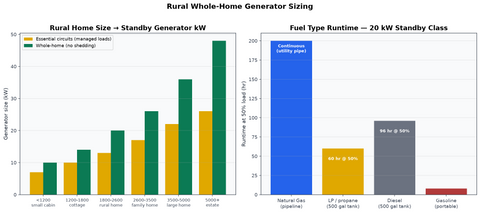
For essentials — refrigerator, furnace blower, sump pump, lights, device charging — a 4,000–4,500W inverter generator suffices with load rotation. To also run a well pump or a window AC, step to 7,500–9,500W. For near-whole-home manual backup including a managed central AC, 10,000–13,000W dual-fuel units are the practical ceiling of "portable."
Are inverter generators worth the extra cost?
Yes if anything with a circuit board will ever plug in: inverters produce under 3% total harmonic distortion versus 12–25% for conventional open-frames, run 10–20 dB quieter, and cut fuel use 30–40% at partial load. Conventional units still win on raw watts per dollar for pure tool and motor loads — saws, pumps, compressors — where power quality doesn't matter.
How long can I run a portable generator continuously?
Indefinitely with discipline: shut down every 8–12 hours to check oil (small engines consume oil under sustained load), let the unit cool before refueling, and never refuel a running or hot generator. In practice, block-running 4–6 hours daily during outages is easier on the machine, the fuel budget, and the neighbors than continuous operation.
Is dual-fuel worth it on a portable generator?
Portable Power Stations vs. Gas Generators
For most owners, yes. Propane stores indefinitely without stabilizer, never varnishes a carburetor, burns cleaner (longer engine and oil life), and stays available when gasoline stations lose power in regional disasters. The tradeoff is roughly 10% less power output on propane and higher fuel cost per kWh. For intermittent users, the storage benefits alone justify the small price premium.
Can I plug a generator directly into a wall outlet to power my house?
Never. Backfeeding through a "suicide cord" (male-to-male) energizes the utility lines outside your house, endangering line workers, bypasses your breakers, and will void insurance after a fire. NEC 702.5 requires listed transfer equipment — an interlock kit with a generator inlet box or a transfer switch. Parts start around $150 and any licensed electrician can install one in an afternoon.
How do I store a portable generator between uses?
Run the carburetor dry or fill with stabilized non-ethanol fuel before storage — ethanol gas varnishes carburetors in about 90 days. Change oil, remove the battery (electric-start models) to a maintainer, fog the cylinder for winter-long storage, and start the unit monthly under a small load for ten minutes. Dual-fuel units stored on propane skip most fuel-system problems entirely.
Need pricing or availability on anything in this guide?
Portlandia Electric Supply dropships direct from the manufacturer — most items Ship Direct with lead times stated up front, no surprises.
Get a quote from PESBulk, pallet and contractor pricing available.