A well-tuned inverter strategy can improve energy harvest on cloudy days, simplify maintenance, and unlock storage and grid-support features down the line—discover solar inverters for more options.
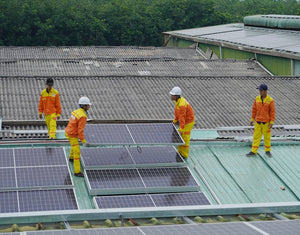
For contractors, installers, and homeowners, the right inverter aligns with system goals—from maximizing daytime output on a shaded roof to enabling seamless integration with batteries for backup power. PES Supply offers turnkey solar solutions with 12+ distribution hubs, 3,800+ SKUs, and a broad partner network to support fast nationwide delivery and professional backing. This vendor-agnostic guide helps you evaluate technologies, sizing principles, installation considerations, and the latest market developments so you can design systems that perform today and scale for tomorrow.
Inverter Technologies: Types and how they work
Solar inverters come in several architectures, including hybrid inverters, each with its own strengths for different layouts and shading profiles.
String inverters
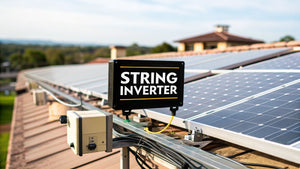
String inverters perform centralized DC-to-AC conversion, typically using one or more MPPT (maximum power point tracking) channels to optimize output from one or more strings of panels, and how to choose the right solar inverter for your home can help you determine the best configuration.
Microinverters and power optimizers
Microinverters sit at the module level, performing DC-to-AC conversion on a per-panel basis; for a quick primer on how this works, what is solar inverter and how does it work?
Hybrid/Smart inverters
Hybrid or smart inverters are purpose-built for storage integration. These inverters are designed to be battery-ready or battery-enabled, often with grid-forming or grid-support capabilities that allow the system to island safely or participate in grid services. They can manage AC coupling or DC-coupled storage, support daytime and nighttime operation, and enable advanced functions such as backup power, peak shaving, and time-of-use optimization. For contractors aiming to offer turnkey storage with solar-on-day-one, hybrid inverters simplify equipment lists and wiring strategies while preserving expandability as storage needs evolve.
Sizing and Configuration: How to size for daily energy and uptime
Correct sizing blends expected energy production with consumer needs, climatic realities, and future plans. The objective is a balanced system that delivers reliable daytime energy, cost-effective installation, and room to add storage or additional capacity later.
Estimate required AC capacity from daily energy use
Start with the daily energy profile. A practical rule of thumb is to size the system’s AC capacity (in kW) to roughly match the daily kWh consumption divided by anticipated peak sun-hours. For example, a home using about 30 kWh per day with an average of 5 sun-hours may target a 6 kW AC system. If backup power or storage is a goal, you’ll size a separate storage rating or a larger hybrid inverter to accommodate daytime charging and nighttime discharge. Always factor a margin for future growth, equipment aging, and potential shading improvements or changes in energy usage patterns.
Panel configuration and MPPT considerations
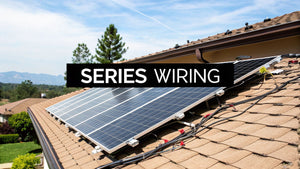
Panel configuration (series vs. parallel) interacts with MPPT strategy and operating voltage windows. In general, you want MPPT channels and voltage ranges to align with your array’s open-circuit voltage (Voc) and the inverter’s input DC voltage window. Arrays with long runs or higher grade temperatures may require more robust voltage headroom. If you anticipate partial shading or future expansions, a design that preserves multiple MPPT paths or per-panel optimization can reduce performance penalties during non-ideal conditions.
MPPT channels and voltage windows
More MPPT channels offer greater resilience against module-level shading and temperature swings. A two- to three-channel MPPT count is common in residential inverters, enabling you to separate strings by orientation or long cable runs. Ensure the array’s voltage at maximum power (Vmp) sits well within the inverter’s operating range across seasonal temperature variations. Proper matching improves overall efficiency and reduces the risk of early system bottlenecks, especially in climates with wide diurnal temperature changes.
Performance Metrics and Reliability: Efficiency, derating, and warranties

Understanding performance metrics helps you predict real-world energy yield, maintenance requirements, and total cost of ownership. Reliability is built on design, components, and a robust support network.
Efficiency, derating, and real-world performance
Inverter efficiency is the ratio of AC output to DC input under rated conditions. Typical string inverters offer rated efficiencies around the high 90s (percent), with real-world performance slightly lower due to temperature, shading, and electrical losses in wiring. Temperature derating becomes meaningful in hot environments: as ambient temperatures rise, efficiency can drop modestly, and inverter electronics may throttle output to stay within safe operating limits. Expect modest performance penalties in high-heat installations, and design cooling or ventilation accordingly to minimize derating.
Warranty, service network, and reliability
Warranty length often falls in the 10–12 year range for standard offerings, with premium or qualifying units extending to 20–25 years. A broad service network, factory firmware protections, and rapid replacement policies contribute to long-term reliability, particularly for commercial or multi-site deployments. When evaluating warranties, look for coverage that includes both parts and labor, clear terms for module- or panel-level faults, and the availability of authorized technicians near job sites to minimize downtime.
Protective features and safety
Key protections—anti-islanding, overvoltage and overcurrent protection, fault detection, and rapid shutdown capabilities—are essential for grid integration and personal safety. A robust inverter should provide clear fault diagnostics, status indicators, and remote alerting. In environments with high heat, dust, or moisture, enclosure protection ratings (IP ratings) and appropriate corrosion resistance contribute to longevity and uptime. Consider these features as part of a holistic reliability assessment alongside efficiency and warranty.
Installation Considerations: Location, cooling, grid connection, and permits
Installation strategy influences longevity, safety, and compliance. Thoughtful site planning reduces maintenance headaches and ensures smoother interconnection with the grid and utility programs.
Location, cooling, venting, and enclosure ratings
Outdoor installations are common for efficiency and ease of service, but they demand proper enclosure ratings and thermal management. Choose a well-ventilated mounting area with adequate clearance for heat dissipation and airflow. If indoors, ensure adequate ventilation to prevent overheating and ensure access for wiring and service. Enclosures should withstand local weather conditions, with appropriate corrosion resistance and protective wiring entries. Proximity to service panels matters for wiring length, voltage drop, and ease of permits.
Grid interconnection requirements and permits
Connecting to the grid involves utility review, permits, and compliance with standards such as interconnection rules and fire-safety requirements. Planning ahead for electrical code compliance, labeling, and safety signage reduces surprises during inspections. Many projects benefit from a pre-inspection with the local authority having jurisdiction (AHJ) to align on required documentation, metering arrangements, and net-metering or storage incentives that can influence inverter choice and configuration.
Cable routing, maintenance accessibility, and codes
Keep DC- and AC-cable routing organized and within code, with secure conduit, appropriate cable trays, and clearly labeled terminations. Shorter DC runs reduce losses, while accessible wiring simplifies future upgrades or service visits. Adequate clearance from heat sources, water exposure, or ignition risk improves long-term safety and reduces maintenance calls. Always verify that the installation aligns with local electrical codes, national standards, and any manufacturer installation guidelines.
Monitoring, Diagnostics, and Maintenance: Keeping performance visible and healthy
Ongoing visibility into system health helps prevent downtime and maximize energy harvest. Modern monitoring tools deliver real-time performance data and proactive alerts.
Monitoring and interoperability
Most inverters offer vendor apps or dashboards that display production, performance ratios, and fault alerts. Interoperability with third-party platforms or building management systems can simplify oversight for multi-site deployments. Favor systems with open APIs or standard data formats to avoid vendor lock-in and to support unified monitoring across products within a project portfolio.
Routine maintenance and firmware updates
Maintenance typically includes firmware updates, cleaning cooling surfaces, and inspecting connections. Storage-enabled systems may require battery health checks and parasitic loads management. Regular firmware updates from the manufacturer can enhance performance, security, and compatibility with grid services or new storage options. Establish a maintenance cadence that fits the system size, warranty terms, and the local environmental conditions.
Diagnostics and service pathways
When performance issues arise, start with monitoring data to identify whether a fault is due to panels, wiring, or the inverter. Many issues are resolved with a firmware update or minor hardware replacement. For complex faults, engage a qualified installer or service partner with access to authorized spare parts and service networks. Clear escalation paths and on-site diagnostic protocols keep outages short and corrective actions precise.
Myths, ROI, and Cost Considerations: Cost components and return on investment

Deciding on an inverter involves balancing upfront costs with long-term savings and reliability. Understanding where the money goes helps contractors present clear value to customers while preserving project margins.
Cost components and total cost of ownership
The inverter is a significant component, but it’s part of a larger equation. Balance-of-system components—racking, wiring, disconnects, and especially storage—often determine total project cost and payback timelines. A cheaper inverter can end up costing more if it requires more maintenance, tighter wiring, or limited storage options. Conversely, a higher-quality inverter with robust monitoring and a longer warranty can reduce maintenance and downtime bets over the system’s life.
ROI considerations: incentives, rates, and storage use
ROI hinges on electricity rates, incentive programs, and how effectively storage is used. Storage-enabled systems can shift peak-rate usage, provide reliable backups, and participate in grid services, all of which influence the economic case. Conduct a scenario analysis that compares simple grid-ted generation against hybrid storage configurations, factoring local tariffs, time-of-use rates, and potential incentives to reveal true total cost of ownership over the system life.
Myths to avoid
Common myths can mislead buyers. Bigger inverter capacity does not automatically yield better results if it exceeds local demand or if shading and wiring constraints bottleneck production. Not all inverters offer the same feature sets or service support, so performance, safety, and maintenance considerations vary across brands and models. Finally, maintenance needs differ; some inverters demand more frequent upkeep or firmware management than others, which can affect long-term reliability and cost. Use a comprehensive evaluation framework that weighs efficiency, MPPT capability, storage compatibility, warranty terms, and network support.
Trends, Standards, and Market Dynamics: What’s new in the solar inverter landscape
The market is moving toward more adaptable, storage-ready, and grid-aware solutions. These trends influence product selection and system design for residential, commercial, and industrial projects.
Battery-ready and hybrid inverters
Battery-ready and hybrid inverters have become increasingly common, enabling integrated storage without a separate, complex AC coupling step. This simplifies timelines for project delivery and improves reliability by consolidating control, protection, and communication into a single, software-updatable platform. Storage-first designs are particularly appealing for backup power, demand management, and resiliency strategies for commercial buildings and multi-residential projects.
Smart grid capabilities and remote management
Smart grid capabilities—such as grid-forming operations, PMU-like monitoring, remote firmware upgrades, and secure communications—are reshaping how inverters interact with utilities and microgrids. Remote management reduces on-site visits, speeds commissioning, and supports dynamic response to grid conditions. For installers, this means more predictable project timelines and ongoing service value through software-enabled features.
Standards, certifications, and interoperability
Standards and certifications are continually evolving to improve safety and interoperability. Notable references include IEEE 1547 interconnection standards, UL 1741SA for inverter-based grid support, and IEC safety frameworks. Interoperability efforts—often led by industry groups and alliances—help ensure that equipment from different manufacturers can work together in larger systems, simplifying multi-vendor projects for distributors and installers alike.
Practical Selection Guide (Vendor-Agnostic)
Use a structured approach to compare options, keeping your project goals front and center. The following guidance aims to be vendor-agnostic and design-focused, helping you choose equipment that aligns with performance, installation realities, and long-term support.
Define system goals, shading profile, and future storage plans
Begin with what you want the system to achieve: maximize daily energy harvest, ensure backup power, or enable storage-driven peak shaving. Map shading patterns, roof orientation, and potential expansion plans. If you anticipate future storage expansion, prioritize hybrid-ready inverters and clear pathways for additional battery capacity. Align goals with customer expectations and budget to set a realistic baseline for equipment choices and timeline.
Compare efficiency, MPPT count, operating temperature range, warranty, service network, and storage compatibility
When evaluating candidates, compare rated efficiency, the number of MPPT channels, and the inverter’s operating temperature range. A larger MPPT count and wider temperature tolerance can yield better performance in variable climates or complex roof geometries. Review warranty length and the provider’s service network—availability of local technicians matters for uptime. If storage is part of the plan, verify compatibility and ease of integration with current or planned batteries and management systems.
Account for installation constraints and grid interconnection requirements
Assess how the physical installation will unfold: mounting options, ventilation needs, cable routing, and proximity to service panels. Confirm interconnection requirements with the local utility and AHJ early to avoid delays and redesign costs. Ensure labeling, safety signage, and protection devices meet local codes. A well-planned installation reduces change orders and accelerates project delivery while preserving long-term reliability.
Example Configurations and Scenarios
Concrete configurations help translate theory into practical choices for different market segments. Below are representative setups you might consider when discussing options with homeowners, contractors, and commercial buyers.
Residential 4–6 kW systems with string inverters for cost efficiency
For simple, cost-conscious deployments on uniform roofs, a 4–6 kW string inverter with two MPPT channels is a common choice. This approach minimizes hardware costs while delivering solid annual production in regions with consistent sun. If shading is a concern, evaluate adding microinverters or optimizers on the affected strings to preserve energy yield without a heavy price premium on the entire system.
Battery-ready 8–10 kW systems with a hybrid inverter for daytime storage and backup power
A hybrid inverter in the 8–10 kW range supports daytime charging and nighttime backup while maintaining a compact, integrated control platform. This configuration suits critical loads, storms preparedness, and time-of-use optimizations. Pair it with a modular battery system that can scale to match evolving backup requirements and potential grid services participation.
Commercial or multi-residential installations with modular inverters and multiple MPPTs
Commercial projects often demand more robust MPPT layouts and modular designs that support complex roof geometries or expansive site footprints. Multiple MPPT-capable inverters, paired with performance monitoring, enable precise string management and easier maintenance across several units or tenants. Consider systems that support remote diagnostics, remote firmware updates, and service access across multiple hubs to reduce downtime and improve maintenance efficiency.
Power your next project with confidence by visiting PES Supply, a nationwide electrical supply distributor and installer partner offering premium Tier 1 solar panels, standby generators, and related electrical equipment. They provide turnkey solar solutions, live support, and fast nationwide delivery from 12+ distribution hubs, serving contractors, installers, and homeowners with 3,800+ in-stock SKUs and a network of 8,500+ solution providers. Click now to unlock faster sourcing, expert guidance, and reliable nationwide delivery—learn more today and power up your success.
Related Resources:
- Best Solar Panels 2026 — Buyer's Guide
- EG4 vs Tesla Powerwall
- Qcells vs Trina vs JA
- Solar Inverter Buyer's Guide
- Solar Battery Buyer's Guide
- 5kW Solar Kit
- 10kW Solar + Battery Kit
- Off-Grid Cabin Kit
- EG4 Batteries
- Qcells Solar Panels
- Trina Solar
- JA Solar
- REC Solar
- Mission Solar
- Sol-Ark Inverters
- SolarEdge Inverters
- Generac PWRcell
Calculate how much storage you need with our battery sizing calculator.
Check solar incentives available in your state.
Use our free solar system calculator to size your array.
Check out our Solar Panel Comparison Tool. Check out our Inverter Sizing Calculator.
Calculate your solar payback and 25-year savings with our Solar ROI Calculator. Follow our complete DIY solar installation guide for step-by-step instructions. Keep your system running at peak performance with our Solar Maintenance Guide.
Related Resources
- Solar System Calculator
- Battery Sizing Calculator
- Solar Panel Comparison Tool
- Inverter Sizing Calculator
- Solar ROI Calculator
- Solar Installation Guide
- Solar Maintenance Guide
- Solar Permitting Guide
- Battery Installation Guide
- NEC Code Compliance Guide
- Solar Panel Mounting Guide
- Grounding & Bonding Guide
- Solar Incentives by State
- Pro Account — Wholesale Pricing
- PowerLink Network — Contractor Program