We’ve sized hundreds of services, subpanels, and solar arrays over the years, and the one calculation we run more than any other is amps to watts. It’s the first check on every quote and the last check before we energize. Get it wrong and the best case is a tripped breaker — the worst is cooked conductors and a red tag from the inspector.
Need the full walkthrough? This page is the quick-answer version. For the complete formula guide — watts = amps × volts worked through for 120V/240V circuits, plus the calculator — read How to Convert Amps to Watts: Complete Formula Guide.
This page is built as a quick reference. The formulas and conversion charts are up front; the worked examples and code watchouts are below when you need the “why.” Bookmark it — you’ll be back.
Whether you’re sizing an inverter, speccing a backup generator, or quoting panelboards by the skid, the amps-volts-watts relationship is what everything hangs on. Undersize and you’ll chase nuisance trips and overheated lugs. Oversize and you’ve spent the customer’s money on copper they’ll never use.
Three things ride on getting it right:
- Safety and Compliance: Correctly sized wire, breakers, and components don’t overheat — and overheating is what starts electrical fires. It’s also how you meet National Electrical Code (NEC) requirements and pass inspection the first time.
- System Performance: Matched equipment — a FranklinWH battery, a Cummins generator, whatever’s on the spec — runs at its rated efficiency instead of straining or idling.
- Budget Accuracy: A correct load calc up front kills the change orders and mid-job equipment swaps that eat your margin.
The Good Ol' Water Hose Analogy
If you’re newer to the trade, the old water-hose analogy still works. It’s how most of us learned it as apprentices, and it holds up.
- Voltage (Volts): This is the water pressure inside the hose. Higher voltage provides more force.
- Amperage (Amps): This is the flow rate, or the volume of electricity moving through the conductor. Higher amps mean more current is flowing.
- Wattage (Watts): This is the total power delivered—the combination of pressure (volts) and flow rate (amps) working together.
High pressure with low flow, or low pressure with high flow — both can deliver the same total power. That’s why you never size gear off amps or volts alone. Watts is the number that pays the bill and heats the wire.
For the next step — measuring energy use over time — see our guide on how to calculate power consumption.
The unit we use for power, the watt, was proposed in 1882 to honor James Watt for his work on the steam engine. It was defined as the power from one ampere of current flowing at one volt—a standard that still underpins all modern electrical design.
The right formula depends on the system in front of you. DC from panels and batteries is one line of math. AC from the grid adds power factor. Three-phase adds the square root of 3. Pick the wrong one and every number downstream is garbage.
The basic relationship never changes: a 120-volt circuit feeding a 10-amp load is delivering 1,200 watts (10A × 120V). Every power calc you’ll ever run starts right there.
Amps are the flow. Volts are the pressure. Watts are the work.

One number without the other tells you nothing. You need both.
Here’s the quick-reference version — three formulas cover every system you’ll touch:
Amps to Watts Conversion Formulas at a Glance
| System Type | Formula | Key Variables Explained |
|---|---|---|
| Direct Current (DC) | Watts = Volts × Amps | Watts (W): Real power used. Volts (V): Electrical pressure. Amps (A): Electrical current or flow. |
| Single-Phase AC | Watts = Volts × Amps × Power Factor (PF) | Power Factor (PF): A measure of efficiency, typically between 0.8 and 1.0 for modern equipment. |
| Three-Phase AC | Watts = Volts × Amps × Power Factor (PF) × 1.732 | 1.732: The square root of 3, a constant used in three-phase calculations to account for the phase difference. |
Most days you don’t need the formula — you need the number. These charts cover the branch-circuit and feeder sizes we quote every week, figured at unity power factor (PF = 1.0). Running motors or anything with a PF below 1? Multiply the chart watts by the PF before you trust it.
Amps to Watts at 120V (Single-Phase)
| Amps (A) | Watts at 120V | Typical Use |
|---|---|---|
| 1A | 120W | Phone chargers, LED bulbs |
| 5A | 600W | TV, desktop computer |
| 10A | 1,200W | Microwave, space heater (small) |
| 15A | 1,800W | Standard 15A branch circuit max |
| 20A | 2,400W | Kitchen / bath 20A circuit max |
| 25A | 3,000W | Large window AC unit |
| 30A | 3,600W | RV shore power (TT-30) |
| 40A | 4,800W | Electric range circuit |
| 50A | 6,000W | Welder, RV 50A service |
| 60A | 7,200W | Subpanel feeder |
| 100A | 12,000W | Small service / large feeder |
Amps to Watts at 240V (Single-Phase)
| Amps (A) | Watts at 240V | Typical Use |
|---|---|---|
| 10A | 2,400W | Window AC (240V model) |
| 15A | 3,600W | Air compressor |
| 20A | 4,800W | Water heater (small) |
| 30A | 7,200W | Electric dryer, water heater |
| 32A | 7,680W | Level 2 EV charger |
| 40A | 9,600W | 40A EV charger circuit |
| 50A | 12,000W | Electric range, 50A EV circuit |
| 60A | 14,400W | Large tankless water heater |
| 100A | 24,000W | 100A subpanel / small service |
Watts to Amps — Working Backwards
| Watts (W) | Amps at 120V | Amps at 240V |
|---|---|---|
| 100W | 0.83A | 0.42A |
| 300W | 2.5A | 1.25A |
| 600W | 5A | 2.5A |
| 1,000W | 8.33A | 4.17A |
| 1,200W | 10A | 5A |
| 1,500W | 12.5A | 6.25A |
| 1,800W | 15A | 7.5A |
| 2,400W | 20A | 10A |
| 3,600W | 30A | 15A |
| 6,000W | 50A | 25A |
| 12,000W | 100A | 50A |
The DC Power Formula
DC is the easy one. This is the calc for string sizing, battery bank capacity, and anything else running straight current.
Here it is:
Watts (W) = Volts (V) × Amps (A)
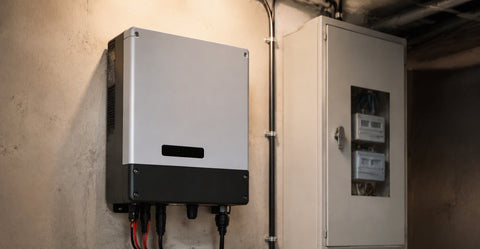
Pro Tip for Installers: When you're sizing a DC system, like a solar array for a FranklinWH battery, always—and I mean always—use the nominal voltage listed on the manufacturer's spec sheet. Grabbing the wrong voltage value is one of the most common mistakes out there, and it can lead to fried charge controllers or undersized inverters.
The AC Power Formula and Power Factor
AC adds a wrinkle: the Power Factor (PF).
Power factor is a number between 0 and 1 that tells you how much of the current actually does useful work. A PF of 1 means every amp is pulling its weight.
Anything with a motor or a switching power supply runs below 1, so the gear draws more amps than the watts alone would suggest. Ignore PF and you’ll undersize the circuit every single time.
Single-phase AC:
Watts (W) = Volts (V) × Amps (A) × Power Factor (PF)
Let's say you have a motor rated at 120V that pulls 5A. You might think that's 600W (120V x 5A), right? But if its Power Factor is 0.85, the actual power it consumes is just 510W (120V x 5A x 0.85). That 90-watt difference is huge when you're doing precise load calculations.
It's also essential to know the difference between true power (kW) and apparent power (kVA), especially in commercial jobs. If you want to go deeper on that, check out our guide on converting kVA to kW. And for those complex jobs where you need to be absolutely certain, a good set of online Amps to Watts Conversion Tools can be a real lifesaver.
Commercial and industrial gear — big motors, three-phase inverters from brands like Sungrow or Cummins, rooftop HVAC — runs on three-phase. The single-phase math won’t get you there.
We once watched a single-phase formula get used on a 480V service calc. The breaker came out undersized by over 40% before anyone caught it. Don’t be that guy.
Three-phase delivers steadier power across three overlapping sine waves, and the math accounts for that with the square root of 3 — 1.732. Commit it to memory. You’ll use it for the rest of your career.
The formula:
Watts (W) = Volts (V) × Amps (A) × Power Factor (PF) × 1.732

Line-to-Line vs. Line-to-Neutral Voltage
Here’s the trap: which voltage goes into the formula. Most industrial nameplates list line-to-line (L-L) voltage — the potential between any two phases — and that’s almost always the number you want.
Line-to-neutral (L-N) voltage is the potential between one phase and the neutral. If that’s all the nameplate gives you, multiply by 1.732 to get L-L.
- Example (208V/120V system): 120V (L-N) × 1.732 ≈ 208V (L-L)
- Example (480V/277V system): 277V (L-N) × 1.732 ≈ 480V (L-L)
Plug L-N into the formula by mistake and your answer comes out way low — undersized breaker, undersized conductor. For the full breakdown, see our guide on understanding three-phase power.
For Procurement Managers & EPCs: Always double-check the voltage type on equipment datasheets. When you're putting together a request for a bulk quote on panelboards or transformers, be explicit about whether your load calculations are based on L-L or L-N voltage. This one detail prevents miscommunication and ensures the gear you get meets NEC standards for the job.
This isn’t academic. Get a three-phase calc wrong on a big machine and you’re buying a replacement motor — or a replacement panel. The formula takes thirty seconds. Rework takes weeks.
Formulas are cheap. The job site is where they earn their keep. Here are three real scenarios — solar, EV charging, backup power — worked start to finish.
Same template every time: pin down the variables, run the math, sanity-check the answer.

Example 1: Sizing a Residential Solar Array
Say you’re designing a grid-tied residential system and need the string’s total DC wattage to check against the inverter’s input window. Standard rooftop work.
-
Known Variables:
- Voltage (Vmp): Each panel's spec sheet lists its Voltage at Maximum Power (Vmp) as 32V DC.
- Amperage (Imp): The Current at Maximum Power (Imp) is 9.5A DC.
- Number of Panels: The string design calls for 10 panels wired in series.
String voltage first. Panels in series add voltage; the amperage stays put.
- Total Voltage: 32V/panel × 10 panels = 320V DC
- Total Amperage: 9.5A DC (this doesn't change in a series circuit)
Now the DC formula:
Calculation:
Watts = Volts × Amps
Watts = 320V × 9.5A
Result: This solar string will generate 3,040 Watts (or 3.04 kW) in ideal conditions.
That 3.04 kW has to land inside the inverter’s MPPT window and under its max input rating — otherwise you’re leaving production on the table or clipping it off.
Example 2: Installing a Home EV Charger
A homeowner wants a Level 2 charger: 32 amps, dedicated 240-volt single-phase circuit. Before you pull a permit, you need to know what it does to their panel.
-
Known Variables:
- Voltage: 240V AC (standard single-phase)
- Amperage: 32A
- Power Factor (PF): Modern EV chargers are very efficient. We'll use a conservative Power Factor of 0.99.
Single-phase AC formula:
-
Calculation:
- Watts = Volts × Amps × Power Factor
- Watts = 240V × 32A × 0.99
- Result: The EV charger will pull a continuous 7,603 Watts (7.6 kW) while in use.
That 7.6 kW is a continuous load, so it goes into the NEC load calc at 125% (NEC 210.20(A)). We’ve seen plenty of 100A services that couldn’t take it — check before you quote, not after.
Example 3: Planning for a Commercial Backup Generator
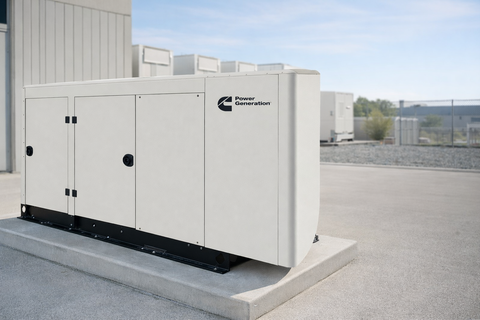
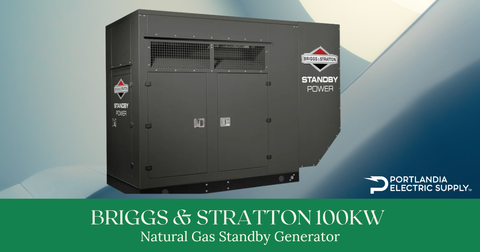
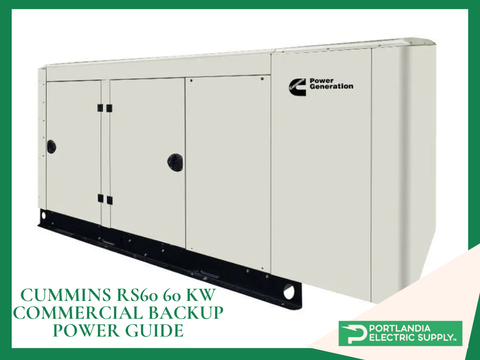
Facility job: a three-phase backup generator for a critical equipment panel. Max load is 60 amps per phase on a 480V/277V system. What size generator do you need?
-
Known Variables:
- Voltage: 480V AC (line-to-line)
- Amperage: 60A
- Power Factor (PF): The panel powers a mix of motors and other equipment, so a typical Power Factor of 0.85 is a safe bet.
Three-phase formula — the only way to a real number:
-
Calculation:
- Watts = Volts × Amps × PF × 1.732
- Watts = 480V × 60A × 0.85 × 1.732
- Result: The total power required is 42,399 Watts (or 42.4 kW).
Now you can ask for quotes on a 45–50 kW unit with a straight face. No guesswork, no undersized genset tripping offline the first time the load transfers.
Bad power math fails inspections, cooks equipment, and burns labor hours. A botched amps-to-watts conversion is one of the fastest ways to end up doing the job twice — for free.
These are the traps we see over and over, including a few that catch guys who’ve been at this for years.
Ignoring Power Factor in AC Circuits
Treating AC like DC. It happens constantly on motor, pump, and commercial lighting jobs — somebody forgets Power Factor (PF) exists.
Leave PF out and you’re not calculating real power (W) — you’re calculating apparent power (VA). You’ll always underestimate the true current draw, which means wire and breakers sized too small. Nuisance trips if you’re lucky. Overheated conductors if you’re not.
Compliance Watchout for EPCs & Installers: The National Electrical Code (NEC) doesn't mess around—it's built on real power and actual current loads. If your calculations ignore Power Factor, your wire gauges and breakers won't be compliant. That’s a guaranteed failed inspection and an expensive do-over. For any single-phase AC load, the formula is always: Watts = Volts × Amps × PF. No exceptions.
Confusing Peak Load with Continuous Load
Misreading the nameplate is another classic. You have to design for the startup jolt and the steady state — they’re different animals.
- Peak Load (Inrush Current): This is the massive, initial surge of amps a device like a motor draws the instant it kicks on.
- Continuous Load: This is the steady, predictable amperage the device pulls once it's up and running normally.
The NEC doesn’t leave room for debate: size the circuit for 125% of the continuous load (210.20(A) for branch circuits, 215.3 for feeders). Size to running amps alone and you’ve built a code violation and a fire hazard into the job.
Miscalculating Power in High-Density Environments
Nowhere does this math matter more than in data centers — a sector already pulling 1% to 1.5% of global electricity.
Data center operators are typically given power allocations in amps at a specific voltage (say, 25A at 240V) and have to convert this to watts with pinpoint accuracy to manage heat and prevent meltdowns. On paper, a 25A/240V circuit delivers 6,000 watts. But for rock-solid reliability, that circuit is almost always derated to 80% of its capacity, which is 4,800 watts (4.8 kW). Get that math wrong, and you’re looking at overloaded racks and a system-wide failure. You can learn more about how data centers manage these loads on colocationamerica.com.
These questions come up on jobs and in our inbox every week. Straight answers, no fluff.
What Is the Minimum Voltage Needed to Charge a Device?
For most of the gadgets in your pocket, like phones and tablets, the standard charging voltage is 5V DC. But things get more interesting with fast-charging tech like USB Power Delivery (USB-PD), which can intelligently step up the voltage to 9V, 12V, or even 20V for power-hungry laptops.
The one thing you absolutely have to remember is that the charger's voltage must match what the device expects. If you hook up a 12V source to a device built for 5V, you're going to fry its internal circuits. No coming back from that.
Can I Use a Charger with Higher Amps Than My Device Needs?
Yes, absolutely. This is one of the most common misconceptions out there. People worry that a charger with a higher amp rating will "force" too much current into their device and destroy it.
That’s not how it works. The device itself is in control—it only pulls the amount of current it needs.
- A Pro-Tip for Installers: It’s actually good practice to use a power supply with a higher amp rating than the device calls for. For instance, if a piece of equipment needs 2.1 amps, running it on a 3-amp supply is a great idea. The device will still only draw its 2.1 amps, but the power supply won't be redlining. It'll run cooler and last longer.
How Many Watts Does a 15-Amp Circuit Handle?
This is a bread-and-butter calculation for any electrician planning out loads. The answer depends entirely on the system's voltage.
- For 120V (Standard U.S. Homes): A 15-amp circuit can technically handle a maximum of 1,800 watts (15A × 120V).
- For 240V (Heavy Appliances/EV Chargers): That same 15-amp circuit can handle double the power, or 3,600 watts (15A × 240V).
A Critical Safety Check: Don't forget the 80% rule. The National Electrical Code (NEC) mandates that a circuit's continuous load shouldn't exceed 80% of its maximum rating. For anything running longer than three hours, that 15A/120V circuit should only be loaded to 1,440 watts to keep things safe and prevent overheating.
Why Does My Fast Charger Slow Down After 80%?
That’s not a bug; it's a feature. Modern lithium-ion batteries are protected by this smart design to make them last longer.
Charging creates heat, and trying to jam a high current into a battery that's nearly full is a recipe for damage and degradation. So, the battery management system follows a "charging curve"—it hits the gas hard up to about 80%, then eases way back on the wattage for that last 20%. This trickle charge keeps the battery cool and preserves its health over hundreds, or even thousands, of cycles.
At PES Supply, we stock the gear and we’ve done the work. NEC compliance, bundled freight, in-house design review — we deal with the same job-site realities you do, and we keep real inventory on the shelf so your schedule doesn’t slip waiting on a pallet.
If you're stuck on a load calculation or need to source equipment for a complex job, our team is ready to help.
Request a Bulk Quote for Your Next Project
Related Resources:
- Best Solar Panels 2026 — Buyer's Guide
- EG4 vs Tesla Powerwall
- Qcells vs Trina vs JA
- Solar Inverter Buyer's Guide
- Solar Battery Buyer's Guide
- 5kW Solar Kit
- 10kW Solar + Battery Kit
- Off-Grid Cabin Kit
- EG4 Batteries
- Qcells Solar Panels
- Trina Solar
- JA Solar
- REC Solar
- Mission Solar
- Sol-Ark Inverters
- SolarEdge Inverters
- Generac PWRcell
Calculate how much storage you need with our battery sizing calculator.
Use our free solar system calculator to size your array.
Check out our Solar Panel Comparison Tool. Check out our Inverter Sizing Calculator.
Calculate your solar payback and 25-year savings with our Solar ROI Calculator. Follow our complete DIY solar installation guide for step-by-step instructions. Keep your system running at peak performance with our Solar Maintenance Guide.
Related Resources
- Solar System Calculator
- Battery Sizing Calculator
- Solar Panel Comparison Tool
- Inverter Sizing Calculator
- Solar ROI Calculator
- Solar Installation Guide
- Solar Maintenance Guide
- Solar Permitting Guide
- Battery Installation Guide
- NEC Code Compliance Guide
- Solar Panel Mounting Guide
- Grounding & Bonding Guide
- Solar Incentives by State
- Pro Account — Wholesale Pricing
- PowerLink Network — Contractor Program