Updated September 2026 — refreshed against the live PES catalog; product pricing verified 2026-09-26.
Every week somebody calls our counter with a version of the same question: "My shop uses 2,400 kWh a month — how many amps is that?" The honest answer is that the question is incomplete, and the missing pieces are exactly what separate a circuit that runs cool for thirty years from one that cooks its insulation by Christmas. Energy (kWh) is a quantity; current (amps) is a rate. Converting between them requires voltage, time, and — on anything three-phase or motor-driven — power factor. Get those three inputs right and the conversion is one line of arithmetic. Get them wrong and you have sized a breaker with a horoscope. This guide gives you the formulas, the NEC tables that turn amps into wire and breakers, and the worked scenarios we walk customers through at PES Supply — residential EV circuits, commercial HVAC, and battery banks included.

The Critical Difference Between Energy and Current
A kilowatt-hour is energy: 1,000 watts sustained for one hour. Your utility bills you for kWh because it measures the total work performed — heat moved, water pumped, batteries charged. Amperes are current: the rate of electron flow at a given moment, and the thing that actually heats conductors, trips breakers, and sizes wire. The two connect through power and time: power (watts) = energy (Wh) ÷ time (hours), and current (amps) = power (watts) ÷ voltage (volts), adjusted for power factor on AC circuits.
The practical consequence: the same 30 kWh can be a gentle 5.7-amp trickle spread across a full day at 240 V, or a 125-amp demand if it is consumed in one hour. Your panel, your conductors, and your breakers only care about the second number — the rate. That is why "how many amps is my monthly kWh?" cannot be answered until you say how fast those kWh arrive.
Why This Matters on the Job Site
Here is where the confusion costs money. A customer reads 900 kWh off a bill, divides by nothing, and concludes they need "900 amps of solar." A GC sizes a subpanel from nameplate kW without asking about duty cycle. An apprentice pulls #12 for a load that NEC 210.20(A) treats as continuous, forgetting the 125% multiplier, and the inspector red-tags the rough-in. We have watched all three happen in the same month. The formulas below are not academic; they are the difference between a job that passes inspection and a job that gets re-pulled at the contractor's expense.
Using the Right Formulas for Accurate Amp Calculations
Single-Phase Systems Formula
For single-phase or split-phase systems — virtually all residential and light commercial work in North America:
Amps = (kWh × 1,000) ÷ (Volts × Hours × Power Factor)
Power factor (PF) is 1.0 for resistive loads (heaters, incandescent light) and 0.8–0.95 for motors, compressors, and most real-world mixed loads. If you do not know it, 0.9 is a defensible planning figure for a mixed residential load; nameplate data beats assumptions every time. Worked example: a household consumed 42 kWh across a day on a 240 V service with PF 0.95. Amps = 42,000 ÷ (240 × 24 × 0.95) = 7.7 A average. That is the average — the peak that sizes equipment will be three to five times higher, which is why averages inform energy decisions and peaks inform hardware decisions.
Three-Phase Systems Formula
Three-phase divides the power across three conductors 120° apart, and the √3 factor appears because line-to-line voltage and phase relationships do the sharing:
Amps = (kWh × 1,000) ÷ (Volts × Hours × PF × √3) where √3 ≈ 1.732 and Volts is the line-to-line voltage (208, 480, or 600 V).
Worked example: a machine shop consumed 680 kWh over a 16-hour production day on a 480 V three-phase service, PF 0.85. Amps = 680,000 ÷ (480 × 16 × 0.85 × 1.732) = 60.2 A average during production hours. That average corresponds to a load that likely peaks 1.5–2× higher when the big lathe and the compressor coincide — the number the breaker cares about.
Single-Phase vs Three-Phase Conversion Cheatsheet
| Parameter | Single-Phase Formula | Three-Phase Formula |
|---|---|---|
| Primary use | Residential, light commercial | Commercial, industrial, heavy machinery |
| Voltage | System voltage (120 V, 240 V) | Line-to-line voltage (208 V, 480 V) |
| Key multiplier | None | √3 ≈ 1.732 |
| Core formula | (kWh × 1000) ÷ (V × Hrs × PF) | (kWh × 1000) ÷ (V × Hrs × PF × √3) |
| 240 V / 208 V example, 10 kW load, PF 1.0 | 41.7 A at 240 V | 27.8 A at 208 V |
Note the last row: the same 10 kW is 41.7 A on a 240 V single-phase service but only 27.8 A per phase on 208 V three-phase. That reduction in per-conductor current — and the smaller, cheaper conductors it permits — is the entire economic argument for three-phase service on bigger loads.
Putting the Formulas to Work in Real-World Scenarios
Residential Project: Sizing an EV Charger Circuit
A homeowner charges 9 kWh into the car every night and wants it done in a 5-hour window before the time-of-use rate jumps. Power = 9,000 Wh ÷ 5 h = 1,800 W. At 240 V single-phase, that is 7.5 A — trivially small. But that is the average for the energy requested; nobody sells a 7.5 A EVSE. The real design question runs the other direction: a 40 A continuous EVSE on a 50 A breaker (NEC 625 treats EV charging as a continuous load, so 40 A × 1.25 = 50 A) delivers 9.6 kW, which puts 48 kWh into the car across those five hours — enough for 150+ miles. Size from the charger and the panel capacity, verify the energy math serves the driver's miles, and make sure the service can carry it: our NEC compliance guide covers the load-calculation side, and the EV charger collection covers the hardware.
Commercial Project: Sizing a Rooftop HVAC Circuit
A 10-ton rooftop unit shows a nameplate of 34 A minimum circuit ampacity (MCA) at 208 V three-phase with a 45 A maximum overcurrent protective device. Sanity-check with the formula: over a 10-hour cooling day the unit logs 95 kWh on the submeter. Amps = 95,000 ÷ (208 × 10 × 0.9 × 1.732) = 29.3 A average — consistent with a 34 A MCA once compressor cycling is considered. The MCA already includes the 125% continuous multiplier on the compressor, so the conductor is sized to 34 A: #8 AWG copper at 75°C per NEC 310.16 (50 A ampacity, well above requirement, but #10 at 35 A leaves no margin for ambient correction on a hot roof — on rooftops we default one size up). Breaker: 45 A per the nameplate MOCP, a standard size under NEC 240.6. Done, and done defensibly.
Solar and Storage Project: Battery System Design
Battery conversions run on DC, where there is no power factor — but there is real danger in the current levels, because DC system voltages are low. A 10 kWh battery at 48 V nominal discharging at half its capacity per hour (a 0.5C rate, 5 kW) drives 5,000 ÷ 48 = 104 A. That is 1/0 AWG territory before you apply the 125% continuous multiplier, after which you are at 130 A and still 1/0 (150 A at 75°C) with margin. The same 5 kW on a 24 V system is 208 A continuous — 260 A after the multiplier — and now you are pulling 300 kcmil and pricing copper by the pound. This is why modern battery systems moved to 48 V, and why 12 V "big bank" builds are a false economy past a couple of kilowatts. Pair the bank with charge control from the charge controller collection and see our MPPT vs. PWM comparison for the controller-side current math.
Real-World Conversion Tables

Table 1: Monthly Energy Use to Average Circuit Load (Residential)
| Monthly kWh | Daily kWh | Voltage | Hours/Day | Average Amps | 125% Continuous | Breaker (240.6) | Wire, Cu 75°C (310.16) |
|---|---|---|---|---|---|---|---|
| 500 | 16.4 | 120 V | 24 | 5.7 A | 7.1 A | 15 A | #14 AWG |
| 750 | 24.7 | 240 V | 24 | 4.3 A | 5.4 A | 15 A | #14 AWG |
| 1,000 | 32.9 | 240 V | 24 | 5.7 A | 7.1 A | 15 A | #14 AWG |
| 1,500 | 49.3 | 240 V | 24 | 8.6 A | 10.7 A | 15 A | #14 AWG |
| 2,000 | 65.8 | 240 V | 24 | 11.4 A | 14.3 A | 20 A | #12 AWG |
| 3,000 | 98.7 | 240 V | 24 | 17.1 A | 21.4 A | 25 A | #10 AWG |
Read this table correctly: these are whole-home average currents, useful for sanity-checking a service size — not branch-circuit design values. A home averaging 17 A around the clock still needs 20 A branch circuits, because the water heater does not care about your average.
Table 2: Solar Inverter Output to Breaker and Wire
| Inverter AC Output | 240 V 1φ Amps | 208 V 1φ Amps | 480 V 3φ Amps | Breaker (125%) | Wire, Cu 75°C |
|---|---|---|---|---|---|
| 3.8 kW | 15.8 A | 18.3 A | — | 20 A | #12 AWG |
| 5.0 kW | 20.8 A | 24.0 A | — | 30 A | #10 AWG |
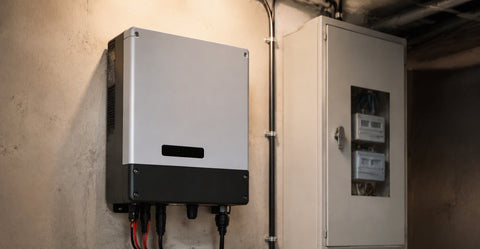
| 7.6 kW | 31.7 A | 36.5 A | — | 40 A | #8 AWG |
| 10.0 kW | 41.7 A | 48.1 A | — | 60 A | #6 AWG |
| 15.0 kW | 62.5 A | 72.1 A | — | 80 A | #4 AWG |
| 25.0 kW | — | — | 30.1 A | 40 A | #8 AWG |
| 50.0 kW | — | — | 60.1 A | 80 A | #4 AWG |
| 100.0 kW | — | — | 120.3 A | 150 A | 1/0 AWG |
We corrected two rows from older versions of this table that have circulated online: a 3.8 kW inverter at 15.8 A continuous needs a 19.8 A minimum overcurrent device, which rounds up to 20 A under NEC 240.6(B) — but #12 wire, not #14, because the 20 A breaker protects #12 at its 25 A ampacity while #14's 20 A ampacity has no margin for terminals rated 60°C. And the 5 kW row: 20.8 A × 1.25 = 26 A, which rounds to a 30 A breaker and #10 wire; #12 would be under-protected at 26 A continuous. Small corrections, real consequences — this is exactly the class of error inspectors catch on solar rough-ins.
Table 3: Battery Bank Discharge Current (48 V DC, 0.5C Rate)
| Battery Capacity | Nominal Voltage | Max Discharge (0.5C) | DC Amps | 125% Continuous | Min. Wire, Cu 75°C (310.16) |
|---|---|---|---|---|---|
| 5 kWh | 48 V | 2.5 kW | 52 A | 65 A | #6 AWG (65 A) |
| 10 kWh | 48 V | 5.0 kW | 104 A | 130 A | 1/0 AWG (150 A) |
| 13.5 kWh | 48 V | 6.75 kW | 141 A | 176 A | 3/0 AWG (200 A) |
| 20 kWh | 48 V | 10.0 kW | 208 A | 260 A | 300 kcmil (285 A) |
| 30 kWh | 48 V | 15.0 kW | 313 A | 391 A | 600 kcmil (420 A) |
Two of these rows correct figures you will see in older guides — including the previous version of this article. A 260 A continuous load does not fit on 4/0 (230 A at 75°C); it needs 300 kcmil. A 391 A load does not fit on 350 kcmil (310 A); it needs 600 kcmil. If you are speccing battery interconnects from a chart, make sure the chart did its 125% multiplication before selecting the conductor, or the inspector will do it for you. The batteries and energy storage collection lists the current LFP banks this table applies to, and our battery installation guide covers the torque specs and overcurrent placement that go with them.
Table 4: NEC 240.6 Standard Breaker Sizes (Quick Reference)
| Continuous Load After 125% | Standard Breaker | Min. Cu Conductor (75°C) |
|---|---|---|
| ≤16 A | 20 A | #12 AWG |
| 16–20 A | 25 A | #10 AWG |
| 20–24 A | 30 A | #10 AWG |
| 24–32 A | 40 A | #8 AWG |
| 32–40 A | 50 A | #6 AWG |
| 40–48 A | 60 A | #6 AWG |
| 48–64 A | 80 A | #4 AWG |
| 64–80 A | 100 A | #2 AWG |
| 80–100 A | 125 A | 1/0 AWG |
| 100–120 A | 150 A | 1/0 AWG |
| 120–160 A | 200 A | 3/0 AWG |
Remember the coordination rule: the conductor ampacity must meet or exceed the continuous load × 1.25, and the breaker must not exceed the conductor ampacity except as NEC 240.4(B) permits the next-higher standard size — and 240.4(B) does not apply when the load is continuous and the next size up would leave the conductor under-protected above its rating. When in doubt, upsize the wire, not the breaker.
Calculating Amp-Hours for Solar and Battery Systems
The Amp-Hour Conversion Formula
Battery people speak amp-hours; utility people speak kilowatt-hours. The bridge is voltage:
Amp-hours = (kWh × 1,000) ÷ Battery Voltage
A 10 kWh usable battery at 51.2 V nominal holds 10,000 ÷ 51.2 = 195 Ah. The same energy at 12.8 V is 781 Ah — which is why a "400 Ah lithium bank" can be 5 kWh or 20 kWh depending on whether it is wired at 12 V or 48 V. Always convert to kWh before comparing batteries; amp-hours without voltage is a marketing number.
Why System Voltage Is a Design Decision, Not a Preference
The amp-hour table above quietly explains the entire architecture of modern off-grid systems. Double the system voltage and every current in the design halves: half the conductor cross-section, half the voltage drop, half the resistive heating, and dramatically smaller overcurrent devices. A 3 kW inverter on a 12 V bank draws 250 A continuous — welding-cable territory with class-T fusing. The same 3 kW at 48 V draws 62.5 A, comfortably served by #4 AWG and a standard 80 A DC breaker. This is why 12 V belongs in RVs and vans below ~1.5 kW, 24 V serves mid-size cabins, and 48 V is the floor for whole-home banks. Choose the voltage first; every amp calculation downstream inherits the decision.
From Amps Back to kWh: Closing the Loop
Every conversion in this guide runs in reverse, and the reverse direction is what monitoring gives you. A clamp meter reads 18.2 A on a 240 V heat-pump circuit; multiply by volts and hours — 18.2 × 240 × 3 hours of measured runtime — and you have 13.1 kWh consumed, no utility data required. Energy audits, solar production verification, and generator fuel planning all run this loop daily: measure current, convert to power, integrate over time, compare against the bill. Learn both directions and the meter, the bill, and the BOM finally speak the same language.
The reverse loop is also how you verify a solar install against its proposal. A 7.6 kW inverter showing 31 A at 240 V at solar noon is delivering 7.4 kW — nameplate, on a cool clear day, exactly as designed. The same inverter showing 22 A at noon in June with clean panels is telling you something is wrong: a shaded string, a failed optimizer, or a tripped DC disconnect. Current measurement is the fastest diagnostic in the field because it is the one quantity every component in the chain must agree on. Volts can float and kWh can lag, but amps are instantaneous and honest — carry a clamp meter on every site visit, and the system cannot lie to you about what it is actually doing right now.
Sizing an Off-Grid Battery Bank
Off-grid sizing chains three conversions: daily kWh of load → battery kWh after depth-of-discharge and inverter efficiency → amp-hours at system voltage → discharge current at the inverter's surge rating → conductor from Table 3 logic. Example: a cabin with 8 kWh/day of load, two days of autonomy, LFP at 90% DoD, 95% inverter efficiency: battery = 8 × 2 ÷ 0.90 ÷ 0.95 = 18.7 kWh nominal. At 51.2 V that is 365 Ah. An inverter surging 6 kW pulls 6,000 ÷ 48 = 125 A, so 1/0 interconnects with a 150 A class-T fuse — because at these currents, DC fault energy is the real hazard, and class-T interrupt ratings exist for exactly this. Our battery sizing calculator runs the energy side; the modular 51.2 V wall-mount blocks in the energy storage collection are the hardware that math lands on.
Common Conversion Mistakes and How to Avoid Them
Ignoring Power Factor in Commercial Projects
A 50 kW motor load at PF 0.8 draws 62.5 kVA — and the conductors, transformer, and utility demand charges all respond to the 62.5, not the 50. Run the three-phase formula with PF = 1.0 on a motor-heavy facility and you will under-size everything upstream by 20%. Worse, many utilities bill demand on kVA or apply PF penalties below 0.9. Measure PF with a power analyzer during representative production, or pull it from the utility interval data if they provide kVARh.
Confusing Voltage Types in Three-Phase Systems
The formula wants line-to-line voltage. Feed it the 277 V line-to-neutral of a 480 V wye system and your amps come out 73% high. Feed it 120 V on a 208 V system and the same error appears in miniature. Label your single-line diagrams with both voltages (e.g., "480Y/277 V") and make the habit of asking "which voltage?" the first question in every conversion.
Mistaking Peak Demand for Average Load
Energy-derived amps are averages. A warehouse averaging 60 A across production hours can peak at 140 A when the compressor and two welders coincide. Breakers, conductors, and transformers are sized to peaks plus code multipliers; batteries and solar arrays are sized to energy. Keep the two columns in your spreadsheet separate, and label them loudly, because the day someone sizes a breaker from the energy column is the day something overheats. The residential version of this mistake is sizing a panel from the monthly bill: 2,000 kWh a month averages 11.4 A at 240 V, yet that same house legitimately peaks past 100 A when the range, dryer, AC, and EV charger coincide — which is precisely why NEC 220 demand-factor load calculations, not monthly averages, govern service sizing.
Skipping the Voltage-Drop Check on Long Runs
Ampacity from NEC 310.16 is only half the conductor decision. Voltage drop scales with distance and current, and past roughly 100 feet it starts choosing your wire size for you. Worked example: a barn workshop 250 feet from the house panel needs 40 A at 240 V single-phase. Ampacity says #8 AWG (50 A at 75°C). Drop says otherwise: #8 copper at 40 A over 500 feet round-trip loses about 5.1% — the lights dim every time the compressor kicks. Step to #4 AWG and the drop lands near 2%, inside the 3% branch-circuit good-practice target in NEC 210.19(A) Informational Note. The drop formula for single-phase runs: % drop ≈ (2 × L × I × R) ÷ (V × 1,000), where R is resistance per 1,000 ft from NEC Chapter 9, Table 8. Run it every time the one-way distance passes 100 feet, and run it with the conductor at operating temperature, not the 20°C table value.
Forgetting That kWh-to-Amps Drives Generator and Transfer Switch Sizing
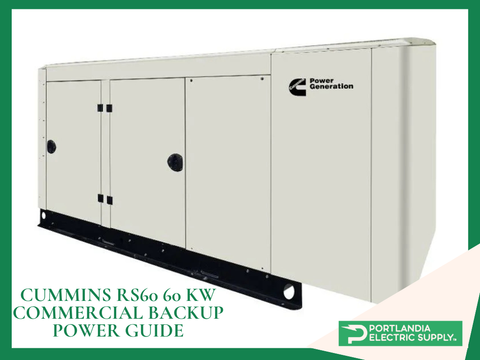
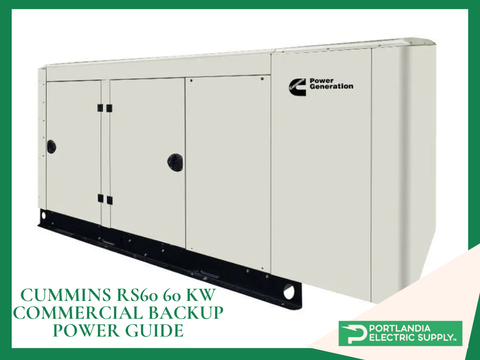
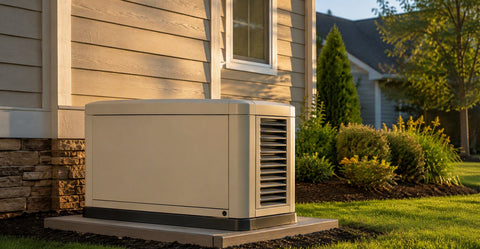
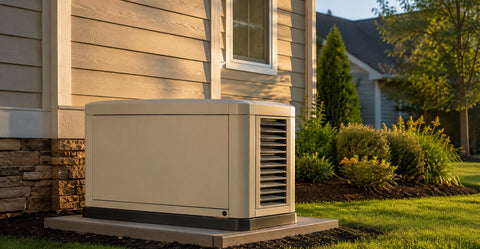
The same conversion answers the backup-power question. A house using 30 kWh on an outage day needs its generator to deliver that energy at the peak rate the house demands — and a generator's rating is just volts × amps wearing a kilowatt hat. A 10 kW standby unit at 240 V makes 41.7 A; whether that covers your converted amp figure decides whether you shop that class or step up. The full generator-side treatment — surge math, NEC 445.13 conductor rules, fuel burn per load level — is in our 10 kW generator amps guide, and the generator collection brackets every size class the math might land on. Transfer switch ratings follow the same current logic: the switch carries amps, so convert first and buy second.
Field Notes from the Counter
I have sized more battery interconnects than I can count, and the question that still separates pros from Pinterest builds is: "at what voltage?" A customer once specced 4/0 welding cable for a 48 V, 15 kW inverter-charger because a forum said 4/0 was "the big one." At full surge that unit pulls over 300 A; 4/0 at 230 A was a fuse waiting for an excuse. We re-did the math together, he left with 600 kcmil and a class-T holder, and his insurance never had to learn how close it came. We have also pulled thousand-foot reels of #10 for solar home-runs where a two-minute voltage-drop calculation showed #12 would have passed — the formula cuts both ways, saving copper when it can and demanding it when it must. And the kWh-to-amps question itself? We have answered it at the counter hundreds of times, and the answer always starts the same way: "Tell me the voltage and how fast you need it, and we will have your number in thirty seconds."
A closing calibration on the whole topic: the conversions in this guide are one-line arithmetic wrapped in code discipline. The customers who get burned are never the ones who could not do the division — they are the ones who skipped the 125% multiplier, assumed PF 1.0 on a motor, or sized a battery bank in amp-hours without asking the voltage. We would rather spend ten minutes at the counter doing the math with you than read the warranty email later, and so would you. Bring the kWh figure, the voltage, and the duty cycle, and leave with a wire size, a breaker, and a BOM that passes inspection the first time.
Frequently Asked Questions
How Does the Time Period Change the Final Amp Calculation?
Directly and linearly — amps are inversely proportional to hours. 24 kWh consumed over 24 hours at 240 V is 4.2 A average; the same 24 kWh over 4 hours is 25 A. This is why EV charging windows and demand-charge intervals matter so much: compressing energy into less time multiplies the current, and current is what sizes every piece of hardware between the load and the utility.
Can I Trust an Online Calculator for Official Project Specs?
For arithmetic, yes — the formulas are simple. For specifications, no. Calculators do not know your ambient-temperature correction factors, your conduit fill, your terminal temperature ratings, or whether your load is continuous under NEC definitions. Use calculators for the number; use NEC 210, 240, 310, and 625 for the design; and have a licensed electrician or engineer review and stamp anything that feeds a permit, a rebate application, or a utility interconnection package.
Why Is Power Factor So Critical for Three-Phase Motors?
Because motors draw apparent power (kVA) greater than their real power (kW), and everything upstream — conductors, breakers, transformers, utility demand metering — responds to the apparent figure. A 100 kW motor bank at PF 0.8 draws 125 kVA, 25% more current than the kW figure suggests. Ignore PF and you under-size the entire distribution chain by exactly that percentage.
What Is the Difference Between Amps and Amp-Hours?
Amps measure rate — how much current flows right now. Amp-hours measure quantity — how much charge a battery holds, the same relationship as watts to watt-hours. A 200 Ah battery at 51.2 V stores 10.24 kWh; the same 200 Ah at 12.8 V stores 2.56 kWh. Convert to kWh before comparing anything.
How Do I Convert My Monthly kWh Bill to a Service Size?
You cannot, directly — service size comes from peak demand, not monthly energy. A rough screen: divide monthly kWh by 730 hours for average kW, then multiply by 3–4 for a typical residential peak-to-average ratio. 1,500 kWh/month ≈ 2.05 kW average ≈ 6–8 kW peak ≈ 25–33 A at 240 V, well inside a 100 A service. For anything definitive, run NEC 220 load calculations or pull demand data from the utility.
Does the 125% Rule Apply to Every Circuit?
No — only to continuous loads, defined by NEC Article 100 as loads expected at maximum current for three hours or more. EV charging (625), solar inverter output (690.8), and water heaters are continuous; a shop saw is not. Applying 125% everywhere wastes copper; skipping it where required fails inspection and overheats conductors.
Related Products & Collections
- EV chargers — 40 A and 48 A units with the circuit math above baked in
- Batteries & energy storage — 48 V LFP banks sized by the Table 3 method
- Inverters — string and hybrid units matched to Table 2
- Request a quote — bring your kWh figure; leave with a BOM