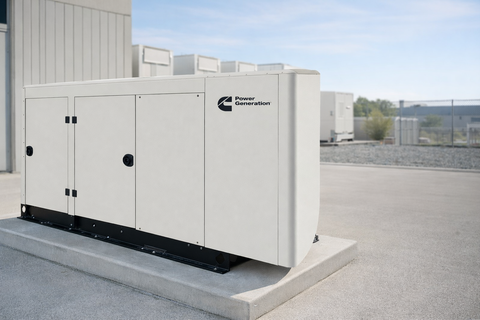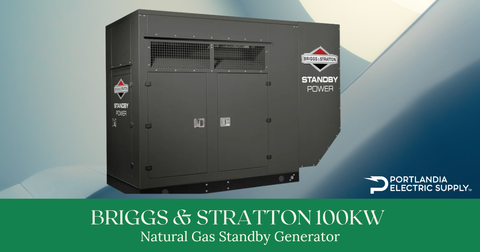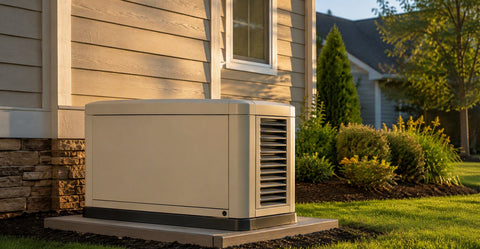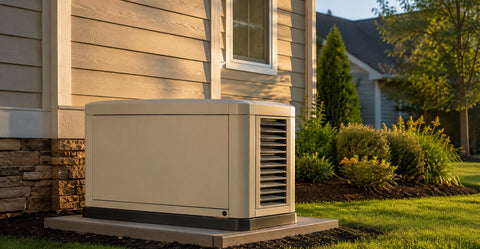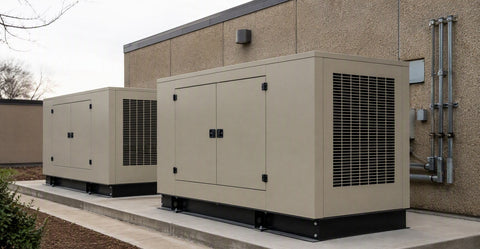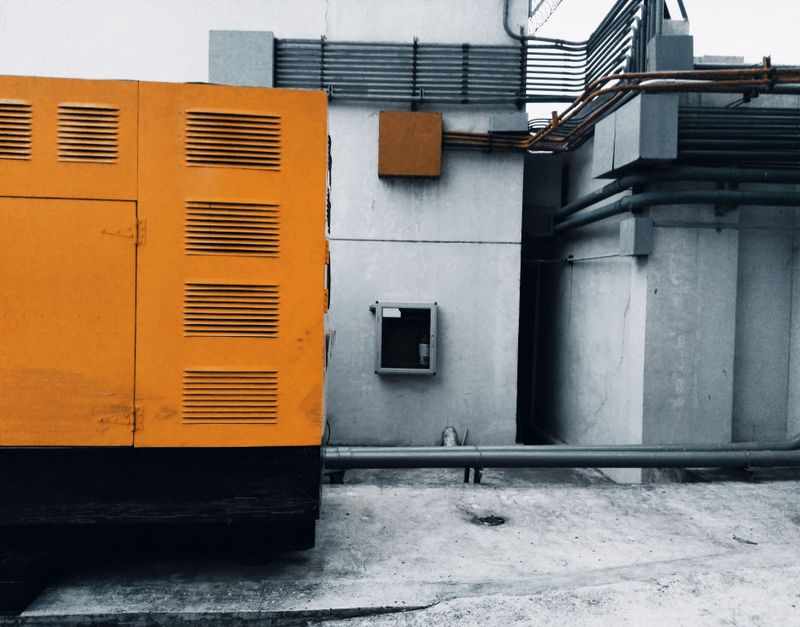
The Briggs & Stratton 22kW home standby generator — sold under the PowerProtect banner — is the unit we quote when a customer wants full-house backup, including central air, without stepping into liquid-cooled commercial pricing. Its headline trick is real: it delivers a full 22kW on both natural gas and propane, where most air-cooled rivals lose 10–15% of their rating the moment you take them off LP. If you are comparing the 20–28kW standby class, this guide gives you the verified specs, the install math, and the field notes from jobs we have supplied.

Verified specifications: PowerProtect 22kW
| Specification | Value | Field significance |
|---|---|---|
| Rated output | 22kW on LP and NG (no NG derate) | Full rating regardless of fuel — rare in air-cooled class |
| Voltage | 120/240V single-phase | Standard residential service |
| Running amperage | 91.7A @ 240V | Sets conductor and breaker sizing |
| Main circuit breaker | 100A | Factory-fitted output protection |
| Engine | Briggs & Stratton Vanguard commercial-grade V-twin | Proven air-cooled platform with broad parts network |
| Motor starting | ≈ 45kVA starting power | Starts a 4–5 ton AC compressor without load shedding |
| Dimensions (L × W × H) | 46.5 × 26.8 × 28.4 in | Compact footprint — eases NFPA 37 clearance layouts |
| Transfer switch bundle | Available with 200A service-rated ATS | One SKU covers generator + switch for most homes |
| Warranty | Up to 7-year comprehensive (bundle/program dependent) | Among the longest in the air-cooled class — confirm terms at order time |
The full-output-on-NG point deserves emphasis. Most air-cooled 22kW-class competitors deliver 22kW on propane and something like 19.5–20kW on natural gas. On a house whose load calc lands at 20kW, that gap is the difference between shedding a circuit and not. With the Briggs, the load calc you run is the power you get on either fuel.
What 22kW actually runs
Real numbers from a worksheet we ran for a 2,400 sq ft all-electric house with gas heat:
| Load | Running watts | Starting watts |
|---|---|---|
| 4-ton central AC (with soft start) | 4,200 | ≈ 6,500 (soft-started) |
| Refrigerator + freezer | 350 | 2,200 |
| Gas furnace blower | 700 | 1,800 |
| Well pump, 3/4 HP | 1,500 | 4,500 |
| Electric water heater (managed) | 4,500 | 4,500 |
| Lighting, outlets, electronics | 1,200 | 1,200 |
| Microwave + coffee maker | 2,200 | 2,200 |
| Simultaneous running total | ≈ 14,650W | worst-case stack ≈ 21kW |
That house fits under 22kW with the water heater on a load-shed module — and with 45kVA of motor-starting headroom, the AC starts without dimming the lights. Put the same loads against a 20kW-on-NG competitor and the water heater shed becomes non-negotiable, and a second big motor starting simultaneously gets sporty.
Field note: I've watched this exact unit start a 4-ton condenser, a 3/4 HP well pump, and a refrigerator compressor in sequence during a storm outage without the voltage dipping enough to reset a single clock in the house. Motor starting is where spec sheets meet reality, and 45kVA is a real number, not marketing.
Natural gas vs propane on this unit
| Factor | Natural gas | Propane (LP) |
|---|---|---|
| Output | Full 22kW | Full 22kW |
| Fuel infrastructure | Existing meter; may need service upsizing for BTU demand | Dedicated tank; 250–500 gal typical |
| Runtime | Limited only by utility | ~3–5 days continuous at half load per 250 gal tank |
| Outage independence | Tied to gas utility pressure (historically very reliable) | Fully independent of utilities |
| Install cost delta | Lower if meter capacity exists; higher if utility upgrade required | Tank lease/purchase + trench + regulator |
Check the gas meter capacity early. A 22kW engine at full load demands roughly 300,000+ BTU/hr, and many residential meters are already near capacity feeding a furnace, water heater, and range. The utility will often upsize the meter free or cheap — but it takes weeks, so file that request before the generator arrives, not after.
Installation: the complete scope
A 22kW Briggs install is a coordinated three-trade job. What belongs in the quote:
- Pad. Poured concrete or a manufacturer-approved composite pad, level, above flood line, with NFPA 37 clearances — figure 5 ft from doors, windows, and vents unless the listing allows closer.
- Gas plumbing. Correctly sized run (often 1 in. or larger at distance), sediment trap, shutoff, and a pressure test before startup.
- Electrical. 200A service-rated ATS between meter and panel or as a service replacement; generator conductors sized per NEC 445.13 at 115% of nameplate — at 91.7A that lands you on 2 AWG copper from the NEC 310.16 75 °C column; our NEC wire sizing guide has the tables.
- Permits and inspection. Electrical permit everywhere, mechanical/plumbing permit for the gas line in most jurisdictions.
- Startup and commissioning. Factory-protocol startup protects the warranty — exercise schedule, firmware, load test, and utility interconnect paperwork where applicable.
All-in, budget roughly $11,000–$16,000 turnkey for a 22kW with 200A ATS in most US markets, equipment plus install. Quotes below that range usually exclude the gas work; quotes above it usually include a meter upgrade or a long run of trench.
Briggs 22kW vs the class
| Attribute | Briggs & Stratton PowerProtect 22kW | Generac 22kW Guardian class | Kohler 20kW class |
|---|---|---|---|
| Output on NG | Full 22kW | Derated vs LP on most models | 20kW LP / 18kW NG typical |
| Motor starting | ≈ 45kVA | Class-competitive | Class-competitive |
| Warranty | Up to 7 years (program dependent) | 5 years typical | 5 years typical |
| Footprint | 46.5 × 26.8 in | Comparable | Comparable |
| Dealer/parts network | Broad, growing | Largest in class | Strong in metro markets |
Cross-shop the class in our catalogs: Generac, Kohler, Cummins, and the full Briggs & Stratton line. On spec-for-dollar in the 22kW class, the Briggs is genuinely hard to beat; on service-network depth, Generac still leads in many regions. Buy the brand your local service company actually stocks parts for — that matters more in year nine than anything on this table.
Maintenance schedule that keeps the warranty alive
| Interval | Task |
|---|---|
| Weekly (automatic) | Self-exercise cycle; verify green status light after |
| Every 6 months | Visual inspection, enclosure louvers clear, rodent check, battery terminals clean |
| Annually / 100–150 hours | Oil and filter, air filter, spark plugs per manual, battery load test, firmware update |
| Every 2–3 years | Valve clearance check where specified; replace starting battery proactively (~$100 insurance) |
| Storm season prep | Full-load test transfer, fuel system leak check, stock spares from the maintenance kit catalog |
Cold-climate installs should add a battery warmer and oil warmer from our cold-weather kit selection. The number-one no-start call we field every January is a frozen, four-year-old starting battery — a warmer kit and a proactive battery swap cost less than one emergency service call.
Who should buy the 22kW — and who should not
Buy it if your load calc lands between 14kW and 20kW, you want central AC to run through an outage, you are on natural gas and refuse to accept a derate, or the 7-year warranty programs close the deal against the competition. Step down to the 14–17kW class if you are willing to manage the AC and big appliances — you will save real money. Step up to liquid-cooled commercial standby if the property is a small business, the outage duty exceeds a few hundred hours a year, or three-phase power is on the requirement list.
Contractors quoting whole-house jobs: bundle generator, 200A transfer switch, pad, and maintenance kit through a Pro Account and we will kit the entire BOM on one purchase order with LTL freight coordinated to the site.
The PowerProtect family in context
The 22kW sits second from the top of Briggs' air-cooled residential line. How the family breaks down:
| Model class | Best-fit home | What changes as you step up |
|---|---|---|
| 10–13kW PowerProtect | Essential circuits, no central AC | Smaller engine, smaller gas demand, lowest entry cost |
| 18kW PowerProtect | Medium home, AC with load management | Fuller coverage, some NG derate-free headroom |
| 22kW PowerProtect | Whole house incl. 3–4 ton AC | Full 22kW on NG and LP; ≈45kVA motor starting |
| 26kW PowerProtect | Large homes, multiple condensers | Top of the air-cooled range; beyond this, go liquid-cooled |
If your load calc lands within 2kW of the 18kW ceiling, buy the 22kW. The price step between adjacent air-cooled sizes is small next to the cost of discovering your surge math was optimistic during the first August outage.
Fuel consumption and runtime planning
Published consumption curves for this class of air-cooled 22kW engine cluster in a tight band, so plan with these working numbers and confirm against the unit's data sheet:
| Load level | Natural gas | Propane | Runtime on 250 gal LP tank (≈200 usable gal) |
|---|---|---|---|
| 25% (≈5.5kW) | ≈ 180–220 cu ft/hr | ≈ 1.8–2.2 gal/hr | ≈ 4 days |
| 50% (≈11kW) | ≈ 260–310 cu ft/hr | ≈ 2.6–3.2 gal/hr | ≈ 2.5–3 days |
| 100% (22kW) | ≈ 380–430 cu ft/hr | ≈ 3.8–4.5 gal/hr | ≈ 1.8–2.2 days |
Real outage duty averages well below 50% — houses cycle, and nights are light. On natural gas the tank question disappears; on propane, the 500-gallon tank is the sweet spot for rural properties that have seen week-long outages. Have the propane supplier confirm vaporization rate: in deep cold, a half-empty small tank cannot boil off LP fast enough for full load, which is why the tank sizing conversation belongs to the fuel supplier, not just the electrician.
Sound, enclosure, and siting
Expect roughly 63–67 dBA at 23 ft during weekly exercise — central-AC territory — with a steel enclosure and automotive-style exhaust doing the muffling. Siting rules that keep inspectors and neighbors happy: NFPA 37 clearances (5 ft from doors, windows, and fresh-air intakes unless the listing says closer), exhaust pointed away from occupied structures, pad above any flood line, and 3 ft of working clearance on the service sides. We have moved exactly one unit after installation because the owner put it under a bedroom window against advice; the concrete saw and the second pad cost more than the conversation would have.
Transfer switch options for this unit
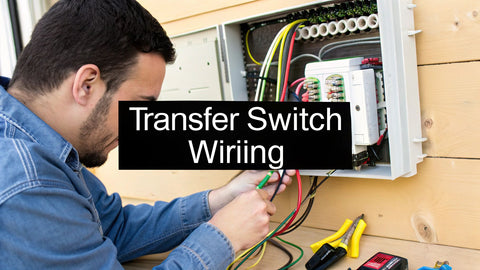
The common bundle pairs the 22kW with a 200A service-rated ATS, which lands between meter and main panel and runs the whole house with load-shed modules on the big 240V appliances. The alternative — a 100A or 200A sub-panel ATS feeding a critical-loads panel — costs less in labor on retrofit jobs where the main panel is crowded, and it makes the load calc easier because the heavy appliances are simply left on utility-only circuits. Either way, match the ATS amperage to the service, confirm whether the neutral is switched (4-pole = separately derived system per NEC 250.30), and size generator conductors at 115% of nameplate per NEC 445.13. Our 200A-class transfer switch selection and the broader transfer switch catalog cover both configurations.
Cold-climate packages and accessories

Below about 20 °F, two accessories stop being optional: a battery warmer and an oil warmer. Cold-soaked batteries lose a third of their cranking power exactly when the engine oil is thickest, and the January no-start call is the most common service ticket in northern markets. Order the cold-weather kit with the generator, not after the first freeze, and add a maintenance kit — oil, filters, plugs — to the same freight so the first annual service is already on the shelf.
Warranty registration and the service relationship
The up-to-7-year comprehensive coverage on PowerProtect bundles is genuine value — most of the class stops at five — but it is conditional: register the unit at commissioning, keep the startup checklist on file, and maintain service records. Warranty claims on unmaintained engines die at the first oil-sample conversation. Identify your nearest authorized servicer before purchase and put their number in the same folder as the registration; the relationship you want in year nine starts before year one.
Field note: The customers who love this machine five years in all did the same three things: the gas meter was confirmed before the order, the pad had proper clearances the first time, and the annual service actually happened every year. The ones with complaints skipped at least one of the three. There is no fourth variable.
The Vanguard engine: why it matters more than the badge
Under the enclosure sits a Briggs & Stratton Vanguard commercial-grade V-twin — an engine family with a decades-long record in rental fleets, turf equipment, and industrial power units, which is a harder life than any standby generator will ever see. The practical dividends: cast-iron cylinder liners, full-pressure lubrication with a real oil filter, and a parts network that reaches every county in the country. Standby engines live brutal lives — long sleep, then full load at the worst possible moment — and the Vanguard's breeding is exactly the right kind for that duty. Valve service intervals, oil specs, and torque values are all published, which also means any competent small-engine shop can work on it, not just factory dealers.
Understanding the exercise cycle
Every week, the unit wakes, runs unloaded for a short self-test — typically 10–20 minutes — and reports status to the controller and any connected monitoring. Two settings worth attention. First, schedule it for mid-morning on a weekday; a 6 AM Sunday exercise cycle has started more neighborhood feuds than leaf blowers. Second, know the difference between unloaded exercise and a real load test: the weekly run proves the engine starts, but only an occasional transfer under actual house load proves the whole chain — generator, ATS, wiring, and fuel — works together. Once a quarter, kill the main breaker deliberately and watch the full sequence. The outage is not the time to discover a corroded ATS lug.
Permitting and inspection realities
Every jurisdiction we ship into wants the same paper: an electrical permit for the ATS and generator circuit, a mechanical or plumbing permit for the gas work, and a final inspection with the unit running. Inspectors consistently check three things — NFPA 37 clearances from openings, the gas line size and sediment trap, and the ATS listing and service rating. Have the manufacturer's clearance document and the gas sizing worksheet printed and on site at inspection; it turns a skeptical inspection into a ten-minute formality. Skipping permits on a permanently installed generator risks insurance coverage and shows up at resale — the permit is cheap compared to the problem it prevents.
Insurance, home value, and the paperwork upside
Two quiet financial notes that rarely make the brochures. Several homeowner insurers offer small premium credits for permanently installed standby systems with automatic transfer — worth a phone call with your agent. And in storm-prone markets, appraisers and buyers increasingly treat a permitted, serviced standby generator as a real asset; we have had customers in hurricane and ice-storm corridors recover most of the install cost at sale. Keep the permits, the registration, and every service record in one folder — that folder is worth money.
When the 22kW is the wrong answer
Honesty from the supply counter: this unit is wrong for you if the load calc says 8kW (buy the 13kW and bank the difference), if the property has no gas and you refuse a propane tank (a dual-fuel portable through an interlock is the honest fallback), or if the site runs outages measured in weeks per year, every year (that is liquid-cooled prime-capable territory). The 22kW is the sweet spot for the modal American house with central air and a gas meter — which is precisely why it is the size we sell most.
A load-management strategy for big houses
If the worksheet says 24–26kW but the budget says 22kW, load management closes the gap legitimately. The 200A ATS ecosystem supports managed modules on the big 240V circuits — electric water heater, range, dryer, second condenser — that shed briefly when the generator approaches its ceiling and restore automatically when headroom returns. Sequenced correctly, a 22kW with two managed circuits carries a house that looks like 26kW on paper, and the occupants never notice a water heater that paused for eleven minutes. The discipline: manage resistive convenience loads, never life-safety or refrigeration loads, and program priorities so the well pump always wins. Done right, it saves a generator size; done wrong, it is a nuisance-trip generator — the programming session at commissioning is where that outcome is decided.
What a service visit actually covers
Annual service on this unit is a real procedure, not an oil change with a sticker. A competent tech runs the full list: oil and filter with the correct viscosity for the climate, air filter, spark plugs and gap, battery load test and terminal service, valve clearance verification per the engine schedule, controller firmware, exercise-clock setting, full-load transfer test with recorded voltage and frequency, gas pressure verification at full load, and a written report. Budget $250–$450 depending on market. The report matters as much as the wrench work — it is your warranty evidence and your resale dossier. Keep every one.
The economics versus portable backup
Run the honest comparison for a household that averages 60 outage-hours a year with one multi-day event every few years. The portable path: roughly $2,500 all-in for a quality 7,500W unit plus interlock, gasoline logistics every event, manual operation in the weather, no central AC, and full replacement around hour 1,500. The 22kW path: roughly $13,000–$16,000 turnkey, automatic operation, whole-house coverage, and 20-year service life with $300–$450 annual maintenance. Over two decades the portable path is cheaper in dollars and more expensive in everything else — your labor in the storm, the freezer loss when nobody was home, the hotel nights. Neither answer is wrong; they serve different households. The mistake is buying the portable while wanting the standby's outcome.
The questions that close the sale correctly
Before you sign, five answers should be on paper: the load calc with surge analysis; the gas meter's confirmed capacity from the utility; the pad location with NFPA 37 clearances drawn; the ATS configuration with any managed circuits listed; and the commissioning date with the startup protocol attached. A quote containing those five is a professional job. A quote without them is a machine in a box and a hope. We build every standby quote around that checklist — it is slower by one afternoon and faster by every year after.
Storm-season readiness drill
Every September, run the drill: deliberate utility kill at the main breaker, timed transfer, thirty minutes under real house load, fuel system check, battery voltage logged, and a look at the exercise clock. Ten items, twenty minutes, once a year. The families who drill treat the machine as an appliance; the ones who do not treat the first outage as an exam they have not studied for. The 22kW passes either way — but you will enjoy the storm a great deal more having rehearsed it.
One last note from the field: the difference between a generator that is an appliance and one that is a hobby is the first year. Commission it properly, run the quarterly transfer tests, keep the service schedule, and this 22kW fades into the background of the house — which is precisely where emergency equipment belongs. The best day to own a standby generator is the day you forget it is there until the street goes dark and your kitchen lights do not.
Frequently asked questions
Does the Briggs & Stratton 22kW really make full power on natural gas?
Yes — the PowerProtect 22kW is rated at a full 22kW on both natural gas and liquid propane, unlike most air-cooled competitors that lose 10–15% of rated output on NG. That makes it the class pick for homes on gas utility service.
Will a 22kW generator run my whole house including central AC?
For most homes up to roughly 3,000 sq ft, yes: 22kW with ~45kVA of motor-starting capacity starts and runs a 3–4 ton central AC (a soft starter helps), plus kitchen, lighting, well pump, and furnace blower, with load management on the electric water heater or range if everything lands at once.
What size gas line does a 22kW standby generator need?
Full-load demand is roughly 300,000+ BTU/hr, which usually means a 1-inch or larger run depending on distance and pressure, plus confirmation that the meter itself has capacity. Have the gas fitter size the run and file the utility meter request before the equipment arrives.
How much does a Briggs 22kW cost installed?
Figure roughly $11,000–$16,000 turnkey in most markets — generator, 200A ATS, pad, gas plumbing, electrical, permits, and startup. Long trench runs or a utility meter upgrade push the top of the range.
What warranty does the PowerProtect 22kW carry?
Briggs & Stratton advertises up to a 7-year comprehensive warranty on PowerProtect bundles — among the longest in the air-cooled class. Terms vary by bundle and program, so confirm the exact warranty document at order time and register the unit at commissioning.
How often does it need service?
Weekly self-exercise is automatic. Plan an annual service — oil, filters, plugs per the manual, battery load test, firmware — and proactively replace the starting battery every 2–3 years. Cold climates should add battery and oil warmers.