Updated September 2026 — refreshed against the live PES catalog; product pricing verified 2026-09-26.
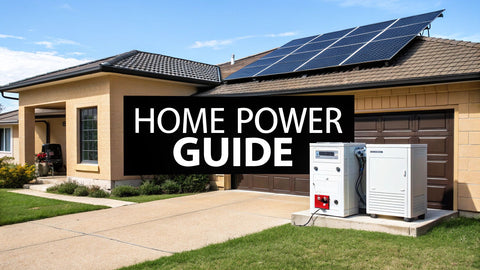
When the grid goes down, a standby generator is the difference between an inconvenience and a crisis: the sump pump keeps running, the refrigerator stays cold, the furnace keeps the pipes from freezing, and the home office stays online. Unlike a portable unit you wheel out in a storm, a standby generator is permanently installed, wired into your electrical panel through an automatic transfer switch, and starts itself within seconds of an outage — whether you are home or a thousand miles away. This buyer's guide walks through how standby generators work, how to size one correctly with real load math, fuel choices, installation and code requirements, costs, and the maintenance that keeps a unit ready for the day you actually need it.

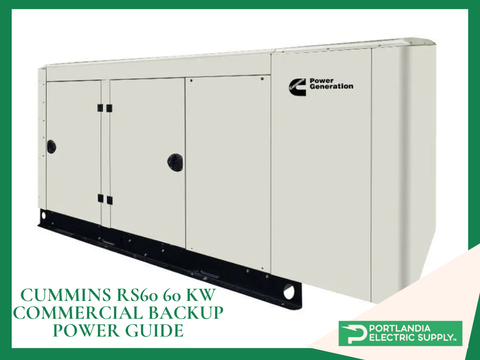
Portlandia Electric Supply stocks standby generators from Generac, Kohler, Cummins, and Briggs & Stratton, along with the transfer switches and accessories that complete a code-compliant installation. We size and quote these systems daily — what follows is the same framework our team uses.
How Standby Generators Work: The 10-Second Sequence
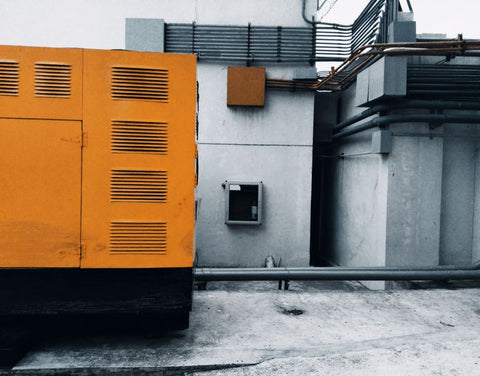
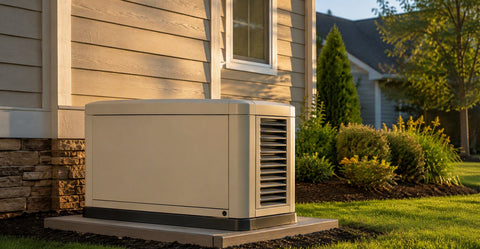
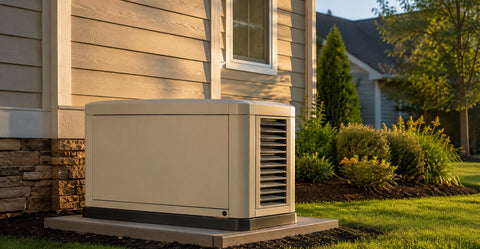
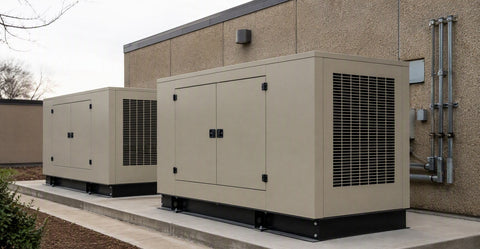
A standby system has three core components: the generator itself (engine plus alternator, housed in a weatherproof enclosure on a pad outside your home), the automatic transfer switch (ATS), and the fuel supply — natural gas, propane, or diesel. The sequence during an outage is fully automatic:
- Detection. The ATS monitors utility power continuously. When voltage drops out (typically below ~80% of nominal for a couple of seconds), it signals the generator to start.
- Start and stabilization. The engine cranks, reaches rated speed, and the alternator's output stabilizes at 120/240 V, 60 Hz. This takes about 5–15 seconds on modern air-cooled units.
- Transfer. The ATS physically switches your home's circuits from utility to generator power — a break-before-make operation so the two sources never connect.
- Run. The generator carries the load until utility power returns and remains stable (typically 30+ seconds), then the ATS switches back and the generator cools down and shuts off.
- Exercise. Between outages, the unit self-tests weekly — usually a 5–12 minute run at a quiet, reduced speed — to keep seals lubricated, the battery charged, and problems visible before an emergency.
The whole outage-to-power sequence typically completes in 10–30 seconds. Well-designed systems handle the transition smoothly enough that computers stay up and most homeowners only notice the brief flicker.
Sizing: The Load Math That Decides Everything
Sizing is where buyers most often go wrong — usually by oversizing "to be safe," which wastes thousands of dollars upfront and hundreds per year in fuel, or by undersizing and discovering during a hurricane that the generator cannot start the air conditioner. Correct sizing starts with a load calculation, not a guess. See also: detailed guide.
The method: list the running watts of every circuit you want backed up, then identify the largest motor load and add its starting (surge) watts — motors draw three to five times their running current for the first second or two. Central air conditioners and well pumps dominate this math in most homes.
| Load | Typical Running Watts | Starting Watts (Surge) |
|---|---|---|
| Central AC, 3-ton (36,000 BTU) | 3,500–4,500 W | 9,000–12,000 W (less with soft-start) |
| Electric furnace blower / air handler | 800–1,500 W | 2,000–3,500 W |
| Well pump (1/2–3/4 HP) | 1,000–2,000 W | 3,000–5,000 W |
| Sump pump (1/3–1/2 HP) | 800–1,200 W | 2,000–3,000 W |
| Refrigerator / freezer | 150–400 W each | 600–1,200 W each |
| Electric water heater (4.5 kW element) | 4,500 W | 4,500 W (no surge) |
| Electric range / oven | 3,000–12,000 W | Same (resistive) |
| Lighting + outlets + electronics (whole house) | 1,000–3,000 W | Minimal |
| Electric dryer | 5,000–5,500 W | Same (resistive + motor) |
Add it up two ways. A "whole house with everything" calculation for a typical 2,500 sq ft all-electric home can reach 30–40 kW of coincident load — expensive territory. A "managed whole house" calculation, using load-shedding modules to defer the water heater and dryer while the AC runs, usually lands at 16–22 kW. That is why the most-installed residential sizes cluster exactly where our 14–17 kW, 20–28 kW, and 22 kW collections sit — they cover real American homes without paying for capacity that never gets used.
| Generator Size | What It Realistically Runs | Typical Home Profile | Installed Cost Range |
|---|---|---|---|
| 10–14 kW | Essentials: fridge, furnace blower, sump, lights, outlets, well pump | Smaller homes, gas heat, no central AC backup | $8,000–$12,000 |
| 16–22 kW | Whole house with one central AC via load management | Most 2,000–3,000 sq ft homes | $11,000–$16,000 |
| 24–26 kW | Whole house, larger AC or two units, minimal management | Larger homes, 3,000–4,500 sq ft | $14,000–$19,000 |
| 30–48 kW (liquid-cooled) | True all-load whole house, no compromises | Large estates, heavy electric loads, home businesses | $20,000–$35,000+ |
For a deeper dive into the sizing math — including how to read your panel and meter to get real demand numbers — see our generator sizing guide and the 2026 whole-home sizing walkthrough. One rule I give every customer: size to the largest motor you must start, not the total of everything you own. Load management handles the rest for a fraction of the cost of a bigger engine.
We sized a 22 kW Generac for a client in Hillsboro last winter. Two weeks later an ice storm took out power for 72 hours. The generator ran 54 hours straight on natural gas. Their neighbor with a 12 kW unit had to choose between the furnace and the well pump.
Fuel Types: Natural Gas vs. Propane vs. Diesel
Fuel choice shapes runtime, cost, and maintenance more than any other decision after sizing.
| Fuel | Consumption (22 kW class, half load) | Runtime Limit | Pros | Cons |
|---|---|---|---|---|
| Natural gas | ~180–220 ft³/hr | Unlimited (utility supply) | No refueling, no tank, cleanest burning | Requires adequate gas service (meter/pipe sizing); ~10% less power than LP rating |
| Propane (LP) | ~2.0–2.5 gal/hr | Tank size: 500-gal tank ≈ 6–8 days at half load | Works off-grid, stores indefinitely | Tank cost, refill logistics during long outages |
| Diesel | ~0.9–1.3 gal/hr (liquid-cooled units) | Tank size; typically 24–72 hr on-board | Most efficient per kWh, longest engine life | Fuel polishing, gelling in cold, residential permitting hurdles |
The propane math deserves a worked example because it surprises people. A 22 kW air-cooled unit at half load burns roughly 2.2 gallons of LP per hour — 52.8 gallons per day. A standard 500-gallon propane tank (filled to 80%, so 400 usable gallons) therefore supports about 7.5 days of continuous half-load operation. At full load, consumption roughly doubles and runtime halves. Dual-fuel units that run on either natural gas or LP, like the Generac 26 kW Guardian, let you choose at installation; note that most engines produce their nameplate rating on LP and slightly less on natural gas — check both ratings on the spec sheet. Our natural gas and propane generator collections are organized by fuel for exactly this comparison.
Transfer Switches and Installation: Where the Code Lives
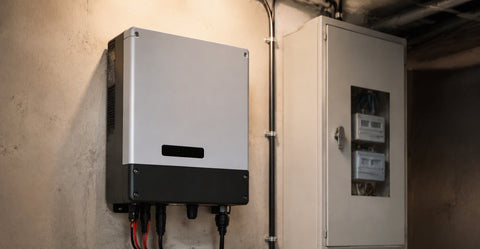
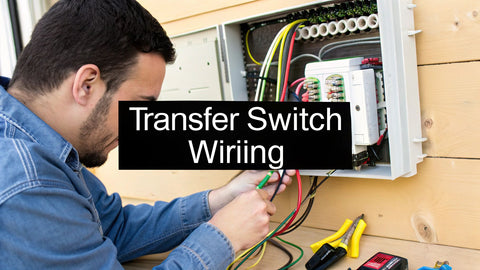
The transfer switch is not optional equipment — it is the legally required device that prevents your generator from backfeeding the utility grid, which can kill line workers. NEC 702 and 700-series rules, plus local amendments, govern the installation. The practical decisions: See also: detailed guide.
- Whole-house ATS with service-entrance rating (most common now): a 200-amp switch like the one bundled with the Guardian 22 kW package sits between your meter and main panel, carrying everything with load management. Browse 100–125 A and 200–225 A transfer switches for service sizes.
- Essential-circuits ATS: a smaller sub-panel approach backing up 10–16 chosen circuits. Cheaper switch, more labor, and you choose in advance what stays dark.
- Smart/load-management modules: modern systems shed and restore heavy loads (water heater, second AC, EV charger) automatically, letting a 22 kW unit behave like a much larger one.
Installation touches gas plumbing (a licensed plumber or gas fitter runs the fuel line, sized for the generator's BTU demand), electrical (a licensed electrician lands the ATS and control wiring), and permitting (mechanical, electrical, and sometimes zoning/placement permits with setback rules — typically 5 feet from windows and doors, 18 inches to 3 feet from the structure depending on the listing and local code, and outside any area that could pool exhaust). Budget $3,000–$6,000 for a straightforward install on top of equipment, more if the gas service needs upgrading or the panel needs relocation. Skipping permits is the one "savings" that can void insurance and complicate selling the house — do not do it. For the electrical side, our NEC wire sizing guide covers conductor and breaker selection for generator circuits.
Standby vs. Portable: The Honest Decision Framework
| Factor | Standby Generator | Portable Generator |
|---|---|---|
| Installed cost | $8,000–$20,000+ | $500–$3,000 plus inlet/interlock ($300–$800) |
| Startup | Automatic, ~10–30 seconds, works when you are away | Manual: wheel out, fuel, connect, start |
| Capacity | 10–48+ kW, whole house capable | 2–12 kW, selected circuits |
| Runtime | Unlimited on natural gas; days on LP | 8–16 hours per tank, refueling in the storm |
| Electrical connection | Code-compliant ATS, no backfeed risk | Needs inlet box + interlock to be safe and legal |
| Best for | Medical devices, sump pumps, frequent/long outages, unattended homes | Occasional short outages, tight budgets, renters |
If your home has a sump pump that prevents flooding, anyone dependent on powered medical equipment, or a climate where frozen pipes are a real threat, the automatic start alone justifies standby — an outage at 2 a.m. while you are traveling is exactly when manual systems fail. If outages in your area average a few hours a year and you are usually home, a quality portable or inverter generator with a proper inlet box is a rational budget answer. Related reading: our standby generator overview and whole-house generator guide.
I have seen inspectors fail generator installs because the pad was poured 6 inches too close to the property line. The NEC does not care about your landscaping plan.
Total Cost of Ownership: Purchase Is Only the Beginning
A standby generator is a small power plant and needs power-plant habits. The full 10-year cost picture for a typical 22 kW air-cooled installation: See also: detailed guide.
| Cost Item | Year 1 | Annual Thereafter | 10-Year Total |
|---|---|---|---|
| Equipment + installation | $11,000–$16,000 | — | $11,000–$16,000 |
| Maintenance kit (oil, filters, plugs) DIY | — | $60–$100 | $540–$900 |
| Professional service plan (optional) | — | $200–$400 | $1,800–$3,600 |
| Fuel during exercise (weekly self-test) | — | $40–$80 | $360–$720 |
| Battery replacement (every 3–4 yrs) | — | ~$30/yr averaged | $270–$300 |
| 10-year total | ~$14,000–$21,500 |
Maintenance is refreshingly simple: change oil and filter every 100–200 run hours or annually, replace air filter and spark plugs on schedule, keep the battery fresh, clear debris from the enclosure, and verify the weekly exercise actually runs. Our maintenance kits bundle the consumables by model, and cold-weather kits (battery warmers and oil warmers) are near-mandatory in northern climates where a cold-soaked engine may fail to start in the exact storm you bought it for. I have taken the service call where a $120 battery warmer would have prevented a frozen no-start during an ice storm — buy the kit if your winters freeze.
2025–2026 Trends Worth Knowing
- Load management has gone mainstream. Modules that shed and restore big loads in priority order now ship integrated with many ATS units, shrinking the generator size most homes need.
- Remote monitoring is standard equipment — cellular or Wi-Fi apps show exercise status, faults, and runtime, and some plans alert your service dealer directly.
- Quieter enclosures and lower-speed exercise modes have pushed neighborhood noise down to 60–67 dB at test speed, easing HOA friction.
- Battery backup pairing is emerging: some homeowners run a modest battery for instant, silent power and let the generator handle extended outages — the best of both. Our battery backup kits complement this approach.
- Larger air-cooled frames. The jump to 26–28 kW air-cooled units closed much of the old gap that forced buyers into liquid-cooled models at 25 kW and above — see our 26 kW guide and 22 kW guide for the current flagship class.
Common Sizing Mistakes We See in the Field
After years of speccing residential standby systems, the same handful of errors accounts for most regrets:
- Buying nameplate watts instead of starting capacity. A generator must start your largest motor. A 3-ton AC with a 10,000 W locked-rotor surge on a 12 kW generator stalls or trips, full stop. Soft-start kits on the AC (a few hundred dollars installed) routinely let a smaller generator carry a bigger compressor — often the cheapest kW you will ever buy.
- Ignoring natural gas meter capacity. A 22 kW unit can demand 250–350 cubic feet of gas per hour at full load, on top of your furnace and water heater. Many homes need a gas meter or regulator upgrade from the utility — usually free or cheap, but it adds weeks if you discover it late. Confirm BTU capacity before choosing the size.
- Placing the unit where the inspector will not. Exhaust clearance rules, flood zones, and easements kill more placements than any other cause. Do the site walk with the install manual's clearance diagram in hand before pouring the pad.
- Forgetting the internet. Whole-house backup that drops the modem and router is a Pyrrhic victory for anyone working from home. Put the network gear on a backed-up circuit — it draws under 30 W and it is the first thing remote workers notice.
- Undersizing the propane tank. The 500-gallon rule of thumb exists because smaller tanks cannot vaporize LP fast enough in cold weather to feed a big engine — the tank literally cannot breathe. In northern climates on LP, 1,000-gallon tanks are the professional standard for 20 kW+ units.
Every fall we get calls from homeowners who started their generator for the first time since March and it will not crank. Nine times out of ten the battery is dead from sitting. A $45 battery tender would have saved a $200 service call.
What a Professional Site Assessment Covers

Whether you hire an installer or buy equipment and subcontract locally, a real assessment checks: electrical service size and panel condition (a corroded 100 A panel sometimes forces a panel upgrade before the ATS can land), gas service capacity at the meter, generator placement against clearance and flood rules, the fuel-line route and length (long LP runs need larger pipe to hold pressure), and any HOA or historic-district constraints. Get this done before equipment ships. Returns on a 500-pound generator are nobody's favorite day, and I say that from experience on the freight-claim side of the desk. See also: detailed guide.
Financing, Incentives, and Resale Value
Standby generators do not qualify for the federal clean-energy credits that solar and batteries enjoy, but the financing landscape still helps: many dealers offer promotional financing, some insurers discount premiums for homes with automatic standby power (sump-pump and freeze claims drop sharply), and in medical-necessity cases, some utilities and state programs offer assistance or priority restoration registration. On resale, a permitted, maintained standby system is a documented upgrade — in outage-prone markets, agents increasingly list it alongside the kitchen remodel. Keep the permits, the service records, and the exercise logs; they are the paperwork that turns equipment into appraised value.
Generator vs. the Alternatives: Solar, Batteries, and Doing Nothing
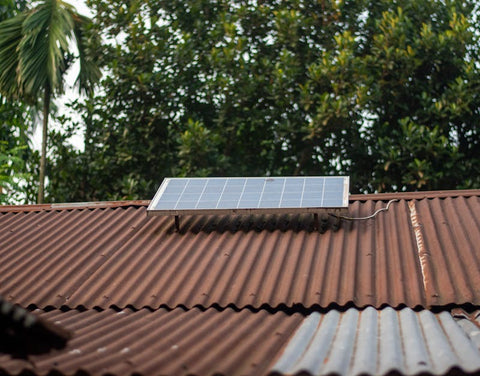
Standby generators exist in a competitive set now, and honest buyers should run the comparison. A solar-plus-battery system delivers daily bill savings and silent backup for hours, but a home battery in the 10–13.5 kWh class carries a typical household's critical loads for roughly 8–20 hours — and a week-long storm outage exhausts it no matter how the sun cooperates afterward. The standby generator's value proposition is indefinite runtime and motor-starting grunt at a fraction of the cost per delivered kilowatt-day. Doing nothing is the third option, and its price shows up in insurance claims: a single flooded basement from a dead sump pump commonly runs $10,000–$30,000 in remediation, and one burst-pipe freeze event can exceed the entire cost of the generator that would have prevented it. Many of our customers ultimately pair technologies — solar and a modest battery for daily economics and instant ride-through, with a right-sized generator for the multi-day events. If you are weighing that combined architecture, our battery runtime calculator quantifies the storage side while this guide covers the generation side.
Noise, Neighbors, and Placement Etiquette
Modern air-cooled standby units run at 65–70 dB under load — about conversation volume at twenty feet — and drop to the low 60s during weekly exercise. Even so, placement is a neighbor-relations decision as much as a code one. Point the exhaust away from bedroom windows (yours and theirs), respect the listing's clearances rather than the fence line's convenience, and schedule the weekly self-test for mid-morning rather than 6 a.m. In dense neighborhoods, aftermarket sound-dampening pads and factory quiet modes shave a few more decibels. A generator that runs every Tuesday at dawn has started more HOA disputes than any other piece of home equipment I can name — pick the exercise time like it matters, because it does. See also: detailed guide.
Frequently Asked Questions
What size standby generator do I need for my home?
Most 2,000–3,000 sq ft homes land at 16–22 kW with load management, enough to run a central AC plus essentials. The correct answer comes from a load calculation: total your running watts, add the starting surge of your largest motor (usually the AC), and let load-shedding modules defer big resistive loads like water heaters and dryers. Our sizing guide walks the full worksheet.
How much does a standby generator cost installed?
Figure $11,000–$16,000 all-in for the most popular 20–22 kW class with a 200 A automatic transfer switch, including the pad, gas plumbing, electrical work, and permits. Smaller essential-circuit systems start near $8,000; large liquid-cooled whole-house systems run $20,000–$35,000 or more.
How long can a standby generator run continuously?
On natural gas, effectively indefinitely — manufacturers typically call for an oil check every 24–48 hours of continuous running and service at 100–200 hours. On propane, your tank is the limit: a 500-gallon tank gives roughly 6–8 days at half load for a 22 kW unit. See also: detailed guide.
Is a permit required to install a standby generator?
Yes, essentially everywhere — electrical and mechanical/gas permits at minimum, with placement rules for setbacks from windows, doors, and structures. A permitted, inspected installation protects your insurance coverage, your warranty, and your resale paperwork. Unpermitted installs create problems at exactly the wrong moments.
How often does a standby generator need maintenance?
Annually or every 100–200 run hours: oil and filter, air filter, spark plugs on schedule, battery every 3–4 years, plus a monthly walk-around to clear debris and confirm the weekly self-test is completing. It is among the simplest equipment maintenance routines in a home — but skipping it is how generators fail during the one outage that matters.
Standby generator or battery backup — which is better?
They solve different problems. Batteries deliver instant, silent, indoor-safe power for hours; generators deliver indefinite power for days and can start heavy motors like central AC. Homes with medical needs, long outage histories, or sump pumps lean generator; homes with short outages and solar lean battery; an increasing number run both. See also: detailed guide.
Getting Quotes and Next Steps
The path from here: run the load calculation (our sizing worksheet makes it an hour's work), confirm fuel availability at your meter or tank pad, pick the size class with a 20% margin over your calculated need, and get the site assessed for placement and gas-line routing before finalizing the quote. Portlandia Electric Supply ships complete standby systems nationwide — equipment, ATS, and accessories on one pallet with freight handled. Start with our standby generator catalog or send your load list through the contact page and we will size and quote the system with you.
Generator Sizing Worked Example: A 2,400 Sq. Ft. Home
Abstract load tables get real fast when you apply them to a specific house. Here is a sizing we ran last month for a client in Beaverton, Oregon: 2,400 square feet, natural gas furnace, electric water heater, well pump, and standard appliances.
| Circuit / Appliance | Running Watts | Starting Watts | Load Type |
|---|---|---|---|
| Gas furnace (1/2 HP blower) | 800 W | 2,350 W | Motor |
| Well pump (1 HP) | 2,000 W | 4,000 W | Motor |
| Refrigerator / freezer | 700 W | 2,200 W | Motor |
| Electric water heater | 4,500 W | 4,500 W | Resistive |
| Sump pump (1/3 HP) | 600 W | 1,300 W | Motor |
| Lighting (LED, 20 fixtures) | 300 W | 300 W | Resistive |
| Home office / electronics | 400 W | 400 W | Resistive |
| Microwave | 1,200 W | 1,200 W | Resistive |
| Totals (non-simultaneous) | 10,500 W | 16,250 W | — |
The starting wattage governs sizing. With the well pump and furnace blower starting simultaneously — a realistic cold-weather outage scenario — the peak demand hits 16,250 W. Applying the 1.25 safety margin: 16,250 × 1.25 = 20,312 W. A 20 kW or 22 kW standby generator handles this with margin. We quoted a Generac 22 kW air-cooled unit with a 200-amp service-rated ATS. Total installed cost: $8,900 including pad, gas line, and electrical. The same home with a propane tank would need a 250-gallon minimum tank for a 48-hour runtime at 50% load — about 2.1 gallons per hour at half load.
NEC Article 445 and Generator Installation Code Requirements
Standby generators fall under NEC Article 445 (Generators) and Article 702 (Optional Standby Systems). Key requirements include: the generator must be listed to UL 2200. The ATS must be listed to UL 1008. The transfer switch must break before make — never allow backfeeding onto the utility. Grounding and bonding must follow Article 250. Natural gas line sizing must meet NFPA 54. Permitting requirements vary by jurisdiction but typically include electrical, plumbing (gas), and sometimes building permits for the pad.
We have seen installations fail inspection because the generator neutral was bonded to ground at both the generator and the main panel — creating parallel neutral paths. The correct configuration: bond at the main panel only when using a switched-neutral ATS. Never guess. Always follow the manufacturer's installation manual and the AHJ's amendments.
| Code Reference | Requirement | Common Violation |
|---|---|---|
| NEC 445.10 | Generators must have nameplate with rating, phase, frequency, and voltage | Missing or illegible nameplate |
| NEC 445.13 | Overcurrent protection sized per Article 240 | Breaker oversized for generator capacity |
| NEC 702.5 | Optional standby systems require approved transfer equipment | Using manual plug-in cords (suicide cords) |
| NEC 250.35 | Generator grounding electrode conductor requirements | Inadequate ground rod depth or spacing |
| NFPA 37 | Engine-driven equipment installation and ventilation | Insufficient clearance to combustibles |
In our experience, the most common code violation on generator installs is inadequate working clearances. NEC 110.26 requires 3 feet of clear working space in front of the transfer switch. A generator installed too close to a fence or wall can make the ATS unreachable for service. Measure before you pour the pad.
Frequently Asked Questions
How to Size a Standby Generator for Your Home
- List essential circuits. Identify what must stay on: refrigerator, sump pump, furnace, well pump, security system, and selected lighting.
- Record running and starting watts. Motors need 3–5× running watts to start.
- Sum the loads. Add running watts for all simultaneous loads. Use the largest starting wattage.
- Apply a safety margin. Multiply by 1.25 to ensure the generator runs below 80% capacity.
- Select fuel type. Natural gas offers unlimited runtime. Propane stores on-site. Diesel provides longest service intervals.
Need pricing or availability on anything in this guide?
Portlandia Electric Supply dropships direct from the manufacturer — most items Ship Direct with lead times stated up front, no surprises.
Get a quote from PESBulk, pallet and contractor pricing available.