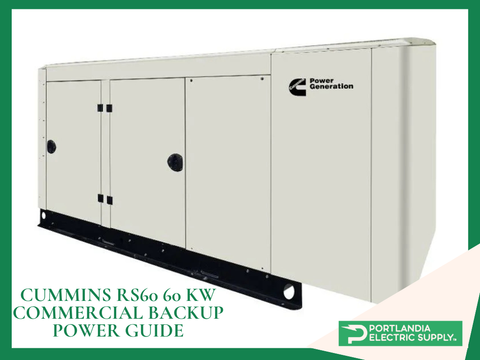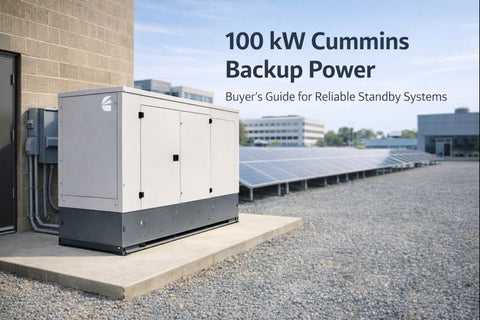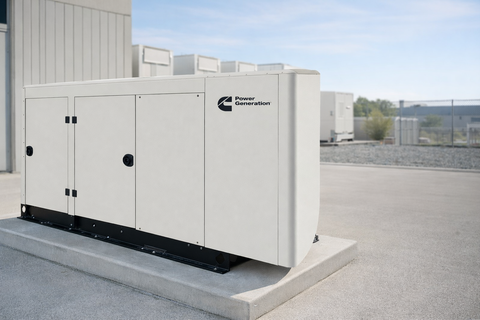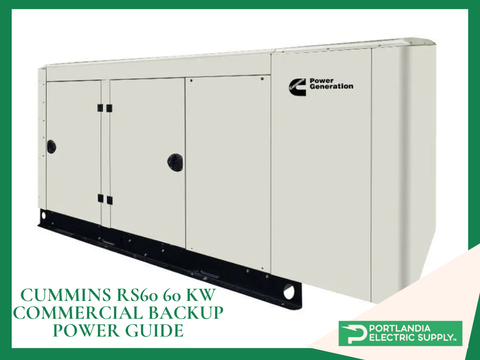
A 100 kW generator sits at the inflection point of the commercial standby market — big enough to carry a mid-size retail box, a medical clinic, a water treatment skid, or a small industrial process, small enough to ship on a single flatbed and set with a 15-ton crane. Cummins owns a serious share of this class with the C100D6-series diesel and the C100N6 natural gas platforms, and we've spec'd, quoted, and freight-coordinated enough of them to know where the buying decisions actually get made. This guide covers ratings, fuel economics, electrical interconnection math, and the install realities for a 100 kW Cummins — written for facility engineers, electrical contractors, and GCs pricing the whole package.

Diesel vs. Natural Gas at 100 kW: The Real Trade-Off
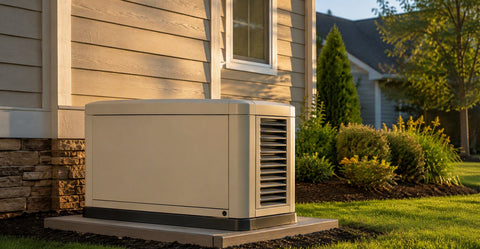
The fuel question drives everything else, so take it first. Diesel (C100D6 family) gives you the best transient response, the highest power density, and independence from utility gas infrastructure — critical for sites where the gas service itself might be the casualty (earthquake country, flood zones). Natural gas (C100N6 family) gives you unlimited runtime without refueling logistics, cleaner emissions for air-permit purposes, and eliminates the fuel-polishing and tank-maintenance burden. Propane exists in this class too, but at 100 kW the on-site storage required for meaningful runtime usually pushes buyers back to diesel or NG.
One spec people misread constantly: a 100 kW natural gas unit and a 100 kW diesel unit do not carry equal real-world capacity. NG ratings are altitude- and temperature-derated more aggressively — expect to lose roughly 1% of capacity per 100 feet above a reference elevation on many naturally aspirated NG engines, and more in high ambient heat. On a 5,000-foot site in August, that "100 kW" NG machine may be an honest 85 kW. The diesel, turbocharged and aftercooled, holds its rating far better. Size the NG unit from the derate curve at your site's worst conditions, not from the brochure headline.
Fuel Consumption: What 100 kW Actually Burns
Fuel burn drives the operating-cost model and, for diesel, the tank sizing. Figures below are representative published values for this generator class — confirm against the specific engine's datasheet before you size a day tank:
| Load Level | Diesel (C100D6 class), gal/hr | Natural Gas (C100N6 class), ft³/hr | Notes |
|---|---|---|---|
| 25% (25 kW) | ≈ 2.4 gph | ≈ 450 cfh | Extended low-load diesel operation risks wet stacking |
| 50% (50 kW) | ≈ 4.2 gph | ≈ 750 cfh | Healthiest sustained diesel operating point |
| 75% (75 kW) | ≈ 6.1 gph | ≈ 1,050 cfh | Design target for standby duty sizing |
| 100% (100 kW) | ≈ 7.8 gph | ≈ 1,350 cfh | Peak demand; verify gas service can deliver ~1.35M BTU/hr |
Two field rules follow from that table. First, diesel runtime math: a 500-gallon sub-base or belly tank at 75% load gives roughly 500 ÷ 6.1 ≈ 82 hours — past the 72-hour mark many AHJs and insurers want to see for critical facilities, with margin for the unusable bottom of the tank. Second, NG supply math: 1,350 cubic feet per hour at full load is about 1.4 million BTU/hr. That is not a residential gas service. We've seen projects reach the install week before anyone confirmed the gas utility could deliver that volume at pressure; the utility's answer was a six-month service upgrade. Confirm gas capacity in writing during design, not during commissioning.
Ratings: Prime vs. Standby vs. Emergency Standby
| Rating | Definition (ISO 8528) | Overload Capability | Typical Application at 100 kW | Warranty/Maintenance Implication |
|---|---|---|---|---|
| ESP (Emergency Standby) | Variable load, max ~200 hr/yr, utility outage only | No overload | Code-required backup: egress lighting, elevators, fire pumps | Lightest duty cycle; longest service intervals |
| Standby (LTP) | Variable load, max ~500 hr/yr | 10% overload, 1 hr per 12 | Commercial backup with occasional extended outages | Standard commercial warranty basis |
| Prime (PRP) | Variable load, unlimited hours | 10% overload, 1 hr per 12 | Peak shaving, remote power, demand response | Higher duty; oil/service intervals shrink |
| Continuous (COP) | Constant load, unlimited hours | No overload | Base-load remote sites, grid-parallel CHP | Heaviest duty; derate ~10% vs standby nameplate |
Buy the rating for the duty, not the price. An ESP-rated unit pressed into demand-response service will eat its warranty terms and its overhaul schedule in a couple of seasons. Conversely, paying for prime rating on a machine that runs 40 hours a year in outages is money idling in the enclosure.
Electrical Interconnection: Amps, Breakers, Wire, and the ATS
Here's the math we run on every 100 kW quote, and the table your electrician will actually use:
| Parameter | 480V 3-Phase | 208V 3-Phase | Method |
|---|---|---|---|
| Full-load current | 100,000 ÷ (480 × 1.732) = 120.3 A | 100,000 ÷ (208 × 1.732) = 277.6 A | I = P ÷ (V × √3) |
| NEC 445.13 conductor sizing (115%) | 120.3 × 1.15 = 138.3 A | 277.6 × 1.15 = 319.2 A | Generator feeders sized at 115% of nameplate |
| Copper conductor, 75°C (NEC 310.16) | 1/0 AWG (150 A) | 400 kcmil (335 A) | Next size at/above 115% value |
| Standard OCPD (NEC 240.6) | 150 A | 350 A | Standard frame sizes |
| Typical ATS rating | 200 A service-entrance class | 400 A service-entrance class | ATS must carry full load, not just gen output |
Notice what the voltage does to the copper. The same 100 kW at 208V needs 400 kcmil feeders — conduit bodies, pulling tension, and labor all jump a class. If the site voltage is a choice (new construction, service upgrade in play), 480V with a step-down transformer for 208/120V loads usually wins the total installed cost above ~75 kW. Our NEC wire sizing guide and ampacity chart cover the conductor tables in more depth, and the conduit fill chart settles the raceway question once you've picked the wire.
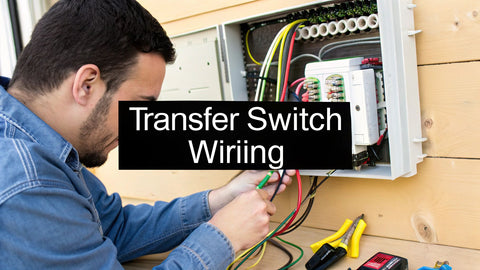
On the transfer switch: a 100 kW unit at 208V drives you into a 400A ATS class; at 480V, a 200A switch usually suffices for the generator side. Service-rated ATS versus separate switchgear is a cost and layout decision — service-rated units simplify the install but concentrate a failure point. Browse transfer switches and ATS packages to see the current configurations we stock.
Emissions, Noise, and the Permit Path
Diesel stationary engines at this size fall under EPA Tier rules and often state air permits; emergency-use engines (true standby, limited annual hours) face far lighter permitting than prime-power machines. California and the Northeast warrant early air-quality conversations — a prime-rated diesel at 100 kW in a non-attainment area can become a paperwork project that outlasts the electrical work. Natural gas sidesteps most of it, one more reason NG wins permits even when diesel wins engineering.
Noise: standard enclosures at this class typically run in the low-to-mid 70s dBA at 23 feet; Level 2/3 sound-attenuated packages pull that into the mid-60s — the difference between "audible at the property line" and "quieter than the rooftop HVAC." If the site has a residential neighbor within 100 feet, price the sound package at quote time. Retrofitting attenuation after a noise complaint costs triple.
Installation Essentials for Commercial Sites
The checklist items that actually bite projects:
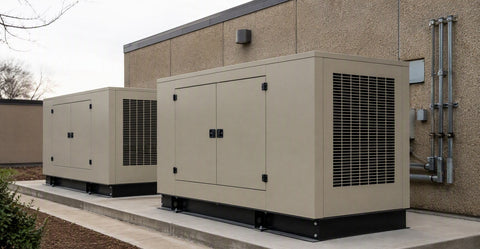
Pad and clearances. A 100 kW packaged unit runs roughly 8–11 feet long, 4,000–6,000 lbs depending on enclosure and sub-base tank. The pad must be engineered for the wet weight plus seismic anchoring where required, with manufacturer's clearance minimums on the radiator discharge and service sides. The single most common install-day failure we hear about: the pad was poured to the genset footprint with no service clearance, and the enclosure door hits the bollard.
Fuel system. Diesel: sub-base tank sized from the runtime table above, plus a fill plan — a 500-gallon tank needs a fuel truck that can reach it. NG: confirmed utility capacity at pressure, a properly sized gas train, and seismic shutoff where code requires. Don't let the plumber size the gas line off the generator's connection size; size it off the full-load cfh with the pressure-drop calc.
Starting and block heater circuits. The battery charger and jacket water heater need their own dedicated 120V circuits, and they're not optional in cold climates — a 100 kW diesel without a working block heater in January is a 100 kW paperweight.
Commissioning load test. Insist on a load-bank test at commissioning — 2 hours at building load tells you the transfer works; a load bank to 100% tells you the engine, cooling, and fuel systems actually deliver nameplate. We've watched a brand-new unit overheat at 80% on a load bank because a shipping brace was never removed from the radiator. That discovery is free at commissioning and very expensive during a hurricane.
Remote Monitoring and Fleet Management
PowerCommand Cloud and comparable Cummins monitoring tiers report run status, fuel level, fault codes, and exercise history. For a single-site owner, the value is the missed-exercise alert — the leading indicator of a dead starting battery. For contractors maintaining fleets, it's the difference between a truck roll for a real fault and a truck roll for a tripped nuisance alarm. Specify the cellular option; site Wi-Fi for the generator is a dependency that fails exactly when the generator matters.
Maintenance, Warranty, and Total Cost of Ownership

Annual maintenance on a standby 100 kW unit — oil, filters, coolant test, battery service, exercise verification — typically runs $1,200–$2,500 per year through a service contract, depending on region and response-time tier. Fuel is the other line: at the 75%-load diesel figure above, a single 24-hour outage burns roughly 145 gallons, around $550 at $3.80/gal delivered. Over a 20-year service life, expect maintenance plus fuel plus one mid-life coolant/hose refresh to total roughly the original equipment cost again. Buyers who model TCO before purchase choose NG more often; buyers who don't, choose diesel for the power density and relearn the lesson at the first multi-day outage.
Alternatives Worth Quoting in the Same Breath
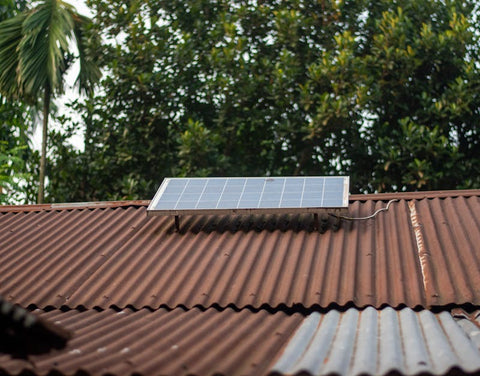
A 100 kW diesel Cummins is not always the right answer, and we say so on quotes. Facilities whose load profile is under 30 kW average with occasional peaks often do better with a pair of smaller units or a hybrid approach — solar plus battery storage for the short outages, a smaller generator for the long tail. For sub-30 kW commercial and estate residential work, the Generac Guardian line — the 26 kW Guardian with 200A ATS is the volume leader — and our standby generator inventory cover that band at a fraction of the 100 kW industrial price. The 26 kW guide and whole-home sizing guide handle those load profiles; this class is for facilities with real three-phase loads.
Footprint, Enclosures, and Site Planning
Physical planning kills more 100 kW projects than electrical design does. Representative dimensions for this class, for preliminary site work (verify the exact submittal drawing before pouring anything):
| Configuration | Typical Length | Typical Width | Weight (wet) | Site Note |
|---|---|---|---|---|
| Open skid, diesel | ≈ 8.5 ft | ≈ 3.5 ft | ≈ 4,200 lbs | Indoor mechanical room only; needs room ventilation design |
| Weather-protective enclosure | ≈ 10 ft | ≈ 4 ft | ≈ 5,000 lbs | Standard outdoor commercial choice |
| Level 2 sound enclosure | ≈ 11 ft | ≈ 4 ft | ≈ 5,600 lbs | Adds attenuation baffling; mind the discharge clearances |
| + 500-gal sub-base tank | same footprint | same | + ≈ 3,600 lbs fuel | Pad must be engineered for full wet weight, ~8,600+ lbs |
Rigging matters too. A 100 kW packaged unit sets with a 15–30 ton crane in one pick — unless the site plan puts it behind the building with overhead lines in the swing path, at which point you're paying for a bigger crane or a helicopter of change orders. Walk the rigging path before finalizing the pad location. And leave the clearances: radiator discharge needs open air, the service side needs door swing plus a technician's shoulder room, and most manufacturers want 3–5 feet minimum on service sides. The drawing set that shows the genset tight against a wall is a drawing set nobody field-checked.
Paralleling and Growth: When One 100 kW Becomes Two
Facilities with growth plans or hard redundancy requirements should price paralleling gear now rather than retrofit later. Two paralleled 100 kW units give you N+1 redundancy at a 100 kW critical load, maintenance without outage, and better part-load fuel economy — one unit at 70% load burns less per kWh than one unit at 35%. The catch is cost and complexity: paralleling switchgear, sync-check relays, and load-sharing controls add meaningfully to the package, and the switchgear lead time often exceeds the gensets'. PowerCommand paralleling controls handle this natively within the Cummins ecosystem; mixing paralleling controls across brands is a specialist project, not a value-engineering opportunity.
PowerCommand Controls: What the Panel Actually Does
| PowerCommand Tier | Core Functions | Right For |
|---|---|---|
| PC 1.1 / 1.2 class | Auto start/stop, engine protection, basic metering, fault annunciation | Single standby unit, simple facility |
| PC 2.3 class | Adds paralleling capability, advanced metering, expanded I/O | Multi-unit sites, load-share applications |
| PC 3.3 class | Full paralleling, utility metering, power-quality data, transfer control integration | Mission-critical, peak shaving, grid-parallel duty |
| PowerCommand Cloud (overlay) | Remote monitoring, alerts, exercise logs, fleet dashboard | Any tier; specify cellular comms |
Don't over-buy controls. A standalone standby unit at a retail site needs PC 1.x and a Cloud subscription, full stop. The 3.3 tier earns its price when the machine has to synchronize, shave peaks, or prove power quality to a data-hungry facilities team.
TCO: The 20-Year Number
Buyers comparison-shop the equipment price and ignore the ownership math. A realistic 20-year TCO sketch for a 100 kW diesel in standby duty, assuming ~50 outage/test hours per year:
| Cost Category | 20-Year Estimate | Basis |
|---|---|---|
| Equipment + ATS + install | $65,000–$95,000 | Varies heavily with voltage, enclosure, and site work |
| Maintenance contracts | $24,000–$50,000 | $1,200–$2,500/yr |
| Fuel (exercise + outages) | $15,000–$30,000 | ~50 hr/yr at ~5 gph average, $3.50–$4.50/gal |
| Mid-life refresh (hoses, coolant, batteries ×4–5) | $6,000–$12,000 | Batteries every 3–4 years are the recurring line |
| 20-year total | ≈ $110,000–$187,000 | Roughly 1.7–2× the installed cost |
That table is why we push the battery question on every generator quote. A facility whose real requirement is "ride through the two-hour outages and keep the server room alive" can sometimes cover that duty with a commercial battery system at lower 20-year cost and zero air permit — keeping a smaller generator only for the multi-day tail. The battery runtime calculator is the fastest way to test whether your outage profile fits that pattern before you commit to 100 kW of iron.
Decision Checklist
Before you sign a 100 kW quote, confirm in writing: site voltage and phase; ESP vs. prime rating matched to actual duty; fuel decision with utility capacity letter (NG) or tank runtime math (diesel); sound level at the nearest property line; air-permit applicability for the intended duty; ATS rating and service-entrance vs. switchgear configuration; pad design with service clearances; commissioning load-bank test in the contract; monitoring plan; and a service agreement with a named response time. Ten lines. Every one of them is cheaper on paper than in change orders.
Frequently Asked Questions
How much fuel does a 100 kW Cummins generator use per hour?
A diesel 100 kW unit in this class burns roughly 2.4 gph at 25% load, 4.2 gph at 50%, 6.1 gph at 75%, and about 7.8 gph at full load. The natural gas equivalent consumes around 1,350 cubic feet per hour at full load — about 1.4 million BTU/hr, which requires a commercial gas service, not a residential meter.
What size wire does a 100 kW generator need?
At 480V three-phase, full-load current is 120.3A; NEC 445.13 sizing at 115% gives 138.3A, requiring 1/0 AWG copper (75°C) with a 150A breaker. At 208V three-phase, the same 100 kW draws 277.6A, needs 319.2A conductor ampacity — 400 kcmil copper — and a 350A OCPD. Voltage choice drives the wire class.
Diesel or natural gas for a 100 kW commercial standby?
Diesel for power density, altitude tolerance, and fuel independence; natural gas for unlimited runtime, easier air permits, and zero fuel maintenance. Confirm the gas utility can deliver ~1,350 cfh at pressure before choosing NG, and remember NG engines derate harder with altitude and heat — size from the derate curve at worst-case site conditions.
How long will a 100 kW diesel run on a full tank?
With a 500-gallon sub-base tank at a typical 75% standby load (about 6.1 gph), expect roughly 80 hours — comfortably past the 72-hour runtime many jurisdictions and insurers require for critical facilities, even accounting for the unusable bottom 5–10% of tank volume.
What transfer switch do I need for 100 kW?
At 480V, a 200A-class ATS typically covers the generator side; at 208V you're into 400A-class equipment. The ATS must be rated for the full connected load it switches, not merely the generator's output, and service-entrance-rated units simplify installs at the cost of concentrating a failure point.
Can a 100 kW generator run a whole commercial building?
It depends on the load study, not the building's square footage. A 100 kW unit carries most 15,000–30,000 sq ft retail, office, or clinic loads with HVAC staging, but a proper load analysis — actual demand history or NEC 220 calculation — decides. Never size from panelboard bus rating alone.
What maintenance does a 100 kW standby generator need?
Weekly automatic exercise, monthly visual checks, and annual oil/filter/coolant/battery service — typically $1,200–$2,500 per year on contract. Add diesel fuel polishing every 1–2 years for diesel units and a commissioning-style load-bank test every few years to catch cooling and fuel-system degradation before an outage does.
Source the Whole Package
PES Supply quotes 100 kW-class power as a package: genset, ATS, fuel system components, wire, and freight in one BOM. Start with the generator catalog, cross-shop transfer switches, and pull conductor sizes from our NEC ampacity chart. For sites pairing generation with solar and storage, our energy storage systems and the battery bank sizing guide cover the hybrid side. Send the load study or the last 12 months of demand data — we'll size it, derate it, and quote it with real lead times.