Updated September 2026 — refreshed against the live PES catalog; product pricing verified 2026-09-26.
Racking is the least glamorous line on a solar BOM and the one you absolutely cannot get wrong. Modules get the marketing, inverters get the monitoring dashboards, but the racking system holds thousands of dollars of glass to a roof through thirty years of wind, snow, thermal cycling, and the occasional roofer who steps exactly where he should not. We have inspected arrays after hurricanes, after 60-pound snow winters, and after installs done by crews who treated torque specs as suggestions. The racking decision determines how all of those stories end. This guide covers the types, the materials, the engineering loads, the codes, and the procurement realities that installers and developers actually face — the same evaluation process we run before any racking line earns shelf space in our warehouse.

Why Your Solar Racking System Is Mission-Critical
Racking typically runs 8–12% of a residential system's hardware cost and a smaller share on commercial work — cheap enough to be an afterthought, structural enough to be a liability. Three jobs define the component: hold the array against design loads for the system's life, bond every module into the equipment grounding path, and preserve the roof's weather integrity at every penetration. A racking failure is not a service call; it is an insurance claim, a lawsuit, or a fire. The stakes are wildly out of proportion to the price, which is why experienced crews develop strong opinions about racking brands and never let the purchasing department freelance the decision.
The good news: modern racking from engineered manufacturers — IronRidge, Unirac, K2, Sinclair, and peers — is tested, listed to UL 2703, and backed by design software that stamps permit-ready calculations in minutes instead of the week-long engineering waits we tolerated a decade ago. The bad news: all of that engineering only protects you if the specified system is what actually gets installed, torqued, and flashed. We will come back to that gap repeatedly, because it is where most field failures are born — and where disciplined crews separate themselves from the ones generating callbacks.
Core Functions and Project Impact
Strip the marketing away and racking does four jobs. It holds the array at the design tilt and azimuth that the production model assumes — a 5° tilt error on a residential roof costs measurable annual kilowatt-hours. It transfers every applied load — wind uplift, snow, seismic, the 250-pound installer standing exactly where the layout drawing said not to — safely into the building structure. It provides the listed bonding path that ties every module frame into the equipment grounding conductor. And it manages the thermal reality that modules and rails expand and contract through 100°F+ seasonal swings, which is why thermal breaks, expansion gaps, and proper splice hardware exist in every engineered system. When a racking platform does all four jobs well, nobody ever thinks about it again. That invisibility is the product.
Comparing Major Types of Solar Racking Systems
Roof-Mounted Systems
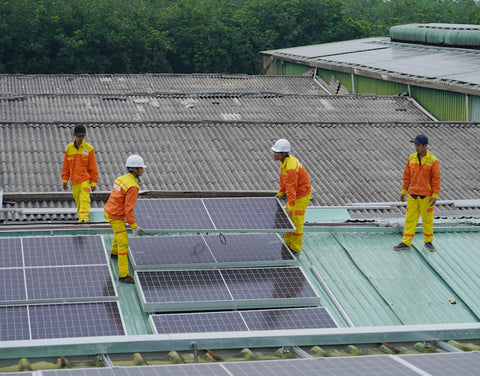
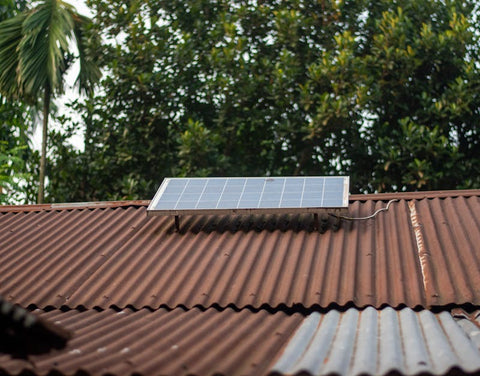
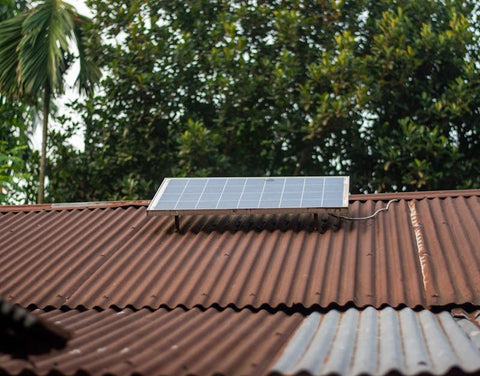
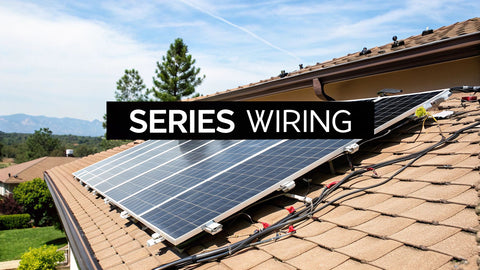
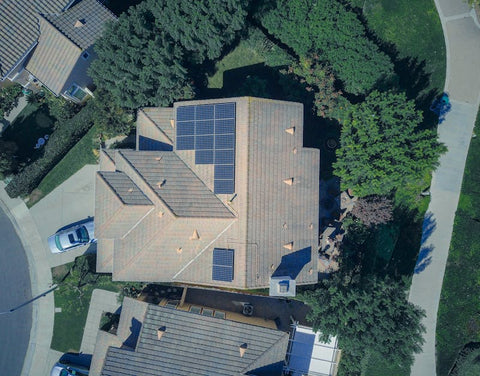
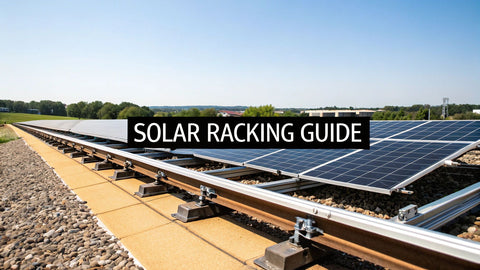
Residential and light commercial work is dominated by rail-based composition-shingle systems: aluminum rails spanning L-feet or standoffs flashed into rafters, with mid and end clamps securing module frames. Rail-less systems skip the rails and mount modules directly to shared mounting feet — fewer parts, faster installs, lower material cost, but tighter layout tolerances and less forgiveness on wavy rafters. Tile roofs demand specialty hooks or tile-replacement flashing mounts and cost roughly 25–40% more in labor than comp shingle. Metal roofs split two ways: standing-seam clamps that grab the seam with zero penetrations (the best rooftop scenario in the business), and corrugated/exposed-fastener profiles that need gasketed brackets landed on purlins. Flat commercial roofs use ballasted racking — concrete ballast blocks on low-slope trays, minimal penetrations, 5–10° tilt — sized by wind-tunnel-tested ballast schedules.
Ground-Mounted Systems
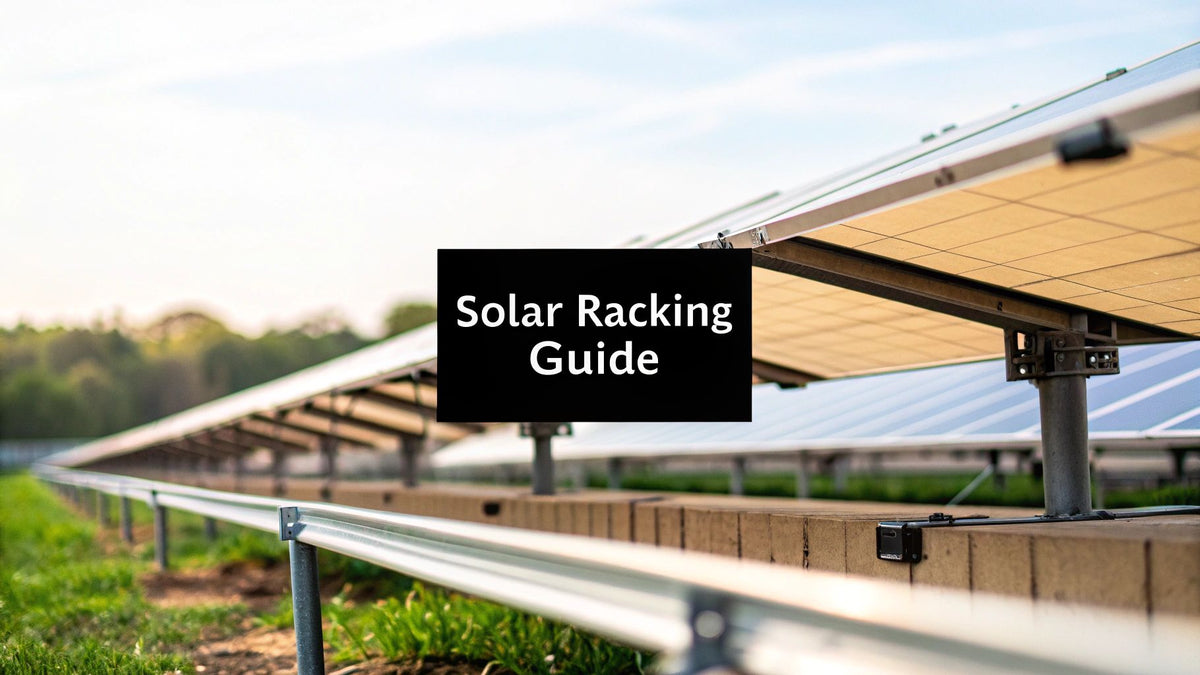
Ground mounts trade roof constraints for civil work: driven pipe piles or helical anchors, steel or aluminum superstructure, and tilt angles optimized for the site latitude and snow-shedding strategy. The cost premium over rooftop runs $0.15–$0.35/watt, buying you perfect orientation, easy cleaning and snow clearing, no roof penetrations, and simple expansion. For raw-land commercial and agricultural sites, pre-engineered kits like the 24-panel Sinclair Sky Rack 2.0 ground-mount kit collapse most of the engineering into a shipped BOM. Pole mounts serve small arrays and pumping applications; single-axis trackers belong to utility scale, where the 15–25% production gain justifies moving parts and their maintenance.
Decision Matrix: Roof-Mount vs. Ground-Mount
| Factor | Roof-Mount | Ground-Mount | Ballasted Flat-Roof |
|---|---|---|---|
| Hardware cost premium | Baseline | +$0.15–$0.35/W | +$0.05–$0.15/W |
| Orientation flexibility | Fixed by roof plane | Optimal tilt/azimuth | Low-tilt, often dual-tilt east-west |
| Structural dependency | Rafter condition, roof age | Soil bearing, frost depth | Roof structure capacity for ballast load |
| Penetrations | Every mount point | None (piles/anchors) | Few to none |
| Snow management | Poor — held on modules | Good — steep tilt sheds | Poor |
| Expansion potential | Limited by roof area | Limited by land | Limited by structural capacity |
| Best fit | Residential, sound roofs <10 yrs old | Rural residential, ag, commercial land | Commercial flat roofs |
Key Components and Material Choices: A Bill of Materials Breakdown
A rail-based residential BOM stacks up as: attachment hardware (flashed L-feet, standoffs, or seam clamps), rails, splices, mid/end clamps, grounding/bonding hardware, and wire management clips. Each piece carries a spec worth knowing. Rails span between attachments according to the manufacturer's engineering tables — 4-foot spans are common at moderate loads, tightening to 3 feet or less in high snow country. Clamps bond the module frame to the rail through the clamp bite; integrated-bonding clamps (listed under UL 2703) eliminate the separate grounding lugs and WEEB washers that used to eat install hours.
Comparing Material Options
| Material | Strength-to-Weight | Corrosion Behavior | Cost | Typical Use |
|---|---|---|---|---|
| 6005-T5 / 6063-T6 aluminum | Excellent | Forms protective oxide; anodized or mill finish; avoid direct concrete/soil contact | Moderate | Rails, clamps, most rooftop hardware |
| Hot-dip galvanized steel (ASTM A123) | High strength, heavy | Zinc coating sacrificial; cut edges need zinc-rich touch-up | Lowest per strength | Ground-mount posts/purlins, heavy commercial |
| 304/316 stainless steel | High | Superior; 316 required in coastal salt air | Highest | Fasteners everywhere; full hardware in coastal zones |
| Roll-formed galvanized (light gauge) | Moderate | Coating thinner than hot-dip | Low | Budget ground-mount purlins |
Pro tip on galvanic corrosion: aluminum rails on stainless fasteners are fine; aluminum rails against bare galvanized steel in a wet coastal climate are a battery. Isolate dissimilar metals with the manufacturer's approved hardware, never field-improvise, and specify 316 stainless within salt-spray distance of the ocean. We have pulled apart eight-year-old coastal arrays where budget fasteners had welded themselves into corroded masses — the modules outlived the hardware holding them.
Navigating Structural Engineering and Environmental Loads
Site Assessments and Load Calculations
Racking engineering is load engineering, governed by ASCE 7 (Minimum Design Loads for Buildings) as adopted by the local jurisdiction. The three loads that size everything: wind uplift, snow, and dead load. Wind is the sleeper — uplift forces on an array edge or corner zone can reach 2–3× the field-zone pressure, which is why manufacturer span tables shrink allowable rail spans as you approach roof edges and why corner modules get extra attachment points on many engineered layouts. Snow loads concentrate on tilted arrays in drift zones and against roof obstructions. Seismic governs in California and the Pacific Northwest but rarely sizes residential racking.
| Design Parameter | Typical Residential Range | High-Exposure Range | Design Standard |
|---|---|---|---|
| Design wind speed (3-sec gust, ASCE 7-22) | 90–115 mph inland | 130–160+ mph coastal/hurricane zones | ASCE 7 risk-category maps |
| Ground snow load | 20–40 psf | 60–100+ psf mountain/northern | ASCE 7 / state snow maps |
| Array dead load (modules + racking) | 3–4 psf | 3–5 psf | Manufacturer data |
| Typical rail span at moderate loads | 48 in | 24–36 in | Manufacturer engineering letters |
| Module clamping zones | Per module maker's frame spec | Clamps move inward under high load | Module installation manual + UL 2703 listing |
Applying Engineering to Real-World Scenarios
Two scenarios illustrate how this plays out. On a 115-mph inland comp-shingle roof with 30 psf snow, a standard flashed L-foot system at 48-inch spans pencils easily — the design software stamps it in minutes. On a 150-mph coastal zone, the same array needs 32-inch spans, upgraded attachment into structural members with 3-inch minimum embedment, often third-rail center support, and clamping positions verified against the module frame's rated zones. The racking cost difference is perhaps $400 on a house; the difference in surviving a hurricane is total. Ground mounts face their own version: frost depth drives embedment (36–48 inches in northern states), and soils drive pile selection — driven pipe in competent soils, helical anchors in soft or frost-susceptible ground, ballasted blocks only where neither works.
Meeting Code Compliance and Capturing Financial Incentives

Adhering to the National Electrical Code
Racking touches the NEC harder than most installers expect. NEC 690.43 requires equipment grounding of module frames and racking — UL 2703-listed integrated bonding hardware satisfies this when used per its listing; mixing brands breaks the listing. NEC 690.12 rapid shutdown interacts with racking through module-level power electronics and their mounting. Wire management is a racking function too: NEC 690.31 and 338/300 wiring-method rules require PV source conductors be secured and protected — UV-rated clips every few feet, no wire resting on the roof membrane, no unsupported home runs. We fail our own crews on wire management in QC photos; the inspectors do too.
Fire Setbacks and Layout Constraints
The IRC/IFC residential provisions (R324.6 and successors) require clear pathways: typically 3-foot setbacks at ridges for smoke ventilation, and 18–36-inch pathways depending on jurisdiction. These eat array area on complex roofs and routinely force layout redesigns — model setbacks in the design software before promising the customer a system size, not after. Hip roofs and dormer-chopped planes lose 20–30% of naive area estimates to setbacks alone.
Unlocking IRA and BABA Incentives
Racking has become a trade-policy component. The IRA's domestic content bonus (an additional 10 percentage points of ITC on qualifying commercial projects) counts racking steel and aluminum toward the adjusted percentage calculation, and US-manufactured racking from domestic mills helps projects cross the threshold. Build America, Buy America provisions apply to federally funded projects and demand documented domestic content. The procurement implication: verify mill certs and country-of-origin documentation at order time, not at audit time. Domestic racking carries a modest price premium that the tax credit usually swallows several times over on commercial projects.
Making Procurement and Logistics Work for You
The Installer's Procurement Checklist
- Buy the engineered system, not a parts salad. UL 2703 listings cover assemblies; mixed-brand rails, clamps, and feet void the listing and the engineering letter.
- Over-order the smalls by 3–5%. Clamps, splice kits, and end caps walk off trucks and roll under modules. A job stalled for want of $40 of clamps burns $400 of crew time.
- Match rail lengths to the truck and the layout. 14-foot rails cut waste on many residential layouts; confirm the saw, the splice count, and the delivery length before the PO.
- Confirm the flashing system per roof type. Comp-shingle flashings, tile hooks, and seam clamps are different SKUs and different labor rates.
- Get the engineering letter before the permit submission. Manufacturer design tools (IronRidge Design Assistant and peers) produce stamped calcs — our IronRidge lineup and racking kits in the solar kits collection include this support.
Watch Out for Hidden Costs
The racking quote is never the racking cost. Add freight (rails ship long and heavy — residential racking freight runs $150–$600 per job depending on distance and liftgate needs), saw time and blade wear, attachment hardware upgrades the design tool surfaces late, and the labor delta between roof types. On tile, budget the broken-tile allowance: plan on replacing 2–5% of tiles around mounts and stock spares matched to the roof before you start. On ground mounts, the geotechnical surprise is the classic budget breaker — a refused driven pile means helicals, and helicals mean a different truck, a different crew day, and a change order nobody budgeted.
One more cost that never appears on a quote: redesign labor when the field contradicts the plan. Every racking platform has quirks — rail orientation rules, clamp compatibility by module frame height, splice placement restrictions — and a designer who knows the platform saves the crew an hour per job in head-scratching alone. We keep a laminated compatibility card in every truck listing our modules' frame heights against our clamp SKUs. That single sheet has prevented more mid-install hardware runs than any software subscription we pay for.
Roof Condition Assessment: The Conversation Before the Contract
The best racking system in the catalog cannot fix a roof that should have been replaced first. Our pre-sale roof check is mandatory and takes fifteen minutes: shingle age and remaining life (granule loss, curled tabs, prior patch layers), decking condition from the attic (water stains, delamination, prior leak repairs), rafter size and spacing (2×4 trusses at 24 inches on center change the attachment conversation), and existing penetrations that constrain layout. The rule of thumb we give every customer: if the roof has fewer than ten good years left, re-roof before solar or price the remove-and-reinstall into the proposal honestly — a detach-and-reset runs $1,500–$4,000 on a typical home, and hiding that number until year eight is how installers earn one-star reviews. On commercial flat roofs, get the membrane warranty holder involved before design; many membrane manufacturers have approved solar attachment details that preserve the roof warranty, and ignoring them voids it.
Installation Sequencing and Torque Discipline
Crew speed on racking comes from sequencing, not hurrying. The rhythm that works: lay out attachment points from the engineered plan (chalk lines, measured off the eave, never eyeballed), install and flash all attachments first as one operation, rack rails and level them, then fly modules and clamp in one pass per row. Two-person residential crews running this sequence install 12–18 modules a day including electrical rough-in; crews that bounce between tasks manage eight. Torque is the QC backbone. Every fastener class has a spec, and the spec is printed in the manual that ships in the box:
| Fastener Class | Typical Torque Spec* | Tool | Failure Mode If Ignored |
|---|---|---|---|
| Module mid/end clamps | 80–150 in-lb | Torque driver or torque-limiting bit | Under: module slippage; over: cracked frame, voided module warranty |
| Rail splice bolts | 120–240 in-lb | Torque wrench | Rail separation under thermal cycling |
| L-foot / standoff lag (5/16 in) | Per manufacturer (often fully seated + spec turn) | Impact + torque verification | Uplift pullout; stripped rafter if over-driven |
| Standing-seam clamp set screws | 90–160 in-lb | Torque driver | Clamp migration; seam damage |
| Bonding/grounding lugs | Per lug listing (often 45–120 in-lb) | Torque driver | Open ground path — invisible until a fault |
*Always use the installed system's manual — specs vary by manufacturer and hardware generation. We photograph every torqued connection row with a paint-pen witness mark at final QC; the photo set has settled more warranty arguments than any other document we produce.
Ground-Mount Specifics: Piles, Frost, and Bifacial Gains
Ground mounts deserve their own paragraph of field notes. Driven piles go in fast with a vibratory or impact driver — a 24-module residential ground mount's steel is often set in a day — but refusal in rocky soils is common, so probe the site before committing the design. Helical anchors cost more per point and install in almost anything short of ledge. Set the array's leading edge at least 3 feet above grade in snow country (drift and shed clearance), 4 feet if the drift line says so. And specify bifacial modules where the ground treatment cooperates: over light gravel or pale ground cover, bifacial gains of 5–12% are routinely measured, which is free production for a few cents per watt — our bifacial panel inventory exists largely because ground-mount customers keep asking. Pair bifacial with raised clearances and tilt angles above 30° and the rear-side gain pays for the rack upgrade by itself.
Racking Inspection and Long-Term O&M

Racking is nearly maintenance-free, and "nearly" is doing heavy lifting in that sentence. The annual inspection that catches everything important takes twenty minutes: walk the array and check for clamp witness marks that have migrated (slippage), flashings lifting at edges (sealant failure — reseal before the roof finds out), wire clips that have UV-shattered leaving conductors on the membrane, and any new shading from tree growth. After any named storm or a 50+ mph wind event, add a fastener spot-check with the torque driver on edge and corner zones. On ground mounts, add a pile-corrosion check at the soil line and a vegetation pass — weeds shading the bottom row cost measurable production by August. Keep the inspection photos; trending them year over year turns "looks fine" into data.
Attachment Systems by Roof Type: Cost and Labor Reality
Roof type is the single largest racking variable on residential work, and estimators who price "a roof" instead of "this roof" eat the difference. The comparison we train our sales engineers on:
| Roof Type | Attachment System | Relative Labor | Penetrations per kW | Field Notes |
|---|---|---|---|---|
| Composition shingle | Flashed L-foot or standoff into rafter | 1.0× (baseline) | 3–5 | Fastest and cheapest; flashing quality is everything |
| Standing-seam metal | Non-penetrating seam clamps | 0.8–0.9× | 0 | Best-case scenario; verify seam profile and gauge before specifying clamps |
| Corrugated / exposed-fastener metal | Gasketed brackets into purlins | 1.1× | 3–5 | Confirm purlin spacing; mastic + butyl gaskets per manufacturer |
| Concrete / clay tile | Tile hooks or tile-replacement flashing mounts | 1.4–1.6× | 3–5 | Budget 2–5% tile breakage; stock matched spares before starting |
| Flat / low-slope membrane | Ballasted trays or engineered penetrating posts | 0.9–1.2× | 0–2 | Ballast schedule from wind-tunnel report; coordinate membrane warranty |
| Slate / wood shake | Generally avoid | 2×+ | — | Quote ground mount instead; slate repairs exceed array value quickly |
Commercial Racking: Ballasted Systems, Carports, and Trackers
Commercial racking is three different product families sharing a name. Ballasted flat-roof systems are engineered trays with concrete ballast, laid out per wind-tunnel-tested schedules that specify ballast weight and parapet setbacks zone by zone — the corner zones of a big-box roof can require triple the ballast of the field zones. Roof structural capacity is the gating item: ballasted arrays add 5–9 psf dead load, and older roofs with marginal structure need an engineer's letter before anyone quotes hardware. Carport and canopy structures are the premium product — steel I-beam or tube structures at $1.00–$1.50/W installed for the structure alone — justified when the parking asset itself has value (shaded fleet parking, EV charging integration) rather than by energy economics alone. Single-axis trackers live at utility scale, where the 15–25% yield gain over fixed tilt pays for motors, controllers, and their maintenance above roughly 5 MW in good-sun regions. Below that threshold, fixed-tilt ground mounts win on simplicity almost every time — we have watched sub-2MW tracker projects spend their yield advantage on service calls.
Structural Red Flags That Kill Projects Late
Every experienced PM keeps a kill-list of structural surprises, because catching them at design costs nothing and catching them at install costs thousands. Truss repairs or sistered rafters in the array zone (common after past leak damage — check the attic, not just the roof). Spaced-sheathing or skip-sheath roofs under old shake conversions, which give lag bolts nothing to bite. Post-1990s engineered I-joist or truss roofs where the bottom chord, not the top, carries the ceiling — attachments must land in the top chord or the web junction, and the truss manufacturer may need to approve point loads. Flat roofs with pending membrane replacement — install solar over a 5-year-old membrane and you have built a 25-year array on a 10-year roof. And ground-mount sites with undocumented fill, which drive piles to refusal at 3 feet. Every one of these is a known, checkable item. The expensive version of each is discovering it with a crew on the clock.
Wire Management, Aesthetics, and the Resale Angle
Homeowners judge racking work with their eyes long before an inspector judges it with a code book, and the two judgments correlate more than installers like to admit. Visible conduit runs should be straight, strapped, and painted to match where the AHJ allows; array skirts (critter guards and edge trim) keep squirrels from turning module wiring into a chew toy — a failure mode responsible for a surprising share of residential service calls — and clean up the street view measurably. Appraisers and buyers notice: a tidy array with documented permits and intact roof warranty reads as an asset at resale, while a bird's nest of loose conductors reads as deferred maintenance. The racking system's wire-management ecosystem — UV-rated clips, rail channels, j-box covers — is cheap; use all of it. We also photograph the finished underside of every array before leaving site. Those photos close customer concerns, support insurance documentation, and give the service department a baseline for every future visit.
One more aesthetic-meets-engineering note: all-black modules on black rails with black clamps look dramatically better on dark roofs, and the all-black racking hardware costs a small premium that customers happily pay when shown the difference. Stock both finishes. On commercial work the calculus inverts — mill-finish aluminum is cheaper, and nobody looks at a warehouse roof — so save the finish upgrade budget for the residential book.
Snow Country Details That Separate Good Installs From Callbacks
Northern installers learn a second set of racking lessons the hard way. Snow slides off tilted glass in slabs, and whatever sits below the eave-line array — walkways, heat pumps, parked trucks, deck railings — takes the hit. Design slide paths deliberately: keep arrays off eaves above entrances, or add snow guards rated for the array's tributary load. Ice dams at the array's lower edge refreeze meltwater and can lever flashings upward over repeated cycles; standing-seam and well-flashed standoff details tolerate this, cheap L-foot caulk jobs do not. On ground mounts, the December sun sits so low that row-to-row shading rules change — space rows for the 9 a.m. December solstice shadow, not the annual average, or accept that the bottom row produces nothing for six weeks. These are climate-specific details, but they are the difference between a system that performs to model in January and one that generates support tickets instead of kilowatt-hours.
Your Solar Racking Questions, Answered
What are the most common installation mistakes?
Three repeat offenders. Missed rafters — attachments into decking alone pull out under uplift; find the rafter, every time, with a proper stud finder or a pilot hole, never by thumping. Over- or under-torqued clamps — module-frame clamps typically spec in the 80–150 in-lb range depending on manufacturer, and a $60 torque driver is the only way to hit it; cracked frames and slipped modules both trace to skipped torque. And broken bonds — one missed bonding connection leaves a section of array ungrounded, invisible until a fault makes it lethal.
How do I choose between rails and rail-less?
Rails forgive: they bridge uneven rafters, ease alignment, and simplify wire management — default for most crews and most roofs. Rail-less rewards precision: fewer parts and faster installs on uniform new roofs with straight structure. Many shops stock rail-based for retrofit work and rail-less for new-construction partnerships where the framer's quality is known.
Can I mix racking components from different brands?
Do not. UL 2703 bonding listings and structural ratings are tested as assemblies, and an insurance investigator after a wind loss will identify mixed hardware from photographs. Keep systems whole.
How does a distributor actually help with racking?
Three ways that matter: design-tool support and stamped engineering letters for permits, kitting (a job-kitted pallet with every clamp and splice counted beats a parts mystery), and logistics on long freight. Distributors stocking deep racking inventory — including complete ground-mount kits like the Sinclair Sky Rack line alongside our module inventory — keep your crews building instead of waiting.
Related Resources
- IronRidge racking systems
- Sinclair Sky Rack 2.0 24-panel ground-mount kit
- Residential solar panels
- Commercial solar panels
- Bifacial panels for ground-mount gains
- Electrical supplies and balance of system
- Solar panel system components: the installer's manual
- Solar energy system components guide
- Vetting a residential solar installer
Need pricing or availability on anything in this guide?
Portlandia Electric Supply dropships direct from the manufacturer — most items Ship Direct with lead times stated up front, no surprises.
Get a quote from PESBulk, pallet and contractor pricing available.