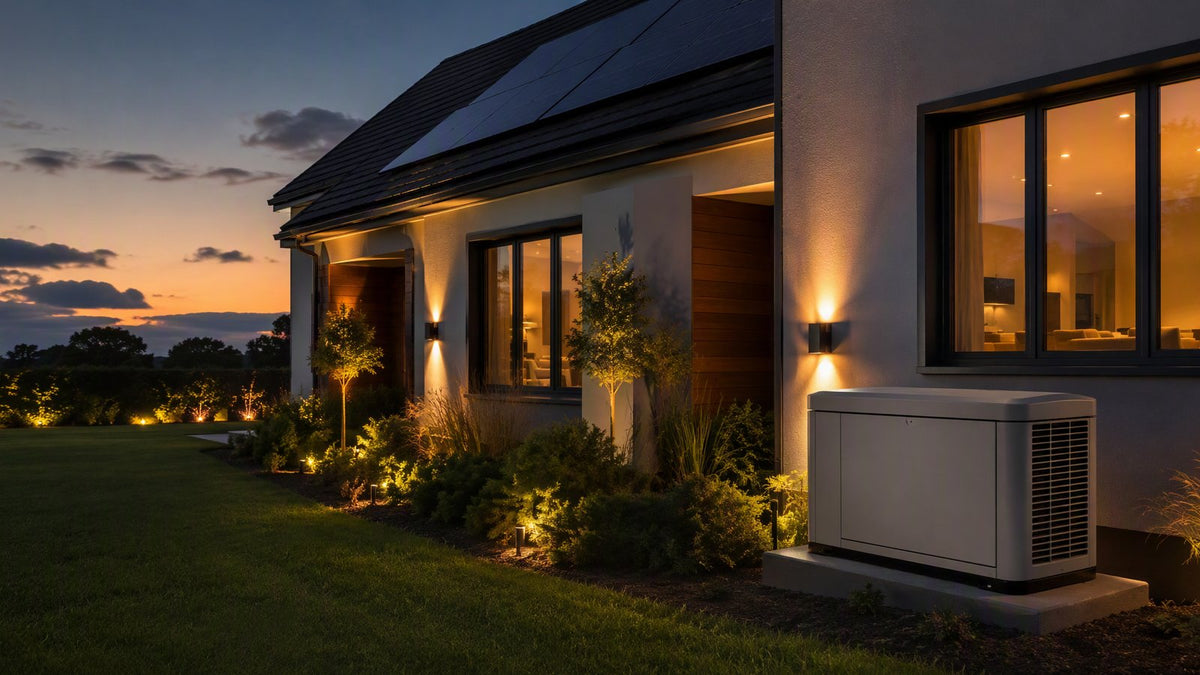
When the grid drops, a whole-house generator does two jobs at once: it produces power, and it protects everything that power touches. Most homeowners understand the first job. The second — safeguarding refrigerators, HVAC boards, well pumps, computers, and medical devices from the chaos of an outage — is less understood and, in our experience, the reason a properly installed standby system earns its keep even in years when it barely runs. This guide walks through the mechanism, the protection layers, the sizing math, and the upkeep that keeps the whole chain reliable.

How a Whole-House Generator Makes Power
A standby generator is an engine spinning an alternator — mechanically simple, but engineered for one hard trick: producing clean, stable 120/240V, 60Hz power within seconds of a grid failure, in any weather, after months of sitting idle. The sequence during an outage:
- Detection (0–3 seconds). The automatic transfer switch continuously monitors utility voltage. When it drops below threshold — typically 80% of nominal for more than a few seconds — the ATS declares an outage.
- Start signal (3–5 seconds). The ATS signals the generator. The engine cranks, fires, and comes up to governed speed — 3,600 RPM on air-cooled residential units, 1,800 RPM on liquid-cooled commercial platforms.
- Stabilization (5–10 seconds). The voltage regulator and governor settle output. Modern units won't let the switch transfer until voltage and frequency are inside tolerance — a protection step that matters enormously for electronics.
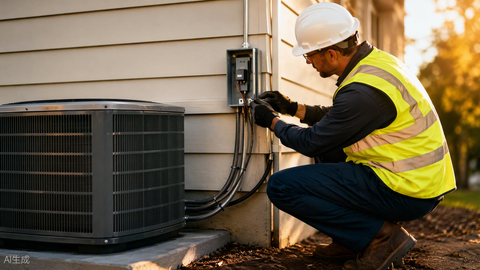
- Transfer (10–30 seconds total). The ATS physically breaks the utility connection before making the generator connection — break-before-make, so the two sources can never meet.
- Re-transfer and cooldown. When utility power returns and stays stable, the ATS transfers back and the generator runs unloaded for a cooldown cycle before shutting down.
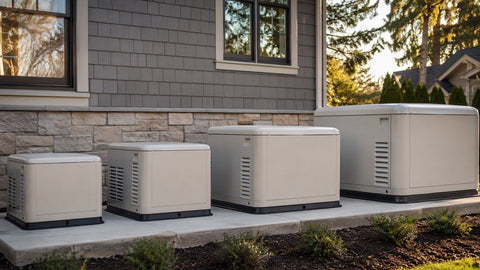
The units we sell most for this duty live in the 10–14kW, 14–17kW, and 20–28kW standby classes, paired with automatic transfer switches sized to the home's service.
The Protection Layer Nobody Talks About
Outages don't just remove power — they degrade it on the way down and the way back up. The minutes around a grid failure are when devices die: brownout voltage cooking compressor motors, restoration surges punching through power supplies, and rapid on-off cycling from a failing line re-closer hammering anything with a motor or a board.
| Grid Event | What It Does to Devices | How a Standby System Shields Them |
|---|---|---|
| Brownout (sustained low voltage) | Motors draw excess current, overheat, and fail early — compressors and well pumps first | ATS detects undervoltage and moves the house to clean generator power before damage accumulates |
| Restoration surge | Voltage spike when the grid reconnects damages boards and power supplies | Home is already on generator power; the ATS waits for stable utility before re-transfer |
| Rapid re-closer cycling | Repeated 1–2 second on/off hits fatigue motor starters and electronics | Outage timers ride through momentary dips without cycling the whole house |
| Total outage, days long | Food loss, frozen pipes, dead sump pumps, security systems offline | Full home runs on generator for as long as fuel lasts |
I've replaced more compressor contactors and ECM blower modules in the week after a storm than in the entire season before it — the pattern is that reliable. A standby generator doesn't just keep the lights on; it removes your home from the grid during exactly the hours when the grid is most dangerous to the equipment you own.
Safeguarding Sensitive Electronics
Modern homes are full of inverter-driven appliances, variable-speed HVAC, networked everything, and often medical equipment. These loads care about power quality — total harmonic distortion (THD) and frequency stability — in ways a 1990s refrigerator never did. Quality standby generators hold THD under 5% and frequency within ±0.5 Hz, which is utility-grade or better. Two additional layers we recommend on every install:
- Whole-home surge protection at the panel. A Type 2 SPD handles the transients that make it past the meter — utility switching, nearby lightning, and generator transfer events alike. Our SPD sizing and installation guide covers the selection math.
- Point-of-use UPS for the truly critical. A desktop running a home business or a CPAP adjacent to a medical setup deserves a small UPS for the 10–30 second transfer gap. The generator covers hours; the UPS covers seconds.
Sizing: Enough Power, Applied Honestly
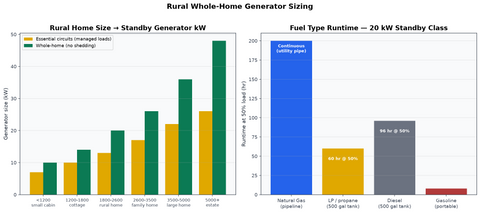
Sizing a whole-house generator is a load calculation, not a guess. List the devices you want running during an outage, total their running watts, and add the largest single motor-starting surge — because a 3,500W air conditioner can briefly demand 7,000–10,500W at compressor start, and the generator must absorb that without the voltage dipping far enough to drop out everything else.
| Home Profile | Critical Loads | Calculated Need | Recommended Class |
|---|---|---|---|
| Small home / essential circuits only | Fridge, furnace blower, lights, sump, Wi-Fi | 6–8 kW | 10–14kW standby |
| Typical 2,000–2,800 sq ft, gas heat, one AC | Above + 3-ton AC + kitchen circuits | 12–16 kW | 18–22kW standby |
| Large home, two ACs, well pump | Above + second compressor + well | 18–24 kW | 26kW or managed-load design |
| Estate / light commercial | Multiple systems, elevators, servers | 30 kW+ | Liquid-cooled, commercial class |
Our detailed sizing walkthroughs — what generator size do I need and the 2026 whole-home sizing guide — run the full calculation, and our 22kW guide covers the most popular residential class. When in doubt between two sizes, load management usually beats upsizing: smart modules shed the water heater or second compressor for the seconds it matters, and a smaller generator carries the house.
Fuel Supply: The Real Runtime Limit
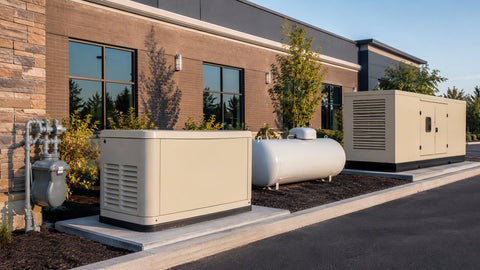
A generator's rated runtime is set by its fuel, not its engine. Natural gas units run as long as the gas utility flows — effectively unlimited. Propane units run until the tank is dry, which makes tank sizing a design decision:
| Propane Tank (usable capacity) | Half-Load Runtime (~2.2 gal/hr, 22kW class) | Full-Load Runtime (~3.8 gal/hr) |
|---|---|---|
| 120-gal (≈96 usable gal) | ~43 hours | ~25 hours |
| 250-gal (≈200 usable gal) | ~91 hours (~3.8 days) | ~53 hours |
| 500-gal (≈400 usable gal) | ~182 hours (~7.6 days) | ~105 hours (~4.4 days) |
| 1,000-gal (≈800 usable gal) | ~364 hours (~15 days) | ~210 hours (~8.8 days) |
The math is just usable gallons divided by the burn rate, but the planning discipline behind it matters: tanks are filled to 80% for thermal expansion, and propane suppliers get very busy during regional emergencies. In ice-storm country we steer customers to 500 gallons minimum; the extra tank capacity is cheap insurance bought exactly once. Note also that most air-cooled units de-rate on natural gas — a 22kW propane rating typically becomes about 20kW on NG — so size against the fuel you'll actually burn.
Installation Essentials: Clearances, Code, and the Transfer Switch
Three rules govern every safe install. First, clearances: typically 18 inches from the structure and 5 feet from operable windows, doors, and fresh-air intakes — a carbon-monoxide rule your inspector will measure with a tape. Second, the transfer switch: NEC 702 requires a listed transfer means, and service-rated ATS units in the 100A/200A classes match standard residential services — see our 200–225A transfer switches for the most common class. Third, grounding: whether the generator's neutral is switched at the ATS determines the grounding electrode arrangement under NEC 250, a detail covered in our grounding and bonding guide.
Wire sizing follows NEC 310.16: a 100A generator output breaker pairs with 3 AWG copper (100A at 75°C), a 125A breaker with 1 AWG (130A). The conductor must meet or exceed the breaker protecting it — our NEC wire sizing guide has the full table.
Maintenance: The Schedule That Protects the Protector
| Interval | Task | Why It Matters |
|---|---|---|
| Weekly (automatic) | Self-test exercise cycle, 10–15 min | Keeps seals lubricated; verifies start circuit |
| Monthly (owner) | Visual check: oil level, enclosure, clearances | Catches leaks, pests, and debris early |
| Annually / 100–200 hrs | Oil, filter, spark plugs, battery test | Battery failure causes most no-start events |
| Every 2–3 years | Valve lash, coolant (liquid-cooled), ATS exercise under load | Proves the whole chain, not just the engine |
The single most common failure we dispatch on is a dead starting battery — a $120 part that disables a $12,000 system. Put the battery on a three-year replacement calendar whether it tests well or not. I tell every customer the same thing: the generator you don't maintain is a very expensive lawn ornament, and the outage doesn't care what you meant to get around to.
Standby vs. Portable: The Protection Gap

Portable generators have their place — job sites, camping, running a fridge and a fan through a short outage. But as a device-protection strategy for a whole home, they come up short in ways that matter:
| Factor | Portable Generator | Whole-House Standby |
|---|---|---|
| Response time | Manual — setup, fueling, cord routing, 30–60+ min | Automatic, 10–30 seconds, nobody home required |
| Coverage | A few corded devices or a manual inlet panel | Every circuit in the home |
| Power quality | Varies widely; many contractor-grade units run high THD | Utility-grade, under 5% THD, regulated frequency |
| Runtime | 8–12 hours per tank, refueled hot in the rain | Days to weeks (NG unlimited; LP by tank size) |
| Safety burden | CO placement, hot refueling, cord trip hazards | Permanently installed to code, clearances engineered |
| Surge protection during grid events | None — house stays on the failing grid until you act | Automatic — home leaves the grid the moment it sags |
The last row is the one I press on with customers. A portable setup protects you from darkness. A standby system protects you from the grid's worst moments — the brownout at 11 p.m., the re-closer cycling at dawn, the restoration surge on Thursday afternoon while you're at work. Devices die in those moments, and nobody's rolling a portable out in time to stop it.
Carbon Monoxide and Placement: The Safety Non-Negotiables
Every generator article that skips this paragraph is negligent. Generator exhaust contains carbon monoxide, and CO sends people to the hospital every storm season — almost always portables running in garages, on porches, or near windows. Standby installations address this by engineering: manufacturer-specified clearances (typically 5 feet from operable windows, doors, and combustion-air intakes), prevailing-wind placement, and inspection sign-off. After the install, add the human layer: battery-backed CO detectors on every level of the home, tested twice a year. The generator protects your devices; the detectors protect your family. Both are cheap; neither is optional.
What an Actual Outage Looks Like With a Standby System
Abstract specs aside, here's the play-by-play of a real ice-storm outage sequence, the kind we debrief with customers every winter:
Hour 0. The line sags twice — re-closer shots — then drops. Ten seconds later the generator is carrying the house. The only evidence indoors is a brief flicker and the Wi-Fi router rebooting (that's what the little UPS is for).
Hours 1–24. Life proceeds. The furnace cycles, the fridge stays cold, the sump pump runs on schedule. The generator's controller logs load and runtime; some customers check the app, most forget it's there. This is the system working as designed: boring.
Days 2–4. If the home is on propane, this is when tank sizing proves itself. The 500-gallon tank that seemed like overkill at install is now the difference between normal life and a hotel. Natural-gas homes simply keep running, with an oil check around the 100-hour mark if the outage stretches.
Restoration. The grid returns — and this is the dangerous moment, when surges and unstable voltage ride the freshly repaired line. The house isn't on it. The ATS watches utility power stabilize for a set interval before re-transferring, so the restoration spike hits a switch, not your refrigerator board. Then the generator cools down, logs the event, and goes back to being a lawn ornament until next time.
I've taken the "did everything work?" call after dozens of these events, and the answer from a maintained standby system is some version of "we honestly forgot the power was out until the neighbors asked." That's the outcome you're buying.
Pairing With Solar and Storage
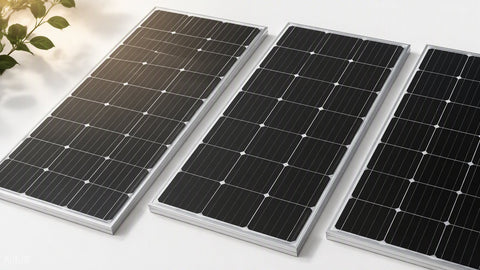
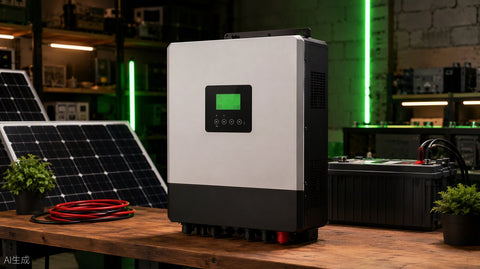
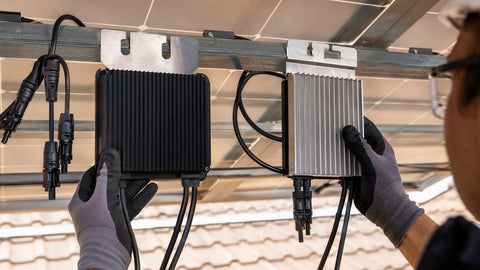
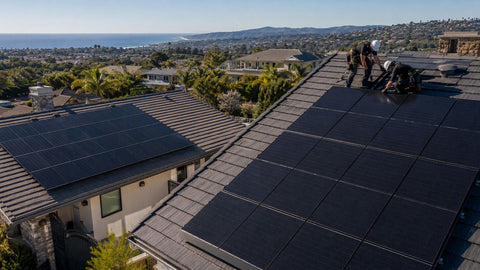
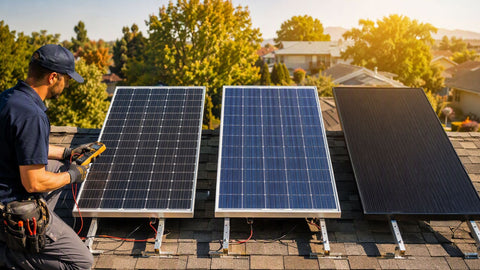
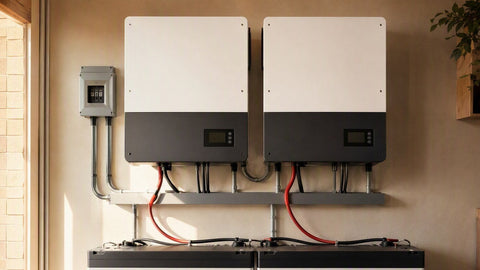
A growing share of our generator customers already have solar, and the technologies complement each other well. Grid-tied solar shuts down during outages (anti-islanding, NEC 690/705) unless paired with a battery and hybrid inverter — so a generator becomes the outage workhorse while a modest battery smooths the transfer gap and carries overnight loads silently. If you're designing that stack, our hybrid inverter overview and the battery runtime calculator are the right starting points, and generator-interactive inverters can even use the genset as a backup-charging source for the battery bank. The short version: solar saves money every day, batteries make outages seamless, and the generator makes them survivable. Each layer covers the others' gaps.
One configuration note that surprises people: in a solar-plus-generator design, the generator should generally sit on the backup side of a transfer scheme that prevents it from ever backfeeding the inverter — and not every inverter accepts generator input gracefully. The ones built for it treat the genset as a managed AC source, throttling charge current to keep the generator loaded in its efficient band rather than lugging at 20% load, which is where wet-stacking and carbon buildup live. If your installer hasn't specified which device arbitrates between the generator and the inverter, ask before you sign — that single box is the difference between three technologies cooperating and three technologies fighting.
Choosing a Brand and a Dealer
The standby market is dominated by a handful of serious manufacturers — Generac, Kohler, Cummins, and Champion among them — and honest differences between them are smaller than the differences between dealers. What actually determines your experience: local parts availability, whether the installing contractor stocks the wear items, and how warranty labor is handled when something fails at hour 400. Ask any bidder two questions — "what's your average warranty response time?" and "what's on your service truck right now for my model?" — and listen for specifics. Vague answers predict slow service. We carry the major lines, including Champion generators and Cummins, precisely because parts pipelines and dealer support matter more than brochure specs.
One more selection criterion that's easy to overlook: controller ecosystem. The monitoring app, the maintenance reminders, and the dealer's remote diagnostic access all live in the controller, and a good one turns a no-start surprise into a Tuesday-morning text message that says "battery low, tech dispatched." After a decade of storm weeks, I'd put remote monitoring near the top of any feature list — it converts silent failures into scheduled service.
The Economics of Protection
Safeguarding devices has a dollar value most homeowners never total. A central AC compressor replacement runs $1,500–$2,800 installed. An ECM blower module is $400–$900. A refrigerator control board is $250–$600. A well-pump motor is $800–$1,800 with the service call. One bad grid event can stack two or three of those onto a single weekend — which is why the week after every major storm is the busiest week of the year for HVAC and appliance repair, and why the homes on standby power are conspicuously absent from those queues.
Set against a $10,000–$17,000 installed system with a 15–25 year service life, the protection case pencils out at roughly $400–$1,100 per year of ownership — about what a single compressor event costs, before you count the hotel nights, the spoiled food, or the finished basement the sump pump saved. Whole-house generators aren't an expense with a payback; they're an insurance policy that also happens to keep the lights on.
There's also a quieter economic effect: buyers in outage-prone markets increasingly filter listings for standby power the way they filter for garages and school districts. A home with a documented, permitted, maintained generator installation reads as a home that was cared for systematically — and that signal carries through the whole inspection negotiation.
Frequently Asked Questions
How does a whole-house generator know when to turn on?
The automatic transfer switch monitors utility voltage continuously. When voltage drops below threshold for more than a few seconds, it signals the generator to start, waits for output to stabilize, then transfers the home — typically 10–30 seconds total, with nobody home required.
Will a standby generator protect my electronics?
Yes, in two ways: it removes your home from the grid during brownouts and restoration surges, and modern units produce utility-grade power (under 5% THD). Add a panel-mounted surge protector for transients and a small UPS for devices that can't tolerate the 10–30 second transfer gap.
How long can a whole-house generator run continuously?
On natural gas, effectively indefinitely with periodic maintenance. On propane, divide usable tank capacity (80% of nominal) by the burn rate — a 500-gallon tank gives roughly 7.6 days at half load in the 22kW class.
What size generator safeguards a whole house?
Total the running watts of everything you want operating, then add the largest motor-starting surge. Most 2,000–2,800 sq ft homes with gas heat and one AC land in the 18–22kW class; load management can trim a size class from that.
Is generator power safe for a furnace, AC, or well pump?
Yes — these motor loads are exactly what standby generators are built for, provided the unit is sized for the starting surge. The transfer switch's stabilization delay also protects HVAC boards from receiving out-of-tolerance power during startup.
How often does a standby generator need service?
Weekly self-tests run automatically. Owner checks monthly. Oil, filters, and a battery test annually or every 100–200 run hours. Replace the starting battery about every three years — it's the most common no-start cause by a wide margin.
Seasonal timing matters too: schedule the annual service in early fall, before heating season and storm season overlap. A generator serviced in October starts its hardest months with fresh oil, a tested battery, and verified transfer — the difference between a system that's ready and a system that's merely present.
Related Products & Resources
- 22kW standby generators — the most popular whole-home class
- Generator transfer switch kits — matched generator + ATS packages
- Standby generator fundamentals
- Whole house generator overview
Whether you're protecting a sump pump, a server closet, or a house full of people who simply shouldn't have to think about the grid, the pattern is the same: size from the real load, install to code, maintain on a calendar, and let the machine do the watching. The next outage is already on the calendar too — you just can't see the date yet.
Generator Controller Intelligence: What the Display Actually Tells You
Modern standby generators are as much computer as engine. The controller — a microprocessor-driven display mounted on the enclosure — monitors voltage, frequency, oil pressure, coolant temperature, battery voltage, run hours, and fault codes. It logs exercise cycles, records the last 50+ events, and communicates via Wi-Fi, cellular, or Modbus to remote monitoring platforms. What matters is knowing which numbers indicate a problem and which are normal.
Oil pressure on a warm 22 kW air-cooled unit should read 25–45 psi at governed speed. Below 10 psi, the controller shuts the engine down — a low-oil-pressure fault. Coolant temperature on a liquid-cooled unit should stabilize at 180–200°F; sustained readings above 220°F indicate a cooling system problem — low coolant, failed thermostat, or radiator blockage. Battery voltage at rest should be 12.4–12.7V; during cranking it will sag to 9–10V, but if it drops below 8V the engine won't start and the controller logs a crank fault.
We've diagnosed more no-starts over the phone by reading the controller display than by dispatching a technician. A customer who says "it beeped three times and the screen says UU" is describing an under-voltage event — the controller saw utility power drop, started the generator, and logged the transfer. That's normal operation, not a failure. Teaching customers to read the display saves everyone time and money. Our generator sizing guide covers controller features by manufacturer, and the 22 kW guide includes a walkthrough of the most common display codes.
Load Management: Smaller Generator, Same Coverage
Load management is the least appreciated technology in residential standby power. Instead of buying a 26 kW generator to cover every circuit simultaneously, a load-management module sheds non-essential loads during high-demand periods and restores them when capacity frees up. The water heater, the second air conditioner, the pool pump — these can wait 30 seconds while the first compressor starts.
| Load Type | Priority | Typical Delay Before Restore | Impact on Comfort |
|---|---|---|---|
| HVAC compressor (primary) | 1 — never shed | Immediate | Critical |
| Refrigerator / freezer | 1 — never shed | Immediate | Critical |
| Well pump / sump pump | 1 — never shed | Immediate | Critical |
| HVAC compressor (secondary) | 2 — shed during start | 5–15 min after first unit stabilizes | Minor; single-zone cooling delay |
| Electric water heater | 3 — shed on overload | 15–30 min after peak passes | Minimal; tank stores hot water |
| Pool / spa pump | 4 — shed on overload | 30–60 min or until utility returns | None |
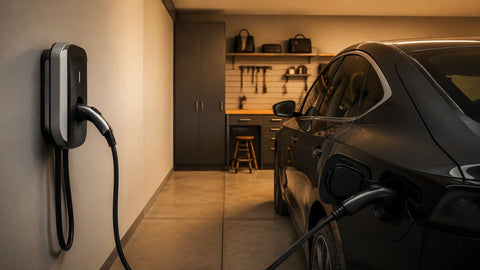
| EV charger | 5 — lowest priority | Until utility returns or load drops | None; car charges later |
With load management, a 22 kW generator can cover the same home that would otherwise need 26 kW. The module costs $300–$600 installed, versus the $2,000–$4,000 delta between generator sizes. We've specified load management on hundreds of installs, and the customer feedback is unanimous: they never notice the shed loads, because the priority circuits never lose power. The water heater stays hot for an hour without electricity; the pool pump can wait. It's elegant engineering that saves real money.
One caveat: load management only works with loads that have inherent thermal or mechanical storage. A tankless electric water heater has no storage — if you shed it, you have no hot water — so it cannot be load-managed. Similarly, a heat pump in sub-freezing weather should not be shed for long because the thermal mass of the house is small. Match the management strategy to the load physics.