Renewable energy stopped being an environmental slogan a long time ago. In 2026 it is a procurement decision, a hedge against utility rate inflation, and — for the contractors and homeowners we supply every day — a straightforward math problem with a favorable answer. Global renewable capacity additions have broken records for more than twenty consecutive years, solar is now the cheapest source of new electricity in most of the world, and storage costs have fallen far enough that pairing batteries with generation is standard practice rather than exotic.

At Portlandia Electric Supply we sell the hardware that turns those trends into working systems — panels, inverters, batteries, charge controllers, and the balance-of-system parts in between. I have watched customers go from skeptical to evangelical after their first full year of production data, and the reasons are consistent. Here are the seven benefits of renewable energy that actually matter for the future, backed by numbers rather than talking points.
What Is Renewable Energy?
Renewable energy comes from sources that replenish on a human timescale: sunlight, wind, moving water, geothermal heat, and biomass. The defining contrast is with fossil fuels, which are finite, price-volatile, and carbon-intensive. What changed in the last decade is not the physics but the economics — photovoltaic module prices have fallen more than 90 percent since 2010, and lithium-ion battery pack prices fell from roughly $1,500 per kWh in 2010 to under $140 per kWh by 2023, with further declines since. When the fuel is free and the hardware keeps getting cheaper, the long-run trajectory is not hard to call.
Types of Renewable Energy Sources
| Energy Source | How It Works | Best Applications |
|---|---|---|
| Solar Energy | Photovoltaic cells convert sunlight directly into electricity | Residential, commercial, utility-scale projects |
| Wind Energy | Turbines capture wind movement to generate power | Open plains, offshore installations, rural areas |
| Hydropower | Flowing or falling water spins turbines to produce electricity | Rivers, dams, tidal and wave installations |
| Geothermal Energy | Harnesses heat from Earth's interior for power and heating | Volcanic regions, heating systems, power plants |
| Biomass/Bioenergy | Organic materials are converted into fuel or electricity | Agricultural regions, waste-to-energy facilities |
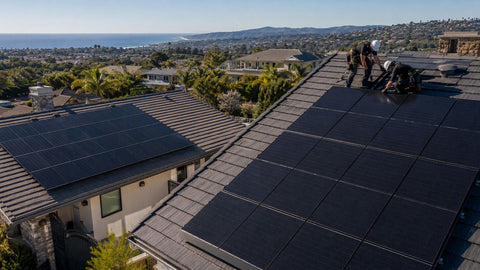
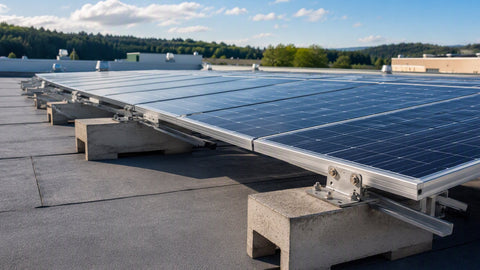
For residential and small commercial applications, solar dominates because it is modular, silent, permit-friendly, and works anywhere with decent sun. Wind and hydro make sense at utility scale or on rural properties with the right resource. If you are evaluating solar specifically, our system components guide and solar system calculator are the practical starting points.
The Top 7 Benefits of Renewable Energy
1. Lower, More Predictable Electricity Costs
A properly sized rooftop solar system in most US markets produces electricity at a levelized cost of $0.06 to $0.11 per kWh over its life — against retail utility rates that average above $0.17 per kWh nationally and exceed $0.30 in California and the Northeast. More valuable than the absolute savings is the price certainty: the sun does not file rate cases. I have customers whose utility rates have risen 40 percent in a decade while their solar cost per kWh has stayed flat since commissioning day.
| Scenario | Effective Cost per kWh | 25-Year Cost Basis |
|---|---|---|
| Utility power @ $0.17/kWh, 3% annual escalation | $0.17 rising to ~$0.36 | Escalating, no control |
| 8 kW rooftop solar, $20,000 installed, 12,000 kWh/yr, 1% degradation | ~$0.07 levelized | Fixed at install |
| Solar + 13.5 kWh storage, $31,000 installed | ~$0.11 levelized | Fixed, plus backup value |
Run your own address-specific numbers with the solar ROI calculator.
2. Energy Independence and Resilience
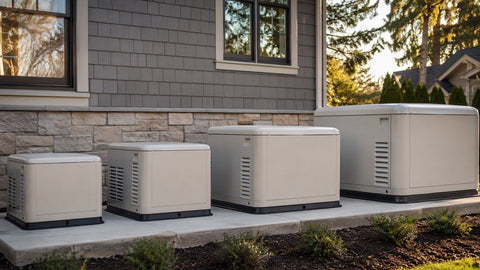
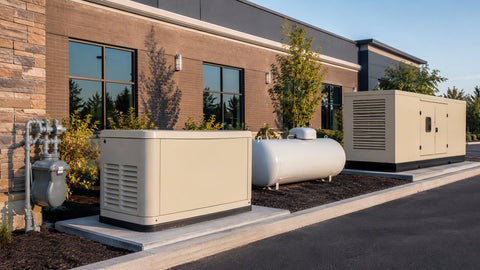
Every kilowatt-hour you generate is one you do not buy, and every kilowatt-hour you store is one that works during an outage. Grid disturbances in the US have increased steadily over the past two decades, and the households that weathered multi-day outages best were the ones with generation and storage on site. Pairing solar with a battery storage system or a standby generator converts a house from a grid-dependent load into a partial island. Our home battery bank sizing guide walks through how much storage different resilience goals require.
3. Job Creation and Local Economic Impact
Renewable energy is labor-intensive in the best way: manufacturing, installation, and maintenance jobs cannot be offshored once the project is local. The solar industry alone employs hundreds of thousands of American workers, more than coal, oil, and gas generation combined.
| Economic Benefit | Impact |
|---|---|
| Job Creation | Solar and wind industries employ millions globally in manufacturing, installation, and maintenance |
| Reduced Energy Costs | Solar homeowners save $20,000-$50,000+ over system lifetime on electricity bills |
| Local Economic Development | Renewable projects keep energy spending within communities rather than exporting it |
| Price Stability | No fuel costs means predictable energy prices unaffected by global commodity markets |
4. Environmental and Public Health Benefits
Every megawatt-hour of solar displaces roughly 0.7 metric tons of CO₂ when it replaces average US grid electricity, and more when it displaces coal or gas peakers. The avoided air pollution has monetizable public-health value — fewer asthma events, fewer premature deaths — that EPA analyses have valued at several cents per kWh on top of the energy value. A typical 8 kW residential system avoids roughly 5 to 6 tons of CO₂ per year, equivalent to taking a car off the road.
5. Increased Property Value
Multiple studies, including large-sample analyses by Lawrence Berkeley National Laboratory, have found that owned solar systems add roughly $4 per watt to home resale value — about $24,000 to $32,000 for a typical 6 to 8 kW system. The premium holds because buyers are purchasing a lower cost of living, not just hardware. Leased systems complicate sales; owned systems, especially with transferable warranties on components like microinverters, sell houses faster.
6. Storage and Smart Technology Make It Dispatchable
The old knock on renewables — "the sun doesn't shine at night" — died with the battery cost curve. Modern lithium iron phosphate storage offers 6,000+ cycle lives, round-trip efficiencies above 90 percent, and per-kWh costs that make time-shifting solar economical in any market with time-of-use rates.
| Storage Technology | Features & Applications |
|---|---|
| Lithium-Ion Batteries | Most common for residential and commercial; high efficiency, declining costs |
| Flow Batteries | Store energy in liquid electrolytes; ideal for long-duration, large-scale storage |
| Sodium-Ion Batteries | Emerging cost-effective alternative using abundant materials |
| Pumped Hydro Storage | Established technology; accounts for 90%+ of global installed storage capacity |
The control layer matters as much as the cells: a good battery management system is what turns a stack of cells into a safe, long-lived asset, and MPPT charge controllers harvest up to 30 percent more than older PWM designs on battery-charging systems.
7. Insulation Against the Future Cost of Carbon
Whether through carbon pricing, clean-energy standards, or utility integrated resource plans, the policy direction in most states prices emissions increasingly explicitly. Renewable generation owned today is insulated from every one of those future costs. Businesses feel this first — commercial customers with solar and storage are already winning bids partly on energy-cost certainty — but homeowners benefit the same way at kitchen-table scale.
Renewable Energy Technologies Driving Change
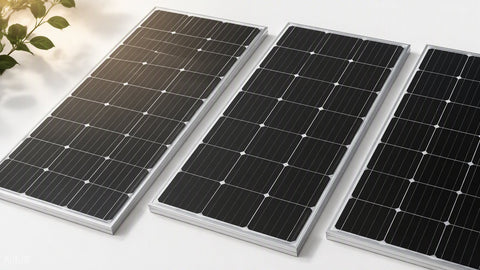
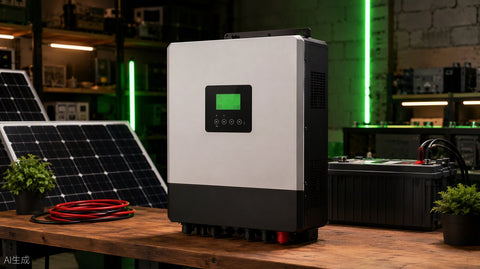
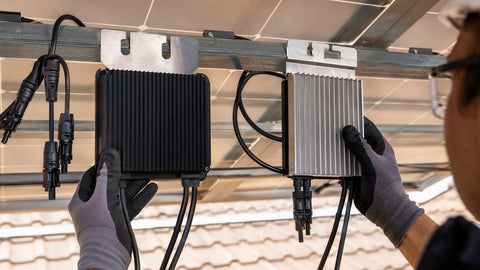
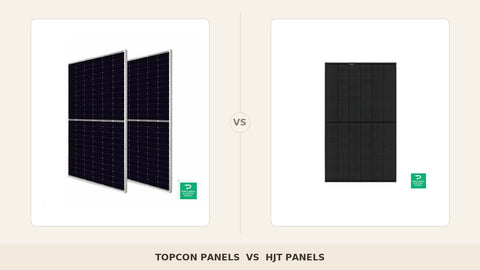
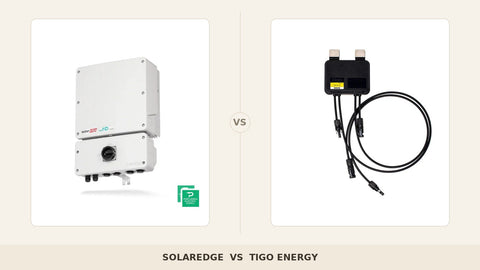
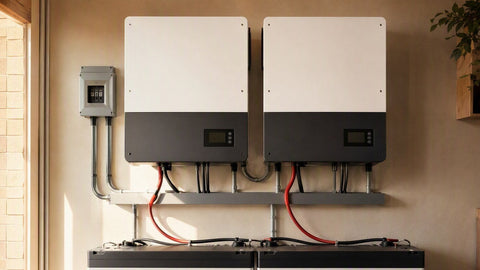
Three hardware trends define the near future. First, high-wattage n-type modules — TOPCon and HJT designs in the 550 to 700 watt class — are pushing residential-scale power density past 22 percent efficiency, meaning more kWh per square foot of roof. Second, hybrid inverters have collapsed the cost of adding storage; a single hybrid inverter now handles PV, battery, grid, and generator inputs that used to require three separate boxes. Third, grid-forming inverters and vehicle-to-home EV integration are turning distributed systems into resources the grid can actually dispatch. For the EV angle, see our solar EV charging collection and the commercial EV charging installation guide.
Future Trends in the Renewable Energy Industry
| Trend | Projection |
|---|---|
| Renewables Overtake Coal | Renewables will surpass coal as the largest source of global electricity generation by early 2025 |
| Annual Capacity Additions | Projected to reach 460 GW by 2027, potentially 600 GW under accelerated scenarios |
| Battery Storage Market | Expected to more than double by 2030, reaching up to $150 billion globally |
| U.S. Battery Storage | Large-scale storage anticipated to grow from 1 GW (2019) to 98 GW by 2030 |
| Renewable Share by 2050 | Renewable sources expected to supply nearly half of all global electricity |
The projection that matters most for buyers is storage: as battery costs continue falling, the default residential system is shifting from "solar only" to "solar plus storage," and the default value proposition shifts from bill savings to bill savings plus resilience plus rate-plan arbitrage. Our energy storage explainer covers the fundamentals if you are new to the storage side.
How to Get Started with Renewable Energy
The practical path has four steps. First, know your load: pull twelve months of utility bills and find your annual kWh — our power consumption guide shows how. Second, size the system: the system size calculator converts kWh into panel count for your region. Third, choose architecture: string, micro, or hybrid inverter, with or without storage — the inverter buyer's guide helps. Fourth, buy hardware that is actually supported: every product we list in the solar panel and solar kit collections is equipment we can source parts for and stand behind.
I have guided hundreds of customers through exactly this sequence, and the ones who measure their loads first always end up happiest — undersizing is the one regret I hear about years later. The future benefits of renewable energy are real, but they arrive one well-sized system at a time.
The Economics of Rooftop vs. Grid-Scale Renewables
Utility-scale solar is the cheapest new electricity in history — but the homeowner does not buy electricity at wholesale. Retail rates bundle generation with transmission, distribution, and utility overhead, which is why rooftop solar at $0.07 per kWh levelized beats a $0.17 retail rate even though wholesale power trades at $0.03 to $0.05. Your roof competes with the retail price, and that structural gap is the durable economic engine behind distributed renewables.
| Scale | Levelized Cost Range | What You Actually Compare Against | Who Captures the Value |
|---|---|---|---|
| Utility-scale solar PPAs | $0.03–$0.06/kWh | Wholesale market prices | Utilities, offtakers |
| Rooftop residential solar | $0.06–$0.11/kWh | Retail rate $0.12–$0.35/kWh | Homeowner |
| Rooftop + storage | $0.10–$0.15/kWh | Retail + TOU spreads + outage costs | Homeowner |
Storage widens the capture further in time-of-use markets, where the spread between off-peak and peak rates routinely exceeds $0.20 per kWh. Charging a battery at midnight and discharging it at 6 PM is arbitrage any household can run, and it requires no solar at all — though pairing the two compounds the benefit.
The Policy Landscape Working in Your Favor

The 30 percent federal investment tax credit remains the anchor incentive, covering solar, storage, and associated electrical work. On a $20,000 system that is $6,000 back, and it applies to batteries whether or not they connect to solar. State and utility programs stack on top: rebates, performance-based incentives, property-tax exemptions for the added home value, and sales-tax exemptions on equipment in most states. Our solar incentives by state page tracks the current programs.
Policy is not static — net metering has been restructured in California and is under review elsewhere — but the direction of travel across most states favors distributed generation, and systems installed under today's rules are typically grandfathered under them for 15 to 20 years. Waiting for "better policy later" has historically been a losing bet; acting while incentives are at their peak has not been.
Renewable Energy and the Electrified Home
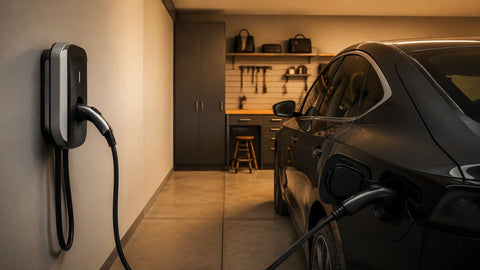
The benefits above compound when solar meets electrification. A heat pump replacing a gas furnace, an EV replacing a gasoline car, an induction range replacing gas cooking — each electrified load multiplies the value of every self-generated kilowatt-hour, because the alternative fuel cost disappears too. An EV driven 12,000 miles per year adds roughly 3,000 to 4,000 kWh of annual consumption; covered by solar, that is $500 to $1,300 per year of avoided fuel cost on top of the household savings. This is why we increasingly design systems for the home the customer will have in five years, not the one they have today: panel capacity for a future EV circuit, a hybrid inverter ready for storage, and a service panel with room to grow. The how many watts to power a home guide helps translate those future loads into system size.
The Honest Challenges — and How the Industry Is Solving Them
A credible look at the future of renewable energy names the friction points. Interconnection queues delay projects as utilities process record application volumes; permitting inconsistency across thousands of jurisdictions adds cost and time; and grid infrastructure built for one-way power flow needs investment for a distributed future. On the customer side, soft costs — permitting, inspection, interconnection — now exceed hardware costs on many residential installs.
Each friction has an active solution track. Automated permitting platforms are cutting approval times from weeks to days in adopting jurisdictions. Standardized equipment certifications reduce inspection friction. And the same storage cost declines discussed above are making systems more valuable per interconnection point, which keeps project economics strong even where the process is slow. None of the challenges reverse the trend; they pace it. The homeowners who benefit most are the ones who start the paperwork early and let the queue time run while incentives are at their peak.
Where Wind, Hydro, and Geothermal Fit for Property Owners
Solar dominates the distributed conversation, but three other renewables deserve honest treatment for property-scale decisions. Small wind works where the resource is genuinely strong — average wind speeds above 10 mph at hub height, unobstructed fetch, and zoning that permits towers; our small wind turbine and wind components categories serve rural properties that pass that screen. Micro-hydro is the most productive renewable per dollar where a year-round stream with adequate head exists, but the resource is rare and permitting is real. Geothermal heat pumps are the quiet giant: not electricity generation, but renewable thermal energy that cuts heating and cooling loads 40 to 60 percent, which shrinks the solar system you need to cover the house. The practical hierarchy for most properties remains solar first, efficiency and heat pumps alongside it, wind and hydro where the site genuinely offers them.
Designing for Resilience: Layers, Not Gadgets
The resilience benefit earns its place on this list only when the system is designed in layers. Layer one is efficiency — every wasted watt removed is a watt no battery or generator must supply. Layer two is generation sized to daily critical loads, not annual averages. Layer three is storage sized for overnight autonomy. Layer four is a long-duration backstop — a generator or grid connection — for extended events. Households that stack these layers ride out outages that paralyze neighbors; households that buy a single gadget in isolation discover its limits at the worst moment. This layered design is exactly how we approach home UPS and backup systems — the hardware follows the resilience plan, not the reverse.
The Workforce Building the Renewable Future
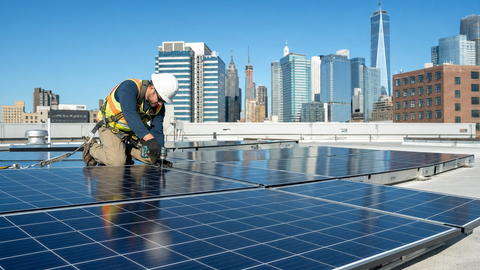
Behind every benefit on this list is a person on a roof, in a trench, or at a design desk. The renewable transition is a skilled-trades story as much as a technology story: electricians adding energy specialties, roofers learning array layouts, lineworkers retraining for a distributed grid. Installer certification programs and manufacturer training have professionalized what was a frontier trade a decade ago, and labor standards have risen with the volume. For homeowners, the practical consequence is access: a decade ago many counties had no qualified installer within an hour's drive; today the network covers most of the country, and suppliers like us support both professional installers and capable DIY owners with the same equipment, documentation, and phone support. The future of renewable energy will be built by that workforce — and it is hiring.
Renters, Community Solar, and Access for Every Household
The renewable future only delivers its benefits broadly if it reaches households that cannot put panels on a roof — renters, condo owners, and homes with shaded lots. Community solar is the main bridge: subscribers buy or lease a share of an off-site array and receive bill credits for its production, typically saving 5 to 15 percent on electricity with no equipment, no roof, and no long-term property commitment. States with enabling legislation have seen subscriptions oversubscribed within months of program launches, a sign of how much pent-up demand exists beyond the homeowner market. Portable and balcony-scale systems fill gaps at the small end, and efficiency upgrades — heat pump water heaters, insulation, smart thermostats — deliver renewable-adjacent savings to households still waiting for access. A transition that only serves roof-owners leaves too much value on the table; the access models are maturing to close that gap.
Renewable Energy FAQs
What are the main benefits of renewable energy?
Lower and more predictable electricity costs, energy independence and outage resilience, job creation, reduced emissions and air pollution, higher property values, dispatchable power through storage, and insulation from future carbon and fuel costs.
Is renewable energy cheaper than fossil fuels now?
For new generation, yes in most markets: utility-scale solar and wind have the lowest levelized cost of any new source, and rooftop solar typically beats retail utility rates by 40 to 60 percent over its life. Storage adds cost but increasingly pays for itself through time-of-use arbitrage.
How much can a typical home save with solar?
A typical 8 kW system producing 12,000 kWh per year saves $1,500 to $3,500 annually depending on local rates, with payback periods of 6 to 12 years and 25-year savings commonly exceeding $40,000.
Does solar work when the grid goes down?
Standard grid-tie systems shut off during outages for line-worker safety. Systems with hybrid inverters, batteries, or grid-forming microinverters can island and keep producing — one reason storage attachment rates keep climbing.
What is the fastest-growing renewable technology?
Solar PV, which has set global installation records every recent year, followed by battery storage, which is growing even faster in percentage terms from a smaller base.
Start Your Renewable Energy Journey Today
Browse complete systems in our complete solar kits, compare storage in LiFePO4 batteries, or reach out through our site — sizing questions are what we answer all day, every business day.
Keep Reading
- Best Tier 1 Solar Panels of 2025
- Tripling Renewable Energy by 2030: What It Takes
- Renewable Energy in Agriculture
- The Rise of Floating Solar Farms
- Solar vs. Fossil Fuel Electricity Costs
- Community Solar Expansion: State Programs
- Solar Panel Technology 2026: TOPCon and Perovskite
- Solar Incentives by State