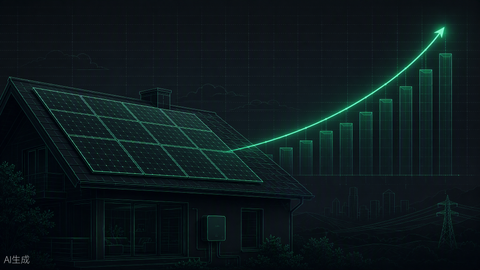
On April 15, 2023, California flipped the switch on the Net Billing Tariff — universally called NEM 3.0 — and cut the value of exported rooftop solar power by roughly 75% overnight. Residential solar permit applications in the state fell off a cliff that summer, battery attachment rates tripled, and the industry's entire design philosophy pivoted from "maximize the array" to "maximize self-consumption." Three years in, the dust has settled enough to see clearly what changed, what the math looks like now, and how installers and homeowners should design systems under the rules as they actually are.
I sold equipment into California through the whole transition. In the ninety days before the NEM 2.0 deadline, we shipped more residential inverters into the state than in the previous three quarters combined — everyone who could get an interconnection application in before midnight on April 14 did. Then the phones went quiet for a quarter. Then they started ringing again, but the questions had changed: nobody asked "how big can I go" anymore. They asked "how much battery do I need."
What the CPUC actually decided
The California Public Utilities Commission approved the Net Billing Tariff on December 15, 2022, after a contentious year-long proceeding, and it took effect for new interconnection applications on April 15, 2023. The decision replaced retail-rate export compensation with an Avoided Cost Calculator (ACC) — a hourly, location-specific value derived from what the utility would otherwise pay for energy, capacity, and grid services in that hour. Grandfathered NEM 1.0 and NEM 2.0 customers keep their legacy terms for 20 years from their original interconnection date; nothing in the decision was retroactive, despite persistent rumors to the contrary.
The three investor-owned utilities — PG&E, SCE, and SDG&E — all administer the same tariff structure with territory-specific ACC values. Municipal utilities like LADWP and SMUD were never under CPUC net-metering jurisdiction and were unaffected.
The core change: exports are worth a fraction of imports
Under NEM 2.0, a kilowatt-hour exported to the grid earned a credit at or near the full retail rate — around $0.30–$0.46/kWh depending on the utility and time-of-use period. Under the Net Billing Tariff, that same exported kilowatt-hour earns the ACC value for that hour, which averages roughly $0.04–$0.08/kWh across the year. The monthly ACC rate tables span 576 values (24 hours × 12 months × weekday/weekend differentiation), and they swing enormously: a summer September evening hour during a grid emergency can be worth $2.00/kWh or more, while a spring midday hour can be worth under $0.02.
| Compensation element | NEM 2.0 | NEM 3.0 (Net Billing Tariff) | Change |
|---|---|---|---|
| Export credit basis | Retail rate (TOU) | Hourly Avoided Cost Calculator | Structure |
| Average export value | ~$0.30/kWh | ~$0.05–0.08/kWh | −75% to −83% |
| Peak-hour export ceiling | ~$0.46/kWh (TOU peak) | $2.00+/kWh (Sept. evenings) | Higher, but rare |
| Spring midday export value | ~$0.26/kWh | <$0.02/kWh | −92%+ |
| Rate lock | 20-year grandfathering | ACC values float; 9-year "ACC Plus" adder for early adopters | Less certainty |
| Mandatory interconnection fee | Modest | Higher fixed charges on new rate schedules | Increased |
The design consequence is stark: a kilowatt-hour you use in your own home is still worth the full retail rate you avoid paying, while a kilowatt-hour you export is worth a small fraction of that. The ratio between self-consumed value and exported value went from roughly 1:1 under NEM 2.0 to roughly 4:1 or 5:1 under NEM 3.0.
What the new math does to payback
Run the numbers on a typical 7.6 kW residential system in PG&E territory producing about 11,000 kWh per year, at a $0.34/kWh blended retail rate:
| Scenario | Self-consumption | Exported kWh | Annual value | Simple payback ($21,000 system, post-ITC $14,700) |
|---|---|---|---|---|
| NEM 2.0, solar only | 35% (3,850 kWh × $0.34) | 7,150 kWh × $0.30 | $1,309 + $2,145 = $3,454 | ~4.3 years |
| NEM 3.0, solar only | 35% (3,850 kWh × $0.34) | 7,150 kWh × $0.06 | $1,309 + $429 = $1,738 | ~8.5 years |
| NEM 3.0, solar + 13.5 kWh battery | 80% (8,800 kWh × $0.34) | 2,200 kWh × $0.06 | $2,992 + $132 = $3,124 | ~7.6 years on $25,900 post-ITC cost |
| NEM 3.0, solar + battery + load shifting | 90% (9,900 kWh × $0.34) | 1,100 kWh × $0.06 | $3,366 + $66 = $3,432 | ~7.5 years, plus backup value |
Two conclusions fall out of that table, and they match what the market actually did. First, solar-only systems under NEM 3.0 still pay back — just in eight to nine years instead of four, which killed the volume of speculative sales but not the fundamental economics. Second, batteries move from luxury to economic instrument: adding storage roughly doubles the annual value of the same array, and the incremental payback on the battery itself is competitive with the panels.
The battery attachment rate tells the story
Before NEM 3.0, fewer than 15% of new California residential solar installations included storage. By the second half of 2023, attachment rates on new NEM 3.0 installations were running above 50%, and in some utility territories above 60%. The market did not shrink to zero — it reorganized around storage. Total installed residential capacity dropped sharply from the 2022 pull-forward peak, but the storage-attached segment grew even in the down year.
| Period | Storage attachment rate (new residential installs) | Market character |
|---|---|---|
| 2021–2022 (NEM 2.0) | 10–15% | Volume solar-only sales, batteries for backup-motivated buyers |
| Q1 2023 (deadline rush) | ~15% | Record pull-forward volume into NEM 2.0 grandfathering |
| Q3 2023 (post-NEM 3.0) | ~45–55% | Volume collapse, surviving deals mostly solar-plus-storage |
| 2024–2025 | 55–65% | Normalized market; storage standard on most new quotes |
How to design for the Net Billing Tariff
The engineering priorities under NEM 3.0 invert the old checklist. Under NEM 2.0 you sized the array to the annual bill and pointed it south. Now the order of operations is:
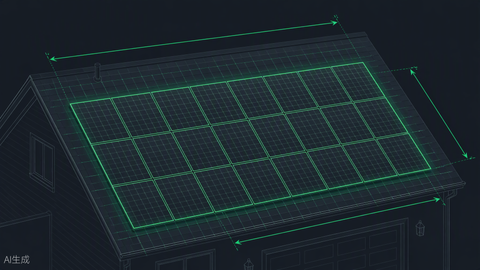
1. Right-size to consumption, not to the bill. Oversizing beyond what the home can absorb or store generates exports worth pennies. The optimal array covers daytime load plus battery charging, with modest headroom.
2. Consider west-facing orientation. Southwest and west arrays shift production into the 4–9 PM window where both retail import prices and ACC export values peak. A west-facing array produces 10–15% less annual energy but can deliver comparable or better dollar value under the new tariff structure.
3. Size the battery to the evening load. A typical California home consumes 8–14 kWh between 4 PM and midnight. A 13.5 kWh battery covers most of it; two batteries make sense mainly for homes with EV charging or electric heating loads in that window.
4. Program for the September jackpot. The ACC's highest export values land in a handful of late-summer evening hours. Battery systems with export-scheduling firmware can hold charge all day and discharge into those hours — a strategy worth several hundred dollars a year on its own.
The electrical side: what changes at the panel
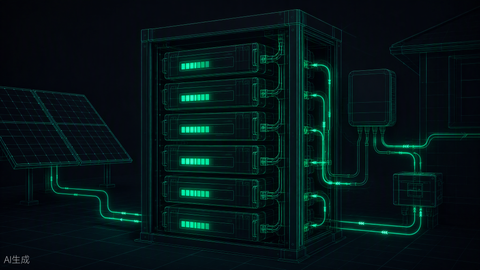
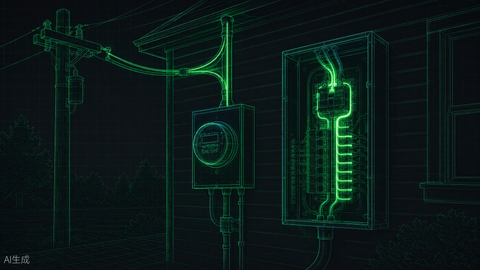
Solar-plus-storage under NEM 3.0 means more homes with power control systems, backed-up loads panels, and interconnection under NEC 705. The code math does not change with the tariff, but the frequency of these installations does, and I see the same sizing errors recur. For a battery inverter rated 7.6 kW continuous at 240 V: rated current is 7,600 ÷ 240 = 31.7 A. NEC 705.28 and Article 215 require conductors at 125% of continuous output: 31.7 × 1.25 = 39.6 A, which lands on 8 AWG copper (50 A at 75°C per NEC Table 310.16) and a 40 A breaker from the NEC 240.6(A) standard sizes. Pair that with a 40 A PV breaker on a 200 A busbar and the 120% rule of NEC 705.12 — 200 A × 1.2 = 240 A minus the 200 A main leaves exactly 40 A of headroom — and you are at the busbar limit with zero margin, which is precisely why so many NEM 3.0-era designs specify a power control system or a supply-side tap instead.
| Component | Rating | NEC basis | Conductor / OCPD result |
|---|---|---|---|
| PV string (13.9 A Isc) | 21.7 A design current | 690.8(A): Isc × 1.56 | 10 AWG Cu / 25 A breaker |
| Battery inverter output (7.6 kW @ 240 V) | 39.6 A design current | 705.28: rated × 1.25 | 8 AWG Cu / 40 A breaker |
| Combined on 200 A busbar (120% rule) | 40 A allowance | 705.12(B) | PV 25 A + battery 40 A exceeds limit — PCS or tap required |
| Backup loads panel feeder (60 A) | 75 A design | 215.2 / 310.16 | 4 AWG Cu / 60 A breaker |
I have reviewed plan sets where the designer forgot the battery inverter counts toward the 120% rule alongside the PV. That omission gets caught at plan check about half the time — the other half it gets caught at inspection, which is a much more expensive place to learn.
What happened to the market — and what comes next
California residential solar installations fell roughly 40–50% in the twelve months after NEM 3.0 took effect, and several large installers exited the state or failed outright. But the obituaries were premature. Install volume stabilized through 2024 at a lower, storage-centric level; the new-construction channel (driven by the Title 24 solar mandate, which never went away) kept a floor under demand; and battery hardware costs continued falling, improving the solar-plus-storage payback every quarter. The ACC adder — the temporary "ACC Plus" bonus for early NBT adopters — stepped down as designed, and the market absorbed it.
Other states watched California's experiment closely. None has replicated the full avoided-cost structure, but several have moved toward time-varying or reduced export compensation, and the California experience is the reference case in every one of those dockets. The lesson regulators took: cut export rates and you do not kill rooftop solar, you convert it into rooftop solar plus storage. Whether that was the intent or the accident, it is the result.
A worked hour-by-hour example
Abstract percentages hide how extreme the hourly spread is. Take a real-shaped summer weekday for a PG&E E-TOU-C household with a 7.6 kW array and a 13.5 kWh battery. The table below uses representative retail import prices and ACC export values for a July weekday; your tariff sheet will differ, but the shape is universal across the three IOUs.
| Hour | PV production (kWh) | Home load (kWh) | Retail import price | ACC export value | Best use of the kWh |
|---|---|---|---|---|---|
| 9–10 AM | 2.1 | 0.8 | $0.30 | $0.05 | Serve load, charge battery with surplus |
| 12–1 PM | 3.4 | 0.9 | $0.31 | $0.04 | Charge battery; export is nearly worthless |
| 3–4 PM | 2.3 | 1.4 | $0.36 | $0.06 | Serve load, finish charging battery |
| 6–7 PM | 0.4 | 2.2 | $0.47 | $0.12 | Discharge battery to kill peak imports |
| 8–9 PM | 0.0 | 1.8 | $0.47 | $0.18 | Battery discharge; hold reserve for Sept. events |
| 11 PM–6 AM | 0.0 | 3.1 total | $0.27 | $0.03 | Grid import at off-peak; battery recharges from PV tomorrow |
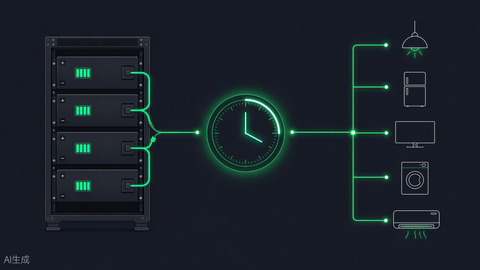
Read the 12–1 PM row and the 8–9 PM row together and you understand the entire tariff. Midday energy is abundant and nearly free; evening energy is scarce and expensive. Every design decision under NEM 3.0 — array orientation, battery capacity, EV charge scheduling, heat-pump water heater timing — is just a strategy for moving energy from the first row to the second.
How installer business models shifted
The sales organizations built for NEM 2.0 optimized for one number: annual kilowatt-hours offset. Bigger arrays closed bigger deals, and export economics made oversizing harmless to the customer. Under the Net Billing Tariff that same oversizing actively harms the customer's payback, and the honest proposal now requires a load profile, an evening-consumption estimate, and a battery sizing conversation that takes real engineering judgment. The companies that survived the transition did three things: they retrained sales staff on self-consumption math, they built storage into every base quote rather than as an upsell, and they got fluent in power control systems and supply-side interconnections because panel-busbar limits became the binding constraint on half their jobs.
On the equipment side, the product mix moved with them. All-in-one hybrid inverter-battery systems, modular stackable batteries, and energy-management hardware went from specialty SKUs to the core of the residential line card. We watched our own order mix flip: in 2022 maybe one residential inverter order in five was a hybrid; by mid-2024 it was three in five.
How other states read the California experiment
Every state net-metering docket opened since 2023 cites California, usually as warning, occasionally as model. The outcomes so far fall into three camps. States that moved toward time-varying or avoided-cost export rates with multi-year transitions — generally preserving some grandfathering — saw California-style shifts toward storage attachment without the full volume collapse. States that proposed abrupt retail-rate eliminations mostly retreated under political pressure after watching California's install numbers. And a third group left retail net metering untouched, usually citing California's post-NEM 3.0 market contraction as the reason. The honest reading of the data supports a middle path: export reform is survivable for the industry when grandfathering is honored, storage economics are allowed to mature, and the transition is measured in years rather than months.
The backup-power dividend nobody prices correctly
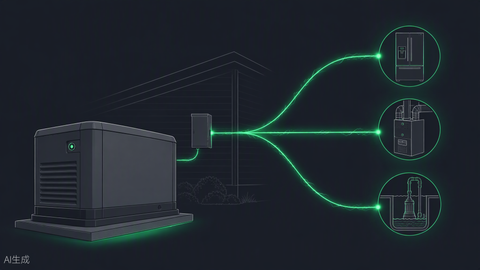
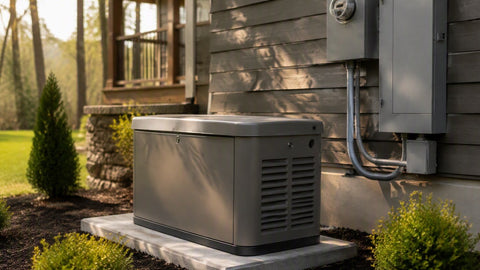
One value stream the payback tables never capture: the battery bought for tariff arbitrage is also a whole-home backup system. California's PSPS wildfire shutoffs and heat-event outages have made resilience a purchasing motive independent of dollars-per-kWh math. I have talked to customers in the Sierra foothills who ran their homes for three days on solar plus storage during an extended shutoff — no generator noise, no fuel runs, no extension cords through windows. Assign that capability even a modest fraction of what a comparable standby generator installation costs, and the storage economics under NEM 3.0 look better than any spreadsheet admits.
A sizing workflow that respects the tariff
When we help an installer spec a California residential job now, the worksheet runs in this order. Pull twelve months of interval data if the utility shares it — Green Button data turns guesswork into arithmetic. Identify the overnight baseline and the 4 PM–midnight block separately; those two numbers, not the annual total, drive the design. Size the PV array to cover daytime load plus full battery recharge on an average day, which for most homes lands between 5 and 8 kW — noticeably smaller than the 8–10 kW NEM 2.0-era arrays designed to zero out the annual bill on export credit. Size the battery to the evening block with 20% reserve, which lands at 10–14 kWh for the median home. Then run the interconnection check: PV breaker plus battery breaker against the 120% rule, and if the busbar fails the math, quote the power control system or supply-side tap in the original proposal instead of as a change order. Finally, set the battery firmware to the utility's actual TOU calendar and verify the September export-window schedule is enabled. Skipping the firmware step is the most common commissioning miss I see — the hardware earns the tariff, but only if someone tells it when September is.
Frequently asked questions
Did NEM 3.0 end net metering in California? It ended retail-rate export compensation for new systems. Imports and self-consumption still offset the full retail rate; exports are paid at hourly avoided-cost values averaging about 75–80% less than retail.
Are existing NEM 1.0 and NEM 2.0 customers affected? No. Legacy customers keep their original tariff terms for 20 years from interconnection. The Net Billing Tariff applies only to systems that applied for interconnection after April 14, 2023.
Is solar still worth it in California under NEM 3.0? Yes, but the design changed. Solar-only paybacks stretched to roughly 8–9 years; solar-plus-storage systems that maximize self-consumption pay back in roughly 7–8 years and add backup capability. Oversizing for export no longer pays.
How big a battery do I need under NEM 3.0? Most homes need 10–14 kWh to cover the 4 PM–midnight window. Homes with EVs or electric heating often justify 20+ kWh. Size the battery to your evening load profile, not to the array.
What is the ACC Plus adder? A temporary per-kWh bonus on export values for residential customers who interconnected early under the Net Billing Tariff, locked for nine years and stepping down for later cohorts. It has largely phased down as designed.
Do west-facing panels make sense now? Often, yes. West orientation sacrifices 10–15% of annual production but shifts output into high-value evening hours, improving dollar-per-watt returns under both TOU import rates and ACC export values.
What we tell homeowners who ask if they missed the boat
Three years of post-NEM 3.0 proposals have produced a consistent answer. No, the golden age of four-year paybacks is gone, and no credible proposal should promise one. But equipment prices fell hard while the tariff was resetting — residential module and battery costs dropped by a third or more between 2022 and 2025 — and retail rates kept climbing, which quietly rebuilt much of the economics from the other direction. A well-designed solar-plus-storage system in California in 2026 still beats doing nothing by a wide margin over its first decade, still insulates the household from the next three rate cases, and still keeps the lights on when the grid does not. The people who genuinely missed out are the ones who could have locked NEM 2.0 in 2022 and did not. Everyone else is simply playing a different, still winnable game.
The bottom line
NEM 3.0 did not end California rooftop solar — it ended the era of the oversized, export-maximizing array and replaced it with storage-centric design measured against evening load curves. For installers, the winning playbook is right-sized PV, honest battery sizing, power-control-savvy interconnections, and firmware that chases the September export windows. The equipment changed less than the math did, and the math is what we now design to — bill by bill, interval by interval, tariff sheet by tariff sheet, for every customer who asks.
Portlandia Electric Supply stocks the hardware NEM 3.0 designs run on: hybrid inverters, 10 kWh batteries, 15–30 kWh battery banks, LiFePO4 batteries, and solar panels. Further reading: solar battery buyer's guide, battery sizing calculator, solar ROI calculator, solar incentives by state, battery sizing for storage needs, and NEC code compliance.