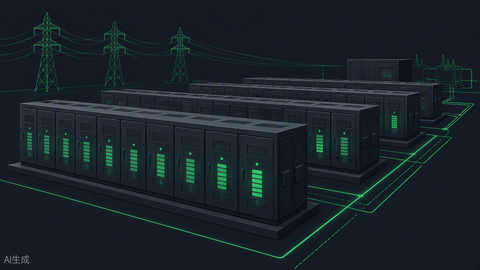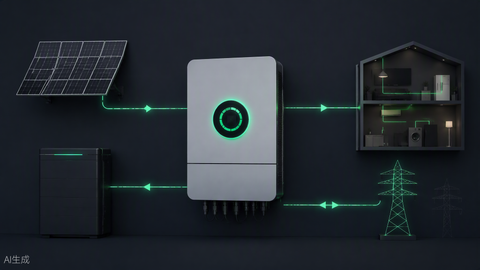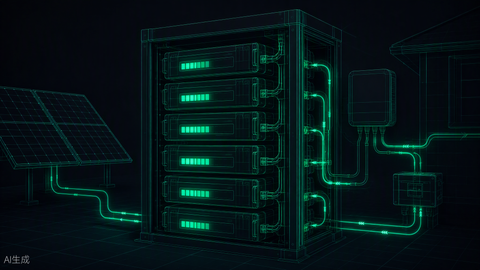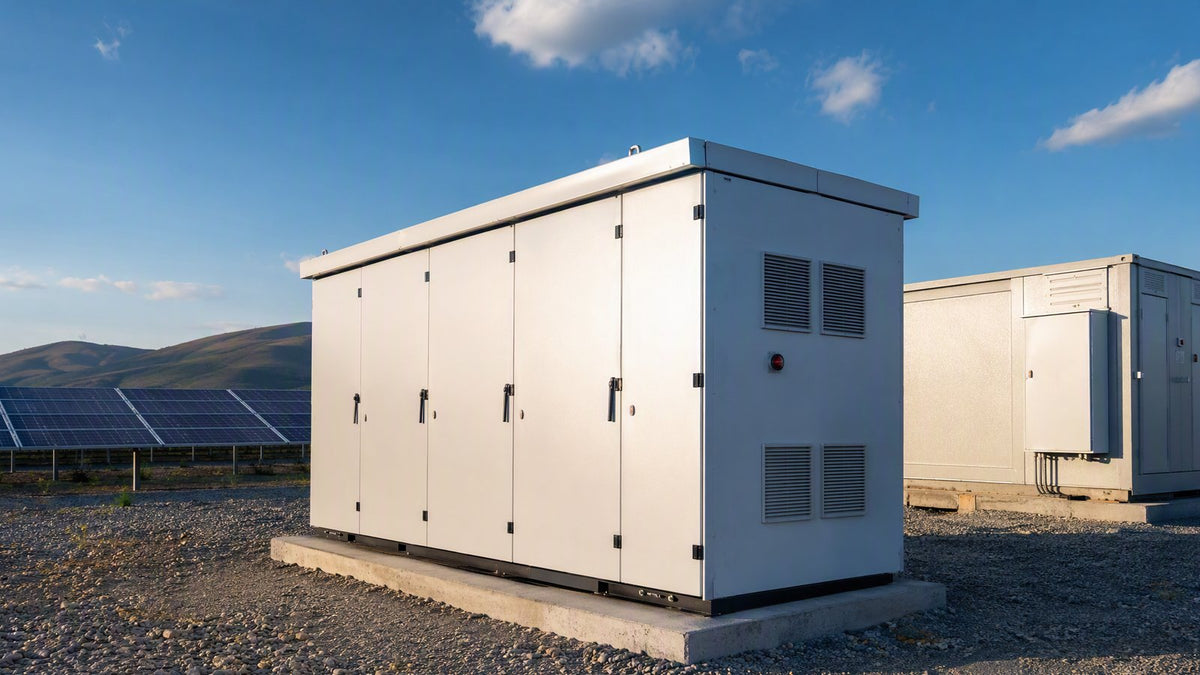
As renewable energy adoption accelerates across commercial and industrial sectors, the need for reliable, high-capacity energy storage systems (ESS) has never been greater. The ATESS PCS500-US-480 represents the cutting edge of power conversion technology—a 500kW battery inverter engineered specifically for the North American market that delivers exceptional efficiency, scalability, and grid compatibility.
This comprehensive guide explores everything you need to know about integrating this powerful inverter into your energy storage infrastructure—from technical specifications and key features to real-world applications and system integration strategies.
In This Guide:
- What Is the ATESS PCS500-US-480 Battery Inverter?
- Key Features and Technical Advantages
- Complete Technical Specifications
- Why Choose the ATESS PCS500-US-480?
- Commercial and Industrial Applications
- System Integration and Smart Grid Compatibility
- Benefits for Commercial and Industrial Users
- Frequently Asked Questions
The ATESS PCS500-US-480 is a high-capacity 500kW battery inverter designed to convert DC (direct current) power stored in battery systems into AC (alternating current) power suitable for industrial loads, commercial facilities, and utility grid interconnection. As part of the ATESS Power Conversion System (PCS) series, this inverter represents the pinnacle of energy storage technology for large-scale applications.
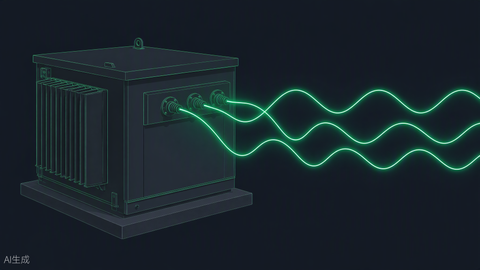
Unlike conventional inverters that require step-up transformers, the PCS500-US-480 features a transformerless design that eliminates bulky, expensive transformer components. This architectural advantage reduces system weight, minimizes power losses, and delivers significant cost savings—critical factors in large-scale energy storage deployments where efficiency directly impacts return on investment.
Engineered specifically for the North American market, the PCS500-US-480 meets stringent UL safety standards and integrates seamlessly with 480V three-phase electrical systems common in commercial and industrial facilities throughout the United States and Canada.
ATESS PCS500-US-480 at a Glance:
- Power Capacity: 500kW — Industrial-grade for large-scale storage
- Design Type: Transformerless — Reduced cost, weight, and losses
- Peak Efficiency: 98.5% — Industry-leading conversion performance
- Target Market: Commercial, Industrial, and Utility-Scale ESS
The ATESS PCS500-US-480 incorporates advanced power electronics and intelligent control systems that set it apart from conventional battery inverters. Understanding these features helps system designers and facility managers select the right equipment for demanding energy storage applications.
Transformerless Architecture
Traditional battery inverters require isolation transformers to step up voltage and provide galvanic isolation between DC and AC systems. The PCS500-US-480's transformerless design eliminates this requirement through advanced power electronics topology, delivering several significant benefits. System weight decreases substantially without heavy transformer cores, installation footprint shrinks, and power conversion efficiency improves by eliminating transformer losses that typically consume 1-2% of throughput power.
Industry-Leading Conversion Efficiency
With a peak conversion efficiency of 98.5%, the PCS500-US-480 ensures that virtually all stored energy reaches its intended load. In large-scale applications processing megawatt-hours daily, even small efficiency gains translate to substantial energy savings and improved project economics. This efficiency rating positions the PCS500-US-480 among the highest-performing inverters in its class.
Modular and Scalable Design
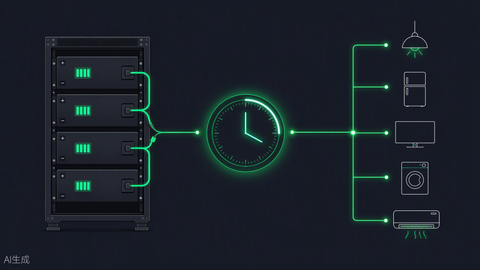
Energy storage requirements evolve as businesses grow and energy markets change. The PCS500-US-480's modular architecture allows multiple units to operate in parallel, enabling system capacity to scale from 500kW to multi-megawatt installations without replacing core infrastructure. This scalability protects initial investments while providing flexibility to expand as needs dictate.
Broad Battery Compatibility
The inverter supports both lithium-ion and lead-acid battery technologies, giving system designers flexibility to select the optimal chemistry for each application. Lithium-ion batteries offer higher energy density and longer cycle life for demanding daily cycling applications, while lead-acid options provide cost-effective solutions for backup power and less frequent discharge scenarios.
Advanced Thermal Management
Reliable operation across diverse environmental conditions requires sophisticated cooling systems. The PCS500-US-480 employs forced air cooling with intelligent thermal management that maintains optimal operating temperatures from -25°C to +60°C (-13°F to +140°F). This wide temperature range ensures consistent performance in both climate-controlled indoor installations and outdoor deployments.
Pro Tip:
When designing energy storage systems with the PCS500-US-480, plan for future expansion from the outset. Specify switchgear, cabling, and battery room space to accommodate additional inverter units—the modular design makes physical expansion straightforward, but electrical infrastructure is easier to size correctly during initial installation.
The following specifications detail the electrical, mechanical, and environmental parameters of the ATESS PCS500-US-480. These values are essential for system design, facility planning, and ensuring compatibility with existing electrical infrastructure.
| Specification | Value | Notes |
|---|---|---|
| Model Number | PCS500-US-480 | North American variant |
| Rated Power Output | 500 kW | Continuous at rated conditions |
| DC Input Voltage Range | 480V DC | Battery bank nominal voltage |
| AC Output Voltage | 480V AC (3-Phase) | Standard North American industrial |
| Maximum Efficiency | 98.5% | Peak conversion efficiency |
| Operating Temperature | -25°C to +60°C | -13°F to +140°F |
| Cooling Method | Forced Air | Intelligent thermal management |
| Battery Compatibility | Li-ion, Lead-acid | Multiple chemistry support |
| Dimensions (L × W × H) | 850 × 900 × 2300 mm | 33.5" × 35.4" × 90.6" |
| Weight | 800 kg | 1,764 lbs |
| Certifications | UL, IEC, CE, ISO | Full North American compliance |
Important:
The PCS500-US-480 weighs 800 kg (1,764 lbs). Ensure that floor loading capacity, rigging equipment, and access pathways can accommodate this weight during installation. Consult with structural engineers when installing in existing buildings or on rooftops.
Selecting a battery inverter for large-scale energy storage requires careful evaluation of efficiency, reliability, total cost of ownership, and long-term support. The PCS500-US-480 excels across all these criteria, making it the preferred choice for demanding commercial and industrial applications.
Superior Power Conversion Efficiency
Every percentage point of efficiency matters in energy storage economics. The PCS500-US-480's 98.5% conversion efficiency means that for every 1,000 kWh stored, approximately 985 kWh reaches the load. Compare this to older inverter designs operating at 94-96% efficiency, and the energy savings become substantial—potentially tens of thousands of dollars annually in large installations cycling daily.
Reduced Capital and Operating Costs
The transformerless architecture delivers immediate cost benefits. Without heavy isolation transformers, the PCS500-US-480 costs less to purchase, requires less structural support, and occupies a smaller footprint. Operating costs decrease as well: higher efficiency means lower electricity consumption for the same energy throughput, and fewer components translate to reduced maintenance requirements.
Future-Proof Scalability
Energy storage needs rarely remain static. The PCS500-US-480's modular design allows capacity expansion through parallel operation of multiple units. A facility might begin with a single 500kW inverter and scale to 2MW or beyond as renewable generation increases or load requirements grow—all without replacing the original equipment.
| Feature | PCS500-US-480 | Traditional Inverter |
|---|---|---|
| Conversion Efficiency | 98.5% | 94-96% |
| Transformer Required | No | Yes |
| Relative System Weight | Lower | Higher |
| Installation Footprint | Compact | Larger |
| Scalability | Modular parallel operation | Limited |
| Total Cost of Ownership | ✓ Lower | Higher |
Flexible Battery Chemistry Support
Different applications demand different battery technologies. The PCS500-US-480 accommodates both lithium-ion and lead-acid batteries, enabling system designers to select the optimal chemistry based on cycle requirements, space constraints, budget considerations, and performance priorities. This flexibility also allows for battery technology upgrades over the system's lifetime without inverter replacement.
The ATESS PCS500-US-480 serves diverse energy storage applications across commercial, industrial, and utility sectors. Its combination of high power capacity, efficiency, and reliability makes it suitable for the most demanding deployments.
Commercial Solar-Plus-Storage Systems
Commercial facilities pairing solar generation with battery storage achieve significant energy cost reductions. The PCS500-US-480 enables businesses to store excess solar production during midday hours and discharge that energy during expensive peak demand periods. This peak shaving strategy reduces demand charges—often the largest component of commercial electricity bills—while maximizing the value of on-site solar generation.
Retail centers, office buildings, hospitals, and universities benefit from solar-plus-storage configurations that provide both economic returns and enhanced energy resilience.
Industrial Backup Power and Microgrids
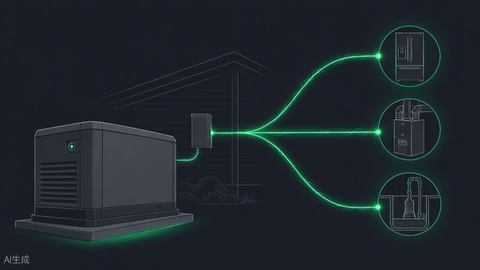
Manufacturing facilities, data centers, warehouses, and other industrial operations cannot tolerate power interruptions. The PCS500-US-480 provides reliable backup power that activates instantly during grid outages, ensuring continuous operations and protecting sensitive equipment and processes.
Beyond backup power, industrial microgrids incorporating the PCS500-US-480 can operate independently of the utility grid when necessary, providing energy security in regions with unreliable grid infrastructure or during planned maintenance events.
| Application | Primary Use Cases |
|---|---|
| Commercial Buildings | Peak shaving, demand charge reduction, backup power |
| Manufacturing Plants | Process continuity, power quality, microgrid operation |
| Data Centers | UPS integration, grid stabilization, renewable integration |
| Healthcare Facilities | Critical backup power, demand management |
| Utility-Scale Projects | Grid services, renewable firming, frequency regulation |
Utility-Scale Energy Storage
As renewable energy penetration increases, utility companies require large-scale storage to balance supply and demand across the grid. The PCS500-US-480 is ideally suited for utility-scale projects, where multiple units operate in parallel to create multi-megawatt storage systems capable of absorbing excess renewable generation and dispatching power during high-demand periods.
Grid services including frequency regulation, voltage support, and spinning reserve represent additional revenue opportunities for utility-scale storage systems built around the PCS500-US-480.
Modern energy storage systems must communicate seamlessly with building management systems, utility SCADA networks, and energy management platforms. The PCS500-US-480 incorporates comprehensive communication capabilities that enable sophisticated monitoring, control, and grid integration.
Advanced Communication Protocols
The PCS500-US-480 supports industry-standard communication protocols enabling integration with virtually any monitoring and control infrastructure. Operators can access real-time performance data, historical trending, alarm management, and remote control through SCADA systems, building management systems (BMS), or dedicated energy management software.
This connectivity provides visibility into system performance, enables predictive maintenance strategies, and allows operators to optimize dispatch schedules based on electricity prices, demand patterns, and renewable generation forecasts.
Bi-Directional Power Flow
Unlike simple backup power systems that only discharge batteries, the PCS500-US-480 supports bi-directional power flow—both charging batteries from the grid or renewable sources and discharging stored energy back to loads or the grid. This capability enables participation in grid services markets, demand response programs, and sophisticated energy arbitrage strategies.
Smart Grid Integration
The inverter's grid-following and grid-forming capabilities allow seamless integration with smart grid infrastructure. Advanced grid support functions including reactive power control, voltage regulation, and frequency response ensure that the PCS500-US-480 operates as a beneficial grid asset rather than simply a load or generation source.
Pro Tip:
When specifying energy management systems for PCS500-US-480 installations, prioritize platforms with proven ATESS integration. Pre-built drivers and tested communication profiles significantly reduce commissioning time and ensure reliable data exchange from day one.
Deploying the ATESS PCS500-US-480 delivers tangible financial, operational, and strategic benefits for commercial and industrial energy users. Understanding these advantages helps justify investment and set appropriate expectations for system performance.
Significant Cost Savings
Energy storage systems built around the PCS500-US-480 reduce electricity costs through multiple mechanisms. Peak shaving reduces expensive demand charges that can constitute 30-50% of commercial electricity bills. Energy arbitrage captures value by charging during low-price periods and discharging when prices peak. Reduced renewable curtailment ensures that every kilowatt-hour of on-site solar or wind generation delivers value rather than being wasted.
The transformerless design and high efficiency further reduce operating costs by minimizing energy losses and maintenance requirements compared to traditional inverter technologies.
Enhanced Energy Security
Grid reliability varies significantly by region and season. The PCS500-US-480 provides instant backup power during outages, protecting critical operations from costly interruptions. For facilities where downtime carries severe financial or safety consequences—manufacturing lines, healthcare facilities, data centers—this reliability alone can justify system investment.
Scalability and Investment Protection
Energy markets and business requirements evolve over time. The PCS500-US-480's modular architecture ensures that today's investment remains valuable as needs change. Expand capacity by adding inverter units without replacing existing equipment. Upgrade battery technology as costs decline and performance improves without inverter modifications. This future-proof design protects capital investment over the system's multi-decade operational life.
ROI Calculation Example — 500kW Commercial Installation:
Annual Demand Charge Savings: $45,000 - $75,000 (varies by utility rate structure) Energy Arbitrage Value: $15,000 - $30,000 (depends on price differentials) Efficiency Gains vs. 95% Inverter: $8,000 - $12,000 annually (at high utilization) Potential Grid Services Revenue: $10,000 - $25,000 (market dependent)
Combined annual value of $78,000 - $142,000 demonstrates rapid payback potential for properly designed systems.
Sustainability and Corporate Responsibility
Energy storage enables higher renewable energy utilization, reducing carbon emissions and supporting corporate sustainability goals. By storing excess renewable generation for later use rather than curtailing production or exporting at unfavorable rates, the PCS500-US-480 maximizes the environmental value of clean energy investments.
What is the efficiency rating of the ATESS PCS500-US-480 battery inverter?
The ATESS PCS500-US-480 achieves a maximum conversion efficiency of 98.5%, making it one of the highest-efficiency battery inverters available for commercial and industrial applications. This exceptional efficiency minimizes energy losses during DC to AC conversion, maximizing the usable energy from your battery storage system and improving overall project economics.
What battery types are compatible with the PCS500-US-480?
The PCS500-US-480 supports both lithium-ion and lead-acid battery technologies, providing flexibility to select the optimal chemistry for your application. Lithium-ion batteries offer higher energy density and longer cycle life for demanding daily cycling applications, while lead-acid options provide cost-effective solutions for backup power scenarios with less frequent discharge requirements.
Can multiple PCS500-US-480 inverters be operated in parallel?
Yes, the PCS500-US-480 features a modular design that allows multiple units to operate in parallel for scalable system capacity. This enables installations to grow from 500kW to multi-megawatt configurations by adding additional inverter units without replacing existing equipment. The parallel operation capability protects your initial investment while providing flexibility to expand as energy storage needs increase.
What certifications does the ATESS PCS500-US-480 hold?
The ATESS PCS500-US-480 holds UL certification for the North American market, along with IEC, CE, and ISO certifications. These certifications ensure the inverter meets stringent safety, performance, and quality standards required for commercial and industrial installations. The UL listing is particularly important for utility interconnection approval and insurance requirements in the United States and Canada.
What is the operating temperature range for the PCS500-US-480?
The PCS500-US-480 operates across a wide temperature range from -25°C to +60°C (-13°F to +140°F), enabling deployment in diverse climatic conditions from cold northern regions to hot southern installations. The forced air cooling system with intelligent thermal management maintains optimal internal temperatures throughout this range, ensuring consistent performance and reliability regardless of ambient conditions.
The ATESS PCS500-US-480 represents the state of the art in commercial and industrial battery inverter technology. Its combination of 98.5% efficiency, transformerless architecture, modular scalability, and comprehensive grid integration capabilities makes it the ideal foundation for energy storage systems designed to deliver decades of reliable service.
Whether your application involves commercial solar-plus-storage, industrial backup power, microgrid development, or utility-scale renewable integration, the PCS500-US-480 provides the performance, flexibility, and reliability that demanding projects require. As the energy landscape continues evolving toward distributed renewable resources and intelligent grid management, investing in proven technology like the PCS500-US-480 positions your organization for long-term success.
Related Products


Ready to Design Your Energy Storage System?
Our commercial energy storage team provides comprehensive support from initial system design through commissioning and ongoing service. Contact us to discuss your application requirements and receive a customized proposal featuring the ATESS PCS500-US-480.
About PES Supply: We specialize in commercial and industrial electrical equipment, including advanced energy storage solutions for businesses transitioning to renewable energy. Our team provides expert consultation, system design support, and ongoing technical assistance for projects ranging from commercial solar-plus-storage to utility-scale energy storage installations. As an authorized ATESS distributor, we offer competitive pricing and comprehensive support for the complete PCS product line.
Related Resources:
- Best Solar Panels 2026 — Buyer's Guide
- EG4 vs Tesla Powerwall
- Qcells vs Trina vs JA
- Solar Inverter Buyer's Guide
- Solar Battery Buyer's Guide
- 5kW Solar Kit
- 10kW Solar + Battery Kit
- Off-Grid Cabin Kit
- EG4 Batteries
- Qcells Solar Panels
- Trina Solar
- JA Solar
- REC Solar
- Mission Solar
- Sol-Ark Inverters
- SolarEdge Inverters
- Generac PWRcell
Calculate how much storage you need with our battery sizing calculator.
Check solar incentives available in your state.
Use our free solar system calculator to size your array.
Check out our Solar Panel Comparison Tool. Check out our Inverter Sizing Calculator.
Calculate your solar payback and 25-year savings with our Solar ROI Calculator. Follow our complete DIY solar installation guide for step-by-step instructions. Keep your system running at peak performance with our Solar Maintenance Guide.
Related Resources
- Solar System Calculator
- Battery Sizing Calculator
- Solar Panel Comparison Tool
- Inverter Sizing Calculator
- Solar ROI Calculator
- Solar Installation Guide
- Solar Maintenance Guide
- Solar Permitting Guide
- Battery Installation Guide
- NEC Code Compliance Guide
- Solar Panel Mounting Guide
- Grounding & Bonding Guide
- Solar Incentives by State
- Pro Account — Wholesale Pricing
- PowerLink Network — Contractor Program
Field notes from our C&I design team
- I've walked enough 480V switchgear rooms to know what a transformerless 500kW PCS saves in practice: it is not just the transformer line item, it is the pad, the rigging, the clearance working space, and a week of schedule that never has to happen.
- On a recent demand-charge project, the customer's 15-minute peak was set by a compressor bank that cycled twice a day. We sized discharge windows around that signature and the PCS paid for its own software tier in the first summer.
- The spec sheet number I check first on any battery inverter is not efficiency — it's the overload curve. Motor starts and elevator banks don't care about your nameplate; they care about what happens in the first 200 milliseconds.
At 500kW continuous into a 480V three-phase service, the PCS500-US-480 is a service-equipment-scale load and source. The arithmetic below follows NEC 690.8's continuous-duty convention (the 125% factor that energy-storage outputs inherit through Article 705 and 706 practice) and NEC 240.6(B) standard ratings. Final conductor and breaker selection belongs to the engineer of record — this table shows the shape of the answer so procurement can plan switchgear and conduit early.
| Step | Reference | Calculation | Result |
|---|---|---|---|
| Full-load AC current | P = V × I × √3 | 500,000W ÷ (480V × 1.732) | 601.4A |
| Continuous-duty adjustment | NEC 690.8(B) convention / 705.28 | 601.4A × 1.25 | 751.7A |
| Overcurrent device | NEC 240.6(B) | Next standard size | 800A frame, 3-pole |
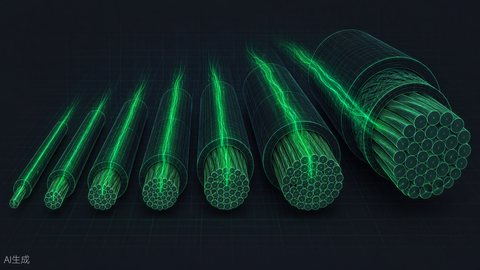
| Conductor strategy (75°C copper) | NEC 310.16 | Parallel sets required at this ampacity — e.g., two 500 kcmil Cu per phase (380A × 2 = 760A) | 2 × 500 kcmil per phase; verify against final design and derating |
| Grounding | NEC 250.122 | EGC sized to 800A OCPD | 2/0 AWG Cu minimum |
| Paralleled 2 × PCS500 (1MW block) | Same method | 1,202.8A × 1.25 = 1,503.6A | 1,600A service-class gear — plan utility service upgrade early |
Two planning notes from projects we've supplied. First, the parallel-set decision drives conduit count and pull schedule — ordering switchgear before this is settled is the classic C&I storage mistake. Second, if the PCS feeds a separately derived system or pairs with the transformer-equipped sibling products (such as the PCS250-US-480 with integrated transformer), the grounding and neutral strategy changes; confirm one-line details with ATESS application engineering and your PE before release. Our NEC compliance guide covers the inspection-side expectations.
What battery types work with the PCS500-US-480?
The unit supports both lithium-ion and lead-acid battery banks at a 480V DC nominal bus, with BMS communication over standard interfaces. Lithium iron phosphate is the common pairing for daily-cycling demand-charge work; lead-acid remains viable for standby-centric designs. Confirm the specific battery's communication protocol with ATESS before ordering.
What does transformerless design actually save?
Eliminating the external isolation transformer removes its purchase cost, pad and rigging requirements, clearance working space, and roughly 1–2% of throughput energy lost in the transformer itself. On a 500kW system cycling daily, that efficiency slice alone is meaningful annual energy. Systems that require galvanic isolation should use the transformer-equipped variants in the ATESS US line instead.
Can multiple PCS500 units run in parallel?
Yes — the PCS series supports modular parallel operation, scaling from a single 500kW unit to multi-megawatt blocks. Parallel systems share a common AC bus and coordinate dispatch through the plant controller. Plan the interconnection for the final buildout ampacity, not the day-one unit count.
What efficiency should I expect in real operation?
Peak conversion efficiency is rated at 98.5%. Round-trip system efficiency is lower once battery round-trip losses, auxiliary loads, and HVAC are included — well-designed lithium systems typically deliver 85–90% AC-to-AC round trip. Model dispatch economics on the round-trip figure, not the PCS peak.
Is the PCS500-US-480 certified for US grid interconnection?
The US variant is built for North American 480V three-phase systems with UL certification to applicable safety and grid-interconnection standards. For the specific listing set your utility requires (UL 1741 SB / IEEE 1547 family), verify the certification documents with PES Supply or ATESS before submittal.
How long does procurement and delivery take?
PES Supply processes orders within 72 hours, with delivery typically in 5 to 7 business days on stocked items; project-scale quantities ship on confirmed freight schedules. Every unit carries full manufacturer warranty support through us as an authorized ATESS channel.
PES Supply carries 80,000+ products from 300+ manufacturers. One PO, one invoice, every trade covered.
Need help sizing? Our team can calculate loads, select equipment, and source everything from one PO.
Call (502) 790-0600
Related PES Supply guides
- The Complete Guide to the ATESS HPS100-US-220D 100kW Hybrid Inverter With Integrated Transformer
- SMA Solar Sunny Highpower Peak3 150kV String Inverter (SHP 150-US-20) | High-Efficiency Power Solution for Solar Projects
- 7 kW Ground-Mounted Grid-Tie Solar System with String Inverter – High-Efficiency, Cost-Effective Solar Solution