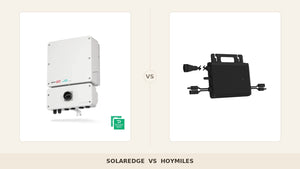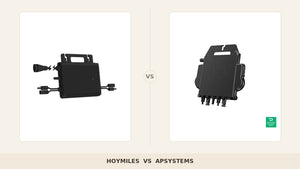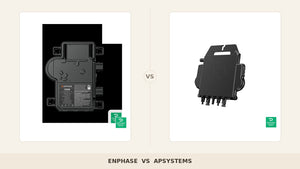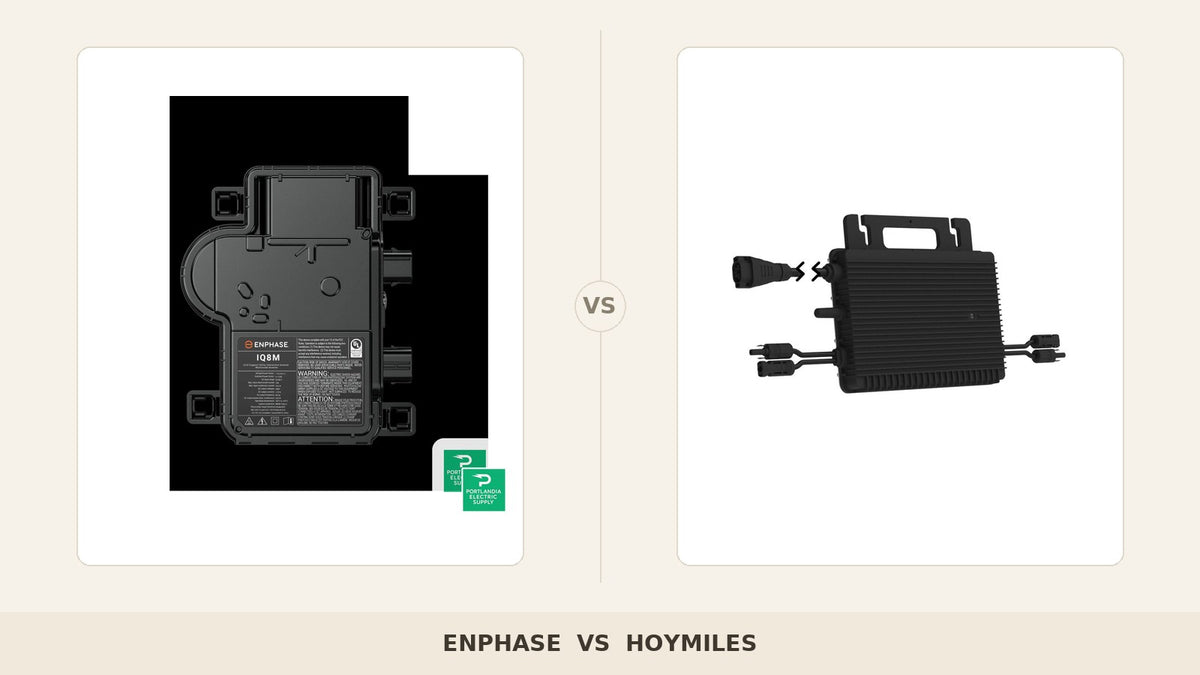
Enphase and Hoymiles both put AC power at the module, but they are aimed at different jobs. Enphase IQ8 is the premium one-micro-per-panel platform: 25-year warranty, no gateway economics surprises, sunlight-backup capability, and the deepest installer ecosystem in North America. Hoymiles HMS 4-in-1 is the value play: one unit carries four panels with independent MPPT each, a 25-year warranty of its own, and a hardware cost per module that typically lands well below Enphase. If the customer buys on lifetime risk and outage resilience, Enphase wins. If the BOM is king and the roof is simple, Hoymiles is the honest recommendation.
Spec Sheet — Enphase vs Hoymiles at a Glance
- Architecture: AC microinverter per module — DC-to-AC on the roof, no central inve… · AC microinverter — 4-in-1 design, four modules per unit with indepe…
- Current Lineup: IQ8 / IQ8+ / IQ8M / IQ8A / IQ8HC residential; IQ9 for high-power co… · HMS-1600/1800/2000-4T-NA (1,600–2,000 VA peak, 400–670W+ modules)
- Efficiency (CEC class): ~97% microinverter efficiency (CEC-weighted class) · Up to 96.7% CEC efficiency; 99.8% MPPT efficiency
- Rapid Shutdown (NEC 690.12): Inherent NEC 690.12 compliance — no DC conductors leave the module · NEC 2017/2020 690.12 compliant (PV rapid shutdown equipment)
- Warranty: 25 years microinverter; 15 years IQ Battery · 25 years (NA-channel HMS-4T series)
The Shared Platform: What Both Have in Common
Both platforms convert DC to AC at the module, which means no high-voltage DC home run, inherent NEC 690.12 rapid-shutdown compliance, per-module MPPT that isolates shade and soiling losses, and per-module monitoring. Both carry IP67-class outdoor enclosures, both are listed to UL 1741 SB for grid-interactive smart-inverter functions, and both now ship with 25-year warranties on the rooftop hardware. Either system answers a customer asking for "safe, monitored, module-level" — the fight is over architecture granularity, ecosystem depth, and price.
Side-by-Side Comparison Table
| Specification | Enphase | Hoymiles |
|---|---|---|
| Architecture | AC microinverter per module — DC-to-AC on the roof, no central inverter | AC microinverter — 4-in-1 design, four modules per unit with independent MPPT each |
| Current Lineup | IQ8 / IQ8+ / IQ8M / IQ8A / IQ8HC residential; IQ9 for high-power commercial modules (IQ7 is EOL) | HMS-1600/1800/2000-4T-NA (1,600–2,000 VA peak, 400–670W+ modules) |
| Efficiency (CEC class) | ~97% microinverter efficiency (CEC-weighted class) | Up to 96.7% CEC efficiency; 99.8% MPPT efficiency |
| Rapid Shutdown (NEC 690.12) | Inherent NEC 690.12 compliance — no DC conductors leave the module | NEC 2017/2020 690.12 compliant (PV rapid shutdown equipment) |
| Warranty | 25 years microinverter; 15 years IQ Battery | 25 years (NA-channel HMS-4T series) |
| Monitoring | Enlighten — per-panel, requires Envoy/IQ Gateway | S-Miles Cloud via DTU gateway (Sub-1G wireless) — gateway required |
| Grid-Down Operation (No Battery) | Sunlight Backup with IQ System Controller — daylight operation without a battery | No — grid-following microinverter, requires grid or compatible storage system |
| Battery Integration | AC-coupled (IQ Battery 5P/10C; most AC-coupled third-party storage) | AC-coupled third-party storage compatible |
| Single Point of Failure | None — one failed micro costs one panel | One failed 4-in-1 micro costs up to four panels (vs one for 1-in-1 designs) |
| Typical Equipment Cost | Baseline premium — highest $/W of the MLPE field | Value tier — typically well below Enphase $/W on residential BOM |
Granularity: One Panel per Micro vs Four
The defining hardware difference is module granularity. An Enphase IQ8 serves exactly one panel; a Hoymiles HMS-2000-4T serves four. Four-in-one means fewer devices on the roof, fewer trunk-cable drops, faster installs, and a lower hardware bill — typically the single biggest line-item saving on a Hoymiles BOM. The trade: a failed 4-in-1 unit takes four panels offline instead of one, and a single replacement unit costs more than a single IQ8. Failure rates on modern micros are low enough that this is an actuarial footnote for most fleets, but on a 25-year warranty horizon it is a real, priceable difference.
Ecosystem, Monitoring, and the Gateway Question
Enphase requires the Envoy/IQ Gateway and delivers the most polished per-panel monitoring in the industry — plus Sunlight Backup, the ability to run daylight loads during a grid outage with no battery when paired with the IQ System Controller. Hoymiles requires its DTU gateway and the S-Miles Cloud platform: capable and improving, but with less installer fleet tooling, fewer third-party integrations, and no battery-free backup mode. For contractors who service what they sell, Enphase's diagnostic depth — see every panel, RMA from the office — is part of what the premium buys.
Cost Per Watt: The Honest Math
On a typical residential BOM, Hoymiles hardware usually lands meaningfully below Enphase per module — the gap that makes Hoymiles the default answer on price-driven bids and light-commercial jobs with hundreds of modules. Enphase's counter is total cost of ownership: 25-year coverage backed by the largest service organization in microinverters, one-panel failure blast radius, and the only mainstream battery-free outage operation in the category. Quote both into the same job: on clean, price-sensitive roofs Hoymiles usually wins the signature; on resilience-driven or monitoring-driven sales, Enphase does.
Quoting this job? We stock Enphase products and Hoymiles products at contractor pricing — or get a system quote with both options priced side by side.
Choose Enphase If / Choose Hoymiles If
Choose Enphase if: Choose Enphase IQ8 if: the customer wants battery-free outage operation (Sunlight Backup); per-panel diagnostics and fleet tooling matter; one-panel failure isolation is worth a premium; the job is AC-coupled storage now or later; or the sale is won on 25-year warranty depth with the strongest service network behind it.
Choose Hoymiles if: Choose Hoymiles HMS if: upfront $/module decides the bid; the roof is simple and unshaded (or shade is handled per-module anyway); fewer rooftop devices and faster install time matter; or the job is light-commercial scale where 4-in-1 economics compound across hundreds of modules.
Field takeaway: Both are legitimate 25-year microinverter platforms. Enphase sells granularity, ecosystem, and outage resilience at a premium; Hoymiles sells 4-in-1 economics with the same warranty length. Price both, and let the customer's priorities — not the rep's — make the call.
Frequently Asked Questions
Are Hoymiles microinverters as reliable as Enphase?
Hoymiles carries the same 25-year warranty length on its NA-channel HMS series and an IP67/NEMA 6 enclosure, which signals manufacturer confidence. Enphase has the longer North American field track record and the largest service organization. Both are credible; Enphase has more history behind the promise.
Do both Enphase and Hoymiles meet NEC 690.12 rapid shutdown?
Yes. Both convert to AC at the module, so no energized DC conductors leave the roof — compliance is inherent to the architecture in both cases.
Can Hoymiles run my house during a blackout like Enphase Sunlight Backup?
No. Hoymiles HMS microinverters are grid-following; with the grid down they produce nothing without a battery system. Enphase IQ8 paired with the IQ System Controller supports Sunlight Backup — daylight operation without storage.
How many panels does one Hoymiles micro handle vs Enphase?
A Hoymiles HMS-4T handles up to four modules with independent MPPT per module. An Enphase IQ8 handles one. Both track each panel independently; the difference is device count and failure blast radius.
Which is cheaper, Enphase or Hoymiles?
Hoymiles, typically by a meaningful margin per module on residential BOMs, because one 4-in-1 unit replaces four single micros. Enphase closes part of the gap on lifetime cost when you price in failure isolation, monitoring, and battery-free backup capability.
Sources & Standards
- Enphase IQ8/IQ9 datasheets (enphase.com)
- Hoymiles HMS-2000-4T-NA datasheet (hoymiles.com)
- NEC Article 690.12 (nfpa.org)
Ready to price your project? Get a free system quote from PES Supply — both options, contractor pricing.
Related Resources: