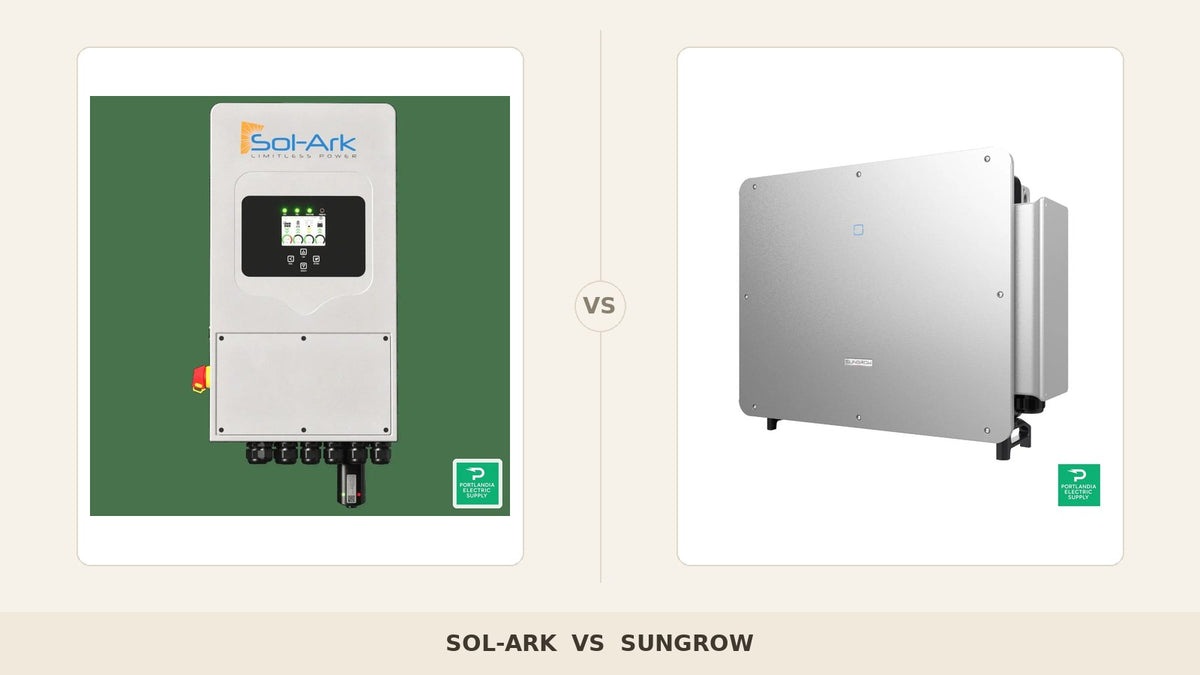
Sol-Ark and Sungrow both sell 15 kW-class hybrid inverters, and on nameplate power they look interchangeable. They are not. Sol-Ark 15K-2P is a US-native, battery-agnostic whole-home platform: split-phase 120/240V, 200A grid pass-through, any 48V battery chemistry with closed-loop comms to a broad certified list, and UL 9540 pairings your AHJ has already permitted. Sungrow is the global Tier-1 value giant: excellent hardware, aggressive pricing, a mature iSolarCloud fleet platform — but high-voltage batteries locked to Sungrow's own SBR/SBH series, a 3-phase-centric lineup, and a thinner US residential channel. For American whole-home backup with battery choice, Sol-Ark is the purpose-built tool. For cost-driven 3-phase or international-style installs inside Sungrow's ecosystem, Sungrow is compelling.
Spec Sheet — Sol-Ark vs Sungrow at a Glance
- Topology: All-in-one 48V hybrid: inverter + charge controllers + transfer + b… · Global Tier-1 hybrid/string inverter platform (3-phase SH5-15T clas…
- Continuous AC Output: 15K-2P: 15 kW AC continuous (12 kW from batteries); 12K class: ~9 kW · SH15T: 15 kW 3-phase class; residential singles 3.6–10 kW class
- Max PV Input: 15K: 19.5 kW class PV, 3 MPPT (12K: 2 MPPT) · Up to 2x nominal oversizing (SH15T: ~30 kW max PV input)
- Grid Pass-Through: 200A grid pass-through — true whole-home backup without a critical-… · Not published for US split-phase class — SH-T is 3-phase-centric; v…
- Backup Transfer Time: ~5 ms automatic transfer · <10 ms backup switchover class (SH-T series)
The Shared Platform: What Both Have in Common
Both are all-in-one hybrid inverters that manage solar, batteries, grid, and generator inputs with fast backup transfer (<10 ms class), both support grid-tie sell-back and time-of-use optimization, both carry outdoor ratings (NEMA 4X vs IP65), and both monitor through mature cloud platforms. Either can be the electrical heart of a serious residential or light-commercial energy system.
Side-by-Side Comparison Table
| Specification | Sol-Ark | Sungrow |
|---|---|---|
| Topology | All-in-one 48V hybrid: inverter + charge controllers + transfer + battery management in one box | Global Tier-1 hybrid/string inverter platform (3-phase SH5-15T class; single-phase SH-RS class) |
| Continuous AC Output | 15K-2P: 15 kW AC continuous (12 kW from batteries); 12K class: ~9 kW | SH15T: 15 kW 3-phase class; residential singles 3.6–10 kW class |
| Max PV Input | 15K: 19.5 kW class PV, 3 MPPT (12K: 2 MPPT) | Up to 2x nominal oversizing (SH15T: ~30 kW max PV input) |
| Grid Pass-Through | 200A grid pass-through — true whole-home backup without a critical-loads panel | Not published for US split-phase class — SH-T is 3-phase-centric; verify per model |
| Backup Transfer Time | ~5 ms automatic transfer | <10 ms backup switchover class (SH-T series) |
| Battery Voltage / Chemistry | 48V nominal — LFP, lead-acid, AGM compatible; 2 battery ports, 275A charger | High-voltage LFP only — locked to Sungrow SBR/SBH battery series |
| Battery Compatibility | CAN/RS485 closed-loop with broad certified battery partner list | Native closed-loop with Sungrow batteries only |
| Monitoring Platform | mySol-Ark / PowerView — mature installer fleet tools (AWS US-hosted) | iSolarCloud — mature global fleet platform |
| UL 9540 ESS Pairings | Multiple UL 9540 listed ESS pairings with major batteries | Limited US residential pairings vs global list — verify with AHJ |
| Warranty | 10 years class (manufacturer standard) | 10 years standard (extendable to 20 in many markets) |
| Typical Contractor Price | 15K: ~$6,700–8,500 contractor class | Value-to-mid tier — typically below Sol-Ark on comparable nameplate power |
Battery Freedom vs Battery Lock-In
This is the structural difference. Sol-Ark runs a 48V battery bus that accepts LFP, lead-acid, and AGM from a broad certified partner list — EG4, Fortress, SimpliPhi, Discover and more — with closed-loop CAN/RS485 communication, and batteries can be swapped or expanded later without touching the inverter. Sungrow's hybrid platform is high-voltage and accepts only Sungrow SBR/SBH battery towers. Sungrow's lock-in buys tight integration and one-vendor accountability; Sol-Ark's openness buys price competition between battery vendors, upgrade paths as battery tech moves, and no single-vendor supply risk on the most failure-prone component of the system. Batteries wear out faster than inverters — Sol-Ark's design assumes it.
The US Install Reality: Split-Phase, Pass-Through, and Permits
American homes are split-phase 120/240V with 200A services. Sol-Ark was built exactly for this: native split-phase output, a 200A grid pass-through that backs up the whole panel without a critical-loads subpanel, and a permitting paper trail (UL 1741 SB, UL 9540 pairings) that US inspectors recognize on sight. Sungrow's global lineup is 3-phase-centric — superb for international and commercial work — and its US residential footprint, distribution depth, and inspector familiarity are thinner. For a US contractor, Sol-Ark's install-and-inspection friction is measurably lower; Sungrow's hardware quality is real but its natural habitat stateside is utility and C&I scale.
Price and Value
Sungrow typically undercuts Sol-Ark on comparable nameplate power — sometimes significantly — and iSolarCloud is a genuinely mature fleet platform. If the job is 3-phase, the customer accepts the Sungrow battery ecosystem, and local support exists, the value case is strong. Sol-Ark's premium buys battery choice, split-phase native design, 200A pass-through, US-based support, and the largest third-party battery compatibility list in residential hybrids. On total installed cost for a US whole-home job, Sol-Ark often wins even at a hardware premium, because the design avoids the subpanel rework and battery lock-in costs Sungrow can impose.
Quoting this job? We stock Sol-Ark products and Sungrow products at contractor pricing — or get a system quote with both options priced side by side.
Choose Sol-Ark If / Choose Sungrow If
Choose Sol-Ark if: Choose Sol-Ark if: the job is US split-phase whole-home backup; you want battery vendor choice (now and at replacement time); 200A pass-through without a critical-loads panel matters; UL 9540 pairings and inspector familiarity count; or generator integration is in the design.
Choose Sungrow if: Choose Sungrow if: the project is 3-phase or commercial-scale; the customer is comfortable in a single-vendor battery ecosystem; upfront hardware cost is decisive; or you are building inside Sungrow's global platform with local distribution support behind it.
Field takeaway: Sol-Ark sells openness: any 48V battery, native US split-phase, 200A whole-home pass-through. Sungrow sells integrated value: locked batteries, 3-phase strength, global scale. For American whole-home residential, Sol-Ark is the purpose-built answer; Sungrow is the price challenger with ecosystem strings attached.
Frequently Asked Questions
Can Sungrow hybrid inverters use non-Sungrow batteries?
No. Sungrow's residential hybrid platform (SH series) works only with Sungrow's own high-voltage SBR/SBH battery series. Sol-Ark accepts a broad certified list of 48V batteries from multiple vendors with closed-loop communication.
Is Sungrow a good choice for US homes?
The hardware is strong and well-priced, but the lineup is 3-phase-centric, US residential distribution is thinner, and battery lock-in limits future flexibility. It shines in US utility/C&I; for split-phase whole-home residential, US-native platforms like Sol-Ark fit the permitting and service reality better.
Which has better whole-home backup capability?
Sol-Ark 15K-2P, for US homes: 200A pass-through backs up the entire panel without a critical-loads subpanel, 15 kW AC continuous, and dedicated generator input. Sungrow's SH-T offers fast backup transfer but is designed around 3-phase services and its own battery ecosystem.
What is the warranty difference?
Sol-Ark carries a 10-year class manufacturer warranty; Sungrow offers 10 years standard with extension to 20 in many markets. Sungrow's longer potential term is offset for US buyers by battery ecosystem lock-in and channel depth.
Do both support generator input?
Sol-Ark has a dedicated GEN port with auto-start and AC-coupling support. Sungrow hybrid support for generators varies by model and market — verify per SKU before designing a generator-coupled system.
Sources & Standards
- Sol-Ark 15K-2P product documentation (sol-ark.com)
- Sungrow SH series documentation (sungrowpower.com)
- UL 9540 / UL 1741 SB standards (ul.com)
Ready to price your project? Get a free system quote from PES Supply — both options, contractor pricing.
Related Resources: