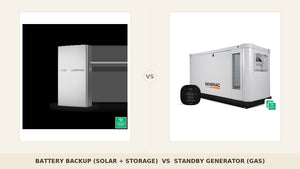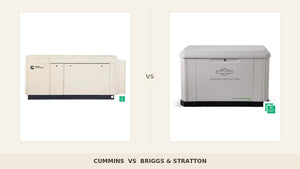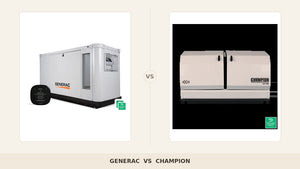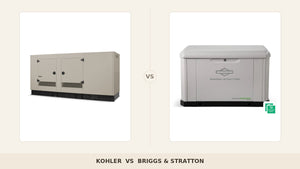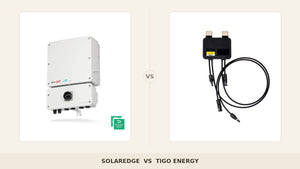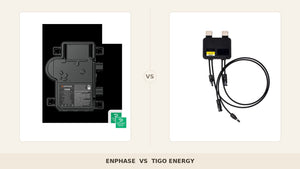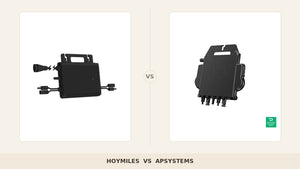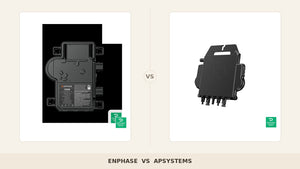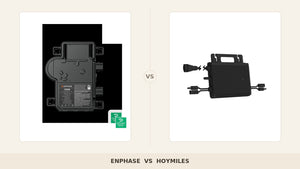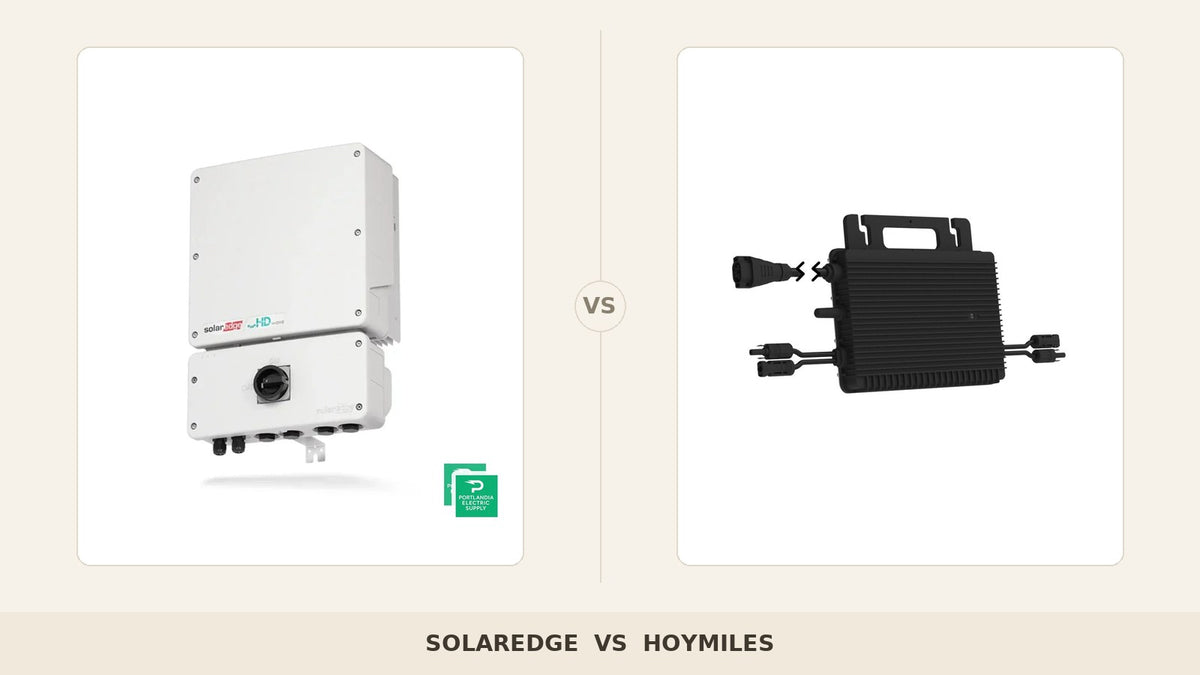
Both platforms chase the same customer: someone who wants module-level performance without Enphase pricing. They get there from opposite directions. SolarEdge keeps conversion centralized — optimizers on the roof, one string inverter on the wall — buying efficiency and cheap serviceability at the price of a single point of failure and a 12-year inverter warranty. Hoymiles distributes conversion — a 4-in-1 micro per four panels — buying no-single-point-of-failure and a 25-year warranty at the price of slightly lower peak efficiency and a thinner monitoring ecosystem. On pure day-one BOM they are often within striking distance; the warranty and failure-domain difference is where the decision actually lives.
Spec Sheet — SolarEdge vs Hoymiles at a Glance
- Architecture: DC optimizer per module + central string inverter (DC-to-DC at the… · AC microinverter — 4-in-1 design, four modules per unit with indepe…
- Current Lineup: P/S-Series optimizers + Home Hub or HD-Wave inverters (3.8–11.4 kW… · HMS-1600/1800/2000-4T-NA (1,600–2,000 VA peak, 400–670W+ modules)
- System Efficiency (class): ~97.5–99% combined (optimizer + string inverter) · Up to 96.7% CEC efficiency; 99.8% MPPT efficiency
- Rapid Shutdown (NEC 690.12): SafeDC — optimizers drop to ~1V per module on shutdown (NEC 690.12) · NEC 2017/2020 690.12 compliant (PV rapid shutdown equipment)
- Warranty: 12 years string inverter (paid extension to 20/25); 25 years optimi… · 25 years (NA-channel HMS-4T series)
The Shared Platform: What Both Have in Common
Both deliver module-level MPPT (so shade and soiling stay isolated), module-level monitoring, and NEC 690.12 rapid-shutdown compliance, at price tiers below the premium microinverter incumbent. Both pair with AC-coupled storage, both are UL 1741 SB listed, and both have real North American distribution. The customer asking for "module-level, monitored, affordable" is choosing between these two more often than any other pair.
Side-by-Side Comparison Table
| Specification | SolarEdge | Hoymiles |
|---|---|---|
| Architecture | DC optimizer per module + central string inverter (DC-to-DC at the panel) | AC microinverter — 4-in-1 design, four modules per unit with independent MPPT each |
| Current Lineup | P/S-Series optimizers + Home Hub or HD-Wave inverters (3.8–11.4 kW residential) | HMS-1600/1800/2000-4T-NA (1,600–2,000 VA peak, 400–670W+ modules) |
| System Efficiency (class) | ~97.5–99% combined (optimizer + string inverter) | Up to 96.7% CEC efficiency; 99.8% MPPT efficiency |
| Rapid Shutdown (NEC 690.12) | SafeDC — optimizers drop to ~1V per module on shutdown (NEC 690.12) | NEC 2017/2020 690.12 compliant (PV rapid shutdown equipment) |
| Warranty | 12 years string inverter (paid extension to 20/25); 25 years optimizers | 25 years (NA-channel HMS-4T series) |
| Monitoring | SolarEdge portal/app — per-panel, built into inverter | S-Miles Cloud via DTU gateway (Sub-1G wireless) — gateway required |
| Grid-Down Operation (No Battery) | No daylight backup — requires battery to operate during an outage | No — grid-following microinverter, requires grid or compatible storage system |
| Battery Integration | DC-coupled (SolarEdge Home Battery) or AC-coupled third party | AC-coupled third-party storage compatible |
| Single Point of Failure | String inverter failure takes the whole array down | One failed 4-in-1 micro costs up to four panels (vs one for 1-in-1 designs) |
| Typical Equipment Cost | ~$0.10–0.20/W below Enphase on typical residential BOM | Value tier — typically well below Enphase $/W on residential BOM |
The Warranty Asymmetry, Again
SolarEdge's 25-year coverage applies to the optimizers — the simple, reliable devices. The string inverter, which does the hard electrical work and fails more often, carries 12 years with paid extensions to 20/25. Hoymiles puts 25 years on the device doing the conversion. On a cost-of-ownership model, quote the SolarEdge inverter warranty extension into the BOM before comparing — it narrows but rarely eliminates Hoymiles' coverage advantage, and it prices honestly the risk each architecture concentrates.
Failure Domains: Four Panels vs the Whole Array
A failed Hoymiles 4-in-1 idles four panels until a swap; a failed SolarEdge string inverter idles everything. SolarEdge's defense is serviceability: the most failure-prone electronics sit at chest height next to the meter, and RMA swaps are fast — but "fast" still means days of zero production. Hoymiles failures are rooftop events, but each costs only a fraction of array output. For landlords, remote sites, and production-guarantee contracts, that difference has a dollar value that belongs in the proposal.
Efficiency and the Big-Roof Case
SolarEdge's combined optimizer-plus-inverter path edges most microinverter architectures on peak conversion efficiency, and on large unshaded arrays — where one central inverter replaces dozens of micros — the efficiency plus hardware math favors SolarEdge most strongly. Hoymiles counters hardest on exactly the jobs where SolarEdge is weakest: price-sensitive residential where 4-in-1 economics undercut even the optimizer BOM, and rooftops where a single point of failure is disqualifying.
Quoting this job? We stock SolarEdge products and Hoymiles products at contractor pricing — or get a system quote with both options priced side by side.
Choose SolarEdge If / Choose Hoymiles If
Choose SolarEdge if: Choose SolarEdge if: the roof is large, clean, and unshaded; peak conversion efficiency matters at scale; you prefer servicing ground-level electronics; you are quoting the extended inverter warranty; or DC-coupled SolarEdge Home Battery is in the design.
Choose Hoymiles if: Choose Hoymiles if: the 25-year warranty on the conversion hardware matters; no single point of failure is a requirement; upfront $/module decides the bid; or the customer wants microinverter architecture without premium-micro pricing.
Field takeaway: SolarEdge sells centralized efficiency with a centralized failure point and a 12-year inverter warranty you should extend; Hoymiles sells distributed conversion with 25-year coverage at value prices. On cost they are neighbors — on risk structure they are opposites.
Frequently Asked Questions
Is Hoymiles cheaper than SolarEdge?
Often, on residential BOMs — the 4-in-1 hardware design is structurally cheap per module. SolarEdge is usually cheaper on large arrays where one inverter replaces dozens of micros. Quote both; the crossover depends on system size.
Which has the better warranty?
Hoymiles on the hardware that matters most: 25 years on the conversion device. SolarEdge covers optimizers for 25 years but the string inverter — the part most likely to fail — for 12 years unless you buy the extension.
What happens when the inverter fails?
On SolarEdge, the whole array stops until the string inverter is swapped. On Hoymiles, one failed micro idles only its four panels; the rest of the array keeps producing.
Do both meet NEC 690.12 rapid shutdown?
Yes. SolarEdge via SafeDC optimizer shutdown (~1V per module); Hoymiles inherently, since AC leaves the module and no rooftop DC runs exist.
Can either run during a blackout without a battery?
No. Both are grid-following without storage. SolarEdge needs the Home Battery (or AC-coupled storage); Hoymiles needs AC-coupled storage. For battery-free daylight backup, look at Enphase IQ8 with Sunlight Backup.
Sources & Standards
- SolarEdge Home Hub/HD-Wave datasheets (solaredge.com)
- Hoymiles HMS-4T datasheet (hoymiles.com)
- NEC Article 690.12 (nfpa.org)
Ready to price your project? Get a free system quote from PES Supply — both options, contractor pricing.
Related Resources: