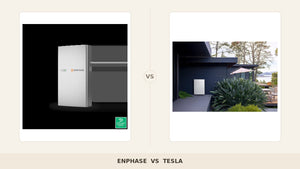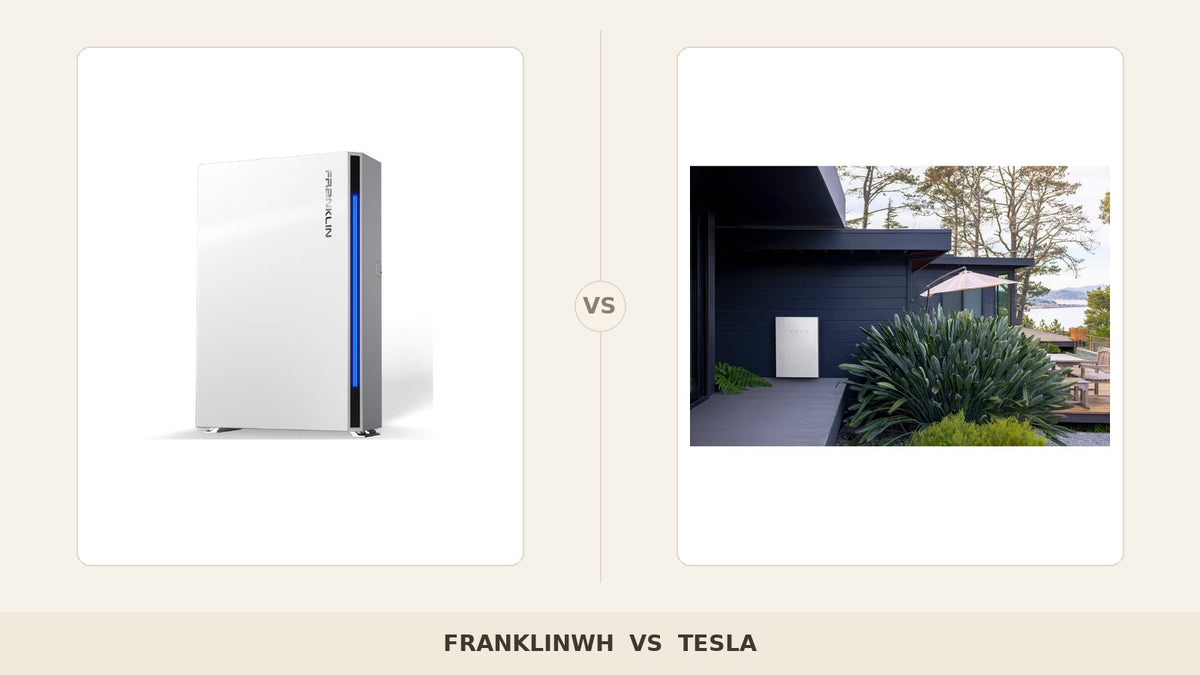
FranklinWH aPower 2 and Tesla Powerwall 3 are the two strongest integrated whole-home batteries of 2026. FranklinWH wins on capacity, warranty, and generator integration: 15 kWh per unit (vs 13.5), a 15-year warranty (vs 10), native automated generator support via aGate, and per-circuit smart load control. Powerwall 3 wins on integration and price: a built-in hybrid inverter with 6 MPPT solar inputs, 11.5 kW continuous output, Tesla's best-in-class app, and typically lower installed cost. Retrofits, generator homes, and warranty-driven buyers lean FranklinWH; new solar-plus-storage builds lean Powerwall 3.
Spec Sheet — FranklinWH vs Tesla at a Glance
- Chemistry: LFP (100% depth of discharge rated) · LFP (Powerwall 3 moved from NMC to lithium iron phosphate)
- Capacity: 15 kWh per unit (stacks to 15 units / 225 kWh) · 13.5 kWh usable per unit (stacks to 4 units / 54 kWh)
- Continuous Output: 10 kW continuous, 15 kW 10-sec peak; 185A LRA motor-starting class · 11.5 kW continuous (on-grid and backup); 185A LRA motor-starting cl…
- Solar Coupling: AC-coupled — retrofit-friendly with ANY existing solar inverter/mic… · DC-coupled native; AC-couples to existing solar with some constrain…
- Built-In Inverter: None — pairs with any existing solar inverter · Integrated hybrid inverter — 6 MPPT solar inputs built in
The Shared Platform: What Both Have in Common
Both are LFP whole-home batteries with ~10-15 kWh per unit, stacking for more capacity, 185A-class LRA motor-starting ability, app-based monitoring, and time-of-use/self-consumption smarts. Both install as AC-coupled appliances (PW3 is DC-coupled native but AC-couples to existing solar with some constraints), and both run a typical home through overnight outages. This is a premium-tier fight between two excellent products.
Side-by-Side Comparison Table
| Specification | FranklinWH | Tesla |
|---|---|---|
| Chemistry | LFP (100% depth of discharge rated) | LFP (Powerwall 3 moved from NMC to lithium iron phosphate) |
| Capacity | 15 kWh per unit (stacks to 15 units / 225 kWh) | 13.5 kWh usable per unit (stacks to 4 units / 54 kWh) |
| Continuous Output | 10 kW continuous, 15 kW 10-sec peak; 185A LRA motor-starting class | 11.5 kW continuous (on-grid and backup); 185A LRA motor-starting class |
| Solar Coupling | AC-coupled — retrofit-friendly with ANY existing solar inverter/microinverters | DC-coupled native; AC-couples to existing solar with some constraints |
| Built-In Inverter | None — pairs with any existing solar inverter | Integrated hybrid inverter — 6 MPPT solar inputs built in |
| Generator Integration | Native automated generator integration via aGate (auto-start, charge, auto-stop) | Generator integration historically manual/clunky — not native |
| Load Management | Smart circuit control — shed/prioritize individual loads from the app | Whole-home or backup-loads panel configuration |
| Monitoring | FranklinWH app with circuit-level visibility (aGate X) | Tesla app — best-in-class consumer UI; Storm Watch weather-response mode |
| Warranty | 15 years — among the longest in residential storage | 10 years |
| Installed Cost Class | ~$14,000–20,000 installed class | ~$10,000–15,000 installed class (includes inverter hardware) |
Retrofit vs New Build
FranklinWH's AC-coupled design bolts onto any existing solar system — any inverter brand, any age — without touching the array. Powerwall 3's integrated inverter is a genuine advantage on new builds (one box does solar and storage) but adds constraints when retrofitting to existing solar. For the millions of homes with solar already installed, FranklinWH is usually the cleaner engineering answer; for new construction, PW3's integration is elegant and cost-effective.
Generators and Load Control
FranklinWH's aGate manages generators natively — automatic start, charge, and stop as a supported configuration — and its smart circuits shed or prioritize individual loads from the app. Powerwall 3's generator support historically requires manual configuration, and load management happens at the panel level. For homes with existing generators — common in outage-prone regions — this difference is decisive.
Quoting this job? We stock FranklinWH products and Tesla products at contractor pricing — or get a system quote with both options priced side by side.
Choose FranklinWH If / Choose Tesla If
Choose FranklinWH if: the home already has solar and/or a generator, the buyer wants 15 kWh per unit with a 15-year warranty, and app-level circuit control matters.
Choose Tesla if: the project is new solar-plus-storage where the integrated 6-MPPT inverter, 11.5 kW output, Tesla ecosystem, and lower installed cost win.
Field takeaway: FranklinWH is the retrofit and generator-home champion; Powerwall 3 is the new-build integration champion. Both are top-tier LFP systems.
Frequently Asked Questions
Is FranklinWH better than Tesla Powerwall 3?
On capacity (15 vs 13.5 kWh), warranty (15 vs 10 years), generator integration, and circuit-level load control, yes. Powerwall 3 counters with an integrated inverter, higher continuous output (11.5 kW), a polished app, and typically lower installed cost.
Which is cheaper installed?
Powerwall 3 typically installs for ~$10,000-15,000 (inverter hardware included); FranklinWH aPower 2 runs ~$14,000-20,000 installed. Actual pricing varies by market and installer.
Do both work with existing solar?
FranklinWH AC-couples to any existing inverter cleanly. Powerwall 3 AC-couples with some constraints — it is designed primarily as an integrated solar-plus-storage unit.
Which works better with a generator?
FranklinWH, clearly — aGate provides native automated generator start/stop and charging. Powerwall generator support historically requires manual configuration.
How long do they last?
Both use LFP chemistry. FranklinWH carries a 15-year warranty; Powerwall 3 carries 10 years. In typical backup duty both are decade-plus systems.
Sources & Standards
- FranklinWH aPower 2 datasheet (franklinwh.com)
- Tesla Powerwall 3 specifications (tesla.com)
- UL 9540 standard (ul.com)
Ready to price your project? Get a free system quote from PES Supply — both options, contractor pricing.
Related Resources: