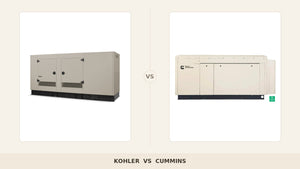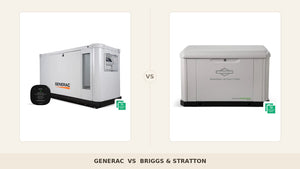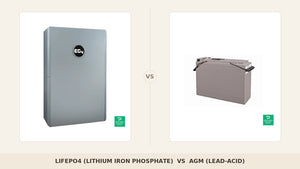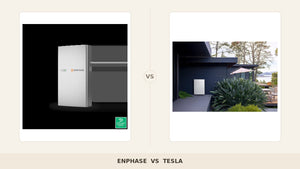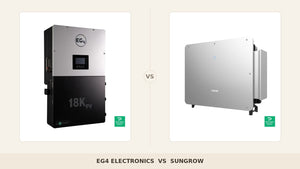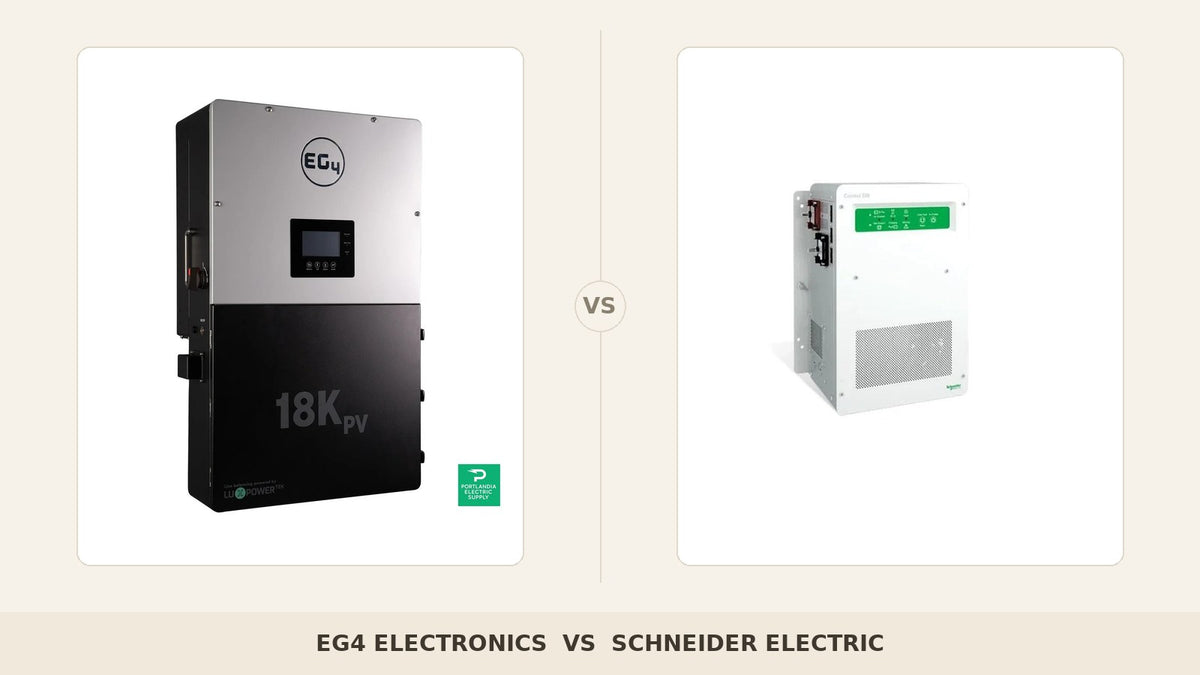
EG4 and Schneider represent two generations of off-grid thinking. EG4 is the modern all-in-one: high-frequency hybrid with MPPTs, transfer, and battery comms in one inexpensive box, sized for whole-home jobs on a budget. Schneider XW Pro is the legacy premium architecture: a low-frequency transformer-based inverter-charger with legendary surge capability, chemistry-agnostic 48V support, and the backing of a global electrical major. EG4 wins on price, integration, and PV input. Schneider wins on surge brutality, component longevity expectations, and institutional support. Budget whole-home build: EG4. Mission-critical remote power with brutal motor loads: Schneider.
Spec Sheet — EG4 Electronics vs Schneider Electric at a Glance
- Topology: All-in-one 48V hybrid inverter (value tier) + matching battery ecos… · Low-frequency transformer-based inverter-charger (off-grid/hybrid)
- Continuous AC Output: 18KPV: ~12 kW class; 12KPV: ~8 kW class continuous · XW Pro 6848: 6.8 kW continuous class (stackable to multi-unit syste…
- Surge / Motor Starting: Comparable surge class — starts 4-ton compressor class loads (verif… · Strong surge class — transformer-based, starts heavy motors/compres…
- PV Input: 18KPV: 18 kW PV, 3 MPPT (12KPV: 12 kW, 2 MPPT) · Requires separate charge controllers (Conext MPPT) — not built in
- Battery Voltage / Chemistry: 48V nominal — LFP, lead-acid, AGM compatible · 48V nominal — chemistry-agnostic (LFP, AGM, flooded)
The Shared Platform: What Both Have in Common
Both run 48V battery banks with broad chemistry support, both integrate generators, both stack for larger systems, and both are proven in off-grid and backup installations across North America. Either can power a whole home or a serious cabin — the fight is architecture, price, and how much abuse the inverter stage will take.
Side-by-Side Comparison Table
| Specification | EG4 Electronics | Schneider Electric |
|---|---|---|
| Topology | All-in-one 48V hybrid inverter (value tier) + matching battery ecosystem | Low-frequency transformer-based inverter-charger (off-grid/hybrid) |
| Continuous AC Output | 18KPV: ~12 kW class; 12KPV: ~8 kW class continuous | XW Pro 6848: 6.8 kW continuous class (stackable to multi-unit systems) |
| Surge / Motor Starting | Comparable surge class — starts 4-ton compressor class loads (verify per install) | Strong surge class — transformer-based, starts heavy motors/compressors |
| PV Input | 18KPV: 18 kW PV, 3 MPPT (12KPV: 12 kW, 2 MPPT) | Requires separate charge controllers (Conext MPPT) — not built in |
| Battery Voltage / Chemistry | 48V nominal — LFP, lead-acid, AGM compatible | 48V nominal — chemistry-agnostic (LFP, AGM, flooded) |
| Battery Communication | CAN/RS485 — best with EG4 batteries; growing third-party list | Open-loop standard; closed-loop via gateway with select LFP |
| Monitoring Platform | EG4 Monitor app/web — functional, improving, less fleet tooling than incumbents | Conext Gateway / InsightHome-InsightFacility |
| Warranty | Value-tier coverage — verify current term per model (3–5 yr class historically) | 2–5 years class by model/region (verify per SKU) |
| Typical Price | 18KPV: ~$4,000–5,000 contractor class | Premium off-grid tier (~$3,500–4,500 XW Pro class) |
| Support Footprint | Texas-based, email/phone, high volume | Global electrical-major support footprint |
High-Frequency All-in-One vs Low-Frequency Transformer
The XW Pro's big iron transformer is the point: massive surge tolerance, graceful overload behavior, galvanic isolation, and a design lineage that runs pumps, welders, and compressors in places where failure is not an option. EG4's high-frequency design packs MPPTs, transfer, and comms into a lighter, cheaper box with far more built-in PV capability per dollar. For a solar-first whole-home build, EG4's integration wins on economics. For a power-first site where the inverter's job is to survive abuse — remote shops, farms, islanded commercial loads — the transformer architecture earns its premium every time a 5HP motor kicks over.
Batteries: Both Open, Different Depths
Both platforms are chemistry-agnostic 48V and both talk to major LFP brands — EG4 best with its own batteries (growing third-party list), Schneider via Conext Gateway with established closed-loop integrations for SimpliPhi, Discover, and others. The practical difference is heritage: Schneider's open architecture predates the LFP boom, so it treats lead-acid, AGM, and lithium as equals with decades of charge-profile maturity. EG4 is lithium-first and priced like it. Either way, you are not locked into one battery vendor — the shared strength versus locked ecosystems.
Total Cost of a Working System
An EG4 18KPV includes the MPPTs; a Schneider XW Pro does not — add Conext MPPT 100A controllers, a Gateway, and battery, and the component sum typically lands well above the EG4 all-in-one for equivalent solar-plus-backup capability. Schneider's counter is lifespan and support: a global service organization, longer product continuity expectations, and hardware designed for decades. If the job is capex-constrained residential backup, EG4 usually wins the signature. If the job is infrastructure — telecom, ag, remote facilities — Schneider's total-risk math beats its price tag.
Quoting this job? We stock EG4 Electronics products and Schneider Electric products at contractor pricing — or get a system quote with both options priced side by side.
Choose EG4 Electronics If / Choose Schneider Electric If
Choose EG4 Electronics if: Choose EG4 if: the job is a US split-phase home; budget is decisive; you want MPPTs, transfer, and comms in one box; the loads are residential-normal; or the build is solar-first with generator as backup.
Choose Schneider Electric if: Choose Schneider XW Pro if: the site has brutal motor/surge loads; the system is infrastructure-grade (telecom, ag, remote commercial); you value transformer-based isolation and longevity; lead-acid-to-lithium migration flexibility matters; or global-major support is a procurement requirement.
Field takeaway: EG4 sells integration and price for solar-first homes; Schneider sells indestructibility and institutional support for power-critical sites. The EG4 is usually enough — and when it is not, nothing in its price class is.
Frequently Asked Questions
Is the Schneider XW Pro worth the extra money over EG4?
For homes with normal loads, usually not — EG4 delivers more built-in capability per dollar. For sites with heavy motor starting, harsh duty cycles, or infrastructure uptime requirements, the XW Pro's transformer architecture and support organization justify the premium.
Do both work with lithium batteries?
Yes. Both are 48V chemistry-agnostic platforms with closed-loop integrations for major LFP brands. EG4 pairs best with its own batteries; Schneider has mature integrations with SimpliPhi, Discover, and others via Conext Gateway.
Which starts heavy motors better?
Schneider XW Pro — the low-frequency transformer design is the class benchmark for surge tolerance and motor starting. EG4 handles residential loads including 4-ton-class compressors in many installs, but the XW Pro is built for abuse.
Does the Schneider have built-in solar charge controllers?
No. XW Pro systems pair with separate Conext MPPT controllers (e.g., MPPT 100 600). EG4 hybrids include multiple built-in MPPTs — a major capex difference on solar-first builds.
Which is better for grid-tied backup with sell-back?
EG4 — it is a true hybrid with grid-tie sell, TOU modes, and UL 1741 SA/SB listings. The XW Pro can grid-interactive in supported configurations but its native habitat is off-grid and backup; for net-metered hybrid duty, EG4 fits directly.
Sources & Standards
- Schneider XW Pro / Conext documentation (se.com)
- EG4 18KPV documentation (eg4electronics.com)
Ready to price your project? Get a free system quote from PES Supply — both options, contractor pricing.
Related Resources: