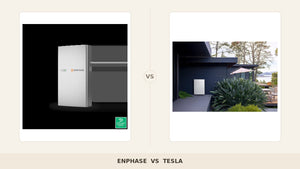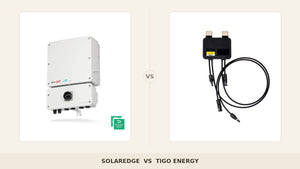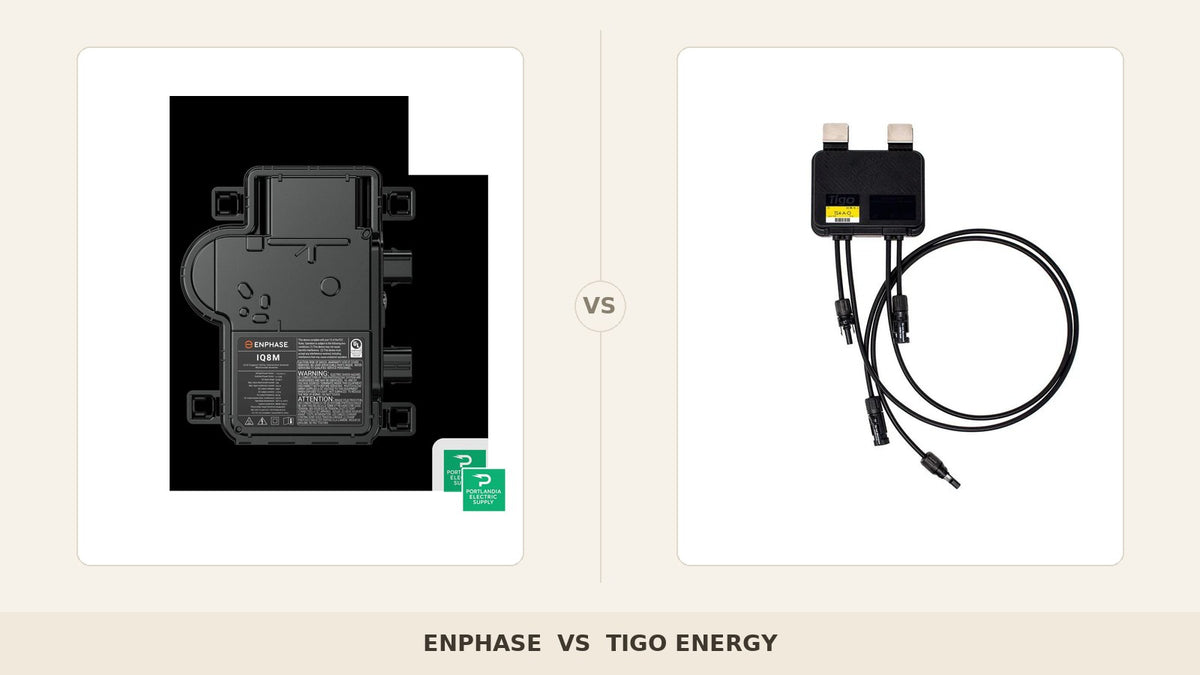
This is not really a brand fight — it is a deployment philosophy fight. Enphase puts module-level electronics behind every panel, always: conversion, MPPT, monitoring, and rapid shutdown at 100% density, with a 25-year warranty and no central inverter. Tigo puts MLPE only where it earns its keep: TS4 units on the shaded or at-risk modules, plain modules everywhere else, feeding a standard string inverter. Full-density Enphase costs more and buys total module-level coverage plus no single point of failure. Selective Tigo costs far less per roof and fixes the 20% of modules that cause 80% of the losses. The roof decides.
Spec Sheet — Enphase vs Tigo Energy at a Glance
- Architecture: AC microinverter per module — DC-to-AC on the roof, no central inve… · Selective-deployment MLPE — TS4 modules add optimization/RSD/monito…
- Current Lineup: IQ8 / IQ8+ / IQ8M / IQ8A / IQ8HC residential; IQ9 for high-power co… · TS4-A-F (RSD), TS4-A-S (RSD+monitoring), TS4-A-O (RSD+optimization+…
- System Efficiency (class): ~97% microinverter efficiency (CEC-weighted class) · System efficiency set by the paired string inverter (Tigo adds modu…
- Rapid Shutdown (NEC 690.12): Inherent NEC 690.12 compliance — no DC conductors leave the module · NEC 690.12 via TS4-A-F / RSS transmitter (SunSpec or Tigo RSS)
- Warranty: 25 years microinverter; 15 years IQ Battery · 25 years on TS4 optimizers
The Shared Platform: What Both Have in Common
Both approaches satisfy NEC 690.12 module-level rapid shutdown, both deliver module-level monitoring (Enphase by default; Tigo when you deploy monitoring-equipped TS4s), and both recover shade losses at the module level. Both carry 25-year warranties on the rooftop electronics. And both are legitimate, code-clean answers that inspectors see every day — this is an engineering economics question, not a compliance question.
Side-by-Side Comparison Table
| Specification | Enphase | Tigo Energy |
|---|---|---|
| Architecture | AC microinverter per module — DC-to-AC on the roof, no central inverter | Selective-deployment MLPE — TS4 modules add optimization/RSD/monitoring to ANY string inverter |
| Current Lineup | IQ8 / IQ8+ / IQ8M / IQ8A / IQ8HC residential; IQ9 for high-power commercial modules (IQ7 is EOL) | TS4-A-F (RSD), TS4-A-S (RSD+monitoring), TS4-A-O (RSD+optimization+monitoring), TS4-X for high-power |
| System Efficiency (class) | ~97% microinverter efficiency (CEC-weighted class) | System efficiency set by the paired string inverter (Tigo adds module-level recovery on shaded units) |
| Rapid Shutdown (NEC 690.12) | Inherent NEC 690.12 compliance — no DC conductors leave the module | NEC 690.12 via TS4-A-F / RSS transmitter (SunSpec or Tigo RSS) |
| Warranty | 25 years microinverter; 15 years IQ Battery | 25 years on TS4 optimizers |
| Monitoring | Enlighten — per-panel, requires Envoy/IQ Gateway | Tigo EI portal via TAP/CCA gateway (when monitoring-equipped TS4s deployed) |
| Grid-Down Operation (No Battery) | Sunlight Backup with IQ System Controller — daylight operation without a battery | Determined by the paired inverter/storage, not the TS4 |
| Battery Integration | AC-coupled (IQ Battery 5P/10C; most AC-coupled third-party storage) | Inherits from paired inverter — works with SMA, Fronius, Sol-Ark and others |
| Single Point of Failure | None — one failed micro costs one panel | None added — string inverter remains the system single point of failure |
| Typical Equipment Cost | Baseline premium — highest $/W of the MLPE field | Lowest MLPE entry cost — deploy only on shaded/at-risk modules (~$25–60 per optimizer class) |
The Selective-Deployment Argument
On most residential roofs, a minority of modules see meaningful shade — the ones under the vent stack, beside the chimney, or in the tree line. Tigo's case: buying module-level electronics for unshaded panels is paying for capability you will never use. Deploy TS4-A-O units on the shaded modules, TS4-A-F rapid-shutdown-only units on the rest, keep a high-efficiency string inverter, and the system captures nearly all of the shade recovery at a fraction of full-MLPE cost. The math is genuinely strong on clean roofs with localized shade.
The Full-Density Argument
Enphase's counter is that shade is only part of the value. Full microinverter deployment eliminates the string inverter — and with it the single component whose failure zeros the array — gives every module independent conversion (not just optimization), enables Sunlight Backup for battery-free outage operation, and delivers per-panel diagnostics on 100% of the fleet by default. For contractors, the last point is operational gold: every install is fully instrumented, so truck rolls get diagnosed from the office whether or not the roof has shade.
Cost Per Roof: The Honest Math
On a 24-module roof with six shaded modules, a Tigo selective deployment (six TS4-A-O + eighteen TS4-A-F + TAP + a string inverter) typically lands well below an all-Enphase BOM — the gap is structural, not marginal. Enphase closes it on jobs where the string inverter was going to be replaced anyway, where storage is in scope (AC-coupling is seamless on Enphase), or where the customer prices outage resilience. On heavily shaded or complex roofs, Tigo's selective advantage evaporates — at 80%+ deployment density, full microinverters usually win on both cost and capability.
Quoting this job? We stock Enphase products and Tigo Energy products at contractor pricing — or get a system quote with both options priced side by side.
Choose Enphase If / Choose Tigo Energy If
Choose Enphase if: Choose Enphase if: the roof is complex or broadly shaded; battery-free outage operation (Sunlight Backup) has value; no single point of failure matters; the customer wants per-panel monitoring on every module; or storage is in the plan and AC coupling simplicity counts.
Choose Tigo Energy if: Choose Tigo selective MLPE if: shade is localized to a handful of modules; the customer already has (or prefers) a specific string inverter; upfront cost is the deciding metric; or the job is a retrofit adding rapid shutdown/monitoring to an existing string system without re-roofing the electronics.
Field takeaway: Tigo sells precision — MLPE where it pays. Enphase sells completeness — MLPE everywhere, plus resilience. Below roughly 40% shade-affected modules, Tigo usually wins the economics; above it, Enphase usually wins the job.
Frequently Asked Questions
Is Tigo a replacement for microinverters?
Partially. Tigo TS4 units provide rapid shutdown, monitoring, and optimization at the module level, but DC-to-AC conversion still happens in a central string inverter. You get most microinverter benefits selectively, at lower cost, while keeping the string inverter's single point of failure.
Do both approaches meet NEC 690.12?
Yes. Enphase complies inherently (AC at the module). Tigo complies via TS4-A-F/TS4-A-2F devices or TS4-A-O with an RSS transmitter — both are standard, inspector-recognized paths.
Can I mix Tigo TS4 with any inverter?
With most major string inverters — SMA, Fronius, Sol-Ark and others — via SunSpec or Tigo's RSS transmitter. The exception is SolarEdge, which requires its own optimizer ecosystem.
Which is cheaper on a typical house?
Tigo selective deployment, when shade is localized — you buy electronics for the modules that need them. If most of the roof needs optimization, Enphase full deployment usually costs less than blanketing the roof in TS4s plus a string inverter.
Does Tigo work during a blackout?
The TS4s follow the paired inverter. With a standard string inverter and no battery, no. Outage capability is determined by the inverter/storage side of the system, not the TS4 layer.
Sources & Standards
- Tigo TS4 documentation (tigoenergy.com)
- Enphase IQ8 datasheets (enphase.com)
- NEC 690.12 device survey (surgepv.com)
Ready to price your project? Get a free system quote from PES Supply — both options, contractor pricing.
Related Resources: