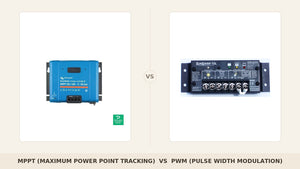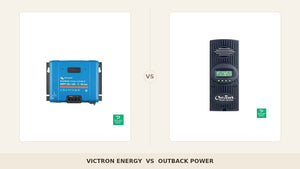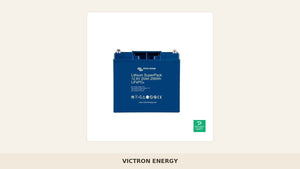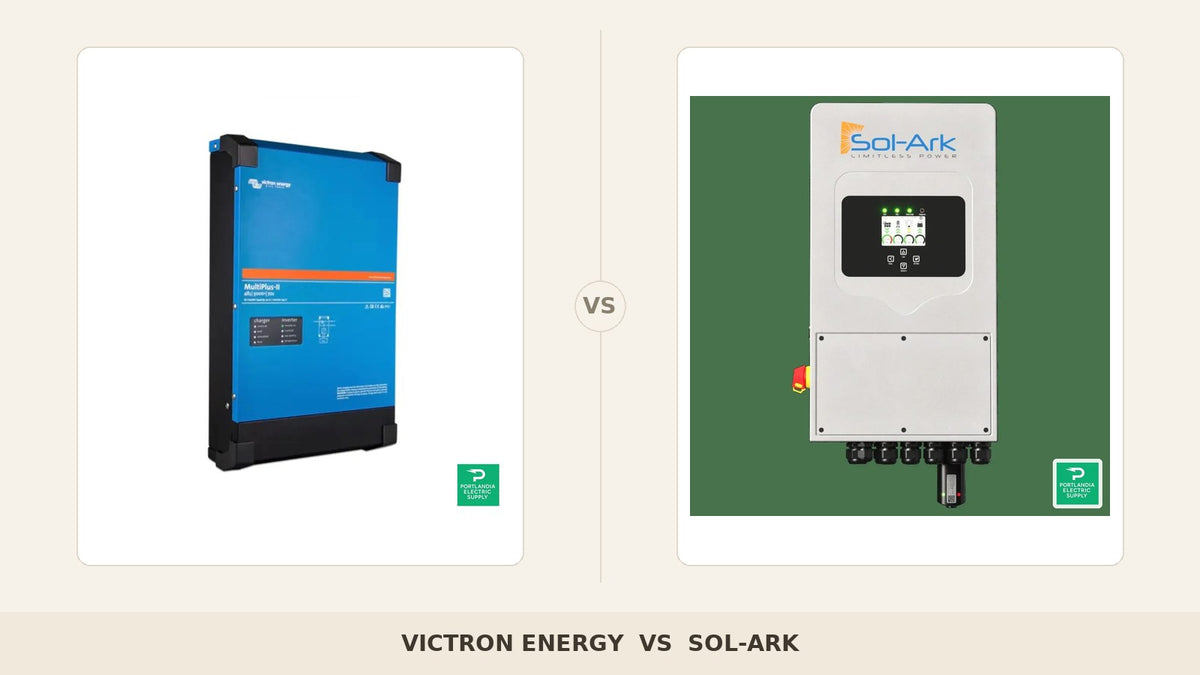
This is the design-philosophy fork in serious off-grid and backup builds. Victron is component architecture: a MultiPlus-II inverter-charger, separate SmartSolar MPPT charge controllers, a Cerbo GX system brain, and whatever battery you choose — infinitely configurable, with the deepest monitoring ecosystem in the class (VRM). Sol-Ark is the all-in-one: inverter, MPPTs, transfer, and battery management in one UL-listed box with 200A pass-through and a permitting paper trail US inspectors know. Victron rewards design skill with total flexibility; Sol-Ark rewards speed with integration. Custom power systems, marine, RV, and 3-phase: Victron. US residential whole-home backup at pace: Sol-Ark.
Spec Sheet — Victron Energy vs Sol-Ark at a Glance
- Topology: Component architecture — inverter-charger + separate SmartSolar MPP… · All-in-one 48V hybrid: inverter + charge controllers + transfer + b…
- Continuous AC Output: MultiPlus-II 48/5000: ~4–5 kVA class per unit; Quattro 48/10000: ~8… · 15K-2P: 15 kW AC continuous (12 kW from batteries); 12K class: ~9 kW
- Surge / Motor Starting: Strong surge class — low-frequency transformer design · Strong surge class — starts 4-ton compressor class loads (verify pe…
- Grid Pass-Through: 50–100A transfer class by model (Quattro adds second AC input for g… · 200A grid pass-through — true whole-home backup without a critical-…
- Battery Voltage / Chemistry: 48V nominal (12/24 on smaller models) — chemistry-agnostic, any LFP… · 48V nominal — LFP, lead-acid, AGM compatible; 2 battery ports, 275A…
The Shared Platform: What Both Have in Common
Both build real off-grid and hybrid systems with 48V battery banks, generator integration, strong surge for motor loads, parallel/multi-unit scaling, and mature remote monitoring. Both are proven in thousands of installations from cabins to estates. And both sit at the premium end of the hybrid market — the choice is architecture, not quality tier.
Side-by-Side Comparison Table
| Specification | Victron Energy | Sol-Ark |
|---|---|---|
| Topology | Component architecture — inverter-charger + separate SmartSolar MPPTs + Cerbo GX brain + battery of choice | All-in-one 48V hybrid: inverter + charge controllers + transfer + battery management in one box |
| Continuous AC Output | MultiPlus-II 48/5000: ~4–5 kVA class per unit; Quattro 48/10000: ~8–10 kVA class; stack/parallel to 3-phase and high kW | 15K-2P: 15 kW AC continuous (12 kW from batteries); 12K class: ~9 kW |
| Surge / Motor Starting | Strong surge class — low-frequency transformer design | Strong surge class — starts 4-ton compressor class loads (verify per install) |
| Grid Pass-Through | 50–100A transfer class by model (Quattro adds second AC input for grid + generator) | 200A grid pass-through — true whole-home backup without a critical-loads panel |
| Battery Voltage / Chemistry | 48V nominal (12/24 on smaller models) — chemistry-agnostic, any LFP with proper profile | 48V nominal — LFP, lead-acid, AGM compatible; 2 battery ports, 275A charger |
| Battery Communication | Open standard; closed-loop with many LFP brands via CAN (DVCC) on Cerbo GX | CAN/RS485 closed-loop with broad certified battery partner list |
| Monitoring Platform | VRM cloud via Cerbo GX — deepest DIY/pro monitoring ecosystem in class | mySol-Ark / PowerView — mature installer fleet tools (AWS US-hosted) |
| Parallel / 3-Phase Stacking | Parallel + 3-phase stacking to 30 kW+ class systems | Multi-unit parallel stacking supported (up to 12 units class) |
| Permitting (US residential) | Component system — UL 1741 listings per component; ESS listing depends on battery pairing, more design documentation | Multiple UL 9540 listed ESS pairings with major batteries |
| Warranty | 5 years | 10 years class (manufacturer standard) |
| Typical System Cost | Component-sum pricing — MultiPlus-II 48/5000 ~$2,000–2,500 class + MPPTs + GX + battery | 15K: ~$6,700–8,500 contractor class |
Flexibility vs Integration
Victron's component model means every subsystem is chosen independently: inverter-charger size, MPPT count and voltage, battery chemistry and brand, monitoring depth. Need 3-phase? Stack three units. Need 400V strings? Choose the right SmartSolar. Marine split-charging, RV alternator input, weird generator — there is a Victron path. Sol-Ark collapses all of it into one box: faster to design, faster to install, one warranty chain, and far fewer ways to misconfigure. The same flexibility that makes Victron unbeatable for custom work makes it slower and more design-intensive for a standard residential job — where Sol-Ark's integration is worth real money.
Monitoring: VRM vs mySol-Ark
Victron's VRM platform, fed by the Cerbo GX, is the deepest monitoring and control ecosystem in the class: every device on the VE.Bus/VE.Can network visible, configurable, and scriptable remotely — the reason Victron dominates marine, RV, telecom, and professional off-grid. Sol-Ark's mySol-Ark/PowerView covers residential fleet needs well — commissioning, production, battery state, alerts — but it does not match VRM's component-level depth or third-party device breadth. If remote diagnostics and granular control are central to your service model, Victron sets the standard.
Permitting and the Paper Trail
For US residential permitted installs, Sol-Ark's single-box UL 1741 SB listing and published UL 9540 battery pairings give inspectors a one-page answer. Victron systems are fully code-capable, but the listing story assembles per component — inverter, charge controllers, battery ESS pairing — which means more documentation work and the occasional educated-AHJ conversation. Off-grid unpermitted work does not care; grid-interactive permitted residential does. Contractors who live in permitting departments tend to standardize on Sol-Ark for homes and keep Victron for the custom jobs that justify it.
Quoting this job? We stock Sol-Ark products at contractor pricing — or get a system quote with both options priced side by side.
Choose Victron Energy If / Choose Sol-Ark If
Choose Victron Energy if: Choose Victron if: the build is custom — 3-phase, marine, RV, telecom, mixed sources; you want the deepest monitoring/control ecosystem (VRM + Cerbo GX); battery brand freedom with CAN-integrated comms matters; or your team has the design skill to exploit component architecture.
Choose Sol-Ark if: Choose Sol-Ark if: the job is US residential whole-home backup; speed of design, install, and permitting matters; one box, one warranty, and 200A pass-through beat modularity; or the customer wants an all-in-one platform their local inspector already knows.
Field takeaway: Victron sells capability per design-hour; Sol-Ark sells capability per install-hour. Custom power systems belong to Victron's component world. Standard US whole-home backup belongs to Sol-Ark's box. Many pros run both — for different jobs.
Frequently Asked Questions
Is Victron or Sol-Ark better for off-grid?
For bespoke off-grid systems — cabins with odd loads, 3-phase shops, marine — Victron's component architecture is more capable. For straightforward whole-home off-grid with solar, battery, and generator, Sol-Ark's all-in-one is faster to deploy and easier to permit where required.
Can Victron use the same batteries as Sol-Ark?
Largely yes. Both run 48V banks and communicate closed-loop with major LFP brands — Victron via CAN/DVCC on Cerbo GX, Sol-Ark via CAN/RS485. EG4, Pylontech, SimpliPhi and others work on both platforms.
Which has better monitoring?
Victron VRM, clearly — it is the deepest component-level monitoring and remote-control ecosystem in this class. Sol-Ark's platform covers residential fleet needs well but does not match VRM's breadth across device types.
Can Victron do whole-home backup like Sol-Ark?
Yes, with the right design — a Quattro or stacked MultiPlus-II units with proper transfer sizing backs up whole services. Sol-Ark makes it simpler out of the box with its 200A pass-through; Victron makes it more configurable.
Which is cheaper?
For equivalent whole-home capability, component-sum Victron pricing usually lands near or above a Sol-Ark box once MPPTs, GX device, and design labor are counted — you pay for flexibility. For small or unusual systems where one Sol-Ark is overkill, Victron can be cheaper by sizing components exactly.
Sources & Standards
- Victron MultiPlus-II/Quattro documentation (victronenergy.com)
- Sol-Ark 15K-2P documentation (sol-ark.com)
- UL 1741 SB / UL 9540 standards (ul.com)
Ready to price your project? Get a free system quote from PES Supply — both options, contractor pricing.
Related Resources: