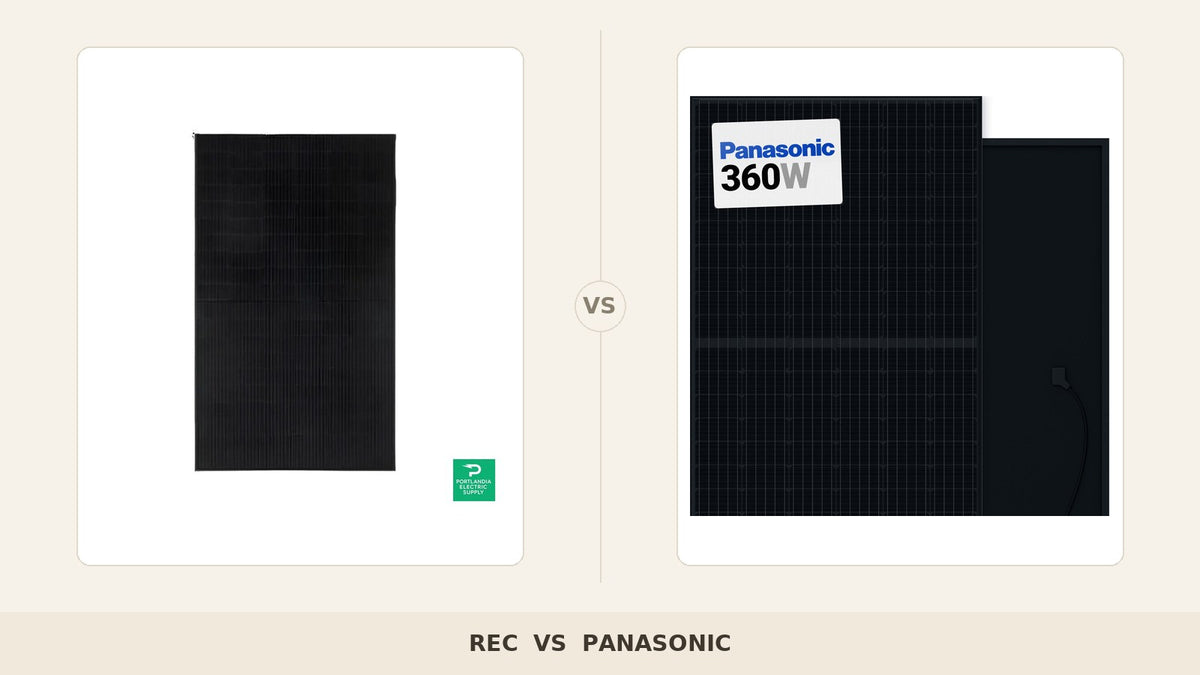
On technology, this would be a fair fight: both are premium heterojunction (HJT) panels with class-leading temperature coefficients and 25-year warranties. But it is 2026, and Panasonic announced in April 2025 that it is exiting the solar panel and battery business, winding down EverVolt in North America while honoring existing warranties. REC Alpha Pure-RX is the same premium HJT idea from a manufacturer that is investing, not leaving — Singapore production, Reliance Industries ownership, and the ProTrust installer program extending coverage to 25 years including labor. The verdict is unusually simple: buy remaining EverVolt stock only at a discount that prices the exit risk; otherwise REC is the default premium HJT.
Spec Sheet — REC vs Panasonic at a Glance
- Cell Architecture: HJT (heterojunction), lead-free · HJT (HIT heritage), among the best temperature performance of its g…
- Residential Wattage Class: ~450–470W residential class · ~360–430W residential class
- Max Module Efficiency: Up to ~22.6% (Pure-RX) · ~21.6–22.2% (EverVolt HK class)
- Temperature Coefficient (Pmax): ~−0.24%/°C (class-leading) · ~−0.26%/°C
- Annual Degradation: ≤1% first year, ~0.25%/yr thereafter — ≥92% guaranteed at year 25 · ~0.26%/yr class
The Shared Platform: What Both Have in Common
Both are HJT panels — the cell architecture with the best temperature coefficients in mainstream solar, meaning more production on hot afternoons than TOPCon or PERC peers. Both target the premium residential tier with all-black aesthetics, low degradation (~0.25%/yr class), and 25-year warranty frameworks. If a 2019 buyer chose between them, either answer was defensible.
Side-by-Side Comparison Table
| Specification | REC | Panasonic |
|---|---|---|
| Cell Architecture | HJT (heterojunction), lead-free | HJT (HIT heritage), among the best temperature performance of its generation |
| Residential Wattage Class | ~450–470W residential class | ~360–430W residential class |
| Max Module Efficiency | Up to ~22.6% (Pure-RX) | ~21.6–22.2% (EverVolt HK class) |
| Temperature Coefficient (Pmax) | ~−0.24%/°C (class-leading) | ~−0.26%/°C |
| Annual Degradation | ≤1% first year, ~0.25%/yr thereafter — ≥92% guaranteed at year 25 | ~0.26%/yr class |
| Product Warranty | 20 yr product / 25 yr performance standard; 25/25/25 (incl. labor) via REC ProTrust certified installer | 25 yr product/performance (existing installs honored) |
| Manufacturing / Corporate Status | Singapore manufacturing; owned by Reliance Industries | Announced April 2025: exiting solar panel & battery business; EverVolt winding down in North America |
| Typical Price Position | +$0.25–0.40/W premium over commodity Tier-1 | Premium tier historically; remaining stock often discounted |
| Manufacturer-Exit Risk | None — investing in capacity | Manufacturer-exit risk on 25-year warranty horizon — weight accordingly |
The Exit Risk, Priced Honestly
Panasonic says it will honor existing EverVolt warranties, and large Japanese electronics companies generally do. But a 25-year panel warranty from an exiting manufacturer is not the same instrument as one from an ongoing concern: service organizations shrink, replacement stock depletes, and claims processes slow. In year 12, a warranty claim against a wound-down business unit is a different experience than against REC's active ProTrust network. This does not make EverVolt a bad panel — it makes it a discounted panel. If remaining inventory sells at commodity-TOPCon prices, the technology is a bargain; at premium-HJT prices, the risk is mispriced.
Technology: HJT vs HJT
Strip away the corporate situation and these are technological siblings. REC's Alpha Pure-RX reaches ~22.6% efficiency with a −0.24%/°C temperature coefficient and ≥92% guaranteed output at year 25 — among the best numbers in residential solar. EverVolt's HIT-heritage HJT cells posted comparable temperature performance (~−0.26%/°C) with slightly lower peak efficiency in final generations. REC also pushed the lead-free manufacturing angle harder, and its gapless all-black aesthetic is the better-looking panel. On merit alone, REC's current generation has edged ahead — and it is the one still being developed.
What to Buy Instead (If You Wanted a Panasonic)
The buyer who wanted EverVolt wanted three things: HJT temperature performance, premium build quality, and a blue-chip warranty. REC delivers all three with a living manufacturer behind them and, via ProTrust installers, labor coverage Panasonic never matched. If the attraction was specifically Japanese corporate conservatism, note that REC is owned by Reliance Industries — a different flavor of large, solvent parent. For a 2026 premium residential install, REC Alpha Pure-RX is the direct, no-compromises EverVolt successor.
Quoting this job? We stock REC products and Panasonic products at contractor pricing — or get a system quote with both options priced side by side.
Choose REC If / Choose Panasonic If
Choose REC if: Choose REC if: you want premium HJT temperature performance with a manufacturer that is actively investing; the 25-year ProTrust warranty (including labor) matters; hot-climate production is the priority; or you were considering Panasonic and want the same idea without the exit risk.
Choose Panasonic if: Choose Panasonic EverVolt only if: remaining stock is priced at a real discount (commodity-tier, not premium) and you consciously accept manufacturer-exit risk on a 25-year horizon; the installer is stable enough to be your practical first-line warranty contact; or it is a matching expansion of an existing EverVolt array where panel consistency matters.
Field takeaway: Same technology family, opposite corporate trajectories. REC is the premium HJT with a future; Panasonic is the premium HJT with a past. Buy REC at premium prices, or EverVolt only at clearance prices — never EverVolt at premium prices.
Frequently Asked Questions
Is Panasonic really exiting solar?
Yes. Panasonic announced in April 2025 that it is exiting the solar panel and battery business, winding down the EverVolt line in North America. The company states it will honor existing warranties, but the panel business is closing.
Will my Panasonic warranty still be honored?
Panasonic says existing warranties will be honored, and large Japanese manufacturers typically stand behind such commitments. The practical risk is degraded service over time: shrinking support staff, depleted replacement stock, slower claims. Weight that against a 25-year horizon.
Is REC as good as Panasonic was?
On current technology, better: REC Alpha Pure-RX posts ~22.6% efficiency, a −0.24%/°C temperature coefficient, and ≥92% year-25 output — at or above final-generation EverVolt numbers, from a manufacturer still investing in the product line.
What is the REC ProTrust warranty?
When installed by a REC Certified Solar Professional and registered, REC extends coverage to 25 years product, 25 years performance, and 25 years labor — one of the strongest residential warranty packages available. Standard (non-ProTrust) is 20/25.
Should I buy discounted EverVolt stock in 2026?
Only at genuine clearance pricing. The HJT technology is excellent, so at commodity-TOPCon prices the panels themselves are a bargain. At anything near premium pricing, REC Alpha Pure-RX is the same technology with a living warranty behind it.
Sources & Standards
- Solar Power World — Panasonic exit (Apr 2025) (solarpowerworldonline.com)
- REC Alpha Pure-RX datasheet (recgroup.com)
- GreenLancer 2026 warranty guide (greenlancer.com)
Ready to price your project? Get a free system quote from PES Supply — both options, contractor pricing.
Related Resources: