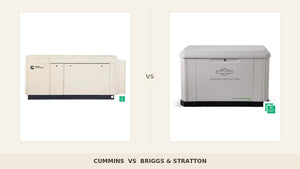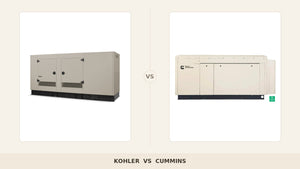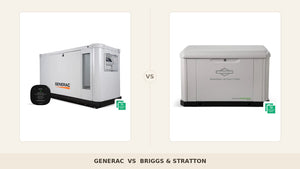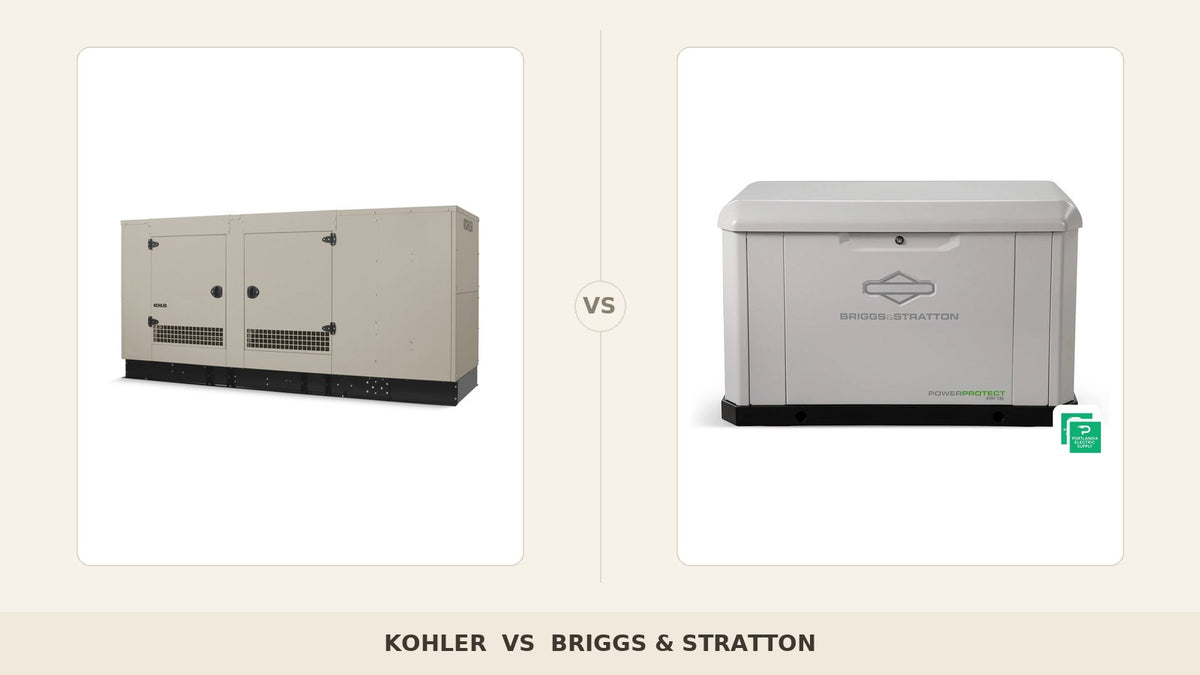
Kohler and Briggs & Stratton field remarkably similar hardware — 999cc-class V-twin engines, 20-26 kW outputs, aluminum enclosures, WiFi monitoring — with two decisive differences. Kohler wins on brand network and industrial heritage: a deeper service channel and a 5-year/2,000-hour warranty with commercial credibility. Briggs wins on warranty coverage and NG output: 7-year comprehensive (parts, labor, travel — 10 on DX class) and NGMax full rated kW on natural gas, where Kohler derates ~10%. Spec-for-spec these units are close; the warranty document and your gas service decide it.
Spec Sheet — Kohler vs Briggs & Stratton at a Glance
- Output (20-26 kW class): 20 kW: 20 LP / 18 NG · 26 kW: 26 LP / ~24 NG class · PP22: full 22 kW on NG via NGMax (no NG derate) · PP26: 26 kW class…
- Engine: Kohler Command PRO 999cc-class V-twin; 3,600 RPM air-cooled · Briggs & Stratton Vanguard-class engine; 3,600 RPM air-cooled; ~39%…
- ATS & Load Management: 200A SE-rated RDT ATS, load control modules · Symphony Choice power management (load-shedding)
- Enclosure: Corrosion-resistant aluminum/composite · Aluminum enclosure class; compact footprint (PP13 ~39% smaller)
- Sound: ~63–69 dBA at 23 ft class · ~64–66 dBA class at 23 ft
The Shared Platform: What Both Have in Common
Both are air-cooled, 3,600 RPM standby generators with 200A service-rated ATS options, load management, corrosion-resistant enclosures, ~63-69 dBA class sound, and NG/LP fueling. Both sit in the premium residential tier below Cummins pricing. Either brand's 20-26 kW unit covers most whole-home loads with management.
Side-by-Side Comparison Table
| Specification | Kohler | Briggs & Stratton |
|---|---|---|
| Output (20-26 kW class) | 20 kW: 20 LP / 18 NG · 26 kW: 26 LP / ~24 NG class | PP22: full 22 kW on NG via NGMax (no NG derate) · PP26: 26 kW class — most starting power in class |
| Engine | Kohler Command PRO 999cc-class V-twin; 3,600 RPM air-cooled | Briggs & Stratton Vanguard-class engine; 3,600 RPM air-cooled; ~39% smaller footprint (PP13) |
| ATS & Load Management | 200A SE-rated RDT ATS, load control modules | Symphony Choice power management (load-shedding) |
| Enclosure | Corrosion-resistant aluminum/composite | Aluminum enclosure class; compact footprint (PP13 ~39% smaller) |
| Sound | ~63–69 dBA at 23 ft class | ~64–66 dBA class at 23 ft |
| Monitoring | OnCue Plus (WiFi standard) | WiFi monitoring via app (info hub) |
| Warranty | 5-year / 2,000-hour limited (extended plans available) | 7-year comprehensive (parts, labor, travel) standard on PowerProtect; 10-year on DX class |
| Service Network | Smaller residential network; deep industrial/commercial channel | Smaller standby dealer network than Generac; century of engine manufacturing (since 1908) |
| Price Class | 20 kW ~$5,500–6,300 · 26 kW ~$6,900–7,800 (unit only) | Value-to-mid tier per kW (strong cost-per-kW on PP26) |
Warranty Structures, Compared Honestly
Briggs' 7-year comprehensive warranty includes parts, labor, AND travel — the broadest standard coverage in residential standby, extended to 10 years on DX-class models. Kohler's 5-year/2,000-hour limited warranty is solid but narrower, with extended plans available. Over a 15-20-year generator life, warranty breadth on the most failure-prone early years is real economic value — Briggs wins this row clearly.
Natural Gas Output
Kohler's 20 kW unit delivers 18 kW on NG; the 26 kW delivers ~24 class. Briggs' NGMax PP22 delivers the full 22 kW on natural gas. For NG-served homes sized near the unit's rating, Briggs effectively offers a size class more capacity at the same nameplate — or lets a smaller, cheaper unit do the job.
Quoting this job? We stock Kohler products and Briggs & Stratton products at contractor pricing — or get a system quote with both options priced side by side.
Choose Kohler If / Choose Briggs & Stratton If
Choose Kohler if: local Kohler service is strong, industrial-brand confidence matters, and a 5-year/2,000-hour warranty plus competitive pricing suffices.
Choose Briggs & Stratton if: warranty breadth (7-year comprehensive with travel) and full NG output outweigh a smaller service network at your address.
Field takeaway: Hardware is a near-tie; Briggs wins the warranty and NG-output rows, Kohler wins network depth. Check local dealer strength for both before choosing.
Frequently Asked Questions
Is Kohler better than Briggs & Stratton for standby generators?
Hardware is closely matched (999cc-class V-twins, 20-26 kW). Kohler has the deeper industrial service brand; Briggs has the better standard warranty (7-year comprehensive) and full NG output via NGMax. Local dealer strength should break the tie.
Which has the longer warranty?
Briggs & Stratton: 7-year comprehensive (parts, labor, travel), 10-year on DX class. Kohler: 5-year/2,000-hour limited, extended plans available.
Which is quieter?
Comparable — both run ~63-69 dBA class at 23 feet. Placement matters more than brand for noise.
Do both derate on natural gas?
Kohler derates ~10% on NG (20 kW unit delivers 18). Briggs NGMax models hold full rated kW on NG. For NG homes near the sizing edge, that difference is material.
Which costs less?
Both price in the premium residential tier (~$5,500-7,800 unit-only class by size). Briggs often delivers strong cost-per-kW on the PP26. Get both quoted installed.
Sources & Standards
- Kohler standby generator specifications (kohlerpower.com)
- Briggs & Stratton PowerProtect specifications (briggsandstratton.com)
- NFPA 110 standard (nfpa.org)
Ready to price your project? Get a free system quote from PES Supply — both options, contractor pricing.
Related Resources: