Updated September 2026 — refreshed against the live PES catalog; product pricing verified 2026-09-26.
Top Backup Generator Providers in Joliet, IL: A Local Guide to Reliable Emergency Power
Outage reality in Will County, generator sizing for Joliet homes, fuel choices, permits, noise rules, and how to choose an installer without getting burned.

Joliet sits in a weather crossfire. Lake-effect winter storms roll off Lake Michigan and ice the overhead lines; summer derechos sweep the I-80 corridor and snap poles from Morris to Orland Park; spring tornado season tests everyone's sump pump at 3 a.m. ComEd's reliability is decent by national standards, but "decent" still means the average Will County customer loses power multiple times a year — and the outages that matter, the multi-day ice-storm events, are exactly the ones a portable unit can't cover. That's why standby-generator inquiries from Joliet, Plainfield, Shorewood, Crest Hill, and Lockport have climbed every year we've shipped into the 60431–60435 ZIP codes. The buyers who call us after the second flooded basement don't ask about price first — they ask how fast we can ship. This guide is what we tell them once the water is pumped out.
One disclosure for transparency: we're an equipment supplier, not a Joliet installer, and we don't rank local contractors for pay. The evaluation framework below is the same one we'd hand a family member.
This guide is the local playbook: what outages here actually look like, how to size a generator for a Joliet home, natural gas versus propane versus diesel in this market, what the City of Joliet and Will County require for permits, how noise ordinances constrain placement, and how to evaluate the providers and installers competing for your money.
Outage profiles drive generator choices, so start with the local reality. Will County's overhead distribution in the older neighborhoods — the tree-lined streets around Cathedral Area and the near west side — takes limb strikes every ice event. Newer subdivisions in Plainfield and Shorewood bury their laterals but still feed from overhead mains exposed along the arterials. The memorable events are the multi-day ones: the 2020 derecho parked damage across the region for days, and the February ice storms do the same every few years. Summer peak events matter too — a July outage in a two-story with no AC becomes a health issue for elderly family members within a day.
The practical consequence: Joliet homeowners need runtime measured in days, not hours. That pushes the decision away from gasoline portables (refuel every 6–12 hours, dangerous in ice storms, useless if you can't get to the station) and toward natural-gas standby units or large propane tanks. It also makes the sump-pump circuit non-negotiable — the Des Plaines and DuPage river basins plus our clay soils mean basements flood fast when pumps die during the same storms that kill the power.
| Joliet Outage Scenario | Typical Duration | Loads That Matter | Generator Class That Fits |
|---|---|---|---|
| Summer thunderstorm / limb strike | 2–8 hours | Fridge, sump, some lights | Portable or small standby |
| Ice storm (the recurring one) | 1–4 days | Furnace, sump, fridge, medical devices | 14–17 kW standby |
| Derecho / wind event | 1–5 days | AC, fridge, freezer, well pump if rural edge | 20–26 kW standby |
| Multi-day winter grid event | 3–7 days | Whole home incl. electric heat strips | 26–48 kW, or managed loads |
Sizing starts from loads, not square footage, but local housing stock gives useful bands. The post-war ranches and split-levels around 60435 with gas heat and a 3-ton AC typically land at 12–18 kW of managed demand — a 14–17 kW standby with load shedding covers them completely, including central air. The two-stories going up in Plainfield and Shorewood with 4-ton AC, finished basements, and home offices usually want 20–26 kW for whole-house coverage. All-electric homes and properties with well pumps, pools, or workshops should expect 26 kW and up, or a hard conversation about which loads shed.
| Joliet Housing Profile | Key Loads | Recommended Class |
|---|---|---|
| Ranch / split-level, gas heat, 3-ton AC | Furnace blower, AC, sump, fridge, lights | 14–17 kW w/ load management |
| Two-story colonial, 4-ton AC | Above + office, basement, kitchen circuits | 20–26 kW |
| All-electric or well-pump property | Heat strips, well pump, water heater | 26–48 kW or aggressive shedding |
| Home business / medical needs | Everything above + guaranteed circuits | 22 kW+ with service-rated ATS |
The load-management note matters more here than in mild climates. Electric resistance heat strips — common in older Joliet all-electric ranches — pull 10–15 kW alone and will crush an undersized generator in January. A modern standby with intelligent load modules sheds the strips and the range while keeping the furnace blower, sump, fridge, and lights alive, which is the honest way to cover a big electrical service with a mid-size generator. Our generator sizing guide and the 2026 whole-home sizing walkthrough both run the circuit-by-circuit math.
Natural gas is the default answer inside the city and most suburbs — Nicor's network covers Joliet, Plainfield, Shorewood, Crest Hill, Lockport, and New Lenox densely. Unlimited runtime, no refueling in an ice storm, no tank to site. A 22–26 kW air-cooled standby draws roughly 250–400 cubic feet per hour at full load, which most residential meters deliver; your installer should verify meter capacity with Nicor before the permit goes in. Propane covers the rural edges — Elwood, Manhattan, the unincorporated stretches — where gas mains don't reach. Size LP tanks for the long events: a 26 kW unit at half load drinks about 2 gallons of propane an hour, so a 500-gallon tank (400 usable) delivers roughly a week at typical outage loads. Diesel makes sense mainly for the commercial and ag properties along the I-80 and I-55 corridors where diesel is already on site.
| Fuel | Joliet-Area Availability | Runtime Character | Watch Out For |
|---|---|---|---|
| Natural gas (Nicor) | City + near suburbs | Unlimited while pressure holds | Meter capacity verification; rare pressure events |
| Propane (500–1,000 gal) | Rural edges, unincorporated Will Co. | ~1 week at half load per 500 gal | Tank siting setbacks; winter vapor pressure |
| Diesel | Commercial / ag corridors | Tank-limited; refuel logistics | Fuel polishing, cold-weather gelling, block heaters |
| Gasoline portable | Everywhere | 6–12 hr per fill | CO safety, refuel during storms, stale fuel |
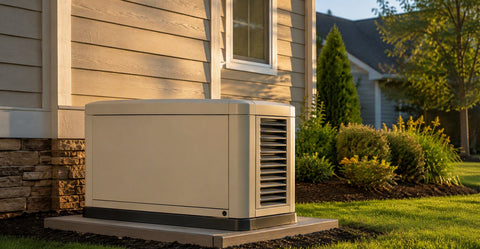
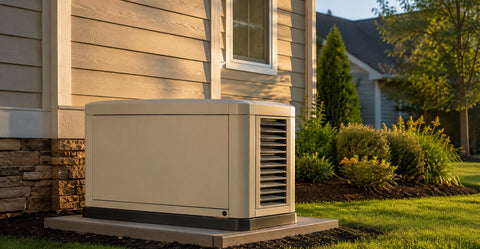
Inside city limits, a standby generator install typically requires an electrical permit and, for gas units, a plumbing/gas permit through the City of Joliet's building division; unincorporated Will County parcels run through the county's building department instead. Expect the permit set to want a site plan showing the unit location, setbacks from property lines and openings, and the gas routing. Placement rules of thumb that inspectors enforce: five feet from windows, doors, and combustible openings per manufacturer instructions; not under decks; exhaust directed away from the house and neighbors; and — in the tight side-yards of older Joliet lots — enough working clearance for service. Corner lots and zero-lot-line subdivisions get creative; plan the location before you buy, because a 26 kW air-cooled unit is a 500-plus-pound appliance with opinions about where it sits.
Noise is the other constraint. Modern air-cooled standby units run 63–70 dBA at 23 feet — conversation-plus, not lawnmower — and Joliet-area ordinances generally restrict sustained noise at the property line, especially overnight. Practically: place the unit away from bedroom windows (yours and the neighbor's), keep the exercise cycle set to mid-morning weekdays, and consider the manufacturer's sound-rated enclosures in tight subdivisions. In five years of shipping into this market, the noise complaints we've heard about trace almost entirely to 6 a.m. Sunday exercise cycles — a setting, not a hardware problem.
Never run a portable generator in a garage — door open or not.
Every Midwestern ice storm brings carbon-monoxide deaths from exactly this. Portable units belong outside, 20+ feet from openings, exhaust pointed away, with battery CO detectors inside the house. If the storm is too brutal to refuel outside, that's the market telling you to buy a standby unit — not to crack the garage door.
How to Evaluate Providers and Installers (Without Getting Burned)

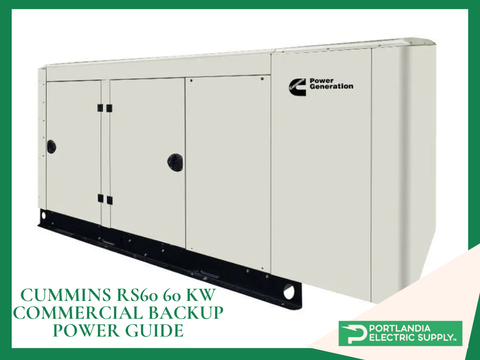
The Joliet market has four provider categories, and each serves a different buyer. Factory-authorized dealers (Generac, Cummins, Kohler, Champion networks) bundle equipment, installation, and warranty service into one contract — the simplest path, and the one we'd choose for most homeowners; verify the authorization on the manufacturer's dealer locator, because "we sell Generac" and "we're authorized to service Generac" are different sentences. Licensed electrical contractors install any brand and often beat dealer pricing on labor; in Illinois, verify the electrical license and pull the permit in the contractor's name, never yours. HVAC/plumbing firms with generator divisions handle the gas work seamlessly — valuable where meter upgrades are needed. Online suppliers (that's our lane) sell the equipment itself at contractor pricing for owner-managers who hire their own installer — the savings are real, typically 15–25% on equipment, but you own the project management.
Verify licensing and insurance
Illinois electrical license, general liability, workers' comp. Ask for certificates, not assurances. The permit should name the installing contractor.
Demand the load calculation in writing
A quote without a load calc is a guess with a price tag. The proposal should list which circuits are covered, which are shed, and the ATS rating.
Ask who performs warranty service
Equipment warranties are only as good as the local tech authorized to execute them. "We install it but the factory services it" is fine — if the factory actually has a local servicer. Verify.
Compare turnkey scope, not sticker
Pad, gas line, meter upgrade, permit fees, ATS, and startup are real line items. A $9,500 quote excluding gas work is not cheaper than an $11,000 quote including it.
Check cold-weather provisions
This is Will County. Battery warmers and, for diesels, block heaters belong in every quote. Our cold-weather kit inventory exists because February exists.
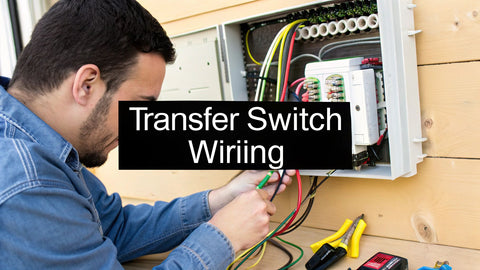
Honest turnkey bands for the Joliet market: a 14–17 kW air-cooled standby with ATS, pad, gas connection, and permits runs $9,000–$13,000 installed; 20–26 kW whole-house systems land at $12,000–$18,000; liquid-cooled 30–48 kW equipment for large or all-electric properties runs $18,000–$30,000+. Nicor meter upgrades, long gas runs, panel replacements, and difficult siting each add hundreds to low thousands. Portable-generator-plus-manual-transfer-switch setups — the budget path — run $2,500–$4,500 all-in and cover the critical circuits well if you accept the manual routine. Financing reality in 2026: most dealers offer promotional financing, and several Will County credit unions underwrite generator loans as home-improvement products at rates that beat dealer paper. Given that a standby unit protects against five-figure basement-flood and inventory losses, the payback framing is insurance math, not appliance math. Browse current equipment pricing across standby generators, 10–14 kW, 17–20 kW, and 22 kW classes, plus transfer switch kits.
Related reading before you buy
A well-run standby install in this market takes four to eight weeks from signed contract to commissioning, and the long pole is usually the gas work or the permit queue, not the equipment. The sequence worth holding your installer to:
Site survey and load calculation
Panel inspection, gas meter verification, placement selection against setbacks and noise paths. You should receive a written load summary and a marked-up site plan, not a handshake number.
Permits and utility coordination
Electrical and gas permits filed; Nicor notified if meter capacity is marginal. Two to four weeks is normal; winter rushes stretch it.
Pad, plumbing, and electrical
Gen-pad or poured concrete, gas line run and pressure-tested, transfer switch mounted and wired. One to two days of on-site work for a standard residential job.
Set, start, and commission
Unit set and anchored, battery in, firmware configured, exercise schedule programmed for a civilized hour, full transfer test with the utility actually interrupted. Don't accept a startup that skips the live transfer test.
| Scope Item | Included in Honest Quote? | If Excluded, Budget |
|---|---|---|
| Generator + ATS equipment | Always | — |
| Concrete pad / gen-pad | Usually | $400–900 |
| Gas line (first 10–20 ft) | Usually | $500–1,500 by length |
| Nicor meter upgrade | Often excluded | $0–800 (utility-dependent) |
| Permits and inspection fees | Usually | $150–500 |
| Electrical panel work | Often excluded | $1,500–4,000 if needed |
| Cold-weather kit | Sometimes | $150–350 — always worth it here |
| First-year service plan | Sometimes | $250–500/yr |
Will County gives generators the full tour: 95°F thunderstorm humidity, −15°F polar-vortex mornings, road-salt air, and pollen seasons that clog louvers. The maintenance calendar that keeps units alive through all of it:
| When | Task | Why Here |
|---|---|---|
| Weekly (automatic) | Exercise cycle, mid-morning weekday | Keeps seals and battery honest; neighbor-friendly hour |
| Spring (post-pollen) | Clear louvers and intake; check rodent evidence | Cottonwood and pollen mat intakes badly in June |
| October | Oil/filter service, battery load test, firmware check | Pre-winter readiness; the storm season that matters starts in November |
| Mid-winter | Verify battery warmer operation after the first hard freeze | Battery capacity drops ~40% by 0°F |
| Annually | Full transfer test under real load; gas pressure verification | Proves the system, not just the engine |
| Every 3 years | Replace starter battery proactively | Batteries fail on schedule, not on warning |
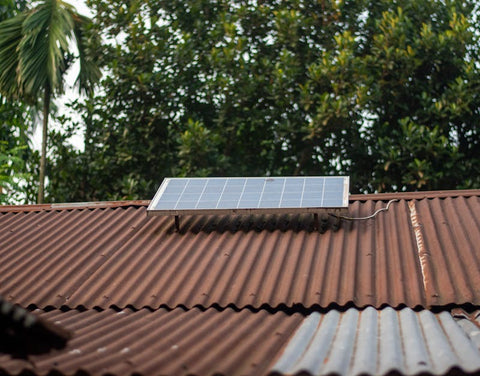
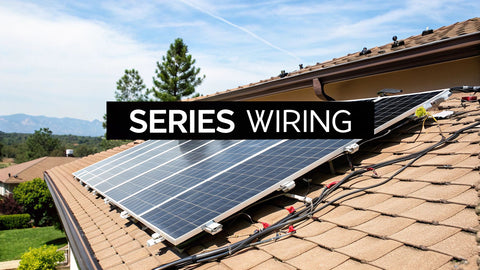
A word on the solar-plus-storage alternative, because Joliet buyers ask: a battery system like the ones in our battery backup kits covers the two-hour thunderstorm outages silently and instantly, with zero maintenance. What it doesn't cover is the four-day ice event — 10–20 kWh of battery is hours of furnace and sump, not days. The honest local answer for most homes is a generator for the long events, with batteries as a complement for the short ones and for solar self-consumption. Anyone who tells you a single Powerwall rides out a February ice storm in a 2,400-square-foot Joliet two-story hasn't done the load math.
After years of shipping into this market, patterns emerge. The older grid in central Joliet and Lockport sees the most frequent short outages — fine for batteries, but the ice events argue for standby. Plainfield and Shorewood's newer construction buries laterals yet still rides overhead mains, so whole-house standby remains the norm in those subdivisions; check your HOA before ordering, because several associations regulate placement and screening even though Illinois law limits how much they can prohibit safety equipment. Rural properties toward Elwood, Manhattan, and Wilmington should plan propane tanks and longer installer lead times — the authorized-dealer density thins outside the metro fringe, so verify who services your brand within 30 miles before you choose one. Properties in the Des Plaines floodplain should pad-mount units above base flood elevation; we've seen flood maps change after the recent re-studies, and a generator that drowns in a 1% event is an expensive anchor.
One more local reality: storm-week lead times. The week after a derecho, every installer in Will County is booked out months and portable units vanish from shelves within hours. The buyers who fare best bought in the off-season — spring and early summer — when installers quote their sharpest prices and equipment ships in days. If you're reading this after a storm with no power, the honest advice is a portable for this week and a properly spec'd standby installed on a calm calendar, not a panic purchase at emergency pricing.
What size generator does a typical Joliet home need?
Most gas-heated homes with central AC land at 14–17 kW with load management or 20–26 kW for full whole-house coverage. All-electric homes and properties with well pumps should expect 26 kW and up, or plan for managed loads.
Do I need a permit for a standby generator in Joliet?
Yes — an electrical permit, and a gas/plumbing permit for natural-gas or propane units. Unincorporated Will County parcels permit through the county. Your installing contractor should pull the permits in their name.
Natural gas or propane for a Joliet standby generator?
Inside Nicor's service area — most of Joliet and the near suburbs — natural gas wins on runtime and convenience. Rural edges without gas mains use propane; size the tank (500+ gallons) for multi-day ice-storm events.
How much does a standby generator cost installed in Joliet?
2026 turnkey bands: $9,000–$13,000 for 14–17 kW, $12,000–$18,000 for 20–26 kW whole-house, $18,000–$30,000+ for liquid-cooled 30–48 kW. Meter upgrades, long gas runs, and panel work add to any of these.
How loud are standby generators, and will Joliet allow one?
Modern air-cooled units run 63–70 dBA at 23 feet. Local noise ordinances generally allow them; place the unit away from bedroom windows, keep the weekly exercise cycle to mid-morning weekdays, and neighbors stay neighbors.
Can I buy the generator online and hire a local installer?
Yes — owner-supplied equipment with a licensed electrical contractor doing the install saves 15–25% on equipment typically. You own project management: permits coordination, gas work, and warranty-service verification all become your checklist.
How long does installation take from contract to commissioning?
Four to eight weeks is normal in the Joliet market: one to two weeks for site survey and proposal, two to four for permits and any Nicor coordination, then one to two days on site. Storm-season demand can stretch the queue to months, which is why off-season buying wins.
Will a standby generator run my central air conditioning?
With proper sizing or load management, yes. A 3–4 ton AC draws 15–20 amps running but spikes hard at compressor start; 17+ kW units with soft-start kits or intelligent load modules handle typical Joliet AC systems. Confirm the compressor LRA against the generator's surge rating in the written proposal.
We ship standby power to Joliet weekly
Contractor pricing on Generac, Cummins, Kohler, and Champion equipment, transfer switches, and cold-weather kits — freight to Will County included in the quote. Tell us your load list and we'll size it.
Shop Standby GeneratorsNeed pricing or availability on anything in this guide?
Portlandia Electric Supply dropships direct from the manufacturer — most items Ship Direct with lead times stated up front, no surprises.
Get a quote from PESBulk, pallet and contractor pricing available.