Angles of Solar Panels: Your Guide to Maximum Project ROI
Tilt, azimuth, seasonal adjustments, cosine losses, snow shedding, and the mounting math that decides how much energy your roof actually harvests.

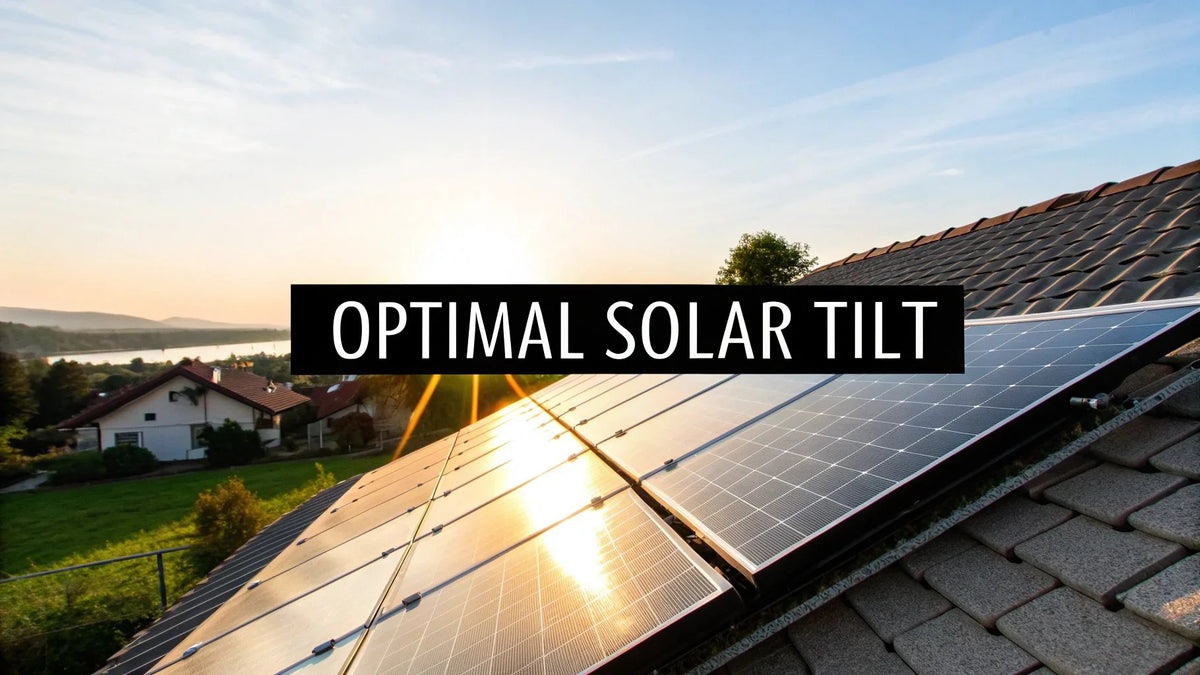
Panel angle is the cheapest performance upgrade in solar — it costs nothing but thought, and getting it wrong silently taxes every kilowatt-hour for twenty-five years. We've laid out arrays from 20° Florida latitudes to 48° Canadian border towns, and the pattern holds: most owners obsess over panel brand and forget that pointing the array fifteen degrees off optimal costs more energy than the difference between value and premium glass. This guide gives you the math, the seasonal tables, and the practical compromises that real roofs demand.
A solar panel delivers its rated output only when sunlight strikes it perpendicular — straight on. Tilt away from perpendicular and the effective capture shrinks with the cosine of the error angle. The cosine function is forgiving near zero: miss by 10° and you keep 98.5% of the energy; miss by 15° and you keep 96.6%; miss by 30° and you're down to 86.6%. That's why "close enough" tilt decisions often are close enough — and why flat-mounted panels in northern winters are a disaster: at 40°N in December, the noon sun sits only 26.6° above the horizon, so a flat panel faces a 63° error and harvests 44% of what a properly tilted one does at midday.
| Angle Error | Cosine | Energy Retained | Field Verdict |
|---|---|---|---|
| 0° (perfect) | 1.000 | 100% | Design target |
| 5° | 0.996 | 99.6% | Invisible loss |
| 10° | 0.985 | 98.5% | Acceptable |
| 15° | 0.966 | 96.6% | Acceptable |
| 20° | 0.940 | 94.0% | Borderline — fix if cheap |
| 30° | 0.866 | 86.6% | Real money lost |
| 45° | 0.707 | 70.7% | Design failure |
| 60° | 0.500 | 50.0% | Flat panel, northern winter noon |
One nuance the cosine table hides: annual energy depends on the sun's path all day, all year — not just the noon error. Diffuse light (clouds, haze) arrives from the whole sky and doesn't care much about tilt, which softens penalties in cloudy climates. The tables below are annualized from PVWatts-style modeling, not noon snapshots.
It also helps to know where the energy actually comes from across the day. A south-facing array at latitude tilt delivers a bell curve peaking at solar noon; the morning and evening shoulders contribute more than most people expect — on a clear June day, the hours before 10 a.m. and after 2 p.m. carry roughly a third of total harvest. This is why small tilt errors hurt so little: the sun spends most of the day off-perpendicular anyway, and annual energy is the integral of all those shallow angles, not the snapshot at noon. Optimizing to the degree is laboratory work; optimizing to the nearest five degrees is field work, and field work is what pays.
Cloud climatology deserves one more paragraph because it flips some intuitions. In marine climates — Seattle, Portland, the coasts — diffuse radiation can exceed 50% of annual total. Diffuse light favors flatter tilts slightly, since a flatter panel "sees" more of the sky dome. The effect is small (a degree or three of optimal-tilt shift) but it's real, and it's why PVWatts, which uses actual weather files for your station, beats any rule of thumb for final decisions. Rules of thumb get you within 5%; local weather files get you the last two.
The classic rule — tilt equals latitude — maximizes annual production for a fixed array. It works because it splits the difference between the high summer sun and the low winter sun. Refinements: subtract 10–15° from latitude to bias toward summer production (good for net-metering credits and AC season), or add 10–15° to bias toward winter (good for off-grid systems where December is the design month). Off-grid arrays we design get the winter bias without exception — a battery bank doesn't care about your annual total if the week before Christmas starves it.
| Latitude | Annual-Optimal Tilt | Summer-Bias Tilt | Winter-Bias Tilt | Example Cities |
|---|---|---|---|---|
| 25°N | 25° | 10–15° | 35–40° | Miami, Houston |
| 30°N | 30° | 15–20° | 40–45° | Jacksonville, New Orleans |
| 35°N | 35° | 20–25° | 45–50° | Memphis, Albuquerque, Los Angeles |
| 40°N | 40° | 25–30° | 50–55° | Denver, Columbus, Philadelphia |
| 45°N | 45° | 30–35° | 55–60° | Portland OR, Minneapolis, Boise |
| 50°N | 50° | 35–40° | 60–65° | Vancouver BC, Winnipeg |
Adjustable-tilt ground mounts let you chase the seasons: steep in November, shallow in May. Two adjustments a year recover most of what a tracker would add at a fraction of the cost and none of the moving parts. We tell owner-builders to mark the adjustment positions with paint the first year — after that it's a twenty-minute job with a socket set, twice a year, worth 4–8% of annual harvest.
What Tilt Errors Actually Cost Per Year

Annual production loss vs. optimal tilt, modeled for a fixed south-facing array. Read your latitude row, find your actual tilt, and the difference is your penalty:
| Latitude | Flat (0°) | 15° Tilt | 30° Tilt | Latitude Tilt | Latitude +15° |
|---|---|---|---|---|---|
| 30°N | −12% | −3% | −1% | optimal | −2% |
| 35°N | −14% | −4% | −1% | optimal | −2% |
| 40°N | −16% | −5% | −2% | optimal | −3% |
| 45°N | −19% | −6% | −2% | optimal | −3% |
| 50°N | −22% | −8% | −3% | optimal | −4% |
Notice two things. First, the penalty for shallow tilt grows brutally with latitude — flat arrays in Miami lose a manageable chunk; flat arrays in Minneapolis lose a fifth of the system. Second, the neighborhood around optimal is wide and forgiving: anywhere within ±15° of latitude costs single digits. This is why flush-mounted arrays on 4:12 to 6:12 roofs (18–27°) perform fine across most of the US, and why we rarely recommend tilt-up legs on shingle roofs — the wind-loading math and extra penetrations rarely pay back the 3–5% they'd recover. Run your exact roof against the solar system calculator and the ROI calculator before adding hardware.
Tilt is how high; azimuth is which way. Due south (180° compass, true not magnetic) is the annual optimum in the northern hemisphere. Southwest rotates production into the afternoon — increasingly valuable as utilities move to time-of-use rates with 4–9 p.m. peaks. Southeast front-loads morning. Due west or due east costs 15–20% of annual harvest on a tilted roof but can still pencil under TOU rates; due north is where arrays go to die, losing 30–50% depending on tilt and latitude.
| Azimuth (at ~35° tilt, mid-US) | Annual Production | Peak-Value Notes |
|---|---|---|
| South (180°) | 100% | Maximum kWh; midday peak |
| SSE / SSW (150° / 210°) | 96–98% | Nearly free compromise |
| SE / SW (135° / 225°) | 93–95% | Fine; SW favored under TOU rates |
| East / West (90° / 270°) | 80–85% | Viable under afternoon TOU; split arrays shine |
| NE / NW (45° / 315°) | 65–75% | Rarely pencils |
| North (0°) | 50–65% | Avoid unless vertical/bifacial specialty |
The modern move on east-west gable roofs: split the array across both faces. Two half-size arrays at 82% each beat one full array at 93% when the second face is free — you harvest 164% of a single-face array's energy, flattened across the day, which pairs beautifully with batteries and TOU arbitrage. Our system size calculator handles split-face designs.
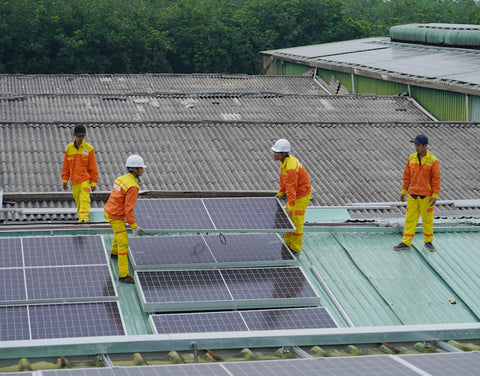
Flush roof mounts take the roof's pitch as the tilt — cheap, fast, low-wind-profile, and the right answer whenever the pitch is within 15° of latitude-optimal. Tilt-up legs on flat commercial roofs set 10–15° tilts on ballasted racking; steeper invites wind uplift that ballast must fight, which is why flat-roof arrays run shallow and accept the loss — ballast block engineering governs that trade. Ground mounts are the angle purist's solution: set exactly the tilt you want, seasonally adjustable if you like, with our Sinclair Sky Rack ground-mount kits handling 24-panel arrays at fixed or adjustable tilt. Pole mounts scale the same idea to smaller arrays. Trackers follow the sun and add 15–25% (single-axis) to 25–35% (dual-axis) — at cost and complexity we recommend only for commercial-scale ground mounts where the land is cheap and the maintenance budget exists.
The racking overview in our solar panel racking guide covers rail types, attachment hardware, and wind/snow ratings in detail. Whatever you mount, torque the hardware to spec — under-torqued clamps walk loose in the first wind season, and over-torqued ones crack frames. The spec sheets aren't suggestions.
Snow, Soiling, and the Northern Case for Steep Tilt

North of 40° latitude, tilt isn't just about photons — it's about physics maintenance. Panels at 35°+ shed snow in slides within a day or two of a storm; panels at 15° hold snow for weeks. A February buried under six inches of persistent snow cover is a zero-production month on shallow tilt and a respectable one on 45°. Steep tilts also self-clean better: rain at 40° flushes dust and pollen that 15° arrays accumulate into a 3–6% soiling loss. We've measured it on our own test array — same panels, same site, the 40° rack out-produces the 15° rack by 7% annually, and the gap concentrates exactly in the snow months.
Snow load itself is the other northern variable: panels carry ratings (typically 5,400 Pa front load) but the racking and roof must carry the drift. Building codes in snow country already size roofs for ground snow loads, so a flush array rarely changes the structural math. Tilted arrays that let snow accumulate in the panel-roof gap deserve a structural glance, because drifted snow stacks deeper than design snow. When in doubt, shed it steep or shed it flush; the in-between angles are where drifts camp.
Don't steep-tilt a roof array without checking wind exposure.
Tilt-up hardware turns panels into sails. Exposure categories B/C/D and local wind speeds drive the engineering; a 45° tilted array on a coastal roof in Exposure D can demand attachment schedules the rafters can't accept. Ground-mount the steep tilt, or keep roof arrays flush. The 4% you chase isn't worth the roof it costs.
Get your latitude
Any mapping app shows it. That's your annual-optimal tilt baseline, no tools required.
Decide your bias
Net-metered grid-tie with summer AC load? Latitude minus 10–15°. Off-grid or battery-critical? Latitude plus 10–15°. Time-of-use afternoon rates? Keep latitude tilt and rotate azimuth southwest if the roof allows.
Check the roof pitch you already own
Measure with a pitch gauge or a level and tape. Within 15° of target? Flush-mount and pocket the savings. Flat or far off? Price tilt hardware or a ground mount.
Model it
PVWatts is free and honest. Run your exact tilt/azimuth candidates and compare kWh, not vibes. Our installation guide walks the modeling step with screenshots.
Plan for maintenance physics
Snow country: bias steep. Dust country: ensure hose access. Hurricane country: flush-mount and torque to the engineered schedule.
Related guides from the field
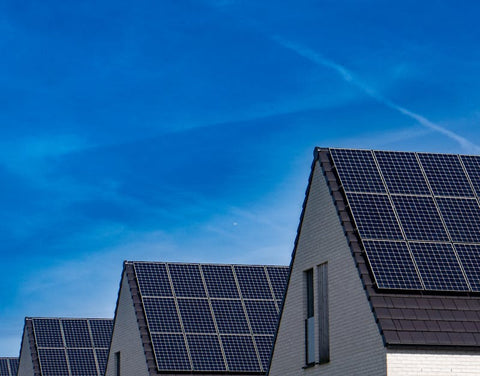
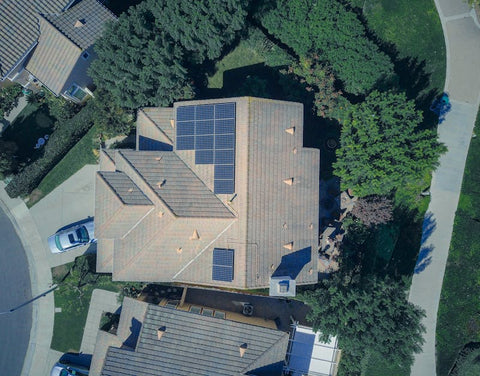
Carpenters speak in rise-over-run; solar speaks in degrees. The translation matters because your roof pitch is your flush-mount tilt. A 4:12 pitch is 18.4°; 6:12 is 26.6°; 8:12 is 33.7°; 12:12 is a full 45°. Most American homes sit between 4:12 and 8:12, which is why flush-mounted residential solar works so well across the sun belt and mid-latitudes — the roof you bought is already within the forgiving window of the cosine curve. Measure pitch with a two-foot level and a tape: hold the level horizontal from the roof surface, measure down to the shingles at the 24-inch mark, and the drop in inches over 24 inches of run is your rise-over-run. Or use any smartphone pitch app against the fascia. Five minutes of measuring beats an hour of guessing.
| Roof Pitch | Degrees | Fit vs. Latitude-Optimal |
|---|---|---|
| 2:12 (low-slope) | 9.5° | Fine south of 25°N; tilt legs worth pricing further north |
| 4:12 | 18.4° | Good to ~33°N latitude |
| 5:12 | 22.6° | Good to ~37°N |
| 6:12 | 26.6° | Good to ~41°N |
| 8:12 | 33.7° | Good to ~48°N |
| 12:12 | 45° | Summer-penalized in the south; excellent winter harvest up north |
Trackers, Vertical, and Bifacial: The Edge Cases

Single-axis trackers rotate east to west and add 15–25% annual energy over fixed tilt; dual-axis adds more but costs and breaks more. The honest counter position: trackers make sense at commercial scale where one maintenance contract covers fifty rows. For a 24-panel owner-built ground mount, seasonal manual adjustment captures the same seasonal geometry for the price of a wrench. Vertical bifacial arrays — panels standing straight up, usually east-west facing pairs — are having a moment in northern Europe and high-latitude farms: they produce in winter, shed snow instantly, and flatten production into morning and evening shoulders. The penalty is total annual energy (often 30–40% below latitude-tilted), so they pencil only where winter kWh are precious or land use demands it. Interesting technology, wrong answer for a conventional roof.
- "Panels must track the sun to work." Fixed arrays at sane tilts capture 75–85% of what perfect tracking harvests. Trackers buy the rest with motors, foundations, and maintenance.
- "Steeper is always better." Only in winter. Steep tilts sacrifice the high summer sun; the annual-optimal split-the-difference angle exists for a reason.
- "My compass says south." Compasses read magnetic south; true south differs by magnetic declination — up to 15–20° in parts of the US. Use a map app or the solar-noon shadow trick: at true solar noon, shadows point true north.
- "Shade at a bad angle doesn't matter." Shade is binary, not angular. A chimney shadow across a string at 3 p.m. costs more than a 20° tilt error all year. Angle optimization comes after shade elimination, never before.
Two owner-builders, identical 8 kW arrays, opposite angle problems. In Phoenix (33°N), the builder's 4:12 roof at 18° tilt loses about 3% annually versus the 33° ideal — call it 400 kWh a year, worth $60 at local rates. Not worth a penny of tilt hardware. In Minneapolis (45°N), the same 18° roof pitch loses about 7% — and worse, it holds snow. Modeled honestly with snow losses, the shallow array can drop 12–15% of annual harvest, over 1,500 kWh. There, tilt-up hardware or a ground mount at 40–45° pays for itself in four to six winters, and the snow-shedding alone justifies the steeper setting. Same panels, same watts — the angle decision is climate-specific, which is exactly why we refuse to print one-size-fits-all tilt advice.
The insurance and engineering angle — pun intended — rounds out the picture. Flush mounts distribute wind loads across the roof structure with attachment schedules your engineer or the racking manufacturer's span tables provide. Tilt-up arrays concentrate uplift at the tilt legs and can demand doubled attachments or structural review. Ground mounts shift the problem to frost-depth footings: 36–48 inches deep in northern climates, concrete below the frost line or the frost heave will re-tilt your array on its own schedule. None of this is exotic, but all of it belongs in the budget before the panels ship. The racking systems guide has the span-table and footing discussions, and our commercial installation cost breakdown shows how the angle decision moves real project budgets.
One last practical note on aesthetics and HOAs, because it decides more residential projects than physics does: flush-mounted arrays read as "skylights" and survive HOA review; tilted arrays read as "industrial equipment" and often don't. If the association balks at tilt legs, take the 4% hit, flush-mount, and spend the saved engineering money on one more panel. Energy harvest is a system property, and a flush array that exists beats a perfectly tilted one that died in committee.
What is the best angle for solar panels?
For fixed arrays in the northern hemisphere, tilt approximately equal to your latitude, facing true south, maximizes annual production. Bias 10–15° shallower for summer/net-metering optimization, 10–15° steeper for winter/off-grid reliability.
How much does tilt angle really matter?
Within ±15° of optimal, losses stay under about 5% annually. Flat panels lose 12–22% depending on latitude, and the loss concentrates in winter — exactly when off-grid systems can least afford it.
Should solar panels be flat or tilted?
Tilted, whenever the structure allows. Flat is acceptable near the equator (within ~10° latitude) or when ballasted flat-roof engineering demands shallow angles; everywhere else, tilt pays.
Is east-west or south better for solar panels?
South maximizes raw kWh. East-west split arrays produce about 80–85% of south per face but flatten the production curve, which wins under time-of-use rates and with batteries. North-facing arrays are rarely worth building.
Do solar panels work at a steep angle?
Yes — steep tilts near latitude +15° excel in winter and shed snow and dust. The tradeoffs are summer production (a few percent lower annually) and wind loading, which demands engineered racking or ground mounts.
How do I find the right angle without an engineer?
Look up your latitude, set tilt to match, face the array true south, and model the result in PVWatts. That sequence lands within a few percent of a professionally optimized fixed array for the majority of US sites.
Can I adjust my panels seasonally if they're roof-mounted?
Practically, no — roof tilt hardware with seasonal adjustment exists but adds cost, penetrations, and wind exposure for 3–5% annual gain. Seasonal adjustment is a ground-mount feature; roof arrays are set-and-forget at the roof's pitch.
What's the best angle for solar panels in winter specifically?
Latitude plus 15°. At 40°N that's a 55° tilt, which sounds absurd until you see December production from a winter-biased off-grid array double its shallow-tilted neighbor's. Grid-tied annual producers shouldn't chase winter; battery-backed systems should.
Ready to rack it right?
Ground-mount kits, roof racking, tilt legs, and the hardware to hold it all at the angle you chose. Tell us your latitude and roof pitch — we'll spec the mount.
Shop Solar Panels & Racking