Why the 80 kW Class Exists — and Why Cummins Owns It
Eighty kilowatts is a deliberately sized machine. It sits exactly at the junction where a serious small business, a mid-size commercial building, a farm operation, or a critical facility crosses from "big portable" territory into permanently installed, code-governed standby power. Below it, 20–48 kW residential and light commercial units handle houses and small shops. Above it, 100–150 kW sets serve larger facilities with three-shift loads. The 80 kW Cummins — built on the company's commercial diesel and gaseous engine platforms with its own alternator, controls, and enclosure engineering — has been the default spec in this class for decades for one unglamorous reason: parts, service technicians, and documentation exist everywhere, and at 2 AM during an ice storm that is the only specification that matters.

I have specced, installed, and troubleshot standby generators across the Pacific Northwest for years — dairy barns, dental surgery centers, cold-storage warehouses, and one memorable water-treatment pump station where the generator was the only thing between a neighborhood and a very bad day. This guide is the buyer's manual I wish every customer read before the first phone call: the sizing math, the fuel decision, the code requirements, the installation realities, and the true twenty-year cost of ownership.
Step One: Confirm You Actually Need 80 kW
Generators are sized by the loads they must carry, not by the square footage of the building. The disciplined approach is a load audit: list every circuit the generator will back up, record running watts and starting (inrush) watts, apply demand factors honestly, and add margin. Here is what realistically lands on an 80 kW machine in the field:
| Load | Running Load | Starting Surge | Notes |
|---|---|---|---|
| 10-ton rooftop HVAC (2 units) | ≈ 24 kW | ≈ 60 kW (staggered start) | Sequence starts; never simultaneous |
| Walk-in cooler + freezer bank | ≈ 8 kW | ≈ 20 kW | Compressor inrush is the design driver |
| Commercial lighting (LED, 15,000 sq ft) | ≈ 6 kW | ≈ 6 kW | LED drivers have modest inrush |
| Office/IT: servers, network, 40 workstations | ≈ 10 kW | ≈ 12 kW | UPS bridges transfer gap |
| Elevator (hydraulic, small commercial) | ≈ 15 kW | ≈ 30 kW | Check code — may be legally required load |
| Pumps: sump, booster, well | ≈ 7 kW | ≈ 18 kW | Motor starting kVA rules apply |
| Miscellaneous: outlets, appliances, signage | ≈ 6 kW | ≈ 8 kW | |
| Total running | ≈ 76 kW | ≈ 95% of rating — the upper edge |
Two rules keep you out of trouble. First, running load should sit at 70–90% of rating for a diesel standby unit — chronic light loading below 30% causes wet stacking, and chronic max loading shortens engine life. Second, the largest motor's starting surge must fit inside the generator's motor-starting kVA capability, or you need soft starters, VFDs, or step-loading. If your audit lands above 70 kW running, honestly evaluate the 100 kW step — browse the 100 kW generator collection before you commit. If you are still learning the vocabulary, start with our generator sizing guide.
The Electrical Output: Voltage Configurations and Amps
An 80 kW Cummins at 0.8 power factor is a 100 kVA machine, and the alternator can be configured for the common commercial voltages. The amperage that configuration produces determines every wire, breaker, and transfer switch downstream:
| Configuration | Full-Load Current (100 kVA) | Typical Application |
|---|---|---|
| 120/208V, 3-phase | ≈ 278 A | Small commercial, mixed lighting/receptacle loads |
| 120/240V, 3-phase (high-leg delta) | ≈ 241 A | Older light-industrial services |
| 277/480V, 3-phase | ≈ 120 A | Commercial/industrial standard; long feeder runs |
| 120/240V, single-phase | ≈ 333 A (de-rated) | Rare at this size; confirm alternator single-phase rating |
Match the generator to the service voltage you have, not the one you wish you had. A 480V service with a generator ordered at 208V means transformers, cost, and a lesson learned the expensive way. I specify 277/480V whenever the building supports it: a third of the current means smaller conductors, smaller conduit, less voltage drop, and a smaller bill for copper.
Fuel: Diesel vs. Natural Gas vs. Propane at 80 kW
The fuel decision is a site decision, not a brand preference. Diesel stores energy densely and starts reliably in cold weather, but fuel in the tank degrades and needs polishing. Natural gas arrives by pipe with unlimited runtime but depends on utility pressure that disasters sometimes interrupt. Propane splits the difference with indefinite storage life at the cost of bigger tanks and fuel-system derating at altitude and cold temperatures.
| Factor | Diesel | Natural Gas | Propane (LPV) |
|---|---|---|---|
| Runtime limit | Tank size (24–72 hr typical) | Effectively unlimited | Tank size |
| Fuel storage risk | Degradation; polish annually | None on site | Indefinite storage |
| Cold-weather starting | Excellent (with block heater) | Excellent | Good; vaporization limits in deep cold |
| Full-load consumption (80 kW class) | ≈ 6.0–6.5 gal/hr | ≈ 1,100–1,300 cu ft/hr | ≈ 9–11 gal/hr |
| Power density / derating | Full rating | Altitude/temp derating | Largest derating of the three |
| Emissions compliance path | EPA Tier for stationary emergency | Cleaner; simpler permitting in air districts | Cleanest of the three |
| Typical installed cost | Baseline | Similar, plus gas-line work | Similar, plus tank |
Consumption figures above are representative for the 80 kW class — always confirm against the specific engine's published fuel curve before sizing tanks or gas service. For diesel planning, the half-load figure matters most in practice, because real outage loads cycle: expect roughly 3.5–4.0 gal/hr at 50% load, which turns a 200-gallon sub-base tank into a genuine two-day machine. Compare against the smaller class in our 26 kW generator guide if your load audit came in light.
The Code Framework: NEC 700, 701, and 702
Which article of the National Electrical Code governs your installation is not a choice — it follows from what the loads do, and it drives the transfer equipment, the wiring methods, and the inspection depth:
| Code Article | System Type | Transfer Time | Typical Loads |
|---|---|---|---|
| NEC 700 | Emergency (legally required) | ≤ 10 seconds | Egress lighting, fire pumps, alarms |
| NEC 701 | Legally required standby | ≤ 60 seconds | Ventilation, some elevators, communication |
| NEC 702 | Optional standby | No fixed limit | HVAC, refrigeration, general business loads |
Most 80 kW commercial installs carry NEC 702 loads only, or a 702 system plus a separated 700 branch with its own transfer switch. Never mix emergency and optional loads on one transfer device without the code-required separation — it is among the most common commercial inspection failures, and the fix after the fact means new switchgear. NFPA 110 layers on top for emergency systems: Level 1 (life-safety impact) requires stricter testing and monitoring than Level 2. Your AHJ and the engineer of record decide which level applies; your job is to not discover the answer at final inspection. Related reading: our disconnect and overcurrent protection guide for the protection philosophy that carries across both solar and generator work.
Wire and Breaker Sizing: The NEC 445.13 Math
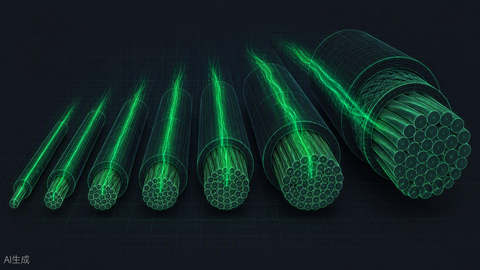
NEC 445.13 requires generator output conductors to carry at least 115% of nameplate current. Worked for the two common configurations, with ampacities from NEC 310.16 (75°C copper) and breaker sizes from 240.6:
| Step | 277/480V 3φ (120 A FLA) | 120/208V 3φ (278 A FLA) |
|---|---|---|
| 115% conductor minimum | 120 × 1.15 = 138 A | 278 × 1.15 = 320 A |
| Conductor choice (75°C Cu THHN) | 1/0 AWG — 150 A | 400 kcmil — 335 A |
| Standard breaker (NEC 240.6) | 150 A frame | 350 A frame |
| Conduit (3 conductors + ground) | 1.5 in. | 3 in. |
| Copper cost (100 ft run, relative) | 1× | ≈ 4× |
That last row is why the 480V configuration wins whenever the service allows it. Verify every conductor choice against the NEC ampacity chart with your actual ambient temperature and conduit fill — the table above assumes standard conditions.
Transfer Equipment: The ATS Is Half the System
The automatic transfer switch senses utility failure, signals the generator to start, waits for stable voltage and frequency, transfers the load, and reverses the sequence when utility returns. At 80 kW you are buying a service-entrance-rated ATS in most commercial installs — 100A to 400A frames depending on configuration — and the specification details matter: 3-pole vs 4-pole (switched neutral for separately derived systems), withstanding and closing ratings against available fault current, and communications back to the generator controller. Undersized or mismatched ATS gear is the second most common failure point I get called to fix, right behind neglected batteries. Source correctly rated equipment from the transfer switch collection and automatic transfer switches, and match the frame to the math above, not to what happens to be in stock.
Installation: What the Site Owes the Machine
A standby generator install is a small construction project. The concrete pad must be sized for the unit's wet weight plus impact factors, level within the manufacturer's tolerance, and set with the code-required clearances — typically 3 feet minimum at the service end, 5 feet from combustible walls and openings, and more where the AHJ or the enclosure's air flow demands it. Exhaust routing must respect window and intake distances. The fuel system — whether a sub-base diesel tank with fill and vent discipline, or a gas line upsized for full-load BTU demand at the building's pressure — is engineered work, not plumbing improvisation. Electrical runs from generator to ATS and ATS to service follow the sizing math above, with the control wiring (start signal, communications) in its own raceway. Cold climates add block heaters and battery warmers from the cold-weather kit collection; seismic zones add anchoring calculations. Budget the site work honestly: on a typical commercial install, pad, fuel, trenching, and electrical run $8,000–$20,000 beyond the equipment.
Controls and Remote Monitoring
The modern Cummins control platform — PowerCommand-class controllers across this size range — does far more than start and stop. It logs every exercise run, every fault, every transfer event with timestamps; it watches battery voltage trends, coolant temperature, oil pressure, and fuel level; and with a cellular or network gateway it pushes all of it to your phone. Specify the monitoring option. Without exception, the failed-to-start generators I have been called to resurrect showed warning signs in their data for weeks before the outage that mattered — a lazy battery, a coolant sensor drifting, an exercise run that kept aborting. A $400 monitoring accessory converts those into text messages instead of a dark building. Options live in the generator monitoring and alarm accessories collection.
Maintenance: The Schedule That Keeps the Warranty Real
| Interval | Tasks | Who |
|---|---|---|
| Weekly (automatic) | Exercise run, 15–30 min; controller logs result | Machine |
| Monthly | Visual inspection: leaks, belts, hoses, battery terminals, fuel level, enclosure pests | Owner/staff |
| Every 6 months / 250 hrs | Oil and filter change (or per oil analysis), coolant check, air filter inspection | Service tech |
| Annually | Full service: filters, fuel polish (diesel), battery load test, ATS exercise and inspection, firmware review | Service tech |
| Every 2–3 years | Load-bank test to 100% rating; coolant replacement per schedule | Service tech |
| Every 3–5 years | Battery replacement — proactively, not post-mortem | Service tech |
Annual professional service on an 80 kW unit runs $800–$1,500 per visit in most markets. Skipping it is the most expensive savings in the industry: the single most common reason standby generators fail to start is a $250 battery that nobody load-tested for four years. Keep genuine maintenance kits on the shelf from the maintenance kit collection and generator accessories so service visits never wait on parts.
Total Cost of Ownership: The Twenty-Year Ledger
| TCO Component (80 kW diesel, commercial install) | 20-Year Cost |
|---|---|
| Generator, enclosure, sub-base tank | $28,000–$42,000 |
| ATS (service-entrance rated) + installation | $8,000–$16,000 |
| Pad, fuel system, electrical, permits | $8,000–$20,000 |
| Maintenance (20 yrs: annual service + consumables) | $18,000–$30,000 |
| Fuel (testing + typical outage hours, 500 hrs over 20 yrs @ ~5 gal/hr avg) | $9,000–$15,000 |
| Batteries (4–5 replacements) | $1,200–$2,000 |
| 20-year total | ≈ $72,000–$125,000 |
Set that number against what an outage costs your operation. A cold-storage warehouse losing a weekend of inventory, a clinic canceling two days of procedures, a manufacturer scrapping one in-process batch — single events in the $20,000–$200,000 range. The generator is not an expense line; it is an insurance policy whose premium buys you an asset with residual value. For smaller operations where 80 kW overshoots the load, the math works identically at the 48 kW or 60 kW class — and our 22 kW guide covers the residential-scale version of this same decision.
Where 80 kW Cummins Units Earn Their Keep
The applications that justify this class share one trait: downtime has a price tag with commas. Medical and dental facilities with refrigeration and procedure schedules; grocery and cold storage with perishables; water and wastewater lift stations where code mandates backup; manufacturing cells where an interrupted process ruins work in progress; data closets and telecom shelters; agricultural operations — dairy parlors, poultry ventilation, irrigation — where animal welfare and crop value ride on continuous power; and multi-tenant commercial buildings where the elevator and egress systems are legal obligations, not conveniences. If your operation is on that list, the question is not whether to install standby power but how to specify it correctly the first time.
The Five Sizing and Buying Mistakes I See Repeatedly
First, sizing from the service panel rating instead of the actual measured load — a 400A service does not mean 400A of load, and I have talked owners out of oversizing by 50% after a week with a data logger. Second, ignoring motor starting kVA until commissioning day, when the fire pump or the chiller refuses to start. Third, buying the generator before engineering the fuel system — a gas meter that cannot deliver full-load BTU is a paperwork problem with a five-figure fix. Fourth, skipping the load-bank test at commissioning to save a day's rental; the commissioning test is where you discover the problems while the installer is still on site. Fifth, treating monitoring as an option instead of a requirement. Every one of these is cheaper to prevent than to repair, and all five are prevented by the same thing: a load study and a complete specification before purchase. When you are ready to price equipment, the Cummins generator collection and the 80 kW class list current inventory, and our team will walk the load audit with you before you commit a dollar.
Anatomy of the Machine: Engine, Alternator, Enclosure
Strip the enclosure off an 80 kW Cummins and you find three engineered systems sharing a skid. The engine — a commercial-duty inline diesel in the 6.7-liter class on current models, or a gaseous-fueled equivalent — is rated for standby duty with the cooling, governor, and turbocharging to accept near-full load within seconds of a start signal. The alternator is a brushless, four-pole, revolving-field machine with Class H insulation, sized for motor-starting kVA and built to tolerate the harmonic abuse that modern electronic loads dish out. The enclosure — weather-protective or sound-attenuated Level 1/Level 2 — decides whether your neighbors tolerate the machine; sound-attenuated packages typically hold noise to the mid-60s dBA at 23 feet during exercise, which matters more to a dental office than to a dairy.
| Subsystem | What to Verify on the Spec Sheet | Why It Matters in the Field |
|---|---|---|
| Engine | Standby rating at your altitude/temperature; block heater wattage | Derating decides real available power; heaters decide cold starts |
| Alternator | Motor-starting kVA at 30–35% voltage dip; insulation class | The number that decides whether your largest motor starts |
| Cooling | Rated max ambient with full load (typically 40–50°C class) | Heat waves coincide with storm outages — buy margin |
| Enclosure | dBA rating at 7 m; wind/load rating; corrosion package | Noise complaints and salt air are real lifecycle costs |
| Controller | PowerCommand-class with event logging and comms port | Data is the difference between maintenance and archaeology |
| Fuel system | Sub-base tank capacity; fuel polishing provisions | Runtime is a tank-size decision made at purchase |
Emissions and EPA Compliance: What Buyers Must Know
Stationary engines in the US are federally certified under EPA tiers, and the rules split sharply by use case. Emergency standby units — machines that run only during outages and testing, typically capped at 100 hours per year of non-emergency operation including maintenance — may be certified to the less stringent emergency tiers. Any unit that runs for demand response, peak shaving, or prime power must meet the far stricter Tier 4 Final standards with aftertreatment (DEF, DPF). The trap that catches buyers: using a cheap emergency-rated unit for peak shaving is a federal violation, and the fines make the hardware price difference look trivial. Buy the certification that matches the duty cycle you will actually run, and document your run hours — the controller log is your compliance record.
Altitude, Temperature, and Derating

Published kilowatt ratings assume standard conditions; real sites are not standard. The working rules of thumb used across the industry: turbocharged diesels lose roughly 1% of capacity per 1,000 feet above about 1,000 feet of elevation, and naturally aspirated gaseous engines lose 3–4% per 1,000 feet above 500–1,000 feet — an 80 kW natural-gas unit in Denver can be a 62–68 kW machine in practice. Ambient heat stacks on top: capacity and cooling margin erode above 25–40°C depending on the package. The table below shows what derating does to a nameplate 80 kW at representative sites — always confirm against the manufacturer's specific derate curves:
| Site Condition | Diesel (turbo) Available kW | Natural Gas (NA) Available kW |
|---|---|---|
| Sea level, 25°C | 80 | 80 |
| 2,500 ft, 35°C | ≈ 78 | ≈ 73 |
| 5,000 ft, 35°C (Denver) | ≈ 76 | ≈ 64–68 |
| 7,000 ft, 40°C (high desert) | ≈ 74 | ≈ 56–62 |
If your load audit says 72 kW and your site sits at 5,000 feet, the gaseous 80 kW nameplate is already undersized. This single paragraph has saved my customers more money than any other in this guide.
Diesel Fuel Management: The Silent Killer of Standby Systems
Diesel in a standby tank ages. Water condenses, microbes colonize the fuel-water interface, asphaltenes settle, and after eighteen to thirty-six months of neglect the tank contains a smoothie that will plug a filter mid-outage. The defense is boring and absolute: buy quality fuel, keep the tank near full to shrink the condensation headspace, add stabilizer and biocide on schedule, and polish the fuel — pump it through filtration and back — annually. A fuel polishing service call costs a few hundred dollars; discovering degraded fuel during a 36-hour outage costs whatever your inventory was worth. Runtime planning on the standard sub-base tank sizes for this class:
| Sub-Base Tank | Runtime @ 100% Load (≈6.3 gal/hr) | Runtime @ 50% Load (≈3.7 gal/hr) | Runtime @ 25% Load (≈2.2 gal/hr) |
|---|---|---|---|
| 150 gal (usable ≈ 135) | ≈ 21 hr | ≈ 36 hr | ≈ 61 hr |
| 250 gal (usable ≈ 225) | ≈ 36 hr | ≈ 61 hr | ≈ 102 hr |
| 500 gal (usable ≈ 450) | ≈ 71 hr | ≈ 122 hr | ≈ 205 hr |
Usable capacity assumes roughly 90% of nominal — you never design to the bottom of the tank. For critical facilities, the AHJ or NFPA 110 may dictate minimum runtime (commonly 24–96 hours); size the tank to the requirement, then add the delivery-reliability margin your geography honestly warrants.
Commissioning Day: What Acceptance Testing Actually Looks Like
Commissioning is the day the paper machine becomes a power plant, and buyers should insist on witnessing it. A proper sequence: the technician verifies fuel, oil, coolant, and battery state; confirms all protective settings against the coordination study; starts the unit and verifies voltage and frequency stability at no load; closes the ATS and applies building load in steps, logging voltage dip and recovery time on each motor start; then runs a load-bank test pulling the machine to 100% of rating for a sustained period — typically two hours — while recording exhaust temperatures, oil pressure, and alternator temperatures. The load-bank step is the one contractors try to skip and the one that matters most: it burns off wet stacking from factory testing, proves the cooling system at full duty, and surfaces weak components while everyone who can fix them is standing on site. Finally, a live utility-failure drill: kill the service, watch the 10-second (or per-code) transfer, restore, and confirm cool-down and re-transfer. I have never regretted insisting on the full sequence; I have absolutely regretted accepting the abbreviated one.
New, Used, or Remanufactured: The Honest Trade-offs
The used-market pitch writes itself — a low-hour 80 kW unit at 60% of new price. The counterweights: standby generators live on calendar time as much as run hours (hoses, seals, and batteries age regardless), emissions certification attaches to the engine family and complicates relocation across air districts, and warranty coverage rarely transfers cleanly. Remanufactured units from reputable rebuilders split the difference — refreshed wear components, tested, often warrantied — and make sense for budget-bound optional-standby applications. For NEC 700 life-safety systems, buy new with full documentation every time; the liability asymmetry is not a place to save $15,000. Whatever you buy, verify the serial number's service history and the availability of parts for that engine family — another reason the Cummins ecosystem dominates this class: the parts pipeline is decades deep.
Warranty and the Service Network Behind the Machine
Standard standby warranty in this class runs two years with extended options to five or ten — read what the extension covers, because some cover parts only and exclude labor, travel, and the consumables that real service visits consume. More decisive than the paper is the service network: who within 50 miles stocks filters, belts, and controller boards for your model, and what is their emergency response commitment? A generator is a 20-to-30-year asset; the distributor relationship outlasts the salesman who quoted it. Ask for the service department's phone number before you sign, and call it once — the way they answer that call is the support experience you are buying. When you are ready to compare configurations, start at the Cummins collection or the broader commercial standby generator catalog, and bring your load audit — we will check the sizing before we quote the machine.
Sound, Neighbors, and Enclosure Selection
Generator noise is a permitting issue, a neighbor-relations issue, and occasionally a zoning-board issue. An open-set 80 kW diesel at full load is loud enough to dominate a property line conversation; weather-protective enclosures knock the edge off; sound-attenuated packages bring exercise-mode levels into the mid-60s dBA range at 23 feet — conversation volume. Two placement tactics multiply the enclosure's value: point the exhaust and radiator discharge away from occupied spaces, and use the building itself as an acoustic shadow where site layout allows. Also schedule exercise runs for mid-morning weekdays, not Sunday at 6 AM — the controller lets you pick the hour, and I have mediated more than one tenant complaint that traced to a factory-default exercise timer nobody ever changed.
The Exercise Schedule Debate
How often should a standby unit exercise, and under load? The traditional weekly 15-minute no-load run keeps fluids circulating and proves the start chain, but chronic no-load running on diesels invites wet stacking — unburned fuel and carbon fouling the exhaust. Current best practice splits the difference: exercise weekly or biweekly at no load for the shortest effective duration, and put real load on the machine monthly (building load via a manual transfer drill) or quarterly to annually via load bank. Whatever schedule you choose, log it. The controller records every run; during warranty claims and insurance reviews, that log is the difference between "maintained per schedule" and an awkward silence.
Paralleling and Planning for Growth
Load Prioritization Strategy
If your facility's five-year plan includes expansion, decide now whether the strategy is one large generator or paralleled smaller units. Paralleling two 40–60 kW sets buys redundancy (one unit can carry priority loads while the other is serviced) and incremental capital, at the cost of paralleling switchgear complexity. A single 80 kW is simpler and cheaper per kilowatt but is a single point of failure. The third path — install 80 kW with a pad, conduit, and ATS infrastructure sized for a future second unit — is the one I recommend most often for growing operations: the civil and electrical work is cheap at construction time and brutal as a retrofit. Whichever path you choose, the load audit from step one is the document everything hangs from.
Insurance, Permits, and the Utility Coordination Nobody Expects
Three administrative threads run parallel to the hardware. Insurance: notify your carrier before installation — standby generation changes the property's risk profile favorably, some carriers discount for it, and an unreported fuel tank is a coverage complication nobody wants to discover after a claim. Permits: expect electrical, mechanical or plumbing for fuel work, and possibly planning review for the pad and enclosure — timelines range from two weeks to three months depending on jurisdiction. Utility: even though a standby generator never exports, many utilities require notification of any generation interconnection, and your electrician must verify the transfer scheme physically prevents backfeed — the open-transition ATS is standard precisely because it makes utility-worker safety structural rather than procedural. Start all three threads the week you sign the equipment order; they, not the hardware, set the schedule.
A Field-Tested Buyer's Checklist
Before you sign a purchase order for an 80 kW Cummins or any comparable machine, confirm each of these in writing: a load audit with measured data or a defensible engineering estimate behind the kW rating; motor-starting kVA verified against your largest motor; voltage configuration matched to your service; altitude and temperature derating applied to the nameplate; fuel runtime calculated at realistic load levels, not best-case; emissions certification matched to your intended duty cycle; ATS frame and pole configuration engineered with the electrical design; enclosure sound rating compatible with the site; warranty terms with labor and travel explicitly stated; a named service provider within response distance; and a commissioning plan that includes a load-bank test and a live transfer drill. Twelve items, one page, and every expensive generator failure story I know starts with one of them skipped. Bring that checklist to us along with your load data, and the equipment conversation takes an hour instead of a month.
Load Banking, In Depth
The load-bank test deserves its own section because it is the most skipped and most valuable step in the generator lifecycle. A portable resistive load bank applies controlled electrical load — 25%, 50%, 75%, 100% steps — directly to the generator, independent of building loads. What it proves: the engine makes full rated power (not just "starts and runs"), the cooling system holds temperature at full duty, the governor and voltage regulator stay stable across load swings, and the exhaust system handles full-load temperatures. What it fixes: wet stacking burns off under sustained high load, restoring rings and injectors that months of light-load exercising fouled. The cadence I recommend for standby diesels in this class: a full load-bank at commissioning, then every two to three years, plus annual load testing at the highest level building loads allow. Rental load banks and a qualified technician for a day run $1,500–$3,000 — against a $40,000 machine whose entire purpose is performing on the worst day of the year, it is the best money in the maintenance budget. Skipping it to save a day's rental is how facilities discover — mid-outage, at full load for the first time in the machine's life — a cooling fault or a weak fuel pump that a two-hour test would have surfaced while everyone who could fix it was still on site.
Cold-Weather Operation: The Northwest Reality
Generators fail to start in cold weather for reasons that are entirely preventable. Battery cranking power falls roughly 20% at 32°F and 40%+ at 0°F while engine oil thickens and cranking loads rise — the battery that "seemed fine" in October is the no-start in the January ice storm. The defense stack: a properly sized block heater keeping coolant warm (and the oil with it), a battery warmer or at minimum a float charger with temperature compensation, and winter-grade fuel with anti-gel additive for diesel units — number 2 diesel gels in sustained deep cold, and a gelled filter is a no-start with extra steps. Cold-weather packages from the cold-weather kit collection bundle exactly these components, and they are standard practice for any unit installed outdoors north of the Mason-Dixon line. Test the heaters every fall; a failed block heater is silent until the night it matters.
The Service Contract Decision
Should you buy the dealer's service contract or self-maintain? The honest answer depends on staffing. Facilities with a competent maintenance department can handle monthly inspections and consumables, leaving annual service and load banking to the pros — the hybrid model saves 30–40% against full contracts. Operations without technical staff should buy the contract: scheduled visits, priority emergency response, and a service history that keeps warranty claims frictionless. What I counsel against is the third path — the "call someone when it breaks" plan — because standby generators break silently: they fail during the months nobody is looking, and announce it during the outage. Whatever you choose, get response-time commitments in writing, and confirm the provider stocks parts for your engine family rather than ordering them after your building goes dark.
Rental, Lease, or Purchase at 80 kW
Not every operation should buy. Rental and lease structures make sense in three situations: construction-phase or temporary power needs measured in months, capital-constrained operations where a deductible monthly payment beats a capital request, and organizations testing a site before committing — a year of rented runtime data settles the sizing debate with real numbers. Purchase wins whenever the need is permanent: the 20-year cost of ownership table above beats any rental stream within three to four years of cumulative payments. The hybrid worth knowing: some dealers offer rent-to-own programs where rental months credit toward purchase, which de-risks the sizing decision without stranding capital.
The On-Site Spare Parts Kit
Every 80 kW installation should ship with a shelf of spares, and specifying it at purchase costs far less than overnight freight at 2 AM. The sensible kit for this class: a complete set of filters (oil, fuel, air) for one full service, a spare belt, two quarts of the correct oil, coolant to top off, fuses for the controller, and — critically — a spare starting battery maintained on a tender, or at minimum a documented rapid-source agreement for one. Add the consumables your environment accelerates: dust-belt sites double the air-filter stock, coastal sites add enclosure hardware in the correct corrosion grade. The whole kit runs a few hundred dollars and converts the most common failures from multi-day waits into one-hour fixes. Our generator accessories and maintenance kit collections cover the standard list for this class.
Fuel Supply Contracts and the Resupply Plan
For diesel installations, the generator is only as reliable as the next fuel delivery. Regional disasters reorder every supplier's priority list, and the customers who get refilled first are the ones with contracts, not the ones with credit cards. A fuel service agreement with guaranteed delivery windows — typically 24 to 72 hours — costs little or nothing beyond the fuel itself and belongs in the same conversation as the equipment purchase. Three operational habits complete the plan: top off after every extended run, log deliveries and consumption in the same record as the maintenance log, and re-verify the supplier's emergency contact tree annually. For natural-gas units, the equivalent discipline is confirming with the utility that your service sits on a priority pressure zone — hospitals and water plants get protected first, and knowing where your building stands in that hierarchy is part of honest resilience planning. Either way, document the plan in the same binder as the maintenance log and the load audit — the machine, the fuel, and the paperwork are one system, and the weakest of the three decides how long the lights stay on.
Frequently Asked Questions
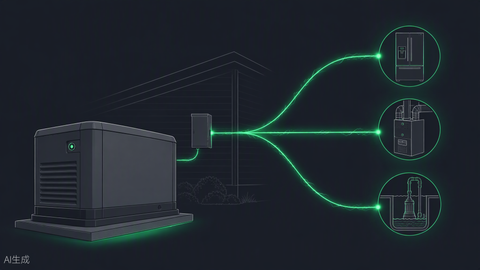
What can an 80 kW generator actually power? A typical small commercial building: two 10-ton HVAC units, refrigeration, full lighting, IT infrastructure, an elevator, and pumps — roughly 60–76 kW of running load with properly sequenced motor starts. The right sizing always starts with a measured load audit, not square footage.
How much fuel does an 80 kW diesel generator use?
Representative figures for the class: about 6.0–6.5 gallons per hour at full load and 3.5–4.0 gallons per hour at half load. Confirm the specific engine's published fuel curve before sizing tanks — at half load, a 200-gallon sub-base tank delivers roughly two days of runtime.
Diesel or natural gas for an 80 kW standby?
Diesel wins on fuel energy density, cold starting, and independence from utility gas pressure; natural gas wins on runtime and eliminates on-site fuel storage and polishing. Sites with reliable gas service and air-quality constraints lean gaseous; sites needing multi-day autonomy lean diesel with a sub-base tank.
Does an 80 kW generator need a permit and engineered drawings? Yes, everywhere we have ever installed one: electrical permit at minimum, usually mechanical/plumbing for fuel work, and frequently an engineered pad and anchoring detail. NEC 700/701/702 classification determines transfer and wiring requirements — confirm with your AHJ before ordering equipment.
How often does an 80 kW Cummins need service? Weekly automatic exercise, monthly visual checks, oil and filters every 6 months or 250 hours, full professional service annually, load-bank testing every 2–3 years, and proactive battery replacement every 3–5 years. Annual professional service typically runs $800–$1,500.
What does a complete 80 kW installation cost? Equipment plus ATS plus site work typically totals $44,000–$78,000 depending on configuration and site complexity, with 20-year cost of ownership including maintenance and fuel running $72,000–$125,000.