SMA Sunny Highpower PEAK3 FLEX-US-21 (180KVA, 690VAC): The Commercial Inverter Deep Dive
High-voltage architecture, transformer strategy, conductor math, and the kVA-versus-kW reality — everything an EPC or facility engineer needs before specifying the FLEX.

For EPCs, facility managers, and commercial developers, inverter selection decides whether a large-scale project meets its pro forma or dies by a thousand small losses. The SMA Sunny Highpower PEAK3 FLEX-US-21 delivers 180KVA at 690VAC — a deliberately high-voltage architecture engineered for energy-intensive commercial and industrial installations where transmission losses and conductor costs compound fast. This guide breaks down the specifications, the installation economics, the transformer question every buyer asks, the sizing mistakes that derail commercial projects, and the operations discipline that protects the investment — with the worked math to check each claim yourself.
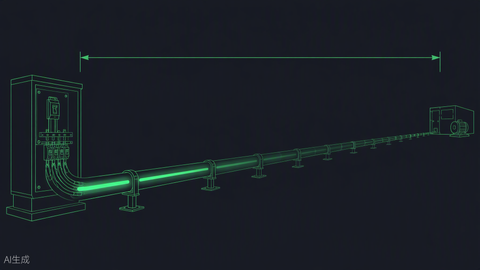
Voltage is the cheapest conductor. Power delivered at 690V needs roughly 30% less current than the same power at 480V — and since line losses scale with the square of current (I²R), the loss reduction is closer to 50% on equivalent runs. On a site where inverters sit hundreds of feet from the point of interconnection, that difference is measured in percentage points of lifetime energy yield and in thousands of pounds of copper you don't buy. This is the same physics that pushed utility DC design to 1500V, applied to the AC side of the fence.
Consider a concrete illustration: a 180KVA unit pushing power 500 feet at 480V on appropriately sized copper sheds roughly 1.5–2% of its output as heat in the conductors before the energy ever reaches the meter. The same unit at 690V on its lighter native conductors sheds under 1%. Over a 25-year life at commercial energy values, that single percentage point is a five-figure sum per inverter — recaptured not by better hardware, but by better voltage. It also explains why data centers and heavy industry standardized on medium-voltage distribution decades ago; solar is simply catching up to the same arithmetic.
The catch — and it is a real one — is that almost no U.S. commercial facility distributes at 690V. The FLEX therefore assumes a step-down transformer to 480V (or the facility's service voltage) in the design. That transformer is a known quantity: sized once, bought once, and it amortizes across every inverter on the block. The arithmetic usually still favors 690V architecture once the array exceeds a few hundred kW and the cable runs get long. Our three-phase power explainer covers the voltage classes and transformer basics, and the commercial installation cost guide shows where transformation lands in the budget.
Each row below maps to a real design decision; the "why it matters" column is where the specification earns its place on the one-line diagram.
690VAC High-Voltage Efficiency
| Specification | Value | Why It Matters |
|---|---|---|
| Apparent power (AC) | 180 kVA | Supports large commercial loads and high DC/AC ratios per unit |
| AC voltage | 690 VAC, 3-phase | Cuts current ~30% vs 480V; halves I²R line losses on long runs |
| Max efficiency | 98.5% | Maximizes energy harvest from every installed module |
| DC input | 1500 V class | Long strings, fewer homeruns, lower BOS cost |
| Real power @ 0.90 PF | 180 × 0.90 = 162 kW | The usable-power number for typical commercial facilities |
| Real power @ 0.95 PF | 180 × 0.95 = 171 kW | Well-corrected facilities recover most of the kVA rating |
| Enclosure | Aluminum, IP65 | Outdoor pad mounting; dust- and jet-water resistant |
| Monitoring | Sunny Portal / Data Manager | Fleet analytics, fault alerts, production reporting |
| Warranty | 5 years standard, extendable to 20 | Match the term to the project's financing horizon |
The single most common commercial inverter misunderstanding: kVA is apparent power — the vector sum of real power (kW) and reactive power (kVAR). What your loads consume and what your meter bills (for energy) is kW. Apparent power is what heats conductors and rates equipment. The conversion between them is the power factor, and getting this distinction wrong is expensive in both directions: under-specify and you clip; over-specify and you bought capacity the facility can't use. The conversion is the power factor:
| Facility Power Factor | Calculation | Usable Real Power |
|---|---|---|
| 0.85 (older plant, uncorrected motor loads) | 180 kVA × 0.85 | 153 kW |
| 0.90 (typical commercial) | 180 kVA × 0.90 | 162 kW |
| 0.95 (corrected facility) | 180 kVA × 0.95 | 171 kW |
| 1.00 (unity, theoretical) | 180 kVA × 1.00 | 180 kW |
Specify against your facility's measured power factor, not the nameplate. A plant that models its solar offset at 180kW and discovers its 0.88 power factor reality at commissioning has a 158kW system wearing a 180kVA badge — a 12% shortfall that no amount of panel washing recovers. Pull twelve months of interval data from the utility before finalizing the design; the power factor is right there in the billing history, and it is the cheapest engineering data you will ever acquire. The flip side: the FLEX can also source or sink reactive power within its capability curve, so in facilities paying power-factor penalties, the inverter's VAR support can partially correct the plant's PF while it produces real power — ask your engineer of record to evaluate that in the interconnection design.
The FLEX's 690V output works the numbers in your favor. Per NEC 690.8's 125% continuous-output sizing:
| Design Step | 690 VAC (Native FLEX Output) | Equivalent at 480 VAC |
|---|---|---|
| Rated current | 180,000 ÷ (690 × √3) = 150.6 A | 180,000 ÷ (480 × √3) = 216.5 A |
| × 1.25 continuous factor | 188.3 A | 270.6 A |
| Breaker (NEC 240.6) | 200 A | 300 A |
| Copper conductor, 75°C (NEC 310.16) | 3/0 AWG (200 A) | 350 kcmil (310 A) |
| Aluminum option, 75°C | 250 kcmil (205 A) | 500 kcmil (320 A) |
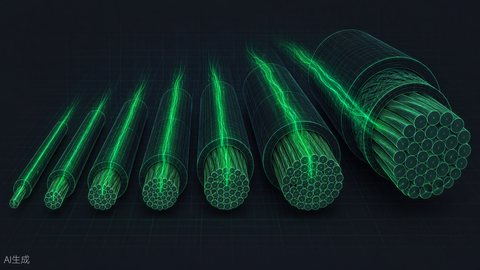
Read across a 500-foot run and the table becomes a purchasing decision: three phases plus ground at 3/0 copper versus 350 kcmil is roughly 40% less conductor weight per foot — thousands of dollars on a multi-unit block, before the conduit size bump (350 kcmil often forces a larger raceway) and the pulling labor. This is the 690V architecture's quiet payoff, and it compounds with every inverter you add to the block. Voltage drop deserves one more caution: even at 690V, very long runs warrant a formal drop calculation in the design package, because every 1% of voltage drop is 1% of energy the meter never sees, forever.
Modular Architecture and Site Applications

The FLEX designation reflects the platform's deployment flexibility: the units tile across rooftops, carports, and ground-mounts, and the block scales by adding units rather than re-engineering. That modularity is a financing feature as much as an engineering one — phased expansions slot into the original interconnection footprint, and the owner's operations team learns one platform across every phase. Where the 180KVA class earns its keep:
- Industrial manufacturing. High continuous loads and demand charges make self-consumption the primary value; the FLEX's output class matches plant-scale consumption without fragmentation into dozens of small inverters.
- Large commercial buildings and campuses. Distributed rooftop arrays with long AC runs back to central switchgear — exactly where 690V line-loss math wins.
- Utility-scale ground-mount. Multi-megawatt blocks tiling FLEX units behind shared step-up transformation.
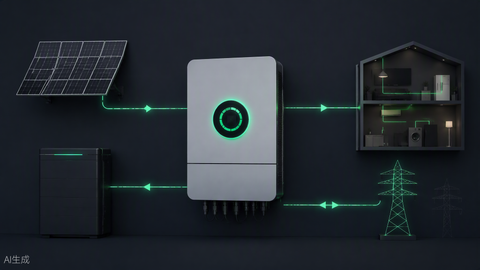
- Hybrid storage projects. AC-coupled battery systems pair with the FLEX for backup, peak shaving, and grid services; the inverter's grid-support functions coordinate with the storage controller through standard protocols.
There is also an underappreciated resilience argument for the multi-unit string architecture at this scale: a site built on ten FLEX units tolerates any single unit's failure with a 10% capacity reduction and a truck-roll repair, while a monolithic central design puts the entire revenue stream on one cabinet. Insurance underwriters and lenders have started pricing that distinction into their requirements, which is another quiet reason the string architecture keeps winning commercial segments that used to default to central stations.
For projects sized below this class, the 150kW inverter collection and our 100kW inverter guide bracket the decision from below; above it, the 250kW+ collection maps the utility tier. The full manufacturer's residential-to-utility arc is in our SMA brand guide.
The FLEX is professional-grade equipment and installs like it — meaning the schedule risk concentrates in design and coordination, not in the physical mount. The pre-installation checklist that prevents slips:
- Load analysis. Verify the 180KVA rating against facility consumption and a 5–10 year growth projection — commercial loads rarely shrink.
- Transformer specification. Size the step-down unit for the full block, not unit-by-unit; check impedance and efficiency at partial load, where solar transformers spend their mornings and evenings.
- Switchgear coordination. Confirm the 690V side's switchgear and the 480V side's breaker coordination study are stamped by the engineer of record before equipment arrives.
- Pad and clearance plan. IP65 means outdoor-capable, not maintenance-proof; preserve airflow clearances and service access on all four sides.
- Monitoring network. Provision the Data Manager and network drops with the electrical rough-in, not after PTO — monitoring is a deliverable, not an accessory.
- Interconnection settings. Load the utility's smart-inverter profile (volt-VAR, frequency-watt, ramp rates) during commissioning and document the settings file for the witness test.
Sequencing discipline matters as much as the checklist itself: the transformer lead time is frequently the longest pole in the equipment schedule, so release it first, before the inverters, before the racking. Sites that order inverters in week one and transformers in week six discover the mismatch in month four, when the inverters sit crated and the transformer is still a twinkle in the factory's queue. Order by lead time, not by line-item size.
The compliance backdrop for all of this sits in our NEC code compliance guide, and system-level sizing questions route through the inverter sizing calculator. For buyers assembling the full bill of materials, the solar inverter buyer's guide and the 2026 solar energy pricing guide put the inverter line item in whole-project context.
One commissioning practice deserves emphasis on 690V systems specifically: verify the transformer's tap setting and measured secondary voltage before the first full-power run. A transformer tapped 2.5% high compounds with a stiff utility service to push the inverters toward their overvoltage curtailment threshold on light-load weekends — a subtle, seasonal underperformance that looks like a hardware problem and isn't. Five minutes with a meter at commissioning prevents a season of head-scratching.
The FLEX's DC side follows the same 1500V string logic as the rest of the PEAK3 family, and the cold-weather voltage correction per NEC 690.7 sets your string length. Using a modern 550W-class bifacial module (Voc ≈ 49.9V, temperature coefficient ≈ −0.26%/°C), the design table is:
| Design Low Temp | Correction Factor | Corrected Voc | Max Modules per String | String Power |
|---|---|---|---|---|
| −5°C | 1.078 | 53.8 V | 27 | 14.85 kW |
| −15°C | 1.104 | 55.1 V | 27 | 14.85 kW |
| −25°C | 1.130 | 56.4 V | 26 | 14.30 kW |
| −35°C | 1.156 | 57.7 V | 26 | 14.30 kW |
At a 1.3 DC/AC ratio, each FLEX carries roughly 235kW DC of array — about 16 strings of 27 modules. A 2MW DC block is therefore nine inverters and ~135 strings, which is the scale where the 690V AC architecture and 1500V DC architecture stack their savings: fewer inverters, fewer strings, lighter AC feeders, and one transformation step for the whole block. Module selection for this class of array is covered in our commercial solar panels guide and the commercial panel cost breakdown.
Integrated Monitoring with Sunny Portal
A single FLEX is a machine; nine of them are a fleet, and fleets live or die on monitoring discipline. The Sunny Portal and Data Manager stack provides the three outputs that matter operationally: yield-versus-expected reporting per unit (so a degraded string shows as a variance, not a mystery), automated fault alerts with enough diagnostic context to dispatch the right tech with the right parts, and the IV-curve and insulation-resistance diagnostics that catch connector degradation and ground faults before they become arc events.
Operational practices that separate well-run fleets:
- Weekly variance review. Ten minutes comparing unit-level yield against expected catches soiling gradients and failed strings while they're cheap to fix.
- Alert routing with ownership. Every alert email lands on a named human with authority to dispatch; orphaned alerts are the leading cause of silent production loss.
- Annual IV-curve baselining. Re-trace a sample of strings each year against the commissioning baseline; the drift rate is your earliest module-degradation evidence for warranty purposes.
- Spare-parts shelf. Fans, fuses, and a communications gateway on the shelf convert week-long outages into same-day swaps.
Commercial inverter purchases should be evaluated on lifetime cost per delivered MWh, not purchase price. The components of that number for a FLEX-class unit, based on project budgets we've reviewed:
| Cost Component | Share of 20-Year TCO | Management Lever |
|---|---|---|
| Hardware purchase | 25–35% | Competitive procurement; avoid over-specification |
| Installation and electrical BOS | 20–30% | 690V architecture; long-string DC design |
| Energy losses (conversion + thermal) | 20–30% | 98.5% peak efficiency; shade and airflow at siting |
| Operations and maintenance | 10–15% | Monitoring subscription; spare parts; preventive schedule |
| Downtime losses | 5–10% | Alert discipline; swap-out service model; warranty term |
The table explains why experienced buyers interrogate the middle rows harder than the top row: a unit that costs 8% more but converts 0.5% more efficiently and fails half as often wins the 20-year math decisively. The FLEX's combination of high conversion efficiency, high-voltage architecture, and a swap-serviceable string form factor is engineered squarely at those middle rows.
Mistake #1: Confusing kVA and kW Ratings
| Mistake | Consequence | Fix |
|---|---|---|
| Confusing kVA with kW | 10–15% production shortfall vs. pro forma | Model at measured facility power factor |
| Sizing to today's load only | Expansion requires new interconnection | Design for 5–10 year load growth or modular headroom |
| Ignoring transformer losses | 1–2% phantom efficiency gap | Specify low-loss transformers; include in energy model |
| Assuming 690V connects to 480V directly | Redesign at submittal stage | Plan step-down transformation from day one |
| Skipping the utility settings sheet | Failed witness test, delayed PTO | Obtain smart-inverter requirements during application |
Our team fields these questions regularly from EPCs, facility managers, and project developers evaluating the PEAK3 FLEX-US-21 for commercial installations. The answers below reflect the datasheet, the NEC, and what we see on real projects.
How many kW does the 180KVA inverter actually deliver?
Multiply by your facility's power factor: at 0.90 PF (typical commercial) that's 162kW of real power; at 0.95 PF, 171kW. Model against measured PF, not nameplate, or your production estimate inherits a 10–15% error.
Does the 690VAC output connect to a standard 480V service?
No — a step-down transformer is required between the FLEX's 690V output and 480V (or 208V) facility distribution. That transformer is a planned, budgeted component of the architecture and usually pays for itself in conductor and line-loss savings on larger sites.
What breaker and wire does each unit need on the 690V side?
Per NEC 690.8: 180,000VA ÷ (690V × √3) = 150.6A, × 1.25 = 188.3A, so a 200A breaker (NEC 240.6) with 3/0 AWG copper at 75°C per NEC Table 310.16 — versus 300A and 350 kcmil copper for the same power at 480V.
Can the PEAK3 FLEX work with battery storage?
Yes. It pairs with AC-coupled storage systems for backup, peak shaving, and grid services, with grid-support functions coordinated through standard control protocols. Storage retrofit does not require replacing the inverter.
What warranty does SMA provide?
Five years standard, extendable to 20 years — match the extension to the project's financing horizon. Keep commissioning records and monitoring history current, since they drive claims speed.
Is the FLEX suitable for a 100kW commercial project?
No — its economics start making sense in the several-hundred-kW range and shine in multi-unit blocks. Below that, the Peak3 125 at native 480V or smaller string units are usually the better tool.
How efficient is the PEAK3 FLEX in real operation?
Peak conversion efficiency is 98.5%, among the best in the commercial string class. Delivered annual efficiency runs somewhat lower once thermal derating, transformer losses, and clipping at your chosen DC/AC ratio are included — model all three rather than designing to the peak number.
Specifying a high-voltage commercial block? We stock the SMA Sunny Highpower PEAK3 FLEX-US-21 and the full SMA commercial family. Call 866-607-3636 for project pricing, transformer coordination support, and current datasheets.