SolarEdge HD-Wave Wins 2018 Edison Award: A Complete History, Specs Guide & Technical Review
On April 11, 2018, in New York City, SolarEdge accepted the Edison Award in Energy & Sustainability for its HD-Wave inverter technology. The award recognized what installers and engineers already knew: the HD-Wave represented one of the most significant leaps in residential solar inverter design in two decades. This article examines the technology, the award, the full model lineup, and why the HD-Wave still matters to anyone sizing a residential system today.

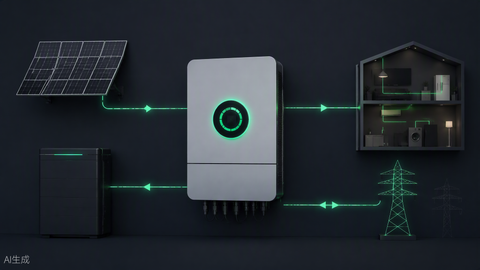
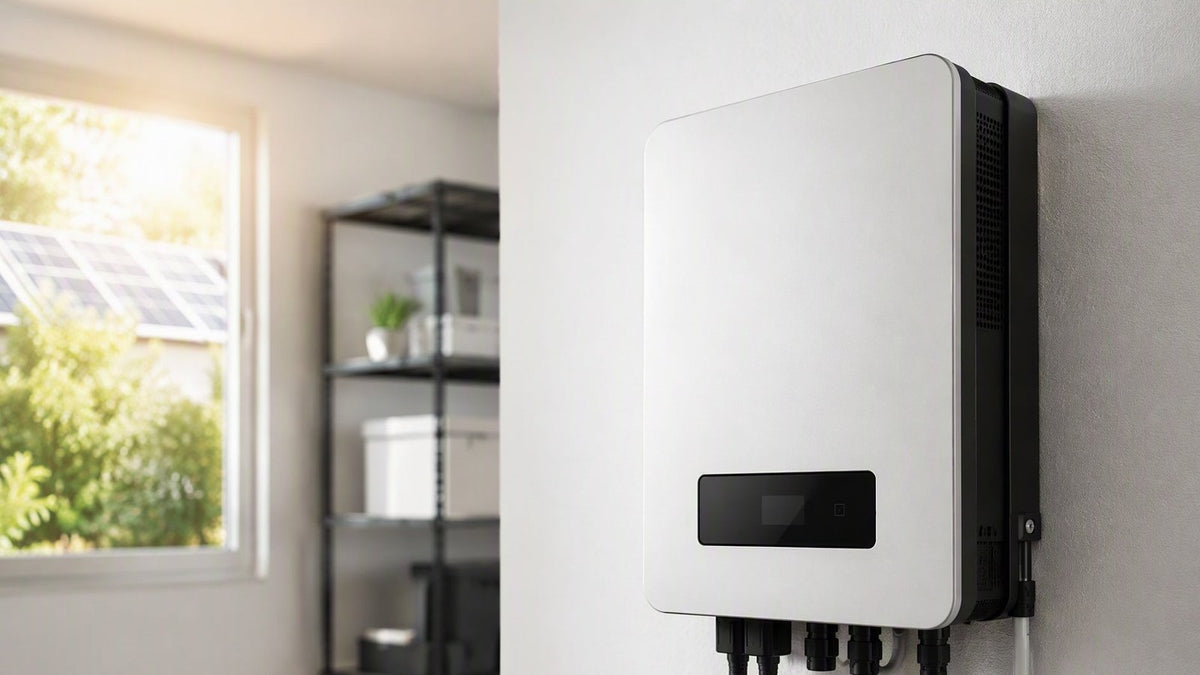
The SolarEdge HD-Wave inverter family, shown here with the SE6000H-US, won the 2018 Edison Award for its distributed-switching topology and industry-leading efficiency.
Table of Contents
- What Is the Edison Award and Why It Matters for Solar
- The 2018 Win: What SolarEdge HD-Wave Did Differently
- HD-Wave Technology Deep Dive
- From Unveil to Victory: The 2015-2018 Timeline
- Complete HD-Wave Model Lineup and Specifications
- Real-World Performance: What Installers and Homeowners Report
- HD-Wave vs the Competition in 2018
- Installation, Commissioning, and NEC Compliance
- Monitoring, Safety, and Smart Features
- System Design and Sizing Considerations
- Where It Stands Today
- Frequently Asked Questions
- Conclusion: Why the 2018 Edison Award Still Matters
The Edison Awards occupy a distinctive position in the landscape of innovation recognition. Run by Edison Universe, a nonprofit 501(c)(3) organization dedicated to honoring and fostering innovation, the awards are named after Thomas Alva Edison and are entirely separate from the IEEE honors that sometimes confuse newcomers to the industry. Since their inception, the Edison Awards have served as a global platform that recognizes, honors, and shares the stories of the teams behind the world's best new products and services. For a solar hardware manufacturer to win in this arena means something. It means the product has passed rigorous scrutiny not merely from solar insiders, but from a multidisciplinary panel of executives, designers, scientists, and entrepreneurs who evaluate innovations across every industry sector.
History of the Edison Awards
The Edison Awards trace their lineage back to the spirit of American invention that Edison himself embodied. Unlike trade-specific recognitions that circulate within a single vertical, the Edison Awards draw nominees from biotechnology, energy, consumer electronics, industrial design, and sustainability simultaneously. This cross-industrial judging pool is what gives the award its weight. A solar inverter does not compete only against other inverters. It competes against medical devices, electric vehicle platforms, and advanced manufacturing systems. To win means the product's innovation is legible and significant to experts who do not spend their careers thinking about maximum power point tracking or distributed switching architectures.
Over the years, the Edison Awards have recognized breakthrough products that later became household names and industry standards. The rigorous nomination and evaluation process involves multiple rounds of review, including detailed technical submissions, competitive benchmarking, and finalist presentations. For energy technology companies, the award functions as a third-party validation that cuts through marketing language and speaks directly to engineering credibility.
Judging Criteria and Categories
Edison Award entries are evaluated on four core pillars: concept, value, delivery, and impact. The concept criterion examines whether the innovation solves a real problem in a novel way. The value criterion assesses whether the product delivers measurable benefit relative to cost. Delivery evaluates the execution, reliability, and market readiness of the product. Impact measures the potential for the innovation to change its industry or society at large. These four pillars are applied uniformly across all categories, which means an inverter must demonstrate not just technical sophistication but also market viability and societal benefit to advance through the judging rounds.
The Energy & Sustainability category specifically recognizes innovations that advance the generation, distribution, storage, or conservation of energy, as well as products and processes that contribute to environmental sustainability. In 2018, this category included entries from battery manufacturers, smart grid technology providers, electric vehicle infrastructure companies, and renewable energy hardware developers. SolarEdge's HD-Wave inverter emerged from this competitive field as the clear winner.
Past Energy & Sustainability Winners
Before 2018, the Energy & Sustainability category had recognized a range of technologies that shared a common thread: they all addressed fundamental bottlenecks in the energy transition. Previous winners included advancements in lithium-ion battery chemistry, utility-scale energy management software, and high-efficiency photovoltaic cell architectures. The presence of SolarEdge alongside these winners signaled that inverter topology, long treated as a solved problem in residential solar, still harbored room for transformative improvement. The award placed SolarEdge in conversation with companies redefining storage, grid management, and generation, rather than confining it to the inverter aisle of a solar distributor's catalog.
For SolarEdge, the Edison Award arrived at a moment of significant momentum. The company had already posted record revenues in the first quarter of 2018, with $209.9 million in revenue representing an 82 percent year-over-year increase from Q1 2017. The award provided external validation that this growth rested on genuine technical differentiation, not merely market timing or aggressive pricing.
The 2018 Edison Awards ceremony took place on April 11 in New York City. Winners were announced publicly the following day, April 12, 2018. SolarEdge's HD-Wave inverter won in the Energy & Sustainability category, an achievement the company and its distribution partners would reference for years as evidence that the HD-Wave represented one of the most significant leaps in solar technology in the preceding two decades.
The Problem with Traditional Inverters
To understand why the HD-Wave earned this recognition, it is necessary to understand what it replaced. Traditional residential string inverters, including SolarEdge's own earlier generation, relied on centralized power conversion architectures. These designs used large copper magnetics, or inductors, to smooth the direct current from the solar array into a clean alternating current waveform suitable for household use and grid export. The magnetics were heavy, bulky, and hot. They required substantial aluminum heat sinks, cooling fans, and enclosures that made inverters difficult to lift, mount, and ventilate.
The conventional approach also depended on electrolytic capacitors, which are known within the industry for limited lifespans in high-temperature environments. Capacitor failure remains one of the most common end-of-life modes for string inverters, and the thermal cycling that occurs in attic, garage, and outdoor installations accelerates this degradation. Installers accepted these limitations as inherent to the technology, much as photovoltaic module buyers accepted polysilicon efficiency ceilings before PERC technology arrived.
Distributed Switching and DSP: The Technical Breakthrough
The HD-Wave inverter replaced the centralized switching and heavy magnetics of traditional inverters with a distributed switching architecture powered by advanced Digital Signal Processing, or DSP. Instead of relying on large copper coils to filter and shape the AC waveform, the HD-Wave used multiple smaller switching elements operating in concert, with DSP algorithms synthesizing a clean, high-definition sine wave in real time.
This distributed approach spread the thermal and electrical load across many smaller components rather than concentrating it in a few large ones. The result was a dramatic reduction in magnetics, approximately sixteen times less magnetic material than in the prior SolarEdge inverter generation. The cooling requirements dropped by a factor of roughly 2.5. These reductions were not marginal improvements. They were architectural changes that allowed the entire inverter to shrink to roughly half the volume and weight of its predecessor, which was already among the smallest on the market.
The DSP-driven waveform synthesis also produced a cleaner AC output with lower total harmonic distortion, which matters for grid compliance and for the longevity of household appliances and electronics. Grid operators in multiple jurisdictions had begun tightening power quality requirements, and the HD-Wave's clean output positioned it well for these evolving standards.
Film Capacitors vs Electrolytic: The Reliability Bet
One of the less visible but most consequential changes in the HD-Wave design was the replacement of electrolytic capacitors with thin-film capacitors. Electrolytic capacitors, while inexpensive and compact, contain liquid electrolyte that evaporates over time, especially under thermal stress. Film capacitors, by contrast, use solid dielectric materials that do not suffer from this evaporation mechanism and tolerate temperature cycling far better.
The trade-off historically was size and cost. Film capacitors required more physical space for equivalent capacitance, making them impractical for compact inverter designs. The HD-Wave's reduced magnetics and improved thermal profile created the physical and thermal headroom needed to integrate film capacitors without expanding the enclosure. By making this switch, SolarEdge addressed one of the longest-standing reliability concerns in string inverter design. Independent testing and early field data from installations dating back to 2016 suggested lower thermal stress and fewer component failures than comparable electrolytic-based designs.
Ninety-Nine Percent Efficiency: How the Numbers Hold Up
The HD-Wave inverter line carries a maximum efficiency rating of 99.2 percent and a CEC weighted efficiency of 99 percent across most North American models. These figures place the HD-Wave among the most efficient residential inverters available in 2018. It is important to understand what these numbers mean and what they do not mean.
Maximum efficiency, also called peak efficiency, measures the inverter's conversion efficiency at its optimal operating point, typically near rated power and nominal voltage. The CEC weighted efficiency, developed by the California Energy Commission, applies a weighted average across multiple load levels to better represent real-world operating conditions. A 99 percent CEC weighted efficiency means that, averaged across typical daily operating profiles, the inverter loses only 1 percent of the DC energy it receives to conversion losses.
However, these figures describe the inverter in isolation. The complete SolarEdge system includes power optimizers at each module, and the optimizers introduce their own small conversion loss, typically around 0.5 percent. System-level efficiency, including optimizer losses, wiring losses, and mismatch effects, is therefore slightly lower than the inverter-only rating. Even so, the module-level optimization that SolarEdge power optimizers provide typically recovers more energy from shading, soiling, and module mismatch than is lost to optimizer conversion, yielding net energy production gains in most installations. The DNV bankability report on the HD-Wave explicitly notes this distinction and confirms that the overall system architecture remains highly competitive on energy yield.
Beyond the headline specifications, the HD-Wave architecture contains several design choices that reward closer examination. For installers, system designers, and technically minded homeowners, understanding these details helps explain both the award recognition and the practical advantages that manifest during installation and operation.
Clean Sine Wave Synthesis Explained
The alternating current that powers homes and feeds the grid is ideally a pure sine wave, a smooth oscillation between positive and negative voltage at 60 hertz in North America or 50 hertz in much of the rest of the world. Inverters create this waveform by rapidly switching DC power on and off and then filtering the resulting pulse train into a smooth curve. Traditional inverters perform this filtering with large inductors, essentially copper coils that resist rapid changes in current and thereby smooth the waveform.
The HD-Wave inverter took a fundamentally different approach. Its DSP processor calculates the ideal sine wave in real time and controls the distributed switching array to produce a waveform that requires far less inductive filtering. The magnetics that remain are smaller, lighter, and cooler-running than in conventional designs. The resulting waveform meets or exceeds utility interconnection standards for harmonic distortion and power factor, which means grid operators accept the HD-Wave's output without the power quality concerns that sometimes delay approval for less sophisticated inverters.
Why Size and Weight Dropped Dramatically
The physical dimensions of the HD-Wave inverter line, covering models from the SE2200H through the SE6000H, measure 280 millimeters in height, 370 millimeters in width, and 142 millimeters in depth. Weight ranges from 7.8 kilograms for the SE2200H to 10.6 kilograms for the SE6000H. These dimensions represent roughly half the volume and weight of the prior SolarEdge generation, which was itself considered compact.
For installers, this size reduction translates directly into labor savings and installation flexibility. A single installer can lift and mount the unit without assistance. The smaller footprint allows mounting in tighter spaces, including narrow gaps between windows, above garage doors, and on the limited wall space of densely built urban homes. The reduced weight also permits mounting on surfaces that might not support a heavier inverter, such as older masonry or manufactured home exterior walls.
The industrial design is clean and rectangular, with no protruding cooling fins or bulky enclosures. The NEMA 4X rating on outdoor-rated models means the enclosure withstands rain, snow, ice, and dust without requiring a separate shelter, though many installers still recommend some degree of overhead protection in extreme climates.
Heat Dissipation and Thermal Performance
Heat is the enemy of electronics, and inverters are no exception. Every watt lost to conversion inefficiency becomes heat that must be dissipated. The HD-Wave's 99 percent weighted efficiency means that for every kilowatt of AC power produced, only about ten watts are lost as heat. This is remarkably low for a residential inverter and is achieved in part because the distributed switching architecture operates individual components at lower thermal stress than centralized designs.
The smaller models in the HD-Wave line, from the SE2200H through approximately the SE5000H, rely on natural convection cooling with no internal fan. This fanless design eliminates a common point of failure and contributes to the noise specification of less than 25 decibels, quieter than a whispered conversation. Larger models, including the SE7600H, SE10000H, and SE11400H, incorporate active cooling to manage the higher absolute heat output at rated power, but still operate at lower temperatures than conventional inverters of equivalent capacity.
Independent thermal imaging tests performed by MC Electrical in Australia during 2017 confirmed that the HD-Wave runs cooler internally than competing inverters under identical load conditions. Lower operating temperatures correlate with longer component lifespans, particularly for capacitors and semiconductor switches, which degrade faster at elevated temperatures.
One-Person Installation: What Installers Actually Say
The residential solar installation industry faces a persistent labor shortage, and any design choice that reduces crew size or installation time carries economic significance. The HD-Wave's light weight and compact form factor enable one-person mounting in most cases. Installers report that the unit can be lifted into position, aligned, and secured without a second set of hands, though local electrical codes may still require two electricians for certain wiring tasks.
The SetApp smartphone commissioning system, introduced alongside the HD-Wave generation, further reduces installation time by allowing the installer to configure the inverter via Bluetooth connection rather than navigating physical dip switches or carrying a dedicated laptop to each job site. While SetApp requires a smartphone, which some veteran installers initially resisted, most now consider it a net time saver that reduces commissioning errors and eliminates the need to remember switch configurations for different grid profiles.
The HD-Wave did not appear overnight. Its development, unveiling, and commercialization followed a trajectory that illuminates both SolarEdge's engineering priorities and the pace of innovation in residential solar power electronics.
2015: The Technology Unveiling
SolarEdge first unveiled HD-Wave technology in late 2015, ahead of the Solar Power International trade show. The announcement generated significant interest among installers who had grown accustomed to the incremental improvement cycle of traditional inverter manufacturers. The claims, sixteen times less magnetics, half the size, film capacitors, and 99 percent efficiency, sounded ambitious to an industry that had seen only modest year-over-year gains in inverter performance metrics.
The unveiling included live demonstrations and technical deep-dives that convinced early skeptics that the claims were grounded in functioning hardware rather than laboratory prototypes. SolarEdge's decision to unveil the technology before commercial availability gave the engineering team time to refine manufacturing processes and build inventory ahead of the 2016 launch.
2016: Commercial Launch and the Intersolar Award
The HD-Wave inverter products entered commercial availability in 2016. SolarEdge began shipping units to distributors and installers in multiple markets simultaneously, a logistical achievement that reflected the company's manufacturing scale and supply chain maturity. The inverter won the 2016 Intersolar Award at Intersolar Europe, one of the solar industry's most respected trade show honors. This award, conferred by an independent jury of industry experts, recognized the HD-Wave's innovation in power electronics and its potential to reduce installation costs while improving reliability.
The 2016 Intersolar Award validated the technology for European installers and set the stage for broader market adoption. By the end of 2016, HD-Wave inverters were available across SolarEdge's major markets, including the United States, Germany, Australia, and Japan. Field installations began accumulating operational hours that would later support the reliability claims underpinning the 2018 Edison Award submission.
2017: Field Validation and Market Adoption
During 2017, the HD-Wave inverter established itself as SolarEdge's primary residential offering. Installers who had initially waited for field validation before adopting the new platform began specifying HD-Wave units as their default residential inverter. Independent reviews, including the detailed three-week field test conducted by MC Electrical in Australia, provided third-party confirmation of the efficiency and thermal performance claims.
SolarEdge's financial results reflected this adoption curve. Revenue growth accelerated through 2017, driven in part by HD-Wave sales and the associated power optimizer ecosystem. The company expanded its manufacturing capacity and distributor network to meet demand, while competitors scrambled to respond with their own next-generation products.
April 2018: The Edison Award in New York City
The 2018 Edison Awards ceremony on April 11 in New York City represented the culmination of two and a half years of development, launch, and market validation. The Energy & Sustainability category win placed the HD-Wave inverter alongside the most significant innovations across all industries. Frank Bonafilia, Co-Founder and Executive Director of the Edison Awards, commented on the 2018 winners collectively:
"The 2018 winners illustrate how important the advancement of STEM is to imagining the once unimaginable. The Edison Awards continues to serve as the global platform that recognizes, honors and shares the stories of the teams behind the world's best new products and services." Frank Bonafilia, Co-Founder and Executive Director, Edison Awards, April 2018
SolarEdge and its distribution partners began referencing both the 2016 Intersolar Award and the 2018 Edison Award in marketing materials, product datasheets, and catalog listings. The dual recognition, one from within the solar industry and one from a cross-industry panel, gave the HD-Wave a credibility profile that competitors struggled to match.
The HD-Wave inverter family spans a wide range of residential power levels, from small rooftop systems to large homes with significant energy demands. Understanding the model lineup is essential for proper system sizing and for comparing the HD-Wave against alternatives from competitors like SMA, Fronius, and Enphase.
SE3000H and SE3800H: Entry-Level Residential
The SE3000H and SE3800H models serve the entry-level residential market, typically corresponding to systems between three and four kilowatts DC. These models are well-suited for small homes, townhouses, and installations with limited roof area. The SE3000H-US carries a rated AC output of 3.0 kilowatts, while the SE3800H-US delivers 3.8 kilowatts. Both models share the compact 280 by 370 by 142 millimeter dimensions and fanless natural convection cooling of the smaller HD-Wave units.
For installers, these entry-level models represent an attractive option for starter systems and for customers who want to begin with a modest array and potentially expand later. The fixed-voltage DC bus architecture means that adding modules later is straightforward as long as the new modules fall within the string voltage window and are paired with compatible power optimizers.
SE5000H and SE6000H: Mid-Range Homes
The SE5000H and SE6000H models target the broad middle of the residential market, covering systems from approximately five to seven kilowatts DC. These are the most commonly specified HD-Wave models for typical single-family homes in the United States. The SE5000H delivers 5.0 kilowatts of AC output, while the SE6000H reaches 6.0 kilowatts. Both maintain the same compact footprint as the smaller models, with the SE6000H weighing 10.6 kilograms.
These mid-range models frequently appear in utility rebate programs and solarize campaigns because their power levels align with the average residential system size in many markets. The 99 percent CEC weighted efficiency applies across these models, ensuring that homeowners receive maximum energy production for their roof area investment.
SE7600H: The Popular Choice
The SE7600H-US, with its 7.6 kilowatt rated AC output, emerged as one of the most popular models in the HD-Wave lineup. This popularity stems from its alignment with typical residential consumption profiles and its compatibility with the most common array sizes installed in the United States. A 7.6 kilowatt AC inverter can comfortably handle a DC array of ten to twelve kilowatts, depending on local irradiance and design philosophy, thanks to the HD-Wave's allowance for DC-to-AC oversizing up to 155 percent.
The SE7600H incorporates active cooling via an internal fan, which becomes necessary at this power level to maintain safe operating temperatures. Even with active cooling, the unit remains compact and relatively light compared to competitors' 7.6 kilowatt offerings. The NEMA 4X enclosure allows outdoor installation without additional weather protection in most climates.
SE10000H and SE11400H: High-Energy Households
For larger homes, properties with electric vehicle charging loads, or installations that anticipate future battery storage additions, the SE10000H-US and SE11400H-US provide the highest power levels in the HD-Wave residential line. The SE10000H delivers 10 kilowatts of AC output, while the SE11400H reaches 11.4 kilowatts. These models serve homes with above-average consumption, large south-facing roofs, or plans for future expansion.
The larger models require careful attention to electrical service capacity and utility interconnection rules. Many residential electrical panels cannot accommodate an 11.4 kilowatt inverter without service upgrades or load-side connection strategies. Installers should verify panel busbar ratings, main breaker sizes, and local utility requirements before specifying these high-power units.
Model Number Decoding Guide
SolarEdge model numbers follow a consistent pattern that reveals key specifications. The prefix "SE" indicates SolarEdge. The four-digit number represents the rated AC output in watts, so SE6000 denotes 6,000 watts, or 6.0 kilowatts. The suffix "H" identifies the HD-Wave generation, distinguishing these inverters from the earlier "A" generation. The "-US" suffix designates North American models with voltage and frequency settings appropriate for the United States and Canadian grids. International models omit the region suffix or use market-specific designations.
Complete Specifications Comparison Table
| Specification | Value / Range | Notes |
|---|---|---|
| Max Efficiency | 99.2% | Peak efficiency at optimal operating point |
| CEC Weighted Efficiency (US) | 99% | Applies to most US models per CEC database |
| European Weighted Efficiency | 98.3% to 99% | Varies by model; SE2200H at 98.3%, SE3000H-SE6000H at 98.8-99% |
| Dimensions (SE2200H-SE6000H) | 280 x 370 x 142 mm (H x W x D) | Compact form factor, fanless design |
| Weight (SE2200H-SE6000H) | 7.8 kg to 10.6 kg | Single-person lift capability |
| Max DC Input Voltage | 480 Vdc | String design must not exceed this limit |
| Nominal DC Input Voltage | 380 Vdc | Fixed voltage topology simplifies design |
| MPPT | Module-level via Power Optimizers | Inverter operates at fixed string voltage |
| Cooling (Small Models) | Natural convection (no fan) | SE2200H through approximately SE5000H |
| Cooling (Large Models) | Active cooling with fan | SE7600H, SE10000H, SE11400H |
| Noise Level | < 25 dBA | Fanless models; extremely quiet operation |
| DC/AC Oversizing | Up to 155% | Allows larger DC arrays than AC rating |
| AC Output Voltage (US) | 240V split-phase | Standard residential grid connection |
| Communication | RS485, Ethernet, ZigBee (opt), Wi-Fi (opt), Cellular (opt) | Multiple options for monitoring connectivity |
| Enclosure Rating | NEMA 4X (outdoor models) | Weather-resistant for outdoor installation |
| Operating Temperature | -40°C to +60°C | Wide range for diverse climates |
| Warranty (Standard) | 12 years | Extendable to 20 or 25 years in many markets |
Sources: SolarEdge Residential Catalogue; SolarEdge Single-Phase HD-Wave Inverter Datasheet (Italy); DNV Bankability Report.
Specifications on datasheets tell only part of the story. For installers and homeowners making purchasing decisions, real-world performance data, field observations, and long-term reliability signals carry equal or greater weight. By early 2018, HD-Wave inverters had accumulated approximately two years of field operating hours across diverse climates and installation conditions.
MC Electrical Three-Week Field Test
In 2017, MC Electrical, an Australian solar installation and consulting firm, conducted a three-week side-by-side field test comparing a SolarEdge HD-Wave inverter against a Fronius competitor. The test measured actual energy yield, thermal performance, and operational behavior under identical irradiance and load conditions. The results showed approximately a 1.5 percent efficiency gain for the HD-Wave over the earlier SolarEdge generation and the Fronius unit tested, a meaningful margin in an industry where half-percent improvements are celebrated.
While a single three-week test cannot establish definitive long-term averages, the result aligned with SolarEdge's published efficiency claims and provided independent validation that the HD-Wave's laboratory performance translated to real rooftop conditions. Installers who referenced this test in customer consultations could point to data from a neutral third party rather than relying solely on manufacturer claims.
Thermal Imaging Data from Australian Installations
MC Electrical's testing included thermal imaging using a FLIR E8 camera to visualize heat distribution within the inverter enclosure during operation. The thermal images revealed that the HD-Wave maintained lower peak internal temperatures than competing inverters under the same load, confirming that the distributed switching architecture and reduced magnetics produced meaningful thermal benefits beyond the theoretical design.
Lower temperatures matter for longevity because semiconductor switches, capacitors, and solder joints all degrade faster at elevated temperatures. The Arrhenius equation, which models chemical reaction rates including the degradation reactions that age electronics, predicts that a ten-degree Celsius reduction in operating temperature can approximately double component lifespan. The HD-Wave's thermal advantage, therefore, may translate into meaningful reliability improvements over the inverter's operational life.
Two Years in the Field: Early Reliability Signals
By April 2018, HD-Wave inverters had been operating in the field for approximately two years since the 2016 commercial launch. The DNV bankability report, published to support SolarEdge's reliability claims for financing and insurance purposes, noted that the inverters had accumulated substantial operating history with low reported failure rates. DNV's assessment, which carries weight with banks and institutional investors evaluating solar project risk, concluded that the HD-Wave design was bankable and suitable for long-term residential installations.
Early reliability data from any new product generation must be interpreted cautiously. Two years is sufficient to identify infant mortality failures, manufacturing defects, and design flaws that manifest quickly, but it is not long enough to validate twenty-five-year lifespan claims. Nevertheless, the absence of widespread early failures, combined with the design choices that address known inverter failure modes, provided a positive signal that SolarEdge's architecture changes were yielding real reliability benefits.
Common Installation Observations
Installers who adopted the HD-Wave platform consistently reported several practical advantages. The light weight and compact size reduced mounting time and allowed installations in locations that would have required custom brackets or alternative placements for heavier inverters. The SetApp commissioning process, once installers adapted to the smartphone interface, reduced configuration errors and eliminated the need to carry reference manuals for dip switch settings.
Some installers noted that the Australian-market HD-Wave units included an inbuilt DC isolator that added bulk to the enclosure compared to European models. This market-specific modification addressed Australian electrical standards but created a slight aesthetic and packaging compromise that did not affect North American units. Other observations included the quiet operation of fanless models, which homeowners appreciated when inverters were mounted near bedrooms or outdoor living spaces.
The residential inverter market in 2018 featured several well-established competitors, each with distinct technological approaches and market positioning. Understanding how the HD-Wave compared to these alternatives helps clarify why the Edison Award recognized SolarEdge's innovation and why installers chose one platform over another.
SolarEdge HD-Wave vs SMA Sunny Boy
SMA Solar Technology, the German market leader in string inverters, offered its Sunny Boy line as the primary residential competitor to the HD-Wave. SMA inverters were known for robust build quality, extensive field history, and strong brand recognition among European-trained installers. The Sunny Boy line used conventional power conversion with heavy magnetics and electrolytic capacitors, producing inverters that were larger, heavier, and generally less efficient than the HD-Wave.
The SMA approach offered proven reliability and a mature service network, advantages that resonated with conservative installers and financiers. However, SMA did not offer module-level power electronics, relying instead on string-level MPPT. This meant that SMA systems could not match SolarEdge's ability to optimize production from partially shaded arrays or modules with varying orientations. For installations with simple, unshaded roof planes, this difference was minimal. For complex roofs with chimneys, vents, or neighboring trees, the SolarEdge optimizer advantage could produce significant energy yield improvements.
SolarEdge HD-Wave vs Enphase IQ7
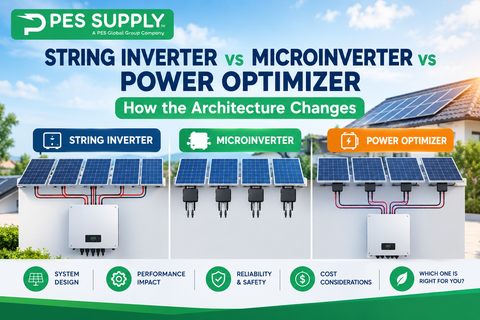
Enphase Energy represented the other major module-level power electronics competitor in 2018, though from a fundamentally different architectural direction. While SolarEdge used a central inverter with DC optimizers, Enphase employed microinverters mounted directly behind each photovoltaic module, converting DC to AC at the module level without a central inverter.
The Enphase IQ7 series began shipping in the first quarter of 2018, marking Enphase's attempt to recover from financial difficulties in 2017 and reassert competitiveness against SolarEdge. The IQ7 microinverters offered CEC efficiencies around 97 percent, lower than the HD-Wave inverter's 99 percent CEC rating, though direct comparison is complicated because the SolarEdge figure excludes optimizer losses while the Enphase figure represents complete module-level conversion.
The architectural trade-off between SolarEdge and Enphase involved several factors. SolarEdge's central inverter with optimizers offered slightly higher peak efficiency, simpler AC wiring, and centralized monitoring and shutdown. Enphase's microinverter approach eliminated the single point of failure represented by a central inverter and allowed module-level AC output without high-voltage DC string wiring. Installers frequently chose between the two based on roof complexity, shading analysis, local electrical code preferences, and personal experience with commissioning and service.
SolarEdge HD-Wave vs Fronius Primo
Fronius, the Austrian inverter manufacturer, competed in the US residential market with its Primo line of single-phase string inverters. Fronius inverters were respected for build quality, grid support features, and strong presence in European markets. The Primo line used conventional transformerless topology with relatively high efficiency, though generally below the HD-Wave's 99 percent CEC rating.
Fronius offered a broader range of communication and monitoring options than many competitors and had developed a loyal following among installers who valued the company's technical support and training programs. Like SMA, Fronius did not offer module-level optimization natively, relying instead on string-level MPPT. The MC Electrical field test referenced earlier included a Fronius unit as the comparison baseline, and the HD-Wave demonstrated measurable efficiency advantages in that controlled evaluation.
Complete Competitor Comparison Table
| Feature | SolarEdge HD-Wave | SMA Sunny Boy | Enphase IQ7 | Fronius Primo |
|---|---|---|---|---|
| Architecture | Central inverter + DC optimizers | String inverter | Microinverter (per module) | String inverter |
| CEC Efficiency | 99% | ~97-98% | ~97% | ~97-98% |
| Module-Level MPPT | Yes (via optimizers) | No | Yes (inherent) | No |
| Rapid Shutdown | Yes (SafeDC) | External required | Yes (inherent) | External required |
| Monitoring | Module-level | String-level | Module-level | String-level |
| Single Point of Failure | Inverter | Inverter | None (distributed) | Inverter |
| Weight (6kW class) | ~10.6 kg | ~16-20 kg | ~1.0 kg per module | ~15-18 kg |
| Standard Warranty | 12 years | 10 years | 25 years | 10 years |
Efficiency figures represent CEC weighted values where available. Exact specifications vary by model year and regional variant. Consult manufacturer datasheets for precise values.
Proper installation and commissioning determine whether an inverter performs to specification and lasts its design life. The HD-Wave line introduced several features that streamlined installation while maintaining compliance with evolving electrical codes, including the National Electrical Code requirements for rapid shutdown that took effect with NEC 2014 and continued through NEC 2017.
NEC Quick Reference for HD-Wave Installs (Then and Now)
Our crews kept a laminated version of this table on the truck through the HD-Wave years. The code cycles have rolled forward — 2017 to 2020 to 2023 NEC — but the compliance spine for an optimizer-based string system has stayed remarkably stable:
| NEC Section | Requirement | How the HD-Wave Architecture Addresses It |
|---|---|---|
| 690.12 (Rapid Shutdown) | Module-level conductor shutdown inside the array boundary | Optimizers drop to ~1V per module when the inverter loses AC — native module-level compliance before most competitors |
| 690.11 (Arc-Fault Protection) | DC arc-fault detection on PV circuits | Inverter-integrated arc-fault detection interrupts the circuit on fault signature |
| 705.12 (Interconnection) | Load-side connection within busbar ratings (120% rule) | Standard breaker interconnection; 7.6 kW unit lands on a 40A breaker per NEC 240.6(A) (32A continuous × 1.25) |
| 690.31 (Wiring Methods) | PV source circuits in raceways or listed cable | Optimizer-to-inverter strings run in EMT or listed PV wire; DC strings at ~350–400V keep currents low |
| 110.3(B) (Listing and Instructions) | Equipment installed per listing and manufacturer instructions | UL 1741 listing; torque specs on DC and AC terminals in the install manual — we torque-mark and photograph at commissioning |
| 690.15 / 690.13 (Disconnects) | Means of disconnecting PV source circuits | Integrated DC disconnect in the inverter enclosure satisfies this on most AHJ reviews |
The 690.12 row is the one that won jobs. When module-level rapid shutdown became enforceable across most of the country, SolarEdge systems complied natively while competing string inverters needed add-on MLPE boxes at $40–$60 per module. Inspectors knew the architecture, and plan review moved faster for it.
Pre-Install Checklist and Site Assessment
Before specifying an HD-Wave inverter, installers should verify several site-specific factors. The electrical service panel must have sufficient capacity for the inverter's AC output, including consideration of the 125 percent continuous load factor required by the NEC. The mounting location must provide adequate clearance for ventilation, particularly for fan-cooled models, and must be accessible for future maintenance or replacement. The DC string voltage, calculated based on the number of modules, their open-circuit voltage, and the local temperature coefficient, must not exceed the 480 volt DC maximum input voltage of the inverter under any anticipated temperature condition.
Because the HD-Wave requires SolarEdge power optimizers on every module, the site assessment must also account for optimizer placement, wiring, and grounding. Power optimizers mount behind each photovoltaic module and are connected in series strings before reaching the inverter. The optimizer model must be matched to the module's power and voltage characteristics.
Wiring, Conduit, and Electrical Requirements
The HD-Wave inverter accepts DC input through one or more string inputs, depending on the model. The DC wiring from the roof-mounted optimizers to the inverter must be sized for the maximum string current and must be routed through appropriate conduit that protects against physical damage and environmental exposure. The AC output connects to a dedicated circuit breaker in the main panel or to a load-side tap, depending on the installation design and utility requirements.
The fixed-voltage DC bus simplifies string design because the inverter operates at approximately 380 volts DC regardless of string length within the allowed range. This fixed voltage means that string sizing calculations focus primarily on staying within the voltage and current limits rather than optimizing for a particular MPPT voltage window, as would be necessary with conventional string inverters.
SetApp Smartphone Commissioning
SolarEdge introduced SetApp smartphone commissioning alongside the HD-Wave generation, replacing the physical LCD screen and button interface that earlier inverters used. SetApp allows installers to configure grid profiles, communication settings, and system parameters through a Bluetooth connection between the inverter and a smartphone running the SolarEdge SetApp application.
The commissioning process involves scanning a QR code on the inverter, selecting the appropriate grid profile for the local jurisdiction, configuring communication options such as Ethernet or ZigBee, and verifying that all optimizers in the system are detected and reporting. The app provides real-time feedback on configuration status and flags any communication errors or missing optimizers before the installer leaves the site.
Some installers initially expressed concern about relying on a smartphone for commissioning, particularly in areas with poor cell coverage where app downloads and updates could be problematic. SolarEdge addressed this by making the core SetApp functionality available offline after initial download. Most installers now report that SetApp reduces commissioning time and eliminates the configuration errors that sometimes occurred with manual dip switch settings.
Rapid Shutdown and NEC 690.12 Compliance
The National Electrical Code Section 690.12 requires rapid shutdown of photovoltaic systems on buildings to protect first responders from energized DC conductors during emergencies. The HD-Wave inverter, when paired with SolarEdge power optimizers, achieves rapid shutdown through the SafeDC feature. When the inverter shuts down or grid power is lost, the optimizers automatically reduce their output voltage to a safe level, typically below 1 volt per optimizer. This eliminates the need for separate rapid shutdown devices and simplifies compliance with NEC 690.12.
For installations subject to NEC 2017, which expanded rapid shutdown requirements to include controlled conductors within the array boundary, the SolarEdge SafeDC approach remains compliant because the optimizers reduce voltage at the module level. Installers should verify the specific edition of the NEC adopted by their local jurisdiction, as adoption timelines vary by state and municipality.
The HD-Wave inverter serves as the communication gateway for SolarEdge's module-level monitoring and safety systems. These features, enabled by the power optimizer ecosystem, provide visibility into system performance and protection against electrical hazards that traditional string inverters cannot address.
Module-Level Monitoring via Power Optimizers
Each SolarEdge power optimizer reports individual module voltage, current, and power to the inverter, which aggregates the data and transmits it to the SolarEdge monitoring portal. Homeowners and installers can view real-time and historical production data for every module in the system through a web browser or mobile application. This granularity enables rapid identification of underperforming modules due to shading, soiling, degradation, or failure.
The monitoring portal is provided free for the life of the system, typically described as a 25-year monitoring subscription at no additional cost. Installers use the portal for remote troubleshooting, performance verification, and warranty claim documentation. For homeowners, the module-level visibility provides confidence that their investment is performing as expected and alerts them to maintenance needs such as panel cleaning or vegetation trimming.
Arc Fault and Ground Fault Protection
The HD-Wave inverter incorporates arc fault circuit interrupter, or AFCI, functionality that detects the electrical signatures of dangerous DC arc faults in the wiring between the optimizers and the inverter. DC arc faults, which can occur at loose connections or damaged conductors, present a fire risk in photovoltaic systems. The AFCI circuitry in the HD-Wave monitors for the high-frequency noise patterns associated with arcing and disconnects the system if an arc is detected.
Ground fault protection is also integrated into the inverter design, monitoring for unintended current paths to ground that could indicate insulation damage or improper wiring. These safety features exceed the requirements of UL 1741 and contribute to the HD-Wave's acceptance by insurance providers and fire marshals.
SafeDC and Rapid Shutdown
The SafeDC feature, referenced earlier in the NEC compliance discussion, deserves additional explanation as a safety technology. In normal operation, the DC conductors between the optimizers and the inverter carry the full string voltage, which can exceed 300 volts in residential systems. If a firefighter needs to ventilate a roof or if a homeowner needs to access the attic, this energized wiring presents a hazard.
When the inverter detects a grid outage, a manual shutdown command, or a safety system trigger, it signals the optimizers to enter SafeDC mode. In this mode, each optimizer reduces its output to approximately 1 volt, rendering the string conductors safe to touch. The response time is rapid, meeting NEC 690.12 requirements for controlled conductors. This automatic behavior provides peace of mind for homeowners and compliance assurance for installers.
StorEdge Interface and Battery Storage Compatibility
Some HD-Wave models in 2018 were marketed as compatible with the StorEdge interface for battery storage applications. The StorEdge interface enabled DC-coupled battery integration, primarily with LG Chem RESU 7H and RESU 10H lithium-ion battery units. In a DC-coupled configuration, the battery connects to the DC bus of the inverter, allowing solar generation to charge the battery directly without the conversion losses associated with AC-coupled systems.
It is important to note that in 2018, SolarEdge did not offer a branded SolarEdge battery. The StorEdge interface provided the hardware and firmware compatibility for third-party batteries, with LG Chem being the primary partner at that time. Installers interested in adding battery storage to an HD-Wave system needed to verify that their specific inverter model supported the StorEdge interface and that the firmware was updated to the appropriate version for battery management.
The DC-coupled approach offered higher round-trip efficiency than AC-coupled alternatives because energy flowed from the solar array to the battery without an intermediate AC conversion step. For homeowners evaluating residential solar panel and storage combinations, this efficiency advantage translated to more usable stored energy per kilowatt-hour generated.
Selecting the right HD-Wave model and designing the surrounding system requires attention to several interdependent variables. Array size, roof orientation, shading, consumption patterns, and future expansion plans all influence the optimal inverter specification.
DC-to-AC Ratio and Oversizing Strategy
The HD-Wave inverter allows DC-to-AC oversizing up to 155 percent, meaning the DC array nameplate capacity can exceed the inverter AC rating by up to 55 percent. This oversizing is common in solar design because modules rarely produce their rated output in real-world conditions due to temperature effects, soiling, and suboptimal sun angles. By oversizing the DC array, the system captures more energy during morning and afternoon hours and loses only minimal clipping at solar noon when the array briefly exceeds the inverter's maximum AC output.
For example, a SE7600H-US with 7.6 kilowatts AC output can handle a DC array of up to approximately 11.8 kilowatts. In practice, many designers target a DC-to-AC ratio between 1.15 and 1.35, depending on local irradiance, module temperature coefficients, and economic factors. Higher ratios reduce inverter cost per watt but increase clipping losses. The optimal ratio varies by project and should be calculated using PV modeling software.
String Sizing with Power Optimizers
Because the HD-Wave inverter operates at a fixed DC voltage of approximately 380 volts, string sizing focuses on ensuring that the string voltage stays within the acceptable range under all temperature conditions. The SolarEdge designer software automates these calculations, but installers should understand the underlying principles.
Each power optimizer has a minimum and maximum input voltage that must be respected. The sum of the optimizer output voltages in a series string must fall within the inverter's operating window. The SolarEdge P300, P400, P401, and P404 optimizers commonly used in residential applications each have specific voltage and current ratings that must be matched to the module specifications. String lengths are typically constrained by the maximum DC input voltage of 480 volts and the minimum voltage required for inverter startup.
Communication and Monitoring Setup
The HD-Wave inverter supports multiple communication options for connecting to the SolarEdge monitoring portal. Ethernet provides the most reliable connection and is preferred for installations where a wired network port is accessible near the inverter location. For installations without convenient Ethernet access, ZigBee, Wi-Fi, and cellular communication options are available as add-on accessories.
The choice of communication method affects monitoring reliability and data resolution. Ethernet and Wi-Fi generally provide consistent connectivity, while cellular options may experience signal variability depending on local carrier coverage. ZigBee creates a mesh network between multiple SolarEdge devices and is useful for sites with multiple inverters or for connecting to remote monitoring hardware. Installers should discuss communication options with homeowners during the design phase to ensure that the selected method aligns with the home's network infrastructure and the homeowner's technical comfort level.
Need help sizing a solar inverter for your project? Portlandia Electric Supply provides system design support for residential installers and homeowners. Request a quote for a complete system design including inverter selection, module matching, and power optimizer specification.
From HD-Wave to Home Wave: The Technology Legacy
The HD-Wave technology pioneered in 2015 and 2016 lives on in SolarEdge's current inverter lines, available at Portlandia Electric Supply. The distributed switching architecture, DSP-based sine wave synthesis, and film capacitor reliability approach that earned the 2016 Intersolar Award and the 2018 Edison Award remain foundational to SolarEdge's residential product strategy. Modern SolarEdge single-phase inverters build directly on this heritage, incorporating the same core innovations while adding features such as integrated EV charging, enhanced grid support functions, and streamlined commissioning interfaces.
The 2026 Successor Lineup: What Replaced the HD-Wave
The HD-Wave platform officially passed the torch to the Home Hub and Home Wave inverter families, which carry the same distributed-switching DNA with battery-ready architecture baked in. For homeowners still running HD-Wave units — and there are hundreds of thousands still in service — the practical question is what a like-for-like replacement or upgrade looks like now:
| Attribute | HD-Wave (2018 era) | Home Hub / Current Generation |
|---|---|---|
| Architecture | String inverter + DC optimizers | String inverter + optimizers, battery-native DC coupling |
| CEC weighted efficiency | Up to 99% class (model-dependent) | Comparable peak numbers with wider MPPT voltage windows |
| Battery integration | AC-coupled third-party storage retrofits | Native DC-coupled SolarEdge Home Battery, plus AC-coupled options |
| Backup capability | Required separate backup interface hardware | Integrated backup with whole-home or partial-home configurations |
| Monitoring | Module-level via SolarEdge portal | Module-level with consumption metering and load-control options |
| Warranty (standard) | 12 years, extendable to 20–25 | 12 years, extendable — same structure |
If your HD-Wave is healthy, our advice is to keep it — the film-capacitor design is aging gracefully, and we see far fewer HD-Wave RMAs than comparable-era transformer-based units. If it fails out of warranty or you want storage, the Home Hub retrofit keeps your existing optimizers and array wiring in most cases, which is thousands of dollars of labor saved versus a platform swap. We stock both the legacy-compatible replacements and the current line in our SolarEdge collection, and the solar inverter top picks guide compares the current generation against Enphase, SMA, and Fronius if you're platform-shopping from scratch.
Shopping for Modern SolarEdge Equipment
While the HD-Wave generation established the technical baseline, SolarEdge has continued to refine its residential offerings. Current product lines available through Portlandia Electric Supply carry forward the module-level optimization philosophy, the high-efficiency power conversion, and the safety features that distinguished the HD-Wave. For installers and homeowners evaluating new systems today, the same principles that made the HD-Wave an award winner, compact design, high efficiency, module-level monitoring, and integrated safety, remain the core value proposition of the SolarEdge ecosystem.
Browse our SolarEdge collection for the latest generation of module-level power electronics, or request a quote for a full system design that applies the engineering principles validated by the 2018 Edison Award to your specific project requirements.
What is the SolarEdge HD-Wave inverter?
The SolarEdge HD-Wave is a single-phase residential string inverter that uses distributed switching and advanced Digital Signal Processing to synthesize a clean AC sine wave. It requires SolarEdge power optimizers for module-level MPPT and is known for its 99 percent CEC weighted efficiency, compact size, and fanless operation on smaller models. The HD-Wave won the 2018 Edison Award in Energy & Sustainability.
What is the Edison Award and why did SolarEdge HD-Wave win it?
The Edison Awards, run by Edison Universe, recognize innovation across all industries based on concept, value, delivery, and impact. The SolarEdge HD-Wave won the 2018 Edison Award in Energy & Sustainability because its distributed switching architecture, DSP-based waveform synthesis, and film capacitor design represented a generational leap in inverter topology, reducing magnetics by 16x and cooling components by 2.5x compared to prior generations.
How does HD-Wave technology differ from traditional string inverters?
Traditional string inverters use large copper magnetics and electrolytic capacitors to filter and smooth DC into AC. The HD-Wave replaces these with distributed switching elements controlled by DSP algorithms, resulting in roughly half the size and weight, lower heat dissipation, and the use of longer-lasting film capacitors instead of electrolytic capacitors.
What efficiency does the SolarEdge HD-Wave achieve?
The HD-Wave achieves a maximum efficiency of 99.2 percent and a CEC weighted efficiency of 99 percent across most North American models. European weighted efficiency ranges from 98.3 percent on the smallest model to 99 percent on mid-range models. These figures represent inverter-only efficiency; the complete system including power optimizers has slightly lower total conversion losses.
Which SolarEdge HD-Wave model is right for my home?
Model selection depends on array size and household consumption. The SE3000H and SE3800H suit small homes and starter systems. The SE5000H and SE6000H fit typical single-family homes. The SE7600H is the most popular choice for average US residences. The SE10000H and SE11400H serve large homes, properties with electric vehicle charging, or systems planned for future battery expansion.
Can I install a SolarEdge HD-Wave inverter without power optimizers?
No. The HD-Wave inverter is designed to operate exclusively with SolarEdge power optimizers. The inverter does not contain string-level MPPT circuitry; instead, it relies on optimizers to perform module-level maximum power point tracking and to maintain the fixed DC bus voltage. Attempting to connect standard modules directly to the inverter will result in improper operation or fault conditions.
What is the warranty on SolarEdge HD-Wave inverters?
SolarEdge HD-Wave inverters carry a standard warranty of 12 years from the date of installation. In many markets, this warranty can be extended to 20 or 25 years through SolarEdge's warranty extension program. Power optimizers are typically warranted for 25 years. Warranty terms vary by region and installation date, so installers should verify current terms at the time of purchase.
How does HD-Wave compare to Enphase microinverters?
The HD-Wave with power optimizers and Enphase IQ7 microinverters both provide module-level power electronics but use different architectures. SolarEdge uses a central inverter with DC optimizers, achieving 99 percent inverter efficiency with centralized monitoring and shutdown. Enphase uses per-module microinverters with approximately 97 percent CEC efficiency, eliminating the single point of failure of a central inverter. The choice depends on roof complexity, shading, installer preference, and cost structure.
What replaced the SolarEdge HD-Wave inverter?
The HD-Wave technology platform evolved into subsequent SolarEdge residential inverter generations, including products marketed under the Home Wave line. These successors retain the core distributed switching and DSP architecture while adding features such as SetApp-only commissioning, enhanced grid support, and integration with energy storage and electric vehicle charging. The fundamental power conversion approach pioneered by the HD-Wave remains the basis for SolarEdge's current residential offerings.
Is the SolarEdge HD-Wave still available in 2026?
The original HD-Wave models are legacy products that have been superseded by newer SolarEdge inverter generations. However, replacement units and compatible accessories remain available for existing installations. For new system designs, Portlandia Electric Supply recommends current-generation SolarEdge inverters that build on the HD-Wave technology foundation.
What is SetApp and do I need a smartphone to commission HD-Wave?
SetApp is SolarEdge's smartphone-based commissioning application that replaces the physical LCD screen and button interface on earlier inverters. SetApp allows installers to configure grid profiles, communication settings, and system parameters via Bluetooth. A smartphone with the SetApp application installed is required for commissioning HD-Wave inverters. The application functions offline after initial download.
Does the HD-Wave inverter work with battery storage?
Some HD-Wave models are compatible with the SolarEdge StorEdge interface, which enables DC-coupled battery storage integration. In 2018, this primarily meant compatibility with LG Chem RESU 7H and RESU 10H batteries. The StorEdge interface is an additional hardware component that connects between the inverter and the battery, managing charging and discharging through the inverter's DC bus. SolarEdge did not offer a branded battery in 2018.
The SolarEdge HD-Wave inverter's 2018 Edison Award in Energy & Sustainability was not a ceremonial footnote. It was a cross-industry validation of an architectural shift in residential power electronics. By replacing heavy magnetics with distributed switching, replacing electrolytic capacitors with film capacitors, and using DSP to synthesize a clean sine wave, SolarEdge demonstrated that the string inverter category still had room for transformative innovation.
For installers, the practical benefits were immediate and measurable. Lighter weight meant faster installations. Smaller size meant mounting flexibility. Lower heat meant longer component life. The 99 percent CEC weighted efficiency meant more kilowatt-hours from the same roof area. The integrated SafeDC and rapid shutdown compliance meant simpler code adherence and safer systems. These advantages, documented in field tests, bankability reports, and two years of operational data, gave the HD-Wave a credibility that marketing claims alone could not provide.
For homeowners, the award offered reassurance that their inverter choice rested on validated engineering rather than incremental improvement. The module-level monitoring provided transparency into system performance. The twelve-year standard warranty, extendable to twenty-five years, aligned with the long investment horizon of a residential solar installation. The compatibility with battery storage via the StorEdge interface provided a pathway to energy independence as storage costs continued to decline.
For the solar industry, the HD-Wave and its Edison Award recognition proved that competition in inverter technology remained vibrant and consequential. The award forced competitors to respond with their own next-generation products, accelerating innovation across the sector. It elevated the visibility of power electronics in a conversation often dominated by modules and installation costs. And it established a benchmark for what residential inverter performance could look like when engineering constraints were questioned rather than accepted.
Today, the HD-Wave line exists as a milestone in SolarEdge's product history, a bridge between the conventional inverters of the early 2010s and the integrated energy systems of the current decade. The technology pioneered in 2015 and validated by the 2018 Edison Award continues to influence inverter design across the industry. For anyone researching solar inverter options, understanding the HD-Wave's significance provides context for evaluating current offerings and appreciation for the engineering advances that make modern residential solar systems as efficient, safe, and reliable as they are.
Portlandia Electric Supply stocks SolarEdge inverters, power optimizers, and system accessories for residential installers and DIY homeowners. For project-specific guidance, request a quote and our team will provide a complete equipment list and design review.
Related reading: See our head-to-head 2018 installer comparison of the award-winning HD-Wave against Enphase's comeback IQ7 platform—specs, pricing, and the financial stability context that shaped installer decisions that year.
Related: 2018 was a landmark year for solar regulation. In May of that year, California became the first state to mandate solar panels on all new homes. See how the CEC's Title 24 vote reshaped the market.
Related: Still weighing inverter platforms? See our SolarEdge Alternatives in 2026 guide.