Updated September 2026 — content reviewed and refreshed by the PES team. For current pricing and availability, see the linked product pages or request a quote.
Every year since about 2015, some headline has promised that solid-state batteries are two years away. The two years never arrive — but the work underneath the headlines has been real, and by mid-2026 the technology has quietly crossed from laboratory curiosity to pilot production. This guide cuts through the press releases: what solid-state batteries actually are, why they can charge faster than the lithium-ion pack in your current EV, who's genuinely shipping samples and who's still showing slides, and what all of it means for the charger on your wall and the one you'll plug into on the highway.

We sell EV charging equipment and stationary storage for a living, so we watch this space the way a lumber yard watches housing starts. The day a 10-minute-charge EV becomes a normal purchase, the DC fast-charging business changes shape. That day is coming — just slower than the headlines claim, and in a different order than most people expect.
What "Solid-State" Actually Means
A conventional lithium-ion cell moves lithium ions between two electrodes through a liquid electrolyte — a flammable organic solvent with a lithium salt dissolved in it. A solid-state cell replaces that liquid with a solid electrolyte: a ceramic, a sulfide glass, or a polymer. Swap the electrolyte and two big things become possible. First, you can use a lithium-metal anode instead of graphite, which roughly doubles the charge the anode can hold per unit weight. Second, the flammable liquid disappears, which changes the fire math entirely.
Three electrolyte families are fighting it out, and the trade-offs matter more than the press releases admit:
| Electrolyte Family | Key Players | Strengths | Weaknesses |
|---|---|---|---|
| Sulfide | Toyota/Idemitsu, Samsung SDI, Solid Power | Highest ionic conductivity, closest to liquid; fast-charge friendly | Moisture-sensitive, can release H₂S; needs dry-room manufacturing |
| Oxide (ceramic) | QuantumScape, ProLogium | Stable against lithium metal, non-flammable, long cycle life potential | Brittle; hard to manufacture in large, thin sheets; needs stack pressure |
| Polymer | Various (Blue Solutions heritage) | Easiest to manufacture, flexible, proven in niche fleets | Needs elevated operating temperature (~60–80°C); weaker rate capability |
| Semi-solid / hybrid (bridge tech) | WeLion (NIO 150 kWh pack), SAIC/QingTao (IM L6), Ganfeng | Ships today; 360+ Wh/kg achieved; uses mostly existing lines | Still contains liquid; not the full safety or density win |
The semi-solid row deserves respect. NIO's 150 kWh pack from WeLion — a semi-solid design — has been on Chinese roads since 2024, delivering genuine 1,000 km-class range ratings. It isn't "true" solid-state, but it's the first taste of the energy-density jump, available as a battery-swap upgrade today rather than a 2029 promise.
Why Solid-State Charges Faster: The Physics, Not the Marketing
Fast charging is limited by what happens at the anode. Push lithium ions into a graphite anode too fast and metallic lithium plates onto its surface instead of intercalating cleanly — that's lithium plating, and it permanently kills capacity and can grow dendrites that short the cell. Today's packs manage this with conservative charging curves: a hard charge to about 50–60%, then a long taper, which is why every EV charges fast at first and crawls near full. The 20–80% charging rule exists because of this physics.
A solid electrolyte changes the game in two ways. The rigid solid layer physically suppresses dendrite growth, so a lithium-metal anode can accept ions at much higher rates without plating. And because solid electrolytes tolerate heat better than liquid solvents, the thermal management system can run the pack harder. The realistic targets being demonstrated in 2026 pilot cells are 10–80% charges in the 10–15 minute range at 350+ Wh/kg cell-level density — versus 18–35 minutes for the best current production EVs at roughly 250–300 Wh/kg.
Here's what those charging times look like as real math, assuming the car and charger can both sustain the peak rate:
| Pack Size (usable) | 10–80% Energy Needed | At 150 kW (typical today's DCFC) | At 350 kW (current high-end) | At 500 kW+ (solid-state era target) |
|---|---|---|---|---|
| 60 kWh (compact crossover) | 42 kWh | ~17 min ideal, 25+ real-world with taper | ~7 min ideal, 12–18 real-world | ~5–8 min realistic |
| 82 kWh (midsize SUV) | 57 kWh | ~23 min ideal, 30–40 real-world | ~10 min ideal, 15–22 real-world | ~7–11 min realistic |
| 100 kWh (truck / flagship) | 70 kWh | ~28 min ideal, 40+ real-world | ~12 min ideal, 18–25 real-world | ~8–13 min realistic |
| 150 kWh (semi-solid, NIO-class) | 105 kWh | ~42 min ideal, 55+ real-world | ~18 min ideal, 25–35 real-world | ~13–20 min realistic |
Two honest caveats. First, "ideal" assumes the pack holds peak rate across the whole 10–80% window — no production EV does, which is why real-world times run 40–60% longer. Second, the charger has to exist. A 500 kW session needs a megawatt-class site feed, and that infrastructure buildout is its own story — our commercial charging installation guide covers what a site host actually faces on service upgrades and demand charges.
The 2026 Scoreboard: Who's Real and Who's Rendering
After a decade of sliding timelines, here's where the serious programs actually stand as of mid-2026. I'm deliberately listing evidence — shipped samples, pilot lines, named customers — rather than announcements.
| Program | Chemistry | Status (mid-2026) | Stated Production Target |
|---|---|---|---|
| Toyota / Idemitsu | Sulfide | Pilot line running; METI-certified production plan | Limited production 2027–2028, volume ~2030 |
| QuantumScape / PowerCo (VW) | Oxide ceramic separator, lithium-metal | QSE-5 B1 samples delivered; Cobra separator process online; gigawatt-license deal with VW's PowerCo | Low-volume late-decade via PowerCo licensing |
| Samsung SDI | Sulfide | Pilot line (S-line) supplying samples to automakers; ~500 Wh/kg claims | Mass production target 2027 |
| CATL | Sulfide (plus condensed-battery semi-solid) | Small-batch pilot samples; publicly cautious on timing | Small-scale 2027; volume later |
| Factorial / Mercedes-Benz | Sulfide (FEST) | Road testing in a modified EQS prototype; 77+ Ah cells delivered | Late-decade |
| WeLion / NIO | Semi-solid hybrid | 150 kWh pack in customer cars since 2024 via battery swap | Shipping now (hybrid, not true SSB) |
| SAIC / QingTao, Ganfeng | Semi-solid → sulfide roadmap | IM L6 semi-solid variant shipping in China; true SSB prototypes shown | True SSB ~2027 (SAIC claim) |
The pattern to notice: nobody credible promises mass-market solid-state before 2027, and most point at 2028–2030 for anything beyond halo vehicles. First applications will be flagship sedans, premium SUVs, and possibly aviation-adjacent niches where cost per kWh matters less than weight. Budget EVs will run LFP for the rest of the decade, and that's fine — LFP chemistry keeps getting cheaper and better on its own curve.
Solid-State vs. What You Can Buy Today: An Ownership Comparison
If you're choosing an EV in 2026, should you wait? Almost certainly not. Here's the honest comparison of what a buyer actually experiences:
| Attribute | LFP (today's value packs) | NMC (today's long-range packs) | Solid-State (2027–2030 arrival) |
|---|---|---|---|
| Pack-level energy density | ~160–210 Wh/kg | ~220–280 Wh/kg | 350–500 Wh/kg (cell claims) |
| Typical 10–80% charge time | 25–40 min | 18–35 min (800V leaders under 20) | 10–15 min target |
| Cycle life expectation | 3,000–5,000+ cycles | 1,500–2,500 cycles | Target ≥1,000 cycles at high density — the hardest remaining problem |
| Fire risk profile | Lowest of current chemistries | Managed by pack design | No flammable liquid; lithium metal still reactive |
| Cold-weather behavior | Weakest point; needs preconditioning | Better than LFP | Promising in prototypes; unproven at scale |
| Cost trend | Cheapest and falling | Falling slowly | Expensive at launch; premium vehicles first |
| Availability | Now, everywhere | Now, everywhere | Halo vehicles ~2027–2028; mainstream ~2030+ |
Degradation habits transfer regardless of chemistry. Whether your pack is liquid or solid, the rules we teach every EV customer still apply: live between 20% and 80% for daily use, save 100% charges for road trips, and don't leave the car baking at full charge in August. Our battery longevity guide was written for solar banks but the lithium physics is identical.
What Solid-State Means for Charging Infrastructure

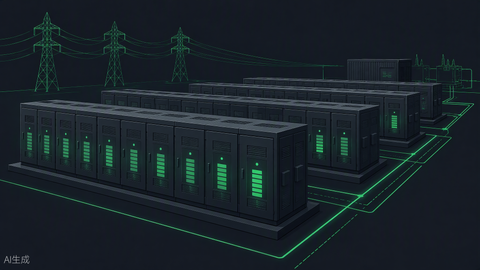
This is the part our side of the industry obsesses over. Ten-minute charging sessions change station economics: a single 350–500 kW stall could turn over three to four times as many cars per day as it does with 30-minute sessions. That's great for drivers and brutal for grid planning. Four stalls pulling 500 kW simultaneously is a 2 MW load — small-industrial-facility territory, with demand charges to match.
Expect the winners to be sites that pair high-power DC fast charging with on-site battery buffering, which is why charging station cost planning increasingly includes a storage line item. For home charging, nothing changes and nothing will: overnight Level 2 charging at 7–11.5 kW from a 240V circuit already refills any realistic daily driving, and solid-state cells sip from a 40-amp EVSE exactly the way current cells do. If you're wiring a garage, the NEC ampacity guide covers the 125% continuous-load rule that governs your breaker and wire size — that math doesn't care what electrolyte is in the car.
I've installed enough EVSE to have strong opinions here: buy the car you need now, install a good Level 2 charger, and let the solid-state generation arrive when it's ready. A 2026 EV with a heat pump and an 800V architecture already charges fast enough that lunch, not the charger, sets your road-trip pace. The gap between "great" and "perfect" is rarely worth three years of waiting.
The Stationary-Storage Crossover
One more angle most EV coverage misses: solid-state's first mass market may not be cars at all. Stationary storage cares about cost, safety, and cycle life far more than weight, and sodium-ion — not solid-state lithium — is the chemistry actually landing in stationary deployments first, with CATL and BYD shipping containerized sodium systems and residential entry expected around 2027–2029. In our catalog, the Powerwall line has already moved to LFP, and every residential solar battery we recommend today is lithium iron phosphate. When solid-state lithium does reach stationary storage, it'll arrive through the EV supply chain, years after the first cars. Watch the battery buyer's guide — we update it as chemistries actually ship, not as they're announced.
The Manufacturing Problem Nobody Puts in the Press Release
Here's why the timelines keep sliding, and it has nothing to do with whether the chemistry works — it does. The hard part is building the cell ten million times. Solid electrolyte layers have to be thin (tens of microns), perfectly uniform, and free of pinholes across square meters of area, because one pinhole is one shorted cell. Sulfide electrolytes demand dry-room conditions beyond what even lithium-ion plants run, and the powders cost orders of magnitude more per kilogram than liquid electrolyte. Oxide ceramics have to be sintered and then kept intact in a stack that breathes as it cycles — QuantumScape's answer is an external frame that maintains stack pressure, which works but adds pack-level complexity.
Then there's yield. A gigafactory running liquid cells at 90%+ yield prints money. The same factory at 60% yield on a novel solid-state process bleeds it. That's the unglamorous reason every credible roadmap starts with low-volume premium vehicles: high sticker prices absorb low yields while the process matures. When you read "pilot line" in a 2026 announcement, translate it as "we can build these by the thousand; tens of millions is a different sport." I've watched the same movie in solar — PERC to TOPCon retools took two years to hit stride, and that was a far gentler process change than this one.
What Fleets and Homeowners Should Actually Do Now
For fleet operators, the actionable move is infrastructure-first. Vehicles turn over every 4–8 years; chargers and service feeds live for 15–20. If you're speccing a depot today, oversize the conduit and the service, and choose DC fast hardware with a power-upgrade path — several of the Level 3 units we carry scale by adding power modules rather than replacing the cabinet. When 500 kW-capable trucks and vans arrive, you'll add modules, not trench new feeders.
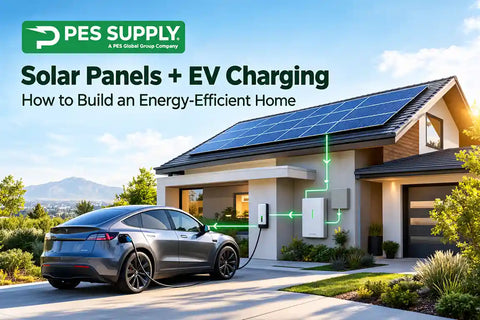
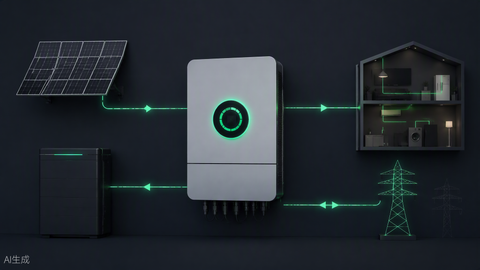
For homeowners, the decision tree is even simpler. Buy the EV that fits your life now. Install a quality Level 2 unit on a dedicated 240V circuit — a 48-amp EVSE on a 60-amp breaker with 6 AWG copper covers every current and foreseeable home-charging scenario, including bidirectional-ready vehicles. If you're already running solar, pairing the charger with your array through solar-integrated charging gear cuts your per-mile cost to levels no battery chemistry will ever beat. And if you want backup power from the same investment, a hybrid inverter plus an LFP battery bank gives you outage protection today — vehicle-to-home will layer on top of that infrastructure, not replace it.
One last piece of shop-floor honesty: the companies that win the solid-state race will be the ones that solved manufacturing, and we won't know who they are until the yield numbers leak. Watch for delivered vehicles with named solid-state packs in customer hands, not auto-show concepts. That's the signal. Everything else is rendering.
Five Solid-State Myths That Refuse to Die
Myth 1: "Solid-state means no fire risk, period." Removing the flammable solvent removes the accelerant, not the energy. A 100 kWh pack stores the energy of a serious fuel load no matter what electrolyte separates the electrodes. Solid-state cells fail safer — slower, cooler, without the runaway cascade — but crash damage and manufacturing defects still demand pack-level protection. Firefighters will still treat EV pack fires as hazardous-energy events, correctly.
Myth 2: "They'll charge in five minutes." Cell-level demonstrations and vehicle-level reality differ by the entire thermal and electrical budget of a car. A 5-minute 10–80% session on a 100 kWh pack averages 840 kW. That's a megawatt-class connection per stall. The 10–15 minute targets are ambitious enough and far more useful; believe those, not the five-minute posters.
Myth 3: "Solid-state kills LFP." Different products, different decades. LFP wins on cost, cycle life, and supply-chain maturity, and it keeps improving on its own steep curve. Solid-state enters at the premium end and works downward over years. Budget and mid-market EVs — and nearly all stationary storage — will run LFP deep into the 2030s.
Myth 4: "The technology is one breakthrough away." There is no single breakthrough left to wait for. The remaining problems are yield, cost, and durability at automotive scale — a thousand small engineering fights, not one eureka. That's why the credible timelines cluster around 2028–2030 instead of next spring.
Myth 5: "Your current EV will be worthless when solid-state ships." Cars depreciate on utility, not on what's announced. A 2026 EV that covers your commute and your road trips will keep doing exactly that in 2031. The used-EV market values range and condition; electrolyte chemistry won't be on the window sticker.
The Battery Passport Angle: Why Traceability Matters Next
One more shift arriving alongside solid-state: battery passports. The EU's battery regulation phases in digital passports recording chemistry, recycled content, and carbon footprint per pack, and the same disclosure mindset is spreading to North American procurement. Solid-state packs will launch straight into this regime — every cell traceable from mine to vehicle to second life. For buyers, that's quietly good news: the first solid-state EVs will be the most documented batteries ever sold, and their residual-value data will finally answer the degradation questions we're currently estimating from lab cycles. For anyone pairing vehicles with home or commercial energy systems, our energy storage primer explains how EV packs and stationary batteries are converging on the same management electronics and the same safety standards.
Frequently Asked Questions
When will solid-state battery EVs actually be available to buy?
Credible programs — Toyota, Samsung SDI, QuantumScape/VW, Factorial/Mercedes — point to limited production between 2027 and 2028, with meaningful volume around 2030. First applications will be premium vehicles. Semi-solid hybrid packs, like NIO's 150 kWh WeLion unit, are already on the road in China and offer a preview of the density gains.
How much faster will solid-state EVs charge?
Demonstrated targets are 10–80% charges in 10–15 minutes, versus 18–35 minutes for the best current production EVs. The solid electrolyte suppresses the lithium plating that forces today's conservative charging curves. Real-world times also depend on charger power — a 500 kW-capable car still charges at the rate the stall can deliver.
Are solid-state batteries safer than lithium-ion?
Mostly yes. Removing the flammable liquid electrolyte eliminates the fuel that drives thermal runaway in conventional cells. However, lithium-metal anodes are themselves reactive, and damaged sulfide electrolytes can release hydrogen sulfide gas. Solid-state shifts the safety engineering problems rather than deleting them, but the net effect is a meaningfully safer cell.
Should I wait for solid-state before buying an EV?
No, for most buyers. Mainstream solid-state availability is likely 2030 or later, launch pricing will be premium, and today's 800V EVs already charge from 10–80% in under 20 minutes on high-power networks. An EV purchased in 2026 will still be a competent daily driver when solid-state arrives — and you'll have spent the intervening years driving electric instead of waiting.
Will solid-state batteries work with home Level 2 chargers?
Yes. Home charging power is limited by the car's onboard AC charger and your circuit — typically 7–11.5 kW on a 240V, 40–60A circuit — regardless of cell chemistry. Solid-state's fast-charge advantage only shows up on high-power DC equipment. Your existing or planned Level 2 installation remains fully compatible.
What is the difference between solid-state and semi-solid batteries?
Semi-solid (hybrid) cells still contain some liquid or gel electrolyte, just less of it, combined with a solid component. They can be built on mostly existing production lines, which is why packs like NIO's 150 kWh unit ship today. True solid-state cells contain no liquid at all, enabling lithium-metal anodes and higher density, but require new manufacturing processes that the industry is still scaling.
Solid-state is real, it's coming, and it will eventually make charging stops feel like fuel stops. But the EV and the charger you buy in 2026 won't be obsolete when it lands — they'll just be the generation that proved the model. The smart money builds the infrastructure now and lets the cells catch up on their own schedule. If you're speccing charging for a home, fleet, or commercial site, talk to us. We stock EV chargers across every accessory class, and we've wired enough of them — in garages, dealerships, fleet yards, and highway corridors — to know what survives contact with reality and what only survives a spec sheet.