BYD Launches Integrated Home Energy Storage System Battery-Box
The Battery-Box and Power-Box lineup explained: LFP chemistry, modular capacity, real runtime math, sizing for your home, and how BYD's storage ecosystem fits a 2026 solar-plus-storage project.

First Integrated Home Storage System Features
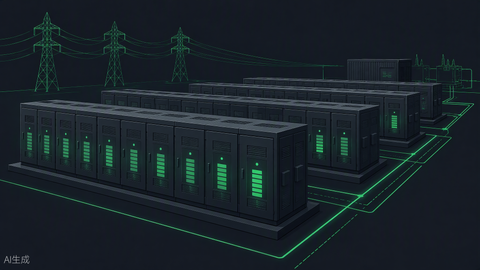
BYD's Battery-Box announcement marked a turning point in residential energy storage: one of the world's largest battery manufacturers — a company whose cells already powered millions of electric vehicles — packaging that manufacturing depth into a modular, wall- and floor-mountable home battery system. The Battery-Box line has since become one of the most-installed residential storage platforms globally, and the integrated Power-Box hybrid inverters extend it into a complete solar-plus-storage ecosystem from a single manufacturer.
We supply the BYD product line alongside other leading storage brands, and I've sized enough of these systems to know where buyers consistently get confused: nameplate capacity versus usable capacity, the difference between a battery and the inverter that runs it, and how much storage a real household actually needs. This guide untangles all three with the actual product specifications, checked runtime math, and a sizing framework you can apply to your own utility bill.
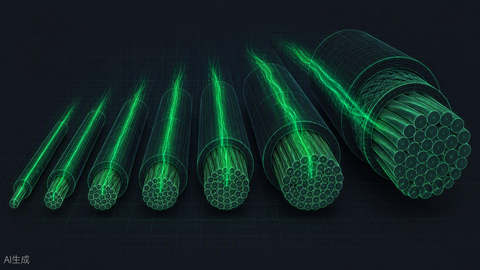
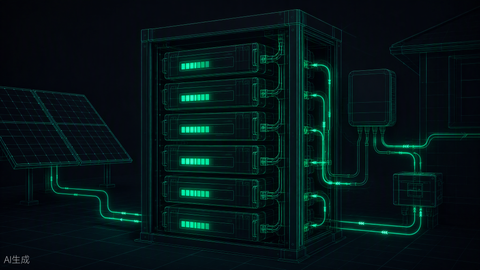
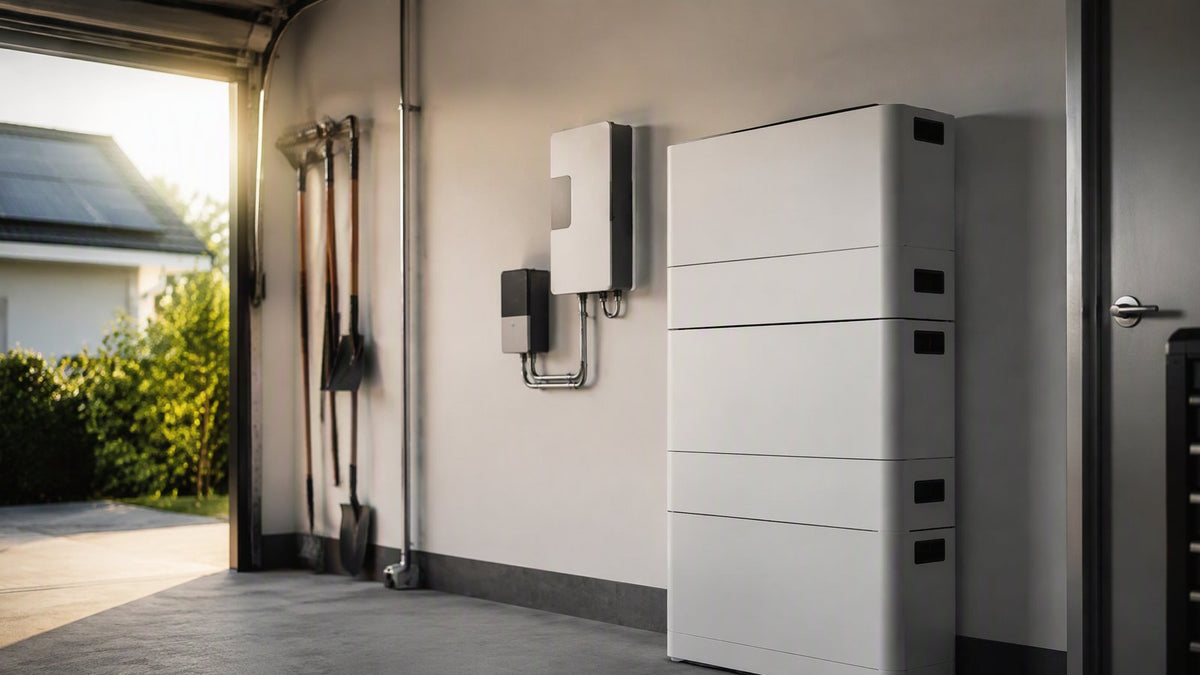
The design insight behind the Battery-Box is modularity done properly. Instead of buying a fixed-capacity monolith sized for a guess about your future needs, you stack matched battery modules and expand later by adding modules to the tower. The HVE-series modules at the heart of the high-voltage line come in two building blocks:
| Module | Capacity (kWh) | Voltage (V) |
|---|---|---|
| HVE4.2 | 4.29 | 76.8 |
| HVE6.4 | 6.45 | 115.2 |
With the physical dimensions to match — compact enough for a garage wall or utility room, heavy enough that two-person installation discipline applies:
| Capacity | Dimensions & Weight |
|---|---|
| 4.29 kWh | 345 mm x 660 mm x 140 mm, 42.1 kg |
| 6.45 kWh | 499 mm x 660 mm x 140 mm, 61.1 kg |
Why does modularity matter beyond marketing? Three practical reasons. First, capital staging: a homeowner can commission a two-module system this year and add capacity when the EV arrives or the utility's rate plan deteriorates — without replacing anything. Second, serviceability: a single degraded module gets swapped, not the whole system. Third, voltage scaling: the high-voltage architecture stacks modules in series, keeping system current low and efficiency high — the electrical reason these systems post round-trip efficiency figures that low-voltage 48V architectures struggle to match. For buyers comparing architectures, our home battery bank sizing guide covers the high-voltage versus 48V trade-off in detail.
Every Battery-Box module runs lithium iron phosphate (LFP) cells, and that's a deliberate engineering choice with consequences a homeowner should understand. LFP trades energy density — the thing EV designers obsess over — for thermal stability and cycle life, the things a battery bolted to your garage wall should obsess over. LFP's thermal runaway threshold sits dramatically higher than nickel-based chemistries, the cells tolerate full depth of discharge without the accelerated wear that punishes NMC packs, and the chemistry contains no cobalt. In practical ownership terms: LFP home batteries routinely carry cycle-life expectations in the 6,000+ cycle range under normal residential use, which at one cycle per day pencils out to well beyond fifteen years of daily service before the capacity floor becomes a factor. The battery longevity guide covers the usage habits that protect that cycle life, and the 20–80 charging rule explainer shows how depth-of-discharge management extends it further.
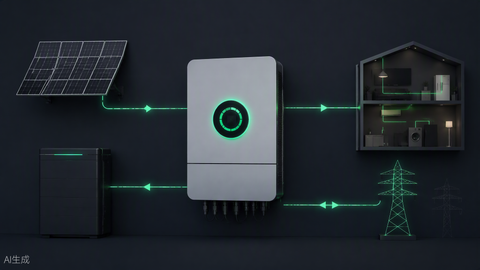
The battery modules are only half the system — the Power-Box hybrid inverters are what make the storage do useful work. BYD's integrated lineup splits into single-phase and three-phase configurations with meaningfully different capabilities:
| Feature | Power-Box SH | Power-Box TH |
|---|---|---|
| Phase | Single-phase | Three-phase |
| IP Rating | IP65 | IP66 |
| Output Range | 3 kW to 6 kW | 5 kW to 15 kW |
| Peak Output Power | Double nominal capacity | N/A |
| Maximum Efficiency | 97.7% | 98.2% |
| Backup Functionality | N/A | Full backup |
| Backup Switch Time | N/A | Less than 10 ms |
| Smart O&M Features | 24/7 online monitoring, remote diagnosis, OTA firmware updates | |
The row that decides most purchases: backup functionality and switch time. The TH's sub-10-millisecond transfer is fast enough that computers and network gear ride through an outage without rebooting — genuine UPS-grade behavior from a whole-home system. The SH's doubled peak output capability matters for motor starting: well pumps and compressor loads that demand a surge on startup are exactly where underspecified inverters embarrass themselves. Both units carry outdoor-rated ingress protection (IP65/IP66), which opens up exterior wall mounting where garage space is tight, and both run the same 24/7 monitoring stack with over-the-air firmware updates — the feature that keeps a fifteen-year asset improving after installation. Our hybrid inverter explainer covers how this class of inverter orchestrates solar, battery, and grid simultaneously.
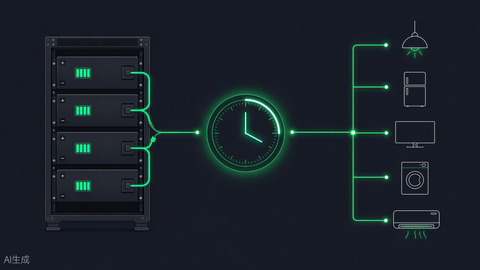
Capacity numbers mean nothing until they're divided by a load. Here's the arithmetic applied to realistic residential load profiles, using a 12.9 kWh configuration (two HVE6.4 modules) at 90% usable capacity — about 11.6 kWh of dispatchable energy:
| Load Scenario | Continuous Draw | Runtime on ~11.6 kWh Usable | What's Covered |
|---|---|---|---|
| Critical loads only | 400 W | ≈29 hours | Fridge, lights, internet, device charging, furnace blower |
| Efficient household baseline | 800 W | ≈14.5 hours | Above + TV, laptops, kitchen use in moderation |
| Normal evening household | 1,500 W | ≈7.7 hours | Cooking, laundry, entertainment, general use |
| Heavy use with central AC cycling | 3,500 W avg | ≈3.3 hours | Whole-home including cooling — battery alone drains fast |
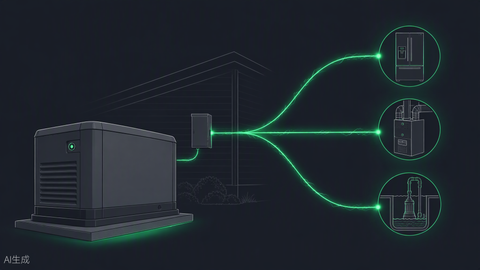
That last row is the truth serum of home storage: batteries are phenomenal for overnight self-consumption, peak-shaving, and critical-load backup, and they are not a multi-day whole-home air-conditioning solution. Pair the Battery-Box with solar and the equation transforms — a well-matched array replenishes the battery daily, and "runtime" stops being a fixed number and becomes a sustainable cycle. For customers whose outage expectations are measured in days with HVAC running, the honest answer is a battery for the nights plus a standby generator for the long events, or a generator-primary design with the battery handling transfer gaps and overnight silence. The battery runtime calculator lets you run your own load list through this same math.
Storage sizing starts from your utility bill, not from a product catalog. The working framework:
- Define the job. Self-consumption under a poor net-metering rate? Peak shaving under time-of-use pricing? Backup for outages? The job decides whether you size to daily cycling energy or to critical-load survival hours.
- Measure overnight consumption. Your meter or a monitoring clamp tells you what the house draws from sunset to solar production — for most efficient homes, 6–12 kWh. That's the floor for self-consumption sizing.
- Check inverter power against surge loads. Capacity (kWh) decides how long; inverter power (kW) decides what starts. A well pump or 3-ton AC compressor has to fit under the inverter's peak output.
- Leave expansion room. The modular architecture means your first stack doesn't have to be your last — size for today's bill and let the EV or the pool pump trigger the expansion.
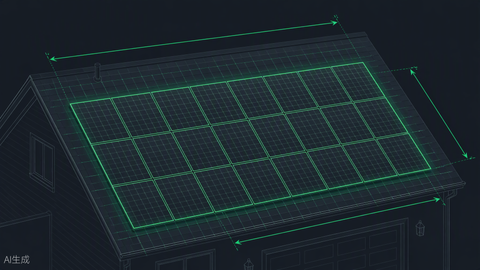
Worked example: a household using 900 kWh/month with 10 kWh of overnight draw and a time-of-use rate that punishes 4–9 p.m. consumption lands naturally on a two- or three-module HVE stack with a 5–6 kW inverter — enough to carry the evening peak from stored solar and coast through the night. The storage sizing guide and solar battery buyer's guide go deeper on both the arithmetic and the product landscape across the battery storage category.
Installation and Ownership: What the First Year Looks Like

A Battery-Box installation is a licensed-electrician project — high-voltage DC stacks and hybrid inverter interconnection are not DIY territory — but it's a well-understood one: typically a single day for the electrical work with permitting and utility interconnection paperwork running in parallel. Placement choices are garage wall, exterior wall (the IP65/IP66 ratings earn their keep), or utility room, with clearances per the install manual and avoidance of direct afternoon sun where possible, since every degree of sustained heat costs a sliver of long-term capacity. Commissioning includes firmware updates, monitoring account setup, and a deliberate grid-outage test — I recommend every owner pull the main breaker once, in daylight, on purpose, to watch the system transfer and learn what their house actually draws on battery. The owners who run that test in week one are the owners who trust the system in year five.
Ownership rhythm after that is deliberately boring: glance at the monitoring app monthly, keep the area ventilated and clear of storage clutter, and let the over-the-air firmware updates arrive on their own schedule. There's no fluid to change, no filter to swap, no battery to trickle-charge, and no exercise cycle to verify — which is precisely the lifestyle difference between battery backup and a generator, and why the two technologies complement rather than replace each other for serious resilience planning in storm-prone regions.
The Battery-Box isn't one product — it's a family that's iterated visibly since the original launch. The early high-voltage (HV) towers established the modular stacking concept; the later HVS and HVM generations refined it with different module sizes and voltage windows aimed at different inverter pairings, while the LV (low-voltage) branch kept a 48V-compatible option alive for off-grid and retrofit applications where legacy inverter fleets dominate. The naming confusion buyers run into — HVE versus HVS versus HVM modules — mostly reflects BYD tuning module capacity and voltage to specific inverter partners over time. The practical guidance: don't shop module part numbers in isolation. Choose the inverter first (single-phase versus three-phase, backup versus non-backup), then let the compatible module family follow. We configure systems this way precisely because a perfect battery module attached to the wrong inverter is a perfect paperweight, and I've talked more than one DIY planner out of a cart full of mismatched part numbers before it shipped.
The 2026 storage conversation has moved well beyond backup. Three value streams now justify residential batteries in markets where outages are rare. Time-of-use arbitrage: charge from solar or cheap overnight grid power, discharge through the 4–9 p.m. peak window where rates run two to four times the off-peak price — a daily cycle the LFP chemistry shrugs off. Self-consumption under weakened net metering: in post-NEM-3.0 California and similar markets, exported solar is worth a fraction of consumed solar, and storage converts low-value exports into full-retail self-supply. Grid services and virtual power plants: utilities and aggregators increasingly pay for dispatchable residential capacity, and a monitored, remotely updatable system like the Power-Box stack is built for exactly that enrollment. The honest sizing implication: a battery bought for arbitrage cycles hard every single day, which makes LFP's cycle life the enabling specification rather than a footnote. A chemistry with half the cycle life spending its days in daily deep discharge is a warranty claim on a schedule.
| Cost Component | Typical Range (2026) | Notes |
|---|---|---|
| Two-module HVE stack (~12.9 kWh) | $6,000 – $9,500 | Equipment, configuration dependent |
| Power-Box hybrid inverter | $2,500 – $5,000 | SH vs TH, power class |
| Installation & electrical | $2,000 – $5,000 | Critical-loads panel work adds cost |
| Permits & interconnection | $300 – $1,200 | Utility process varies widely |
| System total (before incentives) | $10,800 – $20,700 | Standalone storage configuration |
Against that total, the federal residential clean energy credit has historically covered 30% of installed storage cost — standalone batteries qualify, not just solar-attached ones — and state and utility programs stack on top in many markets. Incentives shift with legislation, so verify current eligibility at purchase rather than budgeting off a blog post; we flag applicable programs when we quote. The payback math that actually matters is local: your rate spread between peak and off-peak, your net-metering export value, and your outage exposure. In a strong time-of-use market, a daily-cycling 13 kWh system can return its cost in under a decade; in a flat-rate market with rare outages, the honest payback is longer and the purchase is really a resilience decision wearing a financial costume. We run the arithmetic with customers using their actual rate sheet — the generic national-average math is how batteries get oversold.
Buyers cross-shop this against the Tesla Powerwall, the Enphase IQ Battery line, and the server-rack LFP brands, so here's the candid read. The Battery-Box's structural advantages are modularity (buy capacity in 4.29–6.45 kWh increments instead of fixed 13.5 kWh blocks), BYD's cell-manufacturing depth, and the integrated inverter ecosystem. The Powerwall's advantages are brand recognition, a massive installed base, and a mature installer network in North America. Enphase wins on microinverter-native integration for homes already in that ecosystem. Server-rack and wall-mount value brands — the Pytes and similar lines we also stock — win on raw dollars per kWh for technically confident buyers and off-grid applications. There's no universal winner; there's the system whose inverter matches your loads, whose monitoring you'll actually use, and whose support channel answers in your time zone. That last criterion has decided more happy ownership outcomes than any spec sheet I've ever read.
Residential storage is a fifteen-year relationship, so the paper matters. Battery-Box modules in this class typically carry a ten-year product warranty with a warranted end-of-life capacity floor — read the specific document for your module generation, because terms have tightened and improved in different revisions. Three disciplines protect that coverage in practice. First, registration and commissioning records: register the serials at install and keep the commissioning report; warranty claims attach to documented systems. Second, environment: sustained heat is the quiet capacity thief — a shaded garage wall beats a west-facing exterior wall in Phoenix, and the install manual's temperature guidance is worth following literally. Third, firmware currency: the OTA update stream isn't just features; it carries battery-management refinements that measurably affect longevity. The monitoring platform doubles as the support channel — remote diagnosis resolves a surprising share of faults without a truck roll, which is the ownership experience difference between a system designed in the app era and one designed before it.
Expansion economics deserve one concrete illustration. Say you commission a two-module 12.9 kWh stack in 2026 and add a third HVE6.4 module in 2028 when the EV arrives. Your incremental cost is one module plus a short service visit — no new inverter, no new permit fight in most jurisdictions, no stranded equipment. Compare that with a fixed-capacity competitor where outgrowing the unit means replacing the unit entirely, and the modular architecture's value compounds the same way its capacity does. I've watched customers expand these systems twice over five years; each visit looked like adding a shelf to a bookcase, not rebuilding the library. The same logic applies to buyers planning ahead for a second EV, a hot tub, or an aging parent's move-in: buy the inverter with headroom now, add the kilowatt-hours when life actually demands them, and let the storage grow at the speed of the household rather than the speed of a guess made years earlier.
What is the BYD Battery-Box?
BYD's modular residential energy storage line: stackable LFP battery modules (the HVE series at 4.29 and 6.45 kWh per module) paired with Power-Box hybrid inverters, forming an integrated solar-plus-storage system from a single manufacturer.
How much storage do I need for my home? Start from your overnight consumption — typically 6–12 kWh for efficient homes — and your goal. Self-consumption systems size to daily cycling energy; backup systems size to critical loads multiplied by the hours you need to survive. Two HVE6.4 modules (12.9 kWh) covers a typical household's critical loads for roughly 14–29 hours depending on discipline.
Is LFP better than other lithium chemistries for home batteries? For stationary residential storage, yes: LFP offers superior thermal stability, longer cycle life (6,000+ cycle expectations), full depth-of-discharge tolerance, and no cobalt. The energy-density penalty that matters in vehicles is irrelevant on a garage wall.
Can the Battery-Box run my air conditioning during an outage? Briefly — a 3.5 kW average load drains a 12.9 kWh stack in about three hours. For multi-day outages with HVAC, pair the battery with solar for daily replenishment, or combine it with a standby generator for extended events. Batteries excel at overnight and critical-load duty.
What's the difference between the Power-Box SH and TH? The SH is single-phase, 3–6 kW with double-capacity peak output for motor starting; the TH is three-phase, 5–15 kW with full backup functionality and sub-10-millisecond transfer. Whole-home backup with UPS-grade switchover points to the TH configuration.
Can I expand the system later? Yes — that's the core design premise. Modules stack in matched towers, and capacity expands by adding modules rather than replacing the system. Plan inverter headroom at the initial purchase so a future capacity addition doesn't strand the inverter, and keep the original commissioning paperwork so the expansion visit goes quickly and the warranty trail stays unbroken from day one through the last module added.
Size a Battery-Box System for Your Home
We supply BYD storage with the inverter matched to your loads and the module count matched to your overnight draw. Bring us your utility bill and your outage expectations — we'll return a configuration with the runtime math shown.
Browse BYD Storage