Revolutionizing Urban Energy Landscapes: How Renon Power's EStation Is Leading the Charge
Cities, campuses, and EV fleet depots are running out of spare transformer capacity. Modular battery energy storage — led by cabinets like Renon Power's EStation — is how they add it back without waiting two years for a utility upgrade.

Every week we get the same phone call. A property manager, a fleet operator, or a facilities engineer has a load letter from the utility that says the building — or the depot, or the parking structure — is out of capacity. The upgrade quote has a six or seven figure price tag and an 18-to-24-month timeline because the pad-mount transformer is on backorder. And the project, whatever it is, cannot wait that long.
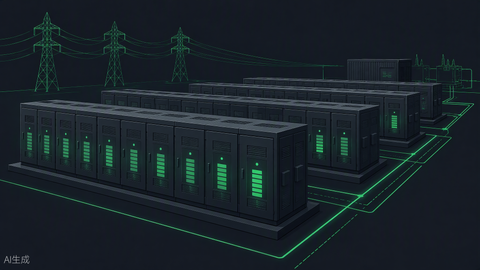
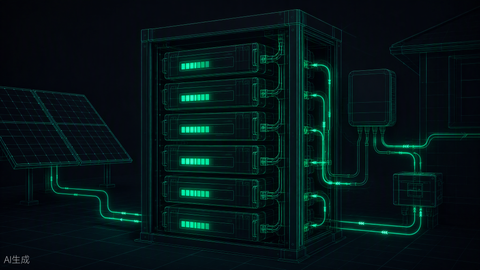
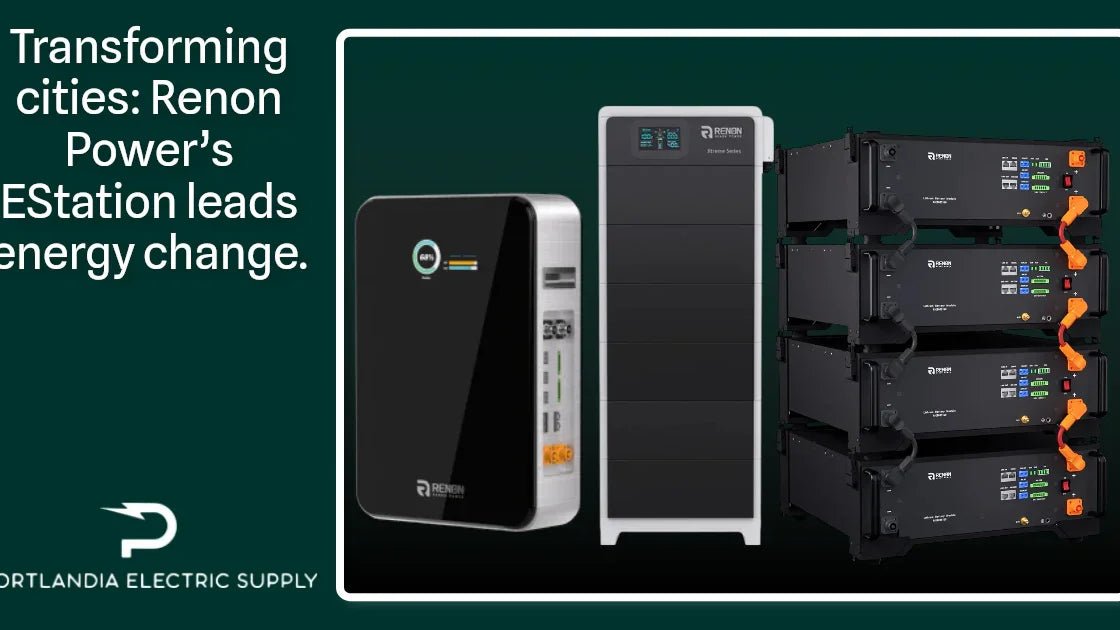
Battery energy storage is the pressure-relief valve for that problem, and it is why modular commercial and industrial (C&I) systems have become the fastest-moving part of our warehouse. Renon Power's EStation line is one of the systems we see specified most often in this slot: a pre-engineered, cabinet-scale energy storage system that drops onto a concrete pad, ties into the service, and starts shaving peaks the week it is commissioned. Renon Power Energy Storage Systems builds the EStation in capacities that scale from roughly 100 kWh cabinet-class units up to multi-megawatt-hour containerized blocks, which is exactly the range where urban retrofit projects live.
This guide is the working version of that conversation: what the EStation class of equipment actually is, the math that makes it pencil, where it fits in an urban energy strategy, and what we have learned commissioning and supplying systems like it.
The EStation is Renon Power's integrated energy storage platform: lithium iron phosphate (LFP) battery racks, a battery management system, a power conversion system (PCS), thermal management, and fire protection, all assembled and tested at the factory inside a rated enclosure. The distinction that matters for buyers is integrated versus built-up. A built-up system means your engineer specifies batteries from one vendor, inverters from another, and an energy management system from a third, and your contractor field-integrates all of it. An integrated cabinet arrives as a UL 9540-listed assembly with a single point of accountability.
For urban sites — where the electrical room is full, the pad space is the size of two parking spots, and the AHJ inspector has seen three battery fires on the news — factory integration is not a luxury. It is the difference between a six-week permitting cycle and a six-month one. If you are new to the category, our primer on what an energy storage system actually is covers the vocabulary before you go further.
| Subsystem | What It Does | What to Ask the Vendor |
|---|---|---|
| Battery racks (LFP cells) | Store DC energy; the bulk of system cost | Cell manufacturer, cycle-life test data, warranty throughput limit |
| Battery management system (BMS) | Monitors cell voltage/temperature, enforces safe limits, balances cells | Cell-level vs module-level sensing, alarm integration, data access |
| Power conversion system (PCS) | Bidirectional inverter; converts battery DC to building AC | Round-trip efficiency, grid-code certification (UL 1741 SA/SB, IEEE 1547) |
| Energy management system (EMS) | Decides when to charge and discharge to hit economic targets | Demand-charge algorithms, utility API support, manual override |
| Thermal management | Keeps cells in the 15–35°C window where they age slowly | Air vs liquid cooling, auxiliary power draw, ambient rating |
| Fire protection | Detection, suppression, and deflagration venting per NFPA 855 | UL 9540A test report — your AHJ and insurer will ask for it |
The load growth is not abstract. Three forces are colliding on the same service entrances: building electrification (heat pumps replacing gas), EV charging (Level 2 banks in garages, DC fast charging at depots), and tenant densification. Meanwhile the utility distribution equipment feeding those buildings was sized decades ago, and replacement lead times for large pad-mount and substation transformers currently run 18 to 24 months across the industry.
Storage does not create energy, but it does something almost as useful: it moves demand in time. A battery charges from the grid at 2 a.m. when the transformer is loafing, and discharges at 6 p.m. when the kitchen, the elevators, and the EV chargers all hit at once. The building's peak draw on the utility drops even though total energy consumption rises. That is the entire trick, and it is worth real money.
Commercial utility bills have two parts: energy charges (per kWh) and demand charges (per kW of your highest 15-minute peak in the billing cycle). Demand charges of $10–$25 per kW-month are common, and for many facilities they are a third to half the bill. Storage attacks the demand charge directly.
Here is a worked example from a real customer profile — a cold-storage warehouse on a 480V service with a 480 kW billing peak, demand charge of $14/kW-month, and a spiky refrigeration load:
| Line Item | Value | Notes |
|---|---|---|
| Current billing peak | 480 kW | Set by compressor starts at 5–7 p.m. |
| Storage discharge at peak | 160 kW | 100 kW PCS plus controlled load drop |
| New billing peak | 320 kW | 480 − 160 |
| Demand charge rate | $14 / kW-month | Utility tariff, large general service |
| Monthly savings | $2,240 | 160 kW × $14 |
| Annual savings | $26,880 | $2,240 × 12 |
| Installed system cost (est.) | ~$180,000 | 215 kWh cabinet-class system, installed |
| Simple payback, demand only | ~6.7 years | $180,000 ÷ $26,880 |
Demand charges alone rarely tell the whole story, and they should not have to. Stack the value streams: time-of-use energy arbitrage (charging at off-peak rates), demand-response program payments, and backup power value for critical loads. On the arbitrage line alone, that same 215 kWh cabinet cycling 300 times per year against an $0.08/kWh on-peak/off-peak spread adds roughly $5,160 per year (215 kWh × $0.08 × 300, before round-trip losses). Layer a 30% federal Investment Tax Credit on the installed cost and the payback on this profile drops toward four years. Run your own numbers with our battery sizing calculator and the deeper guide to sizing a battery bank.
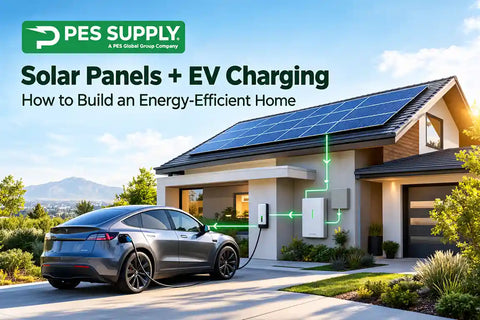
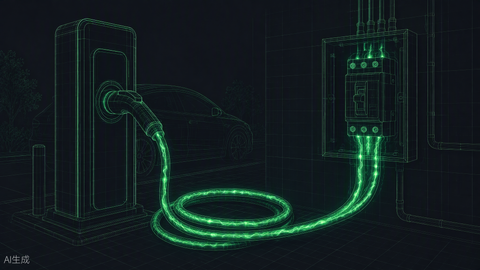
The single most common EStation-class application we quote now is EV fleet charging. A transit agency or delivery fleet wants ten DC fast chargers. The utility wants a new 2 MW service. The site does not have the space, the budget, or the timeline. Storage splits the difference: the grid connection stays modest, the battery fills the gap during charging events, and it recharges overnight when the fleet is parked.
| Depot Design Option | Utility Service Required | How the Math Works |
|---|---|---|
| 10 × 150 kW DC fast chargers, no storage | 1,500 kW | Full nameplate must be served if all chargers run at once |
| Same chargers, 60% coincidence factor | 900 kW | 1,500 kW × 0.6 — real fleets rarely peak together |
| Same chargers + 400 kW storage buffer | 500 kW | 900 − 400; battery covers coincident peaks, recharges overnight |
Cutting the service requirement from 1.5 MW to 500 kW routinely eliminates the transformer upgrade entirely — which, at current lead times, is the difference between a fleet launching this year or in 2028. For the charging side of that design, see our guides to commercial EV charging station installation and EV charging station installation cost, and browse our EV charger inventory including DC fast charging equipment.
Urban siting puts a battery cabinet next to people, buildings, and inspectors. Chemistry choice is therefore not academic. LFP — the chemistry inside the EStation and essentially every modern stationary cabinet — trades a little energy density for a lot of thermal stability and cycle life.
| Chemistry | Typical Cycle Life (80% DoD) | Thermal Runaway Risk | Best Fit |
|---|---|---|---|
| LFP (lithium iron phosphate) | 6,000+ cycles | Lowest of the lithium family; higher thermal runaway onset temperature | Stationary storage, daily cycling |
| NMC (nickel manganese cobalt) | 2,000–4,000 cycles | Higher; tighter thermal management required | Weight-critical applications (EVs, portable) |
| Lead-acid (AGM) | 500–1,200 cycles | Minimal fire risk; off-gassing management needed | Low-cycle backup, legacy retrofits |
Run the lifespan math: 6,000 cycles at one cycle per day is about 16.4 years of daily service before the pack reaches its rated cycle life — which is why LFP cabinets carry 10-year warranties comfortably. We stock LFP batteries across every size class, from 48V rack batteries up through 100–200 kWh C&I cabinets and containerized MWh-scale blocks.
Sizing Rules of Thumb We Actually Use

Before any vendor quote means anything, you need a target size. I always ask for twelve months of 15-minute interval data from the utility first — without interval data, every sizing conversation is guesswork. With it, these rules of thumb get you within striking distance:
| Application | Power Sizing (kW) | Energy Sizing (kWh) |
|---|---|---|
| Demand charge management | 25–40% of billing peak | 2–3 hours of discharge at rated power |
| EV depot buffering | Coincident charging peak minus available service | Sized to the longest charging window, typically 2–4 hours |
| Solar self-consumption | 50–100% of inverter AC rating | 1–2 kWh per kW of solar, load-dependent |
| Backup for critical loads | Critical panel peak plus 25% margin | Critical kWh per day × days of autonomy required |
Permitting Reality Check
Any stationary ESS over 20 kWh falls under IFC / NFPA 855 requirements in most jurisdictions: UL 9540 listing for the system, a UL 9540A thermal runaway test report, setback and separation distances, and often a fire marshal review. Cabinets like the EStation come with the listing paperwork; built-up systems make your engineer assemble it. Budget 4–10 weeks for AHJ review on urban sites and order equipment only after you know the exact listing documents your inspector wants.
I've stood in enough urban electrical rooms to know the first constraint is never the battery — it's the pad space, the crane pick over the sidewalk, and the condenser water line nobody put on the drawings. Plan the rigging path before you fall in love with a cabinet layout.
We had a warehouse customer last year whose EMS was shaving the wrong peak for three months because the demand interval on his tariff was 30 minutes, not 15, and the algorithm was tuned to the wrong window. The hardware was flawless; the configuration cost him about $6,000. Check the tariff definition of "peak" before commissioning, not after.
I tell every facilities manager the same thing about maintenance: LFP cabinets are boring by design, and boring is the goal. Quarterly filter checks, an annual thermal scan of the busbar connections, and firmware updates on a change-controlled schedule. If a vendor's maintenance plan reads like an aircraft checklist, ask what they're compensating for.
And one more from the quote desk: buyers routinely compare a 100 kWh cabinet at $X against a 215 kWh cabinet at $1.6X and call the smaller one cheaper. On a dollars-per-warranted-kWh-throughput basis, the bigger cabinet usually wins by 20% or more. Compare cost per delivered kilowatt-hour over the warranty term, not sticker price.
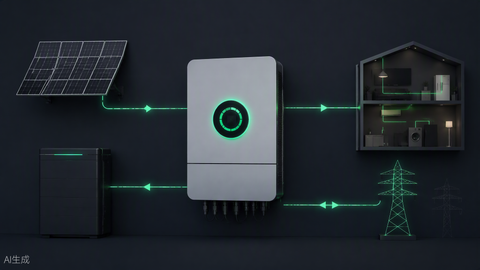
Storage is one layer. The urban sites that get the economics right stack it with on-site generation and intelligent loads: rooftop or carport solar feeding the building through hybrid inverters, the battery firming both, and EV charging scheduled against the whole picture. C&I platforms from Sungrow and ATESS fill adjacent slots in that architecture, and our Renon Power collection covers the EStation line and its siblings. For the full category view, start at energy storage systems or batteries and energy storage.
The trajectory is clear. Cities that treated storage as exotic in 2022 treat it as standard electrical infrastructure in 2026 — the same way they once absorbed elevators, then sprinklers, then rooftop solar. The projects that pencil best are the ones that start with interval data, a clear tariff reading, and equipment with its listing paperwork in order. Everything else is cabinet selection.
Every kilowatt-hour you push into a battery comes back smaller. Round-trip efficiency (RTE) for a modern LFP cabinet runs about 88–92% at the AC terminals — the losses stack up in the PCS conversion (both directions), cell resistance, and the auxiliary loads like cooling and controls that run whether the battery is working or not. That 8–12% loss is the operating cost of storage, and it belongs in every arbitrage model you run.
| Loss Component | Typical Share of Throughput | What Controls It |
|---|---|---|
| PCS conversion (charge + discharge) | 3–5% | Inverter efficiency curve, operating point vs rating |
| Cell and busbar resistance | 2–4% | C-rate; slower cycling is gentler and more efficient |
| Thermal management (HVAC/pumps) | 1–3% | Liquid cooling efficiency, climate, setpoints |
| Controls, BMS, standby draw | ~1% | Always-on loads; check the idle consumption spec |
Worked example on the arbitrage line from earlier: 215 kWh discharged per cycle against an $0.08/kWh spread looks like $17.20 per cycle. At 90% RTE you actually buy 238.9 kWh to deliver that 215 kWh (215 ÷ 0.90), so the real capture is (215 × peak price) − (238.9 × off-peak price). If peak is $0.22 and off-peak is $0.14, that is $47.30 − $33.45 = $13.85 per cycle — about 20% less than the naive math. Over 300 cycles a year, the difference between modeling RTE and ignoring it is roughly $1,000 annually on this size system. Small line, big credibility difference when the CFO audits your pro forma.
Not every urban site wants to own a battery. Three structures dominate the C&I market right now, and the right answer depends on the balance sheet, not the hardware:
| Structure | Who Owns It | Who Captures ITC | Best For |
|---|---|---|---|
| Direct purchase (CapEx) | The facility owner | The owner | Owners with tax appetite and a 10+ year hold on the building |
| Operating lease / financing | Lessor or lender | Typically the lessor; priced into the rate | Owners who want savings without a capital line |
| Storage-as-a-Service | Third-party developer | The developer | Sites that want a fixed monthly payment and zero performance risk |
We supply equipment into all three structures, and I have watched the wrong structure kill good projects: a school district that could not use the ITC directly, buying cash and leaving 30% on the table, when a service agreement would have priced the credit in. Match the structure to the tax appetite first; pick the cabinet second.
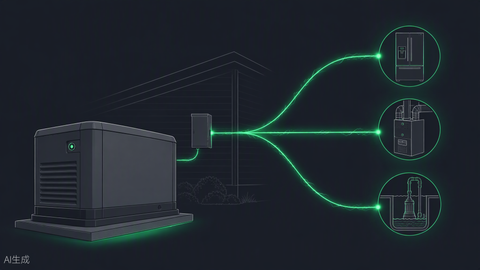
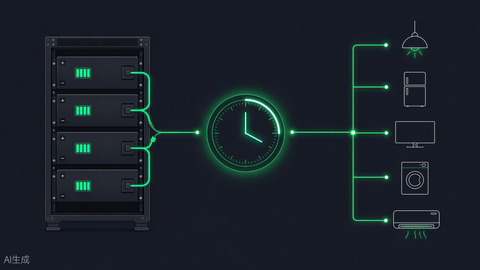
Peak shaving pays the bills, but the reason urban decision-makers sign the PO is usually resilience. A storage system with islanding capability detects a grid outage, opens the intertie, and forms a local microgrid for the critical panel in fractions of a second to a few seconds, depending on the transfer scheme. The design questions that matter are unglamorous: which loads are actually critical (usually 15–30% of a building's total load), how long must they run, and does the PCS carry the certification for intentional islanding under IEEE 1547. A 215 kWh cabinet backing up a 60 kW critical panel delivers roughly 3.5 hours of autonomy at full critical load — longer if the EMS sheds non-essentials on island. Pair the battery with rooftop solar and the autonomy window extends through daylight hours indefinitely in mild weather. That layered design — solar, storage, managed loads — is the architecture we detail in our hybrid inverter guide, and it is how urban buildings stop treating outages as emergencies.
What size EStation or C&I battery do I need for peak shaving?
Start with 12 months of 15-minute interval data from your utility. A common starting point is storage power equal to 25–40% of your billing peak and 2–3 hours of energy capacity. A 480 kW peak site typically lands on a 100–200 kW, 215–430 kWh system. Our team can run the sizing from your interval data — call (502) 790-0600.
How long does a Renon EStation-class LFP system last?
LFP stationary cells are typically rated for 6,000+ cycles at 80% depth of discharge. At one cycle per day, that is roughly 16 years of service before the rated cycle life, and most cabinets carry a 10-year warranty with a defined energy-throughput limit.
Does a battery cabinet qualify for the 30% federal tax credit?
Yes. Standalone energy storage of 3 kWh or more qualifies for the federal Investment Tax Credit under Section 48, and commercial projects can stack bonuses for domestic content and energy-community siting. Confirm current rates and prevailing-wage requirements with your tax advisor.
What permits does an urban battery installation need?
Expect an electrical permit, a fire marshal review under NFPA 855 / IFC Chapter 12, and possibly zoning or encroachment review for the pad. Your AHJ will want the UL 9540 listing and UL 9540A test report for the exact model. Factory-integrated cabinets simplify this substantially.
Can storage replace a utility service upgrade for EV charging?
Often, yes. A depot with 10 × 150 kW DC fast chargers might need only a 500 kW service with a 400 kW storage buffer instead of a 1.5 MW service — because the battery covers coincident peaks and recharges overnight. The utility must still approve the interconnection.
What is the difference between a cabinet and a container system?
Cabinets (roughly 100–400 kWh class) are self-contained outdoor-rated units for single buildings. Container systems scale to multiple MWh for campuses, depots, and utility-adjacent projects. Both use the same LFP fundamentals; the choice is driven by site energy needs and pad space.
Spec'ing Storage for a Building, Depot, or Campus?
PES Supply stocks C&I batteries, hybrid inverters, and EV charging equipment from 300+ manufacturers — one PO, one invoice, freight coordinated to your pad.
Browse Energy Storage SystemsNeed a system sized from your interval data? Call (502) 790-0600 — our team will calculate loads, select equipment, and quote the full bill of materials.