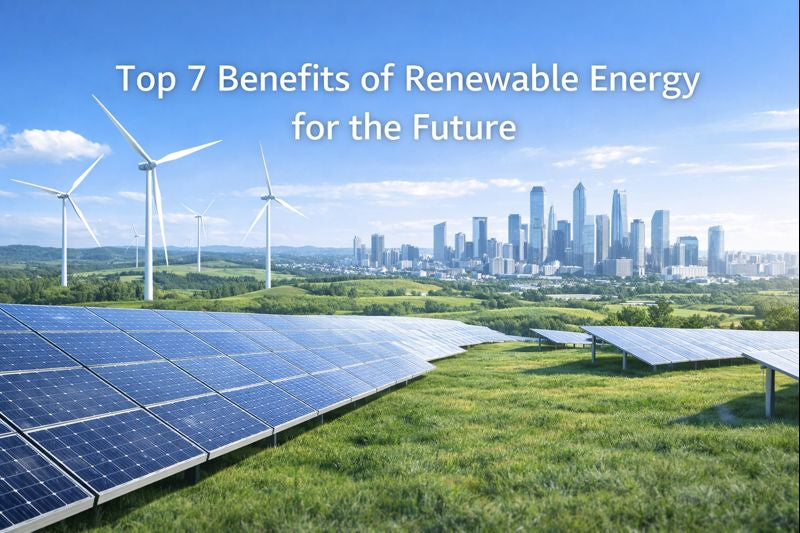
As the world faces the pressing challenges of climate change and dwindling fossil fuel reserves, the shift to renewable energy has never been more critical. For homeowners, businesses, and communities looking to reduce their carbon footprint and energy costs, understanding the benefits of clean energy is the first step toward a sustainable future. This guide explores the top seven benefits of renewable energy and why making the switch today creates lasting value for generations to come.
In This Guide:
What Is Renewable Energy?
Renewable energy comes from natural sources that replenish faster than they're consumed—offering a sustainable solution to the world's growing energy demands. Unlike fossil fuels, which took millions of years to form and release harmful emissions when burned, renewable sources like solar and wind are abundant, clean, and available virtually everywhere on Earth.
Renewable vs. Non-Renewable Energy:
- Renewable Energy: Derived from naturally replenishing sources—solar, wind, water, geothermal heat, and biomass. Produces minimal emissions and offers unlimited supply potential.
- Non-Renewable Energy: Extracted from finite resources—coal, oil, and natural gas. Takes millions of years to form, releases greenhouse gases, and will eventually run out.
The importance of renewable energy in today's world cannot be overstated. As countries strive to reach Net Zero emissions goals, the transition from fossil fuels to clean energy sources is not just environmentally responsible—it's economically strategic and essential for long-term energy security.
Types of Renewable Energy Sources
Several renewable energy sources are driving the global energy transition. Each offers unique advantages depending on geographic location, climate conditions, and energy needs.
| Energy Source | How It Works | Best Applications |
|---|---|---|
| Solar Energy | Photovoltaic cells convert sunlight directly into electricity | Residential, commercial, utility-scale projects |
| Wind Energy | Turbines capture wind movement to generate power | Open plains, offshore installations, rural areas |
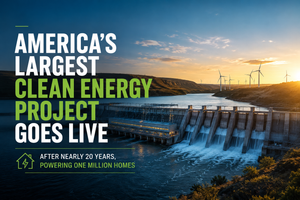
| Hydropower | Flowing or falling water spins turbines to produce electricity | Rivers, dams, tidal and wave installations |
| Geothermal Energy | Harnesses heat from Earth's interior for power and heating | Volcanic regions, heating systems, power plants |
| Biomass/Bioenergy | Organic materials are converted into fuel or electricity | Agricultural regions, waste-to-energy facilities |
The Solar Advantage:
Solar energy is the most abundant renewable power source on Earth—the sun delivers more energy to our planet in one hour than humanity uses in an entire year. This makes solar the most accessible and scalable clean energy solution for homes and businesses.
The Top 7 Benefits of Renewable Energy
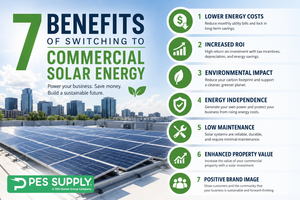
The shift to renewable energy delivers benefits that extend far beyond environmental protection. From economic savings to energy independence, here are the seven most impactful advantages of transitioning to clean power.
1. Enhanced Energy Security
Energy security is a paramount benefit of renewable energy, significantly enhancing the stability and resilience of power supply. By diversifying energy sources through solar, wind, and other renewables, countries and communities can reduce dependence on imported fossil fuels—insulating themselves from geopolitical tensions, supply disruptions, and volatile market prices.
Renewable energy allows for local production of power, diminishing reliance on foreign energy resources and fostering self-sufficiency. For homeowners with solar panels and battery storage, this means keeping the lights on even when the grid goes down.
2. Significant Environmental Impact
Renewable energy delivers profound environmental benefits, primarily through the dramatic reduction of greenhouse gas emissions and air pollution. Unlike fossil fuel power plants, solar panels and wind turbines produce electricity with zero direct carbon emissions during operation.
Environmental Impact:
A typical residential solar system offsets approximately 3-4 tons of carbon dioxide annually—equivalent to planting over 100 trees each year. Over a 25-year system lifespan, that's the same as taking 2-3 cars off the road permanently.
Clean energy sources contribute to significant decreases in air and water pollution, preserving ecosystems and protecting public health. The transition to renewable energy is vital for achieving international climate goals and ensuring a healthy planet for future generations.
3. Substantial Economic Benefits
The economic benefits of renewable energy are substantial, driving innovation, creating jobs, and stimulating growth at local, national, and global levels. The renewable energy sector is one of the fastest-growing industries worldwide, with investments leading to millions of jobs in manufacturing, installation, maintenance, and technology development.
| Economic Benefit | Impact |
|---|---|
| Job Creation | Solar and wind industries employ millions globally in manufacturing, installation, and maintenance |
| Reduced Energy Costs | Solar homeowners save $20,000-$50,000+ over system lifetime on electricity bills |
| Local Economic Development | Renewable projects keep energy spending within communities rather than exporting it |
| Price Stability | No fuel costs means predictable energy prices unaffected by global commodity markets |
4. Energy Independence
The transition to renewable energy is pivotal for achieving true energy independence—at both national and individual levels. By generating power locally through solar panels, wind turbines, and energy storage systems, homeowners and businesses can dramatically reduce or eliminate their reliance on utility companies and the aging electrical grid.
This independence provides protection against rising electricity rates, power outages, and supply disruptions. As nations continue to invest in renewable energy infrastructure, the path toward collective energy self-sufficiency becomes clearer.
5. Improved Public Health
Fossil fuel combustion releases harmful pollutants including particulate matter, nitrogen oxides, and sulfur dioxide—all of which contribute to respiratory diseases, heart problems, and premature death. The transition to renewable energy significantly reduces these health hazards.
The Hidden Cost of Fossil Fuels:
Air pollution from fossil fuel power plants costs the U.S. healthcare system an estimated $100+ billion annually in health-related expenses. Clean energy eliminates these hidden costs while protecting community health.
6. Technological Innovation
The renewable energy sector drives continuous technological advancement that benefits the entire economy. Innovations in solar cell efficiency, battery storage capacity, smart grid management, and energy monitoring create ripple effects across multiple industries.
These advancements make renewable energy increasingly affordable and accessible. Solar panel costs have dropped over 90% since 2010, while battery storage technology continues to improve in capacity, lifespan, and affordability.
7. Long-Term Sustainability
Unlike finite fossil fuel reserves that will eventually be depleted, renewable energy sources are truly sustainable—the sun will shine and wind will blow for billions of years. This long-term availability ensures that investments in renewable infrastructure today will continue delivering value indefinitely.
Summary: The 7 Benefits of Renewable Energy
- Energy Security: Reduced dependence on imports and volatile markets
- Environmental Impact: Zero emissions and cleaner air and water
- Economic Benefits: Job creation, cost savings, and local investment
- Energy Independence: Self-sufficiency at home and national levels
- Public Health: Reduced pollution-related illness and healthcare costs
- Technological Innovation: Advancing efficiency and creating new industries
- Long-Term Sustainability: Unlimited resources for future generations
Renewable Energy Technologies Driving Change
Rapid technological advancement is accelerating the renewable energy transition. From improved solar efficiency to revolutionary battery storage, these innovations are making clean energy more practical and affordable than ever.
Advancements in Energy Storage
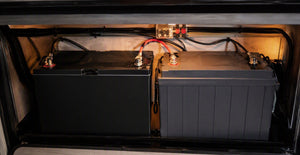
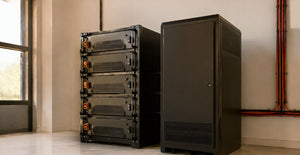
Energy storage technologies are pivotal in enhancing the efficiency and reliability of renewable energy systems. Innovations in battery storage enable the capture of energy generated during peak production for use when the sun isn't shining or wind isn't blowing.
| Storage Technology | Features & Applications |
|---|---|
| Lithium-Ion Batteries | Most common for residential and commercial; high efficiency, declining costs |
| Flow Batteries | Store energy in liquid electrolytes; ideal for long-duration, large-scale storage |
| Sodium-Ion Batteries | Emerging cost-effective alternative using abundant materials |
| Pumped Hydro Storage | Established technology; accounts for 90%+ of global installed storage capacity |
Storage Growth Projection:
Global electricity storage is projected to skyrocket from 176 GW today to over 14,000 GW by 2050—an 80x increase that will fundamentally transform how we generate, store, and consume energy.
Innovative Solar Power Solutions
The solar industry continues to pioneer groundbreaking innovations that maximize efficiency and expand applications:
Solar Technology Innovations:
- Bifacial Solar Panels: Capture sunlight from both sides, increasing energy production by 10-30%
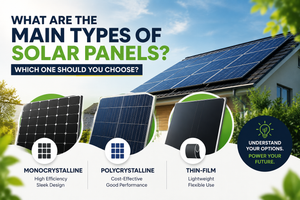
- Thin-Film Solar Cells: Lightweight, flexible panels that can be integrated into building materials
- Floatovoltaics: Solar panels installed on water bodies, reducing land use while improving efficiency
- Agrivoltaics: Combining solar generation with agricultural land use for dual benefits
- AI-Enhanced Monitoring: Smart systems that optimize performance and predict maintenance needs
Pro Tip:
When investing in solar, look for panels with high efficiency ratings (20%+) and comprehensive warranties (25+ years). Pairing solar with battery storage maximizes self-consumption and provides backup power during outages—the ultimate in energy independence.
Future Trends in the Renewable Energy Industry
The future of renewable energy is marked by continuous growth, declining costs, and accelerating adoption. Industry projections paint a compelling picture of the clean energy transformation ahead.
| Trend | Projection |
|---|---|
| Renewables Overtake Coal | Renewables will surpass coal as the largest source of global electricity generation by early 2025 |
| Annual Capacity Additions | Projected to reach 460 GW by 2027, potentially 600 GW under accelerated scenarios |
| Battery Storage Market | Expected to more than double by 2030, reaching up to $150 billion globally |
| U.S. Battery Storage | Large-scale storage anticipated to grow from 1 GW (2019) to 98 GW by 2030 |
| Renewable Share by 2050 | Renewable sources expected to supply nearly half of all global electricity |
According to the International Energy Agency, renewable energy will account for more than 90% of global electricity capacity expansion from 2022-2027. This remarkable shift signals that the energy transition is no longer a future possibility—it's happening now.
How to Get Started with Renewable Energy
Ready to join the renewable energy revolution? Whether you're a homeowner looking to reduce electricity bills or a business seeking sustainability goals, getting started is easier than you might think.
Steps to Go Solar:
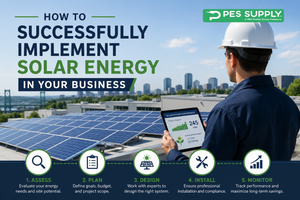
- Assess Your Energy Needs: Review your electricity bills to understand consumption patterns and identify your goals
- Evaluate Your Property: Consider roof orientation, shading, and available space for solar panel installation
- Explore Financing Options: Research tax credits, incentives, loans, and lease options available in your area
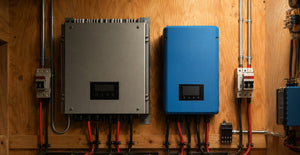
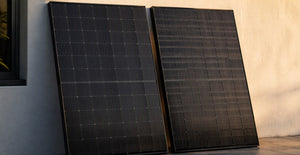
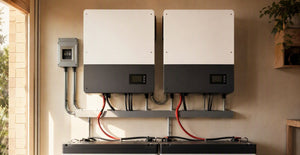
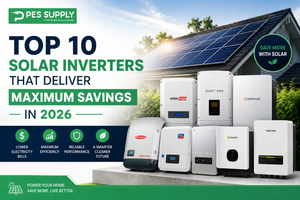
- Choose Quality Equipment: Select high-efficiency solar panels, reliable inverters, and appropriate battery storage
- Work with Certified Professionals: Partner with NABCEP-certified installers who understand local codes and best practices
Pro Tip:
The federal Investment Tax Credit (ITC) currently offers significant savings on solar installations. Combined with state and local incentives, many homeowners can offset 30-50% of their total system cost. Act now to maximize available incentives before they phase down.
Renewable Energy FAQs
Here are answers to the most common questions about renewable energy, solar power, and making the switch to clean energy.
What is the most efficient renewable energy source?
Solar energy is the most abundant and accessible renewable source, with modern panels achieving 20-23% efficiency. However, "most efficient" depends on location and application. Hydropower offers the highest conversion efficiency (up to 90%), while wind excels in coastal and plains regions. For most homeowners and businesses, solar provides the best combination of efficiency, accessibility, and return on investment.
How much can I save by switching to solar energy?
Most homeowners save $20,000-$50,000 or more over the 25-30 year lifespan of their solar system. Actual savings depend on your electricity rates, system size, sunlight availability, and local incentives. Many solar owners eliminate 70-100% of their electricity bills, with systems typically paying for themselves in 6-10 years through energy savings alone.
Do solar panels work on cloudy days or in winter?
Yes, solar panels produce electricity on cloudy days, though at reduced capacity—typically 10-25% of full output. In winter, shorter days mean less total production, but cold temperatures actually improve panel efficiency. Battery storage helps bridge production gaps, and net metering allows you to draw from credits built up during high-production periods.
What is the lifespan of solar panels and batteries?
Quality solar panels are warrantied for 25-30 years and can continue producing electricity for 35-40 years, though at gradually reduced efficiency (typically 0.5% degradation annually). Lithium-ion batteries generally last 10-15 years with proper maintenance. Inverters typically need replacement every 10-15 years. Overall, a well-designed solar system provides decades of reliable clean energy.
Is renewable energy reliable enough to power my home?
Absolutely. When properly designed with appropriate battery storage, solar systems provide highly reliable power—often more reliable than the grid alone. Grid-tied systems seamlessly draw from utility power when needed, while battery backup systems keep essential loads running during outages. Many homeowners achieve 90-100% energy independence with the right system configuration.
What tax credits and incentives are available for renewable energy?
The federal Investment Tax Credit (ITC) offers a significant percentage of your solar system cost as a direct tax credit. Many states offer additional incentives including rebates, performance payments, and property tax exemptions. Some utilities provide net metering programs that credit you for excess energy sent to the grid. Incentives vary by location, so consult with a solar professional to maximize your available benefits.
Start Your Renewable Energy Journey Today
The benefits of renewable energy are clear: enhanced energy security, significant environmental impact, substantial cost savings, and true energy independence. As technology advances and costs continue to decline, there has never been a better time to make the switch to clean power.
Whether you're planning a residential solar installation, a commercial energy project, or an off-grid system, the right equipment and expert guidance make all the difference. Our NABCEP-certified team specializes in helping customers design and build renewable energy systems that deliver lasting value.
How We Help:
- For Homeowners: Expert guidance on system sizing, equipment selection, and maximizing available incentives for residential solar and battery storage.
- For Installers & EPCs: Professional-grade solar panels, inverters, batteries, and balance-of-system components with competitive pricing and technical support.
- For Businesses: Commercial solar solutions that reduce operating costs, meet sustainability goals, and provide long-term energy price stability.
Related Products


Outback Power FXR 2300 Watt 230VAC 48VDC Sealed Grid/Hybrid Inverter/Charger Renewable Energy System () - FXR2348E
ViewReady to Harness the Power of Renewable Energy?
Browse our complete selection of solar panels, inverters, batteries, and accessories. Our team is ready to help you design the perfect system for your energy goals.
About PES Supply: We provide professional-grade renewable energy equipment and expert guidance to homeowners, installers, and businesses throughout the U.S. Our NABCEP-certified team helps customers select the right solar panels, inverters, batteries, and accessories for reliable, high-performance clean energy systems—from residential rooftop installations to commercial-scale projects.
Calculate how much storage you need with our battery sizing calculator.
Check solar incentives available in your state.
Use our free solar system calculator to size your array.
Check out our Solar Panel Comparison Tool. Check out our Inverter Sizing Calculator.
Calculate your solar payback and 25-year savings with our Solar ROI Calculator. Follow our complete DIY solar installation guide for step-by-step instructions. Keep your system running at peak performance with our Solar Maintenance Guide.
Related Resources
- Solar System Calculator
- Battery Sizing Calculator
- Solar Panel Comparison Tool
- Inverter Sizing Calculator
- Solar ROI Calculator
- Solar Installation Guide
- Solar Maintenance Guide
- Solar Permitting Guide
- Battery Installation Guide
- NEC Code Compliance Guide
- Solar Panel Mounting Guide
- Grounding & Bonding Guide
- Solar Incentives by State
- Pro Account — Wholesale Pricing
- PowerLink Network — Contractor Program