Forty kilowatts is the size where Florida's resilience math gets interesting. It's the rating that fully powers a large estate home with every HVAC stage running, a small retail building, a farm shop with welders, or a medical office's essential systems — and in Florida it does that work inside a hurricane zone, a flood map, and the toughest residential wind code in the country. I've walked customers through this size class from Pensacola to Key West, and the winners all did the same thing: treated the generator as a year-round building system, sized from a real load study, permitted by the book, and maintained by contract. This guide covers the 40 kW Cummins options available to Florida buyers, the code and fuel landscape, and the buying sequence that avoids the expensive mistakes. For adjacent sizes, see our 35 kW guide, the 50 kW Cummins, and the 60 kW Cummins articles.

Florida Context: Power Resilience for 40 kW Cummins Generators
Hurricane Season and Grid Reliability
June through November sets the rhythm of generator ownership in Florida. Ian put parts of the grid down for weeks; Michael erased neighborhoods of service for longer; and even "routine" tropical systems routinely black out exurban counties for two to five days. A 40 kW machine carries a property through those windows without rationing — full air conditioning included, which in August is a health issue, not a luxury. The class is liquid-cooled commercial-grade equipment (see our liquid-cooled standby overview), built for multi-day continuous runs at high ambient — exactly the duty air-cooled residential units aren't.
Regulatory and Code Considerations
The Florida Building Code's wind provisions apply to the generator, its anchors, and its fuel system; Miami-Dade and Broward's High-Velocity Hurricane Zone adds product-approval requirements (NOA listings) on enclosures. Flood elevation rules push equipment above design flood level in mapped zones. NFPA 37 clearances govern placement near the building. Your AHJ enforces the currently adopted FBC edition — the three-year cycle means your neighbor's 2020 install is not your code reference.
The 40 kW Genset: A Common Size for Resilience
Why 40 kW specifically: it's the smallest liquid-cooled rating that carries a whole luxury home or small commercial box without load shedding, and the largest that installs on a residential-style pad without commercial-industrial permitting gymnastics. It hits the balance point between capability and project complexity, which is why it dominates the upper-residential and light-commercial segment across the state. Below it, you're managing loads; above it, you're managing a construction project. Forty kilowatts is where the property stays normal and the paperwork stays sane — the two things Florida buyers are actually purchasing. Ask any dealer in the state which size they'd put behind their own house, and watch how many of them name this one without hesitating.
Overview of the 40 kW Cummins Lineup and Florida Availability
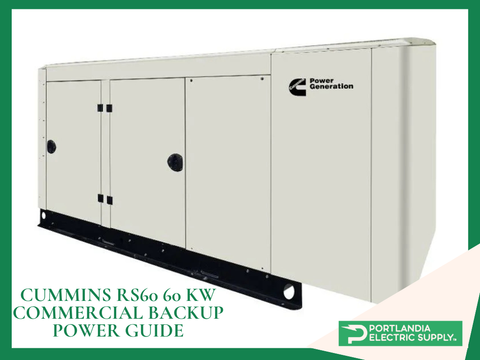
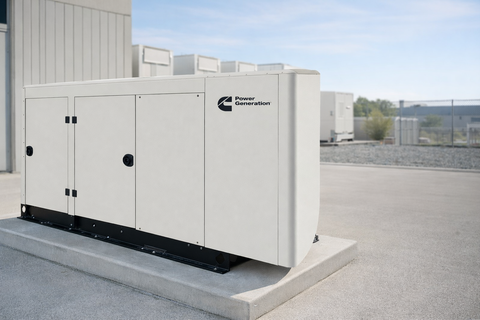
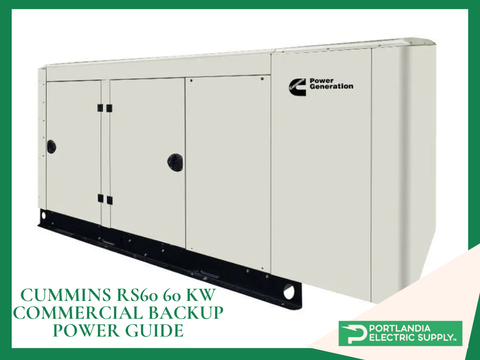
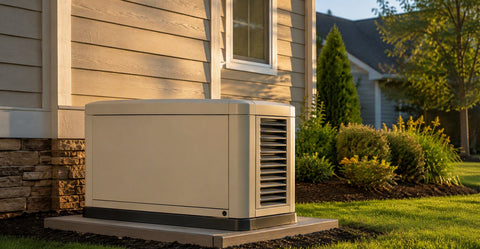
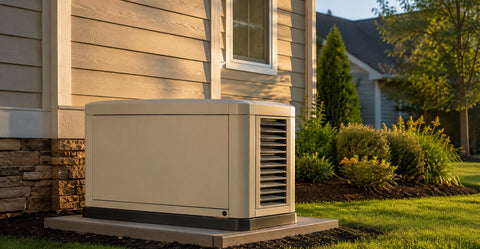
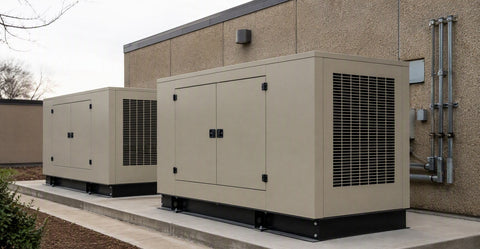
Cummins serves this rating with the QuietConnect gaseous series (natural gas or propane, the volume seller for estates and small commercial) and diesel models built on Cummins' own engine and alternator for long-runtime and critical duty. Representative class specs:
| Attribute | Cummins 40 kW Gaseous (QuietConnect class) | Cummins 40 kW Diesel |
|---|---|---|
| Standby rating | 40 kW | 40 kW (50 kVA class) |
| Voltage options | 120/240V 1φ standard; 3φ configurations available | 120/208V and 277/480V 3φ common |
| Cooling | Liquid-cooled, radiator | Liquid-cooled, radiator |
| Noise class | QuietConnect enclosure, ~mid-60s dB(A) at 23 ft typical | Enclosure-dependent, somewhat louder |
| Typical Florida duty | Estate homes, small retail, offices with gas service | Farms, pump stations, critical loads, no-gas sites |
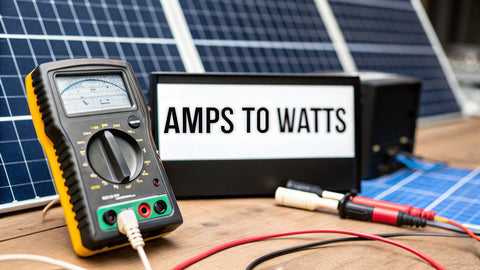
The amp math drives everything downstream. At 120/240V single-phase, 40 kW delivers 166.7A — a 200A-class ATS and 2/0–3/0 copper feeders (NEC 310.16, 75°C). At 208V three-phase it's 111A (125A breaker per NEC 240.6); at 480V three-phase, 48.1A (60A breaker, 8–6 AWG conductors). Feeders size at 115% minimum per NEC 445.13. Most Florida estate installs run single-phase 240V with a 200A service-rated ATS; commercial boxes favor three-phase. Our NEC wire sizing guide has the ampacity tables.
Typical Fuel Options
Natural gas where the utility delivers — verify pressure and volume in writing, as always. Propane from on-site tanks for gasless sites: a 40 kW unit at full load burns roughly 6–8 gallons per hour, so a 500-gallon tank (400 usable) supports about two to three days at full load, four to six at the half-load levels real buildings actually draw. Diesel where runtime and fuel security dominate: ~3.4 gal/hr at half load for the class, which makes a 250-gallon tank a week-long asset. The full trade-off analysis lives in our fuel comparison.
Florida-Specific Features to Look For
Order for Florida, not for the brochure: coastal enclosure treatment within a few miles of salt water, the high-wind anchoring kit engineered to the site's design wind speed, the 50°C-rated cooling package for summer full-load duty, battery warmer only in the Panhandle's frost belt (and skip it further south), and a rodent screen on the enclosure openings — Florida's fauna treats warm generator cabinets as premium housing.
Smart Power Capabilities and Florida Integration
Modern Cummins controls in this class offer remote monitoring, exercise scheduling, event logs, and load-management integration. In Florida practice, the monitoring pays for itself the first time it catches a dead starting battery in July rather than during September's storm. Pair the generator with a load-managed ATS and even large homes can stage big compressor restarts intelligently — the soft-start and sequencing conversation is where a 40 kW machine carries a house that "needs" 60 kW on paper.
Where to Buy in Florida: Authorized Distributors and Installers
Use the Cummins Dealer Locator to Find Florida-Based Partners
Start with Cummins' own dealer locator and verify factory authorization — the Cummins brand guide explains how the network is structured. Cross-shop the premium alternative with our Kohler vs. Cummins comparison so you interview installers with both options in hand.
Verify Local Coverage, Licensing, and Certifications
Florida requires licensed electrical contractors for the ATS and feeder work and licensed gas contractors for the fuel side. Ask bidders for license numbers and verify them on the DBPR site — five minutes that filters out most of the problems. Confirm the installer's service territory actually includes your address for storm response; a great dealer two counties away is a poor storm partner.
Ask About Local Service Plans and 24/7 Support
The generator is a 20-year asset; buy the humans with it. The questions that separate real service networks from answering services: How many techs in my county? What's the contracted storm-season response time? Do you stock parts for my model locally? Can you name three reference customers within 30 miles? Get the response-time commitment in the service contract, in writing.
Installation, Permits, and Florida Codes
Permitting and Licensed Electrical Work
The permit stack: electrical (ATS, feeders, grounding), mechanical/plumbing (gas line and pressure test), building (pad and anchoring), and fire-marshal review where fuel storage thresholds apply. HVHZ counties add product-approval documentation. A competent Florida installer handles the stack as a routine; treat any bidder who waives permitting as disqualified, full stop.
Automatic Transfer Switches and Utility Interconnection
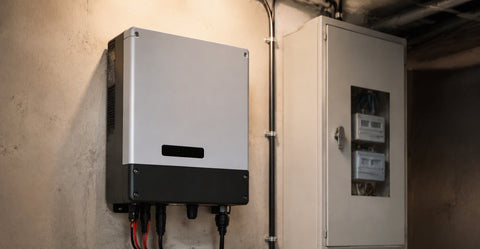
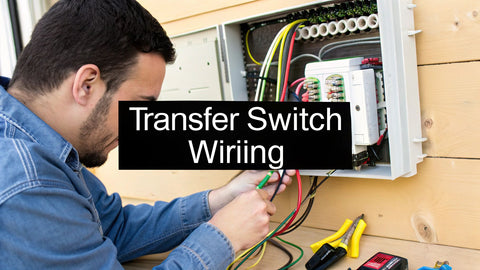
Most 40 kW Florida installs use open-transition (break-before-make) switching, which avoids utility interconnection review; closed-transition or paralleling designs need utility approval and protective relaying. Size the ATS to the full-load current at your voltage — 200A class for single-phase estates, 125A at 208V three-phase, 60A at 480V. Our transfer switch wiring guide and transfer switch explainer cover the hardware in detail.
Site Planning to Minimize Flood Risk and Setbacks
The site rules that matter: above design flood elevation (raised pad in mapped zones), NFPA 37 clearances from openings, exhaust aimed away from occupied spaces, service clearance on all sides for the tech who will kneel there in year 12, and anchoring engineered to the site's exposure category. The prettiest corner of the lot is often the swale; walk the drainage in a rain before you pour.
Sizing, Load Planning, and Optimization for Florida Loads
Full Load Calculation Basics
Forty kW at 240V single-phase is 166.7A — plan continuous duty at 80% (~133A). What Florida properties actually draw:
| Property | Typical Peak Demand | 40 kW Fit | Florida Note |
|---|---|---|---|
| 5,000–8,000 sq ft estate home | 22–36 kW | Strong fit | Two or three HVAC stages, pool, full kitchen — all live |
| Small retail / strip tenant | 20–35 kW | Good fit | Refrigeration restart sequencing after outage |
| Medical / dental office | 25–38 kW | Borderline-to-good | NEC 517 essential-system rules may shape ATS count |
| Farm shop + residence combo | 25–40 kW | Study the motors | Welder and compressor duty needs the surge check |
| Restaurant | 35–55 kW | Usually step up | See the 60 kW guide |
Essential Circuits and Cooling Load
In Florida the cooling load is the generator driver. A 5-ton compressor pulls ~6 kW running with a locked-rotor surge several times that; two of them restarting simultaneously after a week dead is the peak event the machine must survive. Soft starters on the big compressors cut starting current 60–70% and routinely turn a "we need 60 kW" house into a 40 kW success story — a $400 device against $15,000 of iron.
Load Management and Transfer Switch Sizing
Smart load management lets the ATS shed and restore priority tiers — water heater, dryer, second HVAC stage — so the generator never sees the full theoretical peak. Specify the ATS with load-management capability at purchase; retrofitting costs triple. Sequence the restarts, and the 40 kW machine hums along at 60% load through a week-long outage, which is exactly where liquid-cooled engines are happiest.
Fuel Options, Storage, and Reliability in Florida
Diesel, Natural Gas, and LP Configurations
Representative consumption for the 40 kW class (data plate controls; altitude and ambient move these):
| Load | Diesel | Natural Gas | Propane |
|---|---|---|---|
| 100% | ~3.9 gal/hr | ~480–620 ft³/hr | ~6–8 gal/hr |
| 75% | ~3.0 gal/hr | ~370–490 ft³/hr | ~5–6.5 gal/hr |
| 50% | ~2.2 gal/hr | ~260–360 ft³/hr | ~3.5–4.5 gal/hr |
| 25% | ~1.3 gal/hr | ~150–220 ft³/hr | ~2–2.8 gal/hr |
Storage, Ventilation, and Enclosure Considerations
Diesel tanks want UL-listed secondary containment and a polishing plan — Florida's humidity grows fuel algae faster than any state I've worked. LP tanks want setbacks per NFPA 58 and vaporization capacity sized for cold snaps. Gas services want a dedicated meter verified by the utility for full-load volume. Ventilation applies to the whole installation: the radiator needs unrestricted airflow across the enclosure's intake and discharge, which means no landscaping within three feet of the louvers and no pressure-washing debris into the fins. And plan fuel logistics as a system, not a tank: the best diesel installation pairs a right-sized tank with a contracted fuel vendor, a fill port the truck can actually reach, and a treatment schedule — because a 600-gallon tank that can't be refilled during a regional emergency is just a very heavy countdown timer.
Coastal and Humid Environment Protection
Salt air eats untreated enclosures in three to five years near the coast. Specify the coastal package at order time, wash the enclosure quarterly, and inspect fasteners twice a year. Humidity argues for enclosure heaters on standby units that sit for weeks — condensation inside the alternator is a quiet killer in this climate.
Hurricane Readiness and Resilience Features
Auto-Start, Remote Monitoring, and Weather-Aware Installation
The pre-season drill, non-negotiable: full service and load-bank test by May, fuel topped and treated, weekly exercise verified, ATS drill with whoever will be on-site, fuel vendor's storm line confirmed by phone. Auto-start and remote monitoring close the loop for properties whose owners are elsewhere — a generator protecting an empty house that nobody can watch is exactly where cellular monitoring earns its fee.
Site Placement to Minimize Flood Risk and Maximize Performance
Elevation first, wind anchoring second, service access third. After Ian, adjusters photographed generator pads before they photographed roofs; the properties with elevated, anchored, documented installations settled fastest. Boring paperwork, heroic outcomes.
Smart Load Management for Extended Outages
Multi-day events reward discipline: run the property at the loads it needs rather than everything it can carry, log hours against the EPA emergency allowance, and walk the unit daily. A 40 kW machine at 50% load sips fuel relative to its full-throttle appetite — the difference between a five-day tank and a nine-day tank. Load management earns its keep here too: the sheddable tiers (water heater, pool heater, second HVAC stage) can stay offline during peak fuel-conservation hours and return when the situation normalizes. The properties that run out of fuel in week two are almost never the ones that drew too little iron — they're the ones that ran everything from hour one because nobody configured the priorities. Configure the priorities in May, test them once, and let the automation do the rationing while you handle the rest of the storm.
Maintenance, Warranty, and Local Service in Florida
| Interval | Task | Florida-Specific Note |
|---|---|---|
| Weekly | Auto-exercise, visual check | Verify it ran via monitoring app, not assumption |
| Monthly | Fluids, battery, enclosure, pests | Check for corrosion and ant/rodent nests |
| Semi-annual | Coolant test, belts, hoses, battery load test | Coastal sites: enclosure corrosion inspection |
| Annual | Oil/filters/plugs, electrical torque inspection, load-bank test | Schedule April–May, before hurricane season |
| Every 2–3 years | Coolant, battery, thermographic scan, fuel polish (diesel) | Fuel polishing is mandatory-grade in humid climates |
Warranty terms vary by model and rating — typically 2–5 years with extended options — and coverage requires the maintenance records. Keep the logbook; the claim you win with it will pay for a decade of service visits.
Remote Monitoring, Smart Power, and Technology Trends

Cummins' remote monitoring in this class reports status, exercise results, and fault codes over cellular or Ethernet, and integrates with building automation on commercial sites. Configure the alarm list during commissioning — low battery voltage, missed exercise, fault lockouts, fuel level where tank sensors exist — and assign it to someone who will actually act on it. The trends worth watching: tighter utility coordination for demand-response programs (standby fleets earning payments in some Florida territories), insurance discounts for monitored resilience, and hybrid pairings where a small battery handles the first minutes of an outage while the generator spools — our battery vs. generator analysis covers where hybrids beat iron alone. Expect the controls conversation to keep moving toward the cloud; expect the hurricane to keep not caring about your Wi-Fi. Specify cellular monitoring with battery backup, because the day the broadband drops is the day you need the data most.
Getting Quotes and Evaluating Local Support
Demand itemized quotes: equipment, ATS, feeders, pad, fuel work, permits, commissioning, and first-year service, each on its own line. Expect the 40 kW turnkey Florida project to land roughly $28,000–$55,000 depending on fuel, flood elevation, and county — HVHZ and flood-zone work at the top. Compare scopes, not totals; the cheapest quote is usually the one missing the fuel line or the engineering letter. Verify storm-season response commitments in writing, and reference-check three nearby installs that survived an actual hurricane — theoretical service networks and September service networks are different animals. The commercial generator overview and our 100 kW Cummins guide help if your load study keeps growing during the quote process, as they tend to.
The Estate Home Use Case: Where 40 kW Earns Its Keep
The modal 40 kW buyer in Florida is a 5,000–8,000 square foot home with three HVAC stages, a pool, a full electric-capable kitchen, and owners who evacuate for some storms and shelter for others. What that home needs during an outage isn't just watts — it's normalcy: every thermostat live, the pool circulating, the wine fridge cold, the gate and cameras up. An undersized generator forces the family to learn load-shedding triage at 2 a.m.; a 40 kW machine with a load-managed ATS simply runs the house. The design details that make it work: soft starters on the two largest compressors, the water heater and pool heater on sheddable tiers, and a transfer scheme that stages restarts across thirty seconds instead of hitting the genset with everything at once. I've commissioned enough of these to know the deliverable isn't the hardware — it's the moment the grid drops and nobody in the house notices. That's what this class buys, and it's why buyers who experienced one storm on a portable unit never go back.
Used vs. New in the 40 kW Class
The secondary market at this rating is active: telecom take-outs, dealer demonstrators, and estate equipment from renovations. A low-hour diesel at 50–65% of new can be the right buy for a farm or shop — with the same three conditions we apply everywhere: verified hours and service records (ECU pull, not the seller's word), a dealer inspection including compression test, and an honest discount for the missing warranty. The 40 kW class adds a Florida-specific caution: salt-air exposure doesn't show on an hour meter. Inspect the enclosure seams, radiator fins, and terminal blocks of any coastal used unit — surface rust is cosmetic, but corroded radiator cores and green terminal lugs are expensive. Ex-rental units stay on the avoid list; rental duty in this class means cold starts, missed service, and overloaded duty cycles. If a used unit passes inspection, spend part of the savings on a full fluid service, new battery, and a load-bank test before you trust it with a storm season.
Noise and the Neighborhood
A 40 kW liquid-cooled unit in a QuietConnect-class enclosure runs in the mid-60s dB(A) at 23 feet — lawn-mower-adjacent at full load, quieter at partial. Most Florida municipalities cap nighttime property-line levels in the 55–65 dB(A) band, which a well-sited enclosed unit meets and an open-frame unit doesn't. Placement is the free attenuation: every doubling of distance from the property line drops roughly 6 dB, the house itself blocks a shadow zone, and a masonry screen wall adds mass the cheap fences don't. HOA architectural review is the other gate — many Florida communities have generator guidelines covering visibility, screening, and placement that are enforceable and sometimes stricter than the county. Read the HOA documents before the pad pour, not after the violation letter. One field observation: the neighbors who complain about generator noise are usually the ones whose houses went dark. The units that run during real outages generate gratitude, not complaints.
Insurance, Resilience, and the Economics of Not Going Dark
The financial case for 40 kW in Florida has moved past comfort into risk management. Insurers writing wind policies in coastal counties increasingly ask about resilience measures; documented standby power with a maintenance contract supports both underwriting conversations and post-storm claims (a house that stayed powered doesn't develop the mold claim, the spoiled-food claim, or the vacant-house vandalism claim). Businesses add continuity math: a medical office that stays open through a five-day outage keeps its revenue and its patient goodwill; a retail building with cold storage keeps its inventory. Against a $35,000–$55,000 installed cost, a single avoided five-day closure or mold remediation pays a substantial fraction of the project. The financing landscape cooperates: home-improvement and commercial equipment financing carry these projects routinely, and federal depreciation treatment has favored standby generation in recent tax years. Verify current incentives at quote time — resilience funding cycles through state programs faster than brochures update.
Project Timeline: From Decision to Protected Property
Set expectations honestly: a 40 kW Florida project runs three to eight months end to end. Load study and design take one to two weeks; engineering and permits take three to eight weeks (HVHZ counties longer); equipment lead time runs six to twenty weeks depending on configuration and season; site work, installation, and commissioning add two to three weeks; inspection and closeout one to two more. The spring surge is real — every January through April, Florida's generator contractors book out, and the families who decided in May join the queue behind them. If you want protection for the coming season, the decision deadline is the previous fall. We stock select 40 kW configurations and hold factory allocations for exactly this reason: in this market, the calendar is a specification.
The Florida Generator Calendar
Ownership in this state has a rhythm, and the owners who follow it never meet their generator for the first time during a storm:
| Months | Action | Why It Matters |
|---|---|---|
| January–March | Quote, permit, and install new projects | Contractor availability and permit queues are shortest |
| April–May | Full annual service, load-bank test, fuel treatment | The machine must be proven before June 1 |
| June–November | Weekly exercise verification, fuel level checks, daily walk-arounds during events | Storm season; monitoring app earns its keep |
| December | Post-season inspection, logbook review, service-contract renewal | Catch storm-season wear while the queue is empty |
Print it, laminate it, tape it inside the enclosure door. The calendar is the maintenance plan, and the maintenance plan is the actual product you bought.
Frequently Asked Questions
Is 40 kW enough to run a whole house in Florida?
For most homes up to about 8,000 sq ft with gas appliances, yes — including full central air. At 240V single-phase, 40 kW delivers about 167A (133A at the 80% continuous rule), enough for two or three HVAC stages with soft starters or load management on the compressors. All-electric homes with large simultaneous loads may need load shedding or a step to 60 kW.
Does a 40 kW generator in Florida need hurricane-rated anchoring?
Yes. The Florida Building Code applies design wind loads to the unit, anchors, and fuel system — 150–180+ mph depending on location and exposure. Miami-Dade and Broward (HVHZ) additionally require NOA-approved enclosure products. The anchoring is engineered, permitted, and inspected; it is not a hardware-store afterthought.
How long will a 40 kW generator run on a 500-gallon propane tank?
With about 400 gallons usable, roughly four to six days at the half-load levels real properties draw (around 3.5–4.5 gal/hr), and two to three days at sustained full load. Cold weather reduces LP vaporization rates — tank sizing in northern Florida should assume winter demand, not summer.
What permits does a 40 kW installation need in Florida?
Electrical for the ATS and feeders, mechanical or plumbing for gas work, building for the pad and anchoring, and fire-marshal review where fuel storage thresholds apply. HVHZ counties add product-approval documentation. Plan four to twelve weeks for the permit-to-commissioning arc depending on county and equipment lead time.
Diesel or natural gas for hurricane season?
Diesel where runtime certainty rules — the fuel is on your property and under your contract. Natural gas where the utility confirms full-load volume and pressure in writing; it never needs refueling but inherits the utility's post-storm condition. Propane bridges the gap for gasless sites that can't store diesel cleanly.
How much does a 40 kW Cummins cost installed in Florida?
Roughly $28,000–$55,000 turnkey: equipment, transfer switch, pad and elevation, fuel infrastructure, permits, engineering, and commissioning. Flood-zone elevation, HVHZ documentation, and long fuel or feeder runs push toward the top. Annual service contracts run $1,200–$2,500 in most Florida markets.
Quick Local Resources and Next Steps
- 35 kW generator guide — the step down
- 50 kW Cummins — the step up
- 60 kW Cummins — for restaurants and bigger commercial boxes
- Cummins brand guide and dealer network
- Fuel type comparison
- Transfer switch wiring guide
- NEC wire sizing and ampacity charts
Ready to move? Send us the property's square footage, panel size, gas availability, and county — we'll spec the 40 kW configuration, flag the wind and flood requirements, and connect you with licensed Florida installers who answer their phones in September.