Updated September 2026 — refreshed against the live PES catalog; product pricing verified 2026-09-26.
2026 product line update
| Product | Class | Price |
|---|---|---|
| Canadian Solar 710W TOPCon Bifacial Solar Panel | 710W | $340.80 |
| Hyundai 640W 156-Cell TOPCon Bifacial Solar Panel | 640W | $220.78 |
| Thornova Solar TS-BGT72(600) 600W Bifacial Solar Panel | 600W | $165.76 |
| Thornova Solar 595W Solar Panel 144 Cell Bifacial TS-BGT72(595) Wholesale 31 panels per pallet | 595W | $164.64 |
| ZNShine Solar 585W 144-Cell Bifacial Solar Panel | 585W | $246.99 |
| Hyundai HiS-S585OJ 585W Clear on Transparent156 Half-Cell Bifacial Solar Panel | 585W | $195.86 |
Live prices verified 2026-09-26. The current pallet line tops out at 550–640W, plus the Canadian Solar 710W TOPCon flagship panel.
Every few decades, agriculture gets asked to carry a second industry on its back. It happened with wind leases in the Plains, and it is happening now with photovoltaics — except this time the pairing isn't just a land-lease deal. Agrivoltaics, done right, is a genuine symbiosis: the panels moderate the microclimate, the crops cool the panels, and the land produces calories and kilowatt-hours off the same acreage. I've spent the last several years helping growers and solar contractors spec these systems, and I've seen both the beautifully engineered versions and the expensive mistakes. This guide covers the science, the design math, and the practical details that decide which one you end up with.

What Agrivoltaics Actually Means (and What It Doesn't)
Agrivoltaics is the intentional, managed co-production of agriculture and solar energy on the same land, at the same time. That definition excludes two things people constantly confuse with it. A solar array built on retired farmland with gravel underneath is not agrivoltaics — that's just a ground mount with a history. And a pasture that happens to have a panel leaning on a fence is not agrivoltaics either. The defining trait is dual management: someone is actively farming, and someone is actively generating, and the design serves both.
The concept went mainstream in research circles after the University of Arizona's Biosphere 2 trials — the Barron-Gafford group's work that showed cherry tomato production roughly doubling under partial panel shade while water demand per unit of yield fell sharply. Since then, research programs across the US, Europe, and Asia have tested everything from lettuce under trackers to sheep between fixed-tilt rows. The consistent finding: for a wide band of crops and climates, the combination outperforms either use alone when you measure total land productivity.
Two misconceptions are worth killing up front, because they poison otherwise good projects. The first is that agrivoltaics means sacrificing the farm to the array. Properly designed dual-use keeps 70–95% of the land in production; if a proposal retires the field, it's a solar project wearing a farm costume, and you should evaluate it that way. The second is the mirror image: that the agriculture is decorative — a few photogenic sheep for the press release. Real dual-use has a crop plan, a grazier contract, or a harvest schedule with the same contractual weight as the interconnection agreement. When I review a project's documents and the agronomy section is one paragraph long, I know exactly which misconception I'm looking at.
The Science of Sharing Sunlight
Plants have a light saturation point — a level of irradiance beyond which additional sun produces no additional photosynthesis and only adds heat stress and water demand. For many shade-tolerant crops, that point sits well below full desert sun. A panel that takes 30% of the photons is not stealing 30% of the yield; in hot climates it may be removing mostly excess. Meanwhile, transpiring crops cool the air around the array, and cooler silicon converts sunlight more efficiently — every degree Celsius of module temperature costs roughly 0.3–0.4% of output on typical modules, less on TOPCon and HJT. The crops literally air-condition the panels, and the panels shade the crops. That's the symbiosis in one sentence.
| Crop Class | Approx. Shade Tolerance | Observed Response Under Arrays | Best Configuration |
|---|---|---|---|
| Leafy greens (lettuce, spinach, kale) | High — thrives at 30–50% shade | Delayed bolting, stable or improved yield in hot regions, better leaf quality | Elevated fixed-tilt or raised tracker |
| Fruiting vegetables (tomato, pepper) | Moderate-high — 25–40% shade | Arizona trials: cherry tomato fruit roughly doubled, jalapeño yield up ~a third | Elevated rows aligned to crop beds |
| Herbs (basil, cilantro) | Moderate — 25–35% shade | Extended harvest windows, reduced wilting losses | Inter-row ground mount |
| Forage and pasture | Very high — tolerates 40–60% shade | Grazed successfully under thousands of acres of arrays; grass stays greener into dry season | Standard or slightly raised fixed-tilt |
| Grains (wheat, corn) | Low — wants full sun | Yield penalty under anything but sparse layouts | Vertical bifacial fence-style only |
| Pollinator meadow | Flexible | Native seed mixes thrive; supports apiaries and beneficial insects | Any ground mount |
The Water-Energy-Food Nexus, in Plain Numbers
The strongest sustainability argument for agrivoltaics is not the electricity. It's the water. In irrigated agriculture, pumping water is one of the largest energy loads on the farm, and evaporation is one of the largest losses. Panel shade attacks both sides of that ledger at once: less evaporation means less pumping, and the array itself can power the pump. On a Central Valley almond-adjacent vegetable block I consulted on, the grower's irrigation runtime dropped enough in the first shaded season that the farm's diesel backup genset went from monthly exercise runs to quarterly — the pumps simply weren't running as long.
| Nexus Link | Mechanism | Direction of Benefit |
|---|---|---|
| Energy → Water | Array powers irrigation pumps, aeration, cold storage directly | Lower pumping cost; resilience during grid outages |
| Water → Food | Shade cuts evapotranspiration; soil moisture persists longer between cycles | Same yield on less water, or more yield on the same water |
| Food → Energy | Transpiring crops cool the module environment | Higher conversion efficiency vs. arrays over gravel or dry soil |
| Energy → Food | Shade reduces sunscald and heat stress on sensitive fruit | Higher packout percentage, less cull waste |
| Land → Both | One parcel carries both revenue streams | Land Equivalent Ratio above 1.0 — the metric that convinces lenders |
That last row deserves a definition, because it is the number that turns agrivoltaics from a story into a business case. Land Equivalent Ratio (LER) compares the combined output of a dual-use acre against what the same acre would produce in single use. An LER of 1.3 means the dual-use acre produces the equivalent of 1.3 acres of separated solar and farming. Published agrivoltaic trials routinely land between 1.2 and 1.6 for shade-compatible crops. When a grower asks me "why not just lease the whole field to the solar developer," the LER math is the answer: the whole is worth more than the parts.
Configuration Choices: Matching Structure to Crop
Design starts with the crop's machinery and light needs, and works backward to steel. Get the sequence wrong and you'll be the proud owner of a beautifully engineered array that the combine can't reach.
| Configuration | Structure | Farmability | Energy Density | Where It Wins |
|---|---|---|---|---|
| Inter-row fixed-tilt | Standard height, 2–4× row pitch | High for pasture/hay; lanes for equipment | Moderate | Lowest-cost entry; grazing and pollinator programs |
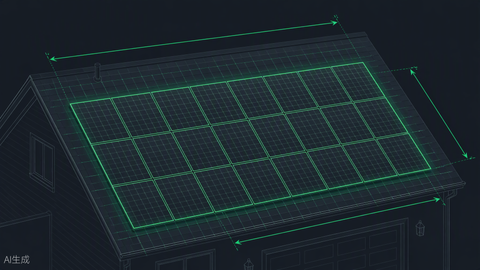
| Elevated fixed-tilt | 8–14 ft clearance to low edge | Near-total; full tractor access | Moderate-high | Vegetables, orchards, intensive horticulture |
| Raised single-axis tracker | 8–10 ft stow height | High; dynamic shade pattern | High per acre of array | High-value crops that benefit from moving shade |
| Vertical bifacial | Fence-style E-W modules | Near-total; wide machinery lanes | Lowest per acre | Grain operations, pasture, perimeter land |
| Greenhouse-integrated PV | Modules as roof glazing | Complete (controlled environment) | Low-moderate | Spectrally selective modules let grow-light wavelengths through |
Module choice follows structure. Anything elevated or vertical should be glass-glass bifacial — the rear gain over living vegetation is real, and glass-glass survives ammonia exposure from livestock far better than polymer backsheets. For elevated horticultural builds, high-efficiency modules like the Solaria PowerX 400R and the PowerXT 430R squeeze more watts out of every pound of steel, which matters when your racking cost per watt is double a standard ground mount. Our broader solar panel catalog and the bifacial panels guide cover the trade-offs in more depth.
A Worked Example: Sizing Solar for a Diversified Family Farm
Here's the math for a realistic small operation: 160 acres total, mixed vegetables on 40 acres, pasture on 80, a packing shed with refrigeration, drip irrigation off two wells, and an annual electric bill driven mostly by pumping and cold storage. The farm wants to offset its own load and add grazing revenue — not become a power plant.
| Step | Math | Result |
|---|---|---|
| Annual farm load (bills) | Pumps + cold storage + shop | ~420,000 kWh/yr |
| Site production factor (upper Midwest) | 1,250 kWh per kW DC per year | — |
| Array size for 100% offset | 420,000 ÷ 1,250 | ~336 kW DC |
| Module count at 430 W | 336,000 ÷ 430 | ~781 modules |
| Land required, inter-row @ 8 ac/MW | 0.336 MW × 8 | ~2.7 acres — fits in one pasture corner |
| Grazable area retained | Inter-row design, 80% farmable | ~2.2 acres still grazed inside the fence |
That table is why small-farm agrivoltaics is quietly the most sustainable version of all: the array is sized to the load, the land sacrifice is one pasture corner, the sheep handle the mowing, and the USDA REAP grant program can cover a meaningful share of the installed cost for eligible agricultural producers. The system behaves like a piece of farm equipment — it earns its keep every day the pumps run.
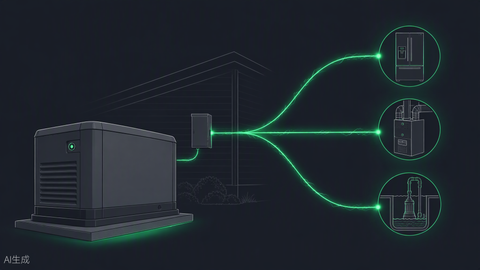
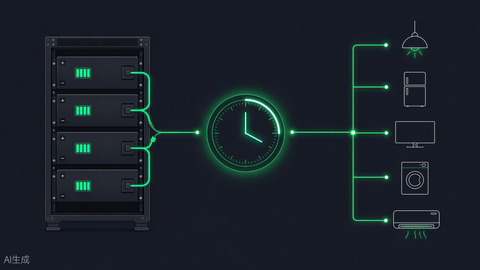
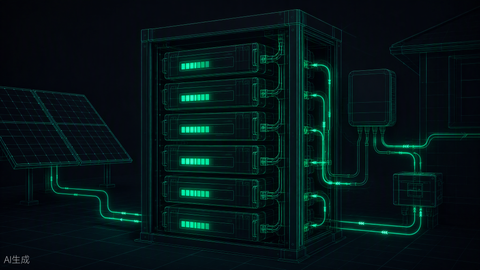
For farms adding resilience to that picture, pairing the array with storage changes the outage math completely; our battery sizing guide walks the storage math, and the battery and energy storage inventory covers the hardware. If the farm already leans on a genset for outage protection, the generator sizing guide and generator catalog are the right companion reads — hybrid solar-plus-genset designs are standard practice on working farms.
Sustainability Beyond the Carbon Ledger
Carbon is the metric everyone quotes, but agrivoltaics scores on several less-discussed ledgers:
- Soil health: perennial ground cover under arrays — especially pollinator mixes — builds soil organic matter that annual tilling strips away. Some of the healthiest soil on hosted farms ends up under the panels, simply because nobody drives on it.
- Biodiversity: array edges and inter-row spaces become habitat corridors. Managed pollinator plantings under arrays support apiaries; I've walked sites where the honey was a real revenue line, not a marketing prop.
- Rural economic durability: lease income or energy savings diversify farm revenue against commodity price swings. A farm that survives a bad commodity year because of its energy income is a farm still in agriculture — which is the whole point.
- Water infrastructure: several projects I've seen bundled new efficient drip systems into the agrivoltaic build, because the project economics finally justified the upgrade. The array financed the irrigation retrofit.
The Design Process, Step by Step
Every successful dual-use project I've been part of followed the same sequence, and every failed one skipped at least one step. Here it is, in order, with the mistakes marked:
- Start with the crop plan, not the array. What is planted, where, with what machinery, on what irrigation schedule? The answer fixes your row orientation, clearance, and lane widths. Skipping this step is how you get a 9-foot clearance array on a farm whose sprayer needs 11.
- Map the energy loads. Pull twelve months of bills and the pump curves. Load-matched systems are the most forgiving financially; oversized export systems are the most schedule-sensitive because they live and die by interconnection queues.
- Soil and geotech before steel. Farm soils are worked soils — compacted lanes, ripped rows, tile drainage. A standard pile refusal table from a suburban solar job does not transfer. Get the geotech report to specify embedment and corrosion allowances for your actual dirt.
- Design the shade pattern. Fixed-tilt rows cast a shade band that moves with season and hour. Over a crop bed, that's a design input: some growers deliberately put the persistent shade band on a service lane and the moving partial shade on the crop. This is where agrivoltaics earns the word "design" instead of just "construction."
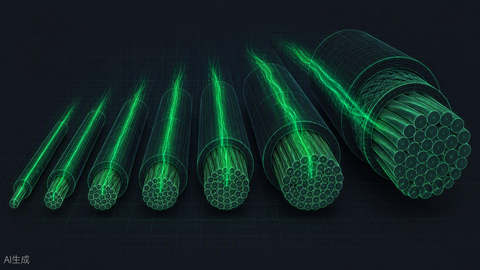
- Engineer for farm abuse. Armored or buried cable below tillage and hoof depth, stainless hardware in livestock zones, bollards or elevated junction gear near lanes. Assume contact. Be pleasantly surprised, never structurally surprised.
- Contract the vegetation plan. Grazing lease, mowing contract, or cropping plan with named responsibility and money attached. "We'll figure it out" is not a vegetation plan; it's a warranty claim in waiting.
- Commission with the farmer present. Walk the rows together at commissioning. The person who will spend the next 25 years inside the array should help decide where the disconnect placards go and how the lanes drain.
Economics: Where the Money Actually Comes From
Dual-use projects stack revenue in a way conventional solar never can. A realistic annual stack for a mid-size elevated horticultural build looks like this, order-of-magnitude per acre:
| Revenue / Savings Line | Typical Mechanism | Who Receives It |
|---|---|---|
| Energy offset or export revenue | Net metering, PPA, or wholesale export | System owner (farmer or developer) |
| Land lease to solar developer | Per-acre lease with escalator, often several times crop net income | Landowner |
| Grazing services | Grazier pays operator, or operator avoids mowing cost | Operator / grazier |
| Crop revenue (retained) | 70–95% of normal production continues | Farmer |
| Water savings | Reduced pumping and irrigation volume | Farmer |
| Grant and tax incentives | Federal ITC on the energy side; USDA REAP on the farm side; state agrivoltaic adders where they exist | Varies by structure |
The caution I give every client: don't let the stack seduce you into ignoring the denominator. Elevated steel is expensive, interconnection studies are slow, and the schedule slip from a utility queue can strand a growing season's worth of planning. Model the pessimistic schedule, not the optimistic one. If the project still pencils with a two-year queue delay, build it.
Three Patterns from the Field
The Yuma lettuce block. Elevated fixed-tilt over drip-irrigated greens. The grower's complaint in year one was not yield — it was that his crew kept harvesting in the shade rows first because it was more comfortable, which skewed his harvest rotation. When your labor force votes with its feet for the array, the microclimate argument is over.
The Midwestern sheep pasture. Inter-row fixed-tilt on a dairy-adjacent pasture, sheep under contract from a local grazier. The operator's mowing budget went to zero, the grazier got subsidized forage that stayed green three weeks longer into the dry season, and the array's vegetation report to the county basically writes itself now. This is the configuration I recommend to anyone starting out, because every stakeholder's incentive points the same direction.
The orchard mistake. A stone-fruit operation that installed standard-height ground mount between young tree rows without involving the orchard manager. Three years later the canopy met the modules, the pruning crew needed the rows the arrays occupied, and the retrofit cost more than the original steel. The crop plan was step one, and they skipped it. Don't be this story.
Operations and Maintenance on a Working Farm
O&M on a farm array is different from O&M on a gravel pad. Soiling is worse — tilling dust is fine and sticky, and pollen season coats glass with a film that morning dew bakes on. Budget two to four cleanings a year in agricultural dust zones, and if the crop below is food-bound, use deionized water and document your wash protocol for the food-safety file. Vegetation management is the second lever: if you took my earlier advice, sheep are doing it; if not, it's a line item, not an afterthought. Third, torque-check the racking after the first two freeze-thaw cycles and after any significant equipment contact. Tilled and thawed soil relaxes connections that passed inspection in September.
Electrical maintenance is the least exotic part and still the most neglected: annual IR scans of combiner and inverter connections, PV wire jacket inspection where UV and manure splash meet, and grounding integrity tests after any tillage near rods. Nothing in the service equipment or the array's BOS forgives a corroded bond in a fertilizer-heavy environment. Keep the spares on the shelf — our electrical supplies and cables and accessories sections exist because farm arrays eat connectors.
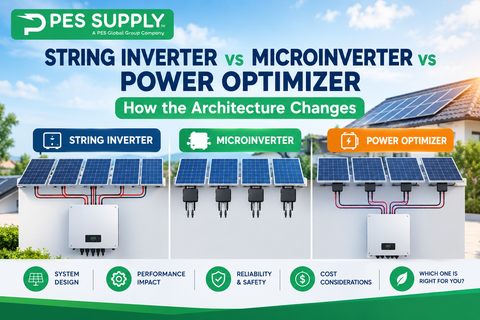
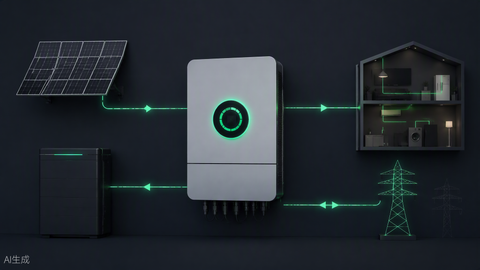
For farms weighing inverter architecture on mixed-use sites — a few elevated crop rows here, a barn roof there — module-level power electronics often pay for themselves in monitoring granularity alone. Our Enphase inventory and the solar inverter catalog cover the microinverter and string options respectively, and the MPPT vs PWM guide is the right read if any of the farm's loads are DC-coupled off-grid systems like stock watering or remote fencing power.
Getting Started: The Grower's Checklist
If you're a grower reading this and wondering whether your land qualifies, run this checklist before you call anyone — including us:
- Own or control the parcel for the long haul. Dual-use projects need 20–30 year horizons. Short leases kill financing.
- Know your twelve-month kilowatt-hour usage and your pump horsepower. Two numbers, and they drive everything.
- Identify your most shade-tolerant crop block. That's your pilot site, not your best corn ground.
- Measure your tallest machine, loaded. Cab, sprayer boom, or combine — write the number down; it's the clearance floor.
- Talk to your county planner early. Fifteen minutes with the AHJ beats fifteen weeks of redesign.
- Ask your insurer and lender before you sign anything. Both have agrivoltaic templates now; both have opinions.
- Decide who farms the array before you build it. Grazier, your own crew, or a contractor — named, priced, contracted.
When those seven boxes are checked, the rest is engineering. When they're not, no amount of engineering will save the project. I've said exactly that sentence in a lot of barn offices, and it has never once been wrong.
Why This Pairing Has Staying Power
Strip away the grants and the headlines and the trade-show booths, and agrivoltaics survives on a simple physical fact: farmland is flat, sunny, gridded with roads, and already has water infrastructure — and crops, unlike parking lots, actively improve the thermal environment for the modules above them. No other land use offers that combination to the solar industry, and no other infrastructure investment offers agriculture a second revenue stream that doesn't take the land out of production. Wind leases proved farmers will host energy infrastructure when the terms respect the operation. Agrivoltaics goes one step further: it makes the hosting itself productive.
The technology will keep improving — better bifacial gains off vegetation, trackers with crop-aware stow algorithms, spectrally selective glass for greenhouse integration. But the core idea doesn't need any of that to work. It worked in the Arizona trials with commodity modules and off-the-shelf racking. It works today on grazing operations with hardware we ship by the pallet. Sustainability, in the end, is just a system whose incentives all point the same direction for a long time. Sun and soil, properly arranged, do exactly that.
The Honest Limitations
Sustainability claims deserve skepticism, including mine. Agrivoltaics is not the right answer for prime flat farmland in regions where dense, cheap ground mount competes for the same interconnection capacity — the economics of maximum energy density are hard to beat there. Construction traffic compacts soil, and remediation has to be contractual, not promised. Shade-tolerant crops still need management skill; the array doesn't farm itself. And the regulatory patchwork is real: some counties have clear dual-use permitting pathways, others will treat your lettuce like a zoning exception. Budget time for the permit conversation, and bring the crop plan — an AHJ who sees a real agronomic plan approves faster than one who sees a solar array with landscaping.
Frequently Asked Questions
What crops grow best under solar panels?
Shade-tolerant leafy greens, peppers, tomatoes, and herbs perform best, with documented yield gains in hot climates. Pasture grasses and pollinator mixes work under almost any array. Light-hungry grains like corn and wheat are poor candidates except under sparse vertical bifacial layouts.
How does agrivoltaics save water?
Panel shade lowers soil temperature and reduces evapotranspiration, so soil moisture persists longer between irrigation cycles. Field trials show substantial reductions in water demand per unit of yield for shade-tolerant crops, which also cuts the energy spent pumping.
What is Land Equivalent Ratio and why does it matter?
LER compares dual-use land output to the same land in single use. An LER above 1.0 means the combined system out-produces separated uses. Agrivoltaic trials commonly report 1.2–1.6 for compatible crops — the number that turns the concept into a bankable business case.
Can livestock live under solar arrays?
Yes — sheep are the industry standard and are grazed successfully under thousands of acres of US arrays. Poultry works under elevated structures. Cattle require elevated designs and armored BOS. Grazing typically replaces paid mowing, which improves project economics.
Is agrivoltaics more expensive than normal solar?
Yes on CapEx — wider spacing, taller steel, and longer wire runs all cost money. The gap narrows when grazing leases, crop revenue, water savings, and grant eligibility enter the model. For load-matched farm systems, the economics are often stronger than pure export projects.
Do I need special permits for agrivoltaics?
It depends on the jurisdiction. Some counties have explicit dual-use pathways; others treat agricultural activity under an array as an exception requiring documentation. Present a genuine agronomic plan with the permit set — it speeds approvals and is increasingly what state incentive programs require.
The takeaway: agrivoltaics earns its sustainability reputation when the design serves the crop first and the spreadsheet second. Match shade tolerance to row geometry, treat water as a first-class benefit, and let the Land Equivalent Ratio make the argument. When you get those three right, sun and soil stop competing — and start compounding.
One last piece of practical advice. Start smaller than your ambition. A two-to-five-acre pilot block teaches you more about your soil, your crew, your insurer, and your county than any feasibility study ever will, and it does it while producing vegetables and kilowatt-hours instead of PDFs. Every large dual-use success I can point to began as somebody's modest pilot that refused to fail quietly. Build the small one, instrument it, learn from a full four-season cycle, and then scale with confidence — the land, the panels, and the crops will all still be there when you're ready.
Need pricing or availability on anything in this guide?
Portlandia Electric Supply dropships direct from the manufacturer — most items Ship Direct with lead times stated up front, no surprises.
Get a quote from PESBulk, pallet and contractor pricing available.