Solar energy works by converting photons into DC electricity inside silicon cells, then inverting that DC into the 120/240V AC your home runs on, with your utility meter netting the difference between what you make and what you use. That is the whole trick in one sentence — but the details decide whether a system makes 8,000 kWh a year or 13,000, and details are what this guide is for. I've spent years speccing, shipping, and troubleshooting this equipment from our Portland warehouse; what follows is the working version of "how solar works," including the physics, the hardware chain, the code rules, and the failure points nobody puts in the brochure.

The 60-Second Version
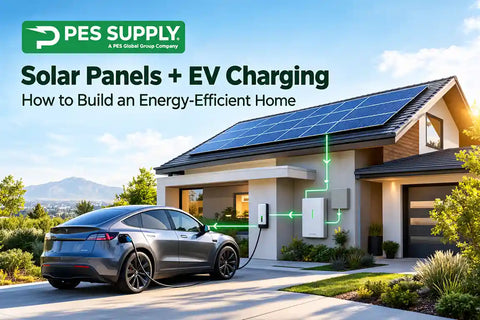
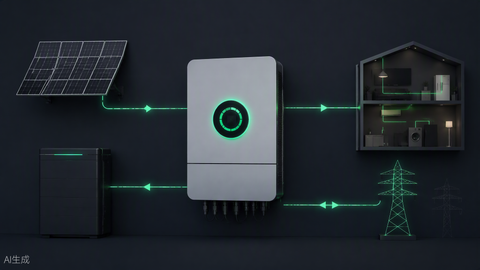
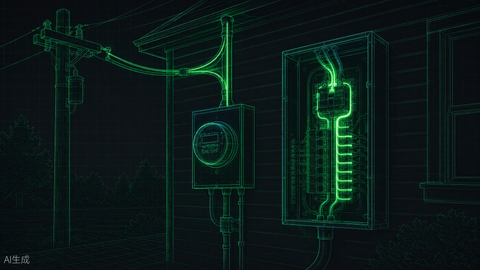
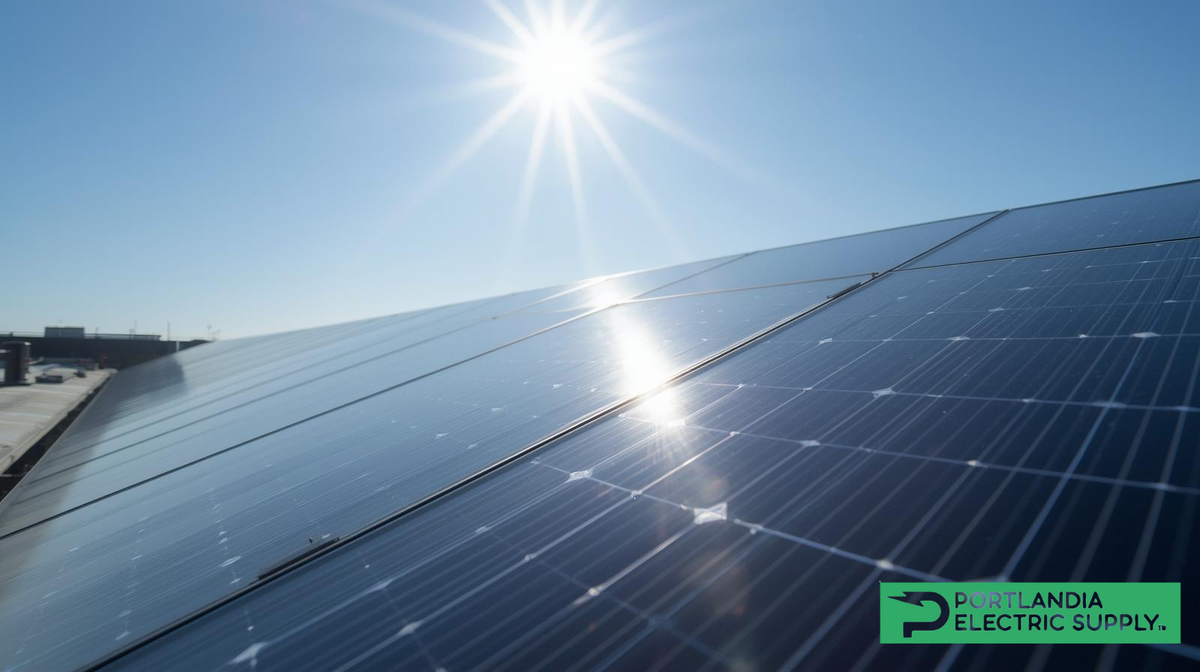
Sunlight hits the panels on your roof. Each panel is a sandwich of silicon cells that knock electrons loose from incoming photons, producing direct current. That DC flows through PV wire to an inverter — one box on the wall, or a small unit under each panel — which converts it to alternating current synchronized with the grid. The AC lands at your electrical panel and feeds your house first; surplus flows backward through the meter for credit; shortfalls pull from the grid as usual. No moving parts, no noise, no fuel. The array on your roof is closer to a semiconductor than to a machine, which is why these systems run 25–30 years with almost no attention.
Step by Step: The Full Energy Chain
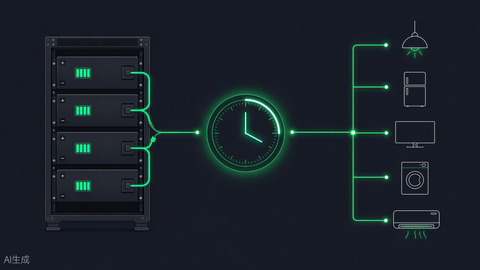
1. Photons arrive. Peak midday sun delivers about 1,000 watts per square meter — the "standard test condition" every panel datasheet references. 2. Cells convert. Modern N-type mono modules convert 22–23% of that into DC electricity; the rest becomes heat. 3. Strings combine. Panels wired in series add voltage; parallel strings add current. 4. The inverter converts. DC becomes grid-synchronous AC at 95–98% efficiency. 5. The panel distributes. Solar AC lands on a backfed breaker and supplies the house. 6. The meter nets. Excess exports for credit under your utility's tariff. 7. Storage, if present, shifts. A hybrid inverter diverts surplus to batteries for evening use. Each link has a loss, and the product of all of them — about 0.86 — is the derate every honest production estimate carries.
The Photovoltaic Effect, One Layer Down
A silicon solar cell is a diode engineered to be annoyed by light. The wafer is doped into two layers — one with surplus electrons (N-type), one with electron vacancies (P-type) — and where they meet, an electric field forms across the junction. Silicon's bandgap is 1.1 electron-volts, so any photon carrying at least that much energy (wavelengths shorter than about 1,130 nanometers — visible light and most of the near-infrared) can knock an electron free. The junction field sweeps that electron out of the cell before it recombines, and billions of these per second become usable current. There is no chemistry being consumed and nothing wears out from the light itself; degradation comes from sealant aging, micro-cracks, and slow dopant migration, which is why quality panels lose only 0.25–0.5% of output per year.
Module Anatomy: What You Are Actually Buying
| Layer / Part | Function | Failure Mode to Know |
|---|---|---|
| Tempered glass (3.2mm) | Impact + weather shield | Hail beyond rating; rare but real |
| EVA/POE encapsulant | Bonds cells, blocks moisture | Yellowing/delamination on cheap modules |
| Cells (half-cut, 120–144) | The generator itself | Micro-cracks from mishandled freight |
| Backsheet or glass-glass | Rear insulation | Backsheet chalking after ~15 yrs on budget lines |
| Aluminum frame | Structure + mounting | — |
| Junction box + bypass diodes | String connection; shade bypass | Diode failure shows as sudden string loss |
| MC4 connectors | Weatherproof DC plugs | Field-crimped mismatched pairs cause arcs — buy factory leads |
That last row is the one I drill into DIY buyers: cross-mated connector brands are the single most common cause of DC arc faults we troubleshoot, and the fix is free at purchase time — keep connectors matched, factory-to-factory. Panel options across all the quality tiers live in our solar panels collection, and the component-level tour continues in solar panel system components.
Inverters: The Actual Brains
Panels are dumb and honest; inverters are where the intelligence and the failures live. Three architectures split the market:
| Type | Efficiency (CEC) | Panel-Level Control | Best Use | Warranty Norm |
|---|---|---|---|---|
| String inverter | 97.5–98.5% | No (string-level MPPT) | Unshaded simple roofs, best $/W | 10–12 yrs (extendable) |
| Microinverters | 96.5–97% | Yes, per panel | Shade, complex roofs, monitoring fans | 25 yrs |
| Hybrid inverter | 97–98% | String-level, battery-integrated | Storage now or later, backup | 10 yrs typical |
| Optimizer + string | 97.5–98.5% | Yes, via DC optimizers | Shade with string economics | 25 (optimizer) / 12 (inverter) |
Efficiency differences look small and compound large: 1.5% of 12,000 kWh/yr at 20¢ is $36/yr, $900+ over 25 years — enough to matter, not enough to override architecture fit. Shade tolerance is the bigger lever: one shaded panel on a string can drag a string's output by a third, while micros shrug it off panel-by-panel. Browse the hardware in solar inverters, microinverters, and hybrid inverters; the primer is what a solar inverter does.
Panel Technology: The 2026 Landscape
| Technology | Module Efficiency | Temp Coefficient | Year-1 Degradation / Then | Notes |
|---|---|---|---|---|
| Mono PERC | 20.5–21.5% | −0.34%/°C | 2.0% / 0.55%/yr | Value workhorse, mature supply |
| N-type TOPCon | 21.8–22.8% | −0.29–0.30%/°C | 1.0% / 0.40%/yr | 2026 mainstream default |
| HJT | 22.0–23.0% | −0.24–0.26%/°C | 1.0% / 0.25%/yr | Best hot-climate behavior, premium price |
| Thin-film (CdTe) | 18–19% | ~−0.20%/°C | ~1% / 0.3%/yr | Utility-scale favorite; rare residential |
The temperature coefficient deserves a worked example because it decides real summer output. At a 45°C cell temperature — an ordinary sunny afternoon, since cells run ~20–25°C above ambient — a PERC panel at −0.34%/°C loses 20 × 0.34% = 6.8% of nameplate; an HJT panel at −0.25% loses 5.0%. On a 10kW array in Phoenix, that 1.8-point gap is roughly 300 kWh/yr. Spec sheets are not trivia; they are money.
String Sizing: The Cold-Morning Voltage Problem
Series strings add voltage, and silicon produces more voltage when cold — so string design uses the record-low morning temperature, not the nameplate. NEC 690.7 requires correcting open-circuit voltage for the site's extreme minimum. Worked example: a 430W module with 49.5V Voc and a −0.27%/°C voltage coefficient, on a −10°C design morning. The delta from the 25°C test condition is 35°C; correction factor = 1 + (35 × 0.0027) = 1.0945; corrected Voc = 49.5 × 1.0945 = 54.2V. Fourteen modules in series hit 758.5V — inside a 1,000V ceiling, but past the 600V input limit of many residential string inverters. That is why residential layouts land at 8–12 modules per string and why I wince when a DIY plan shows 16 in series "because the roof line is clean." The wiring trade-offs are mapped in solar panel wiring basics and the series-vs-parallel guide.
Net Metering: Where the Power Goes
Your house loads always drink first — solar seeks the nearest demand automatically, no switches involved. What remains flows backward through the meter. Under true 1:1 net metering, the meter literally banks kWh for you at full retail value; under the newer avoided-cost structures, exports are credited at 2–8¢ while evening imports cost 15–40¢, which is why hybrid inverters and batteries took over the California market after NEM 3.0. Either way, the meter swap or reprogram is the utility's job at permission-to-operate, and it is the step that makes the system financially real. Storage's role in the chain is covered in what an energy storage system is, and battery hardware in battery storage.
The Safety Layer: Code Requirements That Protect You
Solar's clean reputation rests on an unglamorous safety stack. NEC 690.12 rapid shutdown requires conductors more than a foot inside the array boundary to drop below 30V within 30 seconds of shutdown — firefighter protection, and the reason module-level electronics exist even on string systems. NEC 690.13–690.15 govern the DC disconnects and their labeling. Grounding and bonding per 690.43/Article 250 tie every rail and frame into one fault path — our grounding and bonding guide walks the hardware. Overcurrent protection per 690.9 and the disconnect rules in the NEC 690 disconnect guide handle the fault side. None of this is optional decoration; it is why modern rooftop solar has an excellent fire record, and why I tell every DIY customer that the permit inspection is a free second pair of expert eyes, not a bureaucratic toll.
What Actually Reduces Output in the Real World
| Factor | Typical Annual Impact | Mitigation |
|---|---|---|
| Heat (above 25°C cell temp) | 4–8% | Air gap under modules; better temp-coefficient panels |
| Soiling (dust/pollen/snow film) | 2–5% | Rain, or 1–2 cleanings/yr in dusty regions |
| Inverter conversion | 2–3.5% | Quality inverter, right-sized DC/AC ratio |
| Wiring losses | 1.5–2.5% | Correct gauge per NEC 310.16, short runs |
| Shading (site-specific) | 0–30%+ | Micros/optimizers, layout, tree management |
| Degradation | 0.25–0.55%/yr | Buy tier-one N-type; nothing else required |
Stack the ordinary rows and you arrive at the 0.86 derate used throughout this site's calculators — check yours with the panel output calculator. The row that dwarfs the rest when present is shading; no hardware purchase fixes a forest.
From Sunlight to Savings: Why the Mechanism Matters
Understanding the chain — photons, junction, strings, inverter, panel, meter — converts you from a sales target into a buyer. Quotes stop being vibes: you can ask which inverter topology, what the DC/AC ratio is, how strings were sized against cold mornings, and whether the production model used effective or horizontal sun hours. Customers who ask those four questions get noticeably better proposals; I have watched the same sales team sharpen its pencil mid-meeting when the questions started. The next stop after this guide is the complete go-solar guide, which turns the mechanism into a project sequence from site survey to permission-to-operate.
How Solar Works at Night, in Clouds, and in Winter

Three questions arrive together every time. At night, panels produce nothing — the grid or your battery carries the load; solar is a daytime factory with a storage or credit arrangement for the dark. In clouds, diffuse light still works: overcast skies deliver 10–25% of clear-sky production, which is why cloudy-region systems still pay, just slower. In winter, cold actually helps voltage and efficiency — the enemy is short days and low sun angle, not temperature. A clear 20°F day in Denver often out-produces a hot hazy July afternoon per hour of daylight. Snow slides off dark glass quickly at any reasonable tilt, and production losses to snow average only a few percent annually even in snow-belt states.
Grid-Tied, Hybrid, and Off-Grid: Same Physics, Three Machines
The panels and the photovoltaic effect are identical across all three architectures; everything downstream of the DC bus differs. Grid-tied systems are the cheapest and most efficient, but legally must die during outages (anti-islanding per UL 1741) — a live array backfeeding a downed line would endanger line crews. Hybrid systems add a battery and an automatic transfer function: when the grid drops, the inverter forms its own local grid and keeps critical loads running from panels plus storage. Off-grid systems skip the utility entirely and must be sized for the worst week of the year, which is why they carry larger arrays, bigger battery banks, and honest conversations about generators. I spec all three weekly, and the wrongest assumption buyers bring is that a standard grid-tied array keeps the lights on during an outage. It does not — islanding protection kills it by law within milliseconds. If backup matters, say so before the design, because it changes the inverter purchase, not just the battery purchase.
Frequently Asked Questions
How do solar panels generate electricity?
Photons with energy above silicon's 1.1 eV bandgap knock electrons free inside a P-N junction; the junction's electric field sweeps them out as DC current, which an inverter converts to grid-synchronous AC for your home.
Do solar panels work on cloudy days?
Yes — diffuse light produces 10–25% of clear-sky output. Annual production in cloudy climates is lower but still economically viable where electricity rates are high.
Do solar panels work at night?
No. Nighttime power comes from the grid under net metering or from batteries in a hybrid system. The array is a daytime generator only.
How efficient are solar panels in 2026?
Mainstream N-type TOPCon residential modules run 21.8–22.8%; premium HJT reaches 23%. Efficiency determines roof space needed, not whether the system works — lower-efficiency value panels produce identical electricity per rated watt.
How long do solar panels last?
Warranties run 25 years product / 30 years performance on tier-one modules, with degradation of 0.25–0.55% per year. Functional life routinely exceeds 35 years; inverters are the mid-life replacement item, not panels.
What happens to solar power during a blackout?
Standard grid-tied systems shut down within milliseconds for line-worker safety (UL 1741 anti-islanding). Hybrid systems with batteries automatically island and keep critical loads running.
One Kilowatt-Hour, Traced End to End
Follow a single kWh on a spring afternoon to see every toll it pays. A 430W panel at 1,000W/m² irradiance and 35°C cell temperature (10°C above test conditions) delivers about 430 × (1 − 10 × 0.003) = 417W after temperature loss. Wire losses to the inverter take ~2%: 409W arrives. The inverter converts at 97.7%: ~400W of AC lands on the busbar. One full sun hour at these conditions delivers 0.40 kWh into your house from that panel — and 28 such panels make the 11.2 kWh/hour that a good 12kW spring afternoon looks like. Every efficiency figure on a datasheet eventually expresses itself at that busbar, which is why I read datasheets from the temperature coefficient upward and marketing brochures with one eye closed.
Orientation, Tilt, and Azimuth: Geometry Is Energy
| Roof Orientation (30° tilt, 40°N latitude) | Relative Annual Yield | Practical Verdict |
|---|---|---|
| Due south (180°) | 100% | The reference; best annual kWh |
| Southwest / southeast (135°/225°) | 95–97% | Effectively free of penalty |
| West (270°) | 84–88% | Lower energy, but late-day value on TOU tariffs |
| East (90°) | 84–88% | Mirror of west; morning-weighted |
| North (0°) | 60–70% | Avoid unless no alternative; never at high latitude |
| Flat / low-slope (<10°) | 88–93% | Soiling worsens; fine commercially |
The interesting modern wrinkle is west: on time-of-use tariffs where 4–9pm power costs double, an 86%-yield west array can out-earn a 100%-yield south array in dollars. Energy is physics; savings are tariffs. We model both before recommending a plane.
Degradation, Warranties, and Year 30
Modules do not die; they fade, predictably. Year-one degradation (light-induced, LID/LeTID) runs 1–2% depending on cell chemistry, then 0.25–0.55%/yr linear. A tier-one N-type panel warranted to 87.4% at year 25 will typically measure better than that — warranty figures are floors written by lawyers, not predictions. The practical consequence: size systems to ~110% of current usage and degradation never eats your offset before the mortgage-length mark. What actually ends arrays early is physical — roof replacements, storm damage, and the occasional bypass-diode failure — not the silicon wearing out.
Monitoring: Reading the System Like a Pro
Every modern inverter reports per-day kWh to an app; the discipline is knowing what normal looks like. Three checks monthly: compare the month against the same month last year (weather-adjusted by eye is fine); confirm every panel reports on micro systems — a silent panel is a failed or shaded panel; and watch for step-changes, not drift, since drift is degradation and steps are faults. A string system that drops 30% overnight has a blown fuse or a failed optimizer; a system that fades 3% a year is just aging. Ten minutes a month of attention protects thousands of dollars of production over the system's life, and the monitoring gateway is cheap insurance that pays for itself the first time it catches a dead string in week one instead of season two.
The Environmental Ledger, Honestly Kept
Panels carry an embodied energy of manufacture — silicon purification, glass, aluminum, freight — that a typical module repays in 1–2 years of operation in average US sun, then spends 25+ further years in surplus. Recycling streams for glass and aluminum frames are mature; silicon cell recovery is scaling now that first-generation volumes are retiring. The honest ledger is overwhelmingly positive without needing exaggeration: a 10kW residential system displaces roughly 7–9 metric tons of CO₂ annually on an average US grid mix, the equivalent of retiring about 1.5 passenger cars. Say that plainly and it needs no inflation.
Where Batteries and EVs Plug Into the Chain
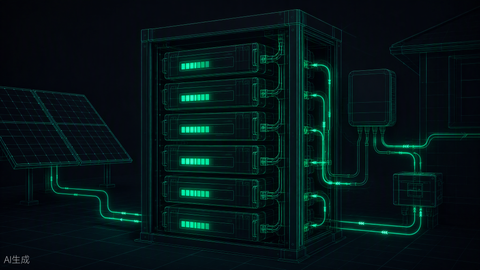
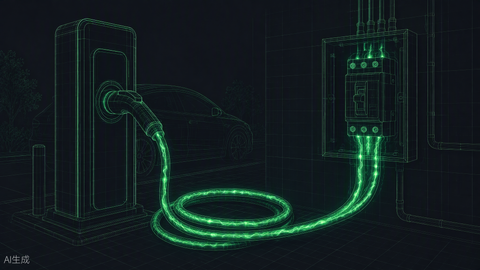
Two modern add-ons attach at the same point in the chain — the home's AC bus — and both reward understanding the basics above. A home battery charges from midday surplus (DC-coupled at the hybrid inverter, or AC-coupled as a retrofit) and discharges into the evening peak; round-trip efficiency runs 89–95% for lithium iron phosphate, so every stored kWh returns about nine-tenths of itself, a toll worth paying when the evening import rate is triple the midday export rate. An EV is simply the largest flexible load most homes will ever own: 7.2kW of Level 2 charging absorbs a 10kW array's entire midday output with room to spare, which is why "charge from sunshine" is a scheduling feature, not a hardware one. Both are covered hands-on in the battery and EV charging guides across this site, and both get cheaper to add at design time than at retrofit time — the recurring moral of every section above.
Reading a Datasheet in Thirty Seconds
Four lines on any module datasheet tell you almost everything. Pmax (watts) sets nameplate — compare panels per dollar per watt, not per panel. Voc with the temperature coefficient drives string sizing under NEC 690.7, as worked above. Efficiency tells you roof area per kW and nothing about quality — a 20.5% panel and a 22.5% panel both deliver their rated watts. The warranty pair (product years / year-25 performance percentage) is the manufacturer's own confidence interval: 25 years and ≥87% is tier-one table stakes in 2026, and anything materially shorter is a discount brand telling you its own price. Customers who learn these four lines stop being impressible, which is precisely the point.
Bottom Line
Solar works because silicon physics is boringly reliable: photons in, electrons out, inverter to AC, house first, meter nets the rest. The craft is in the details — cold-morning string voltage, temperature coefficients, shade geometry, tariff-aware orientation — and every one of those details is checkable arithmetic rather than faith. Learn the seven-step chain, ask the four buyer questions, and you will understand your own system better than most of the people who quote you one. That is the real purpose of this guide, and it is why our team at Portlandia Electric Supply publishes the math instead of hiding it. Bring us your roof dimensions, your utility bill, and your questions — especially the skeptical ones — and we will trace the energy chain for your specific house, watt by watt, until the numbers either close or tell you to wait. Both outcomes are useful; only one of them requires buying anything. That is what honest math is for, and we intend to keep publishing it for as long as we are in this business.
Five Myths That Survive Contact With Nothing
"Panels need direct sun to work." Diffuse light works at 10–25% — Germany, not famous for sunshine, ran national records on diffuse-heavy days for years. "Heat improves output." Backwards: voltage falls as cells warm; the best production hours are cold, bright spring mornings. "Solar voids your roof warranty." Proper flashed mounts do not; hack racking does — the mount system, not the solar itself, is the variable. "You can go off-grid with a normal array." Anti-islanding law says otherwise; backup requires hybrid hardware. "Hail destroys panels." UL 61730-rated modules survive 1-inch hail at 52 mph in testing; the 2024 Texas hail events damaged arrays, yes, at rates far below the roof damage around them — the panels often outlasted the shingles. I keep a hail-pitted module in the warehouse that still tests within 4% of nameplate; it makes this argument better than I can.
How a System Gets Legal: Permits to PTO
The physical build is the fast part; the legal sequence sets the calendar. A permit package — site plan, electrical single-line, structural attachment details — goes to the AHJ; plan review takes days to weeks. The install follows, then two inspections (building/electrical), then the utility's interconnection approval and meter reprogram — the "permission to operate" that legally flips the system on. Total elapsed: 4–10 weeks in efficient jurisdictions, 3–5 months in backlogged ones. Operating before PTO can forfeit your interconnection agreement and your insurance coverage; the blinking inverter tempting you in the garage stays off until the letter arrives. Unromantic, but it is how the physics above becomes a sanctioned power plant on your roof instead of an expensive roof ornament. Budget the calendar accordingly, and treat any installer who promises a two-week turnkey timeline in a backlogged jurisdiction as a storyteller rather than a contractor.