Updated September 2026 — refreshed against the live PES catalog; product pricing verified 2026-09-26.
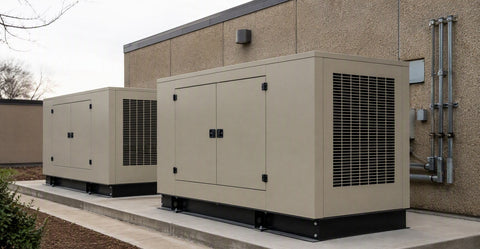
A 125 kW standby generator is serious iron. It sits in the class that powers mid-size commercial buildings, medical offices, retail strips, large estates, and light industrial shops — and in Miami it carries a second job description: survive hurricane season and start every single time. This buyer's guide walks the full decision: disciplined sizing with real kW-versus-kVA math, fuel selection for South Florida realities, hurricane-rated enclosures and anchoring, Miami-Dade permitting, contractor vetting, maintenance scheduling, and honest installed-cost budgeting with current PES catalog pricing (as of mid-2026).

We've specced standby units across South Florida for years, and the projects that go sideways almost always fail in the same three places: an undocumented load calculation, a fuel assumption that didn't survive the first storm, or a permit package submitted too late. This guide is built to keep you out of all three.
Who actually needs 125 kW
One hundred twenty-five kilowatts is not a residential number. It is the size class for a 15,000–30,000 sq ft commercial building running multiple rooftop AC units, a small medical or dental clinic with imaging equipment, a restaurant row, a house of worship, a mid-rise condo's life-safety and common loads, or a large waterfront estate with serious mechanical systems. If your peak demand calculation lands between 90 and 125 kW, you're in this class. Below 80 kW, a 100 kW unit with room to spare usually costs less to buy and to feed. Above 130 kW sustained, step up to 150 kW — running a genset above 80% continuous load shortens its life and trips protection when you need it most.
The applications we quote most often in this class, and what drives each one's number:
- Medical and dental clinics. Imaging equipment and sterilizers set the floor; life-safety circuits (egress lighting, alarm systems) ride NEC Article 700 rules and may require a separate emergency transfer switch. Downtime here is measured in cancelled patient days, not inconvenience.
- Restaurants and food retail. Refrigeration is the mission — a walk-in cooler and freezer bank justifies the whole project in a single avoided spoilage event. Compressor starting kVA is the sizing trap; stagger the starts.
- Small retail and office strips. AC tonnage dominates. Tenants expect lights and climate; the landlord's question is usually whether to back up the whole building or common areas plus one anchor tenant.
- Houses of worship and private schools. Intermittent but absolute requirements — the building must work on Sunday morning or during a shelter activation. These sites often double as community cooling centers after storms, which argues for fuel independence.
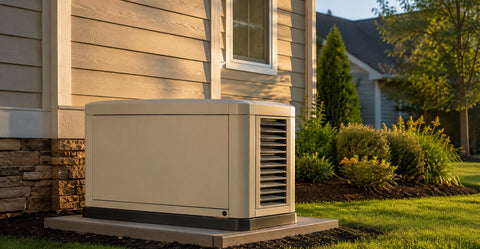
- Large estates and waterfront compounds. Multiple AC systems, pool equipment, elevators, docks, and outbuildings. Single-phase 120/240 service is common here, which is exactly the configuration the C125D6D and RS125 single-phase models are wound for.
Sizing it right: kW, kVA, and the Miami load profile
Generators are rated in kW; buildings are wired in kVA. The bridge between them is power factor, and for commercial standby work the industry assumes 0.8 PF. A 125 kW unit is therefore a 156.25 kVA machine (125 ÷ 0.8). If your load study comes back at 150–160 kVA peak, a 125 kW set is correctly sized — snug but correct, with the motor-starting kVA headroom these units are built for.
The call we get every June goes like this: "My square footage is X, what size generator do I need?" Square footage is a screening tool, not a sizing method. The sizing method is a load audit — every significant load, its running kW, and its starting behavior:
| Load (typical Miami commercial example) | Running kW | Diversity factor | Demand kW | Starting notes |
|---|---|---|---|---|
| Rooftop AC package units (4 × 10 tons) | 56.0 | 0.85 | 47.6 | Compressor LRA drives starting kVA; stagger starts |
| Interior + exterior lighting (LED retrofit) | 12.0 | 1.00 | 12.0 | Non-motor, no surge |
| Walk-in cooler + freezer compressors | 9.0 | 0.90 | 8.1 | Cycles; 3–6× running current at start |
| Elevator (hydraulic, 30 HP) | 22.4 | 0.50 | 11.2 | Highest single starting load on site |
| Receptacles, office equipment, POS/IT | 18.0 | 0.70 | 12.6 | UPS-rided-through loads |
| Water heaters, misc. pumps, exhaust fans | 14.0 | 0.60 | 8.4 | — |
| Total | 131.4 kW connected | — | 99.9 kW demand | 125 kW unit = correct with margin |
Document every assumption — climate-driven loads, diversity, contingencies — and save the worksheet for the permit submission and the commissioning load test. After Hurricane Irma, I walked sites where "125 kW" units carried half their nameplate because the load study was a guess; the owners paid for iron they never used and iron they couldn't use when a starting surge hit.
What 125 kW means in amps
Your electrician, your ATS vendor, and your permit reviewer all think in amps. Here is the full-load current for a 125 kW set at the voltages we actually wire in Miami-Dade:
| Voltage configuration | Full-load amps @ 1.0 PF (125 kW) | Full-load amps @ 0.8 PF (156.25 kVA) | Typical main breaker |
|---|---|---|---|
| 120/240 V single-phase | 520.8 A | 651.0 A | 700–800 A frame |
| 120/208 V three-phase | 346.9 A | 433.6 A | 450–500 A frame |
| 277/480 V three-phase | 150.4 A | 188.0 A | 200–225 A frame |
Three-phase 480 V is the commercial standard for a reason: the same power on one-third of the copper. If your building service is 208 V, confirm the generator is wound for it — voltage is a build option, not a field adjustment. Our generator amps guide covers the same conversion math across smaller sizes, and the amps-to-watts reference handles the single-phase cases.
Motor starting: where paper-perfect sizing dies
The load audit above totals running kW. Generators also have to start motors, and a big motor across-the-line can demand five to seven times its running kVA for the first second. A 10-ton compressor drawing 14 kW running can ask for 70+ kVA at lock rotor. A 125 kW set with a modern digital voltage regulator typically tolerates a single-step dip of 30–35% while starting roughly 60–75 kVA of motor load — enough for one large compressor at a time, not four at once. The fixes are cheap and standard: stagger compressor starts with delay timers in the mechanical controls, specify soft-starts or VFDs on the biggest motors, and put the elevator on its own start delay. I've watched a correctly sized 125 kW unit trip offline because four rooftop units tried to restart simultaneously after a transfer — forty seconds of bad timing erased a year of correct engineering. Sequence the starts and the problem vanishes.
Fuel: the decision that hurricanes grade
South Florida gives you three real fuel pathways at 125 kW, and each one fails differently when a storm rolls through:
| Fuel | On-site storage | Storm resilience | Operating cost profile | Best Miami fit |
|---|---|---|---|---|
| Natural gas | None — utility fed | Good; underground lines rarely fail, but confirm your utility's post-storm restoration protocol | Lowest fuel cost; no delivery logistics | Urban/suburban sites with solid gas service |
| Diesel | Required — base tank or day tank, sized for 24–72+ hours | Fully independent of utilities; fuel quality management is on you | Higher fuel cost; delivery contracts needed pre-storm | Critical loads, sites where gas continuity is uncertain |
| Propane (LPV) | Required — large ASME tank(s) | Independent; tank supply limited by what you store | Mid-range; delivery logistics in storm windows | Sites without gas service that want clean combustion |
Put rough numbers on the diesel case: engines in this class burn on the order of 9–10 gallons per hour at full load and 4–5 at half load, per typical published consumption curves. A 24-hour base tank at half load is honest math; stretching to 72 hours of autonomy at half load means roughly 300–350 gallons on site, which pushes you into a larger sub-base or an external tank with its own fire-marshal review. That gallon-per-hour figure is also your delivery-contract number: tell the fuel company your burn rate before the storm, not during it.
Natural gas wins on convenience in most of Miami-Dade — no tank, no fuel polishing, no delivery contract. Diesel wins on independence: when the gas utility sheds load or a regulator station floods, a diesel with a 72-hour base tank keeps running. The units that embarrass their owners are the diesels with two-year-old fuel growing algae in the tank. If you go diesel, budget for fuel polishing and a delivery contract that names you as a priority account before the season starts. Our generator fuel consumption chart translates tank size into runtime at quarter, half, and full load for exactly this planning step.
The equipment: real 125 kW-class units and what they cost
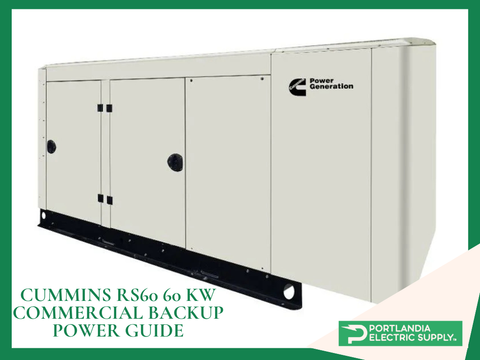
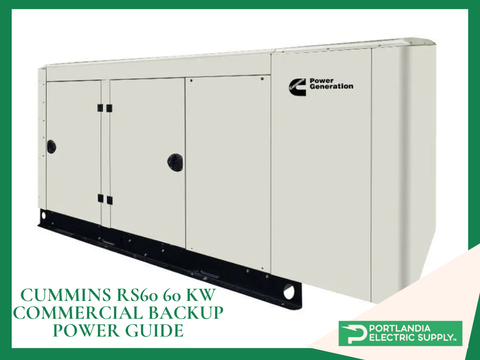
PES Supply stocks the Cummins lineup that dominates this size class, with both gaseous (NG/LPV) and diesel options across the 100–150 kW band. Current catalog pricing as of mid-2026:
| Unit | Rating | Fuel | Voltage | PES price (mid-2026) |
|---|---|---|---|---|
| Cummins C100D6C (A063P977) | 100 kW | Diesel | 120/240 1Ph | $40,704.71 |
| Cummins RS100 100kW Quiet Connect | 100 kW | NG/LPV | 120/240 1Ph | $39,905.52 |
| Cummins C125D6D (A060A344) | 125 kW | Diesel | 120/240 1Ph | $35,879.42 |
| Cummins RS125 (A063B604) | 125 kW | NG/LPV | 120/240 1Ph | $43,788.00 |
| Cummins RS125 (A063A449) | 125 kW | NG/LPV | 277/480 3Ph | $42,542.41 |
| Cummins C150D6D (A061T474) | 150 kW | Diesel | 120/240 1Ph | $37,284.90 |
| Cummins RS150 150kW Quiet Connect | 150 kW | NG/LPV | 120/240 1Ph | $48,750.80 |
Two things stand out in that table. First, the diesel C-series prices under the gaseous RS-series at the same kW — the fuel system and engine architecture differ, and diesel's premium shows up later in fuel logistics rather than at purchase. Second, the price steps between 100, 125, and 150 kW are modest relative to the capacity gained; undersizing to save $3,000 on a 30-year asset is false economy. Browse the full lineup in our generators collection, standby generators, and natural gas generators categories, or compare against Kohler equivalents.
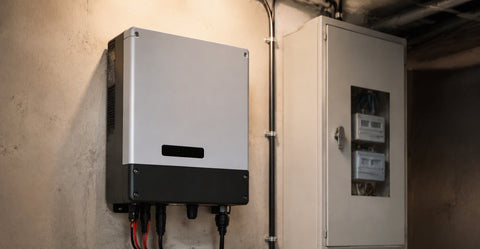
Pair the genset with a correctly rated automatic transfer switch — at these currents, that's a service-entrance-rated ATS, not a sub-panel gadget. Our transfer switch collection covers the amperage classes above, and the ATS types guide plus transfer switch sizing chart walk the selection math.
Single-phase or three-phase: read the service, not the brochure
Order the wrong voltage configuration and you own an expensive lawn ornament. Check the building's service entrance before you quote anything. Large estates and small standalone buildings in Miami-Dade commonly run 120/240 V single-phase; commercial plazas, condos, and anything with an elevator bank usually run 120/208 V or 277/480 V three-phase. The generator's alternator is wound to order — the RS125 in 277/480 V three-phase and the RS125 in 120/240 V single-phase are different SKUs, not a selector switch. If the building has three-phase service with any single-phase-sensitive loads, your electrician handles the balancing at the distribution side; the generator just needs to match the service voltage and phase count. One more field note: mixed-voltage sites (a 480 V building with a 208 V tenant panel) are solved with a transformer, not with a compromise winding.
Enclosures and anchoring: building for the hurricane, not the brochure
Miami-Dade sits in the High-Velocity Hurricane Zone, the toughest wind standard in the country. A 125 kW installation here is a structural project as much as an electrical one:
- Wind rating: enclosures and anchoring must meet HVHZ requirements — look for Miami-Dade NOA (Notice of Acceptance) documentation on the enclosure and follow the anchoring schedule exactly. Standard "weather-protective" enclosures from non-coastal specs don't qualify.
- Salt air: within a few miles of the coast, aluminum or properly coated steel enclosures with sealed penetrations are survival equipment, not upgrades. Fasteners, hinges, and louvers corrode first; specify stainless hardware.
- Flood: check the FEMA flood zone for the pad location. In AE zones the unit goes on an elevated pad or platform above base flood elevation — a submerged generator is a total loss and a contamination event.
- Clearances: maintain manufacturer clearances for airflow and service (typically 3 feet minimum on service sides, more at the exhaust), and keep the exhaust path away from fresh-air intakes, operable windows, and property lines where ordinances push back.
- UL 2200: the assembled system — engine, alternator, controls, enclosure — should carry UL 2200 listing as a stationary engine generator assembly. Inspectors in Miami-Dade ask for it.
I've seen a correctly anchored unit run through a Category 2 landfall and I've seen an unanchored one walk itself six inches off a pad and shear its own fuel line. The difference was a $400 anchor kit and an afternoon of labor.
Noise: the constraint nobody budgets for
A 125 kW diesel at full load is loud — enough to trigger ordinance complaints in dense neighborhoods and mixed-use zones. As a planning reference, an open-set unit in this class can run in the 85–95 dBA range at 23 feet; a Level 2 sound-attenuated enclosure typically brings that down into the mid-70s, and a Level 3 package lower still. Miami-Dade and most municipalities enforce daytime and nighttime dBA limits at the property line, and the nighttime number is the one standby exercise schedules trip over. Mitigations that actually work: a Level 2 or Level 3 sound-attenuated enclosure (worth the premium anywhere near residences), strategic placement using the building as an acoustic shadow, barrier walls on the exposed sides, and hospital-grade mufflers where the ordinance is tightest. Request the manufacturer's tested dBA data at 23 feet (7 meters) for the exact enclosure level you're quoting, and put that sheet in the permit package — it preempts the most common HOA and inspector objection. Set the weekly exercise for mid-morning on a weekday; your neighbors will never know the unit exists.
Installation day: what actually happens on site

Owners who haven't watched a commercial set go in tend to picture a delivery and a plug. The real sequence runs longer. The pad gets poured and cured first — a 125 kW package with enclosure runs several thousand pounds, and the pad spec (thickness, rebar, anchor pattern) comes from the wind-load documentation, not from habit. The unit arrives on a flatbed and sets by crane or forklift onto the anchors; rigging clearance matters, so tree limbs, canopies, and power lines over the pad get sorted before delivery day, not during it. The electrician then lands the feeders between generator and ATS and between ATS and service — at 480 V three-phase that's manageable copper; at 208 V single-phase it's serious parallel runs. The plumber or gas contractor runs the fuel train with the regulator set to the engine's required inlet pressure, a number that lives in the install manual and gets verified with a manometer at startup. Only then does commissioning start: fluids, battery charge, control programming, exercise schedule, and the witnessed full-load test that proves the whole chain — start signal, transfer, carry, retransfer, cooldown — works end to end. Budget a week of coordinated trades for a clean job, and don't schedule the crane for the same morning the concrete truck shows up.
Permits and code: Miami-Dade's reality
A 125 kW standby install in Miami-Dade touches the Florida Building Code (structural and electrical), NFPA 110 (Standard for Emergency and Standby Power Systems) where the load is life-safety, NEC Article 700/701/702 depending on whether loads are emergency, legally required, or optional standby, and local fire and zoning review for fuel storage. Practical sequence that keeps projects moving:
- Site plan and one-line diagram first. Pad location, setbacks, fuel storage, and the electrical single-line go into the permit set. Reviewers bounce vague submittals; complete ones clear in weeks instead of months.
- Wind-load documentation. Include the enclosure NOA and anchoring details in the structural review package.
- Fuel permits. Diesel tanks above threshold sizes trigger fire-marshal review; propane tanks carry their own setback rules.
- HOA and zoning sign-off early. Noise, screening walls, and visibility conditions are cheaper to design around before the pad is poured.
- Commissioning and witnessed test. NFPA 110 installations require documented acceptance testing; even optional-standby jobs should commission with a load-bank or building-load test at 100% for a recorded run.
Start permitting early — hurricane season compresses every timeline: contractors book out, inspectors backlog, and equipment lead times stretch right when everyone wants delivery.
The transfer switch: half the system, one line on the quote
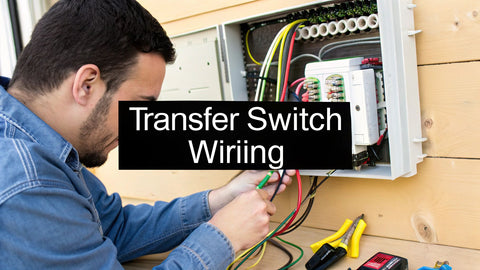
Every standby conversation fixates on the generator and under-specs the box that makes it useful. The automatic transfer switch watches utility power, signals the start, waits for stable voltage and frequency, and moves the building's load — then reverses the whole ballet when the utility returns. At 125 kW you're buying a service-entrance-rated ATS in the 200–800 A frame class depending on voltage, and it must be listed for the available fault current at the service, just like any other service equipment. Three spec points to nail down: the amperage frame matches the service (not merely the generator's output), the enclosure rating matches the location (NEMA 3R outdoors in Miami, full stop), and the controller includes the exercise and monitoring functions your PM plan depends on. An undersized or indoor-rated ATS is the single most common value-engineering cut we see on competitor quotes — and the first component an inspector or a salt-air winter removes from service. The manual-versus-automatic ATS guide and our transfer switch collection cover the options in detail.
Choosing the contractor
At 125 kW you want a licensed electrical contractor (or a specialist generator installer working under one) with verifiable commercial standby experience in Miami-Dade. The questions that separate pros from order-takers: How many 100+ kW installs have you commissioned in this county in the last two years — and can I call two of them? Who performs your NFPA 110 acceptance testing, and what does the report look like? What's your storm-season service response commitment, in writing? Do you stock or have rapid access to wear parts for this engine family? Is remote monitoring included, and who watches it? A contractor who answers cleanly has done this before. One who improvises answers will improvise on your project.
Red flags that should end a conversation immediately: a quote with no load study behind it, a "standard" pad detail with no wind documentation, an ATS sized to the generator instead of the service, no line item for commissioning or load testing, and any contractor who treats the Miami-Dade NOA as optional paperwork. Each of those shortcuts is real money saved on paper and real money lost in year one.
Get two or three quotes with identical scope — equipment, ATS, pad and anchoring, enclosure level, permits, commissioning, first-year service — and compare line by line. The standby generator sizing guide gives you the shared vocabulary to keep those quotes honest, and the transfer switch primer covers the ATS side of the scope.
Generators plus batteries: the hybrid nobody regrets
More Miami commercial projects now pair the genset with battery storage, and the logic is sound. The battery carries the first seconds and the short outages — the transfer is instantaneous, computers and POS systems never blink, and the generator only starts when the outage outlasts the battery's bridge. Overnight, the building rides the battery in silence instead of idling a 125 kW engine at 20% load, which is the duty cycle that wet-stacks diesels and gums up gaseous engines alike. The generator then runs at efficient load to recharge the bank and carry the building through multi-day events. For sites already considering solar, our energy storage systems and battery storage categories cover the storage side, and the battery backup runtime calculator sizes the bridge. The hybrid doesn't replace the generator in hurricane country — it makes the generator's hours count.
Maintenance: the schedule that keeps the warranty alive
Standby generators fail from neglect, not from use. The PM cadence for a 125 kW unit in Miami's climate:
| Interval | Tasks | Why it matters in Miami |
|---|---|---|
| Weekly (automatic) | Exercise run, typically 12–20 minutes, self-logged | Keeps seals wet, battery cycled, controls reporting |
| Monthly | Visual inspection: fluids, leaks, battery terminals, enclosure integrity, louvers clear | Salt air attacks terminals and hardware first |
| Quarterly | Coolant condition, belt and hose check, battery load test, fuel level/water check (diesel) | Heat and humidity degrade coolant and belts faster than northern duty |
| Semi-annual | Oil and filter change (or per hours), air filter inspection, fuel filter (diesel), spark plugs (gaseous) | Document for warranty; schedule before June 1 |
| Annual | Full load test (building load or load bank), valve lash check per engine schedule, fuel polishing or sample test (diesel), transfer switch exercise and inspection | Proves the system end-to-end before storm season |
Remote monitoring pays for itself in this size class — run hours, battery health, fuel level, and fault codes streamed to a dashboard catch the slow failures (a dying battery charger, a creeping coolant leak) that weekly exercise never reveals. Whatever you do, finish the annual service before June 1. The worst week to discover a dead starting battery is the week a named storm is in the Gulf.
Warranty and service coverage
Standard factory warranties in this class run two to five years depending on brand and application (standby vs prime), with extended coverage purchasable. Read three clauses before signing: the maintenance requirements that keep coverage valid (documented oil analysis or PM records are common), the response-time commitment and who backs it locally, and the hurricane/water-damage exclusions that define what "acts of nature" void. A service contract with PM, priority storm response, and remote diagnostics typically runs a few thousand dollars a year at this size — cheap insurance on a six-figure installed asset, and it formalizes the documentation your insurer wants after a claim.
One clause owners miss: warranty labor coverage often differs from parts coverage. Plenty of "five-year" warranties cover parts for five years and labor for one. Ask for the split in writing. And register the unit at commissioning — unregistered generators default to the shorter base term at several manufacturers, which is an expensive thing to learn during a claim.
What it costs, honestly
Total installed cost for a 125 kW standby system in Miami spans a wide band — roughly $50,000 to $150,000 all-in as of mid-2026 — driven less by the generator itself than by everything around it:
| Component | Typical range (mid-2026) | Cost drivers |
|---|---|---|
| Generator (equipment) | $36,000–$49,000 | Fuel type, brand, enclosure level (see equipment table above) |
| Automatic transfer switch (service-rated) | $3,000–$10,000 | Amperage class, service-entrance rating, NEMA 3R |
| Pad, anchoring, enclosure upgrades | $3,000–$12,000 | Concrete work, HVHZ anchoring, sound attenuation level |
| Electrical installation | $8,000–$25,000 | Run lengths, service upgrades, breaker frames, conduit |
| Fuel system (tank, plumbing, or gas service) | $2,000–$15,000 | Diesel base tank vs new gas service vs propane ASME tanks |
| Permits, engineering, commissioning | $2,000–$8,000 | Structural review, load-bank test, county fees |
One more budget line that never appears on a quote: time. Lead times in this class swing from a few weeks to several months depending on configuration — oddball voltages and high sound-level enclosures are built to order, and every hurricane season compresses factory slots. If your project has a hard date (a lease opening, a storm season, an insurance requirement), order the iron first and let the permits chase it.
Financing and leasing are common at this size, and the ROI conversation runs on outage cost, not energy savings: what does one three-day outage cost your business in lost revenue, spoiled inventory, or displaced tenants? A restaurant group we work with prices a walk-in full of inventory against the monthly note and stops deliberating. For most commercial operators in Miami, a single avoided hurricane-week outage covers years of payments. Insurance carriers increasingly ask about standby power in underwriting for this corridor — some offer premium credits for documented, maintained systems, and nearly all of them want the PM records after a claim. That is worth a conversation with your broker before you finalize the spec, because the documentation requirements are easier to build in than to retrofit.
Your quick-start path
The whole decision compresses into six moves, in order. Skip one and the sequence bills you for it later.
- Commission a real load study — documented kW/kVA with diversity and starting loads, per the sizing section above.
- Pick the fuel based on storm resilience requirements, not just convenience.
- Pull two or three scoped quotes from licensed Miami-Dade contractors with commercial standby references.
- Submit permits early with the NOA documentation, site plan, and one-line in the first package.
- Schedule commissioning with a full-load test and get the report in writing.
- Put the PM contract in place day one — and finish annual service before hurricane season.
PES Supply ships 125 kW-class Cummins units nationwide from our Louisville supply house with live support from people who spec these systems weekly. Start with the generators collection, sanity-check your sizing with the whole-building sizing guide, and call the counter for a freight-inclusive quote on the exact Cummins SKU that fits your voltage and fuel.
Frequently asked questions
How much does a 125 kW generator cost installed in Miami?
As of mid-2026, roughly $50,000–$150,000 all-in depending on fuel type, enclosure level, electrical scope, and permitting. The generator equipment itself runs about $36,000–$49,000 in the Cummins 125 kW class; the transfer switch, pad and anchoring, electrical installation, fuel system, and permits make up the rest.
What will a 125 kW generator actually power?
At 0.8 power factor it's a 156.25 kVA machine — enough for a 15,000–30,000 sq ft commercial building with multiple rooftop AC units, a clinic, a restaurant strip, or a large estate, provided motor-starting loads are staggered and the load study confirms peak demand under about 100 kW continuous.
Natural gas or diesel for Miami?
Natural gas for convenience where utility service is solid; diesel where fuel independence matters. Diesel requires on-site storage, fuel polishing, and a pre-season delivery contract; gas requires confirming the utility's post-storm restoration protocol for your area.
How many amps is a 125 kW generator?
At full load and 0.8 PF: about 651 A at 120/240 V single-phase, 434 A at 120/208 V three-phase, and 188 A at 277/480 V three-phase. Size the main breaker and ATS to the next standard frame above the figure for your voltage.
Do I need a permit for a standby generator in Miami-Dade?
Yes — building and electrical permits at minimum, structural review for the pad and HVHZ anchoring, and fire-marshal review for fuel storage above threshold sizes. Enclosures should carry a Miami-Dade NOA for wind resistance.
How long will a 125 kW generator run during an outage?
A natural-gas unit runs as long as utility gas flows. A diesel runs on stored fuel — a 24-hour base tank at half load is typical, with extended tanks or delivery contracts stretching that to 72 hours or more. Runtime planning starts from the fuel consumption chart for your exact model.
Need pricing or availability on anything in this guide?
Portlandia Electric Supply dropships direct from the manufacturer — most items Ship Direct with lead times stated up front, no surprises.
Get a quote from PESBulk, pallet and contractor pricing available.