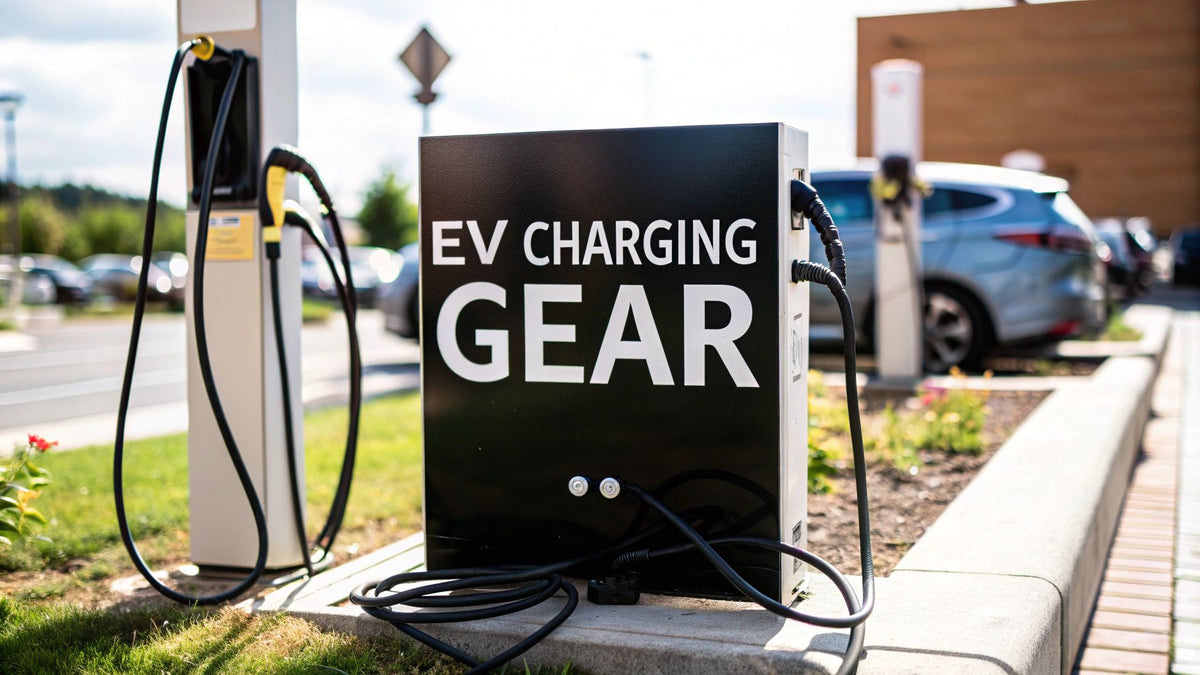
EV charging equipment decisions are electrical decisions wearing a parking-lot costume. The charger itself is often the cheapest line in the project — the power service, the make-ready work, and the demand charges decide whether a station pencils or bleeds. I've specced charging for single-family garages and for fleet depots, and the discipline is identical: match the hardware class to the dwell time, match the electrical service to the hardware, and match the business model to who's actually plugging in. This guide covers the equipment classes, the specs that matter, the installation realities, and the questions to ask before you buy anything.

Choosing the right EV charging equipment for your project
Core decision drivers for your project
Four questions determine everything downstream. Who charges here, and how long do they stay? Dwell time picks the power level — a workplace with 8-hour stays needs Level 2; a highway corridor with 25-minute stops needs DC fast. What does the electrical service allow? The panel and utility service cap what's installable without upgrades. Who pays for the energy? Free amenity, cost recovery, or profit center — the answer decides networked versus dumb hardware. What's the growth path? The conduit you pull today should serve the station count you'll need in five years. Answer those four honestly and the equipment shortlist writes itself.
A deep dive into Level 2 AC charging equipment
Translating power output to charging time
Level 2 chargers deliver AC power to the vehicle's onboard charger, which does the AC-to-DC conversion. That onboard charger — 7 to 19 kW depending on vehicle — is the ceiling no EVSE can exceed. The practical output ladder and what it means at the plug:
| EVSE Output | Circuit Required (×1.25 continuous) | kW Delivered | Approx. Range per Hour | Typical Setting |
|---|---|---|---|---|
| 16 A | 20 A breaker | 3.8 kW | 8 – 12 miles | Older installs, light-duty |
| 32 A | 40 A breaker | 7.7 kW | 15 – 25 miles | The residential/workhorse standard |
| 40 A | 50 A breaker | 9.6 kW | 20 – 30 miles | Homes, workplaces, hotels |
| 48 A | 60 A breaker | 11.5 kW | 25 – 37 miles | Max AC for most vehicles |
| 80 A | 100 A breaker | 19.2 kW | 40 – 60 miles | Commercial/fleet; few vehicles accept it |
The 80 A row fools buyers constantly: very few vehicles ship with 19.2 kW onboard chargers, so that expensive 100 A circuit serves a car that draws 11.5 kW anyway. Check the vehicle fleet's actual AC acceptance before speccing above 48 A.
Core components and standards
A Level 2 station is a smart, hardened switch: contactor, ground-fault and charge-circuit interrupting protection (CCID), a pilot-signal controller that negotiates current with the vehicle per the J1772 protocol, metering on networked units, and the connector. On connectors: J1772 was the universal North American AC standard, and NACS (the Tesla-originated connector, now standardized as SAE J3400) has been adopted across the industry — new vehicles and new EVSE increasingly ship NACS-native, with compact adapters covering the crossover fleet. For DC fast charging, CCS1 and NACS both carry the DC pins; CHAdeMO is legacy. Buy for the connector fleet of the next ten years, which in North America means NACS-native hardware with adapter support.
Networked vs. non-networked stations
Non-networked ("dumb") EVSEs are cheaper, simpler, and fine for single-family garages. Networked stations add access control, metering and billing, load management, demand-response participation, and remote diagnostics — mandatory for any site where money or shared capacity is involved. The subscription fee (typically $150–$400 per port per year) is the trade. One non-negotiable on networked gear: OCPP compliance. An OCPP 1.6J-or-later station can migrate between network software providers; a proprietary station marries you to its vendor's pricing forever. Our ChargePoint brand guide and Wallbox guide profile the two philosophies — network-first versus hardware-first — and the Level 2 buyer's guide ranks current hardware.
Unpacking DC fast charging for commercial use
Matching power levels to site goals
DC fast chargers bypass the vehicle's onboard charger and feed DC straight to the battery — which is why they need serious electrical service and why they cost what they cost. The tiers: 50–62 kW units (urban top-ups, older standard), 150–180 kW (the current retail/fleet sweet spot), and 250–350 kW (highway corridors, premium sites). Vehicle capability again caps reality: most EVs on the road peak at 150–250 kW, and charging curves taper hard past 60–80% state of charge — a 350 kW station and a 350 kW-capable car still average far less across a session. Size for the fleet's real curve, not the nameplate arms race.
The specification checklist that matters
The table below is the core spec sheet comparison we run on every procurement:
| Specification | What to Look For (Level 2 AC) | What to Look For (DC Fast Charger) | Why It Matters |
|---|---|---|---|
| Power Output (kW) | 7.7 kW to 19.2 kW | 50 kW to 350 kW+ | Determines charging speed. Must match site power capacity and vehicle capabilities. |
| Input Voltage/Amps | 208/240V AC, 40A-80A | 480V AC (3-Phase) | Ensures compatibility with your site's electrical service. Mismatches require costly upgrades. |
| Efficiency Rating | N/A (AC pass-through) | 96% or higher | Directly impacts operational costs. Higher efficiency means less wasted electricity and lower bills. |
| Cooling System | Typically convection/passive | Liquid-cooled (for >150kW) or high-flow air | Prevents overheating and "derating" (power reduction), ensuring reliable performance in all climates. |
| Enclosure Rating | IP54 minimum for outdoors | IP54 minimum, IP65+ for harsh environments | Guarantees protection against dust, water, and corrosion, extending the life of the unit. |
| Safety Certifications | UL 2594, UL 2231 | UL 2202 | Non-negotiable. Confirms the equipment has been tested and meets U.S. safety standards. |
| Network Protocol | OCPP 1.6J or higher | OCPP 1.6J or higher | Ensures interoperability with different network management software, preventing vendor lock-in. |
Pro tip: managing demand charges
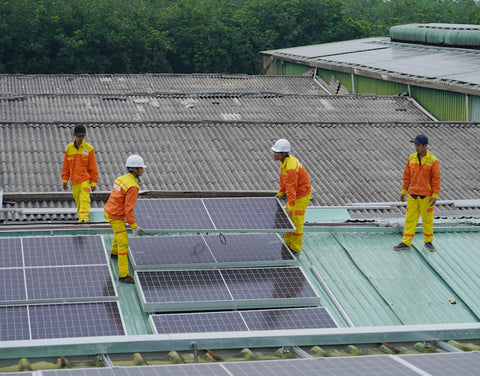
DCFC economics live or die on demand charges. A 150 kW charger that peaks fully even once in a billing cycle can trigger $1,500–$3,750 of demand charges at typical commercial rates of $10–$25/kW — before a single kWh is sold. The mitigations, in order of cost-effectiveness: power-sharing (two dispensers on one power cabinet rarely peak simultaneously), on-site battery buffering that clips peaks, solar canopies feeding daytime sessions, and utility EV-specific tariffs that discount demand charges for charging operators (increasingly common — ask before you model). For sites pairing charging with generation, our solar EV charging guide covers the integration, and the BESS design guide covers the buffering math.
Understanding core components and specifications
Power electronics and conversion efficiency
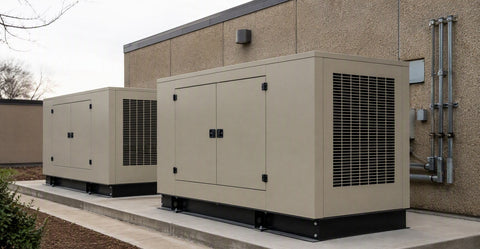
Inside a DCFC, power modules convert 480 V three-phase AC to battery DC; modern silicon-carbide designs push conversion efficiency to 96–97%. The losses are heat: a 180 kW unit at 96% rejects ~7.2 kW of heat continuously, which is why thermal design (next section) and placement matter. On the Level 2 side there is no conversion — the EVSE is a pass-through with safety logic — so "efficiency" claims on AC hardware are marketing noise. Spend your scrutiny on the DC power electronics' efficiency, module redundancy (does the unit derate gracefully when one module fails, or go dark?), and acoustic rating if the site is near windows or residences.
Thermal management systems
Derating is the dirty secret of fast charging: a unit rated 350 kW on the datasheet may sustain 250 kW on a 100°F afternoon if its cooling can't keep up. Air-cooled units are fine to roughly 150 kW in moderate climates; liquid-cooled cables and cabinets sustain high power in heat and are mandatory for the 250 kW+ class. Cable handling matters to users too — liquid-cooled cables stay thin and flexible at high current, while air-cooled high-amp cables get heavy enough that some drivers physically cannot manage them. Evaluate cable weight and cable-management arms as accessibility features, because they are.
Enclosure ratings and certifications
Outdoor minimums: IP54 (NEMA 3R equivalent territory) for general outdoor use, stepping to IP65 in driving-rain, dust-storm, or coastal salt environments. Vandal resistance (IK ratings) matters at public curbside sites. The non-negotiables are the safety listings: UL 2594 and UL 2231 for AC EVSE, UL 2202 for DC charging equipment, and FCC compliance on the radio stack for networked units. An inspector will check the listing mark before anything else; a bargain unit without it is not a bargain, it's scrap metal with a screen.
Your site assessment and installation planning checklist
The initial site walk and utility consultation
The site walk answers four physical questions: where does power enter, how far is the run to the stalls, what's underground between them (call 811; assume nothing), and where do vehicles actually queue. Distance is money — trenching, conduit, and conductor upsizing for voltage drop turn a 50-foot run and a 300-foot run into different projects. Then the utility conversation: service capacity, transformer headroom, EV-specific tariffs, and any make-ready or rebate programs. Utilities increasingly fund the service-side work for qualifying sites; that money goes to whoever asks first. Our commercial installation guide walks the full project sequence, and the installation cost breakdown benchmarks real project budgets.
Critical assessment checklist for installers
The electrical design basics that must land on paper before conduit is purchased: load calculation per NEC 220 with EVSE as continuous load (the 125% factor), breaker and conductor sizing per NEC 240.6 and Table 310.16, GFCI and CCID protection per NEC 625, disconnects within sight of equipment where required, and ADA reach and access clearances at the stalls. For DCFC, add the service study: transformer loading, available fault current for the new gear's AIC rating, and harmonics assessment on multi-unit installs. Pencil these first; the hardware is the easy part. Contractors entering this market should also review licensing requirements — EVSE work is licensed electrical work in every state we operate in.
Total installed cost: where the project budget goes
Buyers shop hardware prices and get surprised by projects. The realistic full-project breakdown for commercial installs:
| Cost Component | Level 2 Commercial (per dual-port pedestal) | DC Fast Charging (per 150–180 kW station) |
|---|---|---|
| Hardware | $3,000 – $7,000 | $40,000 – $90,000 |
| Trenching, conduit, wire | $2,000 – $8,000 | $5,000 – $20,000 |
| Panel/service upgrades | $0 – $10,000 | $20,000 – $100,000+ (transformer, switchgear) |
| Labor & commissioning | $2,000 – $5,000 | $10,000 – $30,000 |
| Permits, engineering, utility fees | $500 – $3,000 | $5,000 – $25,000 |
| Network setup & first-year fees | $300 – $800 | $1,000 – $3,000 |
| Realistic all-in range | $8,000 – $30,000 | $80,000 – $250,000+ |
The spread inside each range is the site, not the charger. A dual-port Level 2 pedestal beside an adequate panel lands near the bottom; the same pedestal 300 trench-feet away with a panel upgrade lands near the top. This is why serious vendors quote hardware and engineering separately from make-ready scope — and why the site assessment section of this guide exists.
Fleet depot charging: a different equipment calculus
Fleet charging inverts the consumer priorities. Vehicles dwell overnight on known schedules, which means managed Level 2 at scale usually beats a few fast chargers: twenty vehicles on load-managed 32 A ports share a service that would support perhaps three DCFC sessions. The equipment criteria shift accordingly — cable durability under daily abuse, automatic load-management across the whole depot, charge-scheduling against departure times, and telematics integration so dispatch knows every vehicle's state of charge at 6 AM. DCFC still has a depot role for opportunity charging and exceptions, sized to the rescue rate, not the fleet. And design the electrical room for the fleet you'll run in five years: depots that electrify in phases regret every undersized transformer they accepted in phase one.
Payment systems and pricing strategy
For revenue sites, the payment stack is part of the equipment decision. Drivers expect tap-to-pay (contactless credit/debit) — and in some states and on some funded projects, it's required. Roaming agreements let drivers of one network use your stations; app-only payment quietly excludes a slice of the public. On pricing: per-kWh pricing is the honest and usually legal model for resellers (a few states still regulate who can sell by the kWh — verify), with per-minute and session-fee hybrids used where regulations require. Set rates against your all-in energy cost including demand charges: a station charging $0.35/kWh that peaks hard once a month can still lose money; a $0.45/kWh station with buffered peaks can profit. Price from the demand-inclusive cost stack or don't price at all.
Uptime, service agreements, and vendor evaluation

Public charging's reputation problem is an uptime problem, and uptime is a procurement decision. Evaluate vendors on: published uptime commitments with remedies (97%+ is the serious threshold), domestic parts inventory and mean-time-to-repair, remote-diagnostic depth (can they see the fault before your site call?), and the financial staying power to honor an 8-year service relationship. OCPP compliance doubles as an exit ramp: if the vendor fails you, an open-protocol station can migrate networks instead of becoming a monument. I've specified service-level agreements into RFPs on every public-facing project since watching a site operator spend four months with a dead pedestal because the "warranty" required shipping the unit back overseas. Uptime terms belong in the purchase contract, not the sales deck.
Site design and accessibility compliance
Charging sites are civil projects as much as electrical ones. ADA-accessible stall requirements apply to public charging: accessible routes, reach ranges to the connector and screen, and ground-space provisions — and the details are codified enough that "we'll figure it out at punch list" reliably becomes rework. Bollards and wheel stops protect equipment from the vehicles it serves; a $400 bollard has saved more $60,000 chargers than any software feature ever shipped. Lighting, signage, and canopy coverage convert a charger from a utility into a destination — drivers remember charging sites the way they remember rest stops, and the well-lit, covered, clean ones win the repeat business. Line-striping for EV-only enforcement, plus towing-policy signage, is cheap and necessary; an ICE'd stall generates exactly the kind of one-star reviews that routing algorithms amplify.
Incentives and make-ready programs
The funding stack for charging infrastructure is genuinely rich right now, and it rewards early applicants. The layers: federal tax credits for qualifying charging property (with eligibility rules around location and project type that must be verified against current law), state energy-office programs (many funded from settlement and infrastructure money, often covering 50–80% of project cost in targeted categories), and utility make-ready programs where the utility funds or rebates the service-side infrastructure — sometimes the single biggest cost line. The practical guidance: inventory every program in your state before finalizing scope, because program rules shape design (port counts, power levels, public-access requirements, and uptime reporting are common conditions). Our charging incentives guide tracks the landscape, and the home charging cost-benefit analysis covers the residential side of the same funding wave.
Level 1 and portable equipment: the underestimated tier
Not every charging problem needs a pedestal. Level 1 (120 V) charging delivers 3–5 miles of range per hour — trivial for road trips, sufficient for a 30-mile commuter parked overnight. Many households discover that the included portable EVSE on a garage outlet covers their real driving, deferring the 240 V circuit entirely. Portable 240 V units extend the idea: one quality portable EVSE can serve a home outlet, a workplace 14-50, and a campground pedestal. For property managers, a bank of ordinary 120 V outlets at employee parking — "trickle infrastructure" — sometimes beats two smart pedestals at a fraction of the cost. Match the tier to the miles, not the marketing. I've talked more than one client out of a $25,000 project their drivers' commute patterns never needed.
Load management: the software that shrinks your service
Load management deserves its own section because it changes what sites can build. Three flavors matter. Static sharing: a fixed power budget split among active ports — four ports on a 100 A budget each get full power alone, half when paired. Dynamic load management: the system watches the building's total draw via CTs and allocates only the headroom, letting a marginal service host meaningful charging capacity. Scheduled/depot management: charging sequenced against departure times so a fleet absorbs its full energy need across the night without ever peaking. Code recognition (NEC 625's energy-management provisions and 220's load-management allowances) makes these legitimate design tools, not workarounds. On several commercial projects, dynamic management was the difference between "six ports now" and "a service upgrade someday" — a six-figure decision made in software.
The used, refurbished, and surplus market
A secondary market in charging equipment has matured: decommissioned network stations, refurbished DCFC power cabinets, and surplus new-old-stock from cancelled projects. The value is real — 40–60% discounts are common — but the diligence list is longer than for new gear. Verify: firmware transferability (some network licenses don't follow the hardware), remaining warranty or refurbisher coverage, connector standard (CHAdeMO units are stranded assets in North America now), parts availability for the specific model generation, and the physical condition of cables and cooling systems. Refurbished Level 2 from a liquidated commercial site can be an excellent buy for a small business; a cheap orphaned-protocol networked station is a subscription-shaped trap. Buy the ecosystem, not the enclosure.
Procurement done right: the RFP structure
For anything past two ports, run a structured procurement. The RFP should specify: port count and power levels with the load-management architecture named; uptime and response-time SLAs with remedies; OCPP version and network-migration rights; payment-stack requirements (tap-to-pay, roaming); warranty terms including labor and freight; five-year TCO including network fees; and the bidder's make-ready scope boundary in writing. Score bids on TCO and service terms, not hardware price — the cheapest hardware line routinely pairs with the most expensive service relationship. Reference-check sites that have run the bidder's equipment for at least two summers; heat reveals what demos hide. And keep the spec brand-neutral where you can: "OCPP 1.6J+, 40 A dual-port, IP54, UL-listed" invites competition; a brand name invites a single bid.
Data, privacy, and cybersecurity
Networked chargers are computers with 240 V attached, and they collect driver data, payment data, and site energy data. Minimum governance: know what the network collects, where it's stored, and what happens to it if you change vendors; confirm PCI compliance on the payment stack (never let card data touch your own systems); and segment the charging network from your business LAN — a charger VLAN is an afternoon of switch config and a permanent risk reduction. On the utility side, demand-response enrollment (letting the utility modulate charging during grid events) increasingly comes with tariff discounts; the cybersecurity posture of your network vendor is part of that trust chain. None of this should scare anyone off networked equipment — it's the price of the features that make commercial charging work — but it belongs in the procurement checklist, not the incident report.
Multifamily and workplace: the two hardest venues
Apartments and offices are where charging demand concentrates and where projects stall. Multifamily: the triad of obstacles is parking assignment (who owns the stall?), cost allocation (who pays for the energy?), and capacity (the building's service wasn't designed for thirty EVs). The working patterns: assigned-stall metering through the resident's own account where panels allow, shared-load-managed stations on common circuits where they don't, and tenant agreements that price charging at cost-plus rather than free-or-nothing. Workplace: the design driver is the 8-hour dwell — 16–24 A charging is plenty when a car sits all day, which means more ports on less service. Both venues reward the same principle stated throughout this guide: dwell time picks the power level, and overbuilding power is how budgets die.
Commissioning and the first 90 days of operation

Turning equipment on is a process, not an event. Commissioning: verify nameplate output on every port with a known vehicle, test ground-fault and emergency-stop behavior, validate network connectivity and payment flows with real cards, and document baseline settings (power limits, load-management parameters, pricing) so future configuration drift is detectable. Then the first 90 days: watch utilization and fault reports weekly — early-life failures cluster, and catching a cable or contactor issue in week three under warranty beats discovering it at month fourteen. Publish the stations on the major routing apps and map networks promptly; unlisted chargers get no traffic, and low early utilization kills the internal political support that expansion funding depends on. The sites that treat launch as an operational event — signage, listings, pricing, monitoring — are the ones whose utilization curves justify phase two.
Where the equipment market is heading
Four trends are worth designing around. NACS consolidation: with the industry standardizing on the J3400 connector, dual-cable and adapter strategies are transitional — new procurement should be NACS-native. Power modularity: DCFC architectures that add power modules to existing cabinets let sites scale from 150 kW to 350 kW without re-trenching; ask vendors about the upgrade path explicitly. Bidirectional readiness: V2G-capable hardware is arriving at commercial price points; sites with valuable flexibility (fleets with predictable dwell) should at least keep it on the options list. Megawatt charging: the MCS standard for heavy trucks will reshape corridor sites over the decade — a consideration for fleet and travel-center planning today. Buy for the fleet and standards of the next ten years, and your curb infrastructure won't strand before its depreciation schedule ends.
The home charger's short list
Most readers of an equipment guide are buying one charger for their own garage, so here is that decision compressed. Buy a 40 A or 48 A unit from a brand with a real warranty and app (or a proven non-networked unit if you don't care about scheduling), NACS-native if your vehicle is, with a 20–25 foot cable — cable length is the spec people regret most, since charge-port locations vary by vehicle and parking orientation. Hardwired beats plug-in for permanence and weather resistance; plug-in (NEMA 14-50) beats hardwired for portability and easier replacement. Have the circuit installed per the breaker table earlier in this guide, by a licensed electrician, permitted — the permit is what makes your homeowner's insurance uncomplicated if anything ever goes wrong. Total realistic budget: $400–$800 hardware plus $500–$1,500 installation, depending on panel distance and capacity. The installer selection guide and buyer's guide close out the decision.
Finding and working with qualified installers
EVSE installation is licensed electrical work, and the quality spread among installers is wide. The vetting questions that separate them: How many EVSE installs have you completed in the last year (volume correlates with competence here)? Will you pull the permit and run the load calculation, or is that "extra"? What breaker and wire size do you propose, and why (you know the right answer now — listen for the 125% continuous-load logic)? Do you warranty the workmanship, and for how long? For commercial projects, add: which charger platforms have you commissioned, and can you provide two site references using them? Manufacturer certification programs (most major EVSE brands run them) are a useful screen, not a guarantee. The installers worth hiring talk about load calculations and conduit routes before they talk about hardware — the ones who lead with a product pitch are selling, not engineering. Get two bids minimum, and be suspicious of any quote that doesn't include a site visit first.
Warranties, spare parts, and the long service life
Charging equipment lives outdoors, gets handled by the public, and carries high current daily — so the warranty terms deserve the same scrutiny as the spec sheet. The norms: Level 2 hardware typically carries 3-year warranties (5 on premium units); DCFC cabinets carry 1–3 years with extensions sold alongside service contracts. Read for three things: whether labor and freight are covered or only parts, the response-time commitment (a warranty that ships a part in six weeks is a six-week outage), and cable/connector coverage — the wear items are sometimes carved out of "full" warranties. On parts: before standardizing a site on any platform, confirm the vendor stocks cables, holsters, screens, and power modules domestically. The total-cost math flips when a $900 cable has a ten-week lead time. Fleet and public operators should keep one spare cable assembly and one spare connector per site type on the shelf; the day you need it, you'll need it immediately, and it will be a Friday.
Environmental siting: heat, cold, flood, and salt
The installation environment shapes hardware selection more than most buyers expect. Extreme heat pushes DCFC thermal systems toward derating and ages Level 2 electronics — shade structures pay for themselves in both performance and component life. Extreme cold stiffens cables (liquid-cooled lines stay supple; some air-cooled high-amp cables become unusable below freezing) and slows the vehicles themselves, which changes session lengths at public stations. Flood-prone sites need elevated mounting and sealed conduits; a charger that survives the storm but dies in the six inches of water afterward was never really specified for the site. Coastal installations within salt-spray range should specify enhanced corrosion protection and conformal-coated electronics. Every reputable datasheet carries operating-temperature and ingress ratings for exactly these reasons — read them against your site's worst week, not its average day.
The five questions to ask before you sign anything
Consolidating this entire guide into the pre-purchase checklist: What is the real dwell-time profile of the vehicles that will use this site, and does the power level match it? What does the electrical service support today, and what will the make-ready work actually cost — quoted, not estimated? Who pays for the energy, and does the hardware's network model support that business model without lock-in? What are the uptime, service, and parts commitments in the contract, with remedies? And what does the five-year total cost look like including network fees, maintenance, and demand charges? Any vendor who answers all five clearly has earned the shortlist. Any vendor who deflects toward a hardware discount has told you something important too — just not what they intended.
Common questions about EV charging equipment
| Question | Answer |
|---|---|
| How much does a commercial EV charger cost? | Hardware costs vary widely. A Level 2 charger can range from $500 to $7,000, while a DC fast charger can be anywhere from $25,000 to over $100,000. Remember, this doesn't include the "make-ready" installation costs. |
| Who pays for the electricity? | You decide. With a smart charger, you can set pricing to recoup electricity costs, offer charging as a free amenity, or even create a new revenue stream. You can also set different rates for employees versus the general public. |
| Are there any incentives or rebates available? | Yes, many federal, state, and local utility programs offer significant rebates and tax credits for installing EV charging stations. These programs can dramatically reduce your upfront project costs. We can help you navigate what's available in your area. |
Frequently asked questions
What is the biggest hidden cost in a charger installation?
The electrical service work. Hardware is 20–40% of most projects; trenching, panel upgrades, transformers, and utility service extensions are the rest. A "cheap" charger on a site needing a new 480 V service is a six-figure project wearing a four-figure price tag. Always price the make-ready work before selecting hardware.
Do I need a networked smart charger for my business?
If money, access control, or shared capacity is involved, yes. Networked stations handle payment, restrict use to employees or customers, balance load across ports to avoid demand spikes, and report usage for reimbursement. Single-tenant sites with free charging can skip the subscription and run non-networked hardware.
How do I plan for future EV charging needs?
Oversize the invisible infrastructure: conduit, panel capacity, and transformer headroom. Installing empty conduit and electrical capacity for double your day-one port count adds roughly 10–15% to initial construction and saves 50%+ on the expansion. The stalls can wait; the trench shouldn't have to be dug twice.
Can I mix Level 2 and DC fast chargers at the same site?
Yes, and many sites should. Level 2 serves long-dwell vehicles cheaply while one DCFC handles quick-turn traffic. Design the electrical service for the combined worst case, use load management between the two classes, and put the DCFC on its own demand strategy — its peak dwarfs everything else on the site.
How long do EV chargers last?
Quality Level 2 hardware runs 7–10+ years with minimal maintenance — the wear items are cables, connectors, and holsters, all replaceable. DC fast chargers have more moving parts (cooling systems, power modules) and heavier usage; plan on 8–12 years with mid-life module service, and buy from vendors with domestic parts inventories.
What maintenance does charging equipment need?
Monthly visual checks (cable abrasion, connector pins, screen function), quarterly cleaning of filters and vents on DC units, annual torque checks on power connections, and prompt firmware updates. Budget $300–$500 per Level 2 port and 3–5% of hardware cost annually for DCFC. A charger that reads "unavailable" is worse than no charger — uptime is the product.
Related resources
- EV Charging with Solar Panels
- EV Charger Installation Requirements
- EV Charger Circuit Breaker Size Chart
- Level 2 EV Charger Buyer's Guide 2026
- EV Charging Station Incentives
- NEC 625 Updates and Solar Integration
- EV Charging Infrastructure Solutions
The equipment decision is the visible tenth of a charging project; the electrical service, the demand strategy, and the network model are the other nine-tenths. Buy hardware that fits the dwell time, insist on the UL marks and OCPP, oversize the conduit, and the station you install this year will still be earning its curb space a decade from now. The market will keep moving — connectors will consolidate, power levels will climb, and bidirectional features will spread — but the fundamentals in this guide do not move: match power to dwell time, respect the continuous-load math, buy the ecosystem rather than the enclosure, and put service terms in the contract. Do those things and the equipment you choose this year will still feel like a good decision long after the next two hardware generations have come and gone. That is what good specification buys you: quiet years.