Updated September 2026 — content reviewed and refreshed by the PES team. For current pricing and availability, see the linked product pages or request a quote.
2026 product line update
| Product | Class | Price |
|---|---|---|
| Canadian Solar 710W TOPCon Bifacial Solar Panel | 710W | $340.80 |
| Hyundai 640W 156-Cell TOPCon Bifacial Solar Panel | 640W | $220.78 |
| Thornova Solar TS-BGT72(600) 600W Bifacial Solar Panel | 600W | $165.76 |
| Thornova Solar 595W Solar Panel 144 Cell Bifacial TS-BGT72(595) Wholesale 31 panels per pallet | 595W | $164.64 |
| ZNShine Solar 585W 144-Cell Bifacial Solar Panel | 585W | $246.99 |
| Hyundai HiS-S585OJ 585W Clear on Transparent156 Half-Cell Bifacial Solar Panel | 585W | $195.86 |
Live prices verified 2026-09-26. The current pallet line tops out at 550–640W, plus the Canadian Solar 710W TOPCon flagship panel.
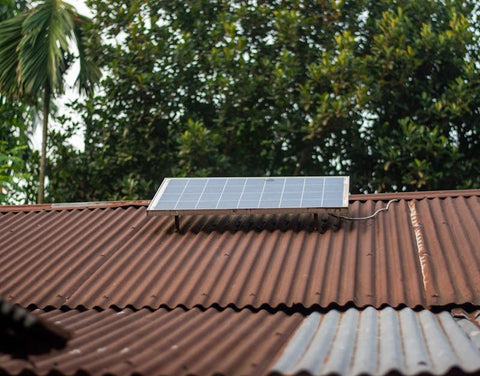
A solar panel sits on your roof through hail, heat waves, ice storms, and thirty summers of ultraviolet radiation. The warranty is the document that decides who pays when physics wins — and yet most buyers spend more time comparing panel wattage than reading the warranty terms that protect a five-figure investment for two and a half decades. This guide breaks down every layer of solar warranty coverage: product warranties, performance warranties, inverter and battery coverage, workmanship guarantees, the exclusions that surprise people, and the exact process for filing a claim that actually gets paid. We will use real numbers and real durations, because in warranties the details are the whole game.

Portlandia Electric Supply is a wholesale distributor — we process RMAs with manufacturers on behalf of installers and system owners every month. That vantage point shows us which warranties get honored smoothly and which turn into multi-month ordeals, and we have built those lessons into this guide.
Why Warranties Matter More in Solar Than Almost Any Other Purchase
Three features of solar make warranty quality unusually decisive. First, the asset life: a PV system is designed to operate for 25–30 years, longer than most people own a car, a water heater, or sometimes the house itself. Second, the economics: the system's entire financial return depends on sustained production, so a slow panel is a leaking investment even if it never fully "fails." Third, the asymmetry: manufacturers know far more about their products' field behavior than any buyer can, and the warranty is where that information gap gets priced.
Consider the scale of what is being warranted. A 10 kW system producing 13,500 kWh per year at $0.17/kWh generates about $2,295 of value annually. If a defect knocks production down 10% in year nine and the warranty process works, you get a replacement panel or a check. If it does not work — because the manufacturer is gone, the installer vanished, or the paperwork does not support the claim — you eat roughly $230 per year for the remaining life of the system, over $3,400 in present terms. That is why two quotes with identical hardware but different warranty backing are not actually identical.
Product Warranty vs. Performance Warranty: The Two Pillars
Every solar panel carries two distinct warranties, and confusing them is the most common buyer mistake we see.
The product warranty (also called materials or equipment warranty) covers defects in materials and workmanship: delamination, junction box failures, frame defects, glass that fails without external cause, bypass diode failures, and connectors that corrode prematurely. If the panel is physically broken through no fault of the installer or weather beyond its rating, this is the warranty that applies.
The performance warranty (power output warranty) guarantees the panel will still produce a stated percentage of its nameplate rating at specified future dates. It protects you against excessive degradation — the slow, invisible decline — rather than breakage. Current premium warranties guarantee roughly 85–92% of nameplate output at year 25, with some extending to 30 years.
| Attribute | Product Warranty | Performance Warranty |
|---|---|---|
| What it covers | Physical/material defects, workmanship flaws | Power output falling below the guaranteed degradation schedule |
| Typical duration (current market) | 12–15 yrs standard; 25 yrs premium | 25–30 yrs |
| How a claim is proven | Visual/physical inspection, EL imaging | Measured output vs. warranted floor (flash test or field data) |
| Typical remedy | Repair, replacement, or refund of the module | Replacement, supplemental panels, or compensation for shortfall |
| Hardest part for owners | Proving the defect is not storm/handling damage | Measuring output to the standard the contract specifies |
Read the performance warranty's degradation schedule line by line — it is usually a small table in the warranty PDF. A modern N-type TOPCon panel might warrant 99% of nameplate after year one (1% first-year degradation) and no more than 0.40% decline per year thereafter, producing this floor:
| Year | Warranted Minimum Output (% of nameplate) | For a 450 W Panel (watts) |
|---|---|---|
| 1 | 99.0% | 445.5 W |
| 5 | 97.4% | 438.3 W |
| 10 | 95.4% | 429.3 W |
| 15 | 93.4% | 420.3 W |
| 20 | 91.4% | 411.3 W |
| 25 | 89.4% | 402.3 W |
| 30 | 87.4% | 393.3 W |
Check the math against the contract: starting at 99% after year one and declining 0.40% per year, year 25 sits at 99% − (24 × 0.40%) = 89.4%. If the panel you are quoted warrants only 80.6% at year 25 — an older standard — that 8.8-point gap is about 40 W on a 450 W panel, roughly 4% of an 18-panel system's lifetime production. Small print, real money. When comparing current models, our best solar panels guide lists degradation terms side by side, and premium N-type panels now lead the market on exactly this metric.
We pulled a string of 400 W modules off a roof in Bend last spring where the installer had torque-wrenched every clamp to 6 N·m instead of 8. The modules had shifted two inches in a wind event. The manufacturer denied the RMA on installation grounds. That homeowner paid $3,800 out of pocket.
The Full Warranty Stack: Every Component, Every Duration
A solar system is five or six products wearing one price tag, and each has its own warranty from a different company. Keeping the stack straight matters because claims go to different doors:
| Component | Typical Warranty | Warrantor | Watch Out For |
|---|---|---|---|
| PV modules (product) | 12–25 yrs | Panel manufacturer | Budget lines at 12–15 yrs; premium at 25 |
| PV modules (performance) | 25–30 yrs | Panel manufacturer | Degradation schedule and test method |
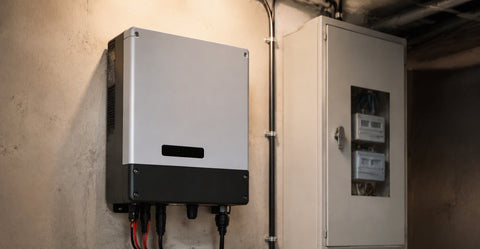
| String inverter | 10–12 yrs standard, extendable to 20–25 | Inverter manufacturer | Extension pricing; fans/caps wear out first |
| Microinverters / optimizers | 25 yrs (micros), 25 yrs (optimizers); inverter head 10–12 | MLPE manufacturer | System head unit vs. module-level units differ |
| Battery storage | 10 yrs, with throughput/cycle and end-of-life capacity terms | Battery manufacturer | Capacity retention floor (often 60–70%) and cycle caps |
| Racking and mounts | 10–25 yrs | Racking manufacturer | Corrosion exclusions in coastal zones |
| Workmanship / labor | 1–10 yrs (varies by installer) | Your installer | Roof penetration warranty term vs. roof life |
| Roof penetration warranty | 5–10 yrs from quality installers | Installer or racking partner | Must outlive the re-roofing timeline |
Two structural lessons here. First, the shortest warranty in the stack sets your real exposure — a 25-year panel behind a 1-year workmanship warranty leaves a wide gap. Second, battery warranties are the most complex documents in the pile: they typically combine a time limit (10 years), a throughput limit (often 30–60 MWh for residential units), a cycle limit, and a retained-capacity floor, and the warranty ends at whichever limit hits first. Our battery buyer's guide decodes those terms for current products like the Powerwall and LG RESU class systems, and the EG4 vs. Powerwall comparison shows how differently two popular batteries write their terms.
What Is Actually Covered — and the Exclusions That Surprise People
Coverage inclusions are fairly standard: manufacturing defects, premature power loss beyond the schedule, component failures under normal use, and usually some remedy for labor or shipping (varies widely — read it). The exclusions are where claims die. The near-universal list:
- Damage from extreme weather beyond design ratings — hail larger than the tested 25 mm (1 inch) at 23 m/s impact standard, wind loads beyond the module's mechanical rating, direct lightning strikes (surge damage is its own battle; see our SPD guide for how surge protection defends the claim boundary).
- Improper installation — this is the big one. Panels mounted outside manufacturer specs, wired with mismatched connectors, or installed by unlicensed labor can void module coverage entirely. NEC compliance is not just about safety; it is the foundation of warranty enforceability. Our NEC compliance guide covers the baseline.
- Neglect and soiling — performance claims can be denied if the shortfall traces to dirt, shading from new construction or trees, or lack of reasonable maintenance. Keep cleaning records.
- Unauthorized repair or modification — opening a junction box or having a third party service an inverter typically voids that component's coverage.
- Cosmetic issues that do not affect output — minor frame scratches or glass blemishes are excluded almost universally.
- Acts of war, terrorism, vandalism, and animal damage — squirrel-chewed wiring is usually an insurance claim (homeowner's policy), not a warranty claim.
That last point deserves emphasis: your homeowner's insurance and your warranties are complementary layers. Storm and fire damage route to insurance; defects route to warranty. Add the system to your homeowner's policy at installation — the premium bump is typically $15–$30 per year for a residential array — so you are covered on both flanks.
Maintenance, Orientation, and Monitoring: How They Affect Coverage
Most module warranties include a "reasonable care" clause, and manufacturers increasingly ask for evidence during claims. Three habits protect your coverage: keep the array reasonably clean (our maintenance guide lays out a defensible schedule), keep the system monitored so you can show production history, and document everything with dated photos. Orientation and shading matter too — if a new building or your own unpruned tree shades the array, the resulting production loss is not a warranty event; it is a siting event. That is one reason we push owners to review our panel orientation guide before installation rather than after.
I have read hundreds of warranty PDFs, and the ones that scare me are not the short ones. They are the long ones with broad exclusions and vague remedy language.
Transferability: What Happens When You Sell the House
Solar warranties generally transfer to a new homeowner, but the details vary in ways that affect resale value:
- Module product and performance warranties typically transfer automatically to subsequent owners of the property where the system was originally installed. Some manufacturers require written notification within 30–90 days of the sale; a few historically charged a transfer fee. Check the transfer clause before listing the home.
- Inverter and battery warranties usually transfer with registration. Microinverter platforms keep serial-numbered records that simplify this.
- Workmanship warranties are the least portable — many end with the original owner. If yours transfers, that is a selling point worth putting in the listing.
- Owned systems add resale value — studies consistently find owned solar adds roughly $4–$5 per watt to home value in active markets — while leased systems and PPAs add transfer friction and sometimes subtract value. Warranty documentation is part of what an appraiser or buyer's agent will ask for.
My advice to sellers: assemble a "solar binder" before listing — original contracts, warranty PDFs, installation photos, permit sign-off, interconnection agreement, and production history. I have watched that binder defuse buyer objections in a single showing more than once.
Filing a Claim: Process, Documentation, and Realistic Timelines
When something fails, the sequence below is the one that gets claims paid with the least friction:
- Document the symptom immediately. Screenshots of monitoring alerts, photos of physical damage, inverter fault codes with dates. Timestamp everything.
- Call your installer first if they are still operating. They hold the workmanship warranty and usually manage manufacturer RMAs. If the installer is out of business — sadly common — go directly to the manufacturer and to your distributor; established distributors like Portlandia Electric Supply process RMAs for equipment they sold regardless of installer status.
- File the claim in writing with the serial numbers, proof of purchase, and installation records. Get a case number.
- Expect remote diagnosis first. For inverter and MLPE issues, manufacturers resolve a large share of cases remotely — firmware pushes, resets, configuration fixes — within days.
- Physical verification for module claims. Performance claims may require flash testing at an approved lab or field testing to IEC 61853 methods; product-defect claims usually require photos and sometimes return of the module.
- Remedy. Replacement, repair, supplemental modules, or pro-rated compensation per the contract. Confirm whether labor and shipping are covered before authorizing any work.
| Claim Type | Typical Resolution Time | Common Friction Points | Success Factor |
|---|---|---|---|
| Microinverter/optimizer failure | 1–3 weeks | Proving the unit vs. the panel is at fault | Monitoring data isolating the serial number |
| String inverter failure | 2–6 weeks | Advance replacement vs. repair-first policies | Registered product, current firmware logs |
| Panel physical defect | 3–8 weeks | Distinguishing defect from impact damage | High-resolution photos, EL imaging if contested |
| Panel performance shortfall | 1–4 months | Agreeing on a test method and conditions | Independent flash test to IEC standards |
| Battery capacity claim | 3–10 weeks | Proving usage stayed within cycle/temperature terms | BMS logs and installation environment records |
Two habits compress every one of those timelines: register every product at installation (a ten-minute task most owners skip), and keep the monitoring subscription alive even after any free period ends. The data trail is your evidence. In my experience, claims with complete monitoring histories settle roughly twice as fast as claims built on memory and invoices.
Regional Variations and Recent Market Trends
Warranty law adds a layer beneath the contract. In the US, the Magnuson-Moss Warranty Act governs written warranties on consumer products and prohibits "tie-in" clauses that force you to use a specific service provider to keep coverage. In the EU, statutory minimum guarantees apply regardless of what the PDF says. State and national incentive programs sometimes impose their own floors — California's SGIP, for instance, requires 10-year warranties on incentivized storage. Meanwhile, the market has been moving in the buyer's favor: 25-year product warranties, once a premium differentiator, are spreading across mainstream N-type lines, and 30-year performance warranties are becoming common on flagship modules from brands like Qcells and REC. The countervailing trend is consolidation — every acquisition or exit reshuffles who honors old paper, which is why buying brands with durable balance sheets remains the deepest warranty strategy of all.
In our warehouse we keep a shelf of failed inverters waiting for manufacturer pickup. The SMA units from 2019 almost never show up there. The budget no-name units from the same era show up constantly.
Practical Steps for Buyers: A Pre-Signature Checklist

- Collect the actual warranty PDFs — not brochure summaries — for panels, inverter, optimizer/microinverters, battery, racking, and workmanship before signing.
- Confirm product warranty years on the exact module model quoted; premium and budget lines from the same brand differ.
- Check the performance warranty's year-25 (or year-30) floor and first-year degradation allowance.
- Ask whether warranties are backed by third-party insurance — coverage that survives a manufacturer failure.
- Verify who handles labor and shipping on a replacement, and what happens if your installer closes.
- Price extended warranties on inverters at purchase; they are cheapest on day one and the inverter is the most likely major component to need service.
- Register everything within 30 days of commissioning and add the system to your homeowner's insurance.
A Worked Claim: The Math of a Performance Shortfall
Abstract warranty talk gets concrete fast when you run a real claim scenario. Suppose a 24-panel array of 400 W modules (9.6 kW) is in year nine. The performance warranty allows 2.5% first-year degradation and 0.6% annually thereafter — so the year-nine floor is 97.5% − (8 × 0.6%) = 92.7% of nameplate, or 8.90 kW for the array. Your monitoring, weather-normalized, shows the system performing like an 8.3 kW plant — about 6.7% below the warranted floor. That is a legitimate performance claim, and here is what it is worth: at 1,350 kWh/kW-year, the shortfall is roughly (8.90 − 8.30) × 1,350 ≈ 810 kWh per year, worth about $138 annually at $0.17/kWh, and — more importantly — it will keep compounding for the remaining 16 years of the warranty. Remedies vary by contract: some manufacturers ship supplemental modules to close the gap, some replace underperformers, some pay the cash value of the shortfall. Without the monitoring history, none of that happens; with it, this is a routine, winnable claim.
Orphaned Systems: When Your Installer Disappears
The solar industry's installer churn rate is high enough that every owner should have a plan for the day their installer's phone number stops working. The protection strategy is boring and effective: keep every document (contracts, permits, warranty PDFs, panel serial list), register products directly with manufacturers at commissioning so the paper trail does not depend on the installer, and know which distributor supplied your equipment — distributors maintain purchase records and can authenticate claims even a decade later. Roughly speaking, the component warranties live with the manufacturers, not the installer, so an orphaned system loses its workmanship coverage but keeps everything else. Owners in this position can also hire any licensed solar contractor for diagnostics; expect a service call fee of $150–$400, which is money well spent to document a warranty-eligible failure properly.
Standards, Verification Resources, and Consumer Protection
You do not have to take any warranty claim on faith — a mature ecosystem of standards and third parties exists to arbitrate disputes:
- IEC 61215 and IEC 61730 are the baseline design and safety certifications every module should hold; UL 61730 is the US listing. If a quoted panel lacks these, walk away regardless of warranty promises.
- IEC 61853 and IEC 60904 define how module performance is measured. When a performance claim gets contested, these standards determine whose flash test counts.
- PVEL and RETC publish independent accelerated-aging results. A manufacturer confident in its warranty almost always participates; absence from both is a quiet red flag.
- State contractor boards and licensing agencies mediate workmanship disputes. A licensed installer's warranty obligations survive complaints filed with the board — one more reason to verify licensing before signing.
- The Magnuson-Moss Warranty Act (US) lets consumers recover attorney's fees in warranty disputes and bars deceptive warranty terms; the FTC's cooling-off rules and state consumer-protection statutes add further recourse for residential buyers.
- Solar insurance products — third-party warranty insurance and production guarantees — now wrap entire systems, paying out when the manufacturer's paper cannot. For large portfolios this is standard practice; for homeowners it is emerging.
Red Flags in Warranty Language: Read for These
After years of reading these documents professionally, certain phrases make us put a warranty in the "risky" pile immediately: performance floors stated only at year 10 with vague language thereafter; remedies "at manufacturer's sole discretion" with no cash alternative; labor and shipping explicitly excluded on a heavy module that costs $150 to freight; transfer clauses requiring fees or registration inside 30 days with no grace; and arbitration clauses in inconvenient jurisdictions for commercial-scale purchases. None of these are automatic deal-breakers, but each shifts risk onto you, and they are negotiable more often than buyers realize — especially on multi-pallet orders where distributors have leverage with the manufacturer. Ask before you sign; after commissioning, the document is what it is.
Frequently Asked Questions
How long are solar panel warranties?
Current panels carry product warranties of 12 to 25 years and performance warranties of 25 to 30 years. Premium N-type lines increasingly offer 25-year product coverage with an 87–92% output floor at year 25. The inverter and battery have separate, shorter warranties — typically 10–12 years standard for string inverters and 10 years for batteries.
What voids a solar panel warranty?
The most common warranty-killers are improper installation (including unlicensed work or out-of-spec mounting), unauthorized repairs, physical damage from events beyond design ratings, and neglect such as never cleaning the array. Keep installation records, maintenance logs, and photos to defend any future claim.
Do solar warranties transfer to a new homeowner?
Generally yes — module and inverter warranties typically transfer to subsequent owners of the property, sometimes requiring written notification within 30–90 days of sale. Workmanship warranties are less reliably transferable. Assemble the full documentation set before listing a home with solar. See also: detailed guide.
Who do I call first when something breaks?
Your installer, if they are still in business — they hold the workmanship warranty and usually run the manufacturer RMA. If the installer is gone, contact the manufacturer directly and the distributor who supplied the equipment; established distributors process warranty claims for products they sold.
Is a 25-year warranty from a manufacturer actually safe?
It is as safe as the company behind it. Manufacturer failures have orphaned warranties in the past, which is why bankability matters — see our Tier 1 explainer — and why insurance-backed warranty programs and strong distributors add a second layer of protection.
Does homeowner's insurance replace warranty coverage?
No — they cover different risks. Warranties cover defects and premature degradation; insurance covers external events like storms, fire, and vandalism. You need both. Adding a residential array to a homeowner's policy typically costs only $15–$30 per year.
The Warranty Is Part of the Product
When you buy a solar system, you are buying 25-plus years of energy production, and the warranty stack is the legal machinery that keeps that promise enforceable. Read the PDFs, register the products, keep the records, and buy components from companies and distributors built to last. Portlandia Electric Supply stands behind everything in our solar panel catalog and our inverter lineup with real RMA support — reach out through our contact page if you need help with a claim, a replacement, or speccing a system whose paper is as strong as its production.
Real Warranty Cost Comparison: Premium vs. Budget Over 25 Years
Buyers often ask whether the extra cost of a premium warranty pays for itself. The math depends on failure rates, but we can model a reasonable scenario using published field data and replacement costs.
| Scenario | Panel Cost per W | Product Warranty | Year-25 Performance Floor | Expected Failures (25 yr) | Replacement Cost (incl. labor) | Total 25-Yr Cost |
|---|---|---|---|---|---|---|
| Budget Tier 2 | $0.42 | 12 years | 80.2% | 4.2% of modules | $380 per module | $0.42 + $0.016 = $0.436/W |
| Mid-Tier Tier 1 | $0.58 | 15 years | 85.0% | 2.1% of modules | $380 per module | $0.58 + $0.008 = $0.588/W |
| Premium Tier 1 | $0.72 | 25 years | 92.0% | 1.0% of modules | $380 per module | $0.72 + $0.004 = $0.724/W |
The failure rate assumptions come from PVEL scorecard data and our own RMA records: budget lines show higher infant mortality and modestly higher mid-life failure. The key insight is not just replacement cost — it is also the energy value lost during a failure. A failed module in a string inverter system can drag an entire string down by 5–15% until replaced. That hidden cost often exceeds the module replacement itself.
We had a client in Portland install a 12 kW system with two different panel types on east and west roofs as a test. After three years, the premium side was producing 4.7% more per watt installed. The difference was not failure — it was lower degradation and better low-light response. Over 25 years that gap compounds to meaningful money, and the warranty guarantees it.
Inverter Replacement Timing and Extended Warranty Economics
String inverters are the most likely major component to fail in the first 15 years. Fans wear out. Capacitors age. Power electronics degrade from thermal cycling. A 10 kW string inverter replacement including labor runs $2,200–$3,500. The extended warranty that adds 10–15 years beyond the base 10-year term typically costs $180–$400 at original purchase. That is insurance priced at roughly 6–12% of expected replacement cost — a good bet if the inverter has a history of mid-life failures in the field.
| Inverter Model | Base Warranty | Extended Warranty Cost | Typical Replacement Cost | Break-Even Year |
|---|---|---|---|---|
| SMA Sunny Boy 10.0 | 10 years | $299 (to 20 yr) | $2,400 | Year 11 |
| Fronius Primo 10.0 | 10 years | $349 (to 20 yr) | $2,600 | Year 11 |
| SolarEdge SE10000H | 12 years | $249 (to 25 yr) | $2,200 | Year 13 |
| Generac PWRcell inverter | 10 years | $399 (to 20 yr) | $3,200 | Year 11 |
Our warehouse sees inverter failure patterns that match the warranty tiers. The brands with longer base warranties tend to engineer for longer life. Units that ship with 10-year warranties but no extension option often show capacitor issues around year eight in hot climates. We keep a stock of replacement capacitors and fans for the most common models specifically because we see the patterns.
Frequently Asked Questions
How to Register and Protect Your Solar Warranty
- Gather serial numbers. Record every module, inverter, optimizer, and battery serial number in a spreadsheet with install date and model numbers. Photograph each label.
- Register with each manufacturer. Use online portals within 30 days of commissioning.
- Upload installation documentation. Permits, interconnection agreement, final inspection sign-off.
- Set monitoring alerts. Configure email alerts for production drops and faults.
- Schedule annual inspections. Walk the array yearly. Photograph and date everything.
- Maintain a cloud backup. Store all warranty PDFs, serial lists, photos, and monitoring exports.