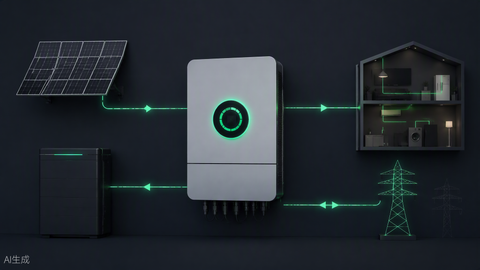
Updated October 3, 2018 — The trade war between the United States and China entered a new phase this week, and solar equipment is squarely in the crosshairs. On September 24, 2018, additional duties under Section 301 of the Trade Act of 1974 took effect on roughly $200 billion worth of Chinese imports. Unlike the earlier Section 201 safeguard tariffs that targeted solar cells and modules, this round hits inverters, AC modules, junction boxes, backsheets, and other balance-of-system (BOS) components — the parts that turn a panel array into a working power plant.
For installers, distributors, and project developers, this means another layer of landed-cost complexity on top of the Section 201 module duties, Section 232 steel and aluminum tariffs, and existing anti-dumping/countervailing duties. Here is what the industry needs to know — with exact rates, codes, dates, and sourcing strategies — as of October 2018.
On September 18, 2018, the Office of the United States Trade Representative (USTR) published a formal notice in the Federal Register (83 Fed. Reg. 47,974) implementing the President's determination to modify the prior Section 301 action. The notice imposes additional duties of 10 percent ad valorem on 5,745 full or partial tariff lines of the Harmonized Tariff Schedule of the United States (HTSUS) — a list originally proposed on July 10, 2018, and finalized after public comment.
The effective date is September 24, 2018, meaning entries for consumption or withdrawals from warehouse on or after that date are subject to the additional duty. The White House has also directed that the rate will increase to 25 percent on January 1, 2019, absent a negotiated resolution.
The following HTSUS subheadings are confirmed covered under List 3 as they pertain to solar equipment. CBP will assess the additional 10 percent duty on the entered value in addition to any existing Most Favored Nation (MFN) rate, anti-dumping duty, or countervailing duty.
| HTSUS Subheading | Description | Solar Application | Additional Duty |
|---|---|---|---|
| 8504.40.95 | Static converters (rectifiers, inverters) | String inverters, central inverters, microinverters | +10% ad valorem |
| 8501.61.00 | AC generators, output not exceeding 75 kVA | AC modules (panel-integrated microinverters) | +10% ad valorem |
| 8538.90.30 | Parts for electrical apparatus (heading 8535–8537) | Junction boxes, combiner boxes | +10% ad valorem |
| Various 39xx / 85xx | Plastics and electrical parts (material-dependent) | Backsheets, encapsulant films, connectors, cable assemblies | +10% ad valorem |
Source: USTR Federal Register notice, 83 Fed. Reg. 47,974 (Sept. 18, 2018); solar component classification confirmed via CBP rulings and contemporaneous trade press (Solar Power World, Sept. 18, 2018).
Solar importers and installers have faced a rapid succession of trade actions in 2018. Understanding the stacking order matters for landed-cost calculations and contract negotiations.
| Date | Action | Statute | Rate | Solar Impact |
|---|---|---|---|---|
| Feb 7, 2018 | Safeguard tariffs on c-Si cells and modules | Section 201, Trade Act of 1974 | 30% (stepping down 5%/yr) | All imported cells and modules |
| Mar 23, 2018 | Steel and aluminum tariffs | Section 232, Trade Expansion Act of 1962 | 25% steel / 10% aluminum | Racking, wiring, ground-mount posts |
| Aug 23, 2018 | List 2 duties on $16B of Chinese goods | Section 301 | 25% | Certain semiconductors, diodes |
| Sept 24, 2018 | List 3 duties on ~$200B of Chinese goods | Section 301 | 10% (→25% Jan 1, 2019) | Inverters, AC modules, BOS |
The cumulative effect is significant. A residential installer sourcing Chinese inverters now faces the Section 301 duty on top of any existing MFN rate. On the module side, Chinese cells and modules already carry anti-dumping/countervailing duties from the 2012 and 2014 cases, plus the Section 201 safeguard rate. The List 3 action does not overlap with cells and modules in most cases — it targets the electronics and plastics that make up the rest of the system.
The immediate question on the warehouse floor is simple: what does the 10 percent duty actually cost, and what can be done about it?
Landed-cost effect. Inverters typically represent 6 to 9 percent of total residential system hardware cost. A 10 percent tariff on the inverter therefore adds roughly 0.6 to 0.9 percent to the total system equipment cost — a manageable but not negligible increment. For a 6 kW residential system with a $2,000 string inverter, the tariff adds approximately $200 to the inverter line item. If the rate jumps to 25 percent on January 1, 2019, that figure becomes $500.
Module price offset. Notably, module prices in Q4 2018 are actually flat to 10 percent below the levels seen before the Section 201 tariffs took effect in February, according to distributor BayWa r.e. This means the inverter tariff is arriving at a moment when panel costs have absorbed some of the earlier shock — but steel and aluminum racking costs remain elevated from Section 232.
Documentation and compliance. CBP requires a country-of-origin declaration at the time of entry. Installers and distributors should verify with suppliers whether the inverter or BOS component is manufactured in China, not merely branded by a Chinese company. Products assembled or substantially transformed in a third country may qualify for a different HTS classification. Transshipment or relabeling to obscure Chinese origin carries significant customs penalties.
Sourcing alternatives. Several major inverter manufacturers are already moving production out of China specifically for the U.S. market. See the table below for confirmed mitigation strategies as of October 2018.
Chinese and non-Chinese manufacturers alike are repositioning supply chains to protect U.S. market share. The following responses are confirmed as of October 2018:
| Manufacturer | Pre-Tariff Manufacturing | Mitigation Strategy | U.S. Market Impact |
|---|---|---|---|
| Sungrow | China (36 GW plant) | Opened 3 GW Bangalore, India plant; will move 100% of U.S. production there if 25% rate takes effect | No price increases announced |
| Enphase | China | Expanded Flex manufacturing contract in Mexico; U.S.-bound production shifts Q2 2019 | Transition period pricing stable |
| CPS America | China (powerheads) | Texas assembly for customizable components; SE Asia sister divisions as backup | Partial tariff absorption |
| OutBack Solar | China | Considering Mexico (Flex); passed 10% price increase to customers in September 2018 | Customer price increase active |
| SMA | Germany | Most U.S. inverters tariff-free; stocked pre-tariff TS4-R optimizers from China | Minimal direct impact |
| Yaskawa Solectria | Massachusetts (XGI/XTM); China (TL) | Absorbed most of tariff on TL series; raised prices 3.6%; imported large pre-tariff inventory | Price increase limited to TL series |
Source: Solar Power World inverter manufacturing survey, published January 2019 (reflecting September–November 2018 corporate statements).
Abstract percentages hide the real exposure. Here is the bill-of-materials view for a typical 100 kW commercial rooftop quoted in Q4 2018 at roughly $1.40/W installed ($140,000), assuming China-origin power electronics:
| Component | Pre-Tariff Cost | +10% Impact (List 3) | At 25% (Jan 1, 2019 rate) |
|---|---|---|---|
| String inverters (2 × 50 kW) | $9,000 | +$900 | +$2,250 |
| Combiner & junction boxes (8538.90.30) | $1,200 | +$120 | +$300 |
| Cable assemblies & connectors | $2,000 | +$200 | +$500 |
| Total direct 301 exposure | $12,200 | +$1,220 | +$3,050 |
| Share of $140,000 installed price | 8.7% | ≈0.9% of job | ≈2.2% of job |
Two lessons from that table survived the decade. First, the inverter tariff alone never killed a project — but stacked on Section 201 modules, Section 232 steel racking, and AD/CVD cell duties, the cumulative burden on a fully imported BOM reached double digits. Second, the line items that hurt most were the ones nobody quoted carefully: a $200 surprise on connectors is small, but it comes straight out of margin because nobody writes change orders over $200.
I watched three installers in October 2018 eat the 10% on inverters they had quoted in August, because their proposals carried no tariff pass-through language. Every quote we have issued since carries a duty-adjustment clause, and every installer who copies that habit sleeps better.
We brought in an extra 60 days of inverter inventory the week List 3 was finalized. The carrying cost hurt for a quarter; the customers who got pre-tariff pricing into Q1 2019 remembered us for years. Inventory is a tariff hedge nobody models until they need it.
The origin question is where audits get people. I have seen a "Malaysian" inverter get flagged at entry because the PCB assembly was Chinese — substantial transformation is a legal test, not a sticker on the carton. Get the origin affidavit before the shipment sails, not after CBP asks.
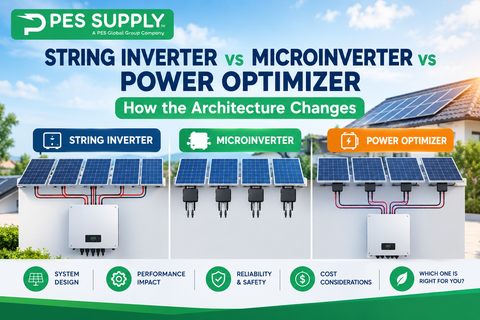
The sourcing logic that worked in 2018 — diversify origin, document everything, contract around duty risk — is the same logic that governs the 2026 landscape of Section 232 minimum import prices and domestic content adders. On the equipment side, that means knowing which platforms ship from tariff-resilient supply chains: browse our current string inverters, microinverters, and hybrid inverters, including Sungrow and Enphase lines that relocated production years ago. For a refresher on the module-side tariff this article's numbers stack onto, revisit our Section 201 tariff guide, and for pure inverter selection fundamentals see how solar inverters work and the full inverter collection.
One detail in the September 2018 notice deserves its own section because it shaped buying behavior for years: List 3 launched with no product exclusion process. Lists 1 and 2 had portals where importers could petition for relief on specific HTS lines; List 3 did not. An exclusion request process was eventually bolted on in mid-2019, but the first nine months of List 3 offered exactly two options — pay the duty or change the origin. That binary is why the manufacturing-migration table above exists: Sungrow's India plant, Enphase's Mexico shift, and the Mexico/SE-Asia moves across the industry weren't strategic preferences. They were the only available exits.
The compliance corollary that still gets importers burned: changing the label is not changing the origin. Substantial transformation is a legal test applied by CBP, and relabeling or transshipping Chinese goods through a third country without real transformation carries penalties that dwarf the duty. Every mitigation strategy in this article is about where things are genuinely made.
List 3 didn't stay at 10%. The threatened escalation arrived, then the four-year statutory review rewrote the solar lines entirely:
| Date | Action | Rate on Solar-Relevant Goods |
|---|---|---|
| Sept 24, 2018 | List 3 effective | 10% on inverters, AC modules, BOS |
| May 10, 2019 | List 3 escalation after talks stall | 25% on the same lines |
| 2020–2023 | Exclusion cycles; COVID-era extensions | 25% baseline persists; exclusions lapse and renew |
| Sept 2024 (effective 2025) | USTR four-year review final actions | 50% on China-origin solar cells, modules, polysilicon, wafers; 25% retained on most BOS |
That escalation path is why the 2026 landscape looks the way it does: inverter production largely migrated out of China years ago, while the cell/module/polysilicon lines from China face 50% Section 301 rates stacked against AD/CVD and, for covered products, the Section 232 minimum import price regime. The 10% duty that felt like a crisis in September 2018 turned out to be the opening bid.
I've told the exclusion story to new procurement hires a dozen times: the companies that waited for a List 3 portal in late 2018 paid 10% for nine months while the companies that moved production paid once. Tariffs reward motion. They always have.
One line in the List 3 table deserves a closer look because it confused even experienced buyers in 2018: AC modules — panels with factory-integrated microinverters — classify under 8501.61.00 as AC generators, not under the module heading that Section 201 covered. The practical consequence was strange: a DC module from Malaysia carried the 30% safeguard but no 301 duty, while the same panel with a Chinese microinverter bonded to it carried 10% under List 3 instead. Buyers who switched to AC modules to simplify labor walked into a different tariff line entirely. The lesson that persists into the 2026 regime: classification is per-product, per-heading, and the "obvious" category is wrong often enough that every new product type deserves a broker ruling before volume purchasing.
The unglamorous hero of the 2018 component tariffs was distributor inventory. Manufacturers relocating production needed quarters; installers facing October deadlines needed product in weeks. The distributors who pre-bought inverter inventory before September 24 — and we were one of them — became the bridge. OutBack's decision to pass through a 10% increase immediately, while Yaskawa Solectria absorbed most of it on TL-series units, showed both strategies in real time: pass-through protects margin but tests loyalty, absorption buys loyalty but burns cash. Eight years later, the same choice confronts every supplier facing the 2026 minimum import prices, and the companies with deep stateside inventory are winning the same way they won in 2018.
The 90-day negotiation window that opened in December 2018 briefly paused the escalation, but the reprieve never hardened into certainty — which was its own lesson. Buyers who treated the truce as a reason to relax re-learned in May 2019 that trade policy moves on political clocks, not procurement ones. We tell customers the same thing today about every pending rate review: plan to the published rate, treat any relief as upside, and never let a vessel sail on the assumption that a negotiation will land.
If there is a single sentence to carry out of the 2018 component tariffs, it is this one, heard on a distributor loading dock that October: the tariff is only 10%, but the uncertainty is 100%. The companies that priced the certainty — alternate origins, documented supply chains, honest contract language — barely noticed the rate increases that followed. That's still the playbook, and it still works.
Does the Section 301 tariff apply to all solar inverters?
Only to inverters manufactured in China. Inverters produced in Germany (SMA, Fronius), Israel (SolarEdge), Mexico (Enphase, beginning Q2 2019), India (Sungrow), or the United States (Yaskawa Solectria, Sol-Ark) are not subject to the additional 10 percent duty. The tariff is assessed at the time of import based on country of origin, not brand headquarters.
What is the exact HTS code for solar inverters?
Solar inverters are generally classified under HTSUS 8504.40.95 (static converters). AC modules — solar panels with integrated microinverters — typically fall under 8501.61.00 (AC generators not exceeding 75 kVA). Both subheadings are included in Section 301 List 3.
Will the tariff rate stay at 10 percent?
As of the September 18, 2018 Federal Register notice, the rate is scheduled to increase to 25 percent on January 1, 2019. The White House has indicated this is contingent on trade negotiations with China. A 90-day negotiation period began in early December 2018, but the outcome remains uncertain as of this writing.
Can I apply for an exclusion?
No. Unlike Section 301 Lists 1 and 2, List 3 does not currently have a product exclusion process. USTR has not announced procedures or a portal for requesting relief from List 3 duties. The only available mitigation is sourcing from non-Chinese manufacturing or absorbing the cost.
How does this compare to the Section 201 module tariff?
The Section 201 safeguard tariff applies to crystalline silicon cells and modules from all countries at 30 percent (stepping down to 25 percent in 2019, 20 percent in 2020, and 15 percent in 2021). The Section 301 List 3 tariff applies specifically to Chinese-origin inverters and BOS components at 10 percent. They are separate statutes with separate rate schedules and are additive where both apply.
Should homeowners expect higher solar quotes?
The direct impact on residential pricing is modest. Because inverters represent a single-digit percentage of total system cost, a 10 percent inverter tariff translates to less than 1 percent of the total project price. The 30 percent federal Investment Tax Credit (ITC) — still available at the full 30 percent rate through 2019 — continues to offset equipment costs. However, if the rate jumps to 25 percent and manufacturers pass the full increase through, installers may need to adjust quotes by a few hundred dollars on a typical 6–8 kW system.
(Editor's note, 2026) The Section 301 tariffs on Chinese inverters and BOS components that began at 10 percent in September 2018 have endured through multiple administrations and reviews. The rate increased to 25 percent in 2019 and, following the four-year statutory review completed in 2024, now sits at 50 percent on solar cells, modules, wafers, and polysilicon from China. Inverters remain subject to the 25 percent Section 301 rate, though many manufacturers have fully relocated production to Mexico, India, or the United States.
For installers and project developers sourcing equipment today, the landscape is defined by domestic content bonuses under the Inflation Reduction Act, supply chain diversification away from single-country dependence, and a growing inventory of inverter options that carry no Chinese-origin tariff exposure. Portlandia Electric Supply stocks current-generation string inverters, microinverters, and hybrid inverters from tariff-resilient supply chains. Browse the full collection:
Need a Quote on Inverters or a Full System?
Our team sources tariff-resilient equipment across string, micro, and hybrid inverter platforms. Tell us your project specs and we will return a competitive landed-cost quote within one business day.
Request a QuoteRelated guide: Pure Sine Wave Inverter Buyer's Guide — waveform quality, THD, sizing, and 2026 inverter types for installers and off-grid builders.