Sol-Ark All-in-One Inverters: How One Box Replaced Five Devices and Rewired Residential Solar
A working guide to the Sol-Ark hybrid lineup — 5K through 60K — with sizing math, NEC interconnection rules, battery pairing, and the lessons installers learn the hard way.

Why All-in-One Matters for Homeowners
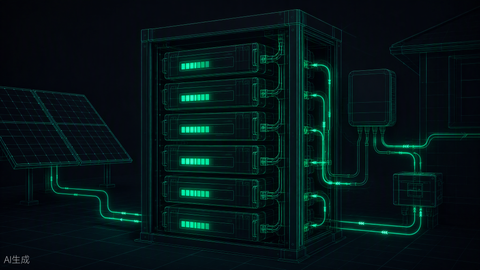
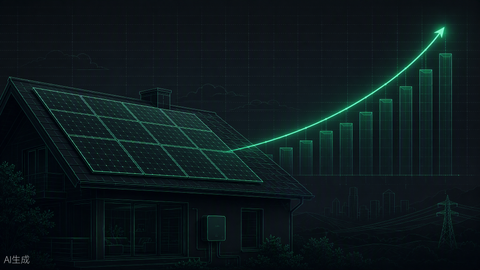
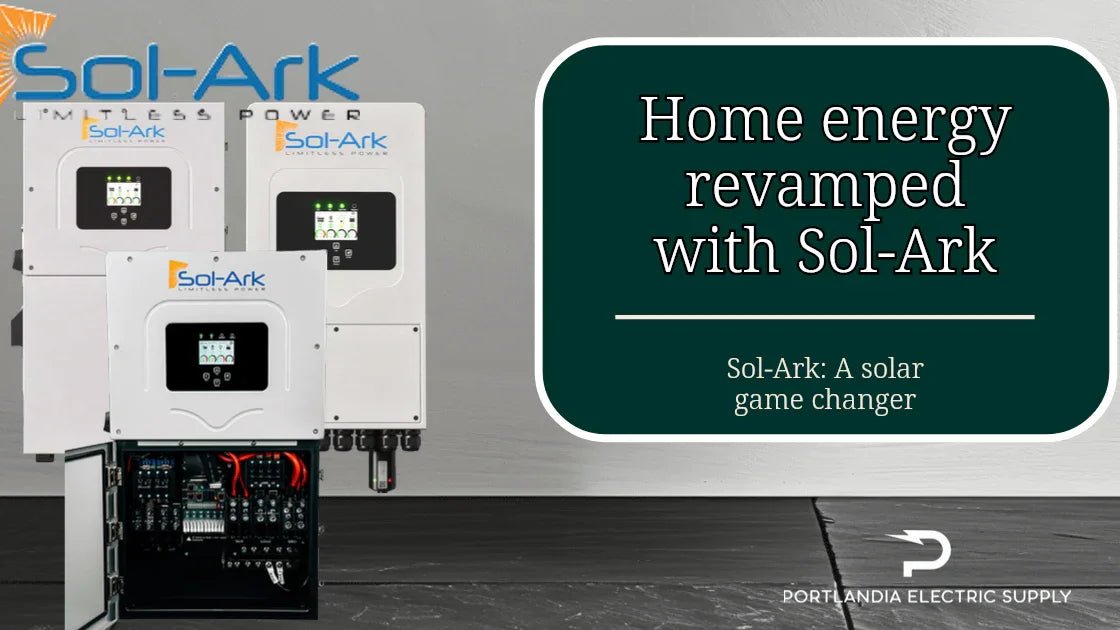
Twenty years ago, a battery-based solar system was a wall of equipment: a string inverter for the panels, a charge controller for the batteries, a battery inverter for the house, a transfer switch for the grid, and a monitoring box to watch it all argue with itself. Sol-Ark's all-in-one hybrid inverters collapsed that wall into a single cabinet — solar input, battery management, grid interaction, generator support, and whole-home transfer in one UL-listed box. For homeowners, that means a simpler install and one throat to choke for support. For installers, it means the difference between a two-day job and a week-long one. This guide covers the lineup, the sizing and interconnection math, and the design patterns that make these systems perform as advertised.
The traditional multi-box approach failed in three predictable places. First, interoperability: the solar inverter, the charge controller, and the battery inverter each carried their own firmware, their own assumptions, and their own ideas about who was in charge — the infamous "three devices, three opinions" problem that turned commissioning into diplomacy. Second, points of failure: every box was another set of fans, connectors, and circuit boards between your roof and your refrigerator. Third, accountability: when a multi-vendor system misbehaved, each manufacturer's support line helpfully suggested the problem lived in the other vendor's box.
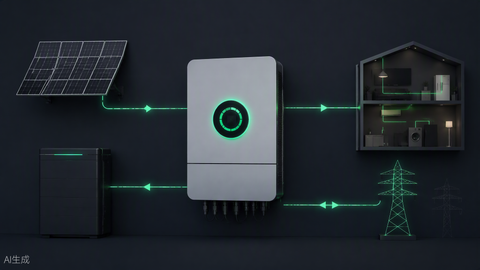
The all-in-one design answers all three. One device manages solar production, battery charging, grid sell-back, and backup transfer under a single control logic, so the mode transitions — grid-tied to islanded, charging to discharging, solar to generator — happen in milliseconds under one firmware. The homeowner sees one app; the installer wires one cabinet; the warranty conversation has one participant. Our overview of hybrid solar inverter architecture explains the category, and the companion piece on inverters for solar battery systems maps the alternatives that still require multiple boxes.
There is a fourth advantage that only shows up after the first storm: recovery speed. When a multi-box system faults during an outage, diagnosis requires understanding four devices' interaction. When an all-in-one faults, one display tells you what happened, one manual covers the fix, and one support line owns the answer. In our service logs, mean time to restore on integrated systems runs hours; on multi-vendor systems it runs days, mostly spent on hold.
| Model | Continuous Output | Architecture | Best Fit |
|---|---|---|---|
| Sol-Ark 5K | 5 kW | 120V, 48V battery | Cabins, RVs, small off-grid, critical-loads backup |
| Sol-Ark 8K | 8 kW | 120/240V split-phase | Small homes, partial-home backup |
| Sol-Ark 12K | 12 kW | 120/240V split-phase | Average homes with moderate A/C loads |
| Sol-Ark 15K | 15 kW | 120/240/208V, 200A transfer | Whole-home backup including central A/C |
| Sol-Ark 30K-3P | 30 kW | 208V three-phase | Light commercial, agricultural, large estates |
| Sol-Ark 60K-3P | 60 kW | Three-phase commercial | Commercial backup and demand management |
Browse the residential hybrid class in the 10–12kW hybrid inverter collection and the 13–18kW collection to cross-shop the category. The question to answer before choosing a model isn't "how big is my solar array" — it's "what must run simultaneously during an outage," because the inverter's continuous and surge ratings are sized to loads, while the array is sized to energy. A household that needs the well pump, the furnace blower, the refrigerator, and the home office alive at once has a very different answer than one backing up a cabin's lights and a DC fridge, and the model table above maps cleanly onto that load inventory once you've written it down honestly.
Two calculations decide every Sol-Ark install. The first is the load calculation — what the inverter must carry when the grid drops. The second is the NEC 705.12 interconnection check — how the inverter's output lands on your electrical panel legally.
| Design Step | Worked Example (Sol-Ark 15K) | Result |
|---|---|---|
| Rated output current | 15,000 W ÷ 240 V | 62.5 A |
| Continuous-load factor (NEC 690.8/705.28) | 62.5 A × 1.25 | 78.1 A |
| Overcurrent device (NEC 240.6) | Next standard size | 80 A, 2-pole |
| Conductor, 75°C Cu (NEC 310.16) | ≥ 78.1 A | 3 AWG Cu (100 A) |
| 120% rule check, 200A panel (NEC 705.12) | 200 A × 1.2 − 200 A main = 40 A allowance | 80 A exceeds it — use the transfer-passthrough or a line-side tap instead |
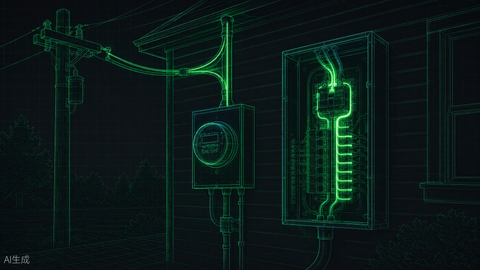
That last row is where residential hybrid design gets interesting, and it's why the 15K's 200A transfer passthrough matters: instead of backfeeding a breaker into a busbar that can't legally accept it, the entire service feeds through the inverter. The grid passes through when healthy; the inverter islands the home when it isn't. The 120% busbar constraint evaporates because there's no backfed breaker to constrain. On smaller units connected as backfed sources, respect the 120% math religiously — it's the check inspectors actually run, and it's the check that protects your busbar from a solar-plus-grid overload it was never rated to carry. Our NEC code compliance guide covers the full rule set, and the inverter sizing calculator automates the arithmetic.
Sol-Ark's battery-agnostic 48V architecture is a strategic choice disguised as a spec line. Where proprietary high-voltage battery ecosystems lock you to one vendor's cells, pricing, and availability, a 48V hybrid accepts a wide field of LFP batteries — which means you can buy on value, expand later, and survive a vendor's discontinuation without ripping out the system. Communication cables and charge profiles are configured per battery model at commissioning; closed-loop communication with supported batteries is the setup we recommend, because it lets the battery's own management system govern charge limits rather than relying on voltage-only inference.
| Pairing Decision | Recommendation | Reason |
|---|---|---|
| Chemistry | Lithium ferro phosphate (LFP) | Cycle life, thermal safety, cobalt-free supply chain |
| Voltage class | 48V nominal (51.2V LFP) | Native platform voltage; no DC-DC conversion losses |
| Communication | Closed-loop CAN/RS485 where supported | BMS-controlled charge limits protect cycle life |
| Starting capacity, whole-home backup | 15–20 kWh | Overnight autonomy for average homes; expand later |
| Starting capacity, off-grid | 25 kWh+ with generator support | Weather weeks, not hours, are the design case |
Purpose-matched bundles like the Sol-Ark 25kWh LFP home battery and cross-brand packages built around the Sol-Ark 12K with SimpliPhi PHI batteries show how the ecosystem assembles in practice. For capacity math against your actual load list, the off-grid battery sizing guide and the battery sizing calculator are the right tools, and EG4 vs Tesla Powerwall benchmarks the budget-versus-proprietary spectrum.
Generator Integration: The Feature That Ends the Debate

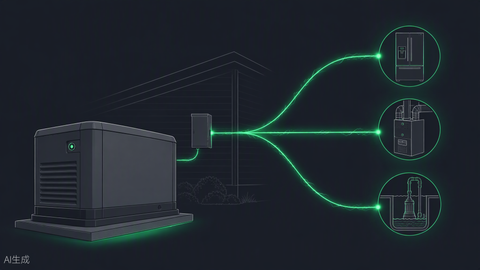
The grid-versus-off-grid argument usually collapses on contact with weather: a five-day ice storm defeats any battery bank you can afford. The Sol-Ark design answer is a native generator input with configurable charge rates and auto-start signaling — the inverter treats the generator as a third power source alongside solar and battery, orchestrating all three. The operating pattern that emerges is genuinely elegant: solar carries the day, batteries carry the evening, and the generator runs a few efficient hours at heavy load to refill the bank instead of droning all night at 15% load where small engines wear out and burn fuel like they're paid to.
That orchestration also fixes the dirtiest secret of generator-only backup: partial-load inefficiency. A 20kW generator carrying a 2kW overnight load operates in its worst fuel-economy band, wet-stacks its diesel or runs its propane regulator at a whisper, and logs maintenance hours at full speed. The hybrid pattern inverts the duty cycle — the generator runs hard and briefly, which is precisely how engines prefer to work. Over a single week-long outage, the fuel savings alone can approach a thousand dollars for a large home.
Sizing the generator for this duty is different from sizing one for whole-home direct power: you need enough to charge the batteries at the configured rate plus carry concurrent loads — typically a 7–12kW unit for residential systems, rather than the 20kW+ monsters that generator-only backup demands. Our whole-home generator sizing guide walks the load math, and the off-grid system architecture guide shows the full three-source design pattern.
Two reference builds from the field, with the numbers that made them work:
| Build | Equipment | Outcome |
|---|---|---|
| Suburban resilience package | Sol-Ark 12K, 12kW array, 20kWh LFP | ~90% grid independence; outages invisible; summer A/C fully supported |
| Off-grid cabin | Sol-Ark 8K, 7kW array, 15kWh LFP, 7kW propane generator | Full-time off-grid through hard winters; generator runs 2–4 hours weekly in December |
| Small farm | Sol-Ark 30K-3P, 35kW array, 40kWh LFP | Well pumps, workshop, and farmhouse backed up; demand charges eliminated |
Notice the pattern in every row: the array is sized to daily energy, the battery to overnight autonomy, and the inverter to simultaneous load. Size any one of the three to the wrong variable and the system disappoints in exactly one predictable way. The farm row deserves a footnote on surge: well pumps and shop compressors are the loads that humble undersized inverters, because their starting current runs four to six times their running current for the first half-second. A 30K-3P absorbs those starts in stride; a residential 8K asked to start a 3HP submersible pump will object loudly. Inventory your motor loads before you pick the model, not after the first failed start.
The all-in-one architecture compresses the physical install dramatically, but the discipline required doesn't shrink with the box count. A correct Sol-Ark install sequence looks like this: mount the cabinet on a wall rated for its weight with the specified clearances; land the battery bank with factory-spec cable and torque; land the PV strings after verifying polarity and open-circuit voltage; land the generator input with its own breaker; terminate the grid and load ports; and only then energize, configure, and test. The transfer test — kill the mains, watch the island form, restore — is the moment that sells the system to the homeowner, so do it with the family watching and the refrigerator running.
Details that separate clean installs from callbacks: leave the manufacturer's specified clearances for fan intake and exhaust; route the battery communication cable away from high-current DC runs to keep noise off the CAN bus; label every port and breaker as if a stranger will service the system at midnight in a storm, because eventually one will; and photograph the complete configuration screens before you leave — when the homeowner factory-resets the unit in year three, those photos are the system's memory.
A slice of Sol-Ark's customer base buys for a reason most inverter marketing ignores: grid-down scenarios measured in weeks. The company leans into that market with EMP-hardened variants of its residential units — models tested against electromagnetic-pulse and severe surge environments — and with a design philosophy that assumes the nearest service tech might be unavailable indefinitely. Whether or not you share that use case, the engineering trickles down: conformal-coated electronics, generous surge suppression, and component derating that leaves thermal margin in the power stage all serve the ordinary customer who just wants the box to survive its second decade in a hot garage.
Physical siting follows the same durability logic. Mount indoors or under cover where possible; a NEMA-rated enclosure survives weather, but electronics last measurably longer out of direct sun and freeze-thaw cycling. Keep the wall solid — these cabinets are heavy, and a lag bolt into a stud beats a drywall anchor by every engineering criterion. And if the site floods, mount above the historic water line; no inverter rating protects against submersion.
All-in-one hybrid systems carry a hardware premium over grid-tie-only string inverters, and the honest way to evaluate that premium is against what it replaces:
| Component Replaced or Avoided | Typical Standalone Cost | Notes |
|---|---|---|
| Grid-tie string inverter | $1,500–$2,500 | The baseline the hybrid replaces |
| Battery-based inverter/charger | $3,000–$5,000 | Required in multi-box designs for backup |
| 200A automatic transfer switch | $1,000–$2,000 installed | Integrated in the 15K's passthrough |
| Generator auto-start controller | $300–$800 | Native to the platform |
| Multi-vendor commissioning labor | $1,000–$3,000 | Firmware integration across 3–4 brands |
Stack those rows and the all-in-one premium largely evaporates before you count the ongoing value: one monitoring platform, one warranty, one firmware train, and outage behavior that doesn't depend on three vendors' devices agreeing with each other during the worst hour of the year. For whole-project economics — panels, storage, incentives, and payback — run the numbers through the 2026 solar pricing guide alongside the ROI calculator.
Out of the box, the Sol-Ark platform exposes its operating modes plainly: grid-tie with sell-back, grid-tie zero-export, time-of-use optimization (charge cheap, discharge into peak rates), and off-grid. The onboard display and app show power flow in real time — solar in, battery state, grid exchange, and household draw — and that visibility changes how families use energy. Time-of-use mode in particular has become the economic engine in markets with weak export compensation: the battery fills from solar at noon and drains into the 4–9 p.m. peak window when grid power costs three to five times as much. For homes in those rate structures, the storage pays for itself on arbitrage alone, and backup arrives as a free byproduct. The solar ROI calculator lets you model that arbitrage against your actual utility tariff.
Data logging matters more than most owners realize. The platform's historical records — production, consumption, battery cycling depth, generator hours — become the system's medical chart: warranty claims reference them, expansion decisions depend on them, and insurance documentation after a major event leans on them. Export and archive the logs quarterly; five years of clean history is worth more in a dispute than any affidavit.
These are the questions our team answers most often about the Sol-Ark platform — asked by homeowners at the kitchen table and by electricians at the panel, with answers grounded in the manual, the code, and the field.
What does "all-in-one" actually include?
Solar MPPT charging, battery management, grid-interactive inversion, generator input with auto-start support, and automatic transfer switching in one UL-listed cabinet. A conventional design needs four to five separate devices — each with its own wiring, firmware, mounting footprint, and warranty — to accomplish the same jobs.
Can a Sol-Ark run my whole house including central air?
The 15K with its 200A transfer passthrough is designed for exactly that: 15kW continuous with surge headroom for compressor starts covers most homes' whole-house loads. Verify your actual simultaneous load — especially A/C locked-rotor current — against the surge rating before promising the homeowner anything.
What breaker and wire does a Sol-Ark 15K need?
Per NEC math: 15,000W ÷ 240V = 62.5A, × 1.25 = 78.1A, so an 80A 2-pole breaker with 3 AWG copper per Table 310.16. On a 200A panel the 120% rule allows only 40A of backfeed, which is why whole-home installs use the 200A transfer passthrough instead of a backfed breaker.
Which batteries work with Sol-Ark inverters?
Any quality 48V-nominal battery can work; LFP chemistries with closed-loop CAN/RS485 communication are the recommended pairing because the battery's own BMS then governs charge limits. That vendor-agnostic stance protects you from single-supplier lock-in, lets you expand on your own schedule, and survives any one manufacturer's discontinuation without a system rebuild.
Do I still need a generator if I have solar and batteries?
For outage resilience measured in days rather than hours, yes. The Sol-Ark's native generator input makes the pairing efficient: the generator runs a few heavily-loaded hours to refill the batteries rather than idling all night, cutting fuel use and engine wear by 70–80% versus generator-only backup.
Can I start grid-tied and go off-grid later?
Yes. The same hardware runs grid-tied with sell-back, zero-export, time-of-use optimization, or fully islanded. Many customers install grid-tied for the economics and keep the off-grid capability as insurance — the mode change is configuration, not construction, and no hardware needs to be swapped to make the transition.
Building a resilient solar-plus-storage system? We stock the full Sol-Ark line from the 5K through the 60K three-phase, plus matched batteries and generator accessories. Cross-shop the category in our 2025 hybrid inverter brand comparison, or call 866-607-3636 for design help.